Tag: daily cooking

  • Mooli Paratha | Radish Stuffed Flatbread

    Mooli Paratha | Radish Stuffed Flatbread

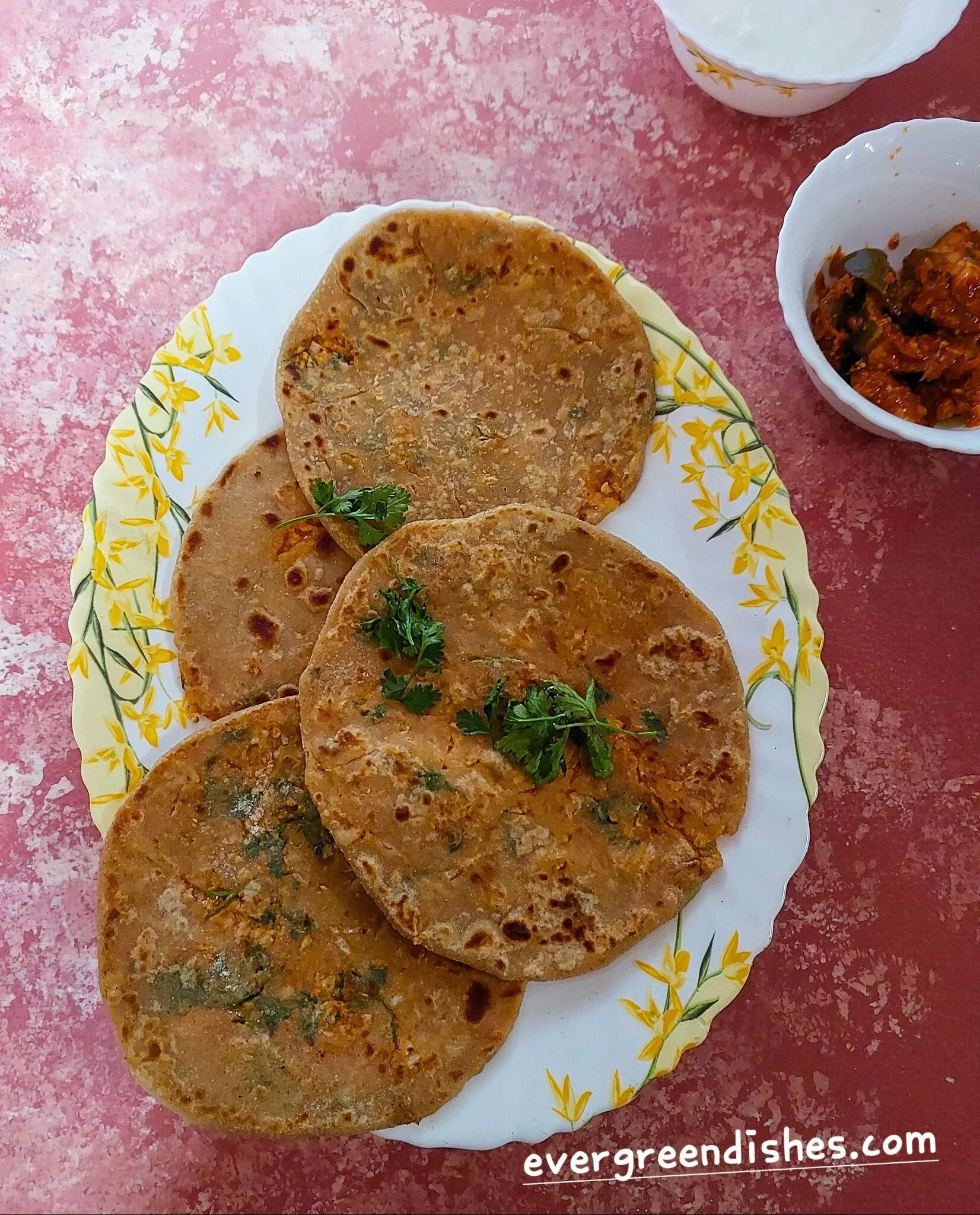
    Mooli Paratha is a tasty stuffed flatbread from North India.
    Mooli or radish is a winter vegetable. It is often used to make tasty stir fry and sambar.

    Winter is bountiful with fresh vegetables and fruits. Varied kind of vegetables are available in the market. Green peas, radish, pumpkin, brinjal are some of the winter vegetables we find here. Green leaf of different kinds are in large produce. 


    Radish is a flowering plant in the mustard family Brassicaceae. Though the vegetable is a tap root, the leaves too are consumed as greens. Earlier, it was used only in Asia, but today it is used throughout the world.

    Mooli as it is commonly called in India, is often disliked for its smell by some of them. But, one must consider the numerous health benefits . Being rich in fiber, it aids in weight loss and digestion. Radish helps in the blood sugar management. It also helps to cure urinary tract infections.

    It also improves the texture of the skin. It promotes better circulation of blood.

    How to use radish :

    Radish can be eaten in both ways, raw and cookwed. It is often used in making tasty stir fry and salad.
    It can also be used in sambar along with other vegetables.
    The leaves of radish can be used in making tasty salads and soups.
    Radish can also be used as a stuffing in parathas. It makes a tasty punjabi breakfast.


    mooli parathaMooli Paratha Recipe :


    Radish contains 75% water, hence it is difficult to roll easily. Salt is mixed to the grated radish and kept covered for sometime. It helps to remove the moisture.

    Radish paratha can be made in two ways. You can either add green chilli or chilli powder as I have added here to the stuffing. There is a variation in taste. Mooli paratha is best enjoyed with pickles and curds. You may add chaat masala or dahi masala to the curd to enhance the taste. The other alternative is to use a green chutney.


    Ingredients :

    For the dough :

    • 2 cup wheat flour
    • ½ teaspoon ghee
    • A pinch of salt
    • Water for kneading
    • 1 teaspoon oil     

    For the stuffing :

    • 4 radish
    • ½ teaspoon garam masala
    • 1 teaspoon chilli powder
    • 1/2 teaspoon salt
    • 1 tablespoon fresh chopped coriander

      Other ingredients :

    • Mixture of oil and ghee for roasting

    Wheat flour for dusting

    Method :

    To make the stuffing :

    • Wash the radish, pat dry and peel the skin.
    • Grate the radish, the finer the shreddings, it will be better to roll.
    • Put ½ teaspoon of salt and keep it aside for ten minutes.
    • Remove the radish by squeezing the water. Put it another bowl
    • Add chilli powder, garam masala and chopped coriander. Mix well. Be careful, if you are adding salt,  as it was added earlier.

    To make the dough :

    In a wide bowl, add wheat flour. Add ghee and salt. At first, mix them well. Then add water in small quantity and mix to a stiff dough. Smear a little oil, cover it with a cloth and keep it aside for ten minutes.

    To make mooli paratha :

    • Take a ball of the dough and roll it a bit.
    • Take a spoonful of the filling, put it in the centre of the rolled dough.
    • Slowly, take the extended sides and make a covering over it.
    • Now, dust the ball lightly and roll it.
    • Heat a griddle, put the rolled paratha on the griddle.
    • Smear some oil and ghee mixture on top of it.
    • Turn it to the other side and smear some oil over it. Cook it to a golden colour on both the sides.

    Serve hot with pickle and curd.

    Take a tip :

    • It is best to keep the spices minimal as radish gives a good taste to the flatbread.
    • You may add ginger and chilli to the grated radish instead of chilli powder and garam masala.
    • The squeezed water may be used for mixing the dough. It can also be used in curry and sambar.
    mooli paratha
    Evergreendishesdev

    Mooli Paratha

    Mooli Paratha is a popular flat bread from North India. It is usually served for breakfast.
    Prep Time 10 minutes
    Cook Time 15 minutes
    Total Time 25 minutes
    Servings: 6 parathas
    Course: Breakfast
    Cuisine: punjabi

    Ingredients
      

    For the dough :
    • 2 cup wheat flour
    • ½ teaspoon ghee
    • A pinch of salt
    • Water for kneading
    • 1 teaspoon oil
    For the stuffing :
    • 4 radish
    • ½ teaspoon garam masala
    • 1 teaspoon chilli powder
    • 1/2 teaspoon salt
    • 1 tablespoon fresh chopped coriander
    Other ingredients :
    • Mixture of oil and ghee for roasting
    • Wheat flour for dusting

    Equipment

    • 2 wide bowl
    • grater
    • scraper
    • rolling board
    • rolling pin
    • skillet
    • ladle
    • small bowl
    • 2 plates
    • 1 small plate
    • 1 small spoon

    Method
     

    To make the stuffing :
    1. Wash the radish, pat dry and peel the skin.
    2. Grate the radish, the finer the shreddings, it will be better to roll.
    3. Put ½ teaspoon of salt and keep it aside for ten minutes.
    4. Remove the radish by squeezing the water. Put it another bowl
    5. Add chilli powder, garam masala and chopped coriander. Mix well. Be careful, if you are adding salt,  as it was added earlier.
    To make the dough :
    1. In a wide bowl, add wheat flour. Add ghee and salt. At first, mix them well. Then add water in small quantity and mix to a stiff dough. Smear a little oil, cover it with a cloth and keep it aside for ten minutes.
    To make mooli paratha :
    1. Take a ball of the dough and roll it a bit.
    2. Take a spoonful of the filling, put it in the centre of the rolled dough.
    3. Slowly, take the extended sides and make a covering over it.
    4. Now, dust the ball lightly and roll it.
    5. Heat a griddle, put the rolled paratha on the griddle.
    6. Smear some oil and ghee mixture on top of it.
    7. Turn it to the other side and smear some oil over it. Cook it to a golden colour on both the sides.
    8. Serve hot with pickle and curd.

    Notes

    It is best to keep the spices minimal as radish gives a good taste to the flatbread.
    You may add ginger and chilli to the grated radish instead of chilli powder and garam masala.

    Pin it for later : 
    If you ever make Mooli Paratha in your kitchen, take a picture and share on Instagram by tagging @foodiejayashree. You can also tag me on facebook. Subscribe to get all updates in your inbox and an e-book of handyhints for free. Until next time, happy cooking !
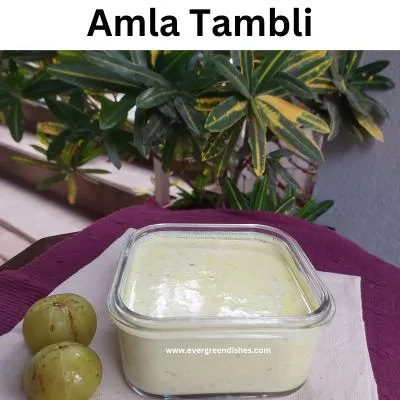
  • Amla Tambli | Nellikayi Tambuli

    Amla Tambli | Nellikayi Tambuli

    Amla Tambli is a tasty, healthy dish from South Canara. It pairs well with hot, steamed rice.

    Amla or the Indian gooseberry is a fruit native to South Asia. It is widely used in Ayurvedic medicine. The botanical name of Amla is Phyllanthus emblica. It is a rich source of Vitamin C. It also contains anti-oxidants and other essential nutrients as iron, calcium and fiber.

    Amla is generally round in shape and greenish yellow in colour. It is usually available during months of December and January. It is used to make various kind of dishes as amla pickle, amla murabba, amla rasam, amla tambuli and amla chitranna. Sadly, I have not posted any amla recipes on the blog. So, here is to new beginnings.

    Benefits of Amla :

    1. Boosts immunity  : Being a good source of Vitamin C, one can include it to get the nutrients and anti-oxidants. The anti-oxidants helps in replenishing the cells and fights against the diseases.
    2. Aids in digestion: The dietary fibre helps in preventing constipation.
    3. Good for the heart : The amla extracts are found to be ideal to lower cholesterol and triglycerides. It also helps to reduce the blood pressure.
    4. Good for the kidneys: Studies have shown that it is good for the kidneys.
    5. Ideal for skin health : The high concentration of vitamin C promotes the texture and elasticity of the skin.
    6. Good for hair care : Amla is often used in hair care products.

    Side effects :

    I am not a  health worker or a doctor.  Please use any suggested food ideas as per your health conditions. Although, amla is a good source of Vitamin C, it is suggested to be used  in moderation. Excess use may cause varied kinds of problems. The high fibre content  may cause bloating and diarrhoea in some individuals.

    It can affect the blood sugar levels also. People with diabetes should be careful about using it.

    Amla Tambli

    Amla Tambli

    Amla Tambli is an easy to make, tangy dish ideal to serve with hot, steamed rice. It is a good way to include amla in our diet. Usually, the round shaped known as bettada nellikayi is used in cooking.

    Amla pickle is often made in made home. Here is an instant amla pickle by my co-blogger Seema.

    Why should you make amla tambli ?

    Amla tambli is an easy to make dish. It is ready in ten minutes. It is ideal to serve with hot steamed rice.

    Can it be stored for a couple of days ?

    No. I suggest to make it in a small quantity and consume it.

    Can I use other kind of oil?

    Coconut oil lends a good taste but feel free to use any neutral cooking oil

    Can I make it spicy ?

    You my add an extra chilli if you need.

    Can I use sour curd ?

    No, use fresh curd to make tambli.


    Evergreendishesdev

    Amla Tambli

    Amla Tambli is an easy to make, tasty, healthy and a no cook side dish. It makes a good accompaniment with hot steamed rice.
    Prep Time 10 minutes
    Total Time 10 minutes
    Course: dinner, lunch
    Cuisine: South Canara

    Ingredients
      

    • To be made into a paste :
    • 4 amla washed and cut into pieces
    • 1/2 cup fresh coconut
    • 2 green chillies
    • 1/2 teaspoon cumin
    • Other ingredients :
    • 4 tablespoon curd
    • 1/2 cup water
    • salt to taste
    • For the seasoning :
    • 2 teaspoon coconut oil
    • 1/4 teaspoon mustard
    • dash of asafoetida
    • 1/4 teaspoon turmeric powder
    • a few curry leaves

    Method
     

    1. Grind the ingredients under the section,”To be made into a paste”. Put  curd and blend it again. Remove it in a bowl.
    2. Add some water to it. Put salt.
    3. Make seasoning with coconut oil. Add mustard seeds. As it splutters,  put a few curry leaves, asafoetida and turmeric powder. Pour it over the prepared dish. Amla Tambli is ready to serve.

    Notes

    You may use any other oil. But, coconut oil gives a good taste to the dish.
    Use fresh curd.
    You may adjust the quantity of green chilly as per the need.

    If you ever make Amla Tambli in your kitchen, take a picture and share on Instagram by tagging @foodiejayashree. You can also tag me on facebook. Subscribe to get all updates in your inbox and an e-book of handyhints for free. Until next time, happy cooking !
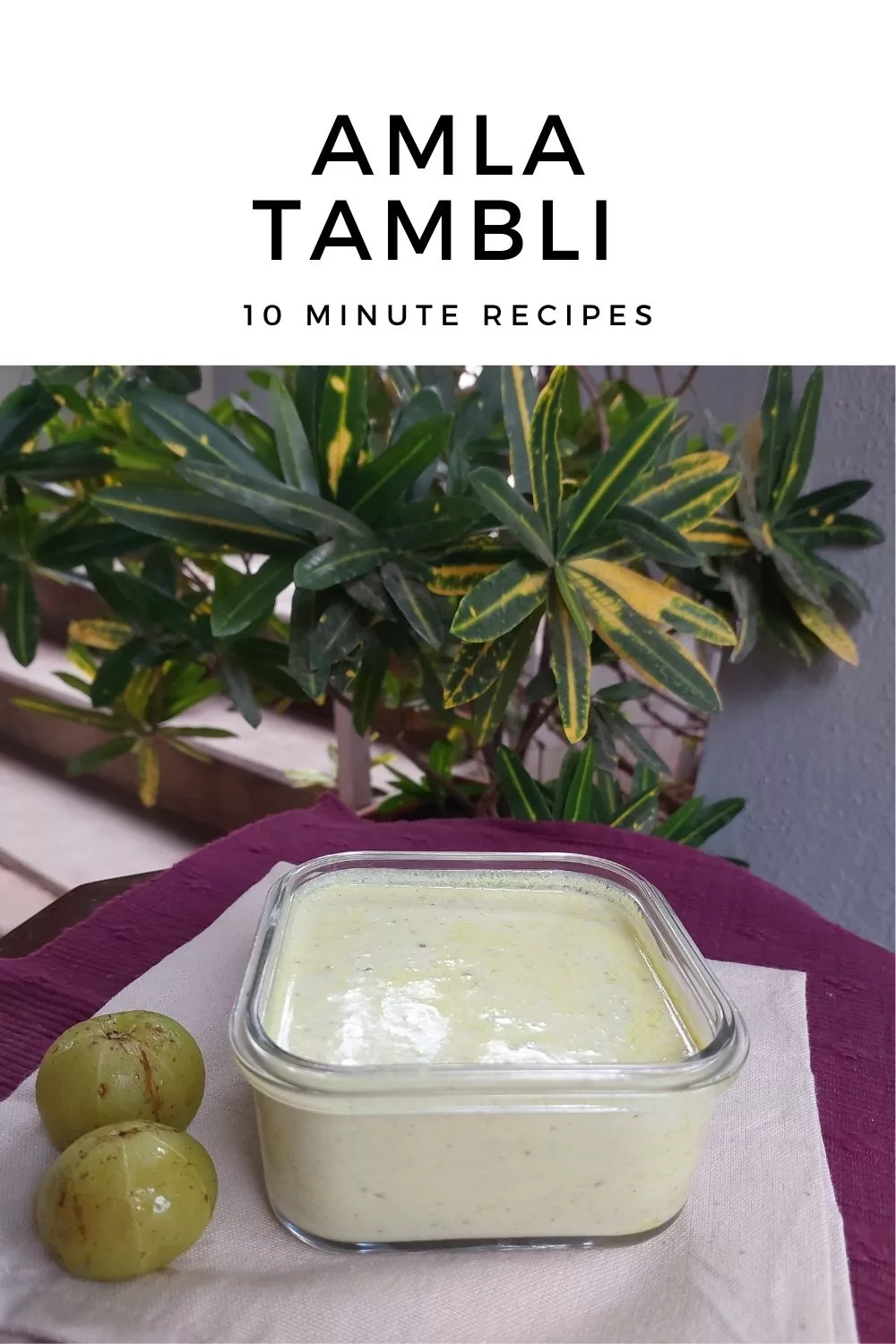
    Pin it for later :

    Amla Tambli
    Amla Tambli


  • No Onion Garlic Thali

    No Onion Garlic Thali

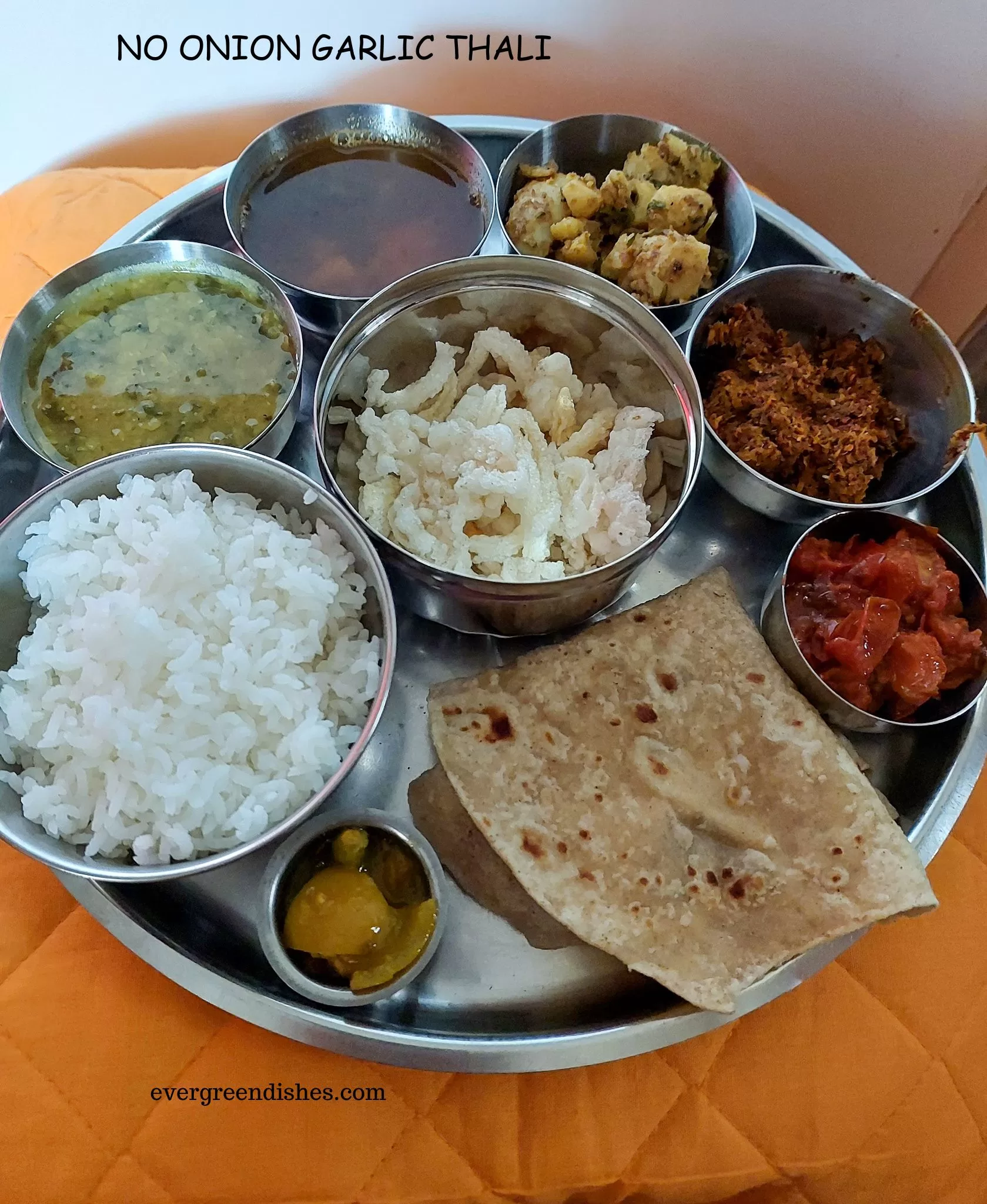
    A no onion garlic thali which you can easily prepare at home.

    Some days call for a simple, no onion garlic meals. I usually add onion regularly except for a few days as Ekadasi, festive days and my mood.


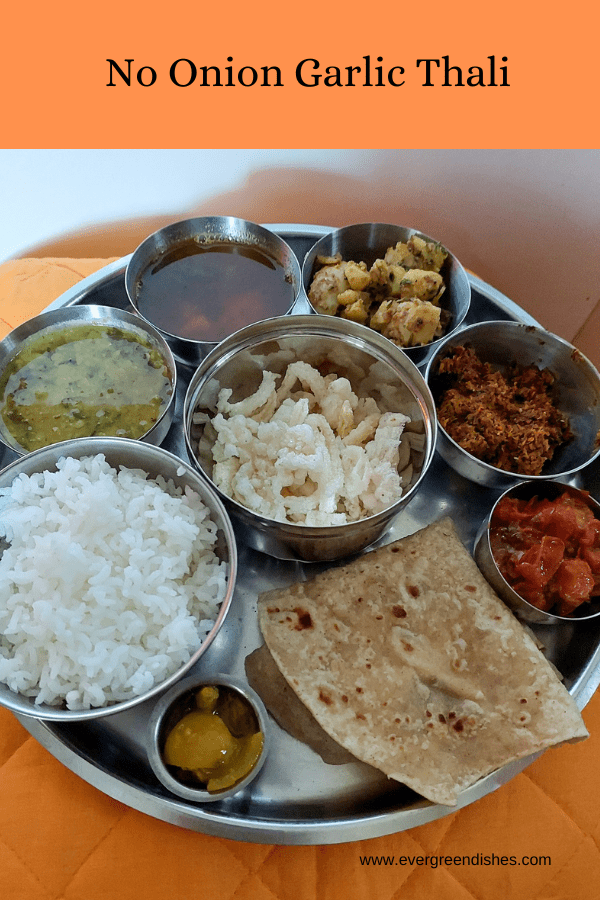
    Here is one such thali. The lunch menu consists of red coconut chutney, two kinds of stir fry, a green dal, rasam, papad, chapathi and steamed rice. Along with it I have served pickle and fryums. Here is the other thali which I shared earlier. 

    All the recipes are easy to prepare. Here is a short method of the cooking. Soak the dal and tamarind,  cut the vegetables  and prepare the dough. Soon, you can put the lentil in the pressure cooker along with potatoes. Make the seasoning for the tomato chutney and the rasam. In the meantime, wash the green leaf thoroughly and get ready with the seasoning. Once the pressure is released, cook the dal and make alu methi sabzi. The chapathis are made in the end after the rice is cooked.
    Alu Methi – It makes a good accompaniment with chapathi.
    Tomato chutney : A simple, flavoursome chutney which is often made at home.
    Red coconut chutney – Abundant of coconut and this chutney happened.
    Dal with green leaves – The dal can be made with any kind of green leaves as fenugreek, palak or amaranth. I often use a combination of palak and fenugreek or only hunase leaf to make dal with green leaf aka mudddipalya      

               Nimbehannina Saaru – A comfort meal by itself, it needs the simplest of ingredients. 


    Pin it for later :

    No onion garlic thali

    If you have liked this post, hit the share button. For more such posts, follow @evergreendishes on Facebook or @foodiejayashree on Instagram


  • Sprouted Moong Methi Stir Fry

    Sprouted Moong Methi Stir Fry

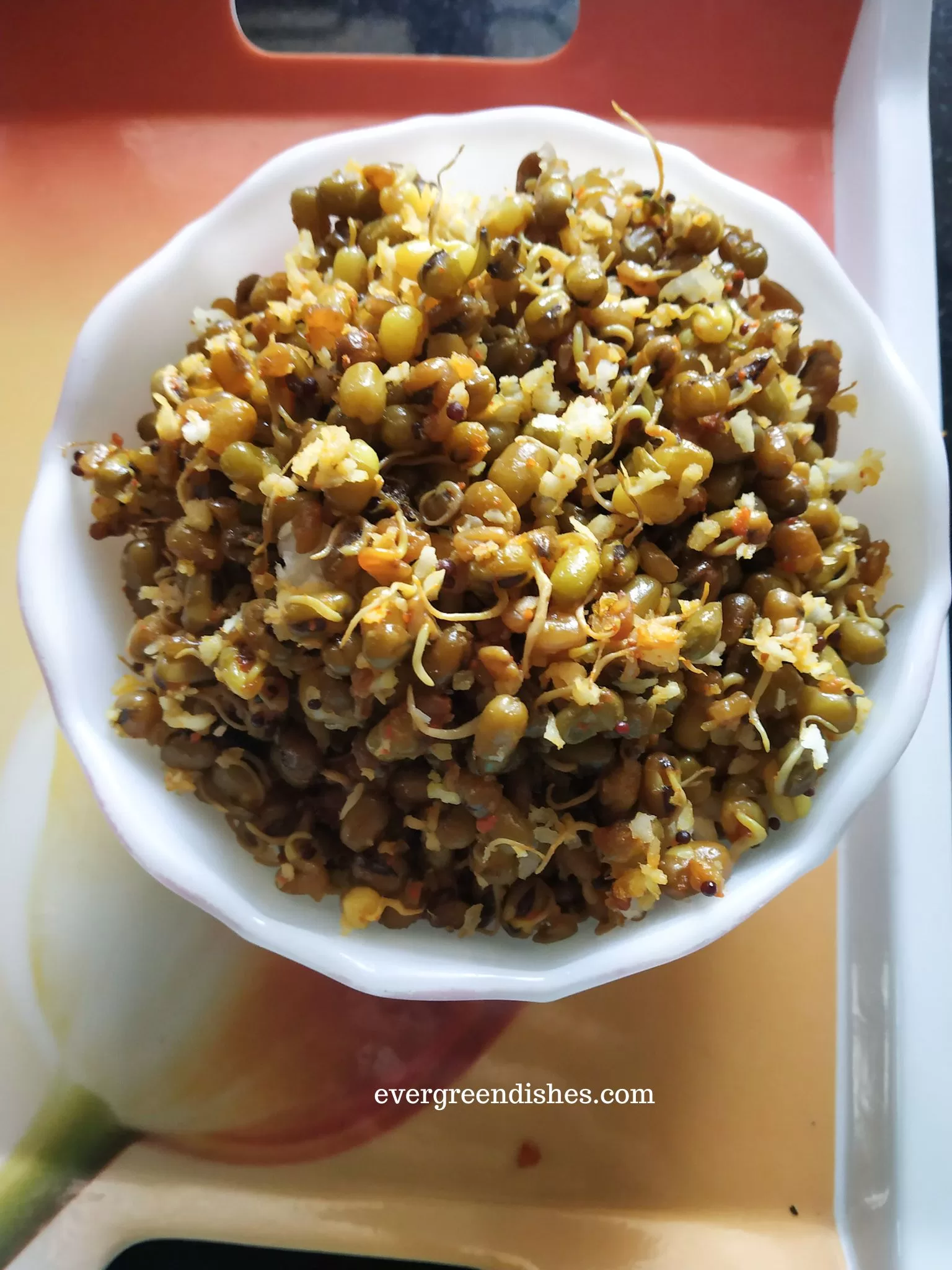
    Sprouted Moong Methi Stir Fry is a tasty, healthy, easy to prepare side dish from Konkani cuisine. It is  a good  way to  include sprouted fenugreek, which is a slightly difficult to consume by itself. You can serve it as an accompaniment with chapathi or along with rice and rasam.

    Sprouting duration varies for both.  Moong sprouts in a day while fenugreek needs more time. Soak them separately for six to eight hours, put them in a colander, once the water is drained and semi-dry, tie them in a thin  muslin cloth and keep them in a warm place. Check them the next day and store them in a container in refigerator. Alternatively, you can keep in a closed container with a tight lid.

    I have shared in detail here regarding the making of sprouts. Do check the post. The other recipes with moong which we often relish is the salad, it is ideal as a snack too.

    The stir fry is called as Sukke in Konkani households and the recipe is adopted from  Healthy Cooking with Mitha. We know each other through a facebook group and remember reading and trying her recipe then. We liked it and it has been a regular feature.The bitterness of the fenugreek is neglible and adds a good taste to the moong stir fry. You can also check out the earlier shared menthe gojju  


      What goes in the sprouted moong methi stir fry ?

    • sprouted green gram : Planning is essential here. We need to soak and sprout them a day prior.
    • sprouted fenugreek seed: Make it two days prior, as sometimes it needs a little longer time.
    • oil: The preferred oil is coconut oil for this recipe but you can use any other oil.
    • mustard seed : for seasoning
    • tamarind paste: You can add a little bit of tamarind extract if you do not have the tamarind paste.
    • coconut: Do not skip it for this recipe.
    • salt: As per the taste
    • chilli powder: For the hot and spicy taste.
    • curry leaves : A few leaves are needed

    Pre-requisites :

    You need to have the sprouted moong and fenugreek ready. To make the sprouts, read the above paragraph, it is mentioned in detail. 1 cup of green gram yields three cups of sprouted moong while 1/4 cup of fenugreek yields a cup of sprouted fenugreek.

    Take adequate precaution while sprouting. Keeping them for a longer may turn them sticky. Weather conditions too play an important role.

    1. Why should you make sprouted moong methi stir fry ?
    1. It is easy to prepare if you have the sprouted grains.
    2. A good way to include fenugreek in your diet.
    3. It is vegan and gluten-free.
    4. It is a no onion garlic recipe.
    5. It makes a good accompaniment with any meal.

    Evergreendishesdev

    Sprouted Moong Methi Stir Fry

    5 from 10 votes
    Sprouted Moong Methi Stir Fry is a tasty, healthy, easy to make accompaniment.
    Course: dinner, lunch
    Cuisine: karnataka

    Ingredients
      

    • 3 cup sprouted green gram moong
    • 1 cup sprouted fenugreek seed menthe
    • 2 teaspoon coconut oil
    • 1/2 teaspoon mustard
    • a few curry leaves
    • 3 cups water
    • 1 tablespoon tamarind paste
    • 2 teaspoon chilli powder
    • salt to taste
    • 1/4 cup fresh grated coconut

    Method
     

    1. Take oil in a pan, add mustard seeds. As it splutters, put curry leaves and the sprouted green gram. Also add the sprouted fenugreek seed. Put some water to it and allow to cook for sometime.
    2. Once it is cooked, add salt to it.
    3. Now, put the tamarind paste and chilli powder to it.
    4. Finally, put grated coconut to it, heat for a minute and keep it aside.
    5. Serve with any meal as an accompaniment.

    Notes

    You need to have the sprouted moong and fenugreek ready. To make the sprouts, read the above paragraph, it is mentioned in detail. 1 cup of green gram yields three cups of sprouted moong while 1/4 cup of fenugreek yields a cup of sprouted fenugreek.
    Take adequate precaution while sprouting. Keeping tied for a longer time may turn them sticky. Weather conditions too play an important role.

    About the event:

    Sending this to Cooking with Sprouts theme for the month of January 2024 at Shhh Secretly Cooking Challenge. The theme was suggested by yours truly. I was paired with Kalyani Sri of sizzling tastebuds, a blog with varied kind of recipes.  Kalyani has prepared Sprouts Dosa with Jowar, a filling breakfast to kickstart a busy day with chana sprrouts and spinach, the secret ingredients given by me. Inturn, I have made moong methi sprouts stir fry with the secret ingredients, chilli powder and methi sprouts.

    shhh cooking secretlyIf you  make  Sprouted Moong Methi Stir Fry, take a picture and share it by tagging @foodiejayashree on Instagram and @evergreendishes on Facebook.  Subscribe to get all updates and an e-book for free.
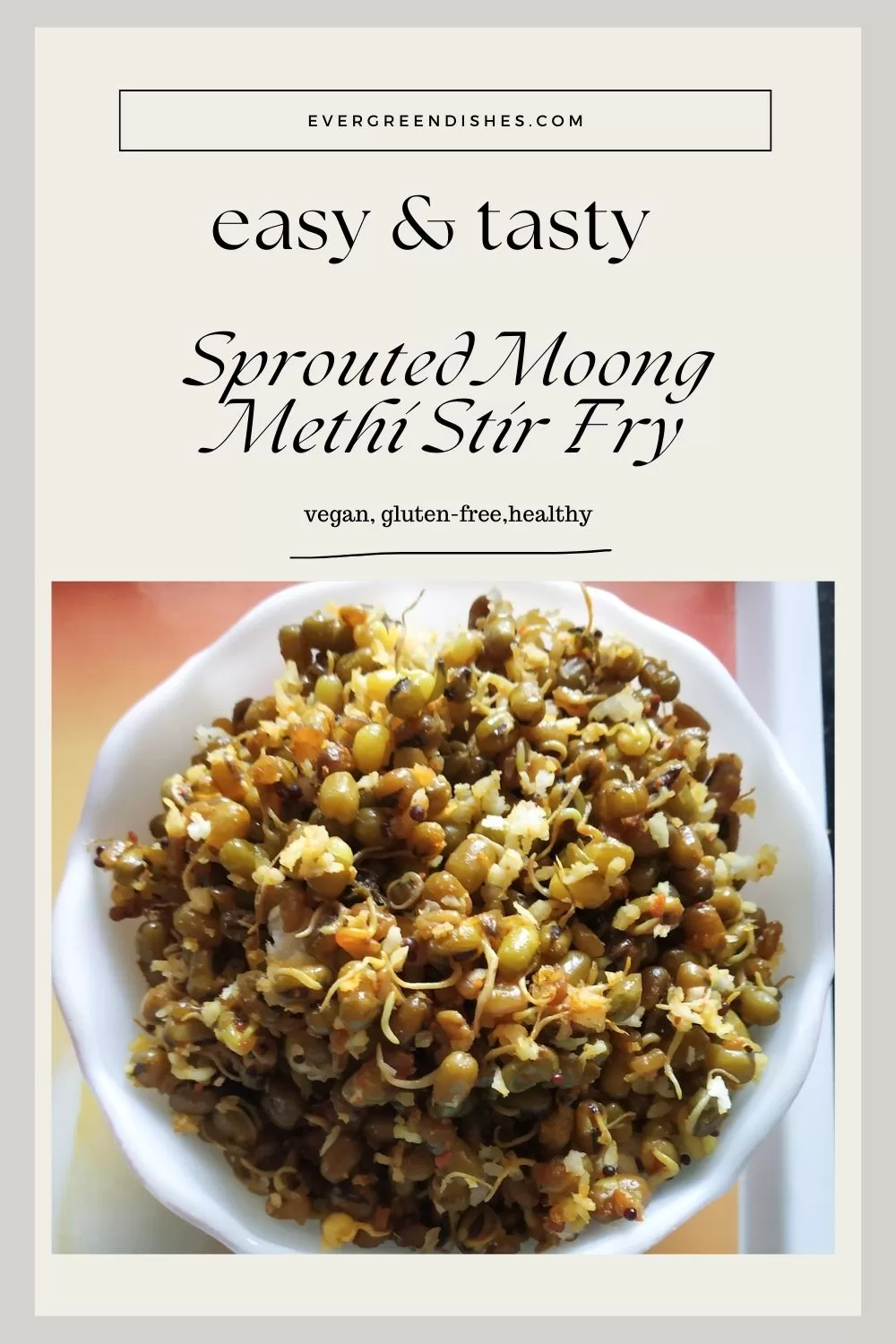
    sprouted moong methi stir fry
    sprouted moong methi stir fry

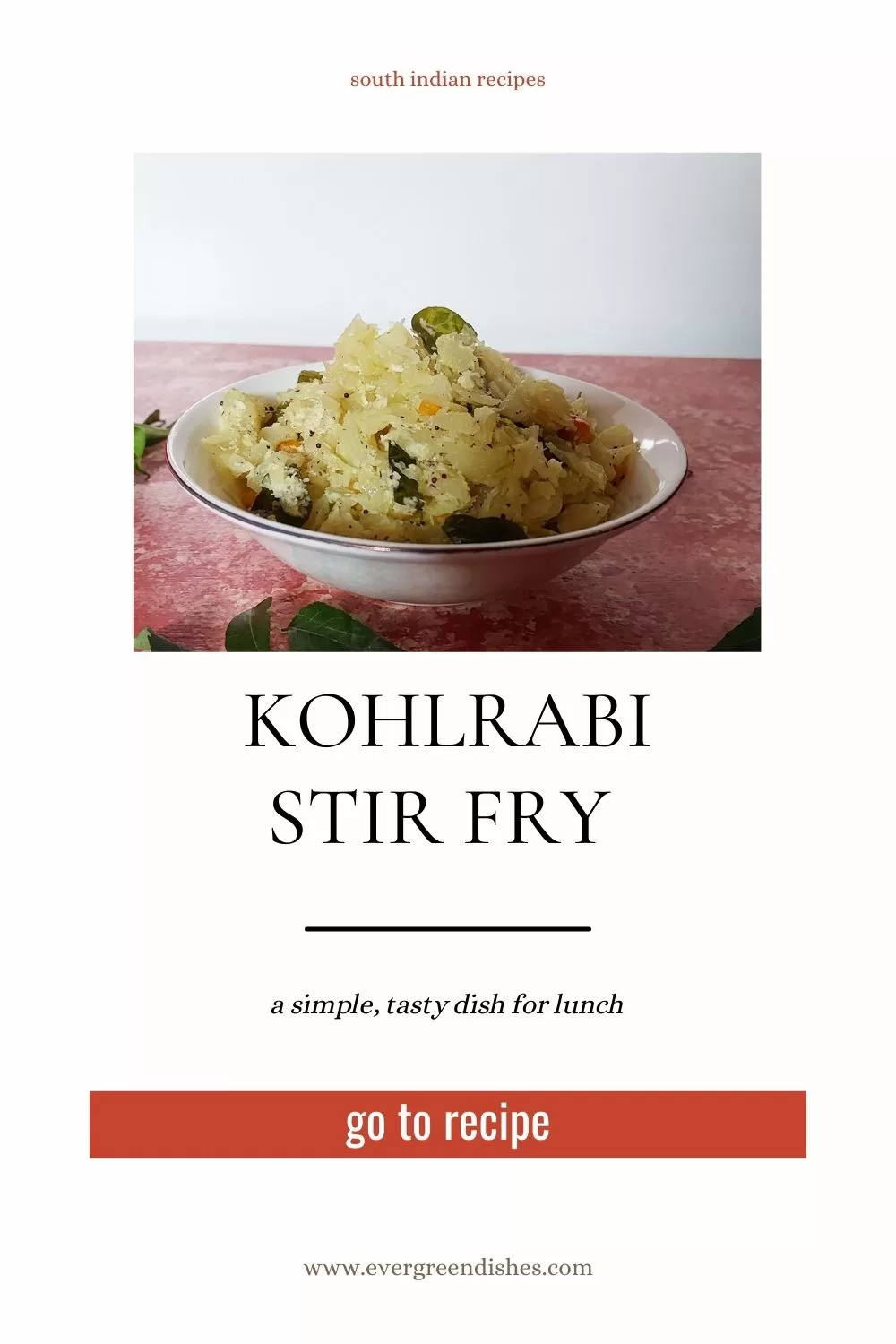
  • Kohlrabi Stir Fry | Navilakosu Palya | No Onion Garlic Recipe

    Kohlrabi Stir Fry | Navilakosu Palya | No Onion Garlic Recipe

    Jump to Recipe

    kohlrabi stir fry | navilakosu palya | 

    Kohlrabi stir fry is a simple, tasty, healthy  side dish for daily lunch menu. You can pair it with sambar, rice and a stir fry. It tastes good with chapathi or jowar roti too. It is vegan and a low calorie dish. 

    Some days we avoid using onion and garlic for religious or personal interests. Today’s recipe is a no onion recipe

    Kohlrabi or German Turnip is a cruciferous vegetable and  belongs to the family Brassica Oleracea, same species as cabbage, cauliflower and brussel sprouts. It grows above the ground and looks like a turnip, but it is neither a root vegetable nor belongs to the turnip family. It has long leafy stems as an alien and a round bulb which may be purple, light green or white. The inside is whitish green . The bulb as well as the leaves are used in cooking. It is eaten both in cooked and raw form. Kohlrabi lends a different taste on cooking which is different from cabbage. 

    The stalk is used in salads. The leaves are used in dal and stir fry. The vegetable can be used in different dishes as stir fry, sambar and chutney. 

    Knolkhol is a good source of nutrients as Vitamin C, B6, potassium and magnesium. It is also a good source of anti-oxidants. 

    Kohlrabil is called by different names in different regions. It is Navilkosu in Kannada, Navalkol in Maharashtra, monj hakh in Kashmiri and Su Hao in Bengali. 

    kohlrabi stri fry
    a bowlful of kohlrabi stir fry


    How to use kohlrabi in cooking:

    Wash the vegetable, remove the leaves if any. Here, we are not using the greens in any way. Remove the skin and chop it. The middle portion is hard and discarded. 


    What goes in the stir fry ? 

    • Kohlrabi : It is the star ingredient here. You can chop it unevenly as it is usually done or cut into small bits. The way you cut the vegetable alters the taste of the vegetabel.
    • Oil : Any cooking coil may be used. 
    • Seasoning : All the usual ingredients of seasoning are needed. They are mustard seeds, asafoetida, bengal gram, urad dal. 
    • Chilli : For that spicy flavour
    • Fresh coconut : Essential but no compulsion.
    • Ginger : You may add a small piece of grated ginger in the seasoning.
    • Curry leaves : Essential in south indian cooking. It gives a distinctive flavour.
    • Coriander : for garnishing


    Making the stir fry : 

    The kohlrabi has a thick outer covering. It needs to be removed slowly. Wash and then peel the skin. Chop it and keep it aside. Make the seasoning and add the chopped vegetable. Sprinkle a little water and put salt. Allow to cook. Once it is tender, add grated coconut and fresh coriander to it.. 


    A few South Indian no onion garlic recipes :

    lemon rasam
    lemon rasam
    instant raw mango pickle
    instant raw mango pickle


    cucumber stir fry
    cucumber stir fry
    Print Recipe

    Kohlrabi Stir Fry

    5 from 11 votes
    Kohlrabi stir fry is a simple yet tasty side dish with any meal.

    Ingredients
      

    • 2 tablespoon oil
    • 1/2 teaspoon mustard
    • 1/4 teaspoon asafoetida
    • 1/4 teaspoon turmeric powder
    • 1 teaspoon bengal gram
    • 1 teaspoon urad dal
    • 4 green chilli
    • a few curry leaves
    • 1/2 kilogram kohlrabi
    • salt to taste
    • 1/2 cup fresh coconut

    Equipment

    • 1 pan with lid
    • 1 plate
    • 1 ladle
    • 1 bowl

    Method
     

    1. Wash, peel the skin  and chop the vegetable.
    2. Take oil in a pan. Add mustard seeds, as it crackles, put bengal gram, urad dal, turmeric powder and asafoetida. Now, add green chilli to it along with a few curry leaves.
    3. Put the chopped kohlrabi to it along with a little salt.
    4. Sprinkle a little water to it.
    5. Allow it to cook for sometime. Close a lid, it helps in proper cooking.
    6. Once it is cooked, add grated coconut and fresh coriander to it.
    7. Kohlrabi stir fry is ready to serve.

    About the event : 

          Priya Iyer suggested  “No Onion Garlic Stir Fry or Curry ” at Shhh Secretly Cooking Challenge for the month of September. Priya has prepared a delicious gravy dish Sweet Corn Masala for the theme,  do check it out. 

    Here, we are paired with a parter, exchange two ingredients and the dish is prepared using those ingredients. Later, it is put in the group for guessing. It is a fun way to  engage with like minded individuals. I was paired with Mayuri Patel. She is a versatile cook  whom I have closely seen in my blogging journey. I discussed about my plan to prepare kohlrabi stir fry and she gave me kohlrabi and urad dal as the secret ingredients. Mayuri Patel wanted to make Methi Corn Malai and I suggested jaggery and cumin accordingly. It is something which my children will relish, will be making it soon. 

    kohlrabi stir fry kohlrabi stir fry

    If you ever make Kohrabi Stir Fry  in your kitchen, take a picture and tag @foodiejayashree on Instagram or evergreendishes on Facebook.  Until next time, Happy Cooking ! Be happy and cheerful. 

  • Tri-colour stir fry for Independence Day

    Tri-colour stir fry for Independence Day

    Jump to Recipe

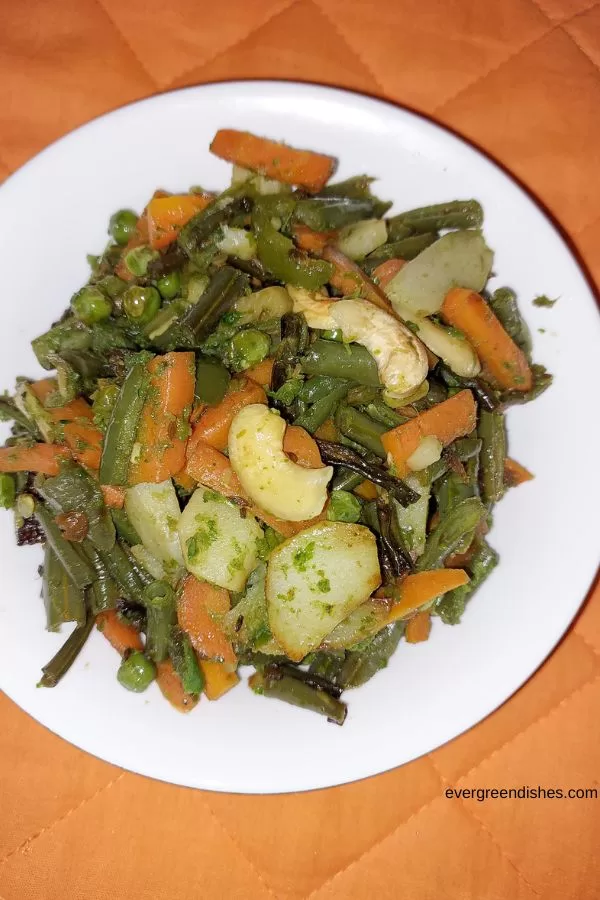
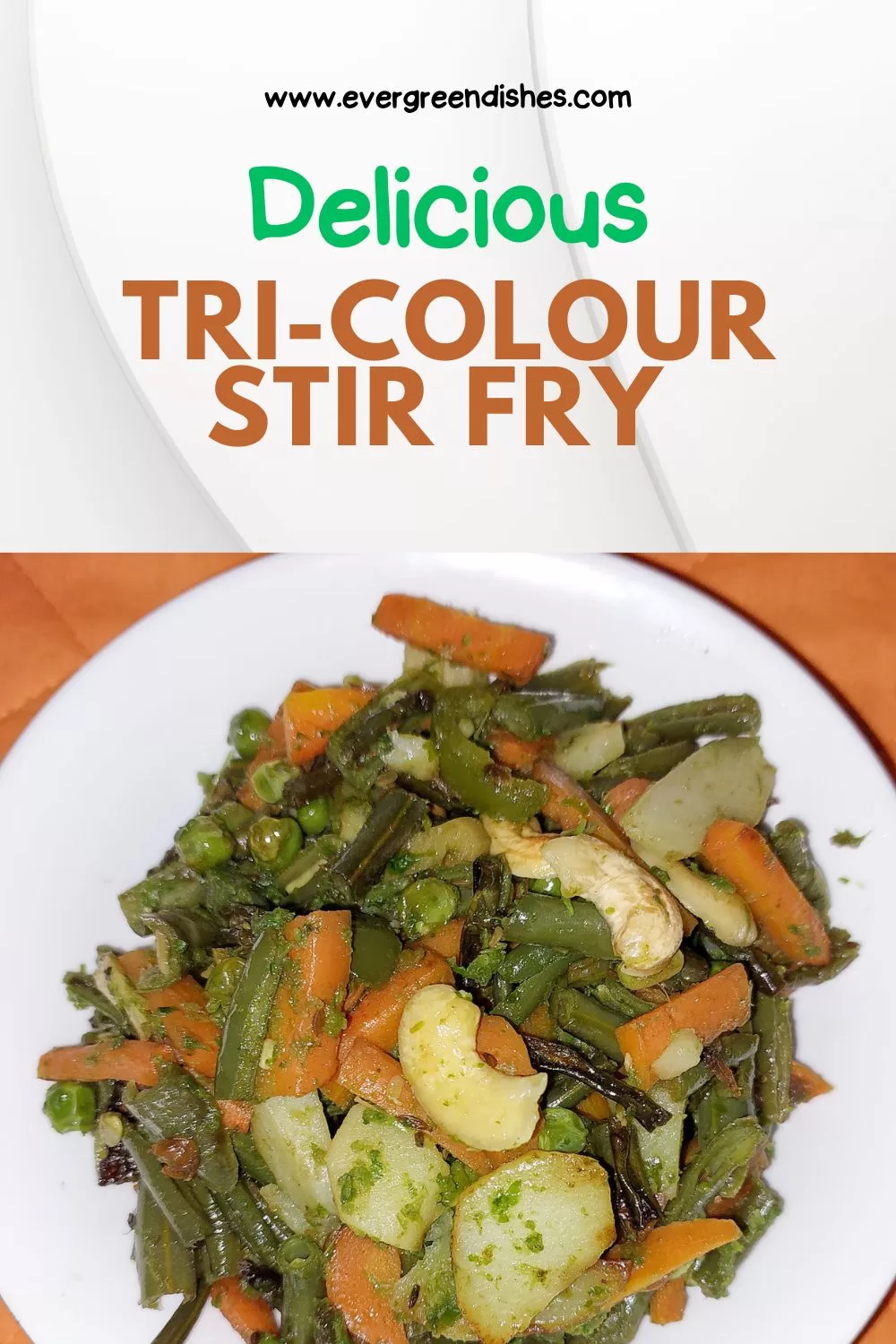
    Tricolour Stir Fry is a simple yet tasty accompaniment with chapati or pulka. It is a no onion garlic recipe.

    It’s that time of the year again when we rejoice and our hearts bow down to the warriors of the country. India celebrates the 76th year of Independence. It was after a long struggle India was declared an independent nation, free from the British rule.

    Be proud of your country. It’s the duty of every citizen to safeguard the hard-won freedom.

    I was wondering what I could post for the Independence Day, and soon I decided it would be a simple yet flavoursome dish which can be easily prepared in the busy mornings. It pairs well with chapati or Phulka. It is ideal to pack in the lunch box too.

    Since it is made as an Independence Day Special dish, I have used beans, capsicum and green peas for the green colour. Carrot represents the green colour, and potato represents the white colour. It is a no onion garlic stir fry.

    tri-colour stir fry
    tri-colour stir fry

    I often make mixed vegetable at home. It is one way  assorted  vegetables are served to all members. Here are some of the other recipes shared earlier : Bengali Mixed Vegetable, Rajasthani Vegetable Curry, Kerala Aviyal

    What goes in the tri-colour stir fry?

    The vegetables used for saffron colour is carror. Beans, capsicum and green peas to represent the green colour. Potato, peeled and cut into pieces is used for the white colour. Along with it cashewnut is also used.

    • Beans cut into long strips
    • Carrot : cut into lone inch long strips.
    • Capsicum : cut into long strips.
    • Potato : It is peeled and cut in the similar way.
    • Green peas: I have used the fresh ones
    •  Cashew : Take a handful of cashew and soak them for 15 minutes.
    • Coriander, green chillies, ginger and cumin are made into a paste.
    • Oil : Any neutral cooking oil
    • Asafoetida
    • Turmeric powder
    • Cumin : a pinch for the seasoning
    • Salt to taste
    • Lemon juice to balance the flavours

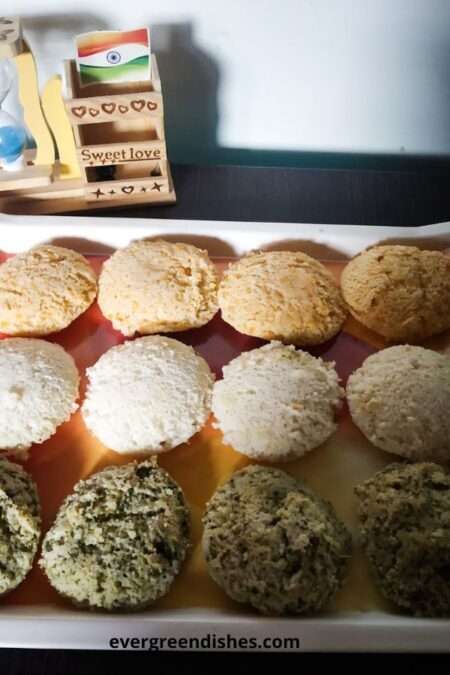
    The other Independent Day recipes shared earlier are : 


    Tri-colour pulav
    Tri-colour pulav


    tri-colour idli
    tri-colour idli

    Why should you make Tricolour Stir Fry?

    1. To celebrate national day.
    2. To use the leftover vegetables in the refrigerator.
    3. If your children are fussy eaters, it is a good way to feed varied vegetables.
    4. When you need something different, from the usual cooking.
    5. To add different vegetables in the daily diet.


    Print Recipe

    tri-colour stir fry
    Evergreendishesdev

    Tri-colour Stir Fry

    5 from 4 votes
    Tri-colour stir fry is a simple yet tasty stir fry. It pairs with chapathi or phulka.
    Prep Time 10 minutes
    Cook Time 15 minutes
    Total Time 25 minutes
    Servings: 4 people
    Course: dinner ideas, lunch, Main Course
    Cuisine: Indian

    Ingredients
      

    • 2 cups beans cut into thin of1 inch long
    • 1.25 cup carrot cut into thin strips of one inch long
    • 1 capsicum
    • 1 potato peeled and cut similarly
    • 1/4 cup green peas
    • 1/4 cup cashew soak for 15 minutes
    To be made into a paste :
    • 1/4 cup coriander
    • 5 green chilli
    • 1/2 inch ginger
    • 1/2 teaspoon cumin
    For seasoning :
    • 2 tablespoon oil
    • 1/4 teaspoon cumin
    • 1/4 teaspoon asafoetida
    • 1/4 teaspoon turmeric powder
    Other ingredients:
    • salt
    • 1/2 lemon

    Equipment

    • 4 4 bowls
    • 2 plates
    • 1 kadai
    • 1 long spoon

    Method
     

    1. Soak cashew for fifteen to twenty minutes. Make a paste of the mentioned ingredients above.
    2. Cut the vegetables and keep them aside. I have cut into one inch long, neither too thick nor thin. The potatoes are peeled here to give the desired white colour.
    3. Take oil in a pan, add cumin. As it sizzles, put beans followed by carrot, potato, capsicum and green peas. Lastly, put the soaked cashew into it. Cover a lid with some water over it, it hastens the cooking process.
    4. Allow them to cook for sometime
    5. Put salt. Add the prepared paste to it. Mix well and remove it after heating it for two minutes on a low flame.
    6. Finally, add lemon juice to it.

    Pin it for later :

    tri-colour stir fry
    tri-colour stir fry

    Wishing all a very happy Independence Day ! If you ever make Tri-Colour Stir Fry  in your kitchen, take a picture and tag @foodiejayashree on Instagram or @evergreendishes on Facebook. Subscribe to get all updates in your inbox and an e-book for free!


  • Kadhi Recipe | Punjabi Kadhi Pakora

    Kadhi Recipe | Punjabi Kadhi Pakora

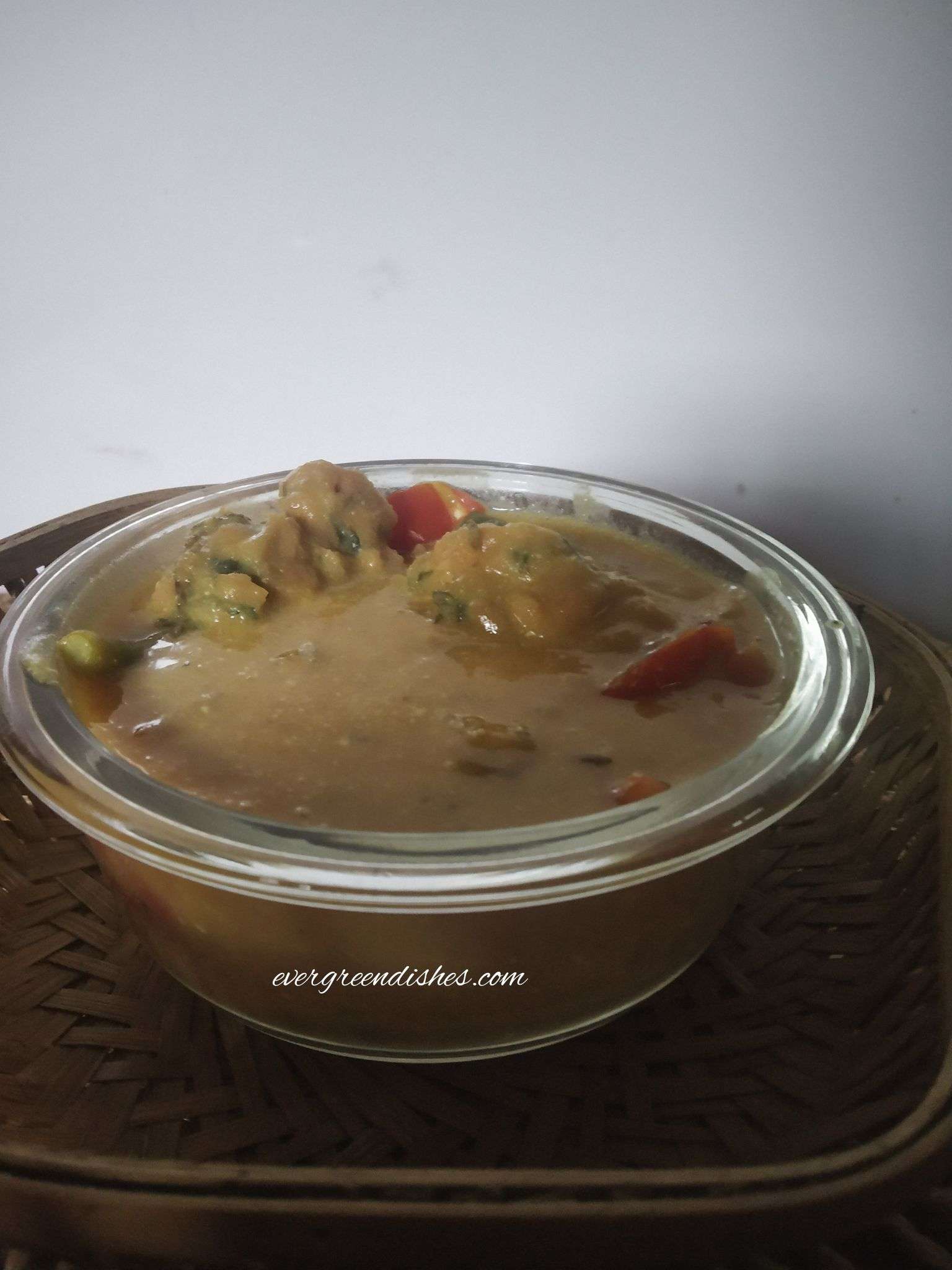
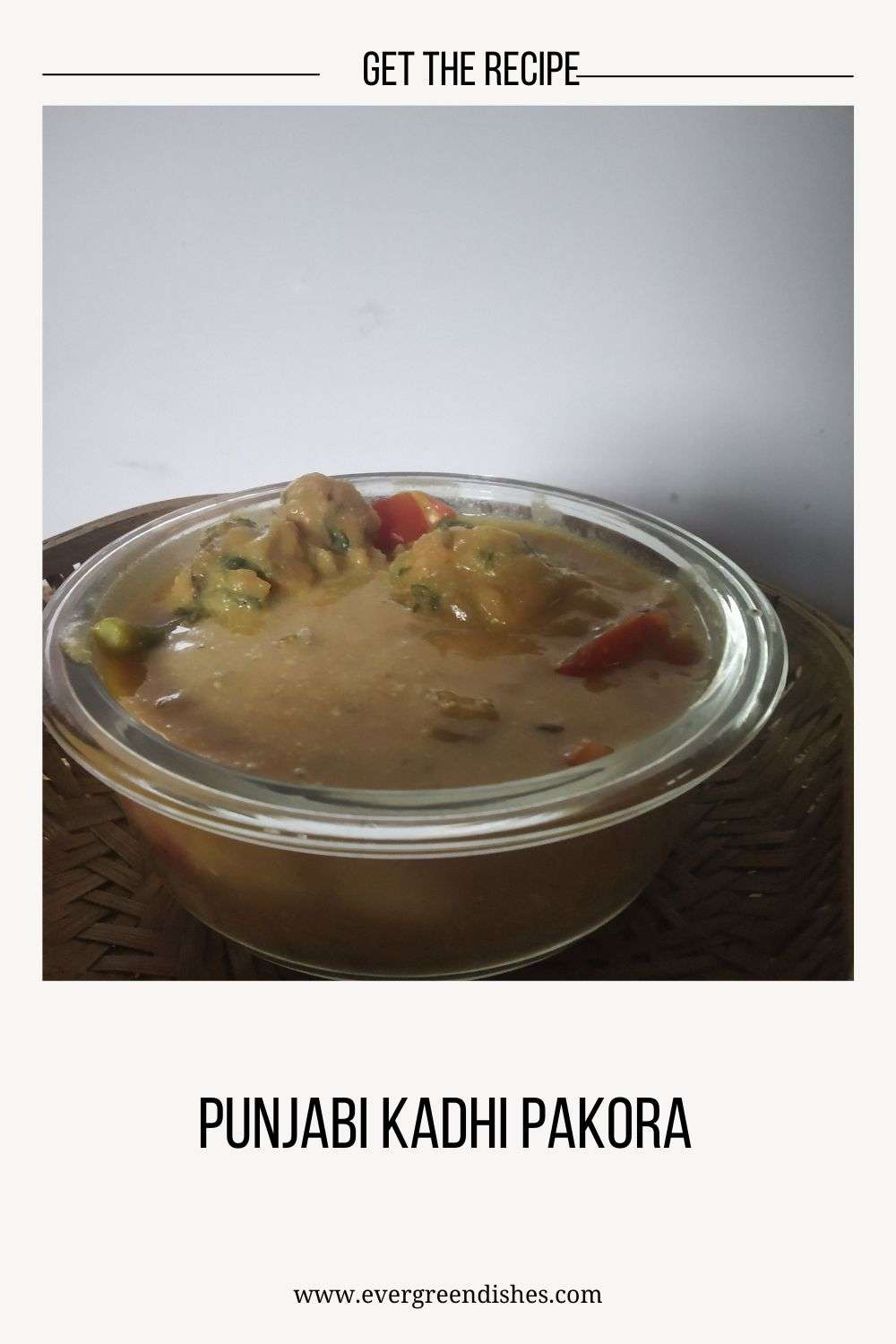
    Kadhi recipe is the popular Punjabi Kadhi Pakora. It is tasty and one of the cherished meals for north indians. 

    Kadhi chawal is the staple food of many people. It is easy to make and makes a good accompaniment with steamed rice. When the usual cooking needs a change, we resort to other kind of dishes. Kadhi is one of them. Every region has its own version of kadhi. The basic ingredient for kadhi is curd and gram flour.  There is a variation in the method of preparation.

    Kadhi with pakora is a signature dish from North Indian cuisine. Kadhi with pakora is made by dunking the onion pakoras in kadhi.

    a bowl of kadhi with pakora
    punjabi kadhi pakora

    What is Kadhi ?

    Kadhi is a popular yoghurt- based dish from Indian sub-continent. Gram flour is usually used to thicken it along with other ingredients. 

    What are the variation in Kadhi ? 

    Every region in India, has it’s own unique culture and traditions. Kadhi is prepared in most parts of the country but every region has its  own unique recipe. In South India, coconut is used in the preparation of majjige paladya along with other ingredients. It is similar to kadhi, at times we add ambodi in it.  The method of preparation is different in Rajasthan, a simple one with or without badas.  Gujarati kadhi is another version which I am yet to make. Sindhi kadhi is totally different and delectable with vegetables in it.

    Kadhi with Pakora Recipe 

    Ingredients:

    For Kadhi :

    • 1 cup sour curd
    • 1/4 cup gram flour
    • 1/4 teaspoon turmeric powder
    • 1/2 teaspoon red chilli powder
    • 1 teaspoon coriander powder
    • salt to taste
    • 1 tablespoon oil
    • 1/4 teaspoon cumin
    • 1/4 teaspoon fenugreek
    • 1 small onion
    • 1 inch ginger grated
    • 1 tomato
    • 2 green chilli

            For tempering 

    • 1 tablespoon oil
    • 1/4 teaspoon cumin
    • 1/8 teaspoon chilli powder

      For Pakoras:

    • 1/2 cup gram flour
    • 1 big onion
    • 2 green chilli
    • 1 tsp chilli powder
    • 1/4 teaspoon garam masala powder
    • 1/2 teaspoon coriander powder
    • water for mixing

      Method:

      To make kadhi : 

    • Blend the curd. Add gram flour, coriander powder, chilli powder, turmeric powder , and salt  to it. Mix it well, no lumps should be formed. 
    • In a kadai, make seasoning. Put oil, add cumin and fenugreek seed. Once it turns golden, add the grated ginger and onion. Saute it for sometime. Add tomato and green chilli pieces to it. Stir for 2-3 minutes.
    • Add the curd mixture, keep stirring it.
    • Reduce the flame, allow it to cook for sometime.
    • Switch off the flame.

    To make the pakoras:

    1. Take besan in a bowl. Add onion, green chilli, chilli powder, garam masala and coriander powder.Mix them together.
    2. Add little water and mix thoroughly. The batter should be of dropping consistency.
    3. Heat oil in a pan, add a spoonful of batter. Put a few more. 
    4. Deep fry to golden colour.
    5. Remove with a ladle and put it aside. 
    6. Put the pakora in kadhi.

    To make the seasoning:

    • Take oil in a pan, add cumin and chilli powder to it. As it turns golden, remove it and pour over the kadhi.
    kadhi with pakora

    Kadhi with Pakora

    5 from 5 votes
    Kadhi with Pakora is a popular dish from Punjabi cuisine. It is a comfort food.
    Course: lunch
    Cuisine: punjabi

    Ingredients
      

    For Kadhi :
    • 1 cup sour curd
    • 1/4 cup gram flour
    • 1/4 teaspoon turmeric powder
    • 1/2 teaspoon red chilli powder
    • 1 teaspoon coriander powder
    • salt to taste
    • 1 tablespoon oil
    • 1/4 teaspoon cumin
    • 1/4 teaspoon fenugreek
    • 1 small onion
    • 1 inch ginger grated
    • 1 to mato
    • 2 green chilli
    For tempering
    • 1 tablespoon oil
    • 1/4 teaspoon cumin
    • 1/8 teaspoon chilli powder
    For Pakoras:
    • 1/2 cup gram flour
    • 1 big onion
    • 2 green chilli
    • 1 tsp chilli powder
    • 1/4 teaspoon garam masala powder
    • 1/2 teaspoon coriander powder
    • water for mixing

    Equipment

    • 1 thick pan
    • 1 kadhi
    • 1 ladle
    • 1 perforated ladle
    • 2 plates
    • 2 bowls

    Method
     

    To make the kadhi :
    1. Blend the curd. Add gram flour, coriander powder, chilli powder, turmeric powder , and salt  to it. Mix it well, no lumps should be formed.
    2. In a kadai, make seasoning. Put oil, add cumin and fenugreek seed. Once it turns golden, add the grated ginger and onion. Saute it for sometime. Add tomato and green chilli pieces to it. Stir for 2-3 minutes.
    3. Add the curd mixture, keep stirring it.
    4. Reduce the flame, allow it to cook for sometime.
    5. Switch off the flame.
    To make the pakoras:
    1. Take besan in a bowl. Add onion, green chilli, chilli powder, garam masala and coriander powder.Mix them together.
    2. Add little water and mix thoroughly. The batter should be of dropping consistency.
    3. Heat oil in a pan, add a spoonful of batter. Put a few more.
    4. Deep fry to golden colour.
    5. Remove with a ladle and put it aside.
    6. Put the pakora in kadhi.
    To make the seasoning:
    1. Take oil in a pan, add cumin and chilli powder to it. As it turns golden, remove it and pour over the kadhi.
    punjabi kadhi pakora
    punjabi kadhi pakora

    If you ever make  Punjabi Kadhi Pakora  recipe,  do take a picture and tag @foodiejayashree on Instagram or @evergreendishes on Facebook or Twitter. I will be glad to see your creation and share it further. Let’s be connected, do follow on social media platforms. Until next time, let’s stay connected.  Subscribe to get all updates and an e-book for free. Check out my e-books on Amazon.  
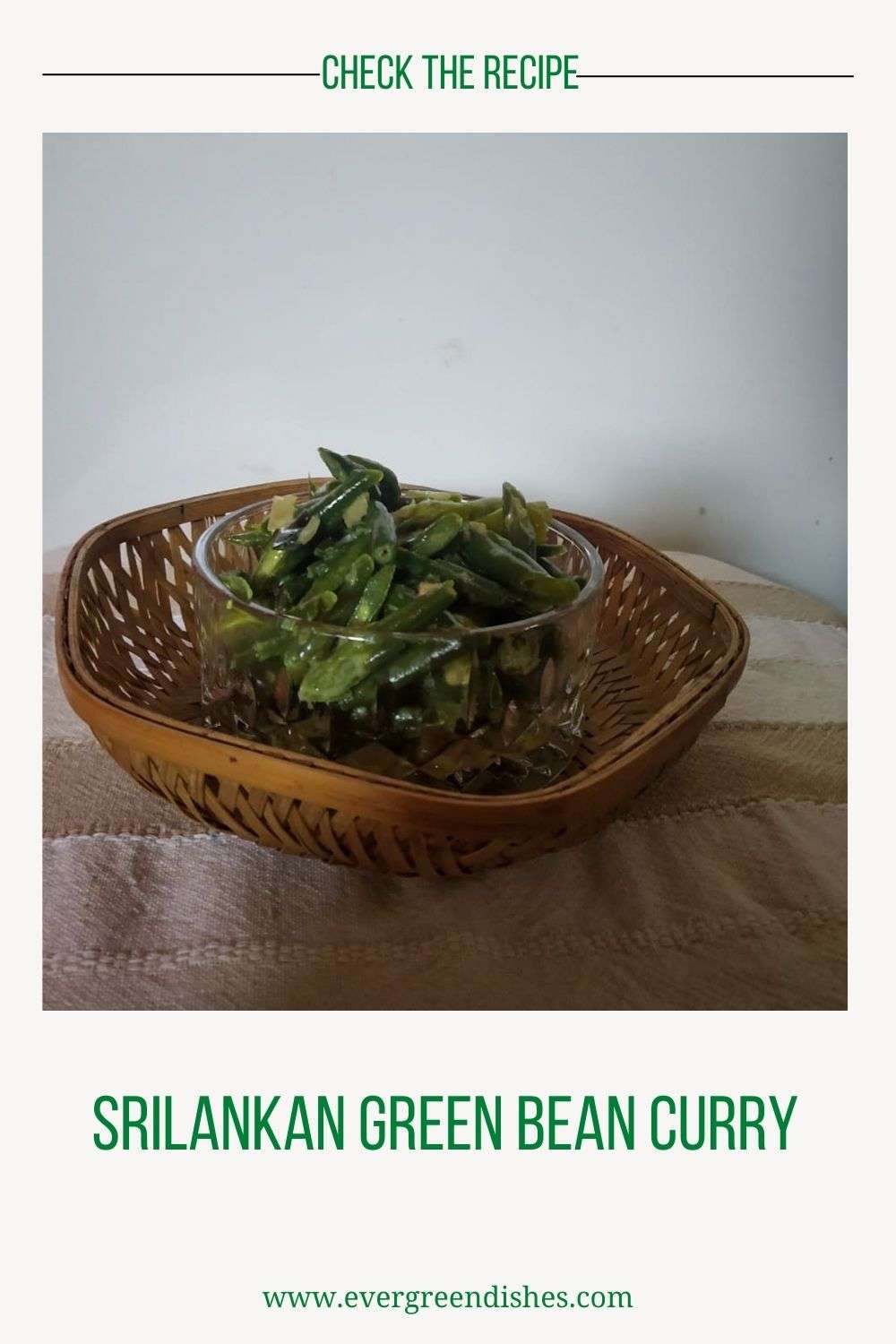
  • Srilankan Green Bean Curry

    Srilankan Green Bean Curry

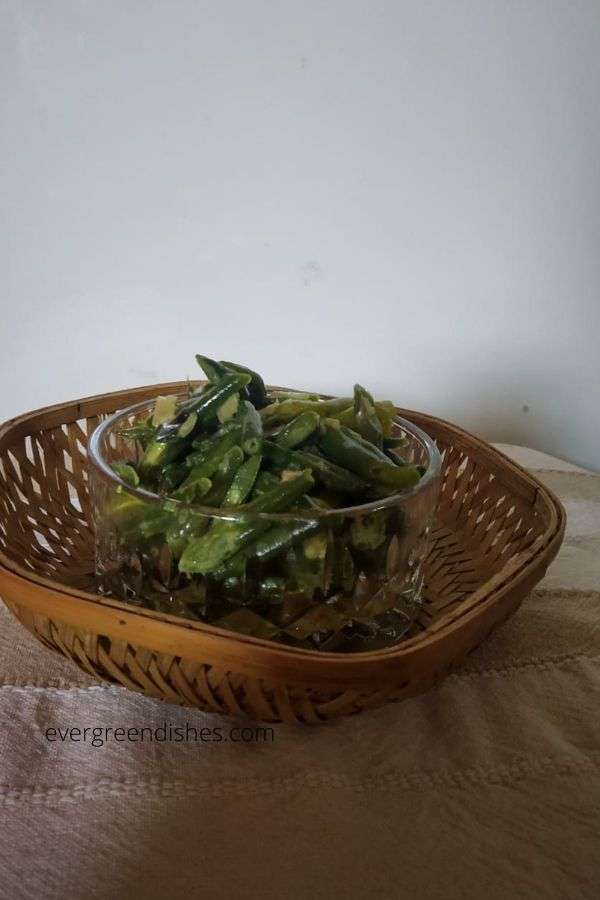
    Srilankan Green Bean Curry is a tasty side dish cooked in coconut milk. It makes a good accompaniment with chapathi or steamed rice. 

    It is a new month and I have a new cuisine on my blog today. It is now to the Srilankan cuisine. Sri Lanka, as we all know is a small country to the south of India. It has a mixed culture traditions.  

    srilankan green bean curry


    About SriLankan cuisine :


    There is a lot to explore in the SriLankan food. I am naive but did a lot of research before I could plunge into cooking it. It is mainly a non-vegetarian cuisine but one can find good vegetarian food too. It is a land of coconut and cinnamon. I think coconut milk or coconut is extensively used. It gives a good taste to the food too. Being a South Indian, I can vouch for the taste it imparts to the dish.

    Ceylon cinnamon is sweetish in taste and gives a good flavour to the dishes. I have used it  and it is more aromatic than the usual one which we use. Pandan leaves are extensively used in many dishes. Although, Srilankan cuisine looks so familiar to us, it is not exactly the same. The spice mix too is different, the food is more spicy than the Indian cuisine as pepper and cinnamon are abundantly used. But, the bottom line is Indian cuisine is quite similar to it. An Indian in Ceylon will be happy with the food that he get there. 

    Srilankan cuisine has many kind of rice based dishes and hoppers . It is mostly served with a coconut milk based curry. I am yet to explore this cuisine, for now I have tried two side dishes, both were good. 

    About the event :

    Narmadha of Nams Corner suggested Sri Lankan cuisine for the month of August. Thanks to Narmadha, I would not have explored this cuisine. She has many dishes on her blog, I have bookmarked her kallu dodol recipe to make it soon.  I was paired with Preethi, she gave me currry leaf and green chilli, I have made this dish. I gave Preethi, mustard seeds and fennel, she has made flavoursome spice mix used in Srilankan cuisine.

    I have adapted the recipe from here.


    shhh cooking secretly


    About the green bean stir fry:

    When I was looking for the dishes to prepare, I had so many in mind. Finally, I decided to make Beans Stir Fry as my family loves the  humble vegetable. The ingredients needed are easily available and the cooking is done quickly if you outsource the coconut milk. Here, I made fresh coconut milk for the dish.. It paired well with chapathi. Let us look at the recipe beans curry in coconut milk


    What goes in Srilankan Green Bean Curry ?

    • Beans : Cut them into two inch long pieces with a diagonal at the end. You will need 150 grams of beans.
    • Coconut milk : You need the thick coconut milk. To extract coconut milk, soak one cup of fresh  grated coconut in hot water for half an hour. Later, grind it and sieve the mixture. The mixture can be pounded again and extracted. The second  extract can be used for any other dish. This is the thick coconut milk. Alternatively, you can use store bought coconut milk. 
    • Onion: Cut it into small pieces.
    • Oil : Any cooking oil will do.
    • Green Chilli
    • Turmeric powder 
    • Salt 
    • Water
    Print Recipe
    a bowl of srilankan green bean curry
    Evergreendishesdev

    Srilankan Green Bean Curry

    Srilankan green bean curry is a tasty side dish cooked in coconut milk. It makes a good accompaniment with chapathi or steamed rice.
    Prep Time 20 minutes
    Cook Time 15 minutes
    Total Time 35 minutes
    Servings: 4 people
    Course: dinner ideas, lunch
    Cuisine: srilanka cuisine

    Ingredients
      

    • 100 ml thick coconut milk (
    • 2 teaspoon oil
    • 1 onion
    • 3 green chilli
    • a few curry leaves
    • 1/4 teaspoon turmeric powder
    • 150 grams beans
    • 75 ml water +100 ml
    • salt

    Equipment

    • 1 pan
    • 1 knife
    • 1 chopping board
    • 2 bowls
    • 1 serving spoon
    • 1 lid cover

    Method
     

    1. To extract coconut milk, soak one cup of fresh  grated coconut in hot water for half an hour. Later, grind it and sieve the mixture. This is the thick coconut milk.
    2. Cut the onion into small pieces.
    3. Cut the beans into two inch long pieces.
    4. Heat oil in a pan, add onion pieces to it. Saute it for some time until it turns pink in colour
    5. Add green chilli and curry leaves to it.
    6. Add the beans, give a stir. Allow to cook for sometime.
    7. Put turmeric powder, salt and water in it.
    8. After two minutes, put the coconut milk.
    9. Cover and cook for two minutes.
    10. Green beans curry is ready to serve.

    Notes

    If you are extracting at home, use only the thick coconut milk. Repeat it second time and use it for any other dish. The milk can be stored in the refrigerator for a day.
    The beans are cut long with a diagonal at the end. 

    Pin it for later : 

    a bowl of srilankan green bean stir fry
    Srilankan green bean stir fry

    If you ever make Srilankan Green Bean Curry, do take a picture and share with me by tagging @foodiejayashree on Instagram or @evergreendishes on Facebook. Subscribe to get all updates and an e-book for free.
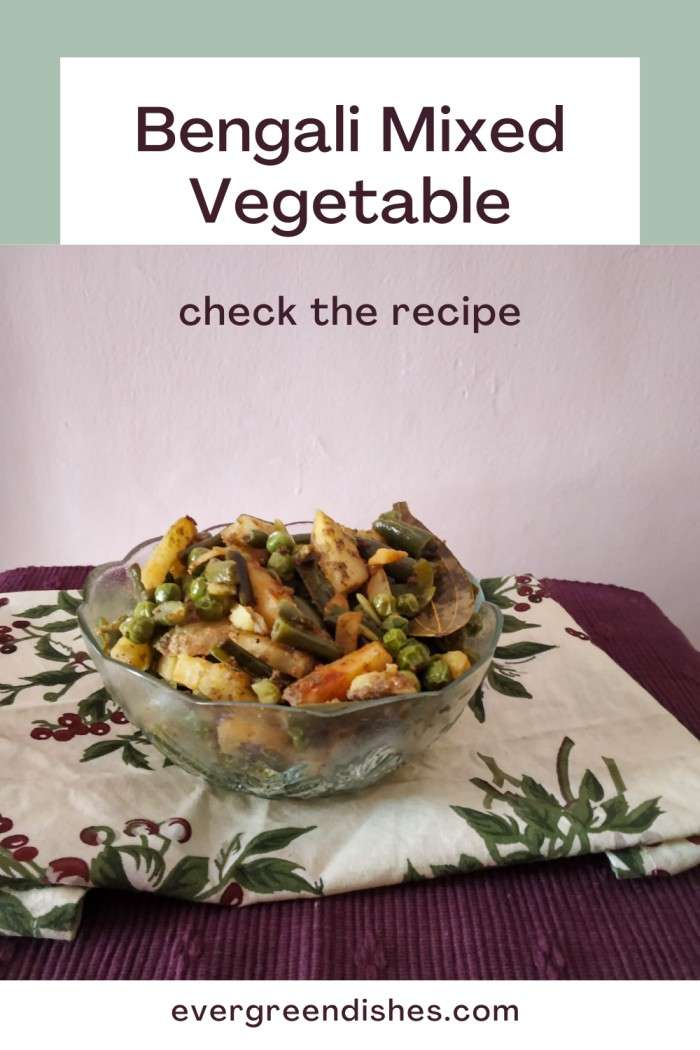
  • Bengali Mixed Vegetable Dry Sabzi

    Bengali Mixed Vegetable Dry Sabzi

    Jump to Recipe Print Recipe

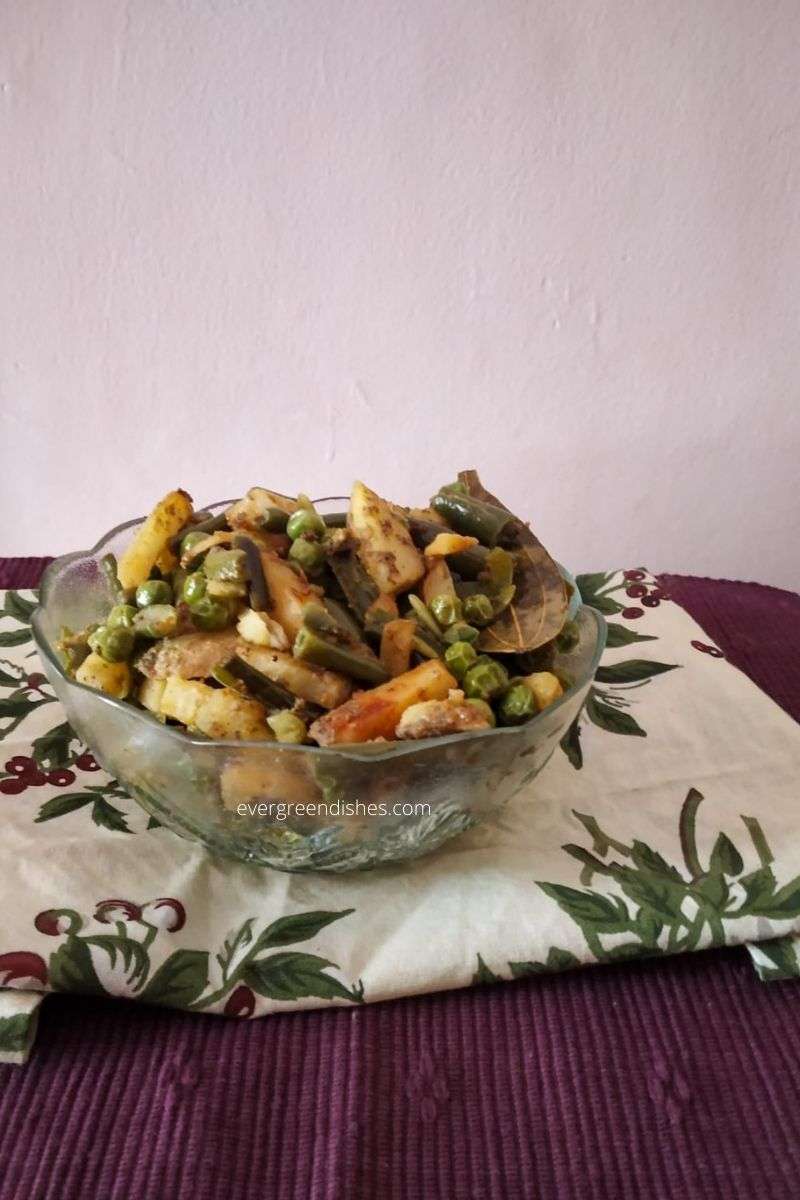
    Bengali Mixed Vegetable Sabzi is flavoursome, tasty, aromatic and easy to prepare. It pairs well with chapathi or phulka.

    It’s been a regular feature these days, I end up making this sabzi but not able to post it here. It is flavoursome and the aroma of the spices is enchantingly good. Panchphoran is used in Bengali cuisine. It makes use of five spices. The good thing about this stir fry is any kind of vegetable can be used. You can use cauliflower, pumpkin, brinjal or cabbage too. Make sure you use the right combination of vegetables. 

    The other sabzi or stir-fry I commonly make at home are Dal Makhani, Alu Palak Dry Sabzi, Corn Palak, Palak Kofta Curry to name a few. 

    What is Panch Phoran? 

    Panch Phoran / Panch Putana  is a blend of five seeds originating from South-east Asia. It is used in dal, sabzi, chutney and many other dishes. It is one of the essentials in Bengali cuisine. It is also used in cuisine of Bangladesh, Nepal and other North Eastern states of India.  Cumin, Fennel, Mustard, Fenugreek and Nigella are used in equal quantities here. Every region has their own variation of the spice mix. This spice mix is usually used as whole spice mix either by roasting or just mixing them together. 

    What is Nigella seed? 

    Nigella seed or Kalonji is commonly  known as black cumin. The scientific name of it is Nigella sativa. It has many medicinal properties. The tincture prepared from it is used in indigestion, diarrohea, amenorrhea and treatment of worms.

    It is worth mentioning here that nigella is neither onion seed nor fennel seed. 

    Why should you make this stir fry?

    • easy to prepare
    • it is aromatic, fennel gives a good aroma to it.
    • flavoursome 
    • a good way to sneak in different vegetables
    • it is also a good way to use the leftover vegetables
    • vegan
    Bengali Mixed Vegetable

    Here is the Bengali Mixed Vegetable Recipe:

    • 2 tablespoon oil
    • 1-2 bay leaf
    • 4 green chilli
    • 1/4 teaspoon turmeric powder
    • asafoetida
    • panchphoran mix ( ingredients given below)
    • 2 cup beans
    • 1 capsicum
    • 2 potato
    • 1 cup green pea
    • salt
    • 1/2 teaspoon chilli powder


    For the panch phoran mix:

    1/2 teaspoon mustard
    1/2 teaspoon fenugreek
    1/2 teaspoon nigella
    1/2 teaspoon fennel
    1/2 teaspoon cumin

    Method:

    To make the panch phoran mix:
    Dry roast the ingredients for two minutes. Once it cools, grind it.

    To make the sabzi;
    Cut the vegetable into one inch long thin pieces. If the peas are frozen, put them in water.
    Take oil in a pan, add bay leaf, break the chilli into two and throw it. Add asafoetida and turmeric powder. Now, put the panch phoran mix into it.
    Add the vegetables depending on their cooking timee. First, put the beans, a little later put the potato pieces, capsicum and lastly the green peas. Gently stir and allow to cook for sometime. Sprinkle salt. You can cover it with a plate with some water on it. This facilitates even cooking.
    When it is done, sprinkle a little chilli powder and remove from flame.


    Take a tip:

    • Other vegetables as cauliflower, brinjal and pumpkin may be used.


      A few other recipes shared earlier from Bengali cuisine are Chaler Payesh, Aloo Chat 


    Evergreendishesdev

    Bengali Mixed Vegetable

    Mixed Vegetable is a medley of vegetables cooked together in a spice mix. It is flavoursome and makes a good side dish.
    Prep Time 10 minutes
    Cook Time 15 minutes
    Total Time 25 minutes
    Servings: 6 people
    Course: dry sabzi, lunch ideas
    Cuisine: Bengali

    Ingredients
      

    • 2 teaspoon oil
    • 1-2 bay leaf
    • 4 green chilli
    • 1/4 teaspoon turmeric powder
    • asafoetida
    • panchphoran mix ingredients given below
    • 2 cup beans
    • 1 capsicum
    • 2 potato
    • 1 cup green pea
    • salt
    • 1/2 teaspoon chilli powder
    For the panch phoran mix:
    • 1/2 teaspoon mustard
    • 1/2 teaspoon fenugreek
    • 1/2 teaspoon nigella
    • 1/2 teaspoon fennel
    • 1/2 teaspoon cumin

    Equipment

    • 1 pan
    • 1 ladle
    • 5 bowls
    • 1 lid cover

    Method
     

    To make the panch phoran mix:
    1. Dry roast the ingredients for two minutes. Once it cools, grind it.
    To make the sabzi;
    1. Cut the vegetable into one inch long thin pieces. If the peas are frozen, put them in water.
    2. Take oil in a pan, add bay leaf, break the chilli into two and throw it. Add asafoetida and turmeric powder. Now, put the panch phoran mix into it.
    3. Add the vegetables depending on their cooking timee. First, put the beans, a little later put the potato pieces, capsicum and lastly the green peas. Gently stir and allow to cook for sometime. Sprinkle salt. You can cover it with a plate with some water on it. This facilitates even cooking.
    4. When it is done, sprinkle a little chilli powder and remove from flame.

    Notes

    Other vegetables as brinjal, pumpkin, cauliflower and cabbage may be used.


    Bengali Mixed Vegetable

    If you ever make Bengali Mixed Vegetable recipe, take a picture and tag @foodiejayashree on Instagram or @evergreendishes on Facebook. Subscribe to get all updates in your inbox and an e-book for free! 

  • Vegetable Makhanwala | Veg Makhanwala recipe

    Vegetable Makhanwala | Veg Makhanwala recipe

    Jump to Recipe Print Recipe

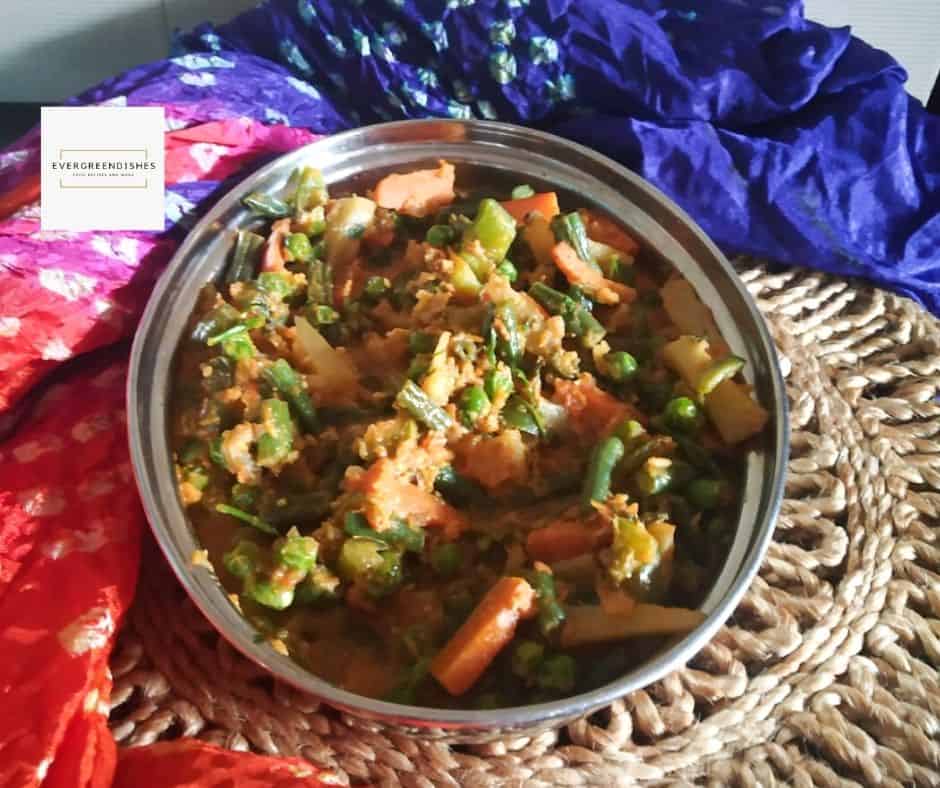
    Vegetable Makhanwala is a delicious side dish from North Indian cuisine. It is a  medley of vegetables cooked in butter with a few spices. It makes a good accompaniment with chapathi or phulka. Ideally, it should be served with nan or roti. 

    This dish is ideal for a family get-together or parties. You can make use of many kind of vegetables. I have used beans, carrot, capsicum, potato and green pea. You can add cauliflower and paneer pieces too. The vegetables can either be boiled or sauteed in a little oil. I have done the later mehod. The dish is made in several steps as cutting the vegetables, saute the vegetables, sauting the vegetables for the paste, making of paste and finally the gravy. 

    Let us get to the recipe of Vegetable Makhanwala

    Ingredients: 

    • 15 beans
    • 1 carrot
    • 1 capsicum
    • 1 potato
    • 1/4 cup peas
    • 2 teaspoon oil
    • 2 teaspoon butter
    • 2 clove
    • 1 teaspoon cumin
    • 1/4 teaspoon turmeric powder
    • 1/2 teaspoon garam masala
    • 1/2 teaspoon chilli powder
    • salt to taste
    • 1/2 teaspoon kasuri methi
    • 1 tablespoon fresh cream
    • 1 teaspoon coriander for garnishing

    For the makhanwala masala :

    • 2 onion
    • 3 large tomato
    • 5 cloves garlic
    • 1 inch ginger
    • 10 cashew nuts
    • 1 teaspoon oil

    Method:

    1. Cut the beans, carrot, and capsicum into thin long strips of half an inch.
    2. Cut the onion and tomatoes, keep them aside.
    3. To make the masala, take oil in a pan, add ginger, garlic and onions. Saute the onions for sometime, let them  be translucent. Put the tomatoes to it. Throw in the cashew pieces to it. Let it cook for sometime. The tomatoes need to be mushy. Once it is done, let cool for sometime. Later, grind to a paste.
    4. To saute the vegetables, take two teaspoon of oil in another pan. Add beans to it. Saute it, after a few seconds, put the carrot pieces. After sometime, put potatoes and peas. Lastly, put the capsicums. Toss them in between. The vegetables must be cooked al dente.
    5. Once the vegetables are cooked, put them in a bowl. In the same pan, add butter. Put cumin, as it sizzles, add the tomato paste to it. Let it cook for sometime. Now, add turmeric powder, chilli powder and garam masala to it. Let cook for sometime. Put salt to it
    6. Now, add the cooked vegetables along with salt. Let it simmer for sometime.
    7. Put kasuri methi to it. Add fresh cream to it. 
    8. Finally, garnish with some coriander leaves. 
    9. Serve with rotis or nan. 
    vegetable makhanwala
    vegetable makhanwala
    vegetable makhanwala
    Evergreendishesdev

    Vegetablee Makhanwala

    5 from 2 votes
    Vegetable Makhanwala is a medley of vegetables cooked together in flavoursome spices.
    Course: Main Course
    Cuisine: north indian

    Ingredients
      

    • 15 beans
    • 1 carrot
    • 1 capsicum
    • 1 potato
    • 1/4 cup peas
    • 2 teaspoon oil
    • 2 teaspoon butter
    • 2 clove
    • 1 teaspoon cumin
    • 1/4 teaspoon turmeric powder
    • 1/2 teaspoon garam masala
    • 1/2 teaspoon chilli powder
    • salt to taste
    • 1/2 teaspoon kasuri methi
    • 1 tablespoon fresh cream
    • 1 teaspoon coriander for garnishing
    • For the masala :
    • 2 onion
    • 3 large tomato
    • 5 cloves garlic
    • 1 inch ginger
    • 10 cashew nuts
    • 1 teaspoon oil

    Method
     

    1. Cut the beans, carrot, and capsicum into thin long strips of half an inch.
    2. Cut the onion and tomatoes, keep them aside.
    3. To make the masala, take oil in a pan, add ginger, garlic and onions. Saute the onions for sometime, let them  be translucent. Put the tomatoes to it. Throw in the cashew pieces to it. Let it cook for sometime. The tomatoes need to be mushy. Once it is done, let cool for sometime. Later, grind to a paste.
    4. To saute the vegetables, take two teaspoon of oil in another pan. Add beans to it. Saute it, after a few seconds, put the carrot pieces. After sometime, put potatoes and peas. Lastly, put the capsicums. Toss them in between. The vegetables must be cooked al dente.
    5. Once the vegetables are cooked, put them in a bowl. In the same pan, add butter. Put cumin, as it sizzles, add the tomato paste to it. Let it cook for sometime. Now, add turmeric powder, chilli powder and garam masala to it. Let cook for sometime. Put salt to it
    6. Now, add the cooked vegetables along with salt. Let it simmer for sometime.
    7. Put kasuri methi to it. Mix fresh cream into the curry.
    8. Finally, garnish with some coriander leaves.
    9. Serve with tandoori roti, nan or chapathi.

    Pin Veg Makhanwala to your board:

    Vegetable Makhanwala is a delicious side dish from North Indian cuisine. Different kind of vegetables are cookeed in a varied spices to make it a tasty side dish.
    Vegetable Makhanwala

    If you ever make this Vegetable Makhanwala recipe,  do take a picture and tag @foodiejayashree on Instagram or @evergreendishes on Facebook or Twitter. I will be glad to see your creation and share it further. Let’s be connected, do follow on social media platforms. Until next time, let’s stay connected.  Subscribe to get all updates and an e-book for free. Check out my e-books on Amazon.  Happy Cooking !