Smoothie are an healthy alternative for the calorie conscious.It is a blend of various ingredients with or without yoghurt. Various kinds of smoothies can be prepared. One can prepare of different vegetables or a combination with green vegetables. Here is one kind,using fruits, banana and apple smoothie, to keep you going for long hours.
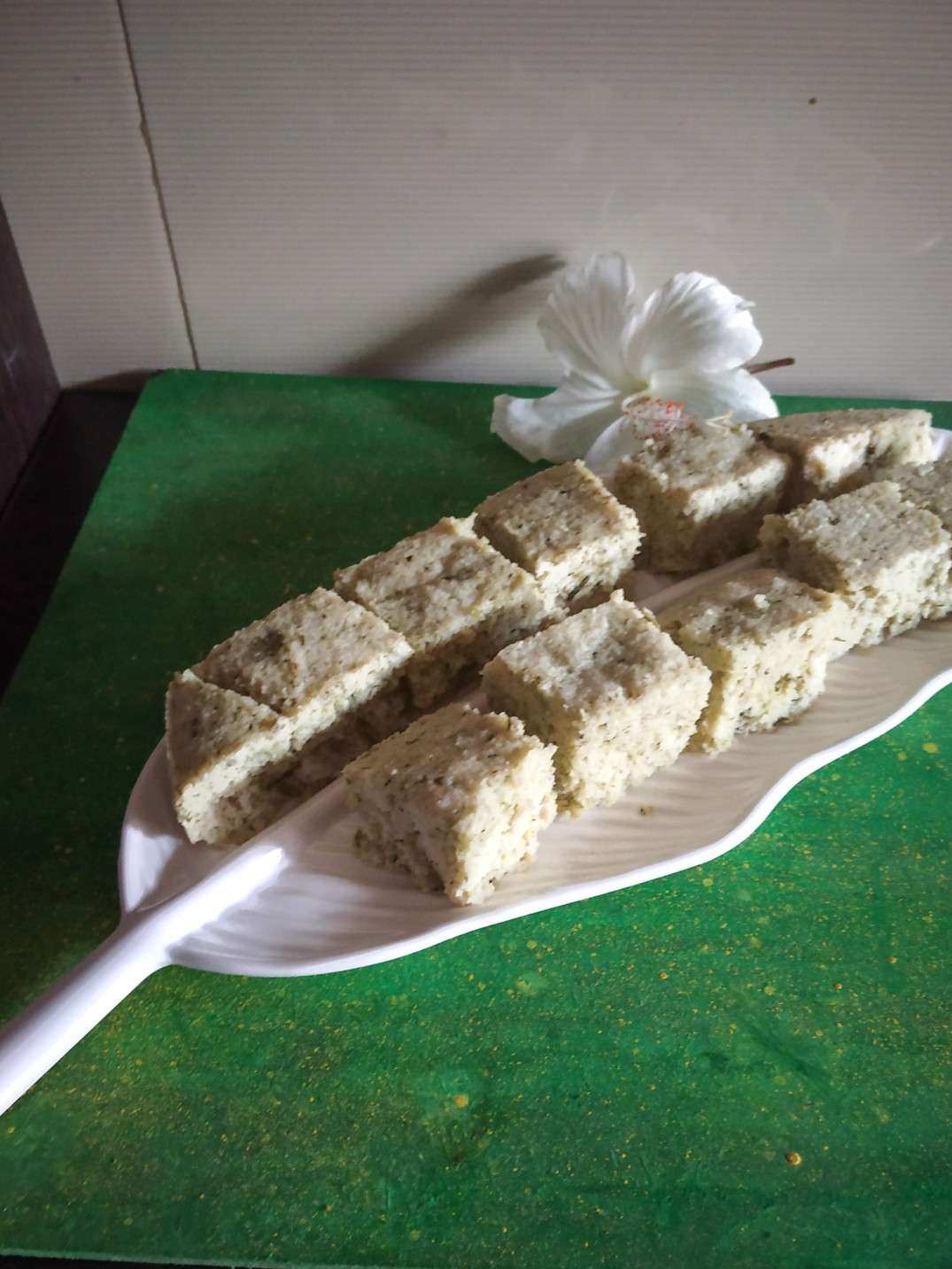
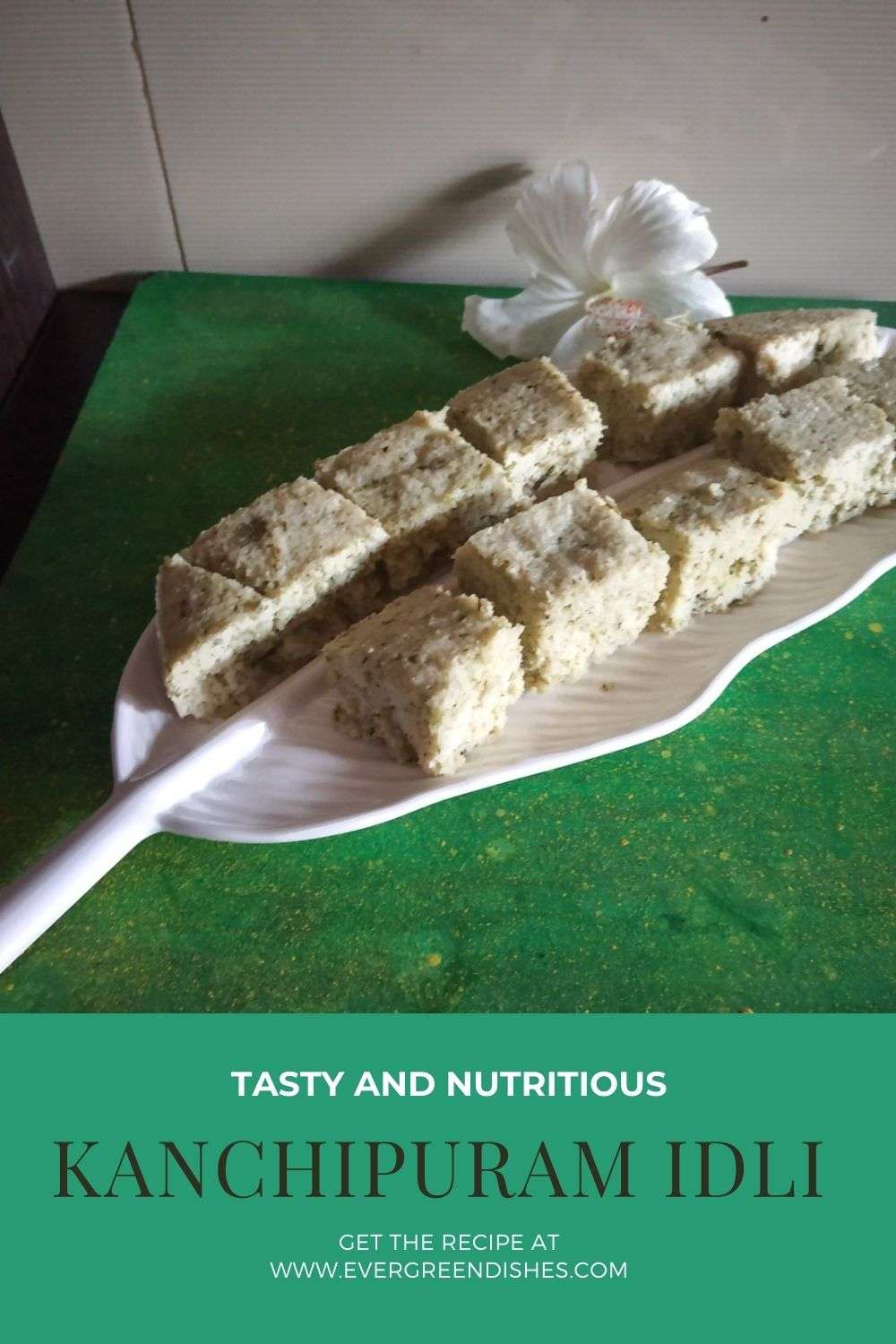
Kanchipuram idli is yet another kind of idli. It is spicy, tasty and ideal to serve as a finger food for small children. It needs no accompaniment.
With the summer showing it’s true colours, I am on an Idli spree,I think nothing is more comforting in the blazing heat. After the semolina idli, we come to the kanchipuram idli.
This recipe is ideal to make when you have leftover idli batter in the refrigerator. It is often regarded as a boredom to eat anything more than once a week. This is easy to make and tasty,, needs no accompaniment and ideal for breakfast or serve it at tea time.
I often keep a little batter aside to make kanchipuram idli. It is usually made during dinner at home. The variations you can make here are ample. Use coarsely ground pepper powder in the idli batter and it is known as pepper idli. Another variety is to add cumin, curry leaves and some chopped coriander in the batter. Steam the idli and later sprinkle a little chilli powder over it.
kanchipuram idli
The Story Behind Kancheepuram Idli
I recently came to know from my aunt about it and I thought I must share it here. It is a traditional prasadam offered in the Varadharaja Perumal Temple of Kancheepuram. Thus it is popular by the name. The idlis are cooked in the bamboo casings lined with the dried mandhara leaves. The leaves lend a good aroma to the idlis.
The batter is specifically ground for the purpose and the spices used in the temple preparation are black pepper, cumin, cashew, asafoetida and dried ginger. There is a long queue in the temple for the tasty prasadam.
My way of making the idli
The recipe is adopted from my mother who was making it quite often when we were young. I realised that making simple changes in the breakfast menu was ideal for all of us and soon it was the kanchipuram idli with leftover idli batter. Instead of making the regular idli, it was a spicy idli which needed no accompaniments. A simple mango tasted best along with some butter.
It is ideal to serve for breakfast, lunch or dinner. You can even serve it in the lunch box. The only thing you should not forget while making these spicy idlis is to grease the container with a little oil. The idlis will not stick to the bottom and come out perfectly.
I would like to remind that if you are like me, making with the leftover batter, be careful with the addition of salt. The batter has salt initially added in it. The quantity of chillies given below is just an indicator and the level of spiciness is not much. You may add a little more if you wish.
1 small seperator ( the container we get along with pressure cooker )
1 bowl
1 ladle
1 knife
1 wide bowl
Method
Soak bengal gram in water for an hour.
Wash coriander leaves and grind it along with green chilli and ginger.
In a small pan, make the seasoning,add the mustard seeds, as they crackle add cumin and curry leaves. Add it to the batter.
Drain water from the soaked bengal gram, and put it along with a pinch of salt.
Take a seperator and smear some oil in it. Pour the batter, to half the quantity.
Heat water in a pressure cooker and let cook without whistle until done.
Remove and cut it diagonally into pieces.
Tasty kanchipuram idlis are ready to serve.
Notes
Adjust spiciness as per your taste.
Grease the tin before pouring the batter into it.
If you ever make this Kanchipuram Idli , do take a picture and tag @foodiejayashree on Instagram or @evergreendishes on Facebook or Twitter. I will be glad to see your creation and share it further. Let’s be connected, do follow on social media platforms. Until next time, let’s stay connected. Subscribe to get all updates and an e-book for free. Check out my e-books on Amazon. Happy Cooking !
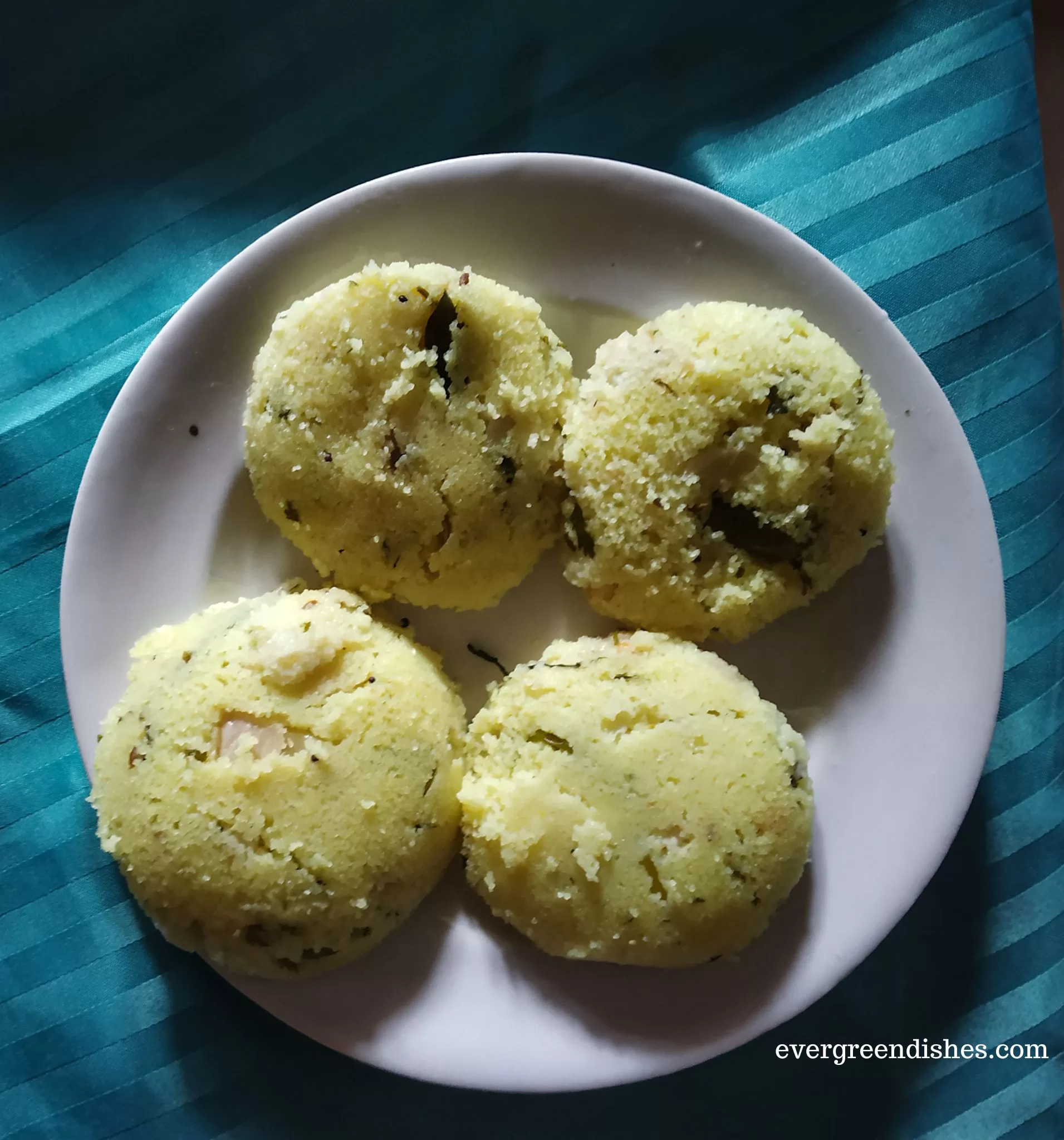
Rava Idli aka Semolina Idli is a popular breakfast from South Idli. It is an easy to make and filling breakfast. It is an instant version of idli made with sooji and curd.
A simple coconut chutney pairs well with it. Sooji and semolina are one and the same. Sooji is more commonly used in North India while semolina or rava is the term used in South India.
Rava Idli was made popular by the MTR brand. Soon, it became a super hit in every household when it could be made in 15 minutes from scratch. Check the recipe below to make it in your kitchen.
What goes in making Rawa Idli?
Rawa or Semolina : It is the primary ingredient we need to make . I use Bombay Rawa and it turns out good every time.
Sour Curd : Here, I set the curd on a daily basis. Keep it out for a day and then use it. Do not use foul smelling curds.
Vegetables : I use finely chopped onion and grated carrot. You may add green peas and capsicum too. You will also need green chilli, curry leaves and fresh coriander. Grated ginger may be added.
Seasoning : Oil is heated in a pan with a little mustard. We add asafoetida, bengal gram, urad dal, cashew nut pieces and turmeric powder along with green chillies. The semolina is put in the seasoning and roasted for a couple of minutes on a slow flame. Ensure it is roasted well.
Mixing of the batter : Once the roasted semolina cools down, curds and salt is added. Close a lid and keep it aside for ten minutes.
Soda-bi-carbonate : Since it is an instant recipe, you will need an leavening agent to activate it. You may use eno also.
Can the pre-mix be ahead and used later ?
Yes, you can make the pre-mix and store in an air-tight container.
About the event :
It is an old post which I have edited on 23/2/24 by changing the pictures. Sending this to Foodies_Redoing Old Post_123. It is a foortnightly event, a group of bloggers work together on an old post. Please do note, I have not added carrot in the new pic.
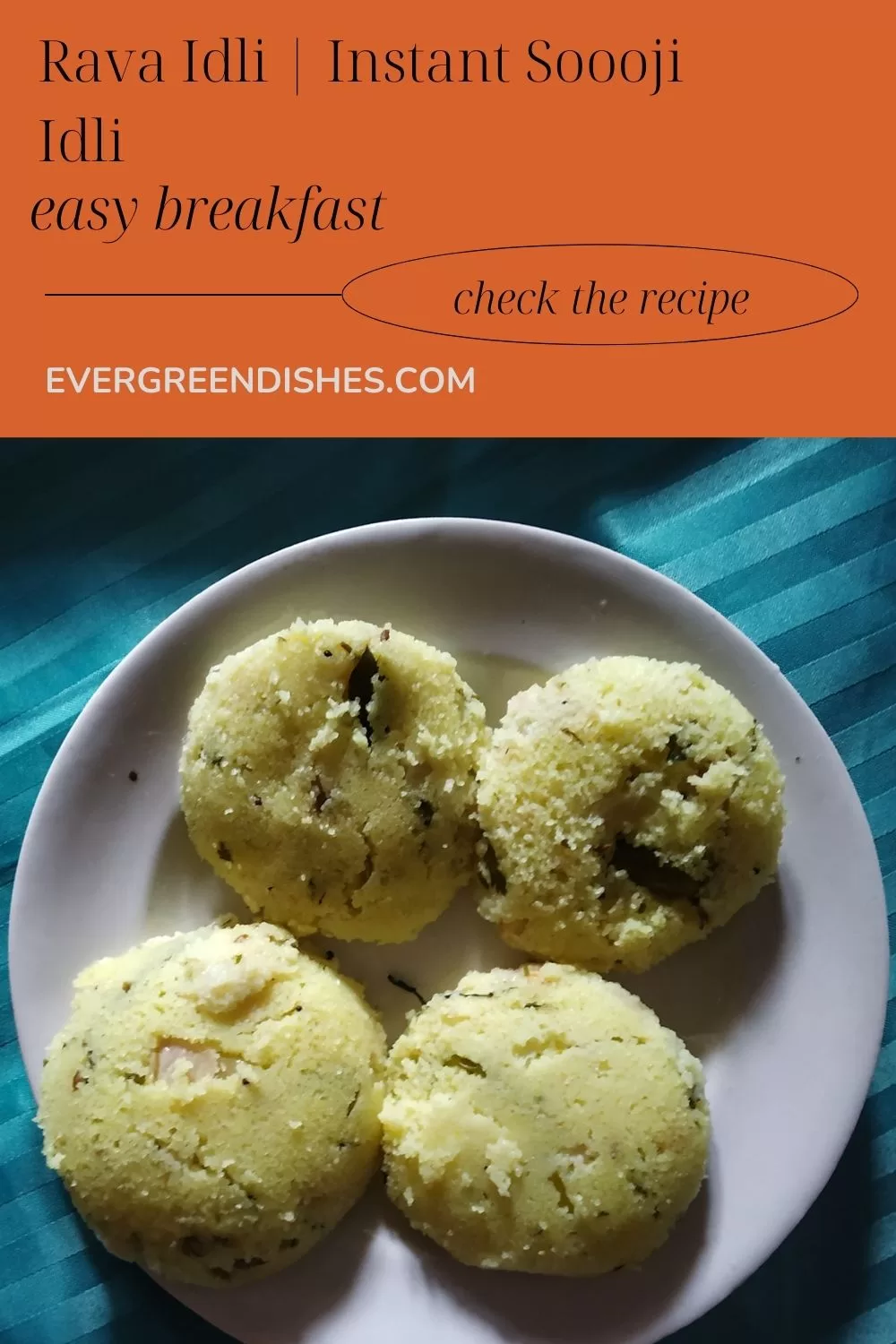
Rava Idli | Instant Sooji Idli
Rava Idli is a popular breakfast from South India. It is a healthy and easy to make breakfast option. Tastes good with coconut chutney.
Take oil in a thick bottomed pan and heat it on a low flame. Add mustard seeds, when they crackle add bengal gram and urad dal. Stir with a spatula and let them turn pale brown, then add cashew pieces, asafoetida, turmeric powder and curry leaves. Add the semolina and saute for some time. Turn off the stove and let cool.
Take yoghurt and whisk it. Mix the seasoned semolina in it. Add grated carrot, onion pieces, coriander and salt to it.
Put water in the idli pan and heat it on a low flame. Take the idli stand and grease it with a little oil. Add soda to the batter and mix well. Put a spoonful into each mould. Steam it for almost fifteen minutes on a medium flame until done.
Semolina idlis are ready to serve. Serve hot with chutney.
Notes
Addition of onion is optional. Thus, it can be made on no onion garlic days.
Use a day old curd to make these idlis.
Eno may be used instead of soda bi carbonate.
Use fresh coriander and curry leaves to enhance the taste.
Rava Idli is a healthy, tasty and an easy to make breakfast option.
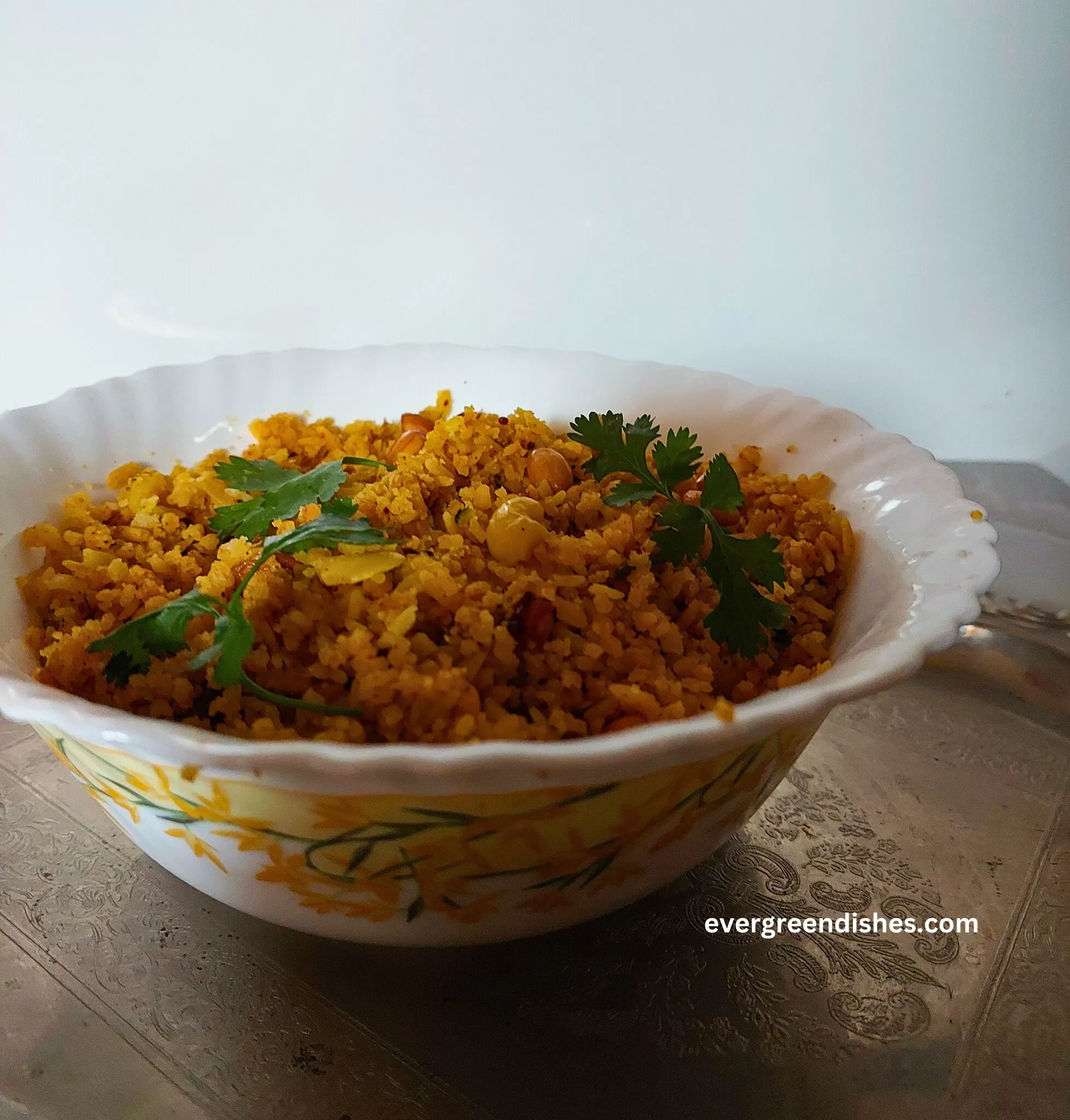
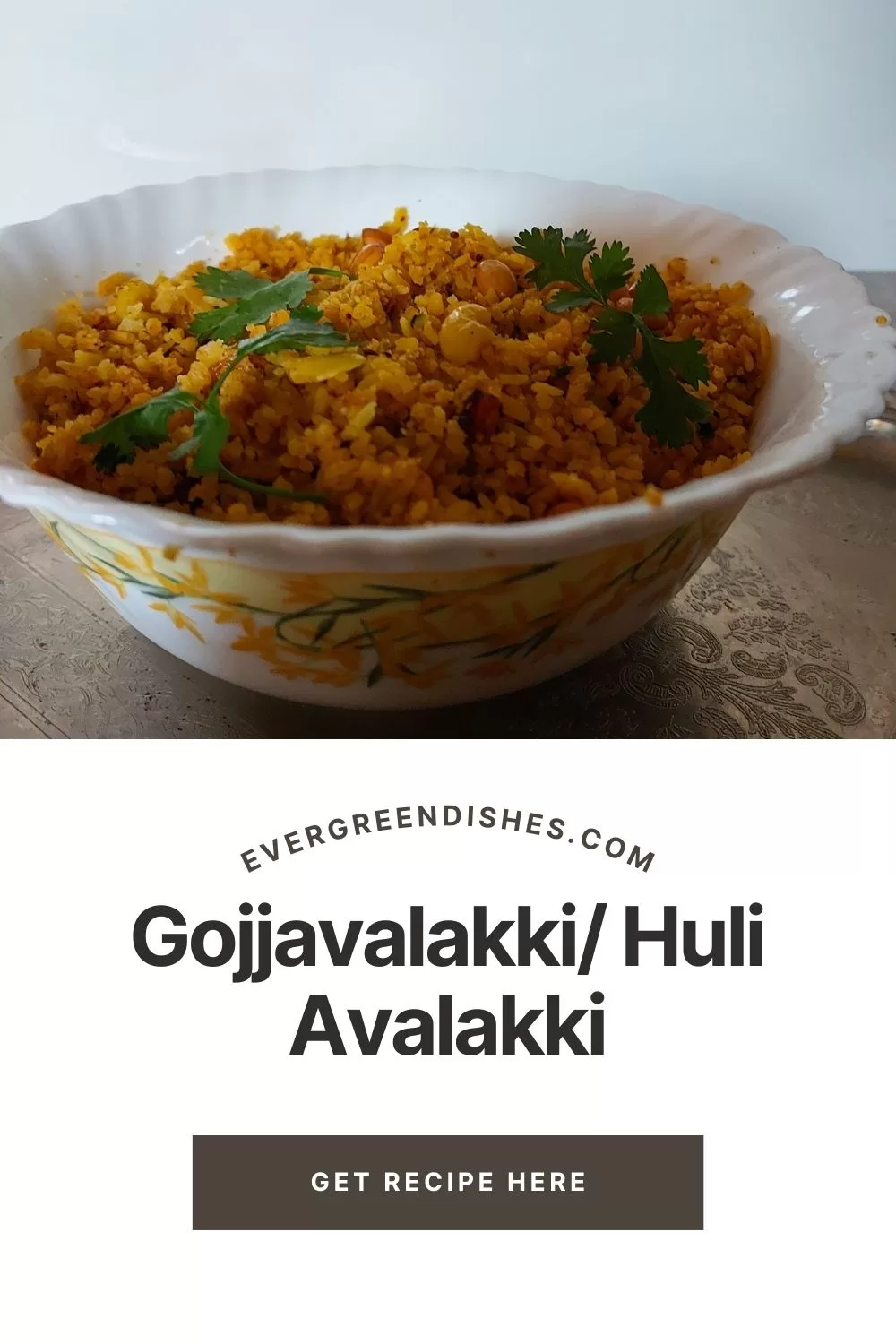
Gojjuavalakki or Gojju Avalakki is a staple food in South India. It is tangy and also called as Huli Avalakki. Huli is the regional word meaning sour. It is not only sour, but I can say tangy.
Beaten rice popularly known as “avalakki ” in karnataka and “poha ” in maharashtra is one of the staple food of the Kannadigas. They relish eating in any form, just as a chivda with tea or for breakfast. Here is one such recipe which many of you can relate.
gojjavalakki
The ingredients needed are :
4 cup beaten rice
300 ml tamarind pulp
a lemon size ball of jaggery
2 tablespoon oil
1/2 teaspoon mustard seeds
a pinch of asafoetida
1/4 teaspoon turmeric powder
2 tablespoon groundnuts
1/2 teaspoon bengal gram
1/2 teaspoon urad dal
6 cashew nuts broken into pieces
a few curry leaves
salt to taste
1 teaspoon chilli powder
2 teaspoon rasam powder
coriander for garnishing
Method :
Take the beaten rice , immerse in water for a second and drain the water.
Take the tamarind pulp, jaggery, salt, chilli powder and rasam powder and boil in a pan. It should be of a moderately thick consistency.
Take oil in a large pan and make the seasoning. Add the mustard seeds, and as they crackle add asafoetida, turmeric powder, bengal gram urad dal, groundnuts, cashew nut pieces and curry leaves . Leave aside for a minute.
As the colour changes, add the pulp to it and mix well. Now add the washed beaten rice to it and mix well. Keep on a low flame for sometime. Garnish with coriander.
Take a tip :
The taste of gojju avalakki is a blend of sour, sweet and spicy, hence it can be described as khatta meetha.
One needs to let the ground nuts cook for some time in the oil. Otherwise, it does not taste good.
One can add onions to it, when the seasoning is done, saute and prepare in the same way. But, this is also equally good.
Take the poha or avalakki and wash it in water. Let the impurities be drained. Then, immerse in water for a second and drain the water.
Take the tamarind pulp, jaggery, salt, chilli powder and rasam powder and boil in a pan. It should be of a moderately thick consistency.
Take oil in a large pan and make the seasoning. Add the mustard seeds, and as they crackle add asafoetida, turmeric powder, bengal gram urad dal, groundnuts, cashew nut pieces and curry leaves . Leave aside for a minute.
As the colour changes, add the pulp to it and mix well. Now add the washed beaten rice to it and mix well. Keep on a low flame for sometime. Garnish with coriander.
Notes
Tamarind pulp can be extracted by soaking the tamarind in water for fifteen minutes. It is squeezed well and then extracted. It is moderately thick in consistency.
The taste of gojju avalakki is a blend of sour, sweet and spicy, hence it can be described as khatta meetha.
One needs to let the ground nuts cook for some time in the oil. Otherwise, it does not taste good.
One can add onions to it, when the seasoning is done, saute and prepare in the same way. But, this is also equally good.
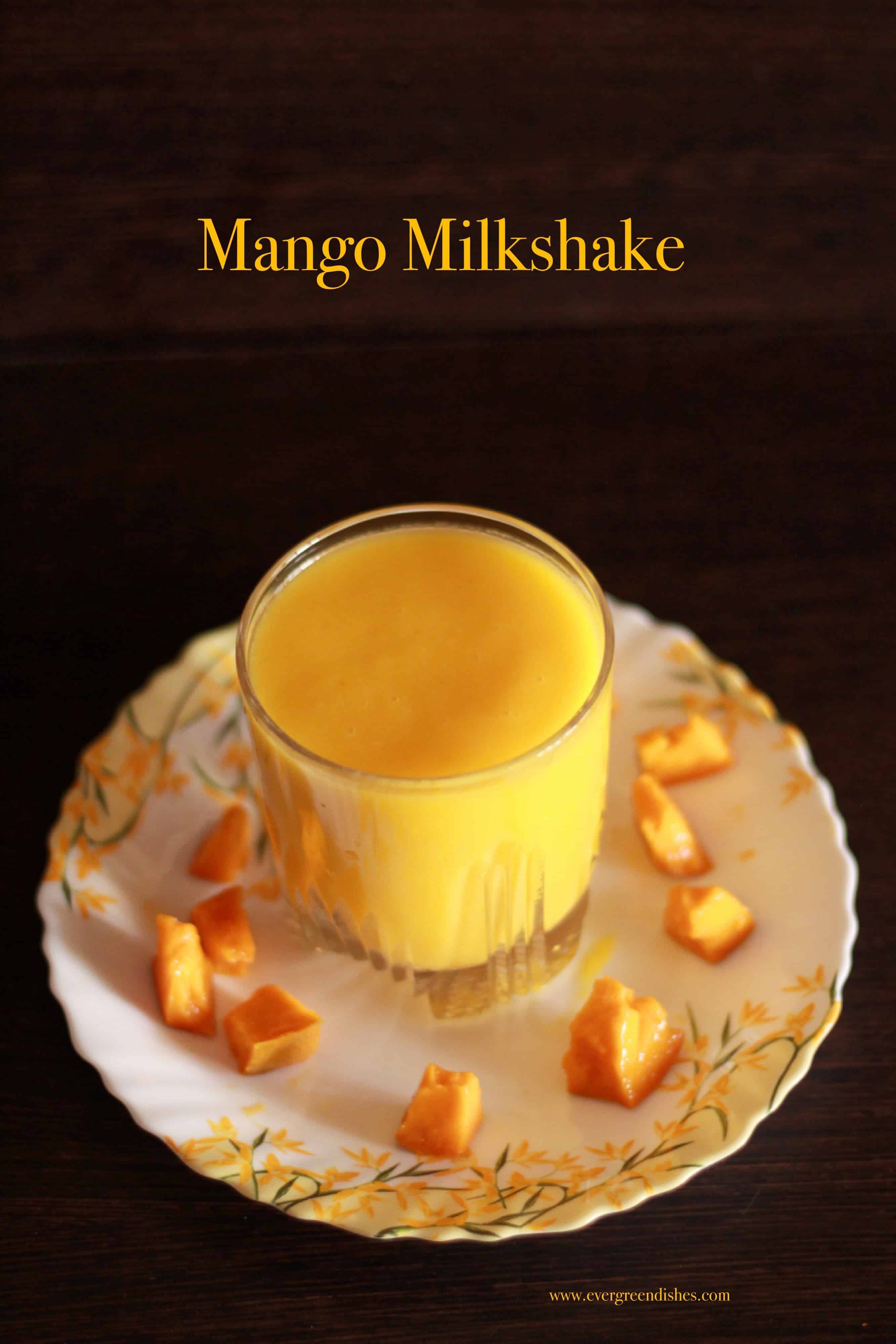
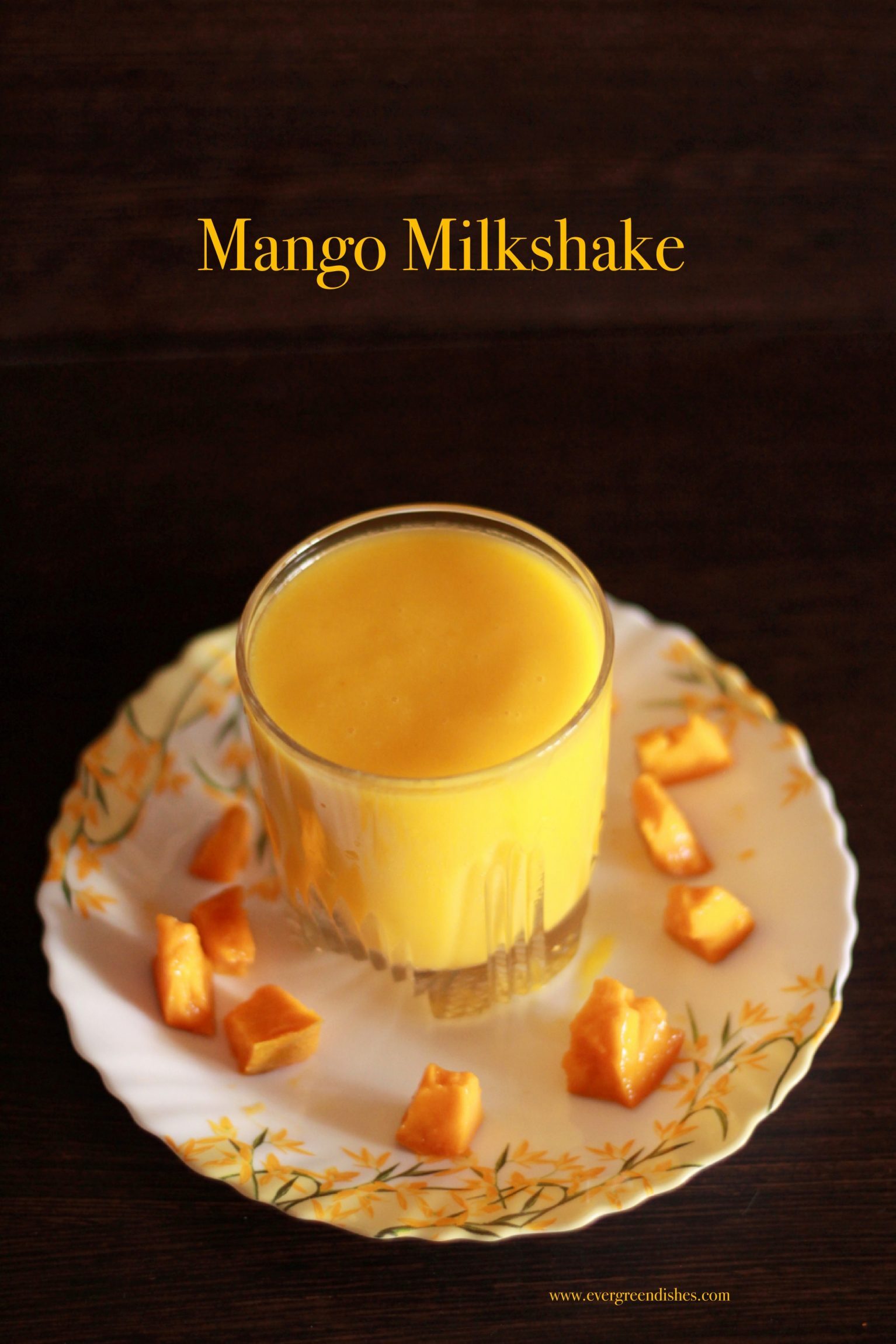
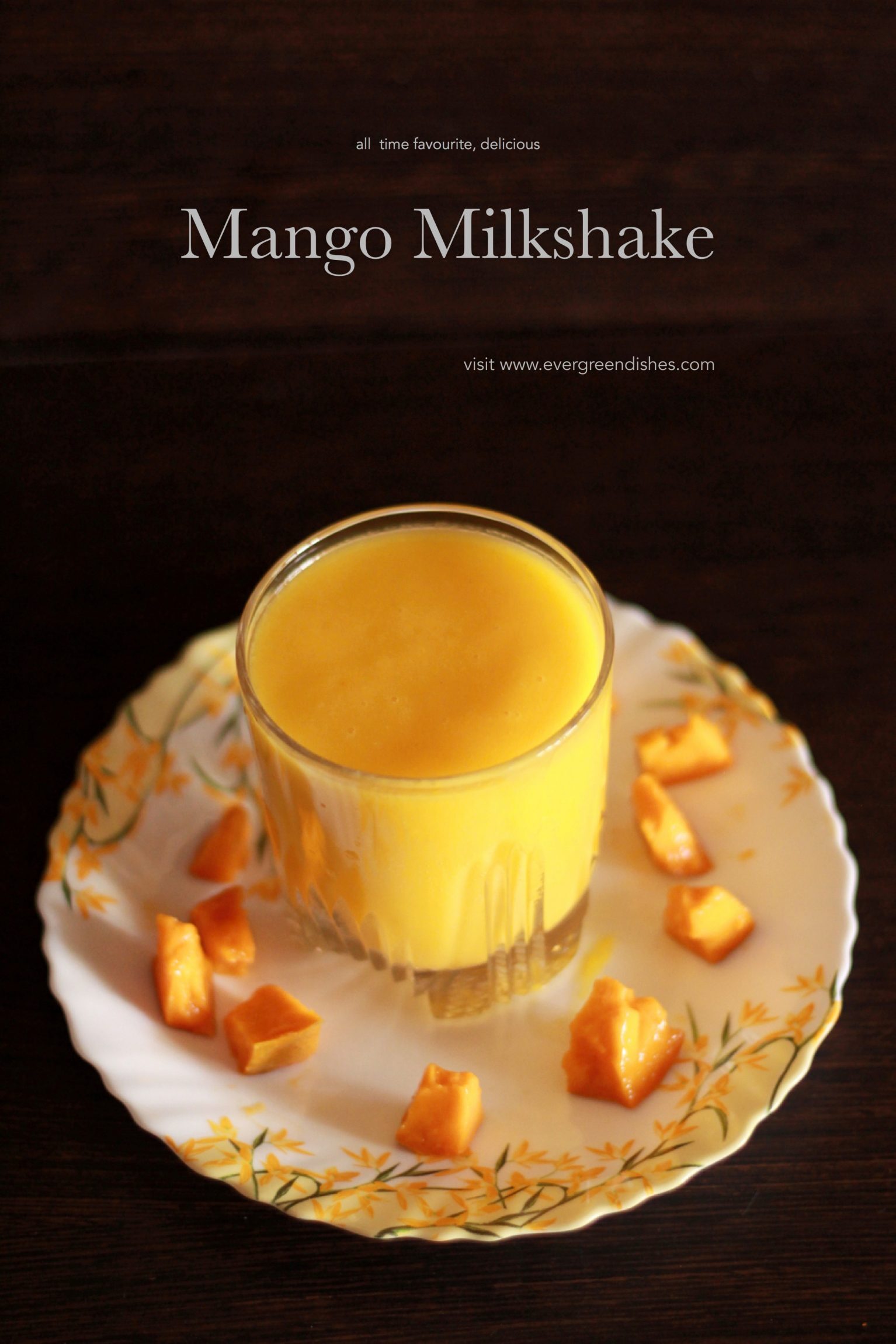
Mango milkshake is a tasty drink to serve during. Children will drink this without any fuss. It is creamy and tasty.
It’s the season of mangoes. Various kind of desserts, juices and sweets are made with it. Milkshake, juice, ice cream, sorbet and souffle are some of them. But the most prevalent is the mango pulp or the aamras as it is popularly known, which is served as an accompaniment. But, there’s nothing like eating a fruit all by itself messing our hands.
Mango milkshake is tasty, filling and ideal to serve during any time of the day. Serve it during breakfast, as a refreshing drink at noon or in the evening after the children come back from play.
Cut chunks of mango and put them in a freezer for sometime. This gives a good texture to the milkshake. Put them in a liquidiser. Add ice cream, milk and sugar to it, give a swirl. Serve chilled with ice cubes in it.
Take a tip:
One can use other variety of mango but avoid the fibrous ones.
Addition of sugar is optional. If you are on diet, skip adding it.
A few other recipes from co-bloggers are :
Giangi uses a combination of fruits in her Italian smoothie or Frullato as it is called. Azlin has made a frappe using raspberry and white chocolate.
Pin it for later :
mango milkshake
This was one of the first few posts that I wrote when I started my blog. Now, it’s time to update the pictures and sending this to Foodies_Redoing Old Post 3
If you have liked this post, do leave a comment, it will be nice to hear from you. Let’s be connected.
Follow @foodiejayashree on Instagram for regular updates or @evergreendishes on Facebook and Twitter.
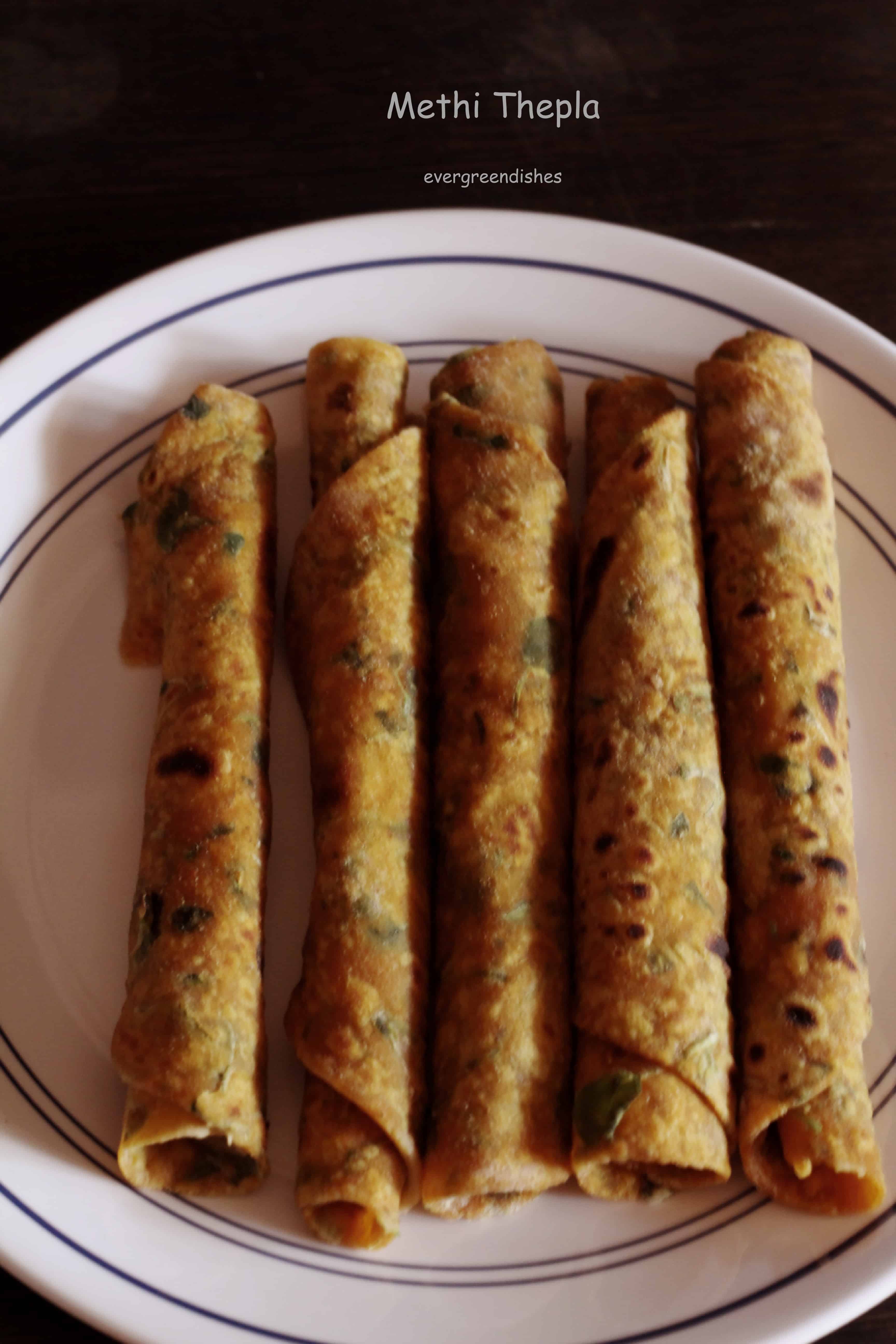
Methi chapatis are tasty and healthy. It is a popular dish of the Gujaratis. It is known by the name of “Thepla”. It makes an ideal mid day meal or pack it in the lunch box.
Methi or fenugreek leaves have a distinct taste and give a good taste to all the dishes. It is ideal to include as it is rich in Vitamin C, Vitamin A, Riboflavin, Calcium and minerals such as folate and riboflavin. It also contains antioxidants which helps the body to heal naturally.
I love using methi leaves in my cooking. I use it to make a lentil stir fry, pairs well with chapati. Dal with methi is absolutely delicious. And I make alu methi once in a fortnight. Methi delight is good as a snack but I prefer to make it as an accompaniment with meals.
Gujarati thepla, methi paratha
The ingredients that you need are:
wheat flour 2 cups
gram flour 1tbsp
fenugreek or methi leaves 2 bunch
chilli powder 2 tsp
turmeric powder 1/2 tsp
a pinch of asafoetida
cumin powder 1 tsp
coriander powder 1 tsp
curd 1 tbsp
salt to taste
oil for smearing
Method:
Cut the fenugreek leaves finely. Immerse it in salt water, strain and keep aside.
Take a wide bowl and mix all the ingredients with water into a dough of thick consistency.
Keep aside for ten minutes.
Take a ball, dust it with flour and roll into a circle. Smear oil, fold it into half, and again into a quarter. Dust with a little flour, roll it into a circle as a chapati.
Heat a skillet. Put the rolled thepla onto the tawa. Smear oil and flip to the other side. Put some oil and allow it to cook for a few seconds.
Roast until brown spots are visible. Keep them in a container. Serve them as and when needed. Tastes good when it is hot.
Take a tip:
Fenugreek leaves should be cleaned well. Use only the leaves here.
Addition of gram flour is optional.
Evergreendishesdev
Methi Thepla / Gujarati cuisine
Methi thepla is a popular dish from Gujarati cuisine. A flatbread with the goodness of fresh fenugreek leaves and other spices makes a good breakfast or lunch option.