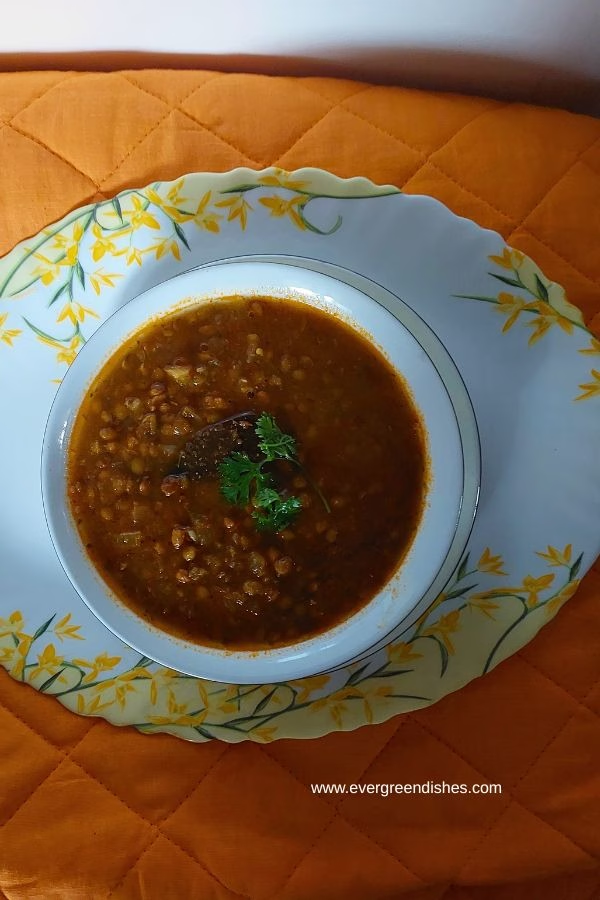
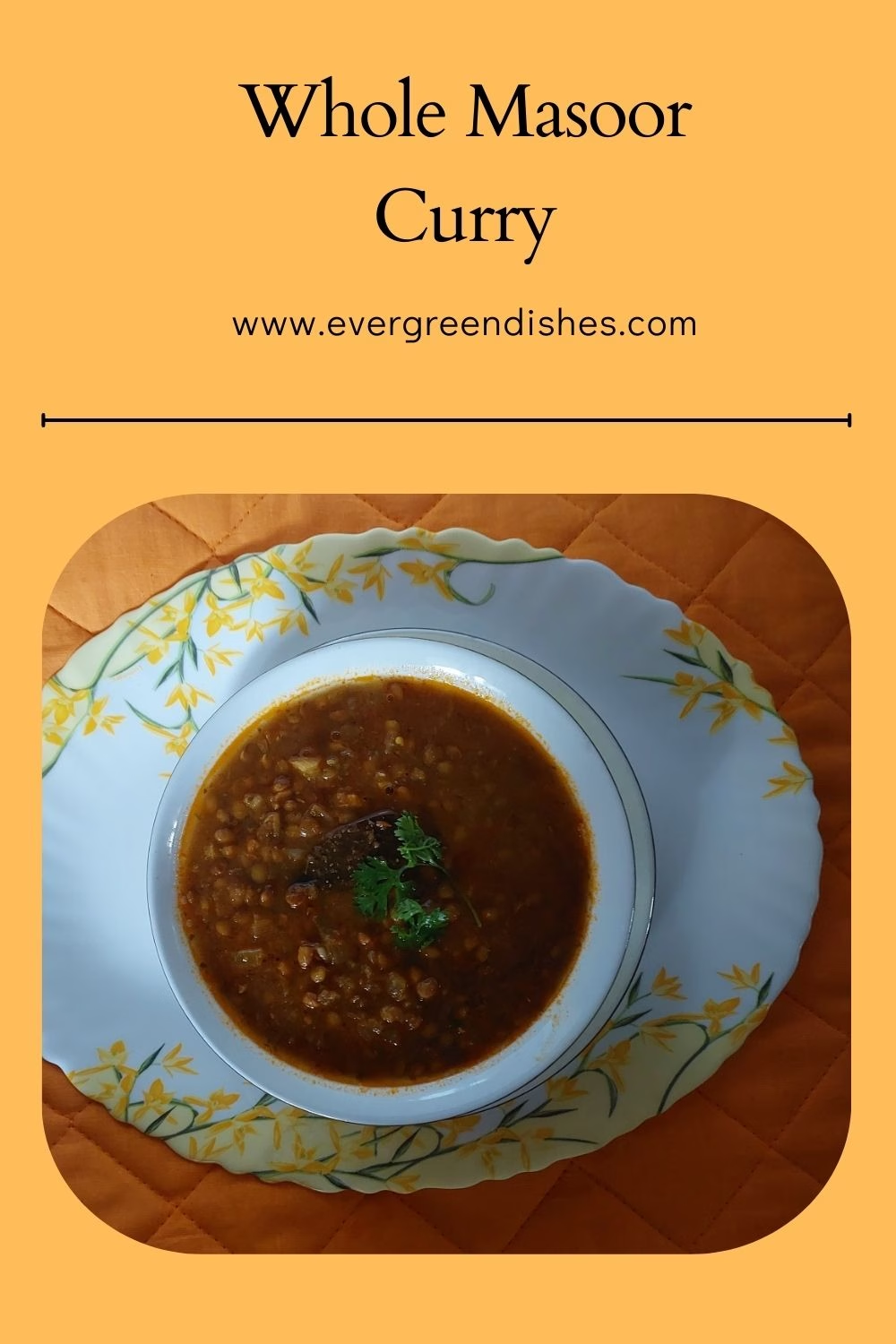
Whole Masoor Curry makes a tasty accompaniment with chapathi, roti or nan. It is easy to prepare.
When you are bored of the regular dishes, give a try to whole masoor curry. It is different and tasty. The taste of masoor is earthy and the spices makes it delectable.
Nutrients in Whole Masoor:
Whole Masoor is a good source of plant protein, fibre, complex carbohydrates, magnesium, iron and potassium. Masoor Dal has the highest source of protein among the lentils.
Why should you make
Whole masoor can be soaked for for only two or three hours unlike others which need six to seven hours of soaking.
It makes a healthy side dish with chapathi.
The dish is easy to prepare, it is ready in half an hour.
It is vegan, gluten-free.
It is a good source of protein.
Something different than the usual cooking.
It is ideal to pair with chapathi and steamed rice.
Masoor Dal: Here, we use the whole masoor. It should be soaked for atleast two hours.
Tomato : Blanch the tomato by putting it in hot water.
Ginger : It not only gives a good taste but aids in digestion too.
Garlic : It is made into a paste along with tomato, ginger and coriander.
Coriander: Always use fresh coriander.
Garam Masala: The spice mix that lends a good flavour to the cooking. Use the brand which you like.
This is a one pot recipe. It can be easily made for lunch, brunch or dinner. I usually soak it at 8a.m in the morning and it is easier to cook after my morning routine.
This is a vegan and gluten-free recipe. You can use it to pair with chapathi, roti or even steamed rice.
Blanch the tomato. Grind them with ginger, garlic and coriander.
Take oil in a small pressure pan. Add cumin, cloves and bay leaf to it. Put the onion and saute it for sometime.
Add the tomato paste to it and continue to saute it.
Add turmeric powder, garam masala, chilli powder and anardana to it along with the salt.
Put the soaked whole masoor to it and mix well.
Put two cups of water and close the lid.
Cook it for two whistle. Let the pressure release by itself. Mix and serve
Notes
Serve with chapathi or hot phulka.
If you ever make Whole Masoor Curry in your kitchen, take a picture and share it by tagging @foodiejayashree on Instagram or @evergreendishes on Facebook. Until next time, Happy Cooking.
A thought to ponder : Eating healthy is a choice we need to make each day.
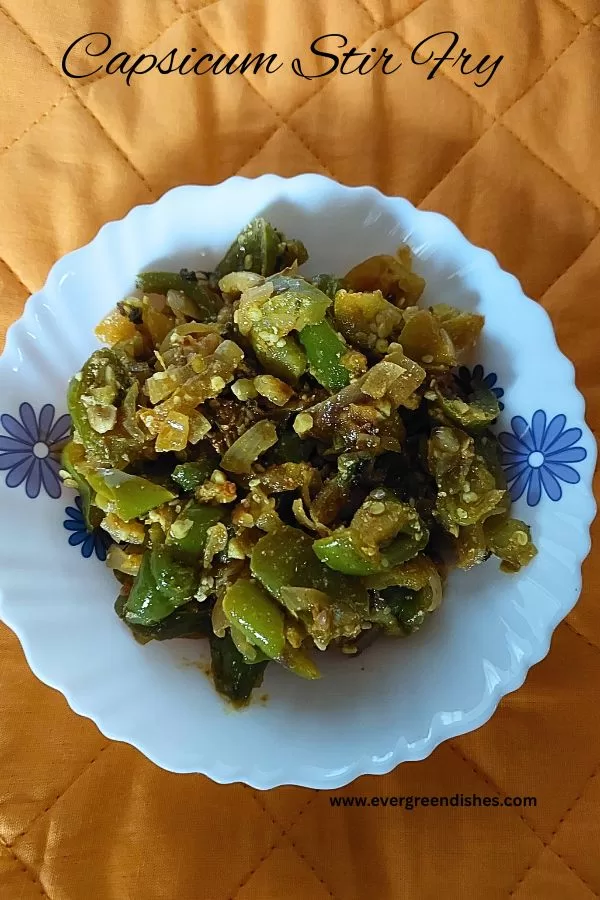
Capsicum Stir Fry is a tasty and easy to make side dish. It is a flavoursome dish from North Indian cuisine. It is ideal to serve for lunch, dinner or pack in the lunch box.
Capsicum Stir Fry needs a few ingredients as sesame seed, cumin, garam masala, chilli powder apart from capsicum and onions. This recipe is from my diary written many years back. When you are bored of the usual cooking, or need a quick side dish, you can prepare this capsicum stir fry. It is ideal to serve with chapathi or phulka.
About the kind of capsicum :
Cpsicum is a versatile vegetable used in all kind of cuisines. The capsicum available in the market are of two kind, big ones and the small ones. The small ones are spicy. Thus, I prefer the big ones for our cooking. If you like using the smaller variety, go ahead but be mindful of the extra chilli powder that is added.
What goes in the Capsicum Stir Fry :
Capsicum : It is the star ingredient. I prefer using the large, green coloured ones. They re not spicy and just right for the stir fry. Here the vegetables are cut into thin, long slices.
Onion and garlic : The onion is cut into thin long pieces while the garlic is crushed.
Oil is one of the essentials in any cooking.
Kasuri methi for that fragrance
Spices like cumin, sesame, chilli powder are essential.
Garam masala for the enhanced flavour. You can make it at home and use it regularly.
Curd is added in the end.
Peanut powder lends an amazing taste to the dish. To make it, roast the peanuts on a low flame. Allow them to cool, remove the skin and grind to a coarse powder.
Coriander for garnishing. Always use fresh coriander.
Salt
Making of stir fry :
The making of stir fry involves two steps. Initially, we saute the onion and capsicum in a little oil. Adding a bit of kasuri methi, fresh coriander and chilli powder gives a good aroma to it. It is then seasoned with spices and peanut powder in another pan. Finally, the addition of blended curd gives a good taste.
Serve it with hot phulka, roti or chapathi. It is ideal o pack in the lunch
If you ever make Capsicum Stir Fry in your kitchen, take a photo and share with me by tagging @foodiejayashree on Instagram and @evergreendishes on Facebook.
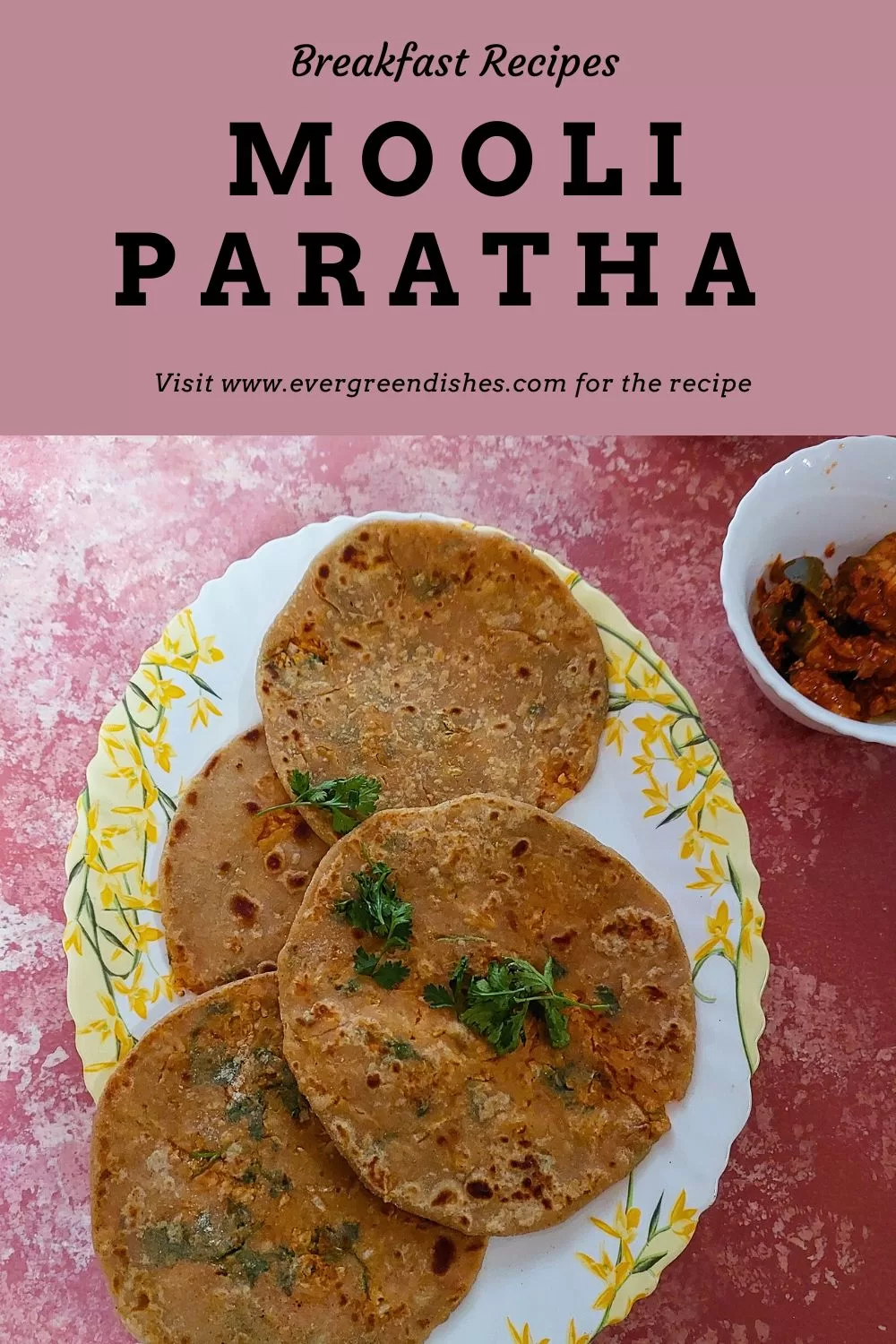
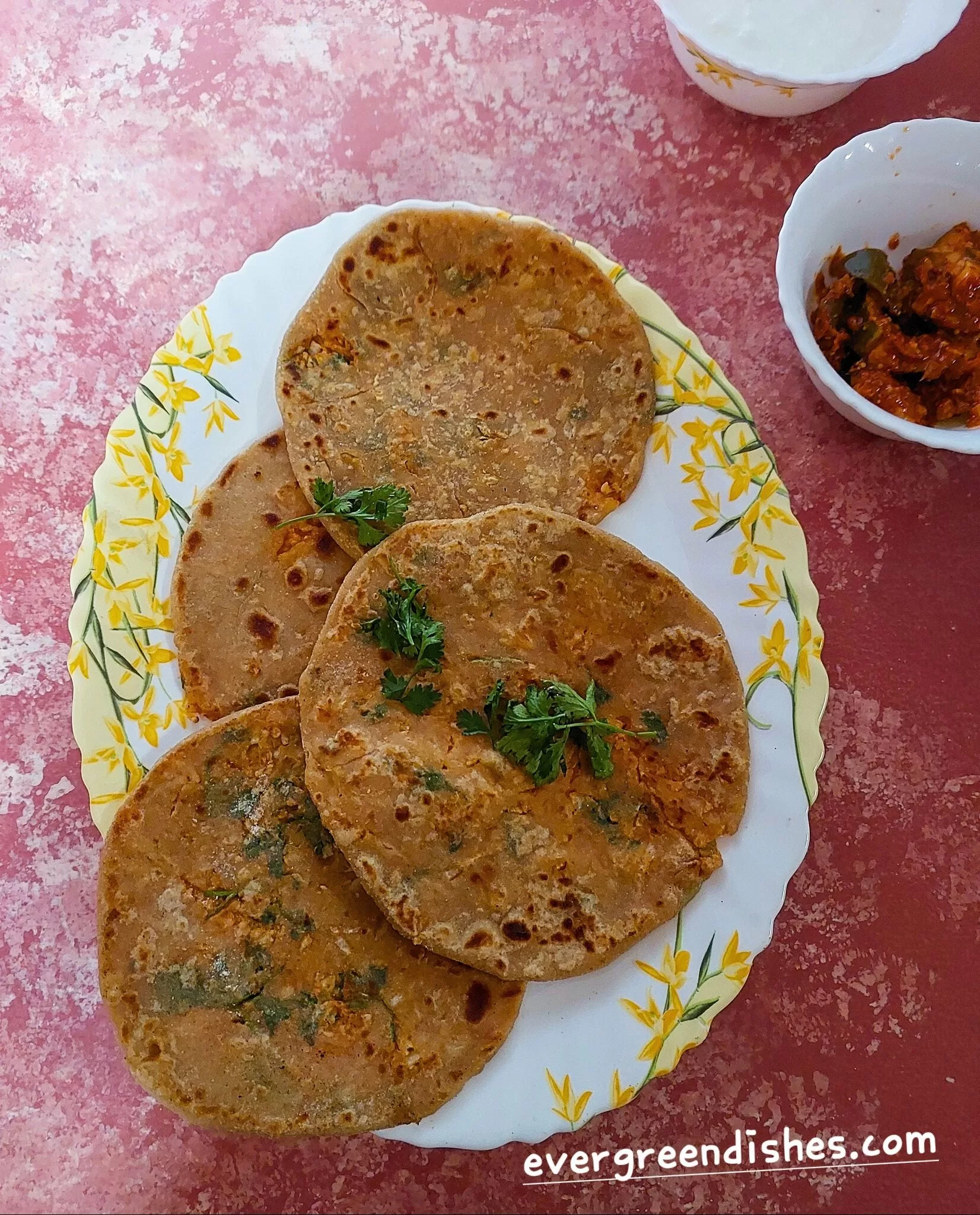
Mooli Paratha is a tasty stuffed flatbread from North India. Mooli or radish is a winter vegetable. It is often used to make tasty stir fry and sambar.
Winter is bountiful with fresh vegetables and fruits. Varied kind of vegetables are available in the market. Green peas, radish, pumpkin, brinjal are some of the winter vegetables we find here. Green leaf of different kinds are in large produce.
Radish is a flowering plant in the mustard family Brassicaceae. Though the vegetable is a tap root, the leaves too are consumed as greens. Earlier, it was used only in Asia, but today it is used throughout the world.
Mooli as it is commonly called in India, is often disliked for its smell by some of them. But, one must consider the numerous health benefits . Being rich in fiber, it aids in weight loss and digestion. Radish helps in the blood sugar management. It also helps to cure urinary tract infections.
It also improves the texture of the skin. It promotes better circulation of blood.
How to use radish :
Radish can be eaten in both ways, raw and cookwed. It is often used in making tasty stir fry and salad. It can also be used in sambar along with other vegetables. The leaves of radish can be used in making tasty salads and soups. Radish can also be used as a stuffing in parathas. It makes a tasty punjabi breakfast.
Mooli Paratha Recipe :
Radish contains 75% water, hence it is difficult to roll easily. Salt is mixed to the grated radish and kept covered for sometime. It helps to remove the moisture.
Radish paratha can be made in two ways. You can either add green chilli or chilli powder as I have added here to the stuffing. There is a variation in taste. Mooli paratha is best enjoyed with pickles and curds. You may add chaat masala or dahi masala to the curd to enhance the taste. The other alternative is to use a green chutney.
Ingredients :
For the dough :
2 cup wheat flour
½ teaspoon ghee
A pinch of salt
Water for kneading
1 teaspoon oil
For the stuffing :
4 radish
½ teaspoon garam masala
1 teaspoon chilli powder
1/2 teaspoon salt
1 tablespoon fresh chopped coriander
Other ingredients :
Mixture of oil and ghee for roasting
Wheat flour for dusting
Method :
To make the stuffing :
Wash the radish, pat dry and peel the skin.
Grate the radish, the finer the shreddings, it will be better to roll.
Put ½ teaspoon of salt and keep it aside for ten minutes.
Remove the radish by squeezing the water. Put it another bowl
Add chilli powder, garam masala and chopped coriander. Mix well. Be careful, if you are adding salt, as it was added earlier.
To make the dough :
In a wide bowl, add wheat flour. Add ghee and salt. At first, mix them well. Then add water in small quantity and mix to a stiff dough. Smear a little oil, cover it with a cloth and keep it aside for ten minutes.
To make mooli paratha :
Take a ball of the dough and roll it a bit.
Take a spoonful of the filling, put it in the centre of the rolled dough.
Slowly, take the extended sides and make a covering over it.
Now, dust the ball lightly and roll it.
Heat a griddle, put the rolled paratha on the griddle.
Smear some oil and ghee mixture on top of it.
Turn it to the other side and smear some oil over it. Cook it to a golden colour on both the sides.
Serve hot with pickle and curd.
Take a tip :
It is best to keep the spices minimal as radish gives a good taste to the flatbread.
You may add ginger and chilli to the grated radish instead of chilli powder and garam masala.
The squeezed water may be used for mixing the dough. It can also be used in curry and sambar.
Evergreendishesdev
Mooli Paratha
Mooli Paratha is a popular flat bread from North India. It is usually served for breakfast.
Grate the radish, the finer the shreddings, it will be better to roll.
Put ½ teaspoon of salt and keep it aside for ten minutes.
Remove the radish by squeezing the water. Put it another bowl
Add chilli powder, garam masala and chopped coriander. Mix well. Be careful, if you are adding salt, as it was added earlier.
To make the dough :
In a wide bowl, add wheat flour. Add ghee and salt. At first, mix them well. Then add water in small quantity and mix to a stiff dough. Smear a little oil, cover it with a cloth and keep it aside for ten minutes.
To make mooli paratha :
Take a ball of the dough and roll it a bit.
Take a spoonful of the filling, put it in the centre of the rolled dough.
Slowly, take the extended sides and make a covering over it.
Now, dust the ball lightly and roll it.
Heat a griddle, put the rolled paratha on the griddle.
Smear some oil and ghee mixture on top of it.
Turn it to the other side and smear some oil over it. Cook it to a golden colour on both the sides.
Serve hot with pickle and curd.
Notes
It is best to keep the spices minimal as radish gives a good taste to the flatbread.
You may add ginger and chilli to the grated radish instead of chilli powder and garam masala.
Pin it for later :
If you ever make Mooli Paratha in your kitchen, take a picture and share on Instagram by tagging @foodiejayashree. You can also tag me on facebook. Subscribe to get all updates in your inbox and an e-book of handyhints for free. Until next time, happy cooking !
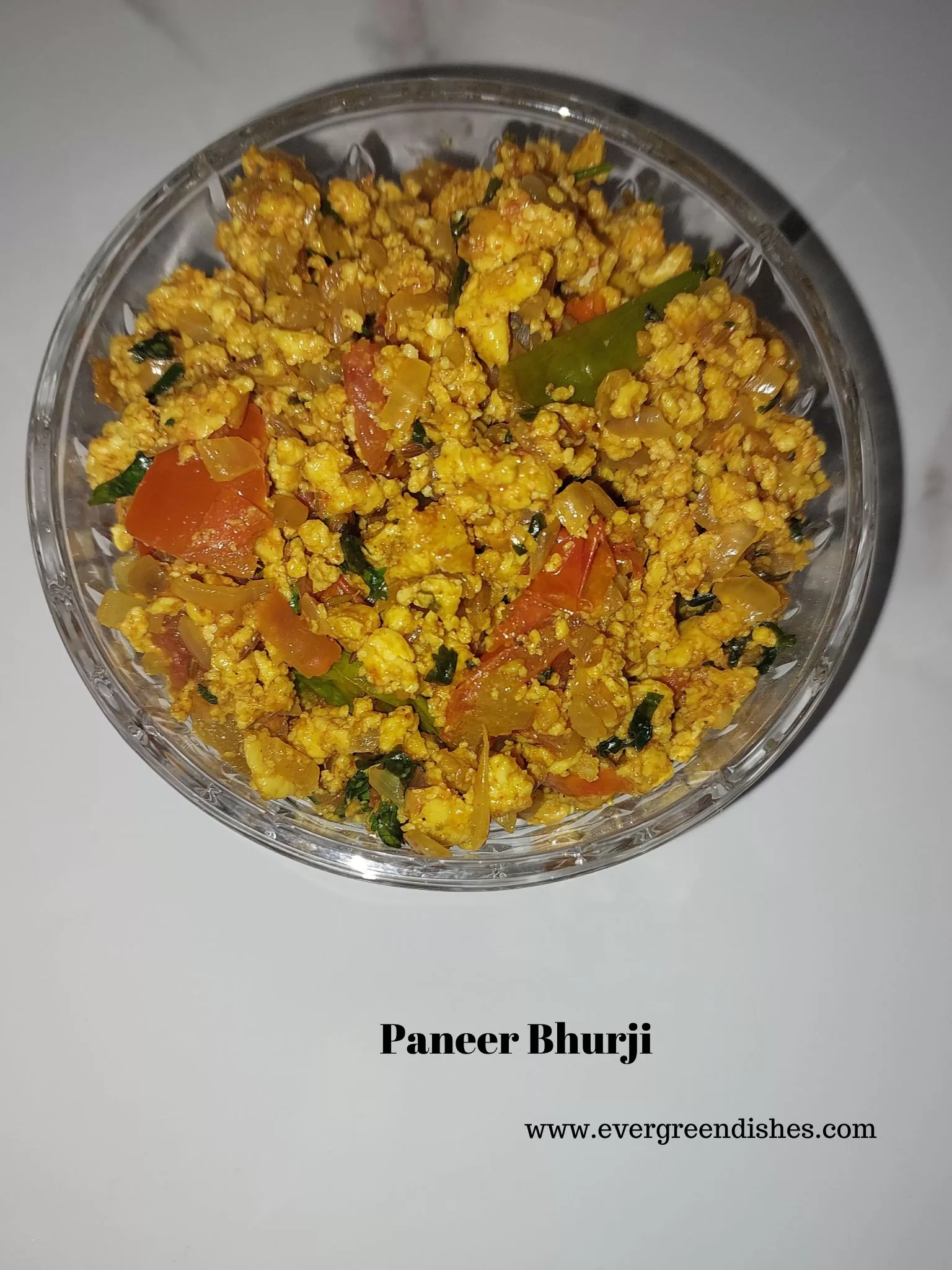
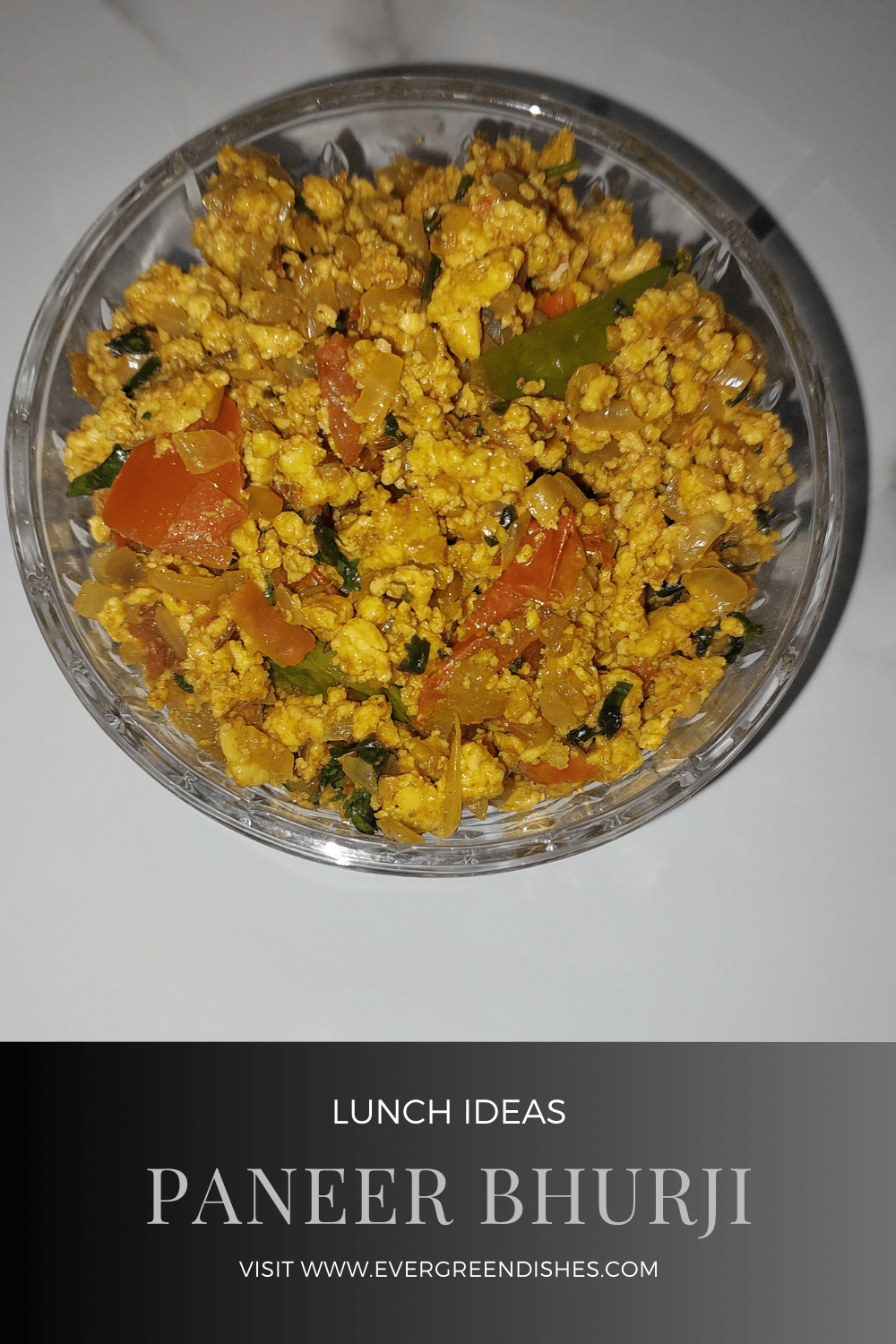
Paneer Bhurji is a classic dish from North Indian cuisine. Scrambled paneer is mixed in a gravy of cooked onion and tomatoes with spice powders to make a tasty accompaniment. Paneer is cottage cheese while bhurji refers to a scramble. Cottage cheese scramble is ideal to pair with any Indian flat bread as roti or paratha. You can also use it as a spread on toasts for a quick and filling breakfast.
Paneer or Cottage cheese is the preferred choice for us. Tofu or egg can also be used.
It is good to use fresh, homemade paneer. To make paneer, heat whole milk on a low flame. Keep the acidic ingredients ready to curdle the milk. Here, we can use curd, lemon or vinegar. Once the milk comes to a boil, put a small quantity of any one of the acidic ingredient and allow it to curdle. Turn off the flame. After a few minutes, drain it over a thin muslin cloth and keep it aside for sometime.
If buying, opt for a whole piece of paneer instead of cubes. After adding the spices, keep stirring as the spices get burnt easily. Put a little water if needed.
What goes in the making of Paneer Bhurji ?
Paneer : It is the star ingredient. It is always best to make paneer at home. But, you can use store bought too. Use a good brand paneer. Once you buy, check it properly if it is fit for use. I am writing this as I read so much about the deterioration in the quality of paneer these days.
Onion : Cut it finely. Invest in a good chopper, it saves so much time.
Tomato: Use the bright, red ones. Cut them finely.
OIl : Any neutral oil will do.
Ginger garlic paste : I prefer making it fresh but you can use the store bought ginger garlic paste.
Cumin : A little bit of cumin, lends a good flavour.
Turmeric powder
Amchur powder : It is the dried mango powder which helps in balancing the flavours.
Garam Masala : It is a blend of all spices. Use a good quality spice mix.
Kasuri Methi: It is dried fenugreek leaves which helps to give a good flavour to the dish.
Coriander powder : You can make it by roasting a small quantity of dhania and then grinding to a fine powder.
Coriander : The final dressing of the dish is the coriander sprinkled on top.
Can it be stored ?
Paneer Bhurji tastes best when it is cooked fresh and served. The texture of the paneer may change .
How to serve it ?
It tastes great with roti and nan.
It can be served as an accompaniment with chapathi or phulka.
It is ideal to top it over a bread toast.
It can be used as a filling for rolls.
It tastes great as a filling for a different kind of dosa.
Paneer Burji is a popular dish from North Indian cuisine. It pairs well with any Indian flat bread. Scrambled cottage cheese is cooked with spices to make a delectable side dish.
If you make Paneer Bhurji, take a picture and share it by tagging @foodiejayashree on Instagram and @evergreendishes on Facebook. Subscribe to get all updates and an e-book for free.
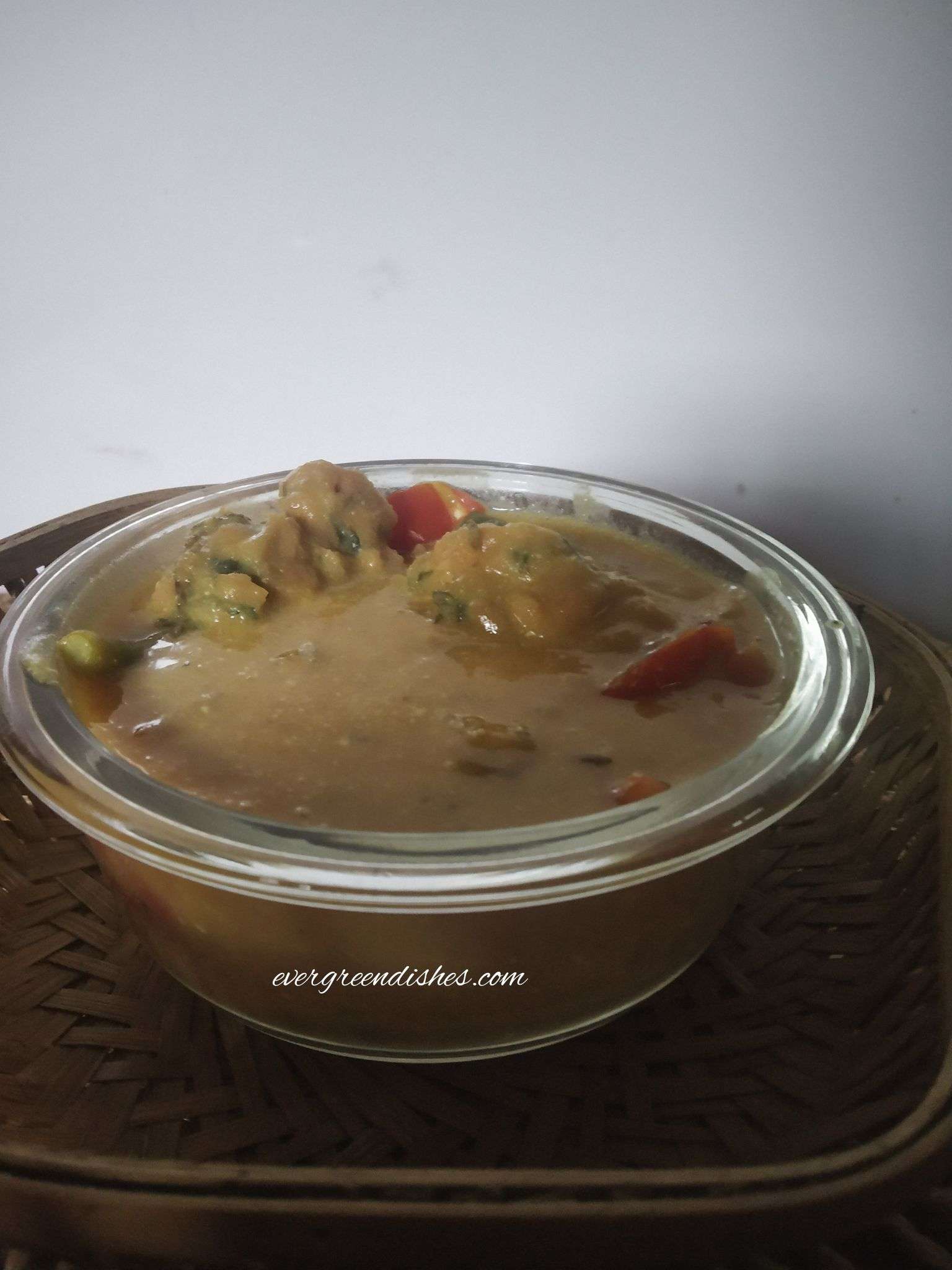
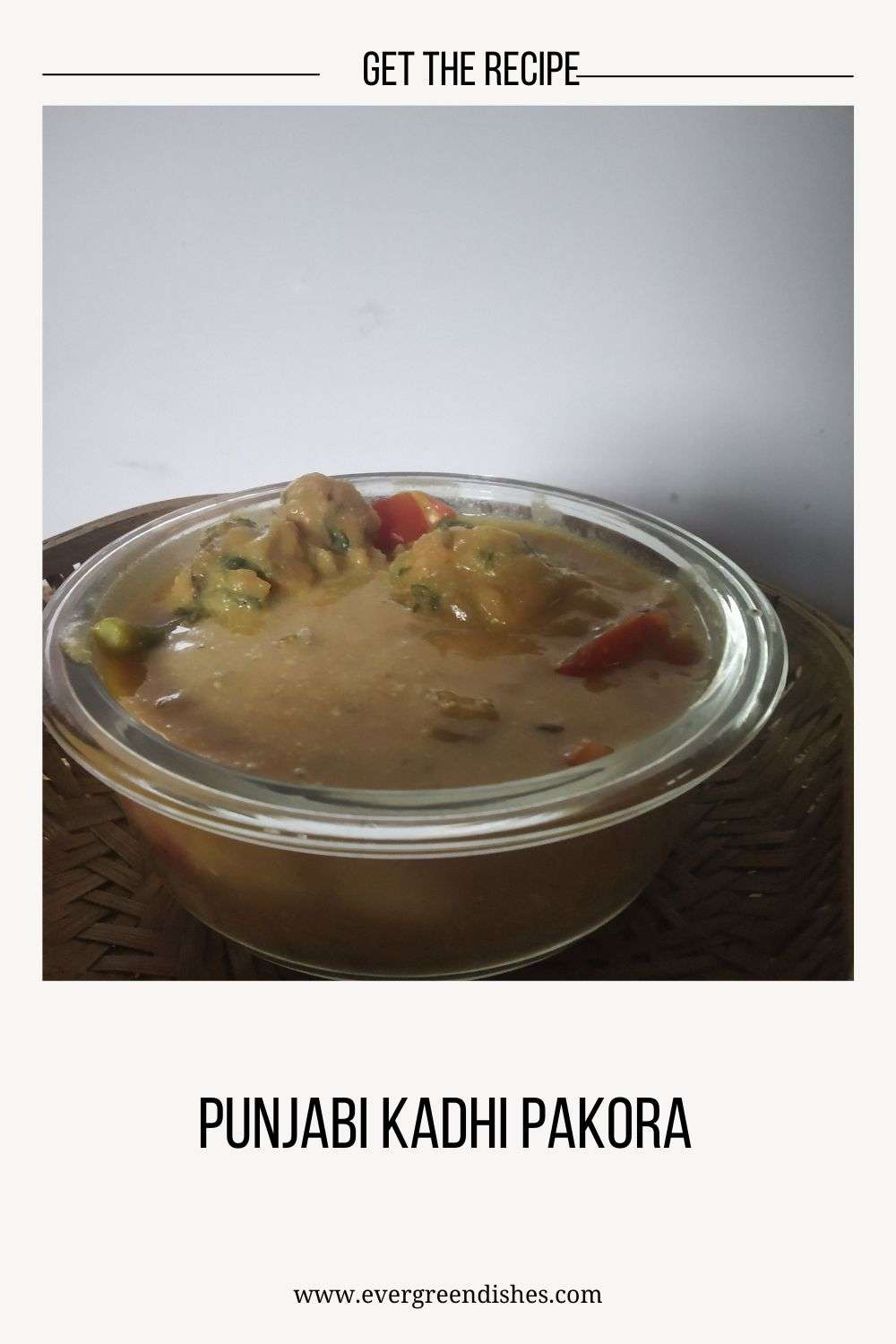
Kadhi recipe is the popular Punjabi Kadhi Pakora. It is tasty and one of the cherished meals for north indians.
Kadhi chawal is the staple food of many people. It is easy to make and makes a good accompaniment with steamed rice. When the usual cooking needs a change, we resort to other kind of dishes. Kadhi is one of them. Every region has its own version of kadhi. The basic ingredient for kadhi is curd and gram flour. There is a variation in the method of preparation.
Kadhi with pakora is a signature dish from North Indian cuisine. Kadhi with pakora is made by dunking the onion pakoras in kadhi.
punjabi kadhi pakora
What is Kadhi ?
Kadhi is a popular yoghurt- based dish from Indian sub-continent. Gram flour is usually used to thicken it along with other ingredients.
What are the variation in Kadhi ?
Every region in India, has it’s own unique culture and traditions. Kadhi is prepared in most parts of the country but every region has its own unique recipe. In South India, coconut is used in the preparation of majjige paladya along with other ingredients. It is similar to kadhi, at times we add ambodi in it. The method of preparation is different in Rajasthan, a simple one with or without badas. Gujarati kadhi is another version which I am yet to make. Sindhi kadhi is totally different and delectable with vegetables in it.
Kadhi with Pakora Recipe
Ingredients:
For Kadhi :
1 cup sour curd
1/4 cup gram flour
1/4 teaspoon turmeric powder
1/2 teaspoon red chilli powder
1 teaspoon coriander powder
salt to taste
1 tablespoon oil
1/4 teaspoon cumin
1/4 teaspoon fenugreek
1 small onion
1 inch ginger grated
1 tomato
2 green chilli
For tempering
1 tablespoon oil
1/4 teaspoon cumin
1/8 teaspoon chilli powder
For Pakoras:
1/2 cup gram flour
1 big onion
2 green chilli
1 tsp chilli powder
1/4 teaspoon garam masala powder
1/2 teaspoon coriander powder
water for mixing
Method:
To make kadhi :
Blend the curd. Add gram flour, coriander powder, chilli powder, turmeric powder , and salt to it. Mix it well, no lumps should be formed.
In a kadai, make seasoning. Put oil, add cumin and fenugreek seed. Once it turns golden, add the grated ginger and onion. Saute it for sometime. Add tomato and green chilli pieces to it. Stir for 2-3 minutes.
Add the curd mixture, keep stirring it.
Reduce the flame, allow it to cook for sometime.
Switch off the flame.
To make the pakoras:
Take besan in a bowl. Add onion, green chilli, chilli powder, garam masala and coriander powder.Mix them together.
Add little water and mix thoroughly. The batter should be of dropping consistency.
Heat oil in a pan, add a spoonful of batter. Put a few more.
Deep fry to golden colour.
Remove with a ladle and put it aside.
Put the pakora in kadhi.
To make the seasoning:
Take oil in a pan, add cumin and chilli powder to it. As it turns golden, remove it and pour over the kadhi.
Kadhi with Pakora
5 from 5 votes
Kadhi with Pakora is a popular dish from Punjabi cuisine. It is a comfort food.
Blend the curd. Add gram flour, coriander powder, chilli powder, turmeric powder , and salt to it. Mix it well, no lumps should be formed.
In a kadai, make seasoning. Put oil, add cumin and fenugreek seed. Once it turns golden, add the grated ginger and onion. Saute it for sometime. Add tomato and green chilli pieces to it. Stir for 2-3 minutes.
Add the curd mixture, keep stirring it.
Reduce the flame, allow it to cook for sometime.
Switch off the flame.
To make the pakoras:
Take besan in a bowl. Add onion, green chilli, chilli powder, garam masala and coriander powder.Mix them together.
Add little water and mix thoroughly. The batter should be of dropping consistency.
Heat oil in a pan, add a spoonful of batter. Put a few more.
Deep fry to golden colour.
Remove with a ladle and put it aside.
Put the pakora in kadhi.
To make the seasoning:
Take oil in a pan, add cumin and chilli powder to it. As it turns golden, remove it and pour over the kadhi.
punjabi kadhi pakora
If you ever make Punjabi Kadhi Pakora recipe, do take a picture and tag @foodiejayashree on Instagram or @evergreendishes on Facebook or Twitter. I will be glad to see your creation and share it further. Let’s be connected, do follow on social media platforms. Until next time, let’s stay connected. Subscribe to get all updates and an e-book for free. Check out my e-books on Amazon.
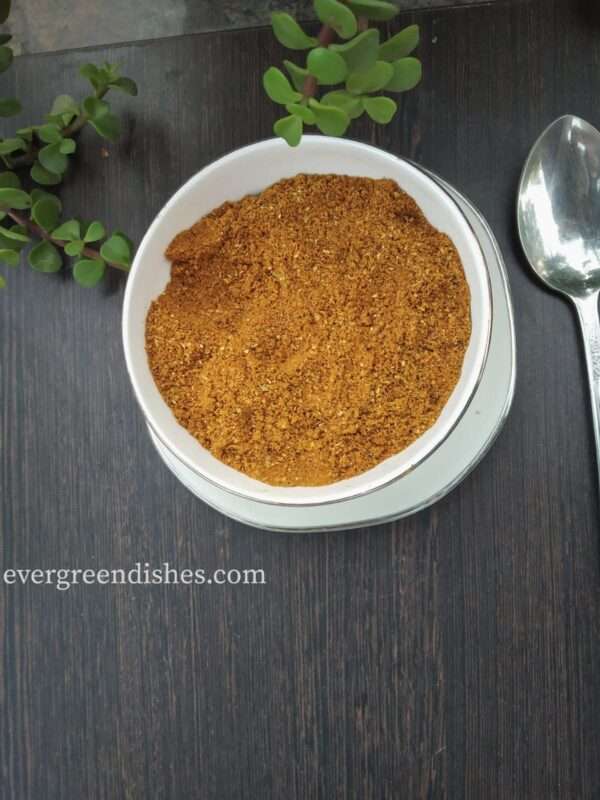
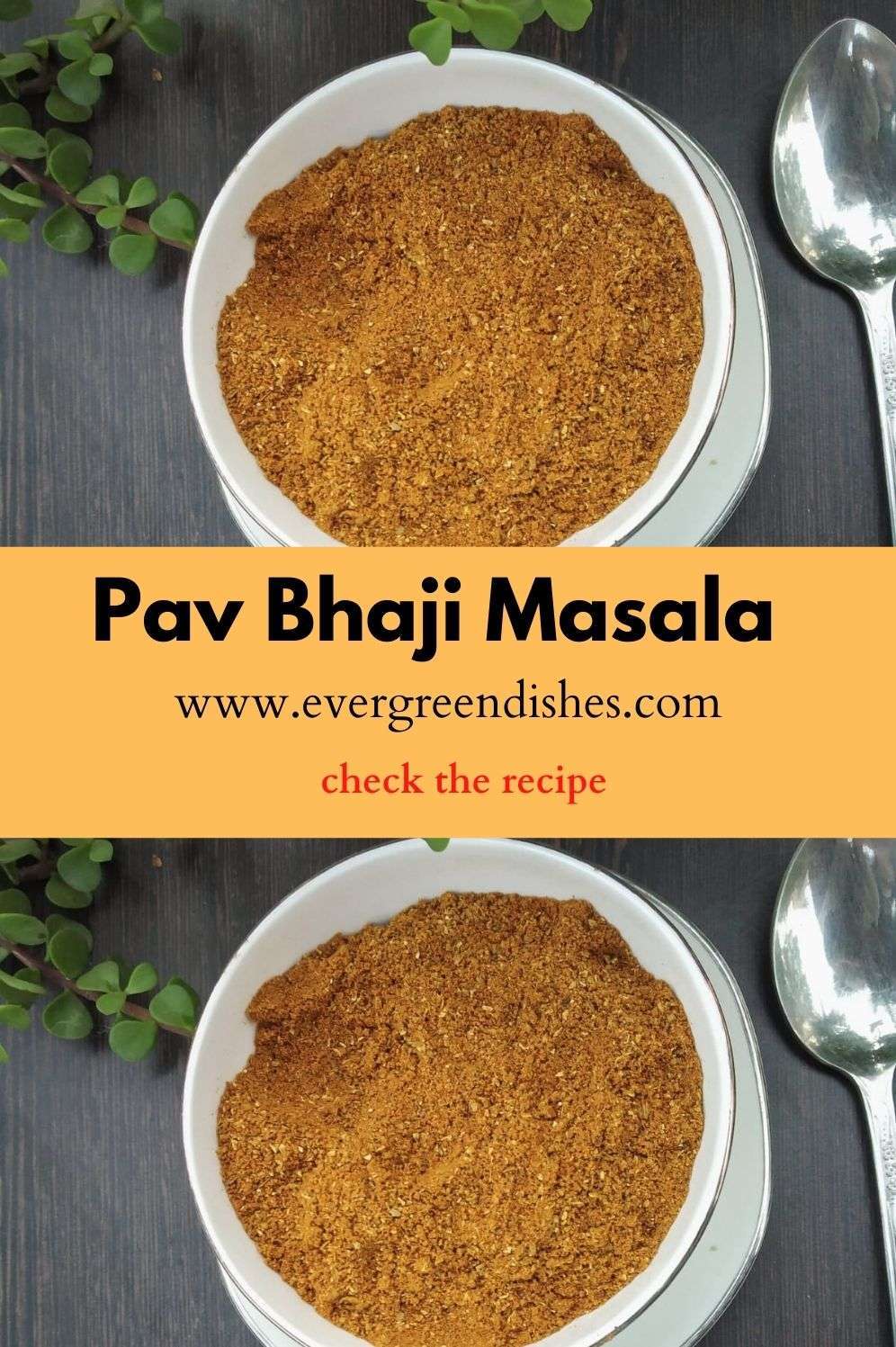
Homemade Pav Bhaji Masala is aromatic and gives a good taste to the dish. The fresh flavour of roasted spices is too good and made an enjoyable dinner for us.
Spice mix are an essential part of our daily cooking. I believe a day of hard work makes it easier for a couple of months.It gives a good flavour and makes cooking easier. The day starts with a chai masala added to tea. Sometimes, I need the sambar powder while making a quick breakfast.too. I like to sprinkle a wee bit of garam masala and the dhana jeera powder in my cooking. Some days, I use the traditional powder south indian spice mix in my cooking. It is flavoursome and ideal to make an array of dishes. It is ideal to make a quick lunch with gojju. I even use it as a stuffing in cucumber stir fry and it tastes awesome. Pav Bhaji Masala is ideal to use in a variety of dishes.
pav bhaji masala
What is pav bhaji?
Pav Bhaji is a popular street for from Mumbai. It is ideal to serve as an evening snack. Roasted bread buns are served with a tasty curry made of fresh peas and other vegetables with a generous topping of butter and finely chopped onions. It makes a good option for dinner as it is filling.
What is pav bhaji masala ?
Pav Bhaji Masala is a spice mix made essentially for this snack. It is easily available in the market by various brands. The homemade spice mix is flavoursome and you are in total control of the kind of spices going into it.
Can it be stored ?
Yes, it can be stored. Make sure you keep it in a clean, air-tight container. I have made a small quantity, hence kept it outside. I usually put the spice mix in an air-tight container and put them in the freezer. I use them occasionally and it stays good for a long time.
How can it used ?
Pav Bhaji Masala is ideal to use in stir fry. Sprinkle a little spice mix along with chilli powder and it gives a good flavour. You can use it in tava pulao. I use it in spicy pav buns too.
About the event :
It’s time for Shhh Secretly Cooking Challenge. Here onee of the members suggest a theme. The members are paired, they exchange two secret ingredients and make a dish accordingly. The theme was ” Spice Mix ” suggested by me. My partner for the month was Kalyani Sri. I told I wanted to make pav bhaji masala and she gave me clove and black cardamom as the secret ingredients. I have given shah jeera and anardana as the secret ingredients and she has made a flavoursome mumbai sandwich masala.
Homemade Pav Bhaji Masala :
Ingredients:
1/4 cup coriander seed
4 black cardamom
6 cloves
10 pepper corn
2 tablespoon cumin
1 tablespoon fennel seed
1 stick cinnamon
5 red chilli
1 tablespoon turmeric powder
1.5 tablespoon amchur powder
1 tablespoon black salt
Method:
Take coriander seed, cloves, pepper corn, cumin, fennel and red chilli in a pan. Roast them for three minutes until you get a good aroma. Keep tossing them with a spatula.
Let the ingredients cool.
Grind to a coarse powder. Add amchur powder, turmeric powder and black salt to it. Grind to a fine powder.
Pav Bhaji Masala is ready to use.
Keep it in a clean air tight container.
Pav Bhaji Masala Recipe
Pav Bhaji Masala is a flavoursome spice mix from Indian cuisine. It is versatile to use.
Take coriander seed, cardamom, clove, pepper corn, cumin fennel, cinnamon and red chilli in a pan. Roast them for three minutes until you get a good aroma. Keep tossing them with a spatula.
Allow them to cool.
Grind them to a powder. Add turmeric powder, amchur powder and black salt to it. Grind altogether again to a fine powder.
Pav Bhaji Masala is ready ro use. Store it in a dry container.
Pin Pav Bhaji Masala Recipe :
pav bhaji masala
If you ever make Pav Bhaji Masala in your kitchen, take a picture and tag @foodiejayashree on Instagram or @evergreendishes on Facebook. Subscribe to get all updates in your inbox and an e-book for free!
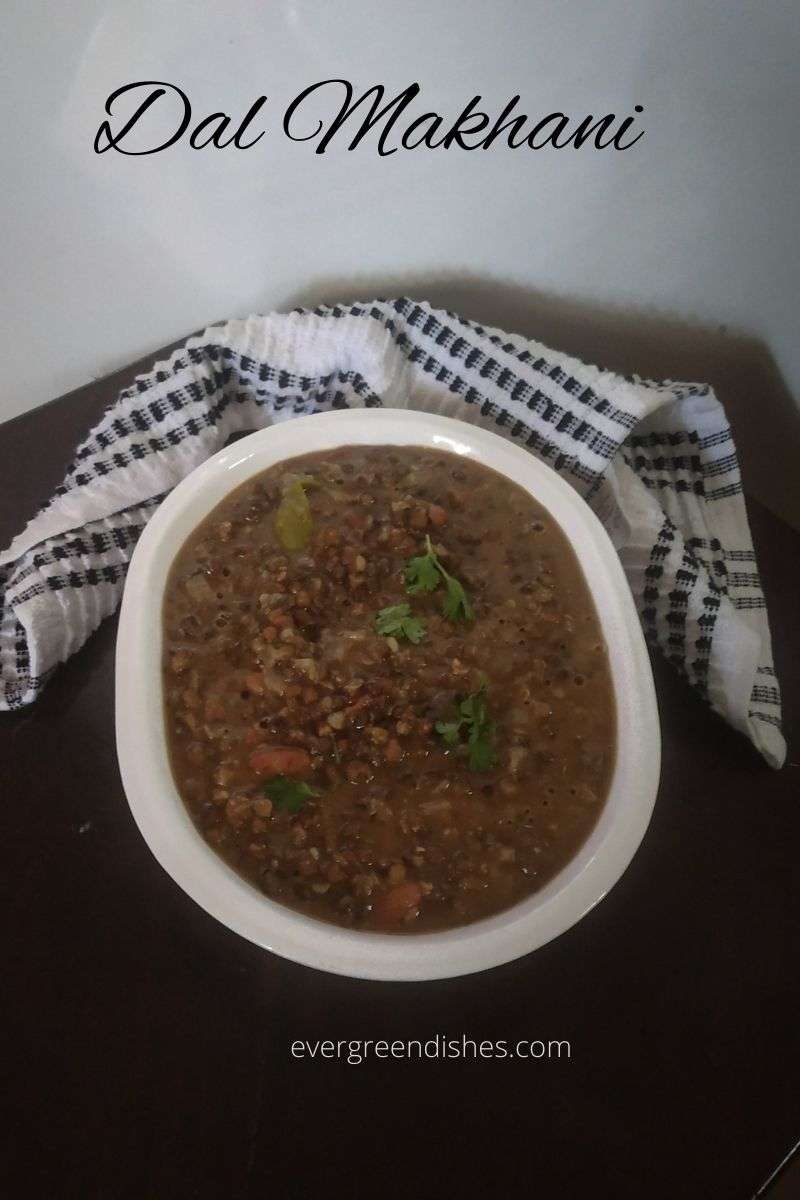
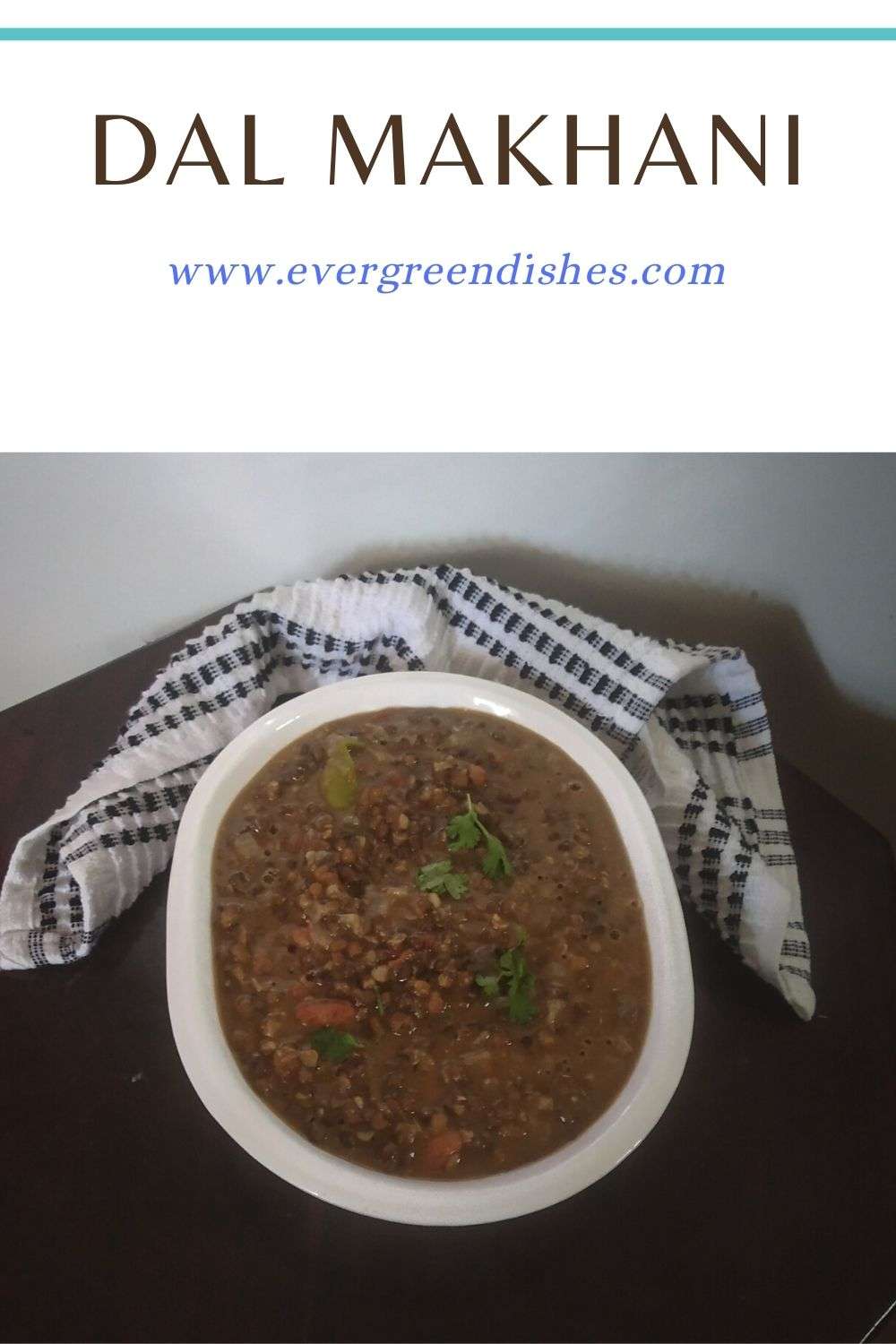
Dal Makhani is a rich creamy, delectable side dish from North Indian cuisine. It makes a good accompaniment to all kinds of flat breads, rice dishes and steamed rice. Dal is the Hindi word for lentil while Makhani translates to butter. It is a whole black lentil cooked in butter.
The first time I had it was decades back and since then it has been a family favourite. I learnt this recipe from a good Punjabi friend who is no more. She was kind enough to share this recipe with me. Dal Makhani is synonymous to the traditional Maa ki dal. Whole black dal is cooked on a low flame for long hours with spices.
Here is an easy restaurant style dal makhni recipe. It is rich, creamy and tastes delicious. It can be paired with any kind of flatbread like roti, nan, paratha, roomali roti or phulka.
A few pointers while cooking dal makhni at home. It needs time and patience, the lentil needs to be soaked for at least six hours. Once they are soaked, put them in a colander, after sometime, clean it thoroughly, discard the hard ones. The hard pulses never cook and do not taste good. Later, it is cooked in a pressure cooker for six whistles along with kidney beans and a few other ingredients. Once the pressure releases, the makhan comes into action. After sauting the onion and tomato in butter, lentils are again cooked in a pressure cooker. This is the usual procedure I have been following to get a creamy dal makhani.
Dal Makhani
Dal Makhani Recipe
Ingredients :
250 grams black urad dal 50 grams rajma 1 inch ginger 2 green chillies 3 cups water 2 tablespoon butter 1/2 teaspoon cumin 1 onion 2 tomato salt to taste 1/2 teaspoon chilli powder coriander for garnshing
Method:
Wash black urad dal a couple of times and soak in water overnight.
Soak kidney bean in another bowl .
The next day, put the soaked urad dal in a colander for sometime.
Now, clean the lentil. Some of them are hard as pellets and will never cook. They need to be discarded.
In a bowl, add the cleaned lentils and kidney beans with three cups of water. Cut the green chilli into two pieces and throw it. Put the grated ginger and a little turmeric powder to it. Pressure cook for five or six whistles.
In another pressure pan, add butter. Add cumin, as it splutters, put onion pieces. Saute it for sometime, until light pink in colour. Put tomato in it. Saute it. Once it is mushy, add the cooked lentil and bean mixture to it. Put salt. Allow it to simmer for sometime. Put chilli powder and pepper powder. Check the consistency, add water accordingly. The consistency, will be thicker on cooling, you need a medium, flowing consistency. Pressure cook for one whistle.
Once the pressure release, check the taste and adjust accordingly. Garnish with fresh coriander.
Take a tip:
I have not added garlic, if you wish, put it and saute with onions.
You can make tomato puree and use it.
The measurement given here may be more for some of you. Reduce the quantity of lentil and kidney beans used. Use the other ingredients as per your need.
You may add some cream in the end.
Evergreendishesdev
Dal Makhni
Dal Makhni is a delicious side dish from North India. Black urad dal and kidney bean are cooked together to form a creamy and tasty accompaniment. It is ideal to pair with roti, nan or steamed rice.
Wash black urad dal a couple of times and soak in water overnight.
Soak kidney bean in another bowl .
The next day, put the soaked urad dal in a colander for sometime.
Now, clean the lentil. Some of them are hard as pellets and will never cook. They need to be discarded.
In a bowl, add the cleaned lentils and kidney beans with three cups of water. Cut the green chilli into two pieces and throw it. Put the grated ginger and a little turmeric powder to it. Pressure cook for five or six whistles.
In another pressure pan, add butter. Add cumin, as it splutters, put onion pieces. Saute it for sometime, until light pink in colour. Put tomato in it. Saute it. Once it is mushy, add the cooked lentil and bean mixture to it. Put salt. Allow it to simmer for sometime. Put chilli powder and pepper powder. Check the consistency, add water accordingly. The consistency, will be thicker on cooling, you need a medium, flowing consistency. Pressure cook for one whistle.
Once the pressure release, check the taste and adjust accordingly. Garnish with fresh coriander.
About the event:
Sending this post at Shhh Cooking Secretly Challenge for the theme “Restaurant style food at home”. The theme was suggested by Aruna Sahas Chandra. I like the variety of different dishes she puts on her blog. Recently, she posted Paneer Do Pyaza, would like to recreate the same as my children love paneer dishes.
Here, it is a monthly event, partners are paired and secret ingredients are exchanged between them. The dish is prepared and shared in the Facebook group. Guessing the ingredients is a fun activity. My partner for the event was talented blogger Anu Kollon. The two ingredients given to me where cumin and onion. I made Dal Makhni which I intended to post since a long time. I had given ginger and tomato, she has made delicious, Paneer Butter Masala.
If you ever make this Dal Makhani recipe, do take a picture and tag me @foodiejayashree on Instagram, I will be glad to see your creation.Follow evergreendishes on Facebook, Twitter, Pinterest and Instagram, let’s be connected. Subscribe to get all updates and a book of handy hints for free! Check out my e-books
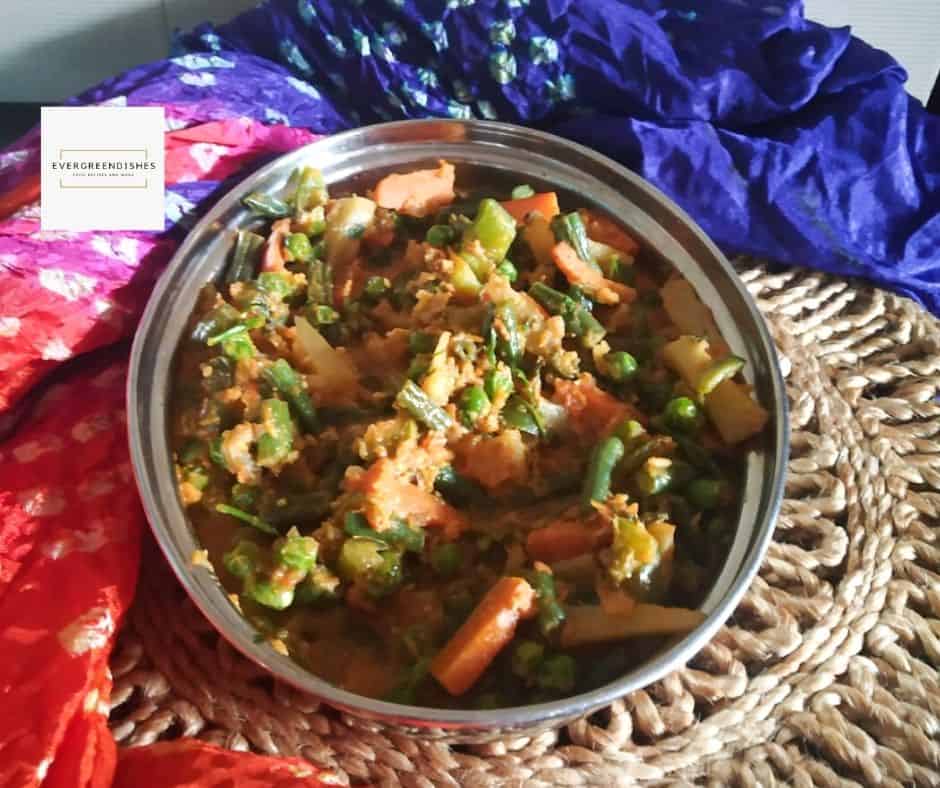
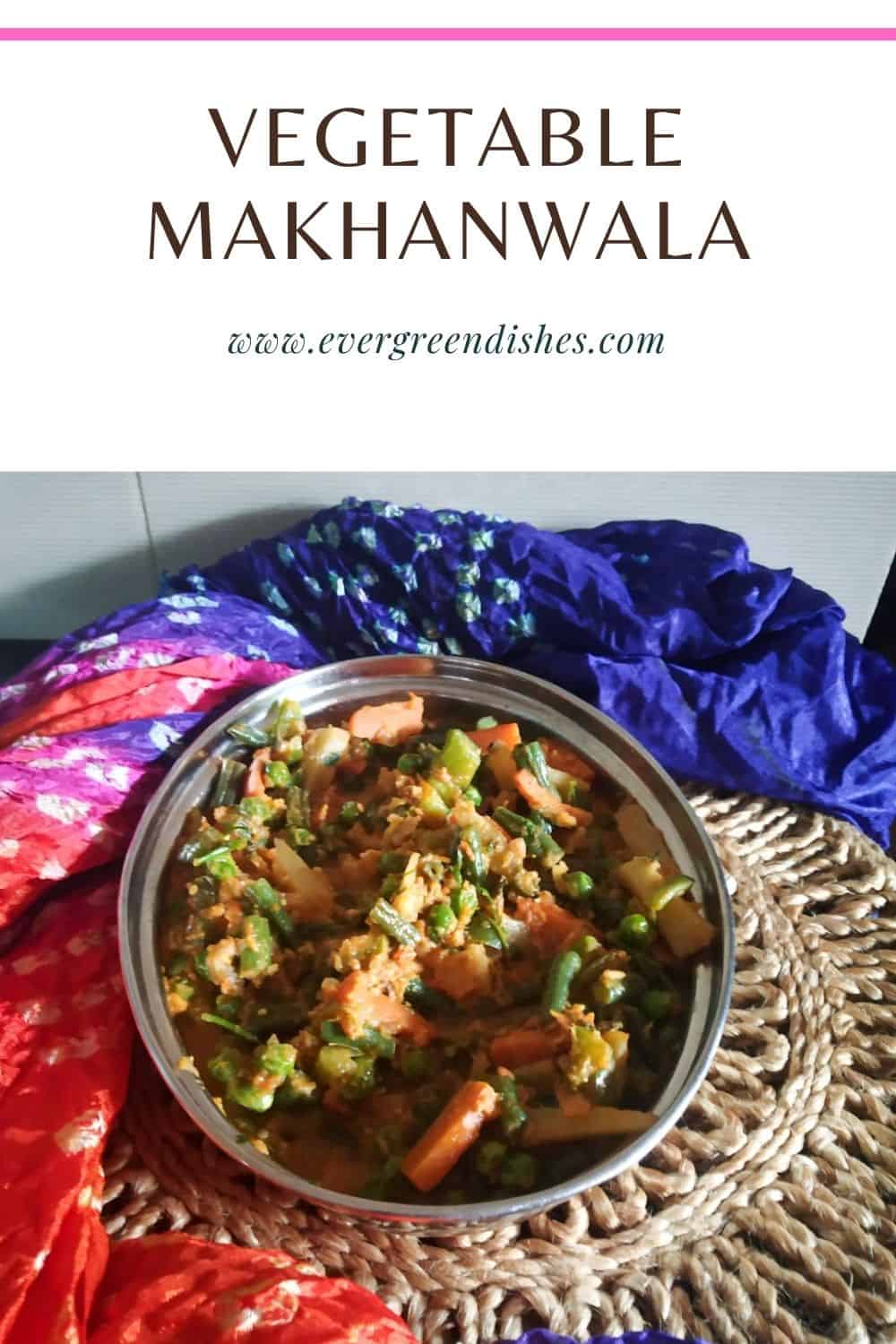
Vegetable Makhanwala is a delicious side dish from North Indian cuisine. It is a medley of vegetables cooked in butter with a few spices. It makes a good accompaniment with chapathi or phulka. Ideally, it should be served with nan or roti.
This dish is ideal for a family get-together or parties. You can make use of many kind of vegetables. I have used beans, carrot, capsicum, potato and green pea. You can add cauliflower and paneer pieces too. The vegetables can either be boiled or sauteed in a little oil. I have done the later mehod. The dish is made in several steps as cutting the vegetables, saute the vegetables, sauting the vegetables for the paste, making of paste and finally the gravy.
Let us get to the recipe of Vegetable Makhanwala
Ingredients:
15 beans
1 carrot
1 capsicum
1 potato
1/4 cup peas
2 teaspoon oil
2 teaspoon butter
2 clove
1 teaspoon cumin
1/4 teaspoon turmeric powder
1/2 teaspoon garam masala
1/2 teaspoon chilli powder
salt to taste
1/2 teaspoon kasuri methi
1 tablespoon fresh cream
1 teaspoon coriander for garnishing
For the makhanwala masala :
2 onion
3 large tomato
5 cloves garlic
1 inch ginger
10 cashew nuts
1 teaspoon oil
Method:
Cut the beans, carrot, and capsicum into thin long strips of half an inch.
Cut the onion and tomatoes, keep them aside.
To make the masala, take oil in a pan, add ginger, garlic and onions. Saute the onions for sometime, let them be translucent. Put the tomatoes to it. Throw in the cashew pieces to it. Let it cook for sometime. The tomatoes need to be mushy. Once it is done, let cool for sometime. Later, grind to a paste.
To saute the vegetables, take two teaspoon of oil in another pan. Add beans to it. Saute it, after a few seconds, put the carrot pieces. After sometime, put potatoes and peas. Lastly, put the capsicums. Toss them in between. The vegetables must be cooked al dente.
Once the vegetables are cooked, put them in a bowl. In the same pan, add butter. Put cumin, as it sizzles, add the tomato paste to it. Let it cook for sometime. Now, add turmeric powder, chilli powder and garam masala to it. Let cook for sometime. Put salt to it
Now, add the cooked vegetables along with salt. Let it simmer for sometime.
Put kasuri methi to it. Add fresh cream to it.
Finally, garnish with some coriander leaves.
Serve with rotis or nan.
vegetable makhanwala
Evergreendishesdev
Vegetablee Makhanwala
5 from 2 votes
Vegetable Makhanwala is a medley of vegetables cooked together in flavoursome spices.
Cut the beans, carrot, and capsicum into thin long strips of half an inch.
Cut the onion and tomatoes, keep them aside.
To make the masala, take oil in a pan, add ginger, garlic and onions. Saute the onions for sometime, let them be translucent. Put the tomatoes to it. Throw in the cashew pieces to it. Let it cook for sometime. The tomatoes need to be mushy. Once it is done, let cool for sometime. Later, grind to a paste.
To saute the vegetables, take two teaspoon of oil in another pan. Add beans to it. Saute it, after a few seconds, put the carrot pieces. After sometime, put potatoes and peas. Lastly, put the capsicums. Toss them in between. The vegetables must be cooked al dente.
Once the vegetables are cooked, put them in a bowl. In the same pan, add butter. Put cumin, as it sizzles, add the tomato paste to it. Let it cook for sometime. Now, add turmeric powder, chilli powder and garam masala to it. Let cook for sometime. Put salt to it
Now, add the cooked vegetables along with salt. Let it simmer for sometime.
Put kasuri methi to it. Mix fresh cream into the curry.
Finally, garnish with some coriander leaves.
Serve with tandoori roti, nan or chapathi.
Pin Veg Makhanwala to your board:
Vegetable Makhanwala
If you ever make this Vegetable Makhanwala recipe, do take a picture and tag @foodiejayashree on Instagram or @evergreendishes on Facebook or Twitter. I will be glad to see your creation and share it further. Let’s be connected, do follow on social media platforms. Until next time, let’s stay connected. Subscribe to get all updates and an e-book for free. Check out my e-books on Amazon. Happy Cooking !
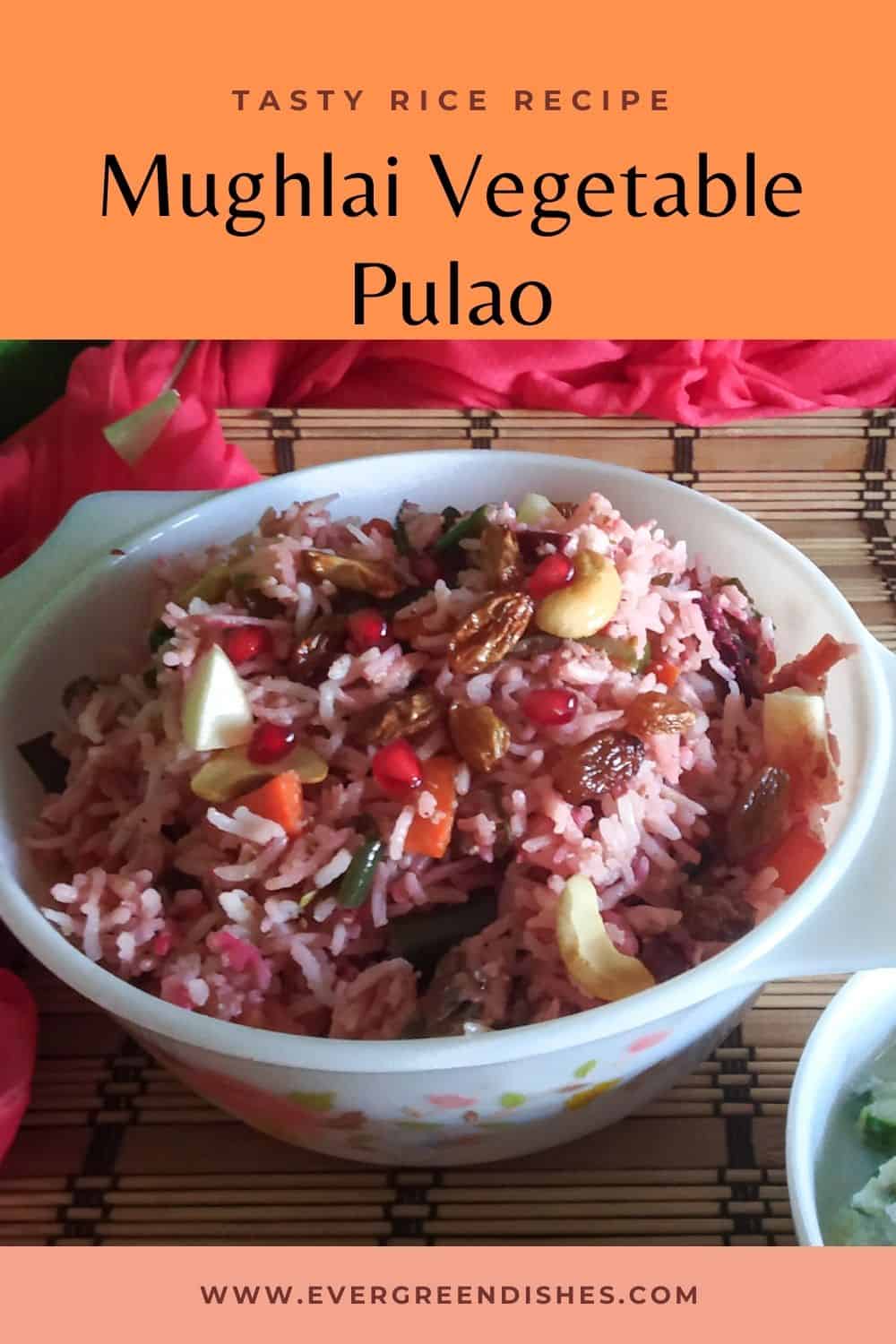
Mughlai VegPulao is a rich, mildly aromatic and delicious rice dish from Indian sub-continent. It is rich with the addition of nuts and fruit pieces. It makes a good meal for the weekend.
Rice dish in any form is always welcome at home. It serves dual purpose, it is loved by my children and cooking is made easier for the day. It is ideal for brunch, weekend lunch or dinner. Mughlai Pulav as the name indicates is rich and tasty. It paies well with any curd based salad and a appetiser.
To make mughlai veg pulao, initially cook the rice separately with a bay leaf, a teaspoon of ghee and a pinch of salt. Cut the vegetables into thin strips. Grind coconut along with coriander seed, poppy seed, garlic and ginger to a paste. Here, I have used a mixture of oil and ghee to cook it., it gives a good taste to the dish. One can fry the nuts ahead and keep them aside at this stage. The detailed recipe is given below.
mughlai vegetable pulao
Mughlai Pulao Recipe
Ingredients:
1 cup basmati rice
1 bay leaf
1 teaspoon ghee
1/4 cup beans (cut in one inch long pieces)
1/4 cup carrot (cut similarly, used in lesser quantity )
peas
1/4 cup beetroot ( cut similarly, used in lesser quantity)
fruit pieces ( I have used apple and pomegranate)
2 tablespoon oil
1 tablespoon ghee
2 cloves
1 inch stick cinnamon
2 cardamom
1 tablespoon fresh coconut
1.5 teaspoon poppy seed
5 cloves garlic
5 green chilli
1/2 inch ginger
1.5 tablespoon coriander seed
salt
Method :
Cook the rice with bay leaf and a teaspoon of ghee. We need separate grains of rice, add water accordingly.
In a thick bottom pam, add ghee and oil. Put cardamom, cloves and cinnamon to it. After a few seconds, add beans to it. Put carrot and beetroot pieces after two minutes. Let them cook. Put peas to it.
Grind together coconut, poppy seed, green chilli, ginger and coriander seed with a little water.
Put the paste in it and saute it for sometime. Let the raw smell diminish.
Now, add the cooked rice and salt to it. Mix it gently.
Fry cashew and raisins in ghee.
Garnish with fruits and dry fruits. Serve Mughlai vegetable pulao with a raita of your choice.
Take a tip:
You may add grapes and pineapple pieces to it.
Let the pressure release by itself. It is good to spread on a wide plate.
Vegetables are of your choice. You may add potatoes and omit beetroot if you wish.
Avoid using garlic to make it a no onion garlic recipe.
About the event :
Sending this to “Exotic Pulao and Biryanis ” at Shhh Secretly Cooking group. The theme was suggested by Swaty Malik. She has a wide range of dishes on her blog. I have bookmarked her healthy moong dal idlis to try. Here, we are paired together and partners exchange two ingredients as secret ones to cook a dish. Later, other members try to guess the given ingredients. I was paired with Renu. She gave me green chilly and poppy seed and I have prepared this Mughlai Vegetable Pulao. I gave cinnamon and bada elaichi ( big cardamom) as the secret ingredients and she has prepared a delicious One Pot Vegetable Mangodi Tahiri. I would love to make her no bake coffee energy balls soon.
Evergreendishesdev
Mughlai Vegetable Pulao
Mughlai vegetable pulao is a delicious rice dish prepared with coconut and other spices, cooked with assorted vegetables and garnished with fruits and nuts
1/4cupcarrotcut similarly, used in lesser quantity
peas
1/4cupbeetrootcut similarly, used in lesser quantity
fruit piecesI have used apple and pomegranate
2tablespoonoil
1tablespoonghee
2cloves
1inchstick cinnamon
2cardamom
1tablespoonfresh coconut
1.5teaspoonpoppy seed
5clovesgarlic
5green chilli
1/2inchginger
1.5tablespooncoriander seed
salt
Method
Cook the rice with bay leaf and a teaspoon of ghee. We need separate grains of rice, add water accordingly.
In a thick bottom pam, add ghee and oil. Put cardamom, cloves and cinnamon to it. After a few seconds, add beans to it. Put carrot and beetroot pieces after two minutes. Let them cook. Put peas to it.
Grind together coconut, poppy seed, green chilli, ginger and coriander seed with a little water.
Put the paste in it and saute it for sometime. Let the raw smell diminish.
Now, add the cooked rice and salt to it. Mix it gently.
Fry cashew and raisins in ghee.
Garnish with fruits and dry fruits. Serve Mughlai vegetable pulao with a raita of your choice.
Notes
You may add grapes and pineapple pieces to it.
Let the pressure release by itself. It is good to spread on a wide plate.
Vegetables are of your choice. You may add potatoes and omit beetroot if you wish.
Avoid using garlic to make it a no onion garlic recipe.
If you ever make this Mughlai Vegetable Pulao, do take a picture and tag @foodiejayashree on Instagram or @evergreendishes on Facebook or Twitter. I will be glad to see your creation and share it further. Let’s be connected, do follow on social media platforms. Until next time, let’s stay connected. Subscribe to get all updates and an e-book for free. Check out my e-books on Amazon. Happy Cooking !
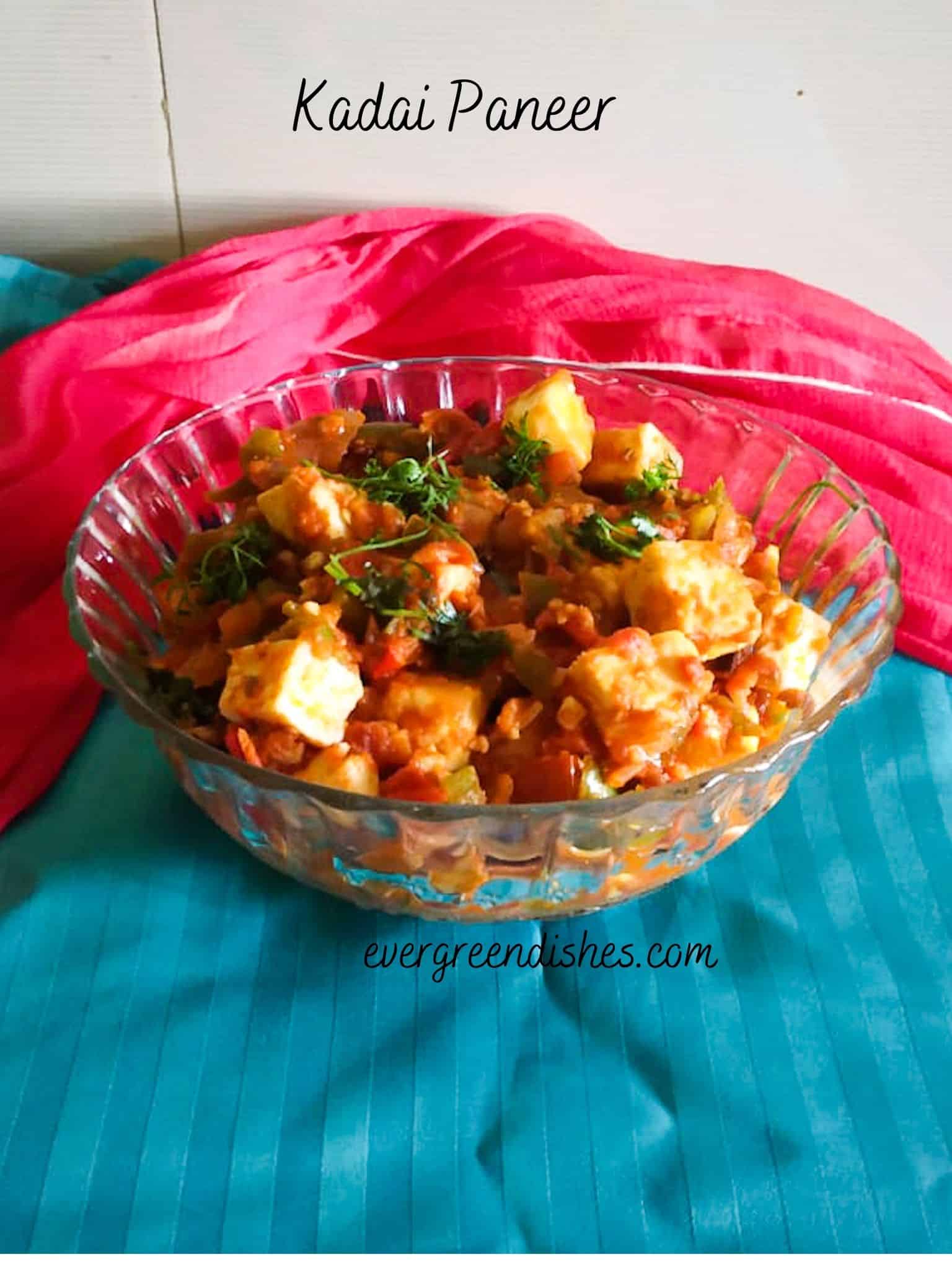
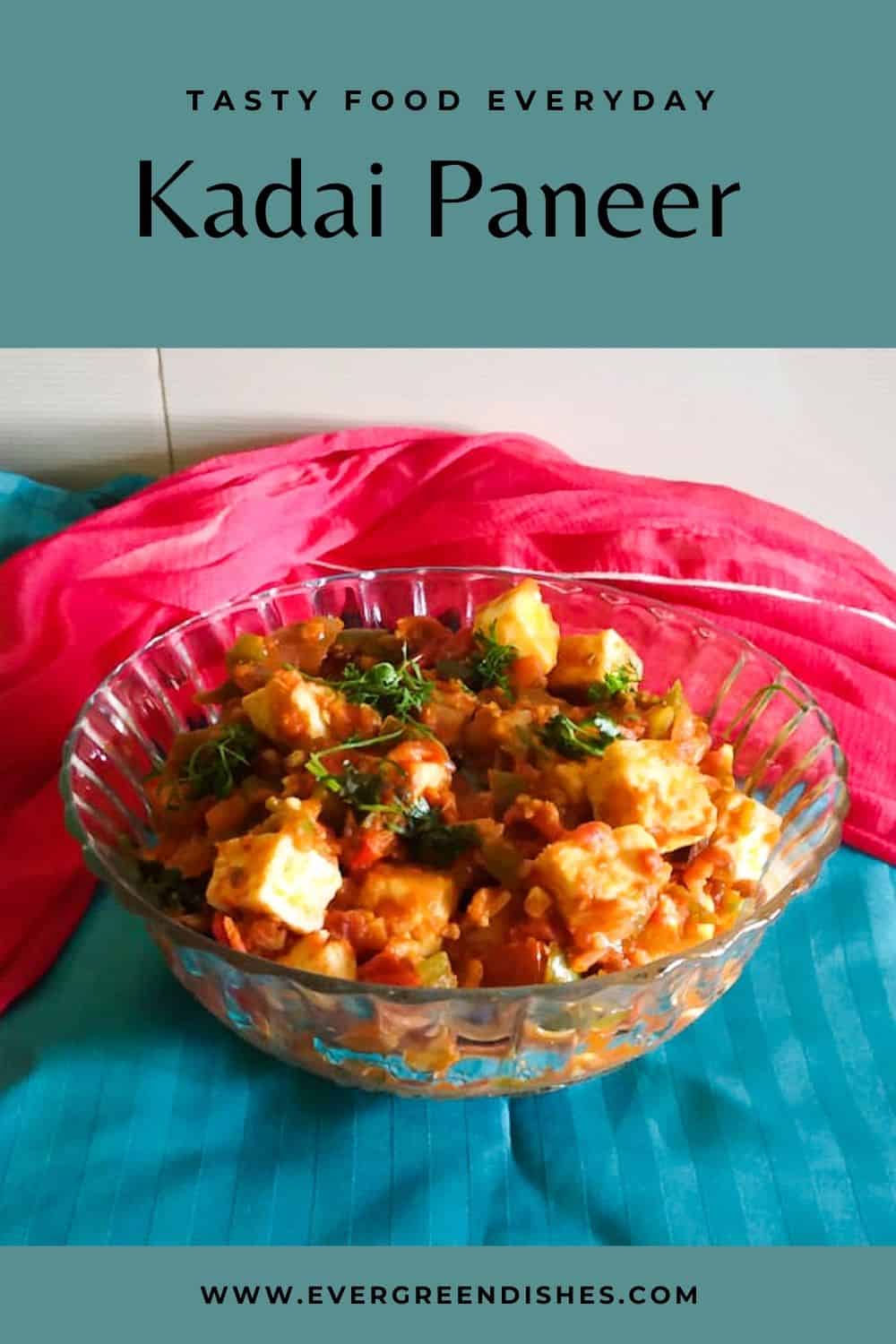
Kadai Paneer is a delicious side dish from North Indian cuisine. It is ideal to pair with Indian flatbreads as tandoori roti, naan, chapati or phulka.
Kadai Paneer is a popular side dish made with cubes of paneer and capsicum, served in a small, beautiful metal pot (known as kadai in Hindi) with two handles in most restaurants. The kadai masala is prepared using a few spices but here I have a quick, semi-dry version with the addition of whole spices. I have lightly roasted the coriander and ground them coarsely. This tasty North Indian sabzi is ready in 30 minutes from scratch. You can serve it with kulcha or roomali roti too.
Paneer, commonly called as cottage cheese, is loved by most people and finds a place in many dishes. It is a rich source of milk protein . It is commonly used in gravies. snacks and many kind of sweets. It is made by curdling milk. Today, many brands have ready to eat which you can just simmer and eat with hot rotis or phulka. We recently had these paneer indie bowl and they were tasty.
Kadai Paneer
Why should you make this Kadai Paneer recipe ?
easy to prepare
tasty
ideal to serve for lunch
loved by both kids and adults
goodness of paneer
Kadai Paneer Recipe
Ingredients:
200 grams paneer 2 tablespoon oil 2 sticks of one inch cinnamon 2 cloves 2 bay leaf 2 red chillies broken into half 2 tablespoon coriander seed 1 large onion 10 cloves garlic 2 pieces of ginger 1 teaspoon coriander powder 1/2 teaspoon turmeric powder 1 teaspoon red chilli powder 2 capsicum 5 tomato salt to taste
Method:
Dry roast the coriander seed and grind it coarsely.
Grind ginger and garlic to a paste.
Cut onion and tomato finely.
Heat oil in a pan, add cinnamon, cloves, red chillies and half the quantity of coriander seed powder. Saute for sometime.
Add onion pieces and saute for a minute. Put ginger garlic paste and saute it for sometime. Put the capsicum pieces into it and let them cook for a while
Put coriander powder, chilli powder, turmeric powder and mix them well.
Add tomato and salt. Mix and let them cook until they are mushy and the oil separates.
Keep the paneer ready to use by thawing them in warm water and cutting into small pieces.
Put the paneer pieces and half a cup of water to it.
Let cook for sometime. Garnish with coriander leaves.
Kadai Paneer is ready to serve.
Take a tip:
You may add a few fried cashew pieces.
It is best to consume paneer dishes soon after preparation.
Evergreendishesdev
Kadai Paneer
Kadai Paneer is a popular side dish from North Indian cuisine. It pairs well with roti, naan, phulka or chapati.
Dry roast the coriander seed and grind it coarsely.
Grind ginger and garlic to a paste.
Cut onion and tomato finely.
Heat oil in a pan, add cinnamon, cloves, red chillies and half the quantity of coriander seed powder. Saute for sometime.
Add onion pieces and saute for a minute. Put ginger garlic paste and saute it for sometime. Put the capsicum pieces into it and let them cook for a while
Put coriander powder, chilli powder, turmeric powder and mix them well.
Add tomato and salt. Mix and let them cook until they are mushy and the oil separates.
Keep the paneer ready to use by thawing them in warm water and cutting into small pieces.
Put the paneer pieces and half a cup of water to it.
Let cook for sometime. Garnish with coriander powder.
Kadai Paneer is ready to serve.
Notes
You may add a few fried cashew pieces.
Paneer dishes should be consumed soon after preparation.
If you ever make this Kadai Paneer recipe, do take a picture and tag @foodiejayashree on Instagram or @evergreendishes on Facebook or Twitter. I will be glad to see your creation and share it further. Let’s be connected, do follow on social media platforms. Until next time, let’s stay connected. Subscribe to get all updates and an e-book for free. Check out my e-books on Amazon. Happy Cooking!
 Mooli Paratha Recipe :