Tag: traditional sweets

  • Banana Rasayana | Balehannina Shikarni

    Banana Rasayana | Balehannina Shikarni

    Jump to Recipe

    Banana Rasayana | Balehannina Sihkarni | No Cook Recipe | 15 minute recipe

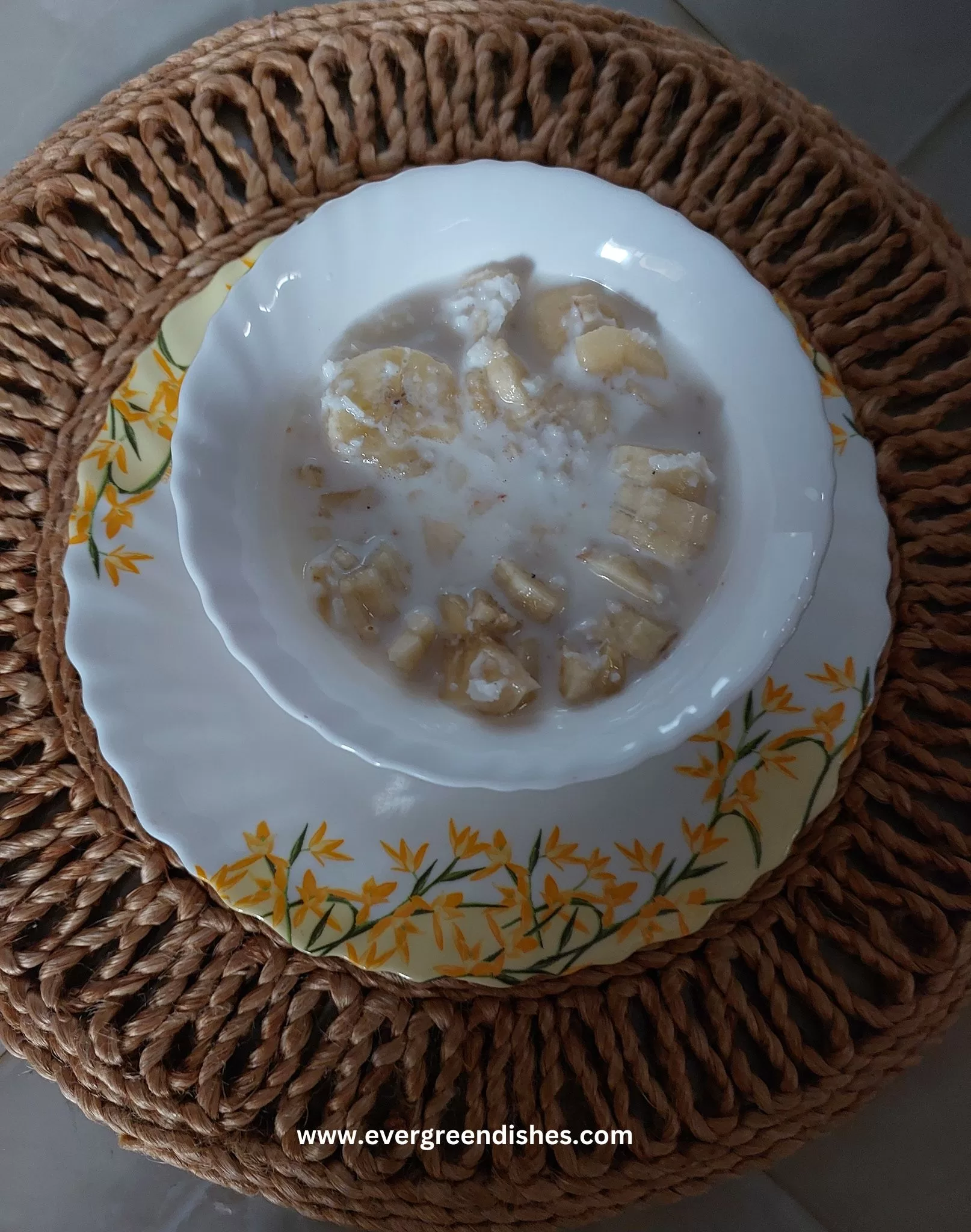
    Banana Rasayana or Balehannina Shikarani is a traditional recipe. It  is a simple yet tasty recipe which can be recreated in ten minutes. It involves no cooking.

    Rasayana can be had as a dessert after meals or one can use it as an accompaniment with chapathi. During our childhood days, I remember banana rasayana was made so regularly. Fasting days and a bowl of rasayana was kept ready to serve. Excess of banana and it was soon made into a shikarni.

    This post is one of the reminiscences of our childhood days.. It was ideal for any day, just cut a few bananas and put them in milk. Growing up in a joint family during my childhood days, cooking was an elaborate affair. If some unexpected guest came home and an extra dish on the platter would be banana rasayana. Too many banana after a festive day and it would turn into a delicious rasayana. I think all of us can relate to such incidents.
    The making of rasayana

    The simplest step is to use those fruits which are a day old. Cut them into small pieces and put it in a bowl of milk. Add sugar, cardamom powder and grated coconut to it. Serve it with chpathi or as a dessert.

    Why should you make this ?

    • It is easy to prepare. Here, no cooking is involved. Just cut a few bananas, mix a few ingredients in milk and voila, it is ready.
    • It is ideal to offer to the Lord on festive days.
    • It is ideal for fasting days. 
    • Rasayana is a good way to finish off the extra banana lying in the kitchen platform.
    • Bananas are  a good source of nutrition, ideal to make it as part of  our diet.
    • It is a quick fix sweet dish anytime.


    Take a tip:

    • Cut the banana into small pieces.
    • Bananas should  not be over ripe.
    • Honey may be added.
    • You may add cashews and raisins. 

    A few recipes from my co-bloggers which are no cook recipes like the Rasayana ;Strawberries with Fresh CreamSolkadhi and Carrot and Orange Granita 

    Check out the other no cook recipes from the blog
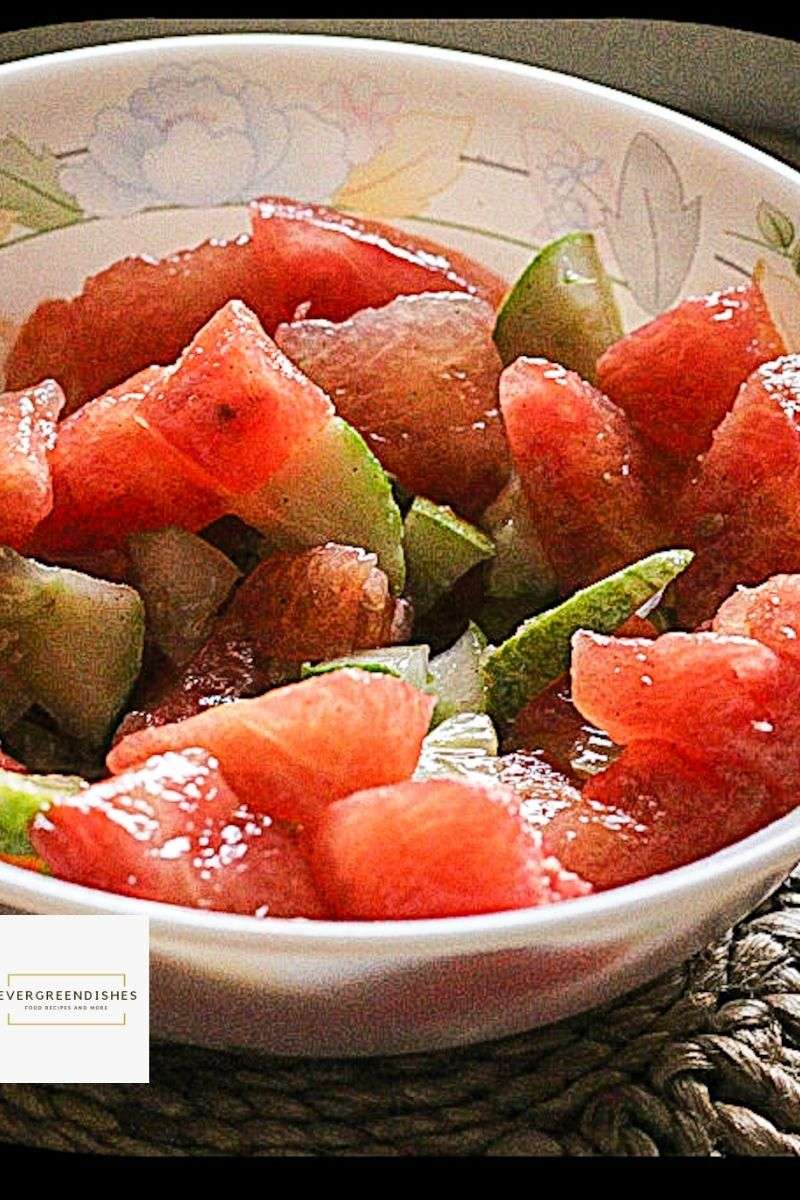
    watermelon and cucumber salad
    watermelon and cucumber salad
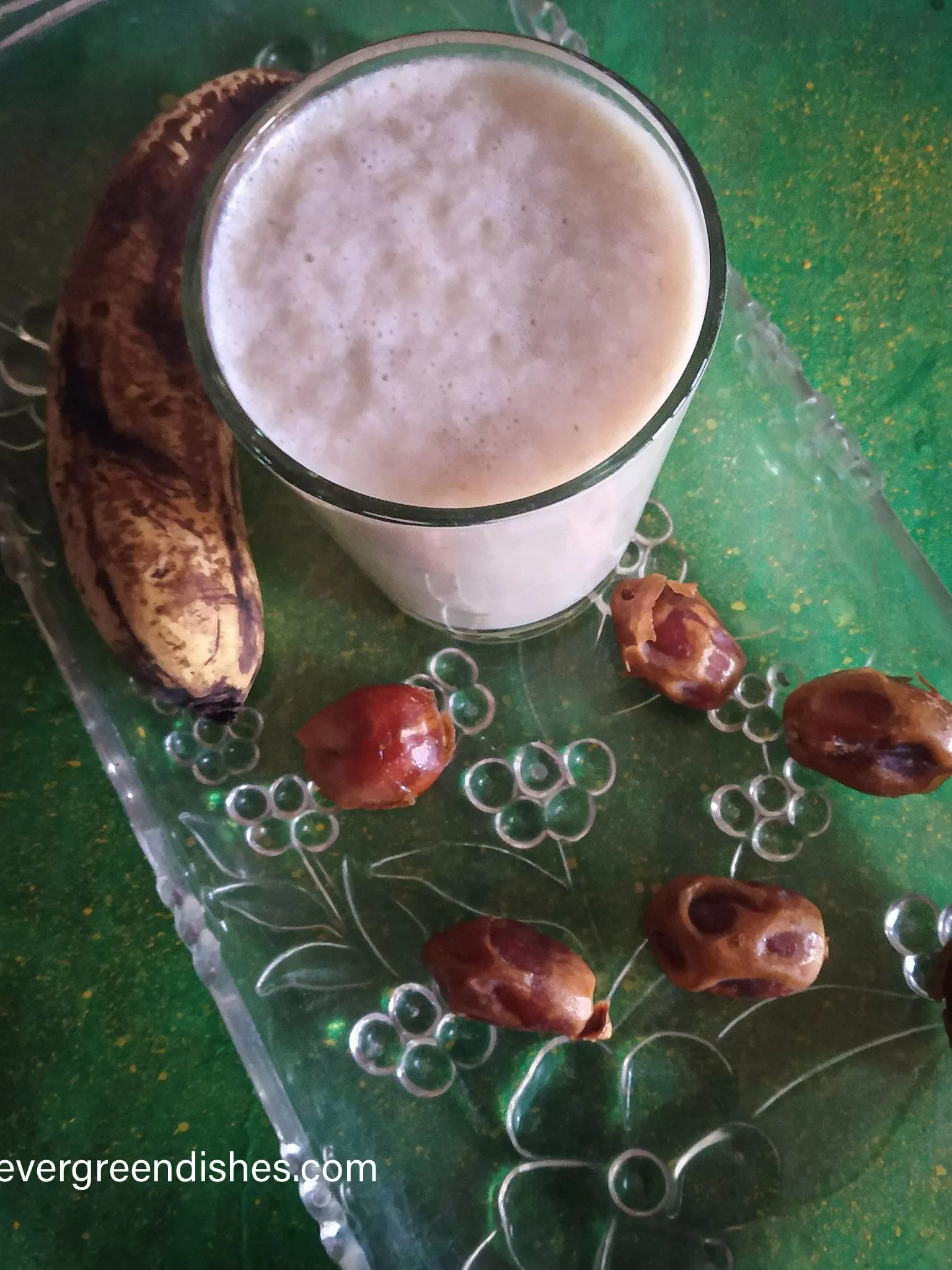
    baanana date milkshake
    banana date milkshake
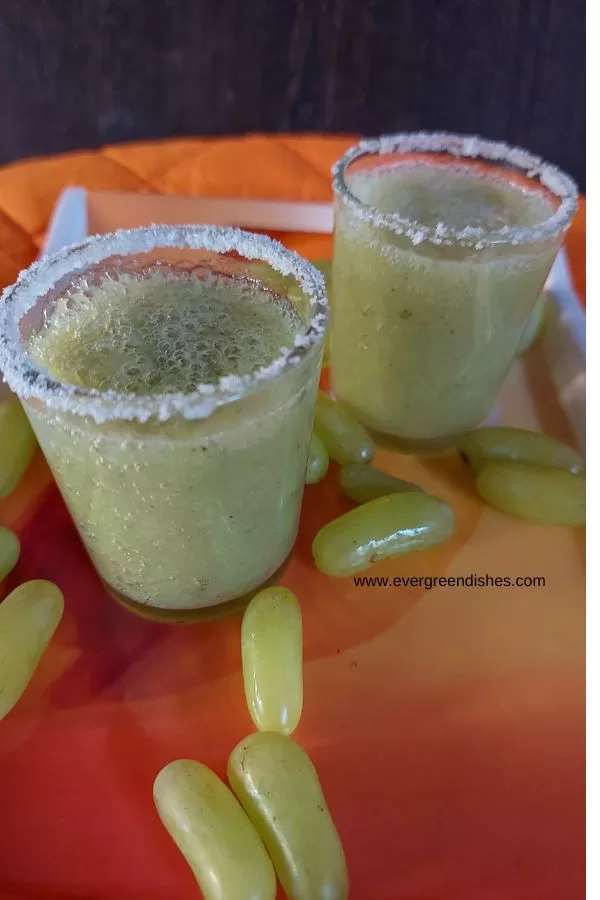
    grapes shot recipe
    grapes shot

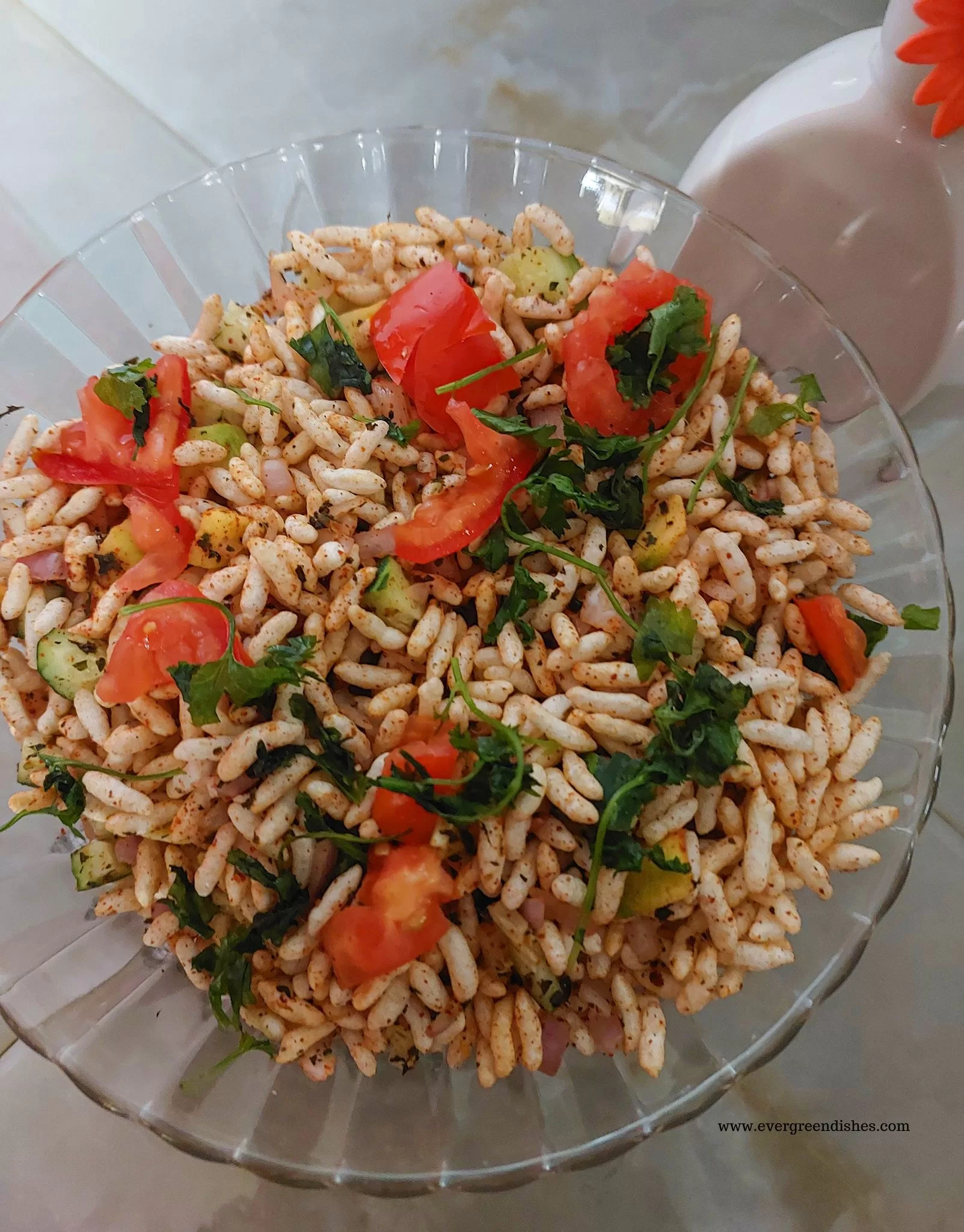
    spicy murmura snack
    spicy murmura snack
    Print Recipe

    banana rasayana

    Banana Rasayana | Balehannu Sihikarne

    5 from 1 vote
    Banana Rasayana is a simple, no cook, tasty dish. It is ideal to serve with chapathi or as a dessert.

    Ingredients
      

    • 2 bananas
    • ½ cup milk
    • 2 teaspoon sugar
    • 2 teaspoon fresh grated coconut
    • A pinch of cardamom powder

    Equipment

    • 1 knife
    • 1 wide bowl
    • 2 spoons
    • 1 serving bowl

    Method
     

    1. Cut the banana into pieces. Add milk. Put sugar, grated coconut and cardamom powder. Mix and serve.

    Notes

    Cut the banana into small pieces.
    Bananas should  not be over ripe.
    Honey may be added.
    You may add cashews and raisins. 

    If you  ever make  Banana Rasayana , take a picture and share it by tagging @foodiejayashree on Instagram and @evergreendishes on Facebook.  Subscribe to get all updates and an e-book for free.

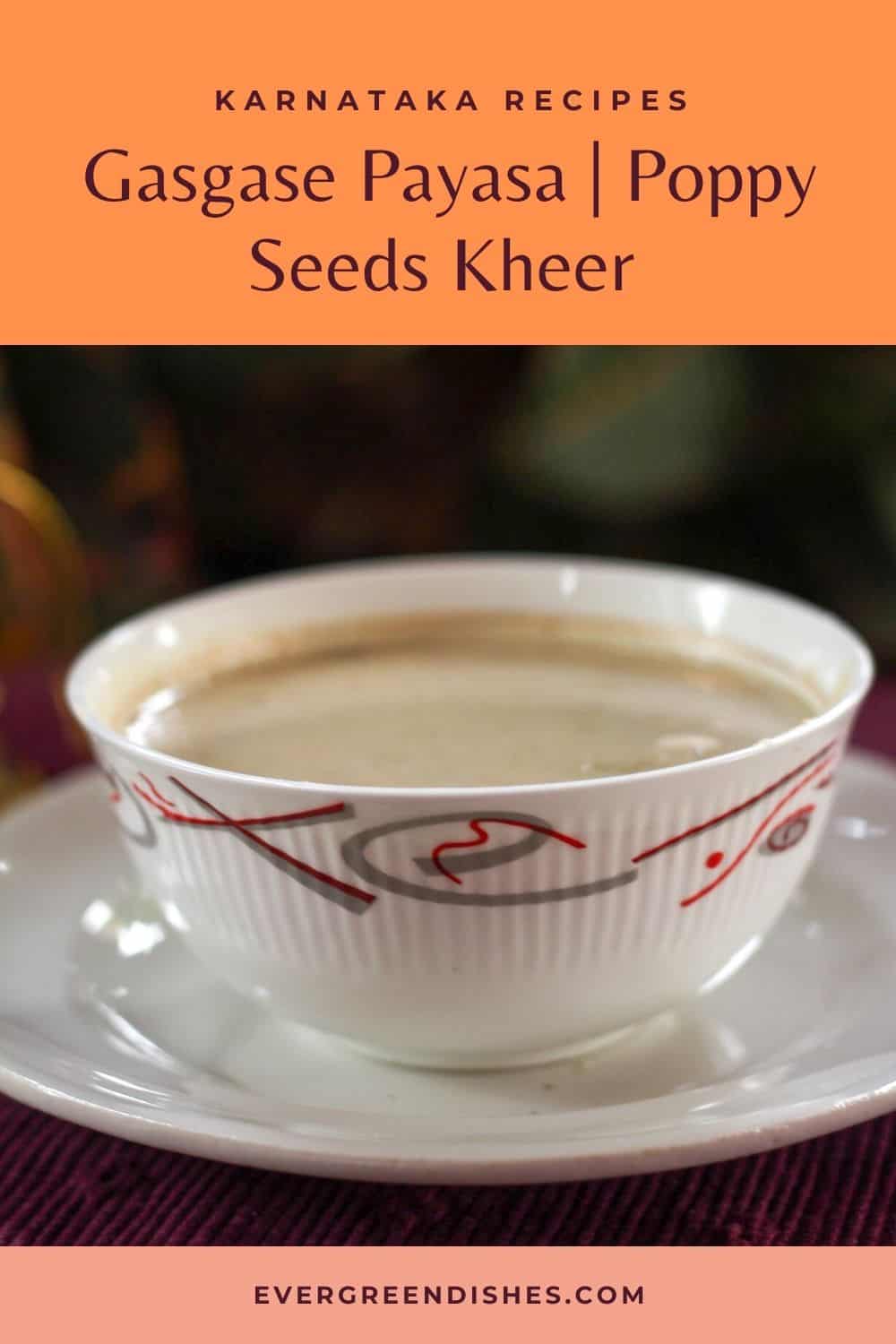
  • Gasgase Payasa | Poppy seeds Kheer

    Gasgase Payasa | Poppy seeds Kheer

    Jump to Recipe Print Recipe

    Gasgase payasa is a rich, creamy, delicious dessert. It is one of the Indian sweet dishes  lost back with time.

    Gasgase is the Indian name for poppy seed. It is also known as khus-khus. in Hindi, kasa kasa in Tamil, and posto in Bengali. Gasgase payasa is an all time favourite sweet dish of many Kannadigas and this is a traditional Karnataka recipe.

    The tiny white seeds are a good source of calcium, manganese, copper, zinc, and potassium. It is a rich source of dietary fiber and thus aids in digestion. It fights insomnia. The poppy plant is a source of opium, thus extensive use of these seeds induces sleep. The anti-oxidants help to maintain good eyesight. It is a good cure for the thyroid.

    Khus khus is widely used in Indian cooking. It is used in small quantity to enhance the taste of the dish.

    Khus-khus payasam is a good sweet dish from South India. It is ideal to prepare for any festivities. It is vegan and gluten-free
    Make sure the poppy seed is thoroughly cleaned. Fresh coconut along with nuts and khus-khus gives a good taste. It is then ground and sweetened with jaggery.

    Navratri festival is celebrated with pomp and show throughout India. It is a ten day festival when elaborate poojas are performed and deities are spectacularly decorated. The tenth day is celebrated as Dasara. If you are looking for other kind of kheer recipes, check out dalia payasam, sabudana kheer, komala payasam, sweet potato kheercustard apple kheer, chaler payesh, makhana kheer,

    gasgase payasa | poppy seed kheer
    gasgase payasa | poppy seed kheer

    Gasgase Payasa recipe | Khus khus payasa

    Ingredients:

    • 1/3 cup gasgase / poppy seed
    • 10 cashew nut
    • 2/3 cup fresh coconut
    • 1 cup jaggery
    • 2 cup water
    • 1/4 teaspoon cardamom powder

    Method:

    1. Dry roast gasgase for two minutes until it pops. Put it aside for sometime.
    2. Once it cools, grind it in the small jar. Now, add grated coconut and cashew to it with a little water. Make a paste of it.
    3. Put jagger in a pan along with water. Once it melts, strain the liquid to remove impurities.
    4. Put the jaggery syrup back on the stove, once it is warm, put the paste to it and simmer for five minutes.
    5. Finally, add cardamom powder.
    6. Gasgase payasa is ready to serve.

    Take a tip:

    • You may top with nuts roasted in ghee.
    • It tastes good when chilled too.
    gasgase payasa | poppy seed kheer
    Evergreendishesdev

    Gasgase Payasa | Khus khus payasa

    Gasgase Payase is a delicious, creamy sweet treat from Karnataka cuisine. It is one of the recipes lost back with time.
    Prep Time 10 minutes
    Cook Time 20 minutes
    Total Time 30 minutes
    Servings: 4 people
    Course: sweets, traditional recipes
    Cuisine: karnataka

    Ingredients
      

    • 1/3 cup gasgase / poppy seed
    • 10 cashew nut
    • 2/3 cup fresh coconut
    • 1 cup jaggery
    • 2 cup water
    • 1/4 teaspoon cardamom powder

    Method
     

    1. Dry roast gasgase for two minutes until it pops. Put it aside.
    2. Once it cools, grind it in the small jar. Then, add coconut and cashew to it and make a paste with little water.
    3. Put jagger in a pan along with water. Once it melts, strain the liquid to remove impurities.
    4. Put the jaggery syrup back on the stove, once it is warm, put the paste to it and simmer for five minutes.
    5. Finally, add cardamom powder.
    6. Gasgase payasa is ready to serve.

    Notes

    • Gasgase payasa  can be served warm or cold. It tastes good when chilled.
    • It can be kept for a day in the refrigerator. 
    • You may garnish with nuts roasted in ghee. 

    If you ever make this gasgase payasa,  do take a picture and tag @foodiejayashree on Instagram or @evergreendishes on Facebook or Twitter. I will be glad to see your creation and share it further. Let’s be connected, do follow on social media platforms. Until next time, let’s stay connected.  Subscribe to get all updates and an e-book for free. Check out my e-books on Amazon.  Happy Cooking!
     

    Pin it for later :

    Gasgase Payasa | Poppy seeds kheer is a rich, creamy dessert. It is one of the traditional recipes from Karnataka cuisine. Give a try to this.
    Gasgase payasa | Poppy seeds kheer
  • Sabudana Kheer / Sabakki Payasam

    Sabudana Kheer / Sabakki Payasam

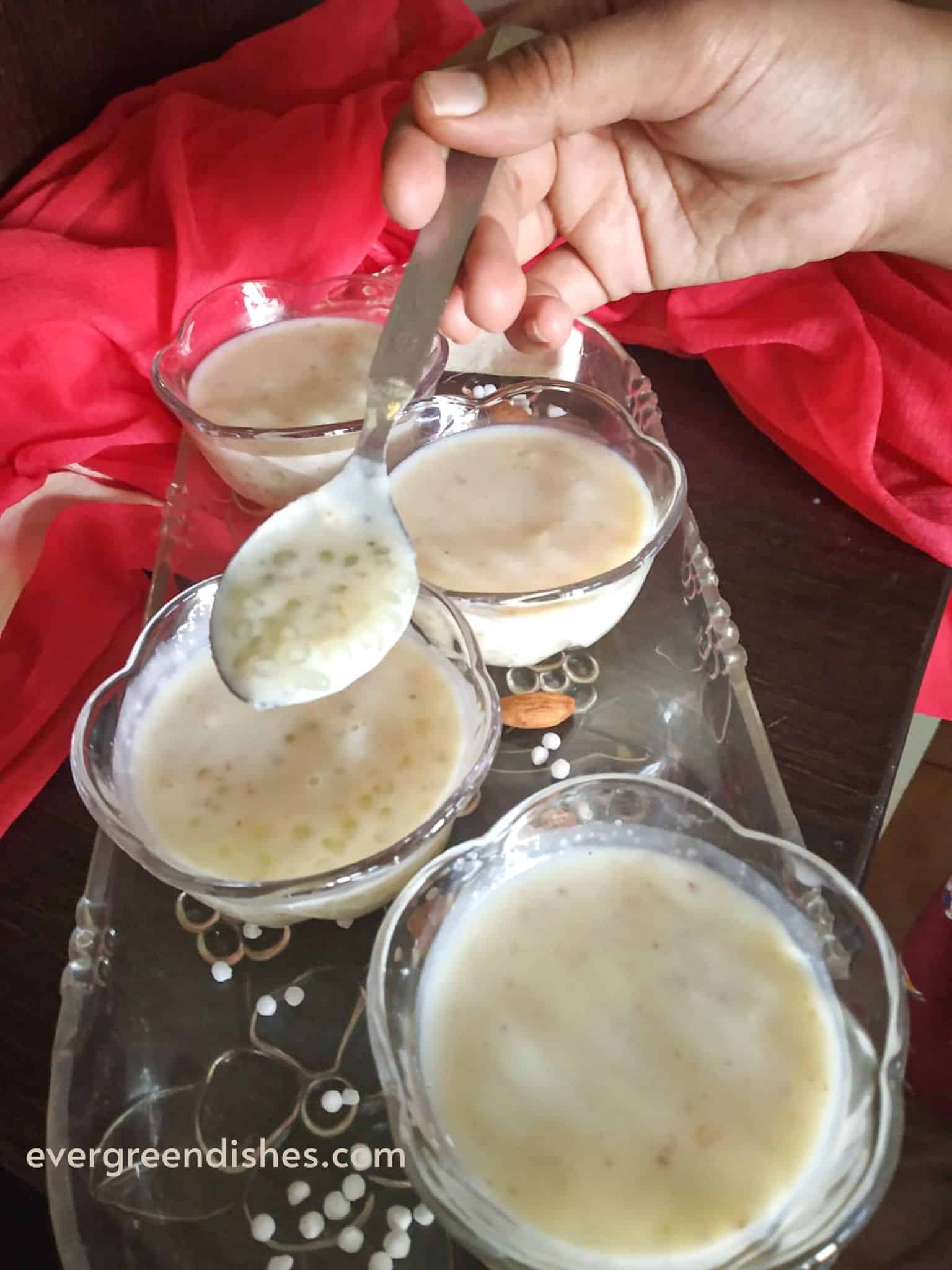
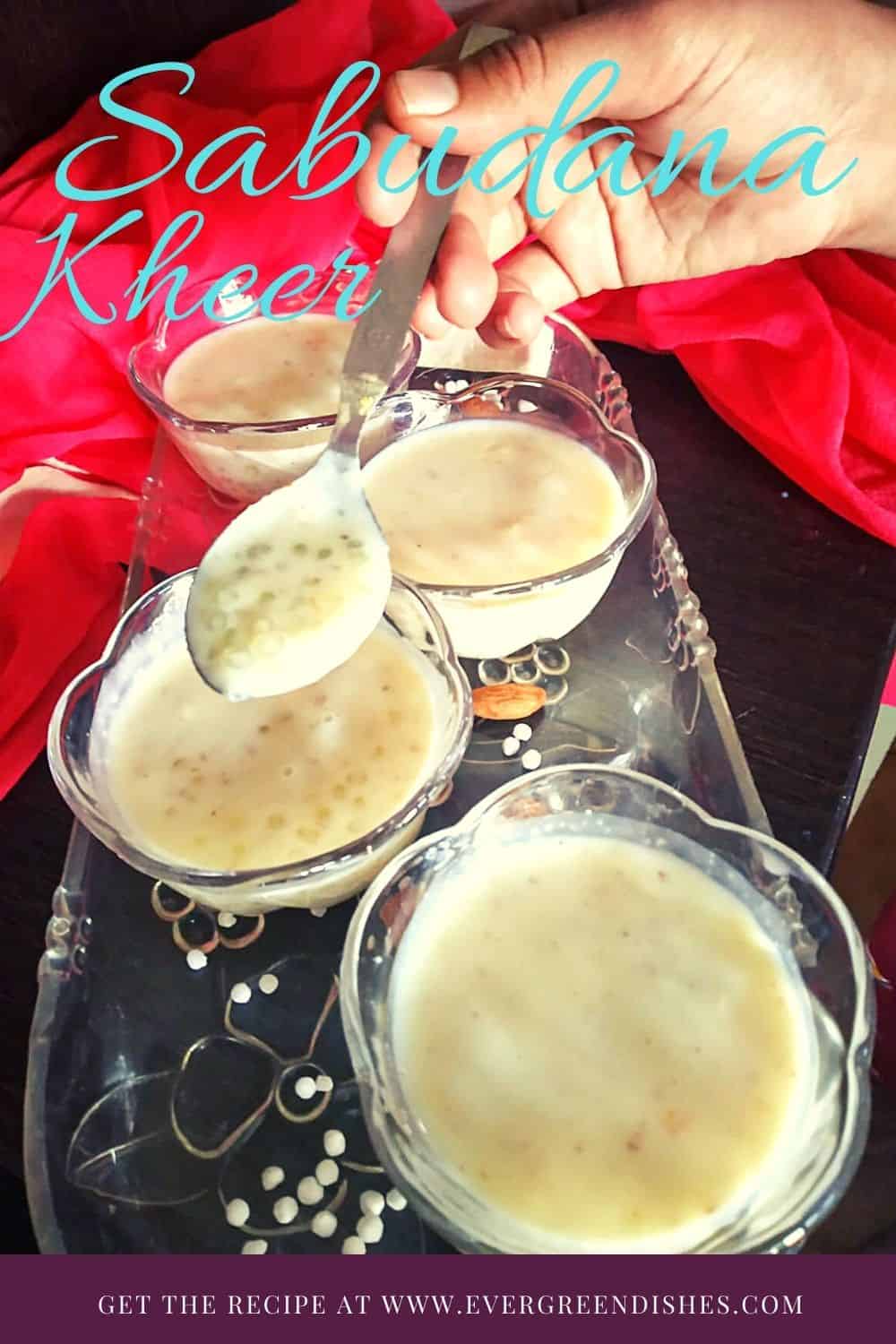
    Sabudana Kheer / Sabakki Payasam is a tasty and easy to make Indian dessert. Tapioca pearls are used to make a delicious kheer, ideal for fasting days. 

    Sabudana is called as sago, rabia and saksak in different parts of the world. It is a starch extracted from the pith of tropical palm trees. The making of sago pearls is an exhaustive process. It is used mainly as a fasting food. Here is another kind of dish you can enjoy with sabudana. I have many good memories associated with this dish. Sabudana kheer is ideal on fasting or festive days. It is good to serve for fussy children. It is a sweet dish one can prepare without any hassle. 

    Unlike the other payasam, the method involved is slightly different. The soaked sabudana are cooked in water and later milk is added to it and sweetened with sugar. The prior cooking helps in softening the sago pearls.

    Sabudana Kheer is ideal for:

    • fasting days
    • festive time
    • as a dessert for family time
    • for fussy children who refuse to eat
    • make ahead sweet for get-together
    sabudana kheer / sago payasam is a delicious, easy to make Indian dessert. Tapoica pearls are cooked in milk to make a tasty kheer. Give a try to this sweet dish.
    Sabudana Kheer / Sago Payasam

    Ingredients:


    1/2 cup sago   (measurement: 1 cup= 250 ml)
    1/2 cup water
    1/2 cup milk
    1/2 cup sugar
    10 almonds
    1/4 teaspoon cardamom powder
    a few strands of saffron

    Method: 

    1. Clean the sago, wash it and soak  for half an hour.
    2. Boil it in half cup of water on a medium flame. The pearls  should be soft and translucent. 
    3. Add milk to it. Put a few strands of  saffron to it. 
    4. Let boil for sometime. Keep stirring in between, it may get burnt. 
    5. Add sugar to it.
    6. Make powder of almonds and put it in the kheer. 
    7. Once it thickens slightly, remove from flame.  Finally, add cardamom powder. You can serve it warm or chilled. 

    Take a tip:

    • Dry fruits like cashew and almonds pieces can be roasted in ghee and garnished.
    • The kheer gets thicker on cooling. Keep the consistency moderately thin while cooking.
    • Sago pearls may be boiled in milk but they do not cook so well. 

    The other sweet recipes for the festive season are : Badam puri, Khaja, Shenga Holige, Kadabu

    sabudana kheer / sago payasam

    Sabudana Kheer / Sago Payasam

    Sabudana Kheer is a delicious sweet ideal as a quick-fix dessert. It can be made ahead and stored.
    Prep Time 5 minutes
    Cook Time 15 minutes
    Soaking time 30 minutes
    Total Time 50 minutes
    Servings: 4 cups
    Course: fasting recipe, festive sweet, sweets
    Cuisine: Indian

    Ingredients
      

    • 1/2 cup sago
    • 1/2 cup water
    • 1/2 cup milk
    • 1/2 cup sugar
    • 10 almonds
    • 1/4 teaspoon cardamom powder
    • a few strands of saffron

    Method
     

    1. Clean the sago, wash it and soak  for half an hour.
    2. Boil it in half cup of water on a medium flame. The pearls  should be soft and translucent.
    3. Add milk to it. Put a few strands of  saffron to it.
    4. Let boil for sometime. Keep stirring in between, it may get burnt.
    5. Add sugar to it.
    6. Make powder of almonds and put it in the kheer.
    7. Once it thickens slightly, remove from flame.  Finally, add cardamom powder. You can serve it warm or chilled.

    Notes

    Dry fruits like cashew and almonds pieces can be roasted in ghee and garnished.
    The kheer gets thicker on cooling. Keep the consistency moderately thin while cooking.
    Sago pearls may be boiled in milk but they do not cook so well. 

    Pin it for later:

    sabudana kheer/ sago payasam
    Sabudana kheer/ sago payasam

    If you ever make this Sabudana Kheer recipe or any of my other dishes,  do take a picture and tag @foodiejayashree on Instagram or @evergreendishes on Facebook or Twitter. I will be glad to see your creation and share it further. Let’s be connected, do follow on social media platforms. Until next time, let’s stay connected.  Subscribe to get all updates and an e-book for free. Check out my e-books on Amazon.  Happy Cooking !

  • Khira Gaintha Recipe | Odisha cuisine

    Khira Gaintha Recipe | Odisha cuisine

    Jump to Recipe Print Recipe

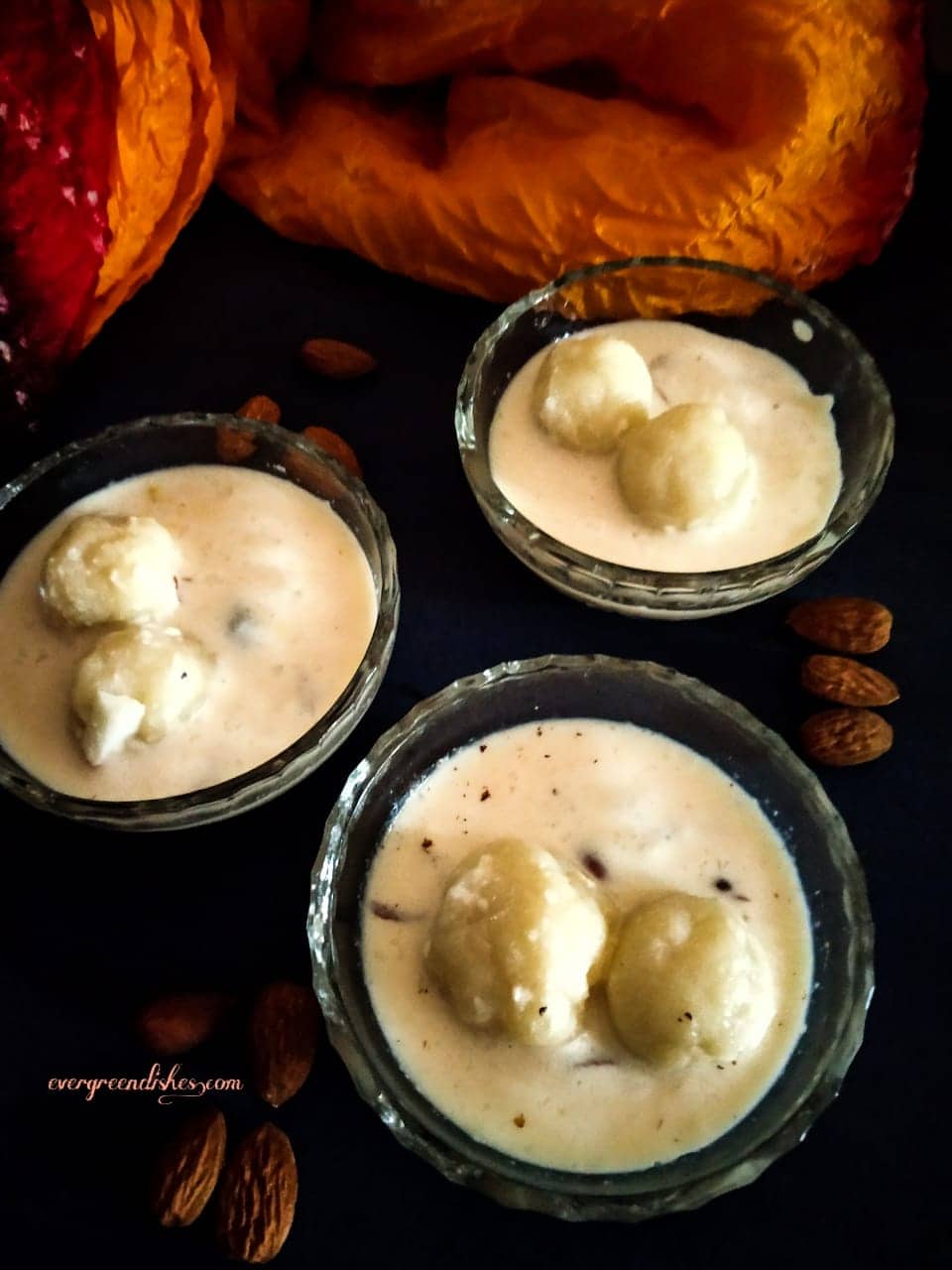
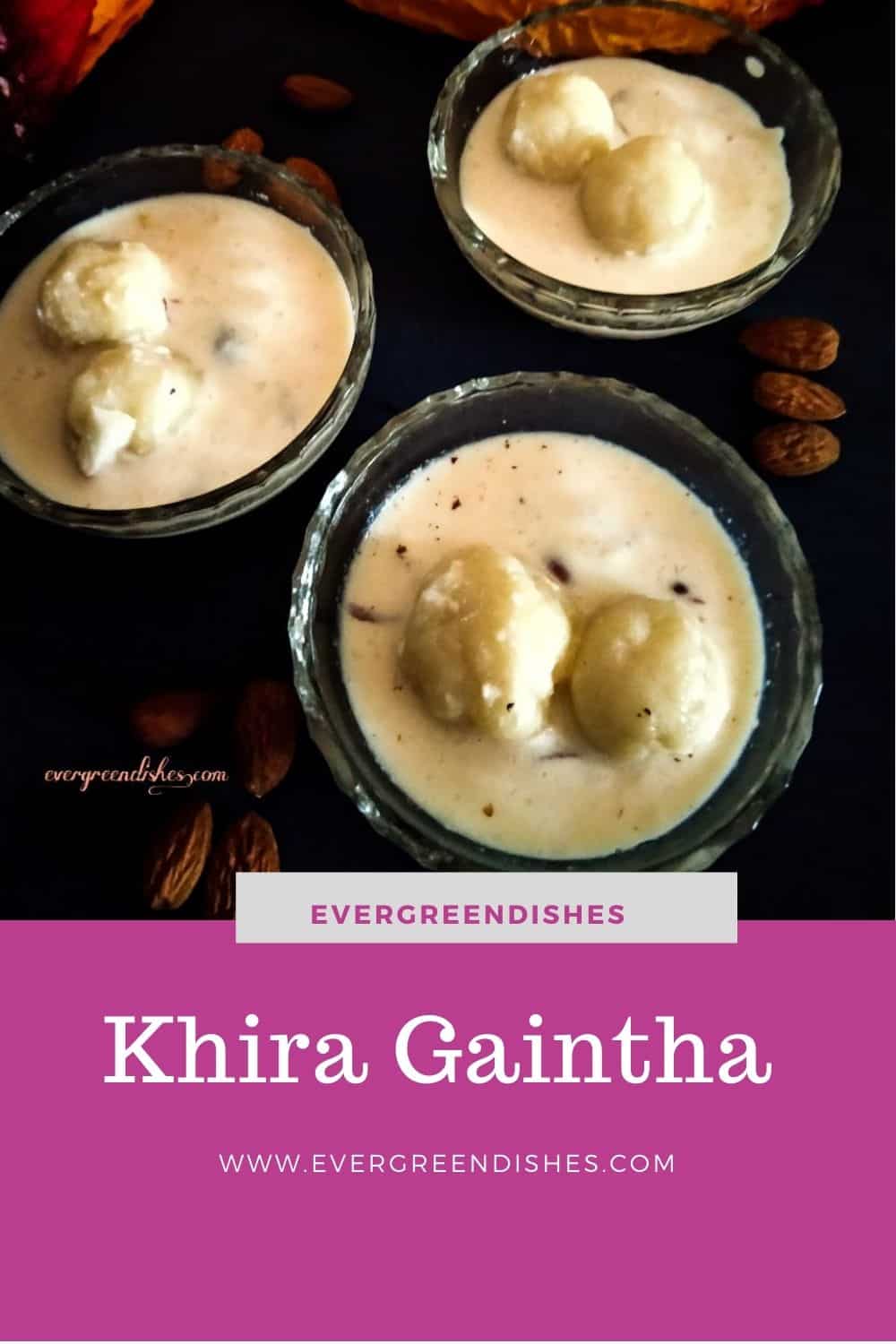
    Khira Gaintha is a delicious sweet dish, rice balls are cooked in thickened milk laced with nuts, cardamom, kesar and coconut. It is from Oriya cuisine and usually made as an offering to the Lord Jaganath. 

    What is a Pitha ? 
     Pitha is a variety of flatbread, dumpling or fritter familiar to Bangladesh and Indian sub-continent. It may be sweet or savoury which is usually made during festivals. It is familiar to states of Orissa, Assam, Nepal, Jharkhand and Bihar. 

    What is the major ingredient used in Pitha? 

    Rice flour is the main ingredient in most Pitha recipes though other ingredients may be used along with it. Gaintha Godi, Malpua Pitha,Suji Kakara Pitha, Tala Pitha,

    What are the variations you find in Pitha? 

    Every state has many different kind of Pitha varieties on it. As I have studied the Odisha Pitha for the event, the different varieties I found were arisi Pitha, Chakuli Pitha, Poda Pitha, Ruka Pitha and Chunchipatra Pitha. 

    About the event: 

    It’s raining Pithas at Shhh  Secretly Cooking Group. The month of May, made us learn about Pitha.  Sasmita of First Timer Cook suggested to make any variety of Pitha. Her blog has many dishes from Oriya cuisine and I would like to try her stir fry from Oriya cuisine  Chhanka Tarkari. It has the goodness of many vegetables in it or one can use any vegetables that they have on hand.  I was paired with Swaty of Food Trails25.  The secret ingredients I gave were pepper and ghee and she prepared the delicious Sooji Kakara Pitha. I am curious to make them soon during some festive occasion.  I was given condensed milk and saffron and I prepared this Khira Gaintha. 

    shhh cooking secretly

    khira gaintha

    Khira Gaintha and Rasmalai

    Pitha and Khira Gaintha are both new to me. I did search on google, looked on youtube and finally made a few changes to the ingredients that I had in hand. Khira Gaintha has rice balls in thickened flavoured milk while rasmalai has dumplings made of paneer. Though, Rasmalai is quite popular, Khira Gaintha is not known to many of us. 

    Let’s get to the recipe of Khira Ghaintha.

    Ingredients:

    For the thickened milk: 

    • 3/4 litre milk
    • 200 ml condensed milk
    • a few strands of saffron
    • 1/4 teaspoon cardamom powder
    • 8 almonds
    • a few coconut pieces

      For the rice balls:

    • 1 cup water
    • 1/4 tsp salt
    • 1 tsp oil
    • 1 cup rice flour
    • 2 tsp ghee

      Method:


    To make the rabdi, boil milk for sometime. Let it reduce in quantity by at least thirty percent. Add saffron strands to it, put condensed milk and cook for a couple of minutes. Put it aside. Finally, add cardamom powder to it. 

    To make the rice balls: Take a cup of water in a pan. Add a pinch of salt and oil to it. Once the water comes to a boil, simmer and slowly mix the rice flour to it. Mix it well. Switch of the stove. Slowly, knead the mixture with a little ghee.

    To make Khira gaintha : Make small balls of it, put them on a plate. Once the balls are formed, slowly put them in the thickened milk and  bring to a boil. Put coconut pieces and almond slivers to it. Let cool. Refrigerate and serve chilled.

    Take a tip: 

    Evaporated milk may be used, then you need to add sugar to it. As I have used condensed milk, no additional sugar is used. 


    Khira Gaintha
    Evergreendishesdev

    Khira Gaintha

    Khira Gaintha is a traditional recipe from Odia cuisine. It is one of the Pitha varieties prepared in that state. It is usually made during festivities.
    Course: Dessert, festive sweet, lunch
    Cuisine: Indian, oriya

    Ingredients
      

    • For the thickened milk:
    • 3/4 litre milk
    • 200 ml condensed milk
    • a few strands of saffron
    • 1/4 teaspoon cardamom powder
    • 8 almonds
    • a few coconut pieces
    • For the rice balls:
    • 1 cup water
    • 1/4 tsp salt
    • 1 tsp oil
    • 1 cup rice flour
    • 2 tsp ghee

    Method
     

    1. To make the rabdi, boil milk for sometime. Let it reduce in quantity by at least thirty percent. Add saffron strands to it, put condensed milk and cook for a couple of minutes. Put it aside. Finally, add cardamom powder to it.
    2. To make the rice balls: Take a cup of water in a pan. Add a pinch of salt and oil to it. Once the water comes to a boil, simmer and slowly mix the rice flour to it. Mix it well. Switch of the stove. Slowly, knead the mixture with a little ghee.
    3. To make Khira gaintha : Make small balls of it, put them on a plate. Once the balls are formed, slowly put them in the thickened milk and  bring to a boil. Put coconut pieces and almond slivers to it. Let cool. Refrigerate and serve chilled.

    Notes

    Evaporated milk may be used, then you need to add sugar to it. As I have used condensed milk, no additional sugar is used. 
    Khira Gaintha is a traditional dish from Odisha cuisine. It is one of the pitha varieties prepared during festivities.
    Khira Gaintha

    The other Oriya dishes shared on the blog are : Aloo Bharta

    If you ever recreate this recipe, take a picture and share it on Instagram by tagging @foodiejayashree or on Facebook by tagging @evergreendishes. I will be glad to see your creation. Have you  check out my e-books ?

    Subscribe to get an e-book of handy hints and all updates in your inbox.

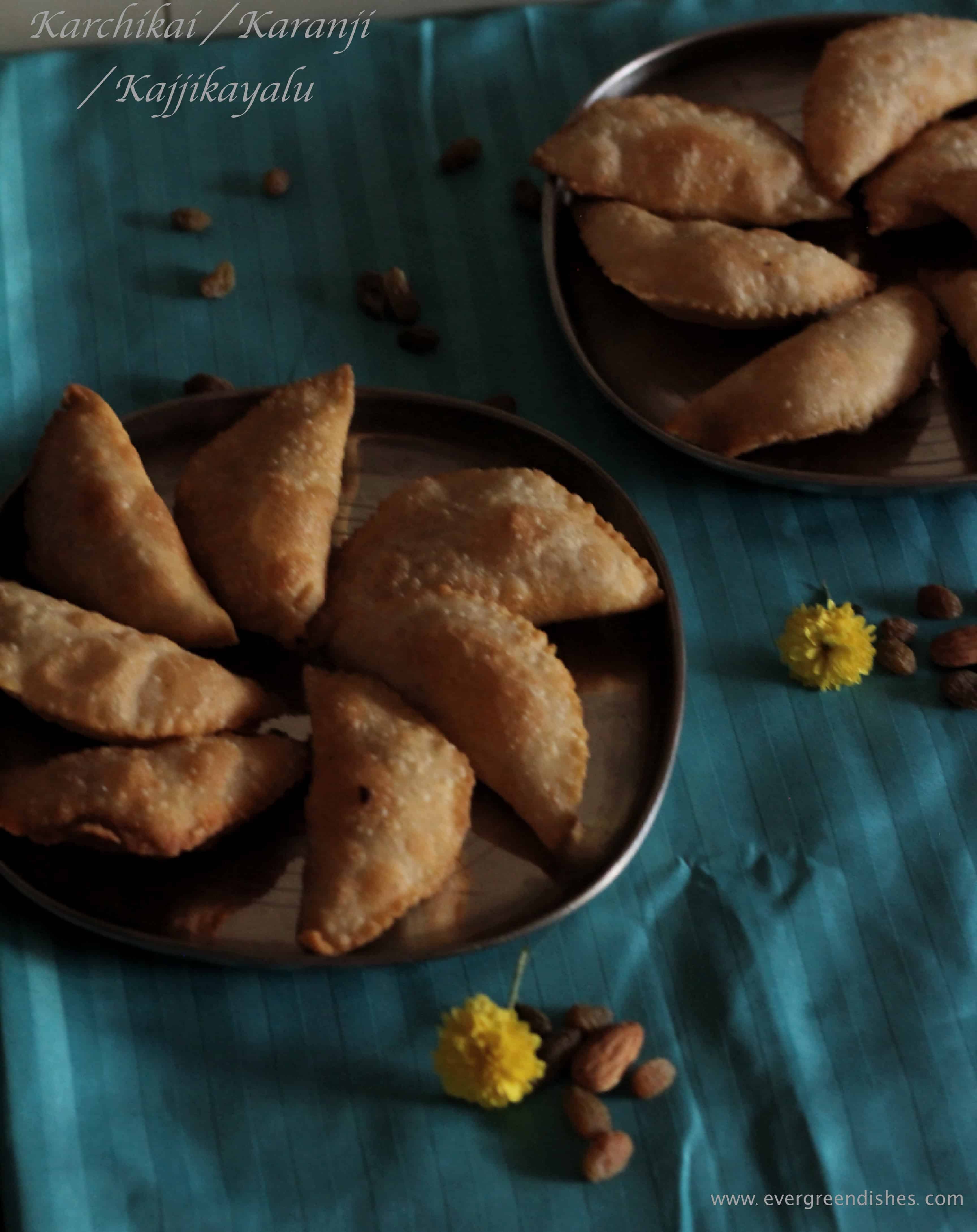
  • Karchikayi / Karanji / Kajjikayalu

    Karchikayi / Karanji / Kajjikayalu

    Karchikayi or Karanji is a popular and traditional snack from South India. It is the sibling of Gujiya from North India. Karanji is a crescent shaped, sweet fried dumpling, filled with a coconut and nut mix, deep fried to perfection. (more…)

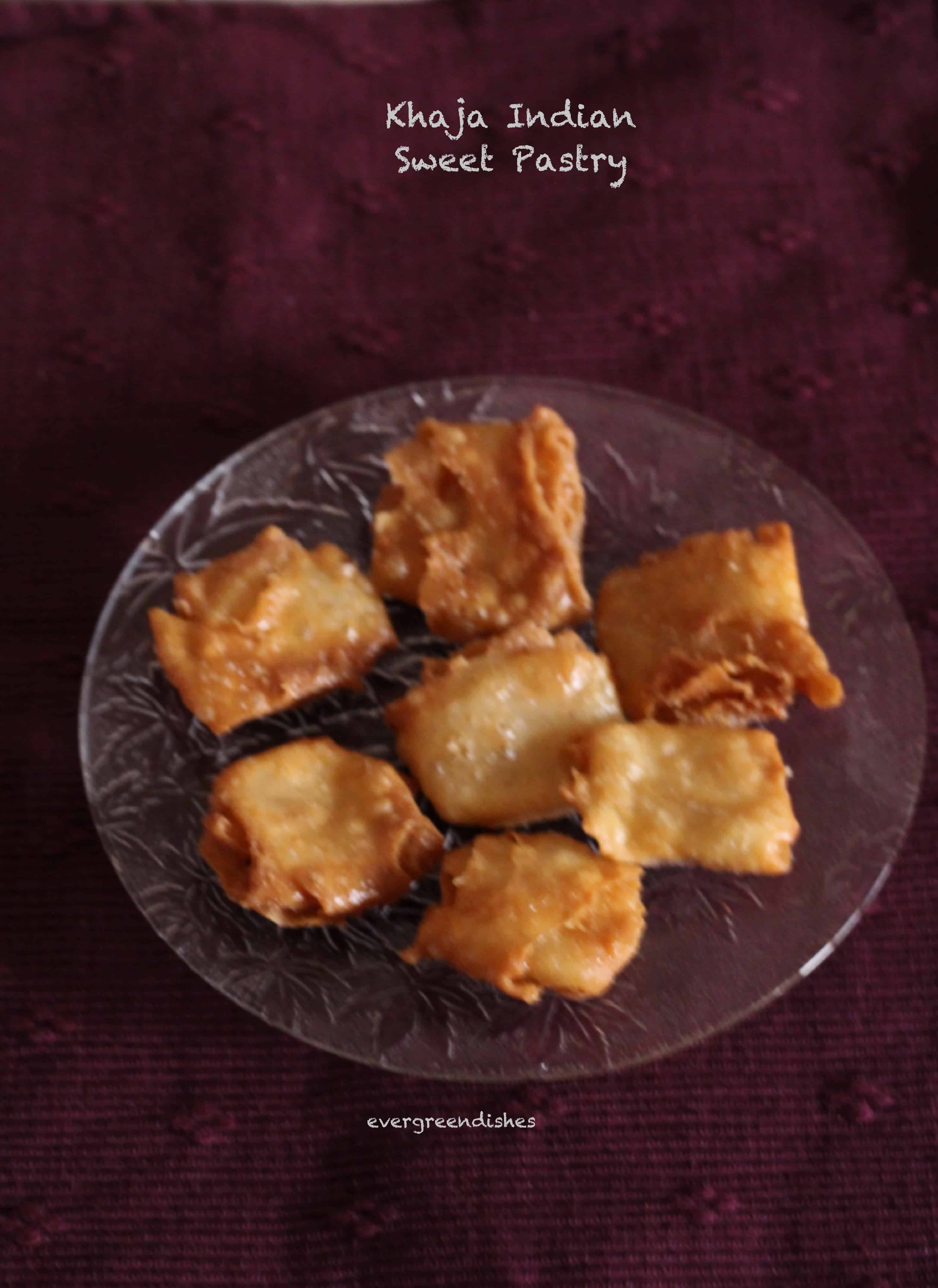
  • Khaja | Kaja | Tapeshwara Khaja | Madatha Khaja

    Khaja | Kaja | Tapeshwara Khaja | Madatha Khaja

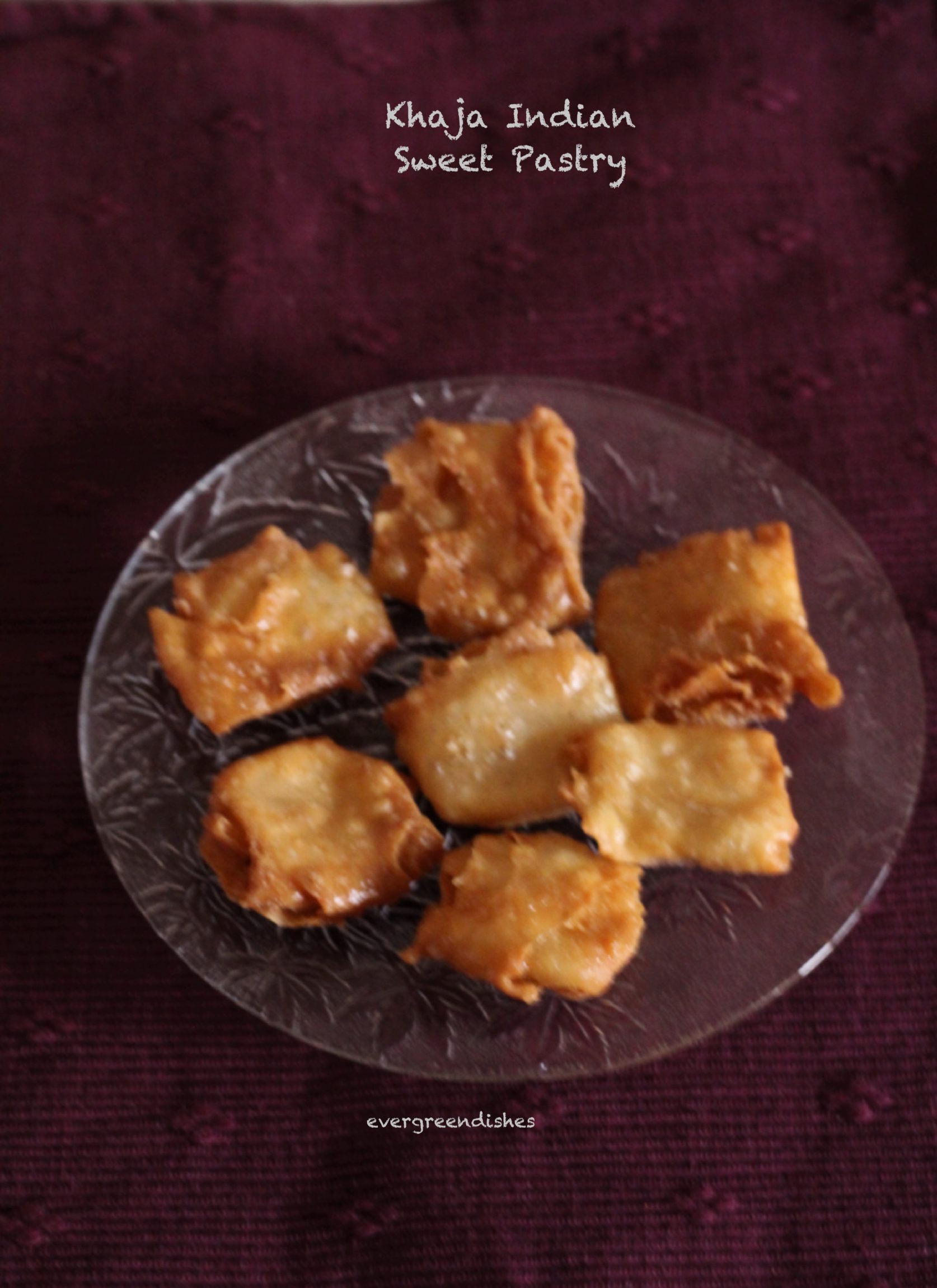
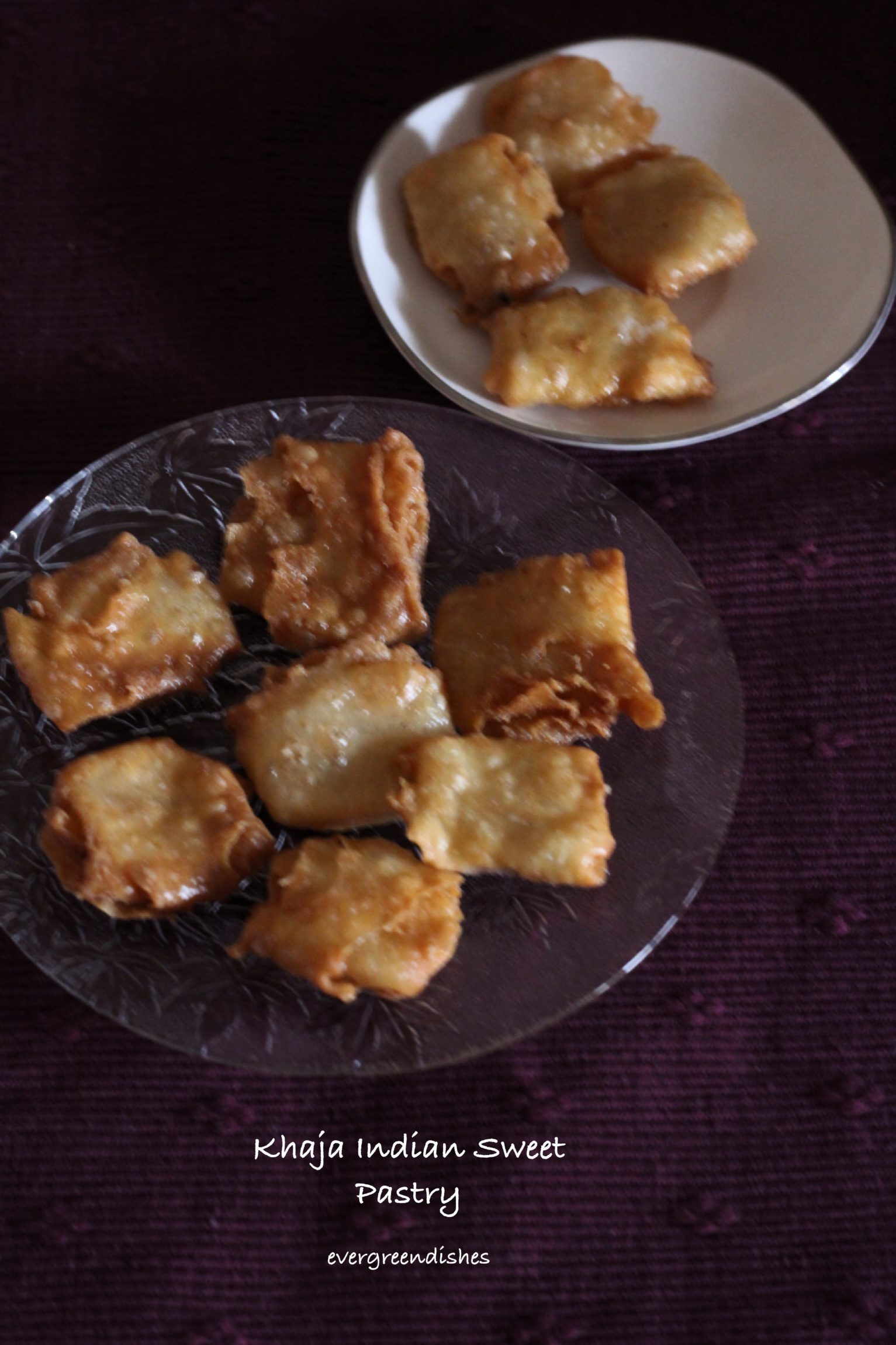
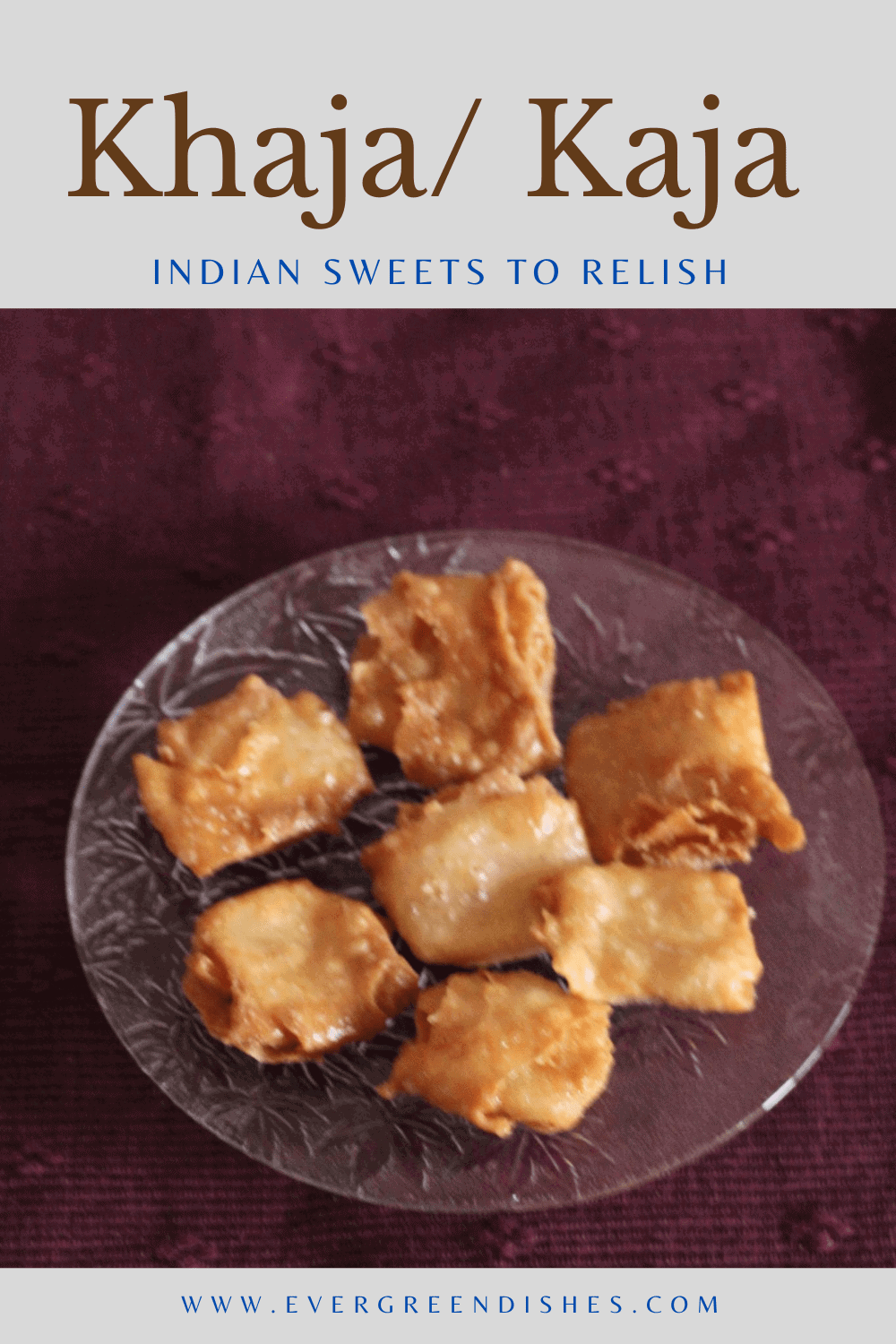
    Khaja is a traditional sweet dish from the state of Andhra Pradesh. It is layered deep fried sweet discs. It is called by different names as Khaja, Kaja, Tapeshwara Khaja or Madatha Khaja.

    It is believed to have originated  from the Eastern  parts of the former Oudh  and the United Provinces of Agra and Oudh. This represents eastern districts of Uttar Pradesh and western districts of Bihar. It is also popular in the neighbouring states of Uttar Pradesh, West Bengal, Orissa and Andhra Pradesh.

    Khaja is a layered sweet from all purpose flour, usually filled with a stuffing of dry fruits, deep fried and dunked in sugar syrup. This is offered as prasadam in Jagganath temple at Puri.

    I have been making this during festivals and is one of the favourites at home.

    A few other festive treats from the blog:

    Khaja, Tapeshwaram Khaja
    Khaja, Tapeshwaram Khaja

    Ingredients:

    For the dough

    • 1 cup all purpose flour
    • 2 tablespoon  ghee
    • 2 tablespoon milk
    • salt a pinch
    • water
    • oil for frying

    For the stuffing:

    • 2 tablespoon rice flour
    • 2 tablespoon ghee
    • 2 tablespoon cashewnuts and almonds grated

    For the sugar syrup:

    • 1 cup sugar
    • 1/2 cup water
    • a few strands of saffron
    • 1/4 teaspoon cardamom powder

    Method:

    •  Sieve the flour, there should be no lumps in it.
    • Add ghee, milk, salt to it and mix well.
    • Add little water and mix into a dough.
    • Cover the dough and keep it aside.

    For the filling:

    • Grate the dry fruits and keep them aside.
    • Mix rice flour, rub the ghee in it and put the dry fruits to it.
    • Keep it aside.

    To make the  sugar syrup:

    • Mix sugar and water in a thick bottom vessel and cook on a low flame for five to seven minutes. Put the cardamom powder and saffron strands to it, it gives a good aroma.

    To make the khajas:

    • Take a big ball of the dough and roll into a thin sheet.
    • Spread the prepared filling over it.
    • Fold it into layers tightly. Cut into discs.
    • Take each disc and press it lightly or roll with a pin.
    • Heat oil in a pan, put the discs and deep fry till golden in colour.
    • Put them in the sugar syrup for two minutes and then remove and keep aside.

    Khaja arranged in glass plates
    Khaja, Tapeshwaram Khaja


    Khaja, Tapeshwaram Khaja
    Evergreendishesdev

    Khaja | Kaja | Tapeshwaram Khaja | Madath Khaja

    Khaja is a traditional sweet pastry from the Indian sub-continent. It is a layered deep fried sweet with a filling of nuts that is deep fried. 
    Prep Time 20 minutes
    Cook Time 20 minutes
    Total Time 40 minutes
    Servings: 20 pieces
    Course: festive treats, sweets, traditional sweets
    Cuisine: Andhra pradesh, Indian

    Ingredients
      

    For the dough
    • 1 cup all purpose flour, maida
    • 2 tablespoon ghee
    • 2 tablespoon milk
    • salt a pinch
    • water
    • oil for frying
    For the filling
    • 2 tablespoon rice flour
    • 2 tablespoon ghee
    • 2 tablespoon cashew and almond grated
    For the sugar syrup
    • 1 cup sugar
    • 1/2 cup water
    • a few strands saffron
    • 1/4 teaspoon cardamom powder

    Method
     

    1. Sieve the flour, there should be no lumps.
    2. Add milk, ghee and salt to it. Mix it well. 
    3. Use little water and knead the dough. It should be of thick consistency. Cover with a thin cloth and keep it aside. 
    4. Mix sugar and water in a thick bottom pan and keep it to boil, put the saffron strands and cardamom powder for a good aroma. Boil it for seven minutes, you should get a string consistency. 
    5. Grate the cashew and almonds. Mix the ghee and rice flour together, add the grated nuts to it. This is the filling. 
    6. To make khajas: Take a ball of the dough, roll into a thin sheet. Spread the filling over it. Roll it tightly, cut it  into discs. 
    7. Take each disc, you can either flatten it with your palm or roll it lightly. 
    8. Heat oil in a pan. Put a few rolled discs in it and deep fry until golden in colour. Remove them on a tissue paper and repeat the same for all the discs.
    9. Put the fried discs in sugar syrup for two minutes, remove and keep them aside. 
    10. Khaja is ready to serve.

    Notes

    Heat oil in a pan, once it is hot, deep fry on medium heat. Frying on high heat will not cook it properly from inside. 

    A few other sweets from my co-bloggers

    book of handyhintsMy books on Amazon

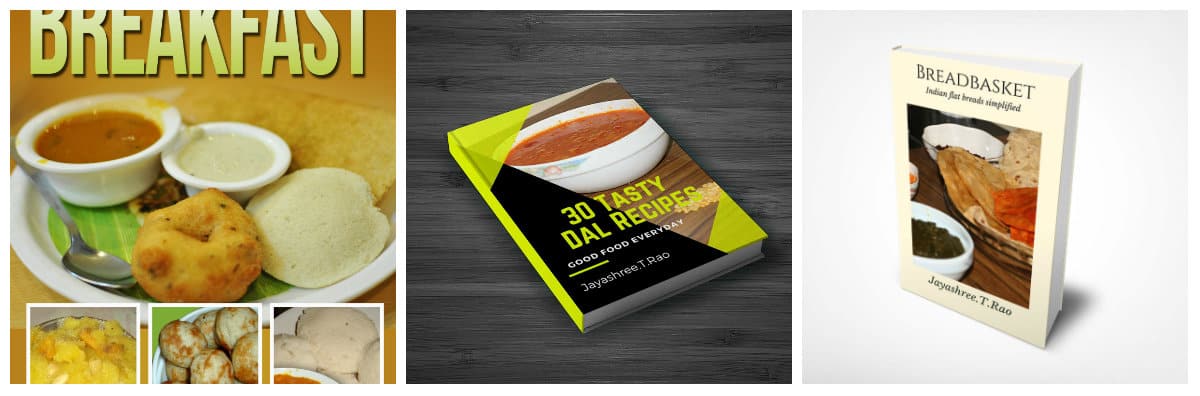
    e-books of Jayashree, south indian breakfast, 30 tasty dal recipees, bread basket
    my e-books

    Khaja  arranged in a glass plate.

    If you ever make this dish, do share it on Instagram and tag #foodiejayashree

    Follow Evergreendishes page on Facebook  

    Subscribe to get a book of handyhints for free!

    book of handyhints

  • Seven Cup Burfi how to make seven cup fudge

    Seven Cup Burfi how to make seven cup fudge

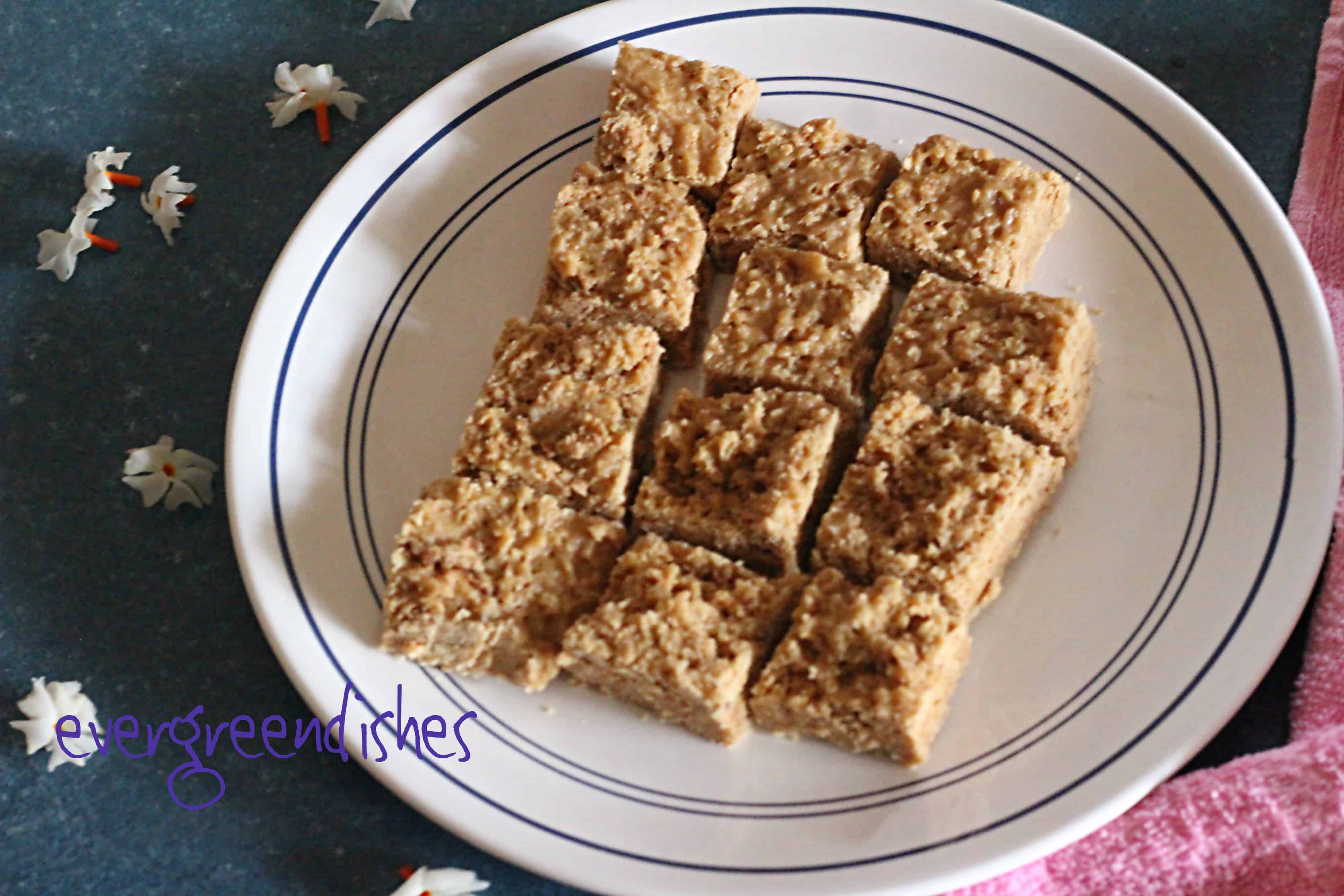
    Seven cup burfi is a popular sweet or fudge made in South India. It is called as a seven cup sweet as the measure of all ingredients together is seven cups.It is usually prepared during Diwali.

    seven cup burfi
    seven cup burfi

    Other burfi recipes on the blog: Coconut and Mango Burfi Dates Burfi  Coconut Burfi

    Recipe of Seven Cup Burfi

    Ingredients:

    • 1 cup fresh grated coconut
    • 1 cup gram flour
    • 1 cup milk
    • 1.5 cup ghee
    • 2.5 cup sugar
    • a pinch of salt

    Method:

    1. Grate the coconut, use the finely grated one for this.
    2. Take a thick bottom pan and mix all the ingredients except salt.
    3. Heat it on a low flame, keep stirring, as it will easily get burnt.
    4. Grease a plate with a little ghee.
    5.  Let cook for fifteen to twenty minutes. It becomes a thick porous mass with bubbles all over.
    6. Sprinkle a little salt and mix well.
    7. Spread it on the greased plate.
    8. Make incisions after some time.
    9. Do not remove them immediately.
    10. Store in a tight jar.

    Take a tip:

    • The actual recipe calls for three cups of sugar and one cup of ghee, but I have decreased the sugar and increased with ghee.
    • Use good quality besan to get good results.


    Evergreendishesdev

    Seven Cup Burfi

    Seven Cup Burfi is a sweet preparation made of fresh coconut and gram flour along with a few other ingredients. Make it for the forthcoming festival and enhance the joy.
    Servings: 16 pieces

    Ingredients
      

    • 1 cup fresh grated coconut
    • 1 cup gram flour
    • 1 cup milk
    • 1.5 cup ghee
    • 2.5 cup sugar
    • pinch of salt

    Method
     

    1. Grate the coconut, use only the finely grated one for making this one.
    2. Take a thick bottom pan and mix all the ingredients except salt.
    3. Heat it on a low flame, keep stirring all the while.
    4. Grease a plate with a little ghee.
    5. It takes about fifteen minutes to be ready. It forms a thick porous mass.
    6. Add the salt and mix it.
    7. Pour it on the greased plate. Cut them into pieces.
    8. Do not remove immediately.
    9. Store in a clean jar.

    Notes

    • Adding of salt is optional.
    • Cardamom powder may be used.
    • The actual recipe calls for three cups of sugar and one cup of ghee, but I felt it was too sweet.
    • Use any cup for measurement but ensure you use the same one for all ingredients.


    Wishing all my readers a very Happy Dasara ! May the victory be of the good and truth always. May peace and happiness prevail in this world.

    Do check out my e-books on Amazon. Subscribe to get all updates and a  Book of Handyhints for free! Do watch out for a special post during Diwali! 

    If you have liked this post, do leave a comment or your feedback. 


  • Hayagreeva maddi/ traditional sweet of chana dal

    Hayagreeva maddi/ traditional sweet of chana dal

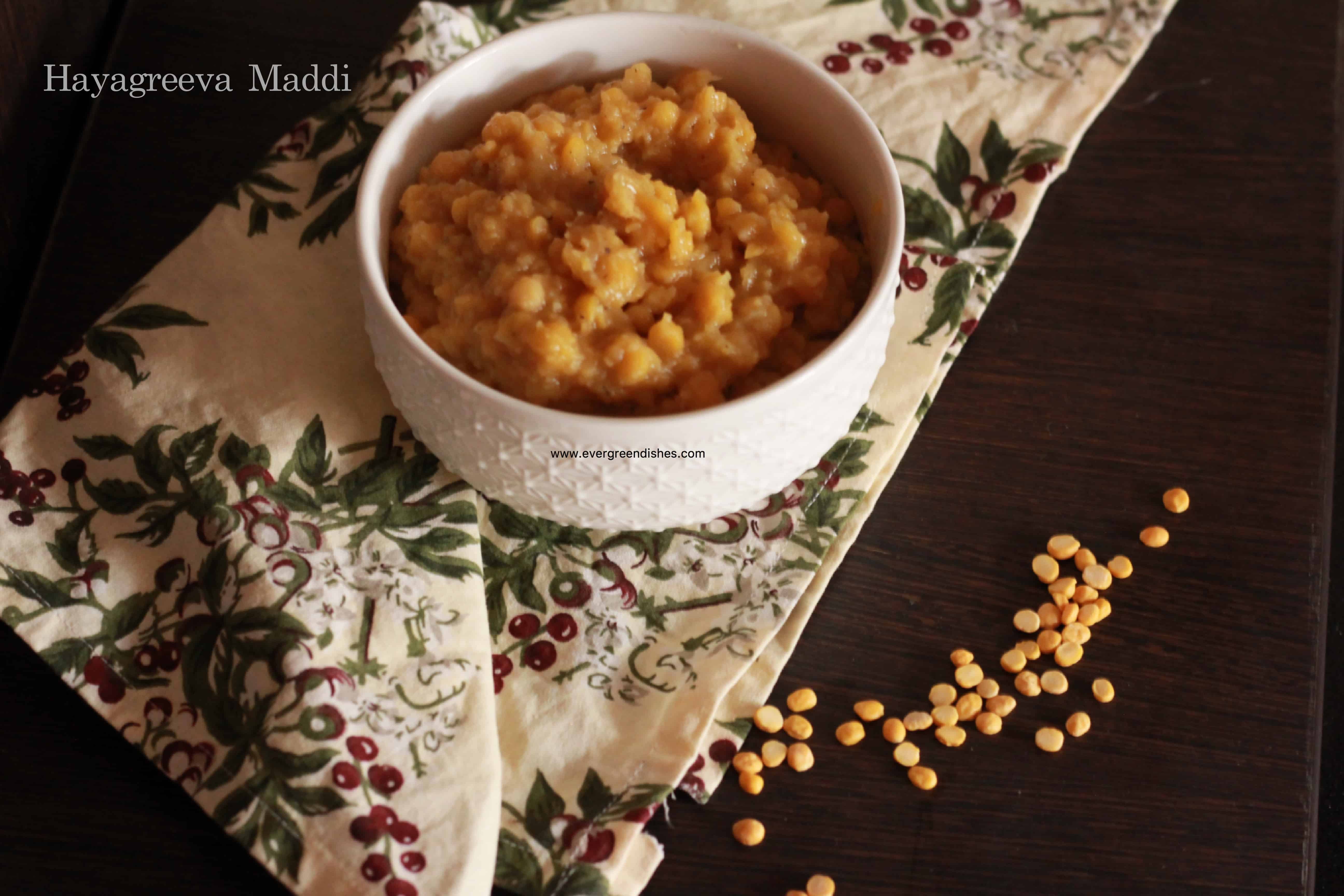
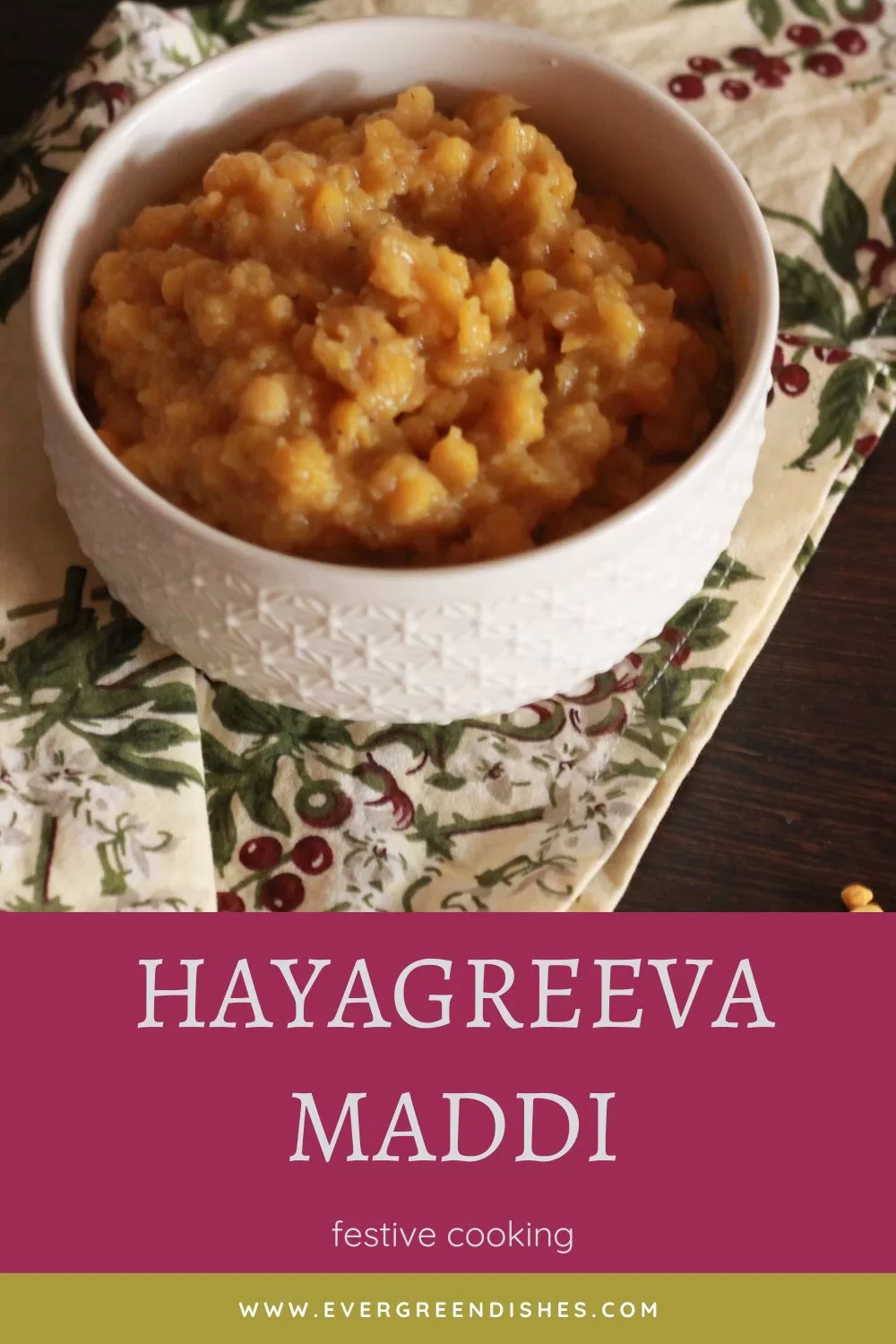
    Hayagreeva Maddi is a traditional sweet dish from Karnataka. Bengal gram is perfectly cooked and simmered in jaggery along with desiccated coconut and nuts. It makes a delectable sweet.

    As we enter the new year 2016, I start my posts here on a sweet note. Here is a traditional sweet dish from the state of Karnataka. This is widely prepared during festivals in Mysore, Hayagreeva maddi, popularly  known as hayagreeva, is made of boiled chana dal in syrup of jaggery, garnished with grated coconut, cardamom  and nuts.

    Sweets are usually made during festivities. Some sweets like Hayagreeva maddi are ideal to serve for lunch. This is an easy to prepare dish, which does not need elaborate preparation and all ingredients are easily available at home.

    Chana dal or bengal gram needs longer time to quickthan other lentils. Hence, I prefer to soak it for half an hour, before cooking in the pressure cooker. It is necessary that the lentil is well cooked before proceeding further to step 3 in the recipe.

    Before I proceed to the recipe, I wish you all  a very Happy New Year again !


    My other traditional sweet dishes

    hayagreeva maddi
    hayagreeva maddi

    Hayagreeva Maddi Recipe

    Ingredients :

    • 1 cup Chana dal
    • 1.25 cup jaggery grated
    • 2 tablespoon ghee
    • 1/2 cup desiccated coconut
    • 1/4 teaspoon cardamom powder
    • 8 cashew nut
    • 3 cup water

    Method :

    • Wash and soak chana dal in water for half an hour.
    • Pressure cook the chana dal  with three glass of water. Add a little ghee to it.
    • Drain the water of the dal. It can be used in other dishes. Put the cooked dal in a pan and heat it on a low flame.
    • Ensure that the cooked lentil is extremly soft. It will not get cooked after the addition of jaggery.
    • Add the jaggery  and ghee.and simmer on a low flame for five to ten minutes.
    • Add dessicated coconut.
    • Finally, garnish with roasted nuts and cardamom powder.
    • Hayagreeva maddi is ready to serve.

    Take a tip:

    • The consistency should neither be too thick or thin.
    • It is essential for the lentil to be well cooked. Otherwise, you children may suffer stomach disorders.
    • The quantity of jaggery may be increased or decreased.
    • Check the cooked lentil by pressing between fingers.

    Evergreendishesdev

    Hayagreeva Maddi

    5 from 2 votes
    Hayagreeva Maddi is a traditional sweet dish from Karnataka. Bengal gram is perfectly cooked and simmered with desiccated coconut and jaggery to make a delectable sweet.
    Prep Time 45 minutes
    Cook Time 30 minutes
    Total Time 1 hour 15 minutes
    Course: festive cooking, lunch, traditiional sweets
    Cuisine: karnataka

    Ingredients
      

    • 1 cup Chana dal
    • 1.25 cup jaggery grated
    • 2 tablespoon ghee
    • 1/2 cup desiccated coconut
    • 1/4 teaspoon cardamom powder
    • 8 cashew nut
    • 3 cup water

    Method
     

    1. Wash and soak chana dal in water for half an hour.
    2. Pressure cook the chana dal  with three glass of water. Add a little ghee to it.
    3. Drain the water present in the dal. It can be used in other dishes. Put the cooked dal in a pan and heat it on a low flame.
    4. Ensure that the cooked lentil is extremely soft. It will not get cooked after the addition of jaggery.
    5. Add the jaggery  and ghee.and simmer on a low flame for five to ten minutes.
    6. Add desiccated coconut.
    7. Finally, garnish with roasted nuts and cardamom powder.
    8. Hayagreeva Maddi is ready to serve.

    Notes

    The consistency should neither be too thick or thin.
    It is essential for the lentil to be well cooked. Check by pressing between fingers. If it is undercooked, put it again itn the pressure cooker.
    The quantity of jaggery may be increased or decreased.

    hayagreeva maddi
    Hayagrreeva Maddi

    Subscribe to get a book of handyhints for free!

  • Kadabu Ganesha Chaturthi Special

    Kadabu Ganesha Chaturthi Special

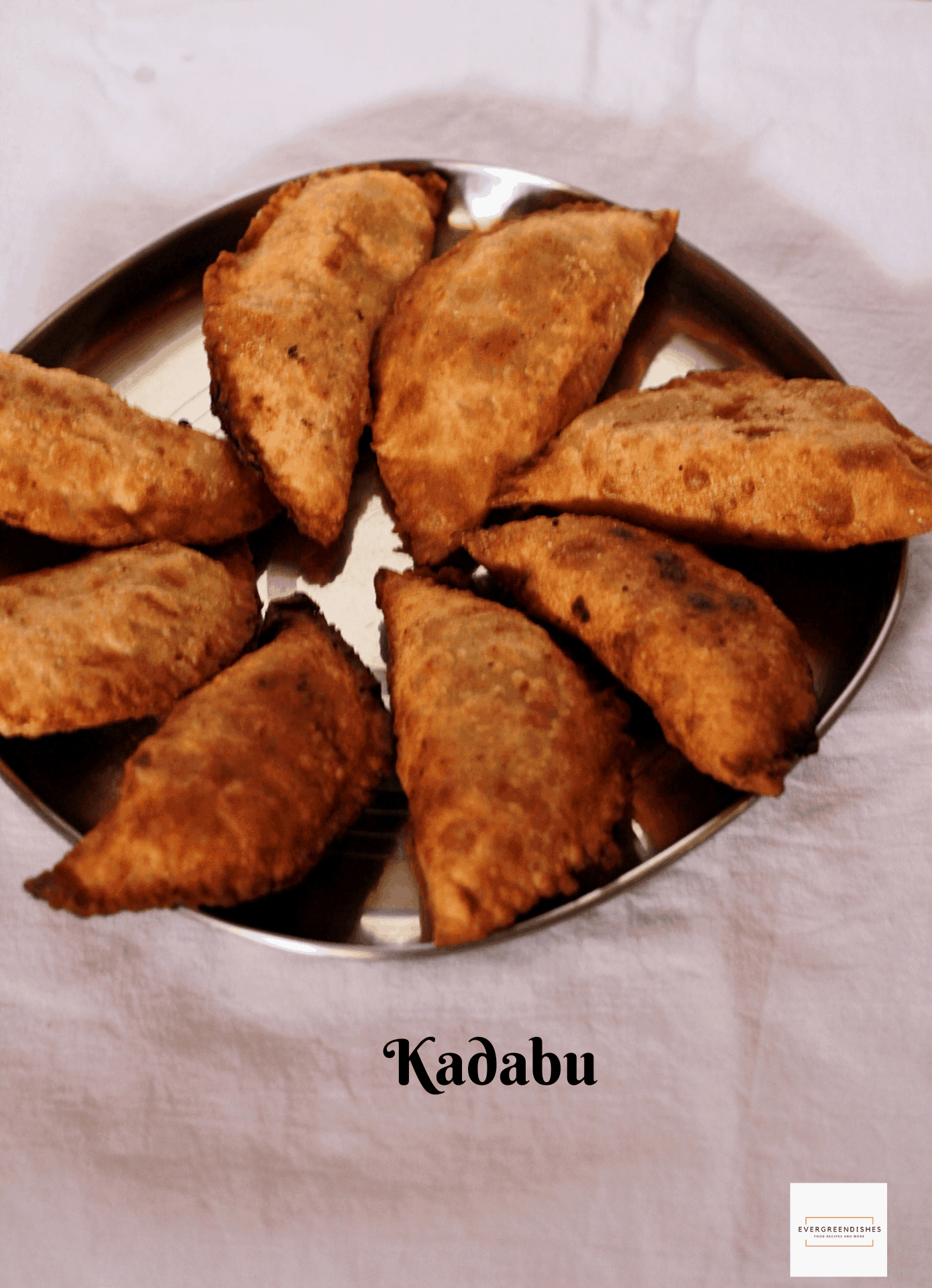
    Kadabu is a festive sweet from Karnataka. Lentil is cooked with jaggery, laced with nuts, desiccated coconut and cardamom powder, filled in thin sheets into crescent shaped and deep fried. These are absolutely tasty and usually made as an offering to Lord Ganesha.

    With the Ganesha festival fast approaching, it is time to prepare a wide variety of sweets. Modak and kadabu are usually prepared during this festival. Here is Kadabu recipe for you.Have a great festival and enjoy your time with family.


    stuffing ready
    stuffing ready

    For the stuffing :
    • Split pigeon peas ( tur dal) 1 cup
    • ghee 1/2tsp
    • jaggery grated 1 cup
    • cardamom powder 1/2 tsp
    • camphor a pinch
    • desiccated coconut 1/2 cup
    • cashew pieces and raisins


    For the covering :

    • wheat flour 1 1/2 cup
    • rice flour 2 tsp
    • ghee 1/2 tsp
    • water

    Other ingredients :

    • oil for frying
    • flour for dusting

    Method : 

    To make the stuffing: 

    Cook split pigeon pea with a little ghee and water in a pressure cooker. Once it iscooked, let the pressure release by itself. Drain the water, from the lentil. Now, you can either cook it directly in a thick bottom pan or smudge it well along with jaggery. I have a handy equipment and I use it. 

    Put the lentil and jaggery together and cook for sometime. When I pass the lentil, I get a thin, smooth consistency of it and I it is boiled. Put desiccated coconut, dry fruits and cardamom powder to it. Once the consistency is moderate, turn off the stove.

    To make the dough : 

    In the meantime, prepare the dough. It should be firm, cover it with a muslin cloth and keep it aside for sometime.

    To make the kadabu:

    • Make balls of the stuffing and keep it aside.
    • Take a small piece of the dough, roll it into a circle. 
    • Take the stuffing and elongate it between palms. Keep it on one side and slowly cover the other end and seal it. The edges can be trimmed with a curvy knife. I have a mould and I use it. The picture of the mould is given. 
    • Heat oil in a pan.
    • Once the oil is warm, slowly immerse two stuffed kadabu into it. Deep fry on both the sides on a moderate heat. Once the brown spots are visible, remove them on a plate with tissue paper. 
    • Repeat for the rest of the dough. 

    Kadabu

    Kadabu

    Kadabu is a festive sweet from Karnataka. Lentil is cooked and mixed with jaggery. It is then filled and fried in crescent-shaped, called as kadabu.

    Ingredients
      

    • For the covering :
    • wheat flour 1 1/2 cup
    • rice flour 2 tsp
    • ghee 1/2 tsp
    • water
    • Other ingredients :
    • oil for frying
    • flour for dusting

    Method
     

    1. Cook split pigeon pea with a little ghee and water in a pressure cooker. Once it iscooked, let the pressure release by itself. Drain the water, from the lentil. Now, you can either cook it directly in a thick bottom pan or smudge it well along with jaggery. I have a handy equipment and I use it.
    2. Put the lentil and jaggery together and cook for sometime. When I pass the lentil, I get a thin, smooth consistency of it and I it is boiled. Put desiccated coconut, dry fruits and cardamom powder to it. Once the consistency is moderate, turn off the stove.
    3. In the meantime, prepare the dough. It should be firm, cover it with a muslin cloth and keep it aside for sometime. 
    4. Make balls of the stuffing and keep it aside.Take a small piece of the dough, roll it into a circle. Take the stuffing and elongate it between palms. Keep it on one side and slowly cover the other end and seal it. The edges can be trimmed with a curvy knife. I have a mould and I use it. The picture of the mould is given. Heat oil in a pan.Once the oil is warm, slowly immerse two stuffed kadabu into it. Deep fry on both the sides on a moderate heat. Once the brown spots are visible, remove them on a plate with tissue paper. Repeat for the rest of the dough.  

    Kadabu


    This is an old post which I have redone with better pictures and text. I am sending this to Foodies_ Redoing Old Post 20, a group which I am part of. Every fortnight, a group of bloggers have decided to work on old posts which need our attention. This was one of the first few posts that I had posted in the beginning.

    If you have liked this post, do share it with your family and friends. You can save it for later use on pinterest. If you ever make this sweet dish, take a picture and share it by tagging @foodiejayashree on Instagram or @evergreendishes on Facebook. I will be happy to see and share further.

    Let’s be connected.  Subscribe to get all updates and an e-book for free !


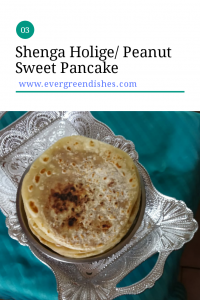
  • Shenga holige/peanut sweet pancake

    Shenga holige/peanut sweet pancake

    Shenga Holige is a traditional sweet from North Karnataka. It is often made during festivals. It is like a stuffed sweet pancake with peanut jaggery filling.

    With the commencement of the holy month of Shravan, many auspicious days and festivals lay ahead. If the tuesdays and fridays are sacred, in between are the Nagara chauti, panchmi , raksha bandhan,  varmalakshmi  and krishna janmasthmi, so many tuned up, one needs to think of the different sweets that can be prepared. Today, I am presenting to you shenga holige/peanut sweet pancake. Shenga is peanut or groundnut and holige is a stuffed sweet bread or pancake.

    Shenga holige is a popular sweet of North Karnataka. It  can be stored for a few days. It is tasty and muchloved by kids, as it can be eaten just like that, no need of milk or  even ghee. This post is part of  Culinary Hoppers with the theme “Sweets “. Let’s get cooking in steps.

    Shenga Holige / Peanut Sweet Pancake

    Ingredients :

    For the dough :
    • fine semolina 3 cups
    • refined flour 2 cups
    • ghee 1tbsp
    • oil 2tsp
    • water

    Note : Fine semolina is known by the name of “chiroti rawa”

    For the stuffing :
    • peanuts 1/4kg
    • jaggery 1/4kg
    • cardamom powder 1/2tsp
    Other ingredients :
    • refined flour for dusting
    • oil for greasing
    Equipments :

    Skillet , kitchen turner, rolling pin, pan or container, thin muslin cloth


    Shenga Holige / Peanut Sweet Pancake


    Method :

    To make the dough :

    Take the flour and semolina in a wide bowl. Mix well. Add ghee, mix , add little water and make it into a dough of medium consistency. Smear oil, cover with a thin muslin cloth and keep aside for fifteen minutes.

    To make the filling :

    • Roast the groundnuts and let cool. Discard the skin by crushing with hand or rolling pin.
    • Break the jaggery into small bits.
    • Grind the groundnut coarsely. Add jaggery and cardamom to it and pound it well. Put it in a bowl and keep aside.

    To make the pancakes:

    • Take a small ball of the dough, roll it into a small circle.
    • Mix the filling. Take a small portion of it, squeeze it between palms and  make it into a small ball.
    • Put it into the centre and slowly seal the edges together.
    • Dust it with flour and roll it.
    • Heat a skillet.
    • Smear little oil on the rolled pancake and put it on the skillet.
    • Put some oil and roast it till brown bubbles are seen.
    • Remove and keep aside.
    • Repeat for the remaining dough.
    • Shenga holige/peanut sweet pancakes are ready to savour. Tastes good with ghee.

    Take a tip:

    • Once you take the ball and fill it, press the ball lightly between palms.
    • Dust with a little flour and roll it very lightly.
    • Once cool, store them in a tight container. They can be kept for a couple of days.
    • Holige is usually served with ghee.

    About the event:

    This is an old post which I have redone with better pictures. Sending this to our fortnightly event, Foodies_Redoing Old Post 34. I have changed the main picture of holige and put better ones. Some text also needed formatting.

    shenga holige


    Shenga Holige / Peanut Sweet Pancake

    Shenga Holige

    Shenga Holige is a festive sweet from North Karnataka.

    Ingredients
      

    • For the dough :
    • fine semolina 3 cups
    • refined flour 2 cups
    • ghee 1tbsp
    • oil 2tsp
    • water
    • Note : Fine semolina is known by the name of “chiroti rawa”
    • For the stuffing :
    • peanuts 1/4kg
    • jaggery 1/4kg
    • cardamom powder 1/2tsp
    • Other ingredients :
    • refined flour for dusting
    • oil for greasing

    Equipment

    • Skillet , kitchen turner, rolling pin, pan or container, thin muslin cloth

    Method
     

    To make the dough
    1. Take the flour and semolina in a wide bowl. Mix well. Add ghee, mix , add little water and make it into a dough of medium consistency. Smear oil , cover with a thin muslin cloth and keep aside for fifteen minutes.
       
    To make the filling
    1. Roast the groundnuts and let cool. Discard the skin by crushing with hand or rolling pin.
      Break the jaggery into small bits.
      Grind the groundnut coarsely. Add jaggery and cardamom to it and pound it well. Put it in a bowl and keep aside.
    To make the pancake
    1. Take a small ball of the dough, roll it into a small circle.Mix the filling. Take a small portion of it, squeeze it between palms and  make it into a small ball.Put it into the centre and slowly seal the edges together.Dust it with flour and roll it.Heat a skillet.Smear little oil on the rolled pancake and put it on the skillet.Put some oil and roast it till brown bubbles are seen. Remove and keep it in a plate. Repeat for the rest of the dough and filling.


    Shenga Holige / Peanut Sweet Pancake

    My other sweet recipes, do have a look here :

    Do check out these by my  blog hop friends. So many ideas for the festival season ahead !

    Pin it for later :

    shenga holige/ peanut sweet pancake


    If you have liked this post, do share it with your family and friends. If you ever make this recipe, take a picture and share it on Instagram by tagging @foodiejayashree or on Facebook by tagging @evergreendishes. Do check out our recent videos that I am making

    Check out my e-books on Amazon !

    Subscribe to get an e-book for free and all updates in your inbox.