Author: Evergreendishesdev

  • Whole Masoor Curry | Vegan and Gluten-Free Brown Lentil Dal

    Whole Masoor Curry | Vegan and Gluten-Free Brown Lentil Dal

    Jump to Recipe

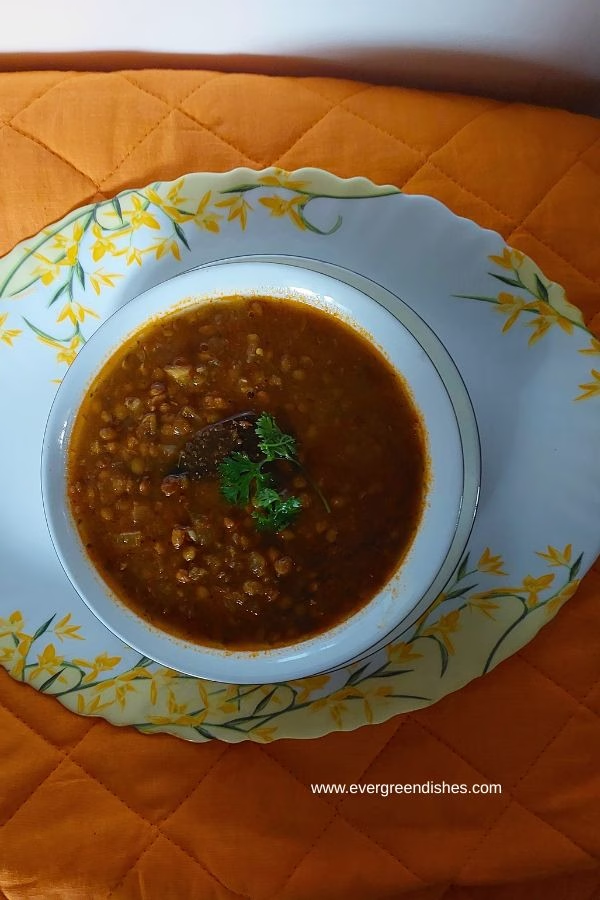
    Whole Masoor Curry makes a tasty accompaniment with chapathi, roti or nan. It is easy to prepare. 

    When you are bored of the regular dishes, give a try to whole masoor curry. It is different and tasty. The taste of masoor is earthy and the spices makes it delectable.

    Nutrients in Whole Masoor:

    Whole Masoor is a good source of plant protein, fibre, complex carbohydrates, magnesium, iron and potassium. Masoor Dal has the highest source of protein among the lentils.

    Why should you make

    • Whole masoor can be soaked for for only two or three hours unlike others which need six to seven hours of soaking.
    • It makes a healthy side dish with chapathi.
    • The dish is easy to prepare, it is ready in half an hour.
    • It is vegan, gluten-free.
    • It is a good source of protein.
    • Something different than the usual cooking.
    • It is ideal to pair with chapathi and steamed rice.

    A few other side dishes from the blog:
     

    whole masoor curry
    whole masoor curry

    Masoor Dal: Here, we use the whole masoor. It should be soaked for atleast two hours.

    Tomato : Blanch the tomato by putting it in hot water.

    Ginger : It not only gives a good taste but aids in digestion too.

    Garlic : It is made into a paste along with tomato, ginger and coriander.

    Coriander: Always use fresh coriander.

    Garam Masala: The spice mix that lends a good flavour to the cooking.  Use the brand which you like.

    This is a one pot recipe. It can be easily made for lunch, brunch or dinner. I usually soak it at 8a.m in the morning and it is easier to cook after my morning routine.

    This is a vegan and gluten-free recipe. You can use it to pair with chapathi, roti or even steamed rice.

    Here  is the Whole Masoor Curry Recipe.

    Print Recipe

    Whole Masoor Curry

    Whole Masoor Curry is a tasty, nutrient rich, vegan,gluten-free dish. It pairs well with chapathi or phulka.

    Ingredients
      

    • ½ cup whole masoor
    • 1 onion finely cut
    • 2 tomato
    • 3 clove garlic
    • ½ inch ginger
    • Handful of coriander
    • 2 tablespoon oil
    • ¼ teaspoon cumin
    • 2 cloves
    • 1 bay leaf
    • ¼ teaspoon turmeric powder
    • ½ teaspoon chilli powder
    • ½ teaspoon garam masala
    • ¼ teaspoon anardana
    • Salt to taste
    • 2 tablespoon oil

    Method
     

    1. Wash and soak the whole masoor for two hours.
    2. Blanch the tomato. Grind them with ginger, garlic and coriander.
    3. Take oil in a small pressure pan. Add cumin, cloves and bay leaf to it. Put the onion and saute it for sometime.
    4. Add the tomato paste to it and continue to saute it.
    5. Add turmeric powder, garam masala, chilli powder and anardana to it along with the salt.
    6. Put the soaked whole masoor to it and mix well.
    7. Put two cups of water and close the lid.
    8. Cook it for two whistle. Let the pressure release by itself. Mix and serve

    Notes

    Serve with chapathi or hot phulka.

    If you ever make Whole Masoor Curry in your kitchen, take a picture and share it by tagging @foodiejayashree on Instagram or @evergreendishes  on Facebook. Until next time, Happy Cooking.

    A thought to ponder : Eating healthy is a choice we need to make each day.

    Pin it for later:
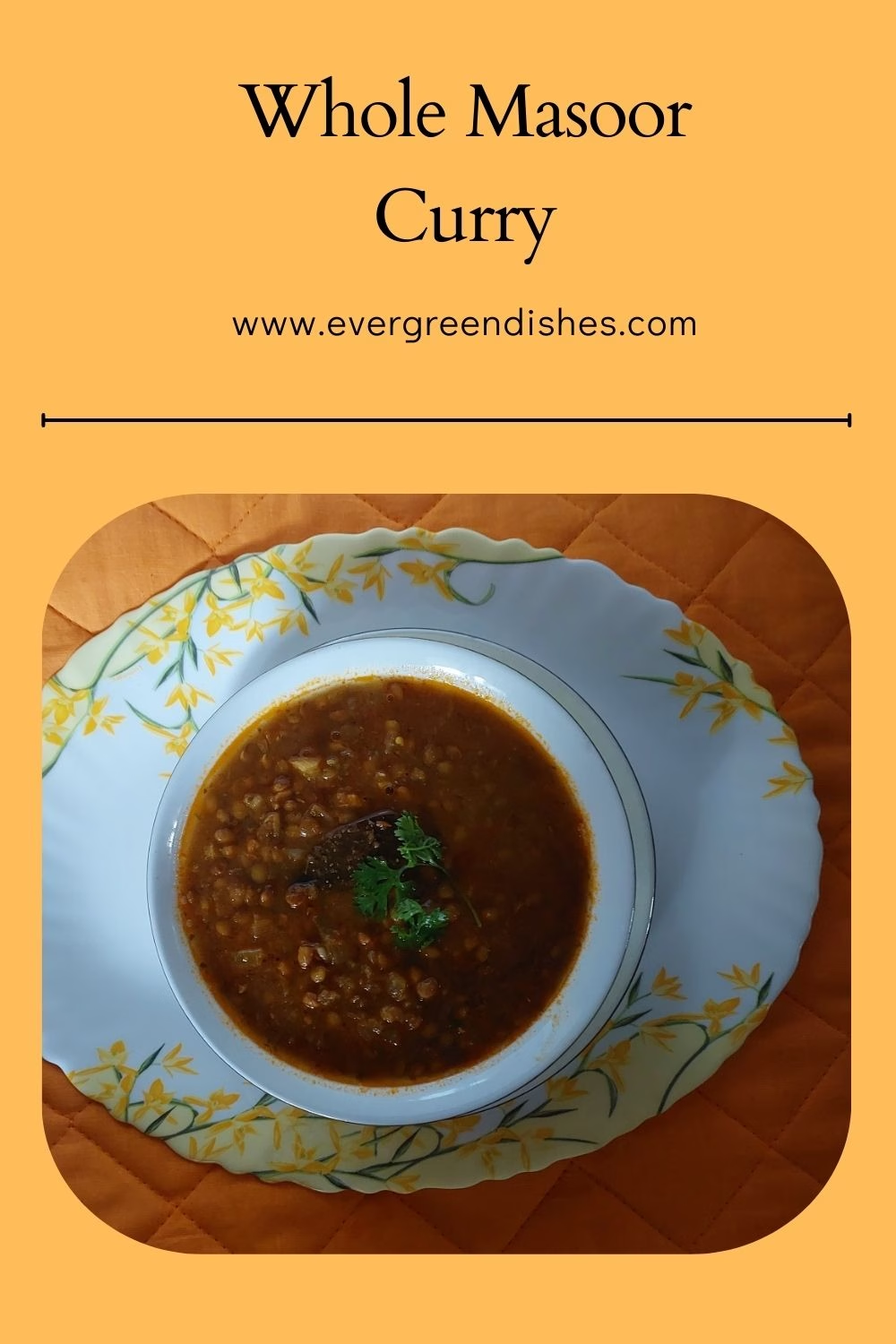
    whole masoor curry
    Whole Masoor Curry


  • Jowar Flour Idli | Jolada Idli | Sorghum Idli

    Jowar Flour Idli | Jolada Idli | Sorghum Idli

    Jump to Recipe

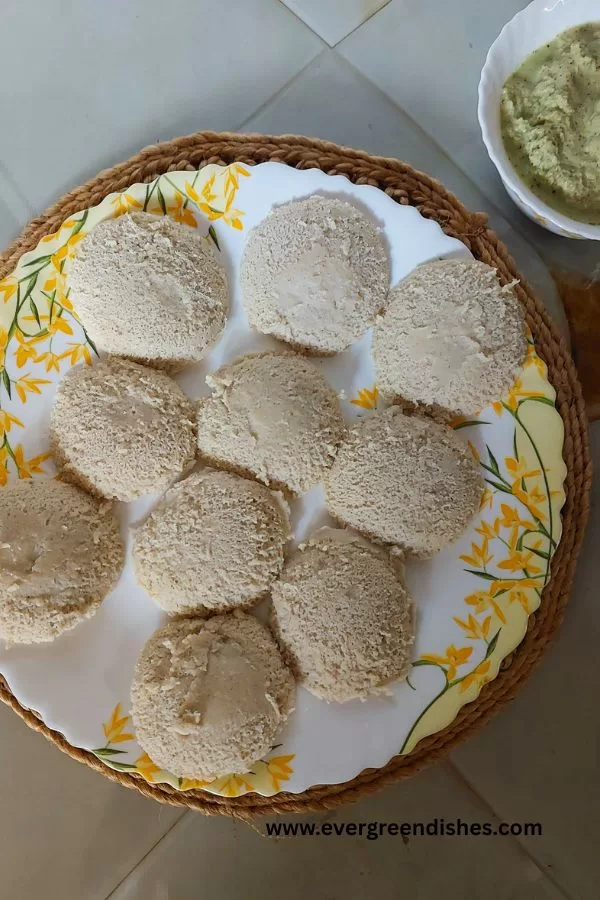
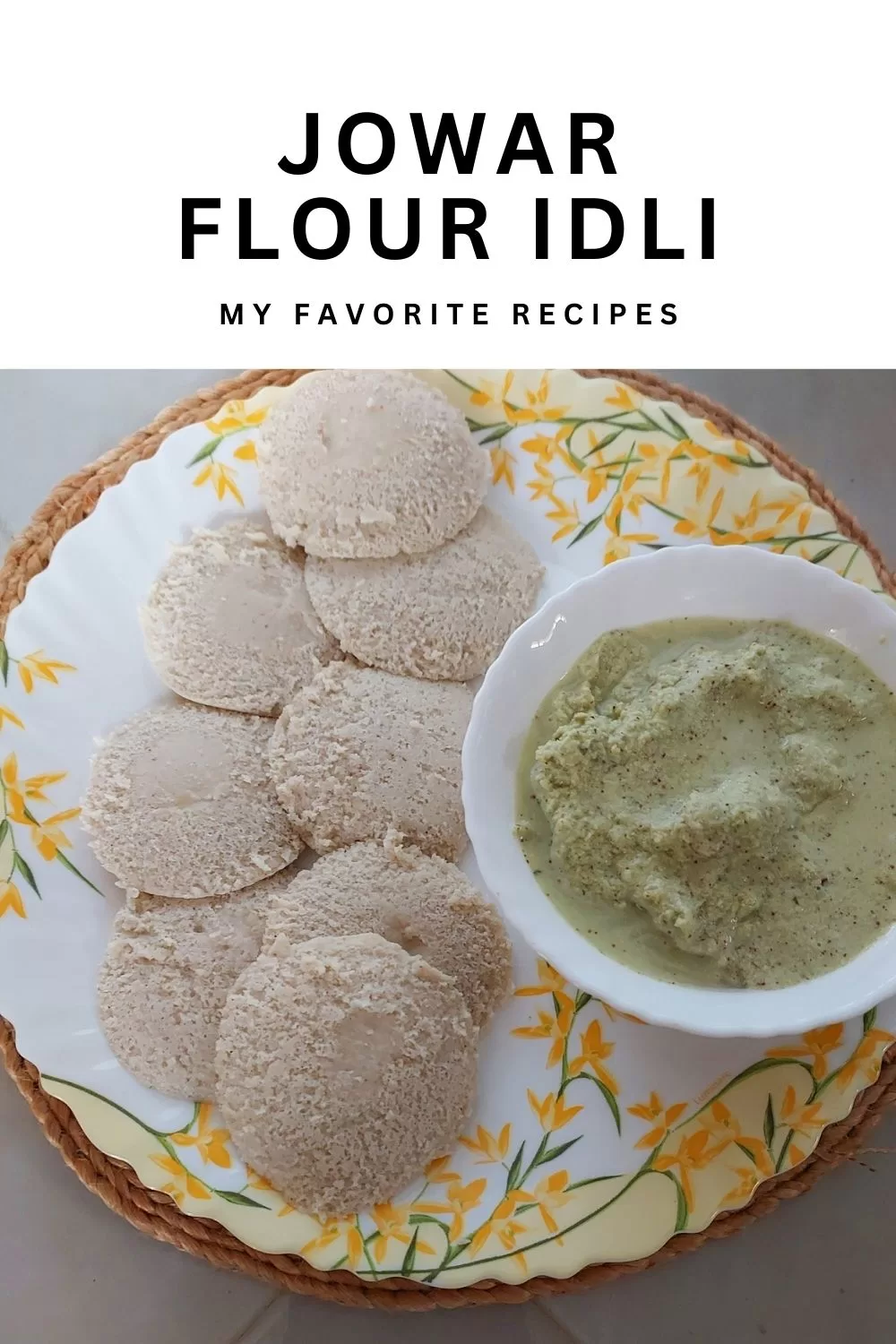
    Jowar flour idli is a healthy twist to the usual one we often make. They are ideal for people of all age group, healthier and keeps going for a longer period of time.

    Eating healthy food is a choice we need to make it often. Do we break the norm or just once in a while? Yes, we are spoilt for choices and ultimately the decision rests in us. Balancing is the key, and as home makers we need to include millets and other related items in our cooking.

    jowar flour idli

    Idli is considered as healthy breakfast. I have shared many different variety of idli recipes  as Sago Idli, Ragi Idli, Rawa Idli, Instant Ragi Idli and Chennai Idli. Today, I am sharing idlis made with jowar flour.

    Jowar flour is the main ingredient. Use fresh jowar flour. Anything stored for a few days, are soon attacked by pests or molds due to the climatic conditions. We need to keep a check on all the ingredients stored at home.

    Urad dal is the other ingredient which we use to make these idlis. It is soaked for two hours and then made into a batter.

    Water is needed for soaking and grinding the batter. We also need it for steaming the idly in the idly cooker.

    Salt is essential in cooking, there is no taste to the food without it.

    As usual, making of idly involves five steps:

    1. Soaking
    2. Grinding
    3. Mixing
    4. Fermentation
    5. Steaming

    Urad dal needs to be soaked for atleast two hours. Rinse it well, put water and keep it aside. Later, grind to a fine batter. Jowar flour is mixed well in the batter, be careful as lumps are easily formed. Adjust the consistency of the batter. Put it in a wide bowl and keep it in a warm place to ferment. The time of fermentation depends on the season.

    Once the batter is fermented, add salt to it. Heat the idli steamer and put the batter to two-third of the capacity in each of the moulds. Steam it for fifteen minutes. Check if it is properly done and then turn off the stove.

    As the idli is made with millet and not the usual rice, it tends to get sour easily. I suggest that you make a small quantity and use it on the same day. Do not keep it outside for a long time.

    Ingredients:

    • 1 cup urad dal
    • 2 cup jowar flour
    • salt to taste
    • water for soaking and grinding

    About the event :

    Sending this to Shhh Secretly Cooking Challenge. It is a monthly event. The theme for the month of August was Fermented Foods. I was paired with Preethi and she has made Savoury Chia Seed Pudding. The secret ingredients were cucumber and chia seed. Do check out the recipe on her blog.

    I wanted to make jowar flour and she gave the ingredients accordingly.

    Print Recipe
    jowar flour idli
    Evergreendishesdev

    Jowar Flour Idli

    Jowar Flour Idli is healthy, tasty and ideal for people of all ages. Serve it with chutney and sambar for a filling breakfast.
    Prep Time 20 minutes
    Cook Time 20 minutes
    8 hours
    Total Time 8 hours 40 minutes
    Course: Breakfast
    Cuisine: South Indian

    Ingredients
      

    • 1 cup urad dal
    • 2 cup jowar flour
    • salt to taste
    • water for soaking and grinding

    Method
     

    1. Wash urad dal. Soak it in water for two hours.
    2. Grind urad dal to a fine batter.
    3. Remove the batter in a wide bowl. Mix two cups of jowar flour to it. See that no lumps are formed as you mix. Adjust the consistency of the batter by adding water to it.
    4. Keep it covered in a warm place.
    5. Next day, add salt to it and mix well.
    6. Take the idly cooker. Put the batter in the idly mold and steam it for fifteen minutes.
    7. Serve with chutney and sambar.

    Notes

    Jowar flour can be made fresh by pounding in small quantity.
    You can use the ready jowar flour. 
    Do not keep it outside for a long time, the taste of the idli turns sour.
    Make a small quantity of batter, do not keep it for the next day to use.

    Pin it for later:

    jowar flour idli
    jowar flour idli

    If you ever make Jowar Flour Idli in your kitchen, take a photo and share with me by tagging @foodiejayashree on Instagram and @evergreendishes on Facebook.

  • Fresh Lemon Juice | Indian Sherbet Recipe

    Fresh Lemon Juice | Indian Sherbet Recipe

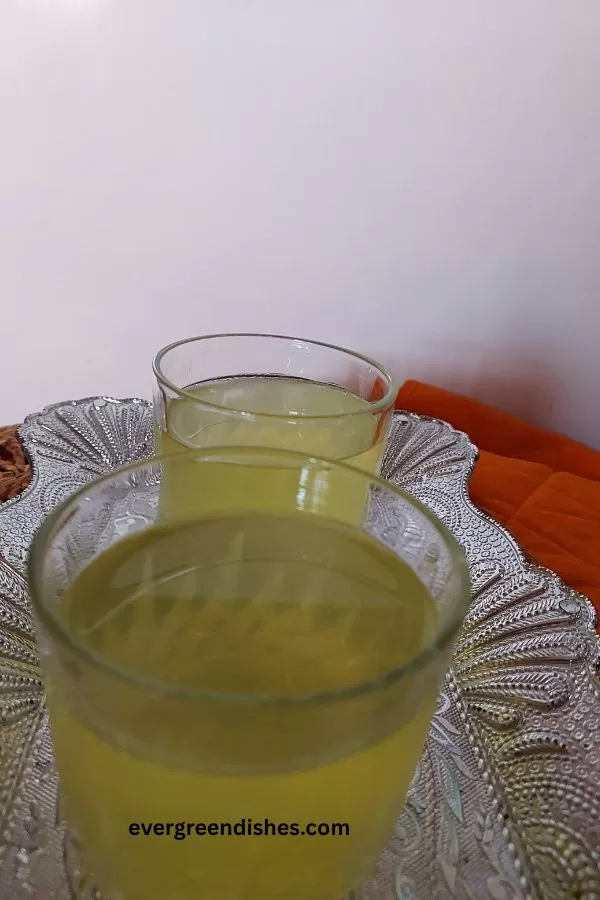
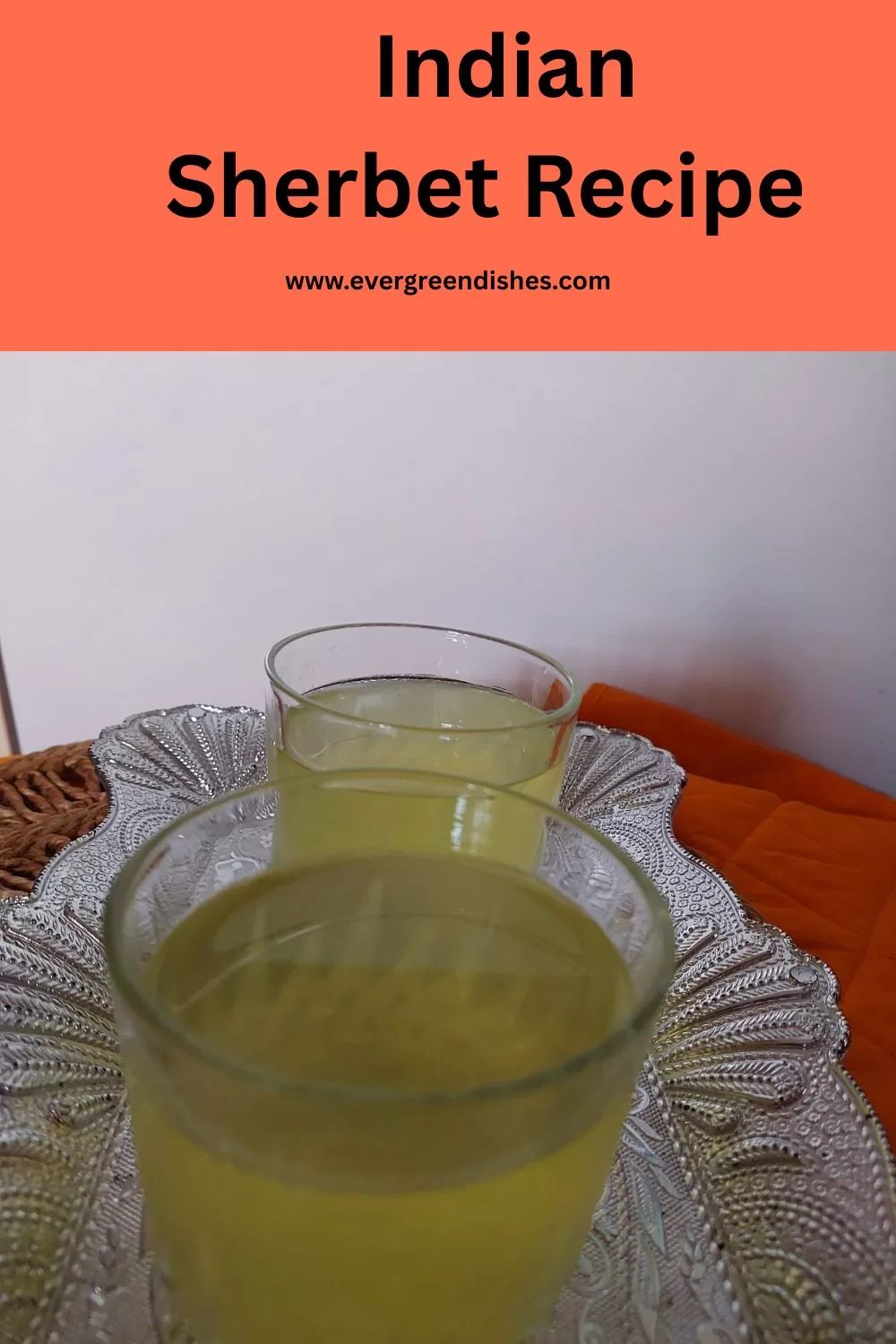
    Fresh Lemon Juice is an all-time favourite Indian drink. It is ideal as a summer quencher, party appetiser or just anytime.  It comes under the category of popular Indian Sherbet Recipes.

    As the saying goes, when you have limes, make a lemonade, then why the delay?

    Fresh Lemon Juice is called as Nimbehannina Panka in Kannada. It is often made during Ram Navmi as an offering to the Lord along with butter milk. It is also a part of the Haldi kum kum tradition in South India. Ladies are usually served fresh lemon juice along with a lentil salad.

    The making of fresh lime or lemon juice needs no introduction. You must be wondering why a post should even be written about it? Yeah, it is that simple one which anyone can make. But here are a few ingredients which enhances the taste of it. Addition of a few strands of saffron lends a divine taste to it. A dash of cardamom powder gives a good aroma and taste to the drink. Do not forget to add a pinch of salt.

    What is an Indian Sherbet?

    Sherbet originated from the Arabic word sharbah which means  a drink and Shariba refers to drink. Indian Sherbet is a traditional drink made with fruits, herbs or even flower petals. It is usually chilled. It is served at festive occasions and family gatherings. It is a popular summer drink in South India.

    Can we add jaggery instead of sugar ?

    Yes, you may add powdered jaggery but the taste differs. It is another version of sherbet. Make sure the jaggery is pure.

    Do we need saffron to make sherbet ?

    Saffron lends a good aroma to the drink. You can skip it and instead add a few fresh mint leaves.

    What are the variations we can make to this popular drink ?

    You can add sabja seeds. You can also add soaked chia seeds.

    Can I make it ahead and keep it in the refrigerator?

    Yes, you can make it ahead and keep it in the refrigerator to chill. Make sure you consume within two days.


    A few other related recipes for you are

    imli ka amlana
    imli ka amlana
    blueberry lemonade
    blueberry lemonade
    mint ginger cooler
    mint ginger cooler
    Print Recipe

    Fresh Lemon Juice

    Fresh Lemon Juice is a traditional Indian beverage made with lemon, sugar and water.

    Ingredients
      

    • 4 glass cold water
    • 3 tbsp sugar
    • a few saffron strands
    • dash salt
    • 2 lemon

    Method
     

    1. Take water in a pan.
      Add sugar and saffron strands to it. Mix it well.
    2. Add lemon juice, salt and cardamom powder. MIx and serve in glasses.
    3. This is the basic fresh lemon juice recipe, you may add a few mint leaves. Soaked chia seeds can also be added.

    Pin it for later :

    fresh lemon juice
    fresh lemon juice

    If you ever make Fresh Lemon Juice in your kitchen, take a photo and share with me by tagging @foodiejayashree on Instagram and @evergreendishes on Facebook.

  • Capsicum Stir Fry | Donna Menasinakayi Palya

    Capsicum Stir Fry | Donna Menasinakayi Palya

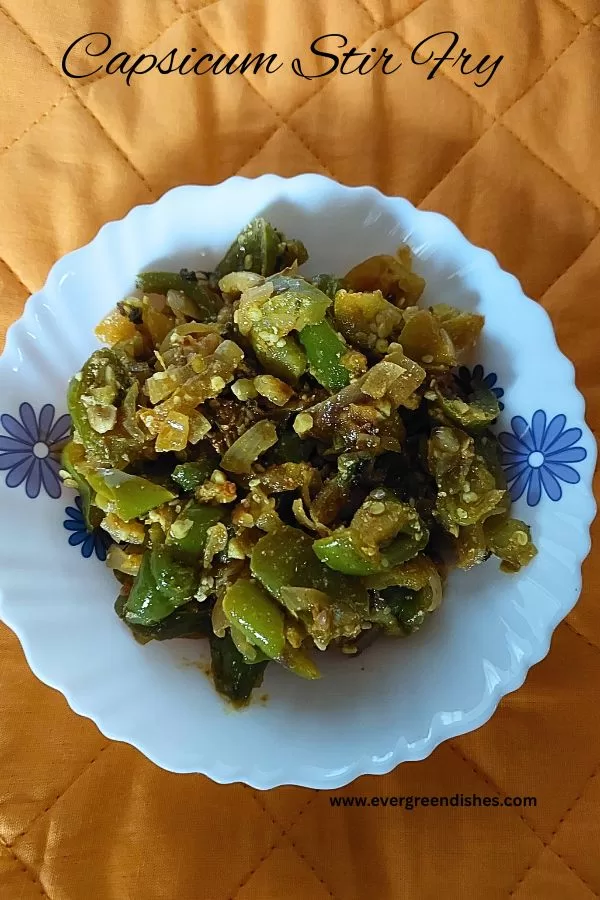
    Capsicum Stir Fry  is a tasty and easy to make side dish. It  is a flavoursome dish from North Indian cuisine. It is ideal to serve for lunch, dinner or pack in the lunch box.

    Capsicum Stir Fry needs a few ingredients as sesame seed, cumin, garam masala, chilli powder apart from capsicum and onions. This recipe is from my diary written many years back. When you are bored of the usual cooking, or need a quick side dish, you can prepare this capsicum stir fry. It is ideal to serve with chapathi or phulka.

    About the kind of capsicum :

    Cpsicum is a versatile vegetable used in all kind of cuisines. The capsicum available in the market are of two kind, big ones and the small ones. The small ones are spicy. Thus, I prefer the big ones for our cooking. If you like using the smaller variety, go ahead but be mindful of the extra chilli powder that is added.

    Capsicum Stri Fry

    What goes in the Capsicum Stir Fry :

    • Capsicum : It is the star ingredient. I prefer using the large, green  coloured ones. They re not spicy and just right for the stir fry. Here the vegetables are cut into thin, long slices.
    • Onion and garlic : The onion is cut into thin long  pieces while the garlic is crushed.
    • Oil is one of the essentials in any cooking.
    • Kasuri methi for that fragrance
    • Spices like cumin, sesame, chilli powder are essential.
    • Garam masala for the enhanced flavour. You can  make it  at home and use it regularly.
    • Curd is added in the end.
    • Peanut powder lends an amazing taste to the dish. To make it, roast the peanuts on a low flame. Allow them to cool, remove the skin and grind to a coarse powder.
    • Coriander for garnishing. Always use fresh coriander.
    • Salt

    Making of stir fry :

    The making of stir fry involves two steps. Initially, we saute the onion and capsicum in a little oil. Adding a bit of kasuri methi, fresh coriander and chilli powder gives a good aroma to it. It is then seasoned with spices and peanut powder in another pan. Finally, the addition of blended curd gives a good taste.

    Serve it with hot phulka, roti or chapathi. It is ideal o pack in the lunch

    Capsicum Stri Fry

    If you ever make Capsicum Stir Fry in your kitchen, take a photo and share with me by tagging @foodiejayashree on Instagram and @evergreendishes on Facebook.

  • Sabudana Papad | Sago Fryums | Sabudana Sandige

    Sabudana Papad | Sago Fryums | Sabudana Sandige

    Jump to Recipe

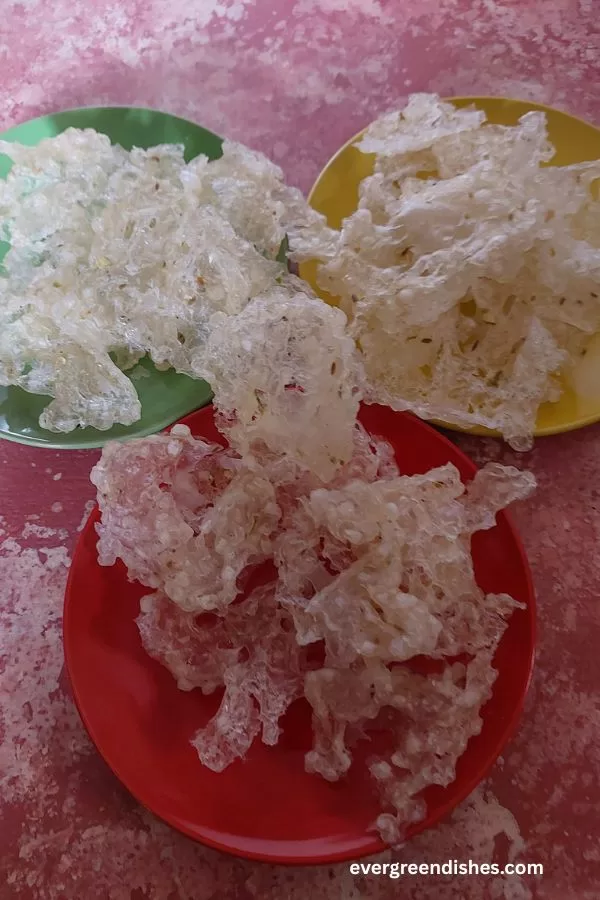
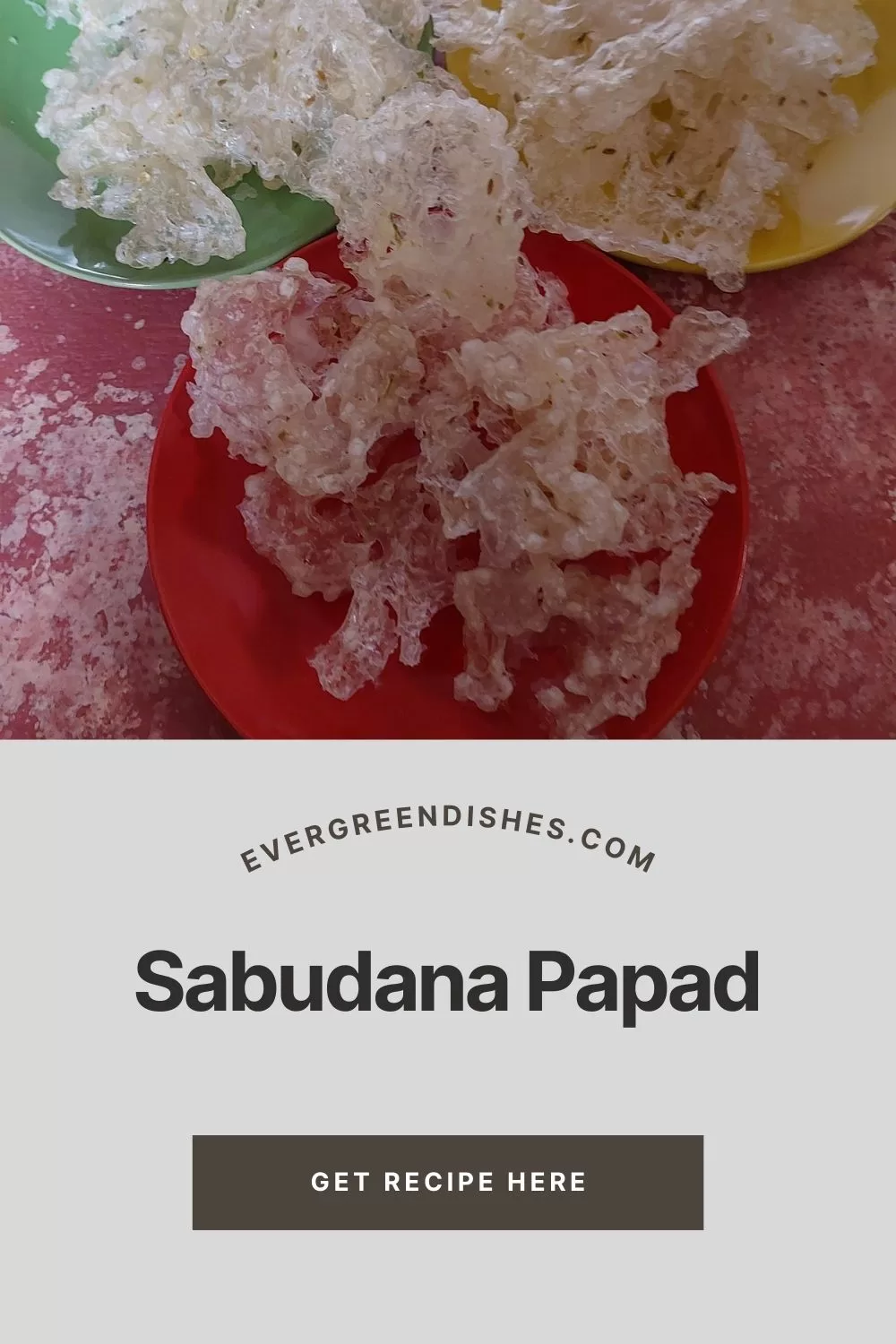
    Sabudana Papad is a popular summer treat from South India. It is made in large quantities and stored in air tight containers for further use. It is ideal to serve as an accompaniment with any meal. 

    Summer is the time we indulge in many activities as making papad and pickles. Papad and fryums should be sundried as they are stored throughout the year. The scorching heat makes them crisp and ready to eat in two or three days. The different kind of sundried recipes are rice fryums, poha papad, pumpkin sandige {aralu sandige} and majjige mensinakai (chillies in buttermilk).

    Today, I am sharing the recipe of Sabudana Sandige or Sago Papad as it is commonly called.

    Sabudana Papad, sabakki sandige, sabudani sandige are the different names associated with it. It is made from tapioca pearls. The sago or sabudana is commonly used during fasting in many parts of India. To make sabudna papad, we use the large ones. It is soaked and cooked with some spices and later dried in the sun. It is quite easy to make as the making does not involve much labour. One needs to keep an eye while boiling it, lest it gets burnt. 

    The sabudana sandige can be made as simple as you wish. You may add only salt and asafoetida. Otherwise with a little cumin tastes good, I love the taste of cumin along with some chillies put in it. The other options are addition of pepper powder, chilli powder, or garlic. I do not add any of these. 

    The method I follow requires one day. I soak sago pearls in the afternoon. By evening, it is bloomed. I cook it at night and keep it it closed in a warm place. Next day, early in the morning, I adjust the consistency and put them on the terrace. Later, by evening, they are semi-dried. I remove them and keep them in wide plates which help me to keep easily in the sun on the following days. I need to sun dry them for a couple more days as they are stored all year long.


    Let us get to the recipe of Sabudana Papad.

    Ingredients: 

    • ½ kilogram white sabudana ( large )
    • 4 + 8 + 8 cups water
    • 1 teaspoon cumin
    • 6 green chilly
    • 1 tablespoon curd
    • ½ teaspoon asafoetida

    Method : 

    Making of sabudana papad includes 6 steps :

    1. Soaking of sago 
    2. Boiling of the mixture
    3. Making of papad
    4. Drying of papad
    5. Storing of papad
    6. Frying 

    Let us discuss each step now.

    1. First, clean the sago pearls and wash them once. Soak it in four cups of water for five hours.
    2. Now, in a thick bottom pan, add the soaked sabudana along with eight cups of water. Put it to boil. Add cumin and asafoetida to it. Keep stirring. 
    3. It becomes a gelatinous like substance, transparent in colour. The sago pearls are soft and well cooked. Turn off the stove. You can put it after an hour. But I prefer to put it on the next day.
    4. Grind green chilly to a paste.
    5. Put it into the boiled mixture along with a spoon of curd.
    6. Use clean plastic sheets to make papad.
    7. Smear some oil on the sheet. With a wide spoon, take a spoonful and pout it on the sheet, spread a little with the back of the spoon. 
    8. Repeat by putting them in a row. Continue to the next row and so on. 
    9. Allow it to dry in the sun. 
    10. By evening, only one side is dried. We need to put them carefully on a plate and dry the other side the following day.
    11. Once they are dry on both sides, you need to keep them in the sunlight for a few days.
    12. Later, store them in a clean, dry container.
    13. To fry, heat oil in a pan. Take a few sun dried sago papad and slowly fry them. 

    Take a tip : 

    • Collect all materials before you start doing the work. You need sheets which are dry and clean. Also, not to forget the bricks or tiles to hold them as you lay them in the sun. Food cooked at home takes care of all these things, isn’t it ? 
    • Adjust the consistency if it is too thick by adding some water to it.
    • Green chilly may be avoided. You can do plain ones only with cumin.

    Other sabudana recipes I have shared earlier are :

    Jump to Recipe Print Recipe

    Evergreendishesdev

    Sabudana Papad

    5 from 2 votes
    Sabudana Papad is a popular sun dried munchies from South India. It is made and stored in airtight containers.
    Course: accompaniment
    Cuisine: karnataka

    Ingredients
      

    • ½ kilogram white sabudana large
    • 4 + 8 + 8 cups water
    • 1 teaspoon cumin
    • 6 green chilly
    • 1 tablespoon curd
    • ½ teaspoon asafoetida
    • 1 teaspoon cumin

    Equipment

    • 1 large utensil for soaking
    • 1 lid to close
    • 1 thick bottom pan with lid
    • 6 large plates
    • 1 ladle
    • 1 tablespoon
    • 1 teaspoon
    • clean plastic sheets
    • bricks or something similar as weights

    Method
     

    1. First, clean the sago pearls and wash them once. Soak it in four cups of water for five hours.
    2. Now, in a thick bottom pan, add the soaked sabudana along with eight cups of water. Put it to boil. Add cumin and asafoetida to it. Keep stirring.
    3. It becomes a gelatinous like substance, transparent in colour. The sago pearls are soft and well cooked. Turn off the stove. You can put it after an hour. But I prefer to put it on the next day.
    4. Grind green chilly to a paste.
    5. Put it into the boiled mixture along with a spoon of curd.
    6. Use clean plastic sheets to make papad.
    7. Smear some oil on the sheet. With a wide spoon, take a spoonful and pout it on the sheet, spread a little with the back of the spoon.
    8. Repeat by putting them in a row. Continue to the next row and so on.
    9. Allow it to dry in the sun.
    10. By evening, only one side is dried. We need to put them carefully on a plate and dry the other side the following day.
    11. Once they are dry on both sides, you need to keep them in the sunlight for a few days.
    12. Later, store them in a clean, dry container.
    13. To fry, heat oil in a pan. Take a few sun dried sago papad and slowly fry them.

    Notes

    Collect all materials before you start doing the work. You need sheets which are dry and clean. Also, not to forget the bricks or tiles to hold them as you lay them in the sun. Food cooked at home takes care of all these things, isn’t it ? 
    Adjust the consistency if it is too thick by adding some water to it.
    Green chilly may be avoided. You can do plain ones only with cumin.


    If you have liked this post, do share it with your family and friends.. Follow @foodiejayashree on Instagram  and @evergreendishes on Facebook.

    Pin it for later :


    Sabudana Papad
    sabudana papad
  • Mooli Paratha | Radish Stuffed Flatbread

    Mooli Paratha | Radish Stuffed Flatbread

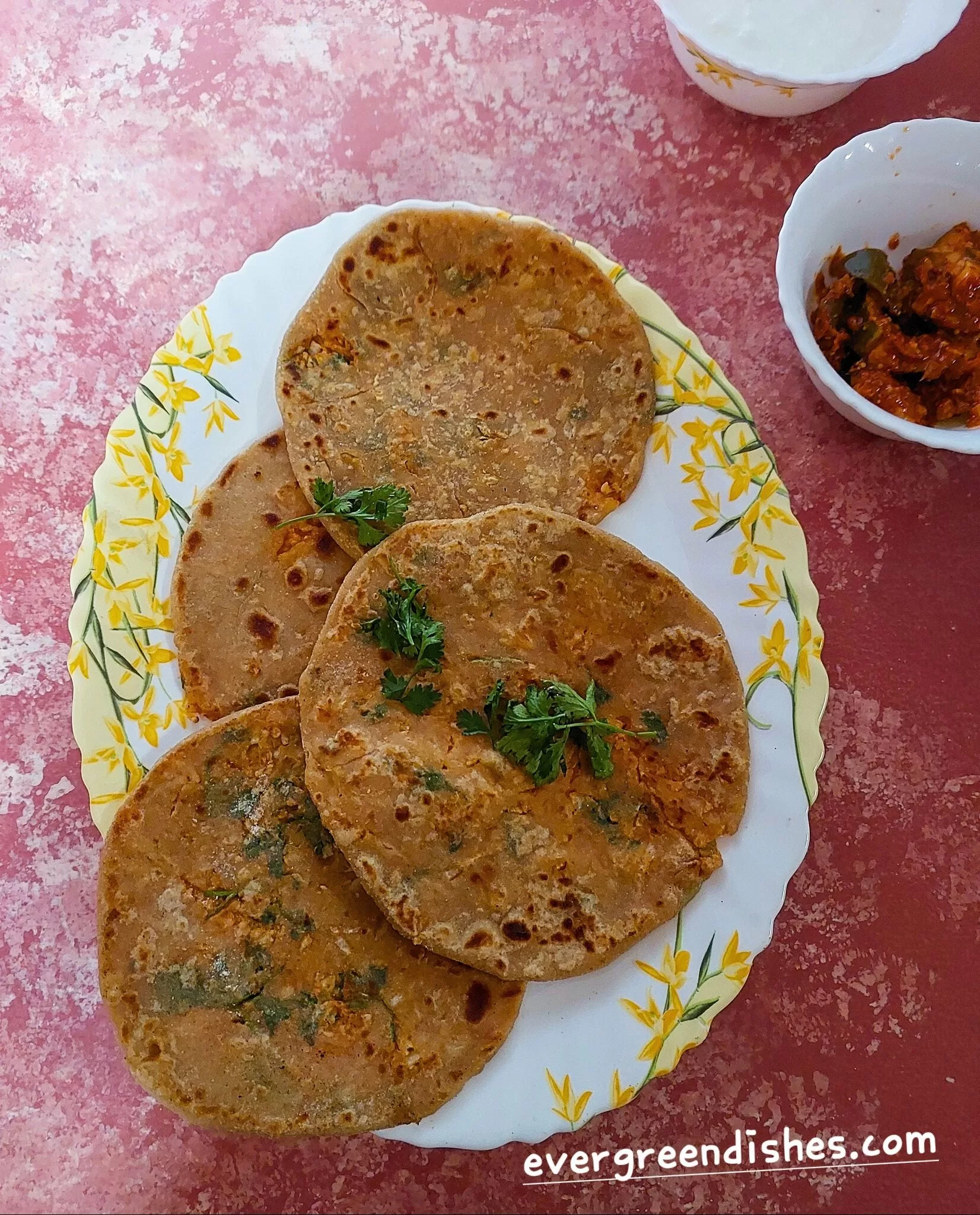
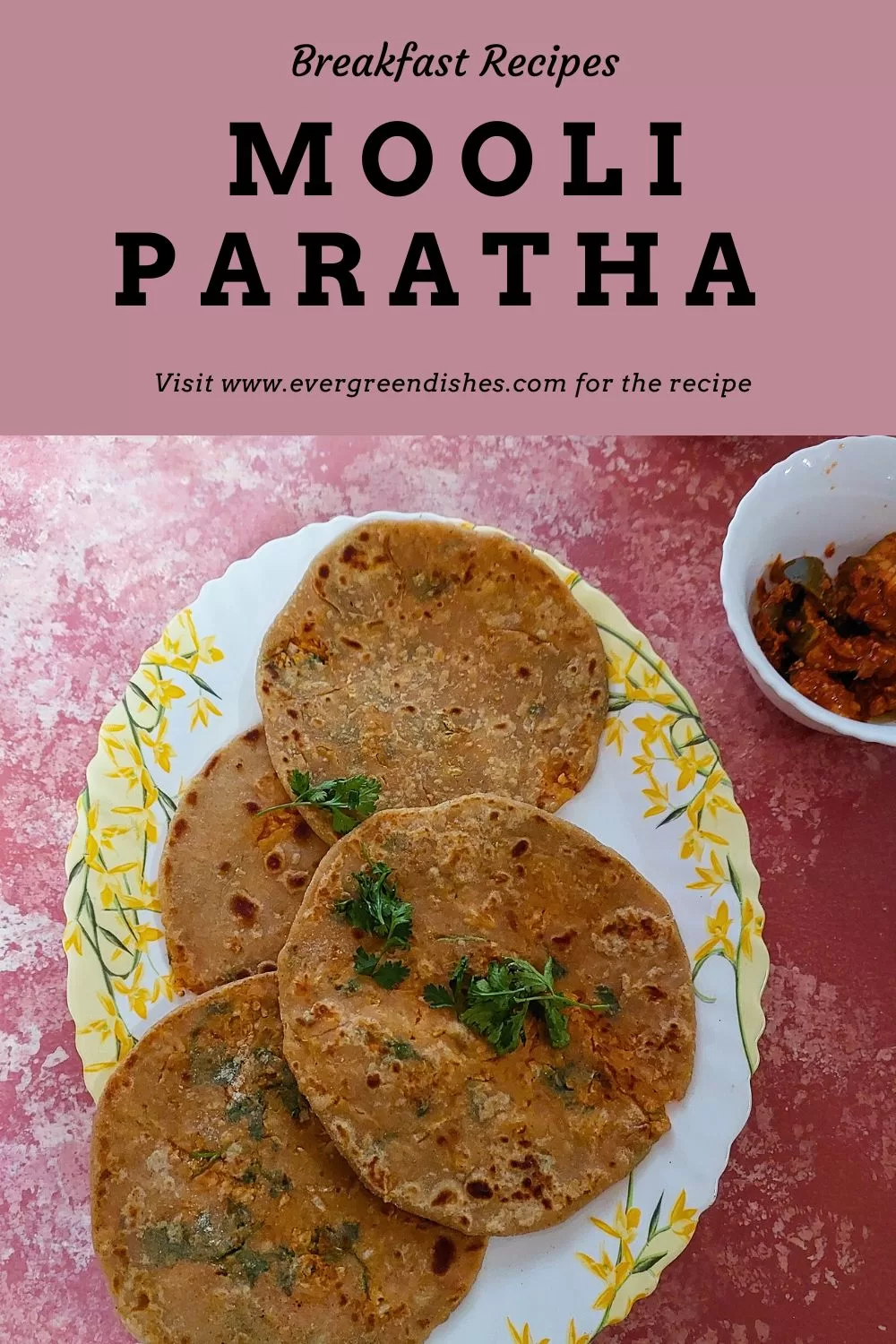
    Mooli Paratha is a tasty stuffed flatbread from North India.
    Mooli or radish is a winter vegetable. It is often used to make tasty stir fry and sambar.

    Winter is bountiful with fresh vegetables and fruits. Varied kind of vegetables are available in the market. Green peas, radish, pumpkin, brinjal are some of the winter vegetables we find here. Green leaf of different kinds are in large produce. 


    Radish is a flowering plant in the mustard family Brassicaceae. Though the vegetable is a tap root, the leaves too are consumed as greens. Earlier, it was used only in Asia, but today it is used throughout the world.

    Mooli as it is commonly called in India, is often disliked for its smell by some of them. But, one must consider the numerous health benefits . Being rich in fiber, it aids in weight loss and digestion. Radish helps in the blood sugar management. It also helps to cure urinary tract infections.

    It also improves the texture of the skin. It promotes better circulation of blood.

    How to use radish :

    Radish can be eaten in both ways, raw and cookwed. It is often used in making tasty stir fry and salad.
    It can also be used in sambar along with other vegetables.
    The leaves of radish can be used in making tasty salads and soups.
    Radish can also be used as a stuffing in parathas. It makes a tasty punjabi breakfast.


    mooli parathaMooli Paratha Recipe :


    Radish contains 75% water, hence it is difficult to roll easily. Salt is mixed to the grated radish and kept covered for sometime. It helps to remove the moisture.

    Radish paratha can be made in two ways. You can either add green chilli or chilli powder as I have added here to the stuffing. There is a variation in taste. Mooli paratha is best enjoyed with pickles and curds. You may add chaat masala or dahi masala to the curd to enhance the taste. The other alternative is to use a green chutney.


    Ingredients :

    For the dough :

    • 2 cup wheat flour
    • ½ teaspoon ghee
    • A pinch of salt
    • Water for kneading
    • 1 teaspoon oil     

    For the stuffing :

    • 4 radish
    • ½ teaspoon garam masala
    • 1 teaspoon chilli powder
    • 1/2 teaspoon salt
    • 1 tablespoon fresh chopped coriander

      Other ingredients :

    • Mixture of oil and ghee for roasting

    Wheat flour for dusting

    Method :

    To make the stuffing :

    • Wash the radish, pat dry and peel the skin.
    • Grate the radish, the finer the shreddings, it will be better to roll.
    • Put ½ teaspoon of salt and keep it aside for ten minutes.
    • Remove the radish by squeezing the water. Put it another bowl
    • Add chilli powder, garam masala and chopped coriander. Mix well. Be careful, if you are adding salt,  as it was added earlier.

    To make the dough :

    In a wide bowl, add wheat flour. Add ghee and salt. At first, mix them well. Then add water in small quantity and mix to a stiff dough. Smear a little oil, cover it with a cloth and keep it aside for ten minutes.

    To make mooli paratha :

    • Take a ball of the dough and roll it a bit.
    • Take a spoonful of the filling, put it in the centre of the rolled dough.
    • Slowly, take the extended sides and make a covering over it.
    • Now, dust the ball lightly and roll it.
    • Heat a griddle, put the rolled paratha on the griddle.
    • Smear some oil and ghee mixture on top of it.
    • Turn it to the other side and smear some oil over it. Cook it to a golden colour on both the sides.

    Serve hot with pickle and curd.

    Take a tip :

    • It is best to keep the spices minimal as radish gives a good taste to the flatbread.
    • You may add ginger and chilli to the grated radish instead of chilli powder and garam masala.
    • The squeezed water may be used for mixing the dough. It can also be used in curry and sambar.
    mooli paratha
    Evergreendishesdev

    Mooli Paratha

    Mooli Paratha is a popular flat bread from North India. It is usually served for breakfast.
    Prep Time 10 minutes
    Cook Time 15 minutes
    Total Time 25 minutes
    Servings: 6 parathas
    Course: Breakfast
    Cuisine: punjabi

    Ingredients
      

    For the dough :
    • 2 cup wheat flour
    • ½ teaspoon ghee
    • A pinch of salt
    • Water for kneading
    • 1 teaspoon oil
    For the stuffing :
    • 4 radish
    • ½ teaspoon garam masala
    • 1 teaspoon chilli powder
    • 1/2 teaspoon salt
    • 1 tablespoon fresh chopped coriander
    Other ingredients :
    • Mixture of oil and ghee for roasting
    • Wheat flour for dusting

    Equipment

    • 2 wide bowl
    • grater
    • scraper
    • rolling board
    • rolling pin
    • skillet
    • ladle
    • small bowl
    • 2 plates
    • 1 small plate
    • 1 small spoon

    Method
     

    To make the stuffing :
    1. Wash the radish, pat dry and peel the skin.
    2. Grate the radish, the finer the shreddings, it will be better to roll.
    3. Put ½ teaspoon of salt and keep it aside for ten minutes.
    4. Remove the radish by squeezing the water. Put it another bowl
    5. Add chilli powder, garam masala and chopped coriander. Mix well. Be careful, if you are adding salt,  as it was added earlier.
    To make the dough :
    1. In a wide bowl, add wheat flour. Add ghee and salt. At first, mix them well. Then add water in small quantity and mix to a stiff dough. Smear a little oil, cover it with a cloth and keep it aside for ten minutes.
    To make mooli paratha :
    1. Take a ball of the dough and roll it a bit.
    2. Take a spoonful of the filling, put it in the centre of the rolled dough.
    3. Slowly, take the extended sides and make a covering over it.
    4. Now, dust the ball lightly and roll it.
    5. Heat a griddle, put the rolled paratha on the griddle.
    6. Smear some oil and ghee mixture on top of it.
    7. Turn it to the other side and smear some oil over it. Cook it to a golden colour on both the sides.
    8. Serve hot with pickle and curd.

    Notes

    It is best to keep the spices minimal as radish gives a good taste to the flatbread.
    You may add ginger and chilli to the grated radish instead of chilli powder and garam masala.

    Pin it for later : 

    If you ever make Mooli Paratha in your kitchen, take a picture and share on Instagram by tagging @foodiejayashree. You can also tag me on facebook. Subscribe to get all updates in your inbox and an e-book of handyhints for free. Until next time, happy cooking !

  • Moong Dal Idli

    Moong Dal Idli

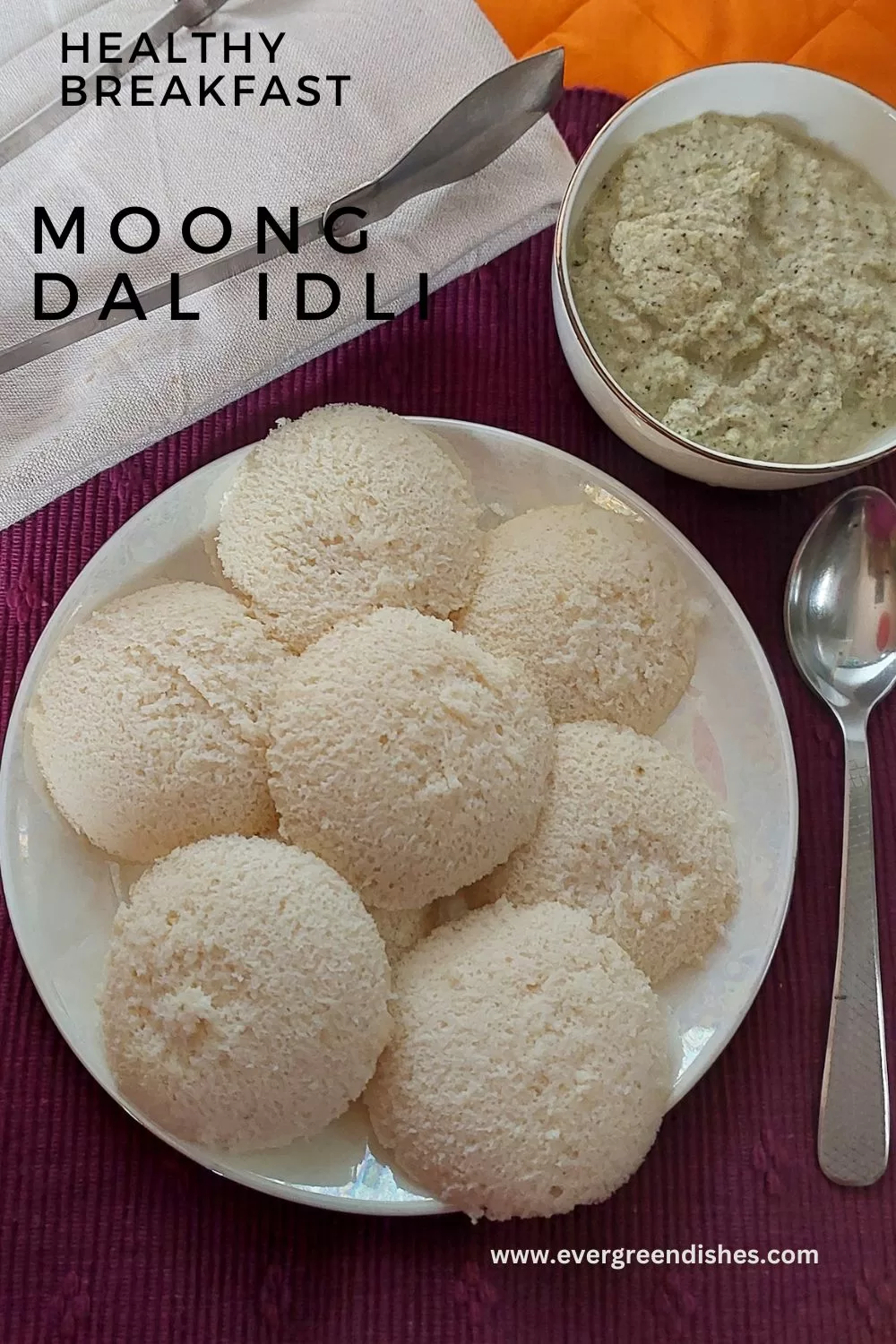
    Moong Dal Idli is another version of idli, it has no rice and is ideal for people with diabetes. It makes use of two different lentils, thus it is protein rich also.

    Earlier, I have mentioned various kinds of idli. Among them ragi idli were of two different kinds, one was the instant version and the other fermented one. Both can be used as diabetic-friendly recipes. The instant rawa idli is equally good .

    Today’s post is about Diabetic friendly food

    What kind of vegetarian foods are diabetic friendly ?

    The best food for people with diabetes are high protein with low sugar options. It can be all healthy foods from various sources such as fruits, vegetables, whole grains, proteins and dairy.
    Fruits include apple, jamun, berries, grapes, cherries and plums.
    Vegetables ideal are green leaves, french beans, okra and cabbage.
    Whole grains include whole wheat, brown rice, barley, quinoa, oats, jowar, finger millet.
    Foods rich in protein are beans, lentils, and soya products like tofu.
    Dairy products are low fat milk, yoghurt and cheese.

    Why suddenly an idli made of moong dal ?

    Just as daily cooking needs a change, we can make different variety of dishes. Moreover, it is diabetic friendly.

    It is a task to plan a healthy and varied kind of breakfast everyday for the family. Moong Dal Idli may be included in your menu.

    Husked moong dal and urad dal are the main ingredients. A little bit of fenugreek seeds is added along with the lentils. The other ingredients needed are salt and water. 


    1. It is nutrient rich as it has the goodness of two kinds of lentils.
    2. It is diabetic friendly.
    3. It can be used by all.
    4. It is ideal when you are bored of the usual breakfast.

    What can I pair with moong dal idli ?

    You c an serve it with chutney or sambar. You can also add a little ghee and podi to it.


    Other Diabetic Friendly recipes by co-bloggers are : Oats Upma by vasusvegkitchen.blogspot.com by Aruna Saras Chandra and One Pot Quinoa Meal by Preethi Prasad. 

    Moong Dal Idli

    5 from 8 votes
    ½ cup moong dal ½ cup urad dal ¼ teaspoon fenugreek seed Salt to taste Water for soaking and grinding

    Ingredients
      

    • Wash and soak urad dal and moong dal for four hours along with fenugreek seeds.
    • Grind them to a fine batter with a cup of water.
    • Remove in a wide bowl and keep it aside in a cool dark place to ferment.
    • Next day add salt to it and mix.
    • Take the idli mould and pour batter in them .
    • Steam them for fifteen minutes or until done.
    • Serve with coconut chutney.

    Method
     

    1. Wash and soak urad dal and moong dal for four hours along with fenugreek seeds.
    2. Grind them to a fine batter with a cup of water.
    3. Remove in a wide bowl and keep it aside in a cool, dark place to ferment.
    4. Next day, add salt to it and mix.
    5. Take the idli mould and pour batter in them .
    6. Steam them for fifteen minutes or until done.
    7. Serve with coconut chutney.

    Notes

    Salt may be added initially before setting it to ferment. I usually add it the next day.
    Be careful while adding water. A little more and the consistency is thinner, it is difficult to prepare.
    Some people smear a little oil on the idli mould to avoid stickiness. I wash the molds before pouring and the dampness helps in creating good ones.

    Pin it for later : 


    moong dal idli


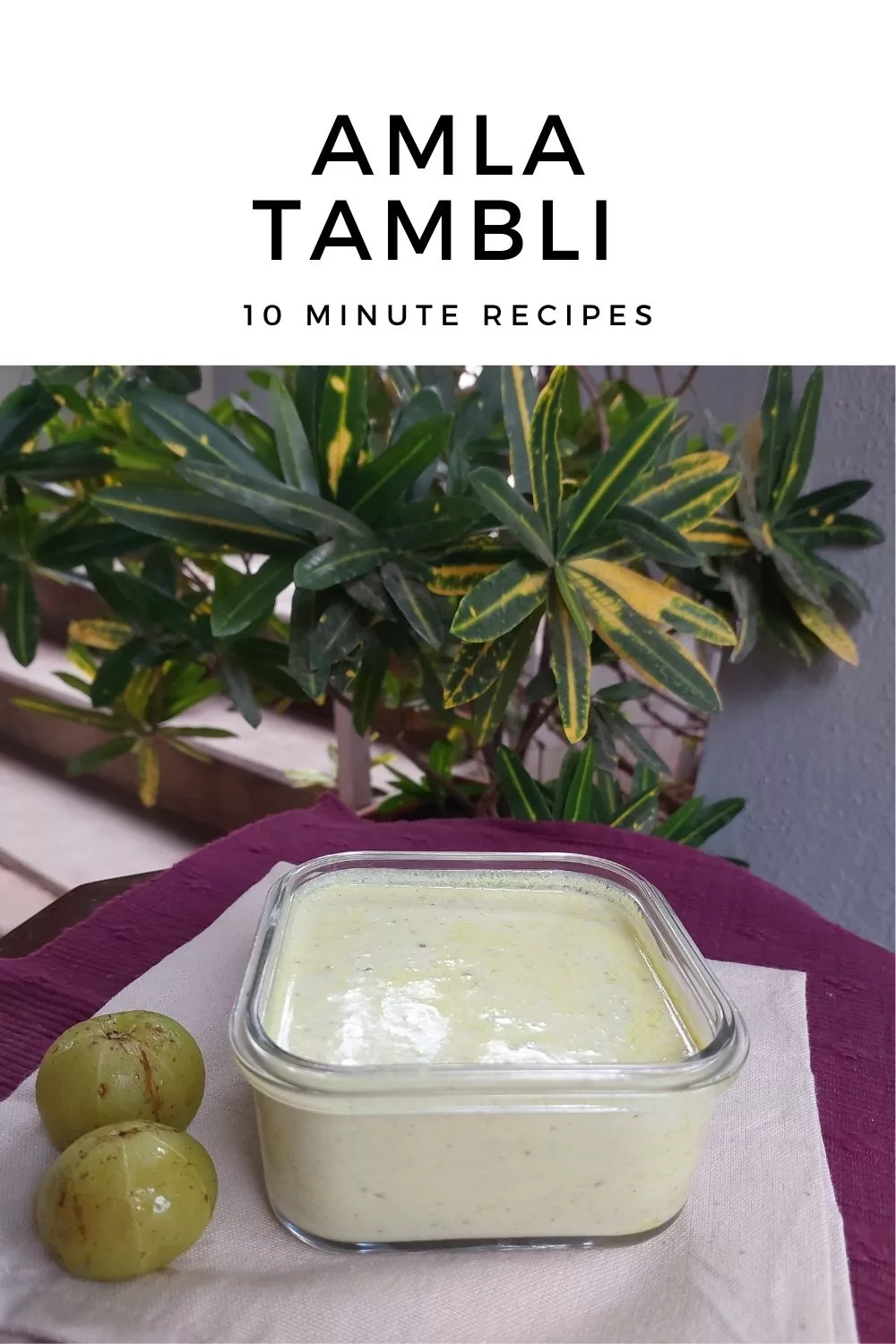
  • Amla Tambli | Nellikayi Tambuli

    Amla Tambli | Nellikayi Tambuli

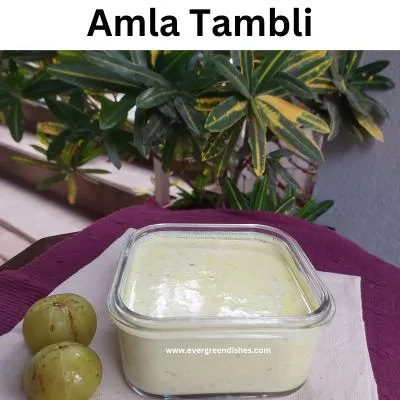
    Amla Tambli is a tasty, healthy dish from South Canara. It pairs well with hot, steamed rice.

    Amla or the Indian gooseberry is a fruit native to South Asia. It is widely used in Ayurvedic medicine. The botanical name of Amla is Phyllanthus emblica. It is a rich source of Vitamin C. It also contains anti-oxidants and other essential nutrients as iron, calcium and fiber.

    Amla is generally round in shape and greenish yellow in colour. It is usually available during months of December and January. It is used to make various kind of dishes as amla pickle, amla murabba, amla rasam, amla tambuli and amla chitranna. Sadly, I have not posted any amla recipes on the blog. So, here is to new beginnings.

    Benefits of Amla :

    1. Boosts immunity  : Being a good source of Vitamin C, one can include it to get the nutrients and anti-oxidants. The anti-oxidants helps in replenishing the cells and fights against the diseases.
    2. Aids in digestion: The dietary fibre helps in preventing constipation.
    3. Good for the heart : The amla extracts are found to be ideal to lower cholesterol and triglycerides. It also helps to reduce the blood pressure.
    4. Good for the kidneys: Studies have shown that it is good for the kidneys.
    5. Ideal for skin health : The high concentration of vitamin C promotes the texture and elasticity of the skin.
    6. Good for hair care : Amla is often used in hair care products.

    Side effects :

    I am not a  health worker or a doctor.  Please use any suggested food ideas as per your health conditions. Although, amla is a good source of Vitamin C, it is suggested to be used  in moderation. Excess use may cause varied kinds of problems. The high fibre content  may cause bloating and diarrhoea in some individuals.

    It can affect the blood sugar levels also. People with diabetes should be careful about using it.

    Amla Tambli

    Amla Tambli

    Amla Tambli is an easy to make, tangy dish ideal to serve with hot, steamed rice. It is a good way to include amla in our diet. Usually, the round shaped known as bettada nellikayi is used in cooking.

    Amla pickle is often made in made home. Here is an instant amla pickle by my co-blogger Seema.

    Why should you make amla tambli ?

    Amla tambli is an easy to make dish. It is ready in ten minutes. It is ideal to serve with hot steamed rice.

    Can it be stored for a couple of days ?

    No. I suggest to make it in a small quantity and consume it.

    Can I use other kind of oil?

    Coconut oil lends a good taste but feel free to use any neutral cooking oil

    Can I make it spicy ?

    You my add an extra chilli if you need.

    Can I use sour curd ?

    No, use fresh curd to make tambli.


    Evergreendishesdev

    Amla Tambli

    Amla Tambli is an easy to make, tasty, healthy and a no cook side dish. It makes a good accompaniment with hot steamed rice.
    Prep Time 10 minutes
    Total Time 10 minutes
    Course: dinner, lunch
    Cuisine: South Canara

    Ingredients
      

    • To be made into a paste :
    • 4 amla washed and cut into pieces
    • 1/2 cup fresh coconut
    • 2 green chillies
    • 1/2 teaspoon cumin
    • Other ingredients :
    • 4 tablespoon curd
    • 1/2 cup water
    • salt to taste
    • For the seasoning :
    • 2 teaspoon coconut oil
    • 1/4 teaspoon mustard
    • dash of asafoetida
    • 1/4 teaspoon turmeric powder
    • a few curry leaves

    Method
     

    1. Grind the ingredients under the section,”To be made into a paste”. Put  curd and blend it again. Remove it in a bowl.
    2. Add some water to it. Put salt.
    3. Make seasoning with coconut oil. Add mustard seeds. As it splutters,  put a few curry leaves, asafoetida and turmeric powder. Pour it over the prepared dish. Amla Tambli is ready to serve.

    Notes

    You may use any other oil. But, coconut oil gives a good taste to the dish.
    Use fresh curd.
    You may adjust the quantity of green chilly as per the need.

    If you ever make Amla Tambli in your kitchen, take a picture and share on Instagram by tagging @foodiejayashree. You can also tag me on facebook. Subscribe to get all updates in your inbox and an e-book of handyhints for free. Until next time, happy cooking !

    Pin it for later :

    Amla Tambli
    Amla Tambli


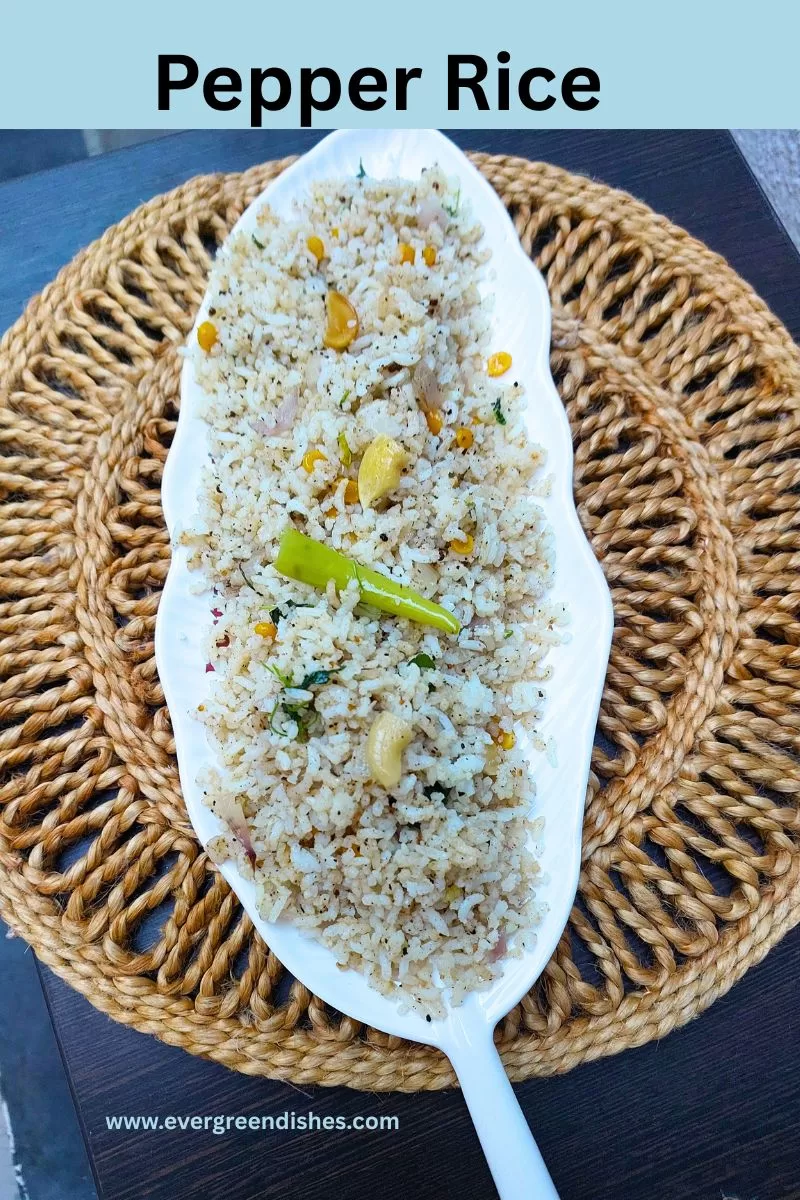
  • Pepper Rice | Pepper Cumin Rice Recipe

    Pepper Rice | Pepper Cumin Rice Recipe

    Pepper Rice | pepper rice recipe | lunch ideas | easy dinner recipes | 15 minute recipes |pepper cumin rice


    Pepper Rice is a flavorsome, easy to make rice dish. It is ideal to pack in the lunch box. It also makes a good weekend menu for us.

    I learnt the recipe from a good friend who cooks really well. When you are stuck with the usual menu and looking for an easy lunch option, you can make pepper rice. Leftover rice may be used to make this quick and easy dish. Pepper rice can also be packed in the lunch box. 

    The good thing about the varied rice dishes, can be used both  for lunch or dinner. It makes a good brunch option too. They are loved by children, isn’t it ? It comes an upper hand when compared to the rice and dal option. They serve as a fuss free menu in most household.

    Pepper Rice needs a few simple ingredients; they are easily available in the kitchen. It is ideal to pack in the lunch box. You can make use of the left-over rice and serve it for dinner too.

    A few basic ingredients are all that you need and a tasty rice is ready in a jiffy. Cut the onion.  Make a powder of pepper and cumin.  Put the spice mix in the seasoning and mix with cooked rice. Make sure the rice grains are separate and well cooked. 

    You can serve pepper rice with papad, pickle and a cucumber salad.

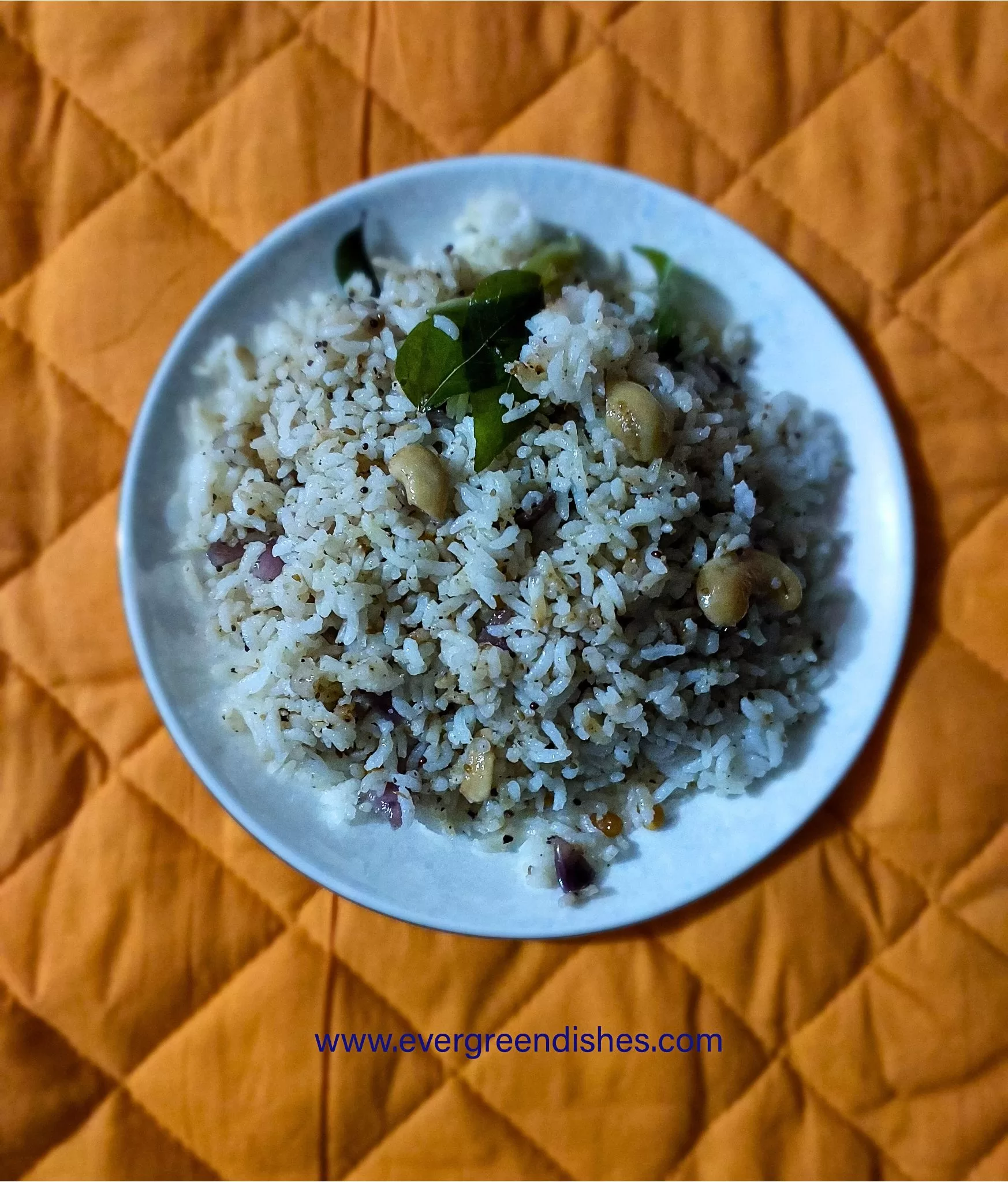
    pepper rice
    pepper rice

    Why should I make pepper rice ?

    I find three reasons to convince you. It is easy to prepare. It is ideal for lunch or a quick dinner. Most of the times, when you need a change from the normal cooking, I think you can give it a try.

    Can I use left over rice ?

    Yes, you can use left over rice to make pepper rice.

    Can I store the remaining spice mix ?

    Yes, keep it in a clean, air-tight container.

    Can I add garlic to the rice ?

    Yes, go ahead. Put a few cloves of garlic in the seasoning.

    Other kind of South Indian rice recipes :  Coconut Rice, Lemon Rice, Sesame Rice 


    pepper rice

    Pepper Rice

    5 from 7 votes
    Pepper rice makes a good lunch or dinner option. It can be served in the lunch box too.
    Prep Time 10 minutes
    Cook Time 10 minutes
    Total Time 20 minutes
    Course: dinner ideas, lunch, lunch box
    Cuisine: karnataka

    Ingredients
      

    • 1 cup cooked rice
    • 2 tablespoon oil
    • ½ teaspoon mustard
    • 1 teaspoon bengal gram
    • 1 teaspoon urad dal
    • 2 green chilly
    • 1 onion finely cut
    • A few curry leaves
    • 2 teaspoon ground powder
    • Salt to taste
    • For the spice mix :
    • 1 tablespoon pepper
    • 1 teaspoon cumin

    Method
     

    1. Make a coarse powder of pepper and cumin.
    2. Take oil in a pan. Add mustard seeds, as it sputters, put bengal gram, urad dal to it. Allow it to cook for thirty seconds. Put green chilly, saute, stir in the onion and curry leaves. Let cook for sometime.
    3. Put two teaspoons of the ground mix to it.
    4. Add salt. Switch off the flame.
    5. Mix rice to it.
    6. Easy pepper rice is ready to serve.

    Notes

    A few cloves of garlic may be added in the seasoning.
    The spice mix can be stored in a clean, air tight container.
    Depending on the level of spiciness you need, adjust the quantity of the spice powder.

    About the event :

    Sending this to Foodies_Redoing Old Post _150. It is a fortnightly event, a group of bloggers of shared interest, work on an old post either by updating the recipe and content or with better pictures. Here, I have changed the pictures. The post was first published on September,24, 2024. Now, on Aril 27th, 2025 I have redone it with better pictures.

    Pin it for later:

    Pepper Rice
    Pepper Rice


    If you ever make Pepper Rice in your kitchen, take a picture and share on Indtagram by tagging @foodiejayashree. You can also tag me on facebook. Subscribe to get all updates in your inbox and an e-book of handyhints for free. Until next time, happy cooking !


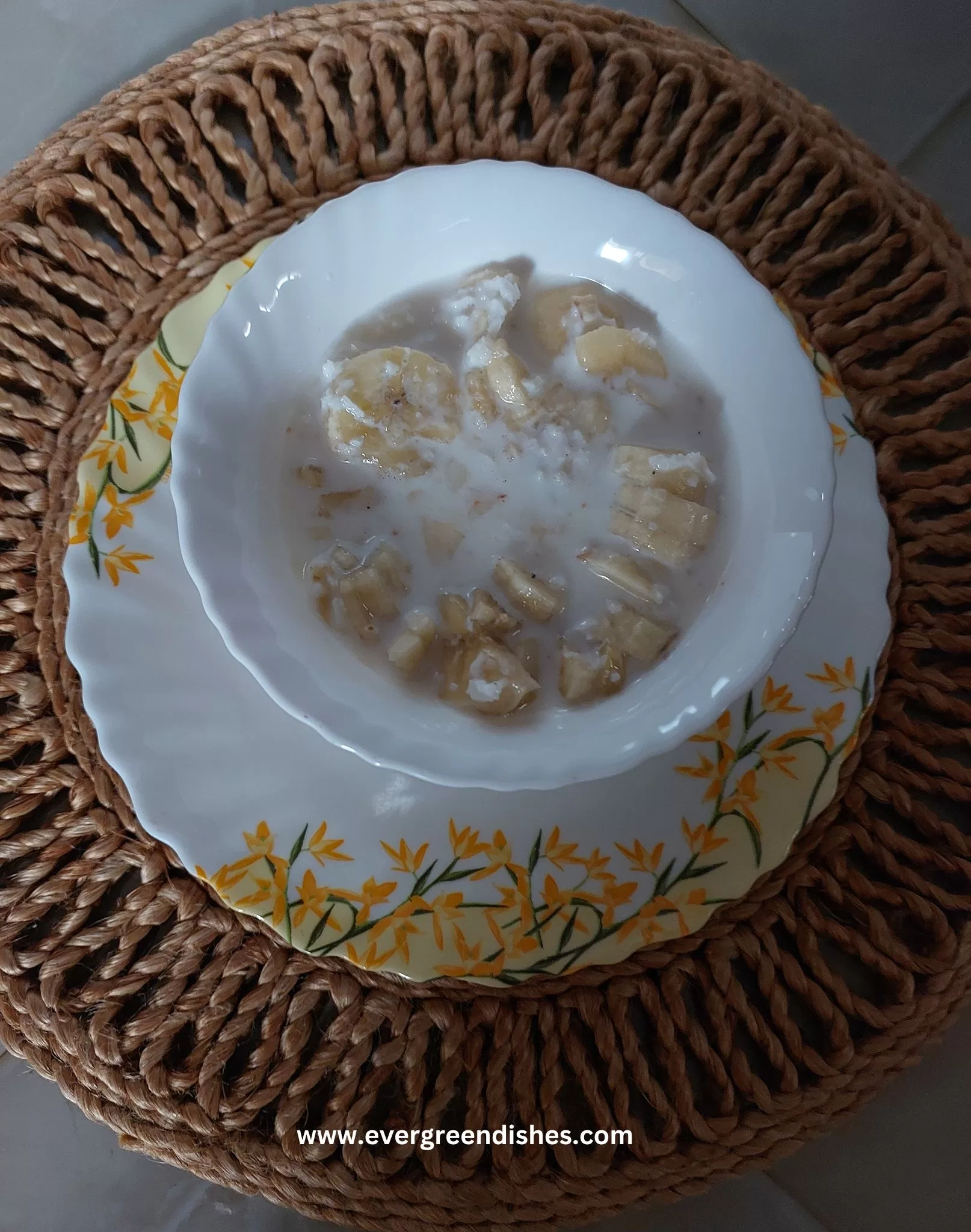
  • Banana Rasayana | Balehannina Shikarni

    Banana Rasayana | Balehannina Shikarni

    Jump to Recipe

    Banana Rasayana | Balehannina Sihkarni | No Cook Recipe | 15 minute recipe

    Banana Rasayana or Balehannina Shikarani is a traditional recipe. It  is a simple yet tasty recipe which can be recreated in ten minutes. It involves no cooking.

    Rasayana can be had as a dessert after meals or one can use it as an accompaniment with chapathi. During our childhood days, I remember banana rasayana was made so regularly. Fasting days and a bowl of rasayana was kept ready to serve. Excess of banana and it was soon made into a shikarni.

    This post is one of the reminiscences of our childhood days.. It was ideal for any day, just cut a few bananas and put them in milk. Growing up in a joint family during my childhood days, cooking was an elaborate affair. If some unexpected guest came home and an extra dish on the platter would be banana rasayana. Too many banana after a festive day and it would turn into a delicious rasayana. I think all of us can relate to such incidents.

    The making of rasayana

    The simplest step is to use those fruits which are a day old. Cut them into small pieces and put it in a bowl of milk. Add sugar, cardamom powder and grated coconut to it. Serve it with chpathi or as a dessert.

    Why should you make this ?

    • It is easy to prepare. Here, no cooking is involved. Just cut a few bananas, mix a few ingredients in milk and voila, it is ready.
    • It is ideal to offer to the Lord on festive days.
    • It is ideal for fasting days. 
    • Rasayana is a good way to finish off the extra banana lying in the kitchen platform.
    • Bananas are  a good source of nutrition, ideal to make it as part of  our diet.
    • It is a quick fix sweet dish anytime.


    Take a tip:

    • Cut the banana into small pieces.
    • Bananas should  not be over ripe.
    • Honey may be added.
    • You may add cashews and raisins. 

    A few recipes from my co-bloggers which are no cook recipes like the Rasayana ;Strawberries with Fresh CreamSolkadhi and Carrot and Orange Granita 

    Check out the other no cook recipes from the blog

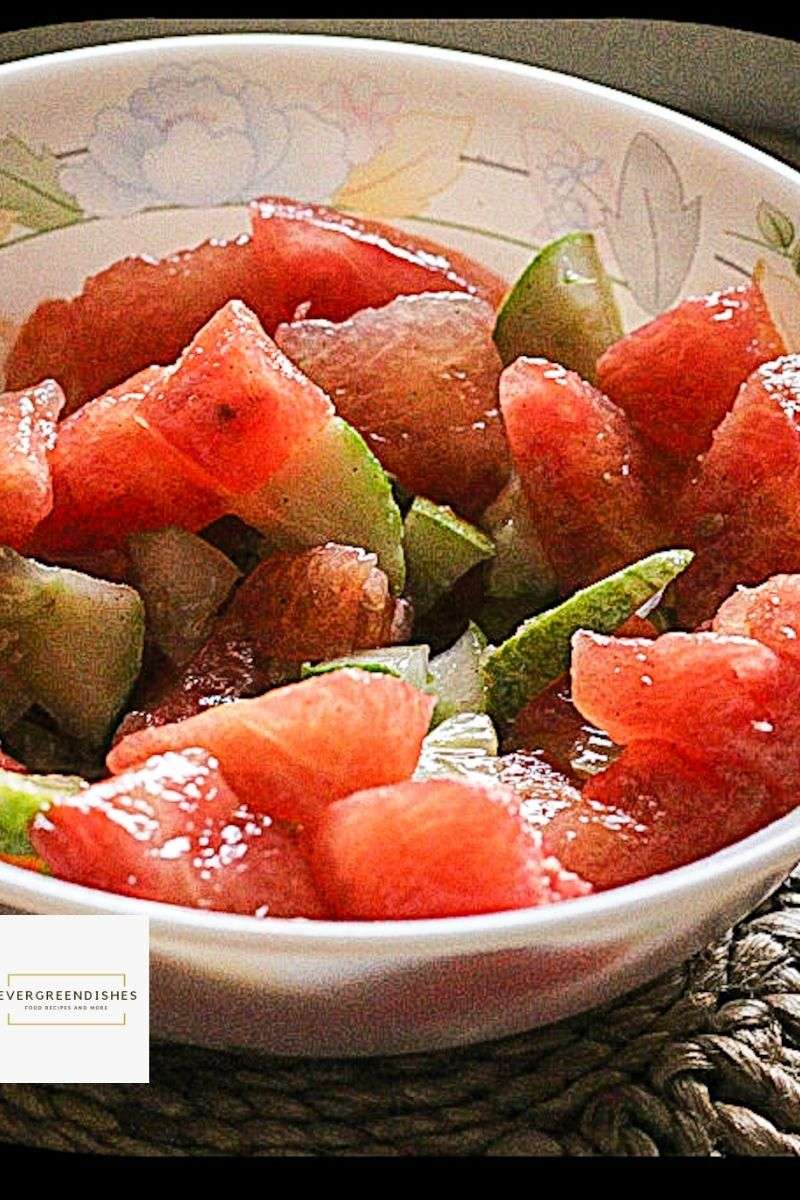
    watermelon and cucumber salad
    watermelon and cucumber salad

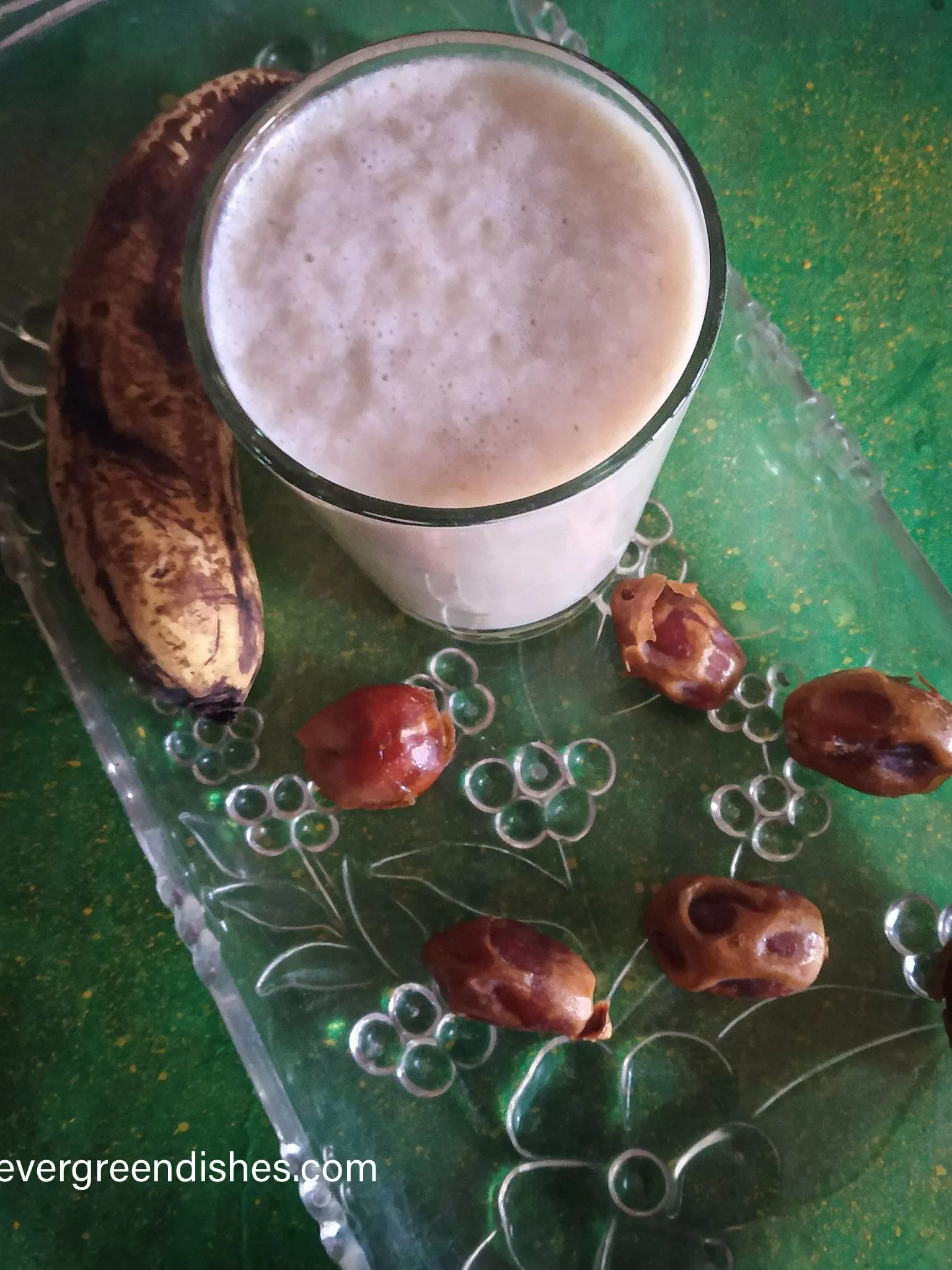
    baanana date milkshake
    banana date milkshake

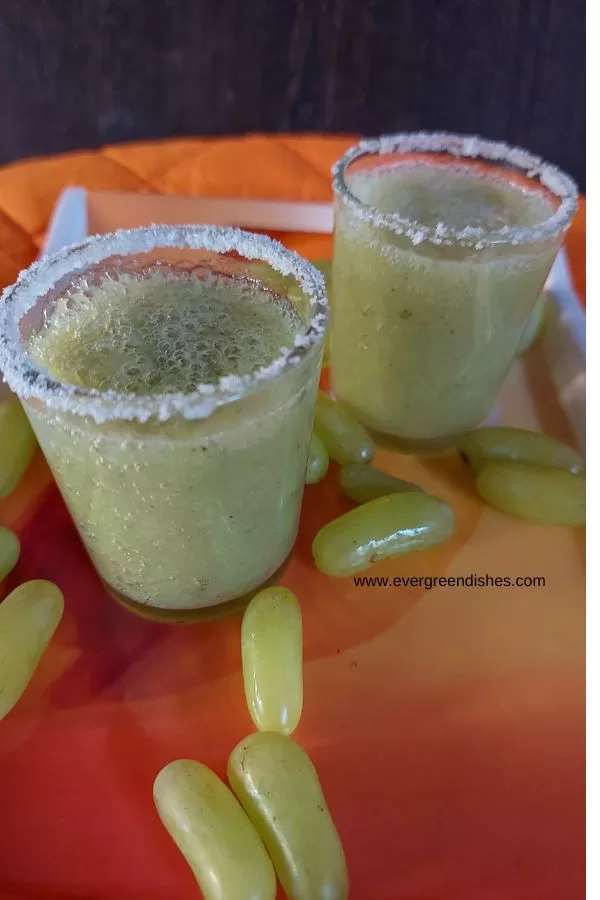
    grapes shot recipe
    grapes shot

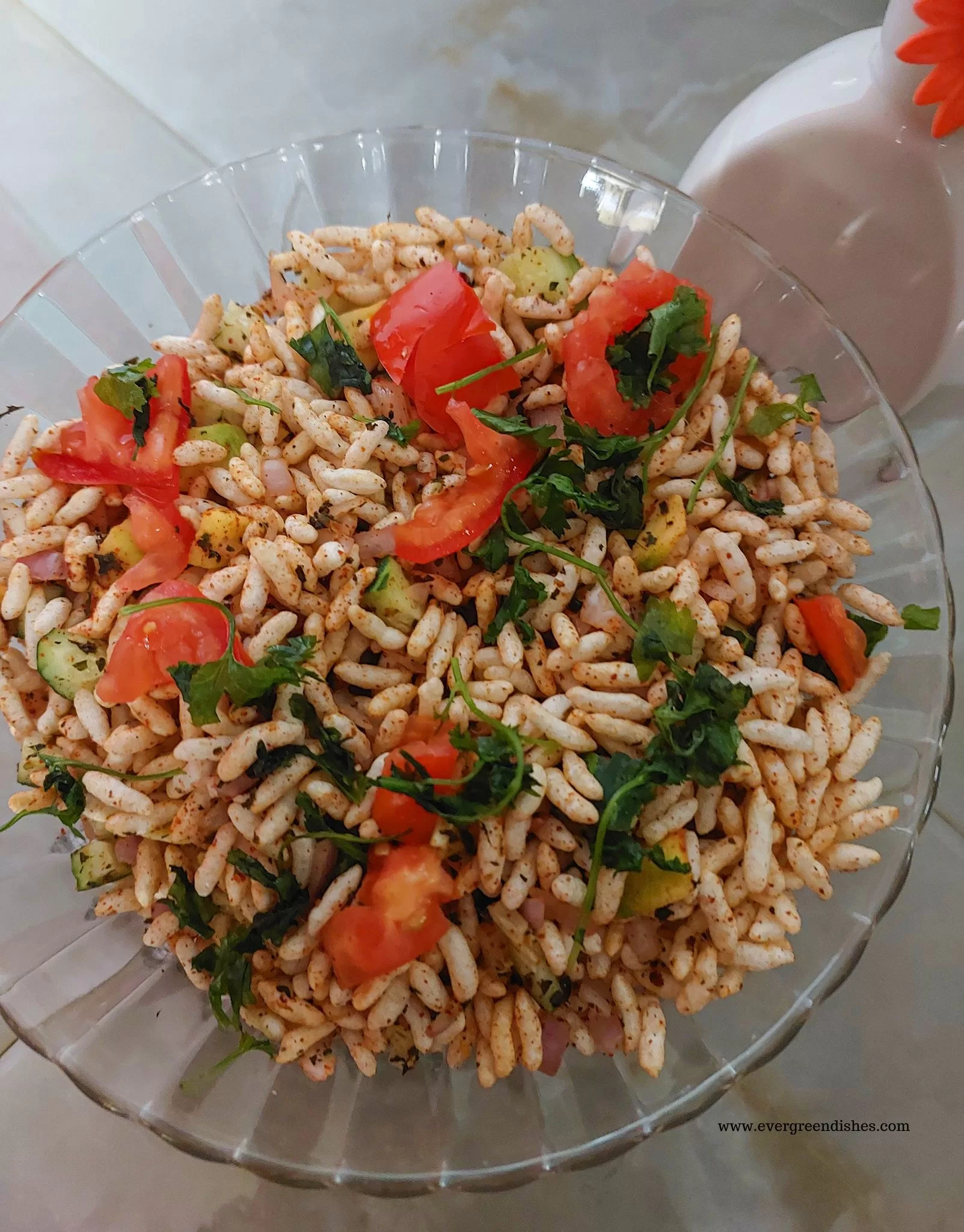
    spicy murmura snack
    spicy murmura snack
    Print Recipe

    banana rasayana

    Banana Rasayana | Balehannu Sihikarne

    5 from 1 vote
    Banana Rasayana is a simple, no cook, tasty dish. It is ideal to serve with chapathi or as a dessert.

    Ingredients
      

    • 2 bananas
    • ½ cup milk
    • 2 teaspoon sugar
    • 2 teaspoon fresh grated coconut
    • A pinch of cardamom powder

    Equipment

    • 1 knife
    • 1 wide bowl
    • 2 spoons
    • 1 serving bowl

    Method
     

    1. Cut the banana into pieces. Add milk. Put sugar, grated coconut and cardamom powder. Mix and serve.

    Notes

    Cut the banana into small pieces.
    Bananas should  not be over ripe.
    Honey may be added.
    You may add cashews and raisins. 

    If you  ever make  Banana Rasayana , take a picture and share it by tagging @foodiejayashree on Instagram and @evergreendishes on Facebook.  Subscribe to get all updates and an e-book for free.