Category: lunch ideas

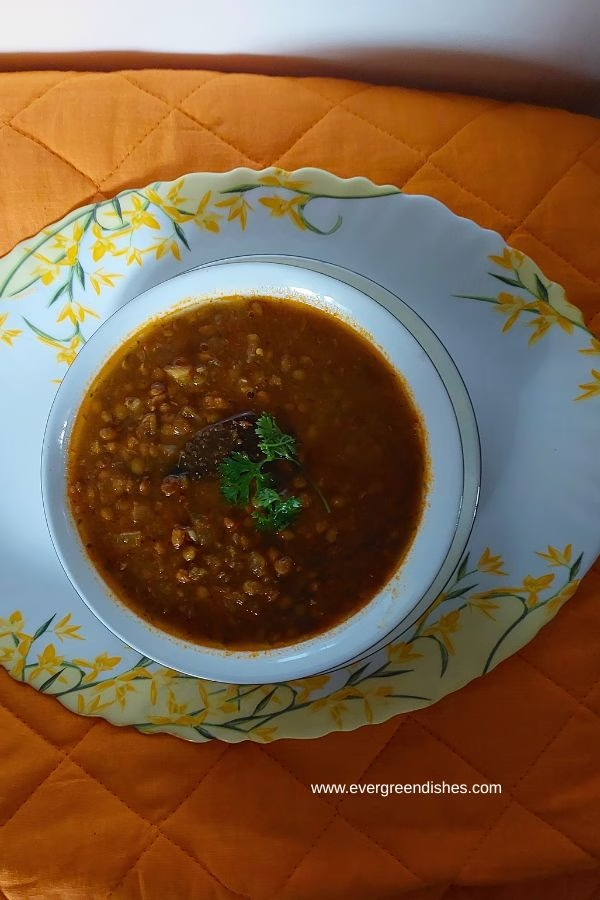
  • Whole Masoor Curry | Vegan and Gluten-Free Brown Lentil Dal

    Whole Masoor Curry | Vegan and Gluten-Free Brown Lentil Dal

    Jump to Recipe

    Whole Masoor Curry makes a tasty accompaniment with chapathi, roti or nan. It is easy to prepare. 

    When you are bored of the regular dishes, give a try to whole masoor curry. It is different and tasty. The taste of masoor is earthy and the spices makes it delectable.

    Nutrients in Whole Masoor:

    Whole Masoor is a good source of plant protein, fibre, complex carbohydrates, magnesium, iron and potassium. Masoor Dal has the highest source of protein among the lentils.

    Why should you make

    • Whole masoor can be soaked for for only two or three hours unlike others which need six to seven hours of soaking.
    • It makes a healthy side dish with chapathi.
    • The dish is easy to prepare, it is ready in half an hour.
    • It is vegan, gluten-free.
    • It is a good source of protein.
    • Something different than the usual cooking.
    • It is ideal to pair with chapathi and steamed rice.

    A few other side dishes from the blog:
     

    whole masoor curry
    whole masoor curry

    Masoor Dal: Here, we use the whole masoor. It should be soaked for atleast two hours.

    Tomato : Blanch the tomato by putting it in hot water.

    Ginger : It not only gives a good taste but aids in digestion too.

    Garlic : It is made into a paste along with tomato, ginger and coriander.

    Coriander: Always use fresh coriander.

    Garam Masala: The spice mix that lends a good flavour to the cooking.  Use the brand which you like.

    This is a one pot recipe. It can be easily made for lunch, brunch or dinner. I usually soak it at 8a.m in the morning and it is easier to cook after my morning routine.

    This is a vegan and gluten-free recipe. You can use it to pair with chapathi, roti or even steamed rice.

    Here  is the Whole Masoor Curry Recipe.

    Print Recipe

    Whole Masoor Curry

    Whole Masoor Curry is a tasty, nutrient rich, vegan,gluten-free dish. It pairs well with chapathi or phulka.

    Ingredients
      

    • ½ cup whole masoor
    • 1 onion finely cut
    • 2 tomato
    • 3 clove garlic
    • ½ inch ginger
    • Handful of coriander
    • 2 tablespoon oil
    • ¼ teaspoon cumin
    • 2 cloves
    • 1 bay leaf
    • ¼ teaspoon turmeric powder
    • ½ teaspoon chilli powder
    • ½ teaspoon garam masala
    • ¼ teaspoon anardana
    • Salt to taste
    • 2 tablespoon oil

    Method
     

    1. Wash and soak the whole masoor for two hours.
    2. Blanch the tomato. Grind them with ginger, garlic and coriander.
    3. Take oil in a small pressure pan. Add cumin, cloves and bay leaf to it. Put the onion and saute it for sometime.
    4. Add the tomato paste to it and continue to saute it.
    5. Add turmeric powder, garam masala, chilli powder and anardana to it along with the salt.
    6. Put the soaked whole masoor to it and mix well.
    7. Put two cups of water and close the lid.
    8. Cook it for two whistle. Let the pressure release by itself. Mix and serve

    Notes

    Serve with chapathi or hot phulka.

    If you ever make Whole Masoor Curry in your kitchen, take a picture and share it by tagging @foodiejayashree on Instagram or @evergreendishes  on Facebook. Until next time, Happy Cooking.

    A thought to ponder : Eating healthy is a choice we need to make each day.

    Pin it for later:
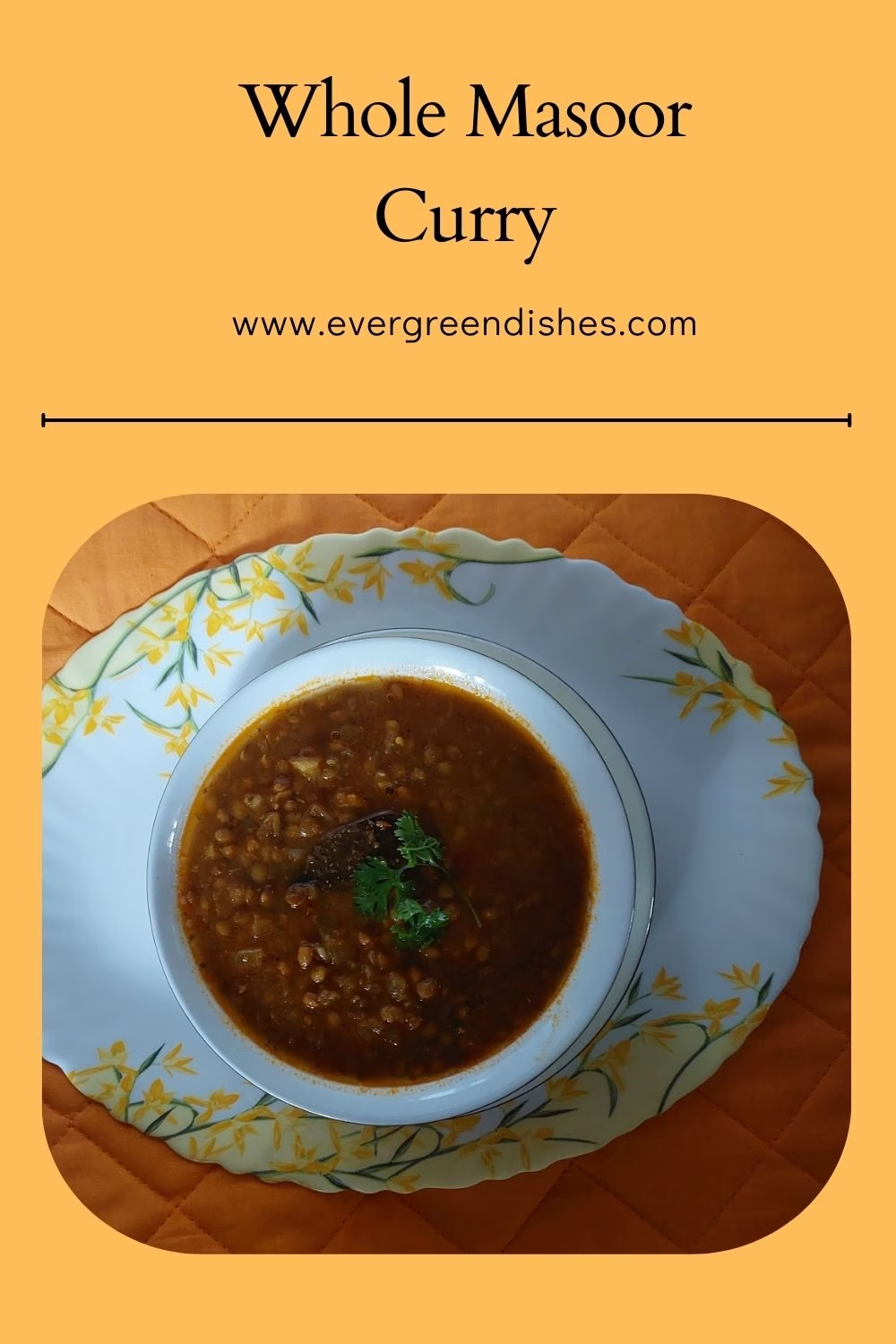
    whole masoor curry
    Whole Masoor Curry


  • Pepper Rice | Pepper Cumin Rice Recipe

    Pepper Rice | Pepper Cumin Rice Recipe

    Pepper Rice | pepper rice recipe | lunch ideas | easy dinner recipes | 15 minute recipes |pepper cumin rice


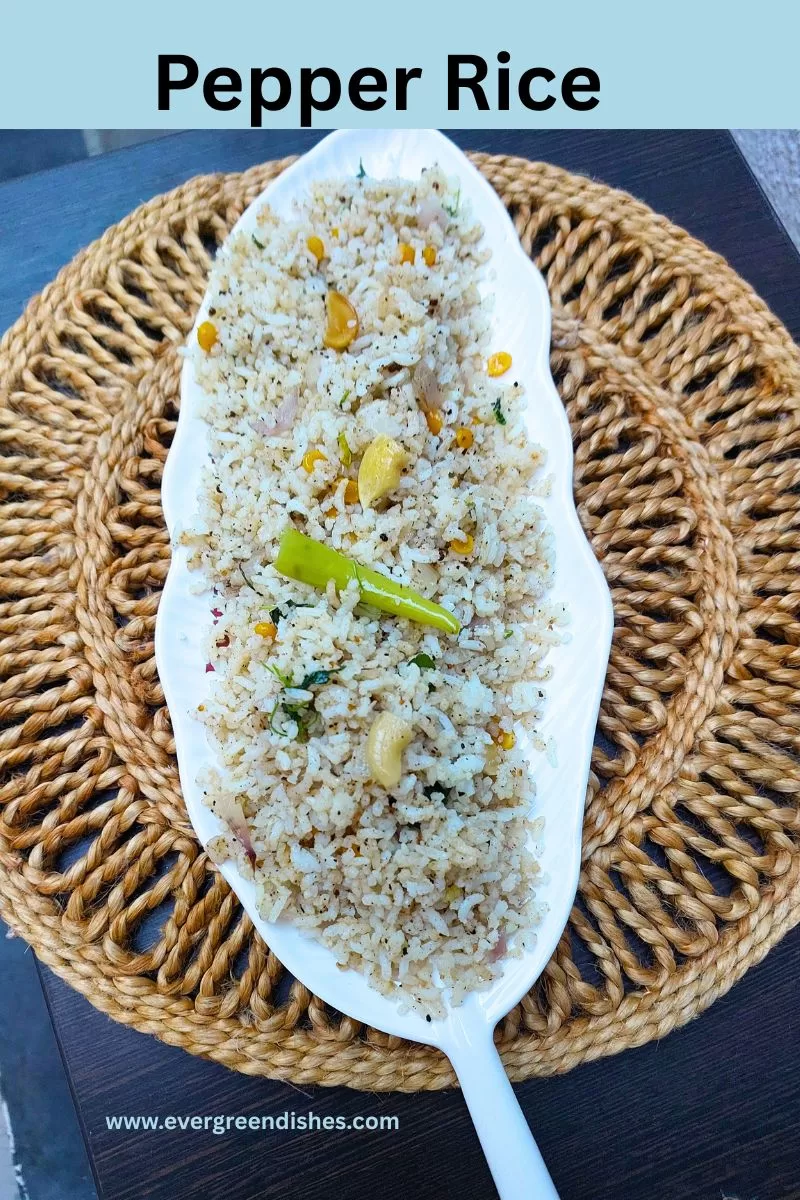
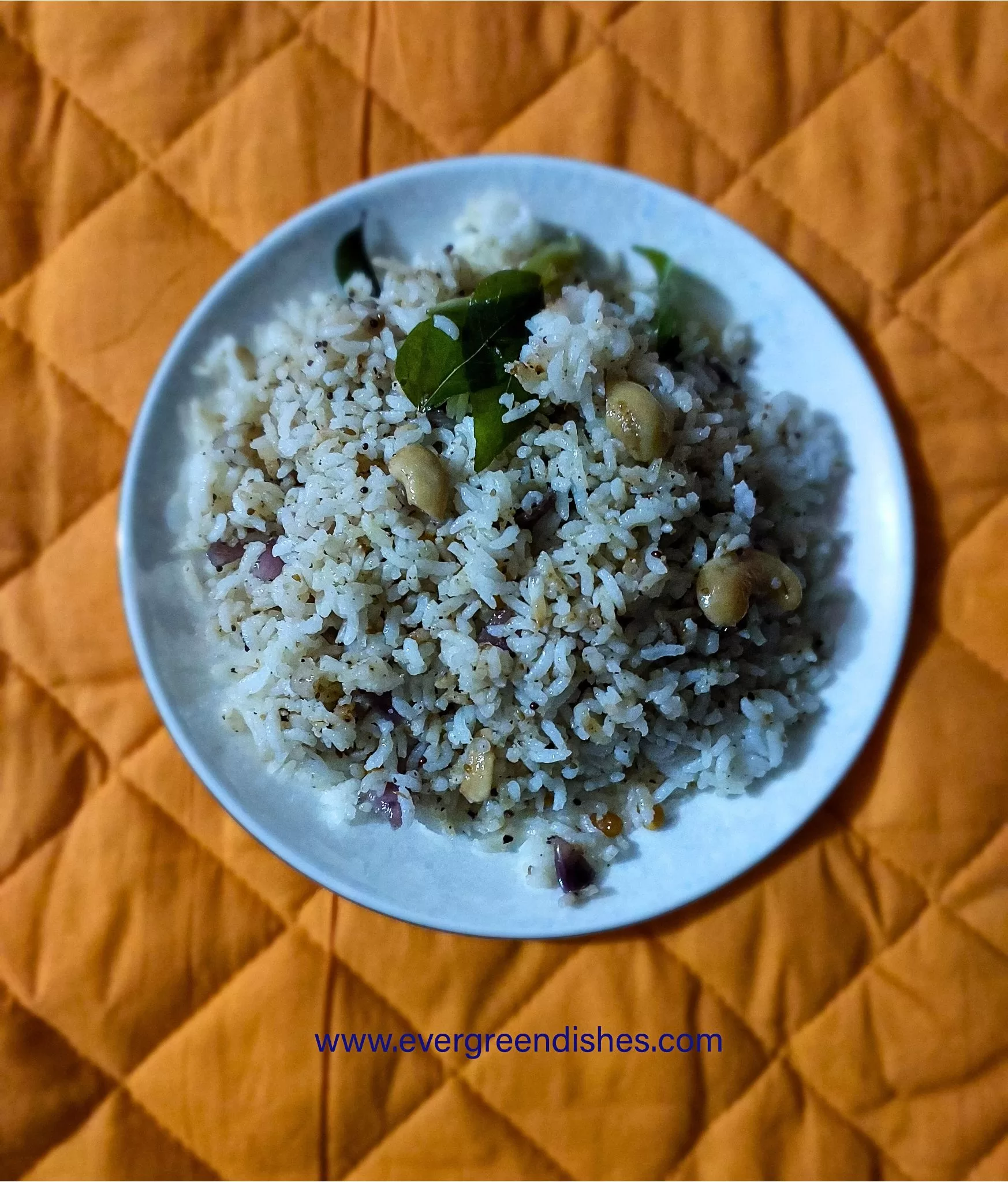
    Pepper Rice is a flavorsome, easy to make rice dish. It is ideal to pack in the lunch box. It also makes a good weekend menu for us.

    I learnt the recipe from a good friend who cooks really well. When you are stuck with the usual menu and looking for an easy lunch option, you can make pepper rice. Leftover rice may be used to make this quick and easy dish. Pepper rice can also be packed in the lunch box. 

    The good thing about the varied rice dishes, can be used both  for lunch or dinner. It makes a good brunch option too. They are loved by children, isn’t it ? It comes an upper hand when compared to the rice and dal option. They serve as a fuss free menu in most household.

    Pepper Rice needs a few simple ingredients; they are easily available in the kitchen. It is ideal to pack in the lunch box. You can make use of the left-over rice and serve it for dinner too.

    A few basic ingredients are all that you need and a tasty rice is ready in a jiffy. Cut the onion.  Make a powder of pepper and cumin.  Put the spice mix in the seasoning and mix with cooked rice. Make sure the rice grains are separate and well cooked. 

    You can serve pepper rice with papad, pickle and a cucumber salad.

    pepper rice
    pepper rice

    Why should I make pepper rice ?

    I find three reasons to convince you. It is easy to prepare. It is ideal for lunch or a quick dinner. Most of the times, when you need a change from the normal cooking, I think you can give it a try.

    Can I use left over rice ?

    Yes, you can use left over rice to make pepper rice.

    Can I store the remaining spice mix ?

    Yes, keep it in a clean, air-tight container.

    Can I add garlic to the rice ?

    Yes, go ahead. Put a few cloves of garlic in the seasoning.

    Other kind of South Indian rice recipes :  Coconut Rice, Lemon Rice, Sesame Rice 


    pepper rice

    Pepper Rice

    5 from 7 votes
    Pepper rice makes a good lunch or dinner option. It can be served in the lunch box too.
    Prep Time 10 minutes
    Cook Time 10 minutes
    Total Time 20 minutes
    Course: dinner ideas, lunch, lunch box
    Cuisine: karnataka

    Ingredients
      

    • 1 cup cooked rice
    • 2 tablespoon oil
    • ½ teaspoon mustard
    • 1 teaspoon bengal gram
    • 1 teaspoon urad dal
    • 2 green chilly
    • 1 onion finely cut
    • A few curry leaves
    • 2 teaspoon ground powder
    • Salt to taste
    • For the spice mix :
    • 1 tablespoon pepper
    • 1 teaspoon cumin

    Method
     

    1. Make a coarse powder of pepper and cumin.
    2. Take oil in a pan. Add mustard seeds, as it sputters, put bengal gram, urad dal to it. Allow it to cook for thirty seconds. Put green chilly, saute, stir in the onion and curry leaves. Let cook for sometime.
    3. Put two teaspoons of the ground mix to it.
    4. Add salt. Switch off the flame.
    5. Mix rice to it.
    6. Easy pepper rice is ready to serve.

    Notes

    A few cloves of garlic may be added in the seasoning.
    The spice mix can be stored in a clean, air tight container.
    Depending on the level of spiciness you need, adjust the quantity of the spice powder.

    About the event :

    Sending this to Foodies_Redoing Old Post _150. It is a fortnightly event, a group of bloggers of shared interest, work on an old post either by updating the recipe and content or with better pictures. Here, I have changed the pictures. The post was first published on September,24, 2024. Now, on Aril 27th, 2025 I have redone it with better pictures.

    Pin it for later:

    Pepper Rice
    Pepper Rice


    If you ever make Pepper Rice in your kitchen, take a picture and share on Indtagram by tagging @foodiejayashree. You can also tag me on facebook. Subscribe to get all updates in your inbox and an e-book of handyhints for free. Until next time, happy cooking !


  • Okra Sambar | Bendekayi Huli | Ladies finger Sambar

    Okra Sambar | Bendekayi Huli | Ladies finger Sambar

    Jump to Recipe

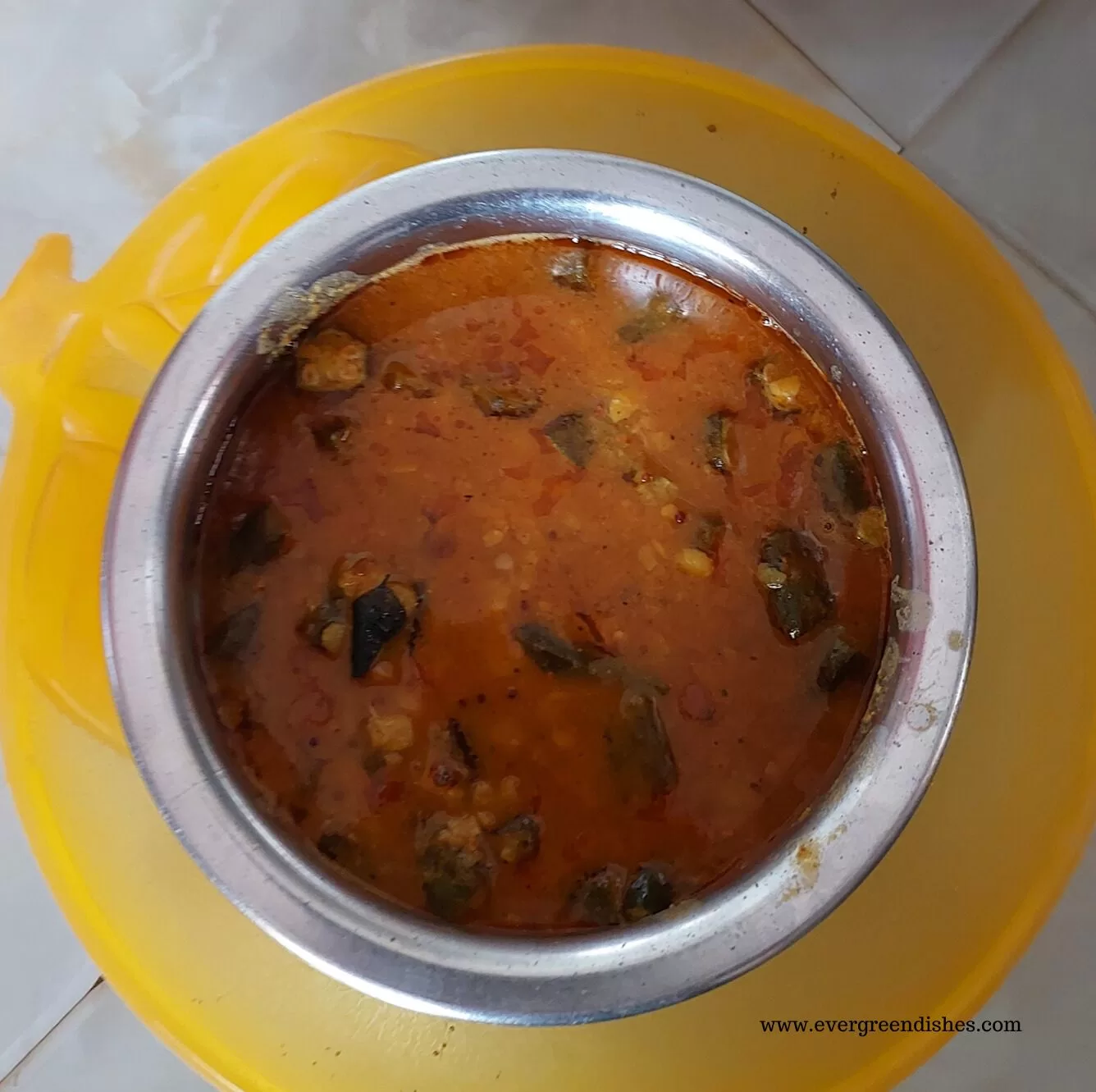
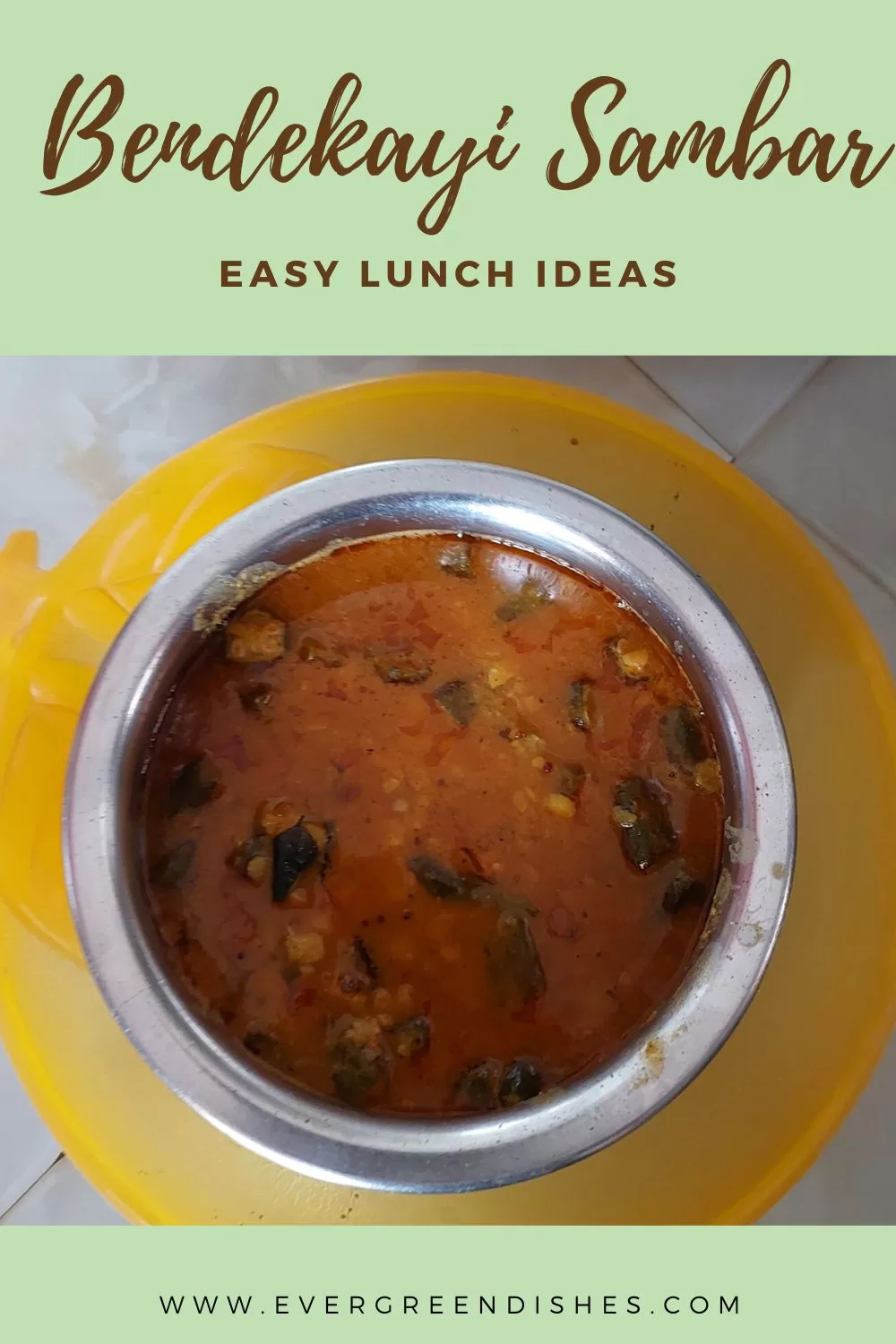
    Okra Sambar is one of the kinds of dish  you can prepare when you need something different and easy, filling that will pair up with steamed rice and a simple stir fry. It is an ideal lunch idea for a busy day.  Okra is commonly called as ladies finger in English speaking countries. The scientific name is Abelmoschus esculentus. 

    Sambar is dense and more nutritious as it has the goodness of lentils and vegetables in it. It can be made in various ways as using varied vegetables or green leaf. Pulses such as horse gram taste good along with vegetables. Today, I am sharing the recipe of Bendekayi Sambar.

    Bendekayi is ideal to make as a crispy  fry. My family loves all kinds of okra fry. This sambar is one of the lesser made items. But, believe me, it is tasty and a winner for those who like ladies finger. 

    Initially, soak the tur dal for sometime and cook it with a pinch of turmeric and oil. I prefer to soak for atleast two hours, it eases the cooking. The bhendi should be washed and dried. There should be no trace of water in it, it turns slimy. 

    bendekayi sambar | ladies finger sambar
    bendekayi sambar

    What goes in the making ?

    Choose tender okra. The quality of okra will either elevate or spoil the dish. Wash them and pat them dry. The bhindi should be cut evenly. This will help in proper cooking of the vegetable.

    Tur Dal:  I prefer to soak for atleast two hours. Add a pinch of turmeric and a little oil while cooking it. Cook it for three whistles and allow the pressure to release by itself.

    Sambar powder : I make most of the  spice mix at home. You can use any good brand of sambar powder.

    Tamarind : It needs to be  wash and soaked for at least for fifteen minutes. Alternatively, you can use the tamarind extract which is readily available.

    Chilli powder : Check for spiciness and adjust by adding a little bit of chilli powder. The flavour should be a mix of sweet, spicy and sour.

    A few other recipes with okra are :

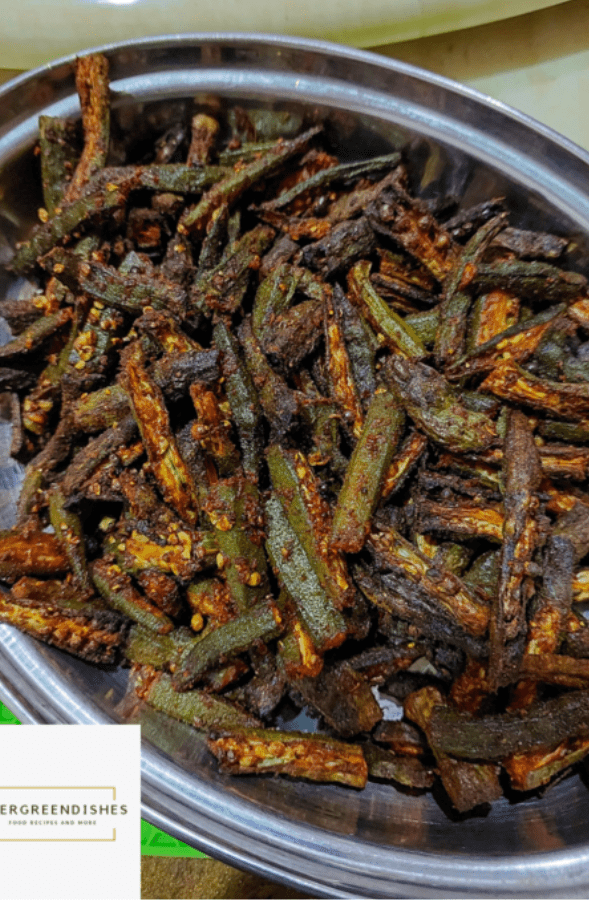
    crispy okra fry 2 ways
    2 ways of making okra fry


    Okra with tomatoes / bhindi tamatar ki sabzi
    okra with tomatoes / bhindi tamatar ki sabzi


    Bharli bhendi /stuffed okra
    Bharli bhendi / stuffed okra


    Print Recipe
    okra sambar
    Evergreendishesdev

    Bendekayi Sambar

    Ladies finger sambar makes a good and easy lunch menu. Pair it with hot steamed rice along with a stir fry for a good meal.
    Prep Time 10 minutes
    Cook Time 20 minutes
    10 minutes
    Total Time 45 minutes
    Servings: 4 people
    Course: lunch ideas, Main Course
    Cuisine: karnataka

    Ingredients
      

    • ½ cup tur dal
    • ½ teaspoon oil
    • ¼ teaspoon turmeric powder
    • 2 cup water
    • 1 teaspoon oil
    • ¼ kg tender okra
    • Marble size ball of tamarind
    • 2 teaspoon sambar powder
    • 2 tablespoon oil
    • ½ teaspoon mustard
    • ¼ teaspoon asafoetida
    • ¼ teaspoon turmeric powder
    • ¼ teaspoon fenugreek powder
    • A few curry leaves

    Equipment

    • 1 pan
    • 1 ladle
    • 1 lid
    • 1 pressure cooker with pan

    Method
     

    1. Initially, begin the prep work by soaking the tur dal in water for ateast half an hour.
    2. Cut the washed okra into one inch pieces.
    3. Cook the lentil with a pinch of turmeric powder and oil.
    4. Saute the okra pieces in a teaspoon of oil for a couple of minutes. They should be cooked with a tinge on the edges. Put them aside.
    5. In a pan, add oil. Put mustard, asafoetida and turmeric powder. As it crackles, put the okra pieces to it and let it cook for a minute.
    6. Mix the lentil with a ladle, pour it into the pan. Put salt. Allow to cook for sometime.
    7. Extract the pulp from the tamarind.
    8. Put the tamarind extract along with sambar powder. Cook for two minutes, allow the flavours to blend on a low flame.
    9. Okra Sambar is ready to serve.

    Notes

    Choose a tender lady finger. Cut them into appropriate sizes.
    A little bit of jaggery lends a good taste.
    Add a little bit of chilli powder if needed. The sambar should be flavoursome, a balance of sour, spicy, hot and a little sweetness if needed.

    Pin it for later :

    bendekayi sambar
    bendekayi sambar

    If you  ever make  Okra Sambar , take a picture and share it by tagging @foodiejayashree on Instagram and @evergreendishes on Facebook.  Subscribe to get all updates and an e-book for free.
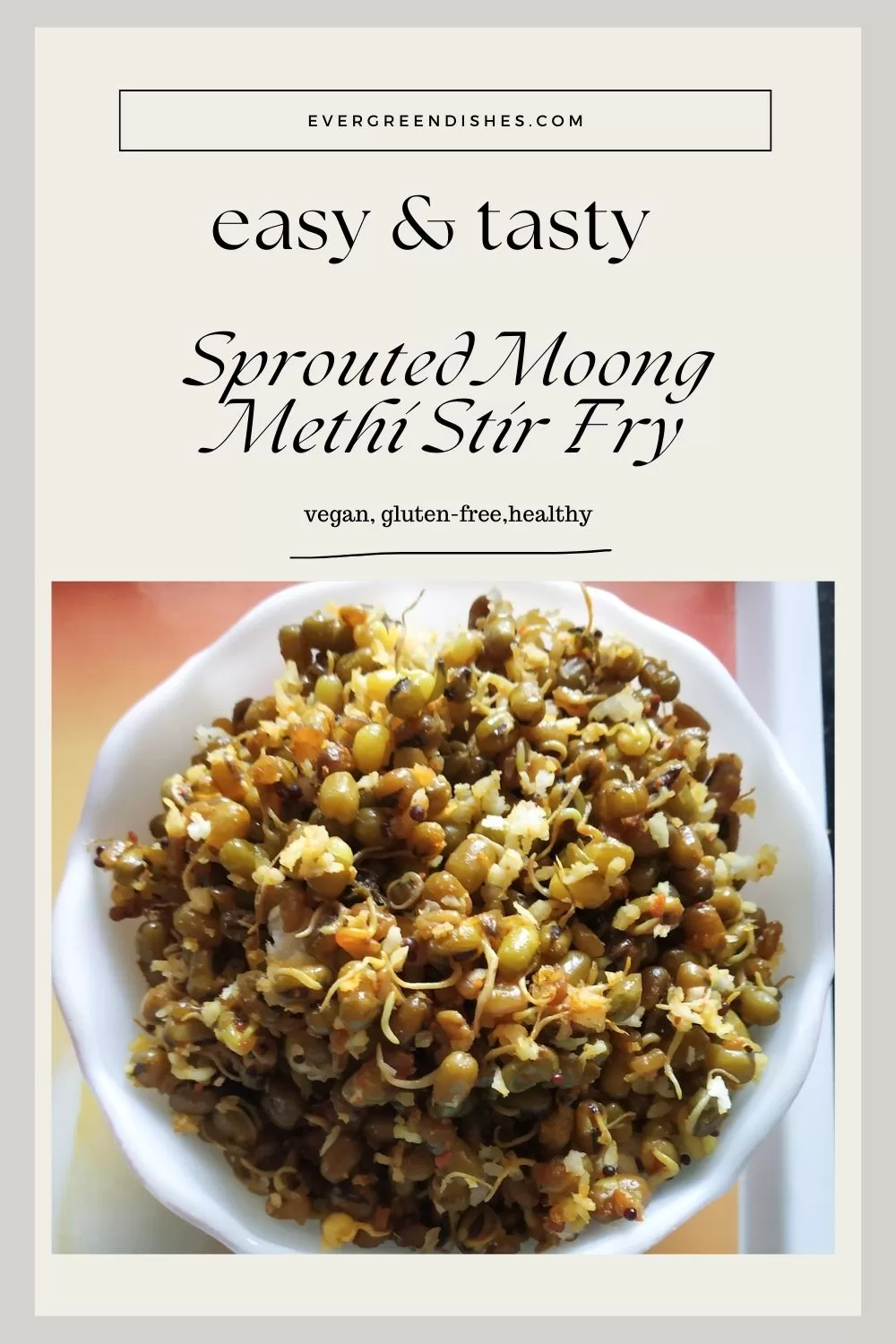
  • Sprouted Moong Methi Stir Fry

    Sprouted Moong Methi Stir Fry

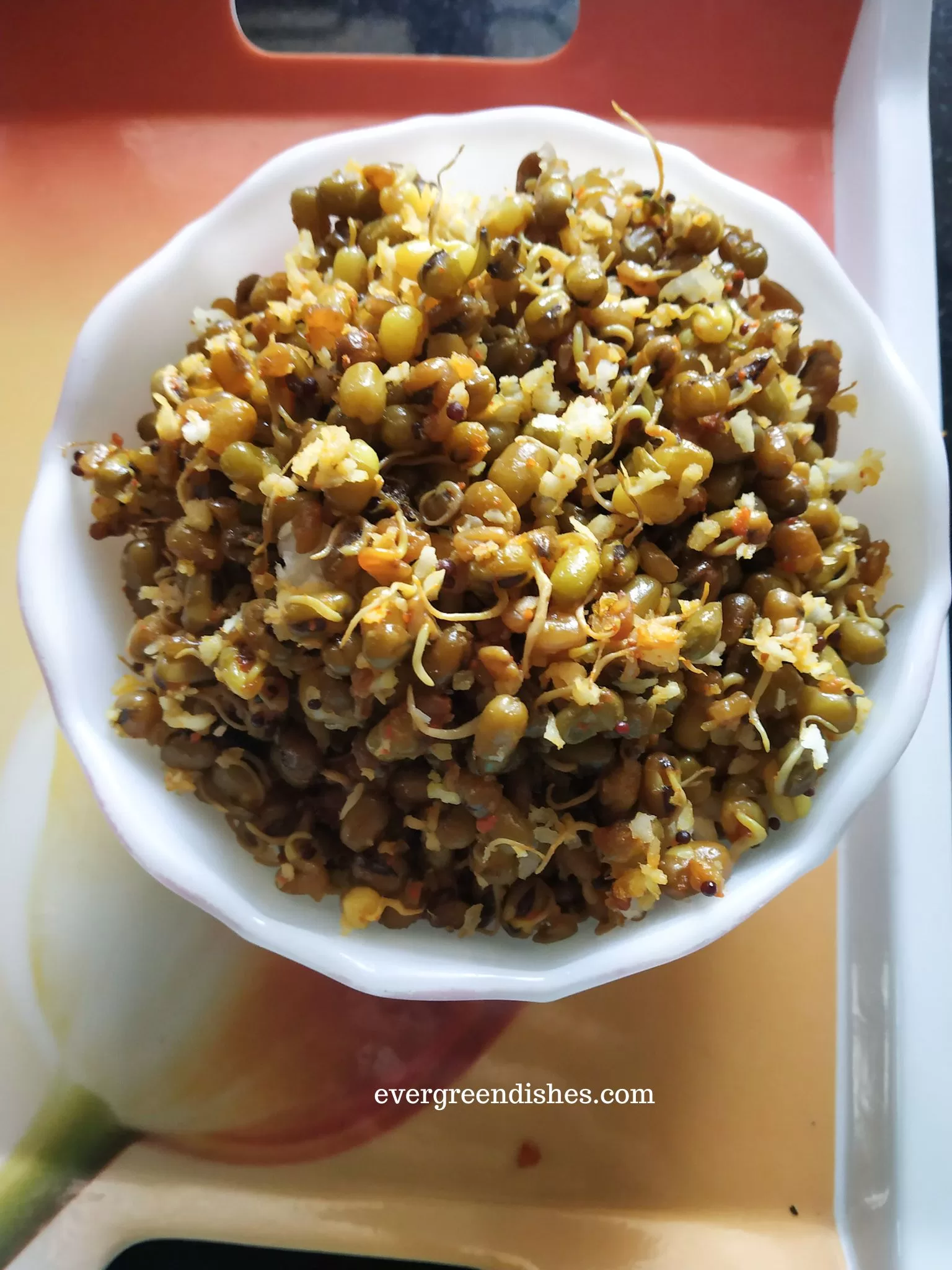
    Sprouted Moong Methi Stir Fry is a tasty, healthy, easy to prepare side dish from Konkani cuisine. It is  a good  way to  include sprouted fenugreek, which is a slightly difficult to consume by itself. You can serve it as an accompaniment with chapathi or along with rice and rasam.

    Sprouting duration varies for both.  Moong sprouts in a day while fenugreek needs more time. Soak them separately for six to eight hours, put them in a colander, once the water is drained and semi-dry, tie them in a thin  muslin cloth and keep them in a warm place. Check them the next day and store them in a container in refigerator. Alternatively, you can keep in a closed container with a tight lid.

    I have shared in detail here regarding the making of sprouts. Do check the post. The other recipes with moong which we often relish is the salad, it is ideal as a snack too.

    The stir fry is called as Sukke in Konkani households and the recipe is adopted from  Healthy Cooking with Mitha. We know each other through a facebook group and remember reading and trying her recipe then. We liked it and it has been a regular feature.The bitterness of the fenugreek is neglible and adds a good taste to the moong stir fry. You can also check out the earlier shared menthe gojju  


      What goes in the sprouted moong methi stir fry ?

    • sprouted green gram : Planning is essential here. We need to soak and sprout them a day prior.
    • sprouted fenugreek seed: Make it two days prior, as sometimes it needs a little longer time.
    • oil: The preferred oil is coconut oil for this recipe but you can use any other oil.
    • mustard seed : for seasoning
    • tamarind paste: You can add a little bit of tamarind extract if you do not have the tamarind paste.
    • coconut: Do not skip it for this recipe.
    • salt: As per the taste
    • chilli powder: For the hot and spicy taste.
    • curry leaves : A few leaves are needed

    Pre-requisites :

    You need to have the sprouted moong and fenugreek ready. To make the sprouts, read the above paragraph, it is mentioned in detail. 1 cup of green gram yields three cups of sprouted moong while 1/4 cup of fenugreek yields a cup of sprouted fenugreek.

    Take adequate precaution while sprouting. Keeping them for a longer may turn them sticky. Weather conditions too play an important role.

    1. Why should you make sprouted moong methi stir fry ?
    1. It is easy to prepare if you have the sprouted grains.
    2. A good way to include fenugreek in your diet.
    3. It is vegan and gluten-free.
    4. It is a no onion garlic recipe.
    5. It makes a good accompaniment with any meal.
    Evergreendishesdev

    Sprouted Moong Methi Stir Fry

    5 from 10 votes
    Sprouted Moong Methi Stir Fry is a tasty, healthy, easy to make accompaniment.
    Course: dinner, lunch
    Cuisine: karnataka

    Ingredients
      

    • 3 cup sprouted green gram moong
    • 1 cup sprouted fenugreek seed menthe
    • 2 teaspoon coconut oil
    • 1/2 teaspoon mustard
    • a few curry leaves
    • 3 cups water
    • 1 tablespoon tamarind paste
    • 2 teaspoon chilli powder
    • salt to taste
    • 1/4 cup fresh grated coconut

    Method
     

    1. Take oil in a pan, add mustard seeds. As it splutters, put curry leaves and the sprouted green gram. Also add the sprouted fenugreek seed. Put some water to it and allow to cook for sometime.
    2. Once it is cooked, add salt to it.
    3. Now, put the tamarind paste and chilli powder to it.
    4. Finally, put grated coconut to it, heat for a minute and keep it aside.
    5. Serve with any meal as an accompaniment.

    Notes

    You need to have the sprouted moong and fenugreek ready. To make the sprouts, read the above paragraph, it is mentioned in detail. 1 cup of green gram yields three cups of sprouted moong while 1/4 cup of fenugreek yields a cup of sprouted fenugreek.
    Take adequate precaution while sprouting. Keeping tied for a longer time may turn them sticky. Weather conditions too play an important role.

    About the event:

    Sending this to Cooking with Sprouts theme for the month of January 2024 at Shhh Secretly Cooking Challenge. The theme was suggested by yours truly. I was paired with Kalyani Sri of sizzling tastebuds, a blog with varied kind of recipes.  Kalyani has prepared Sprouts Dosa with Jowar, a filling breakfast to kickstart a busy day with chana sprrouts and spinach, the secret ingredients given by me. Inturn, I have made moong methi sprouts stir fry with the secret ingredients, chilli powder and methi sprouts.

    shhh cooking secretlyIf you  make  Sprouted Moong Methi Stir Fry, take a picture and share it by tagging @foodiejayashree on Instagram and @evergreendishes on Facebook.  Subscribe to get all updates and an e-book for free.
    sprouted moong methi stir fry
    sprouted moong methi stir fry
  • Tri-colour stir fry for Independence Day

    Tri-colour stir fry for Independence Day

    Jump to Recipe

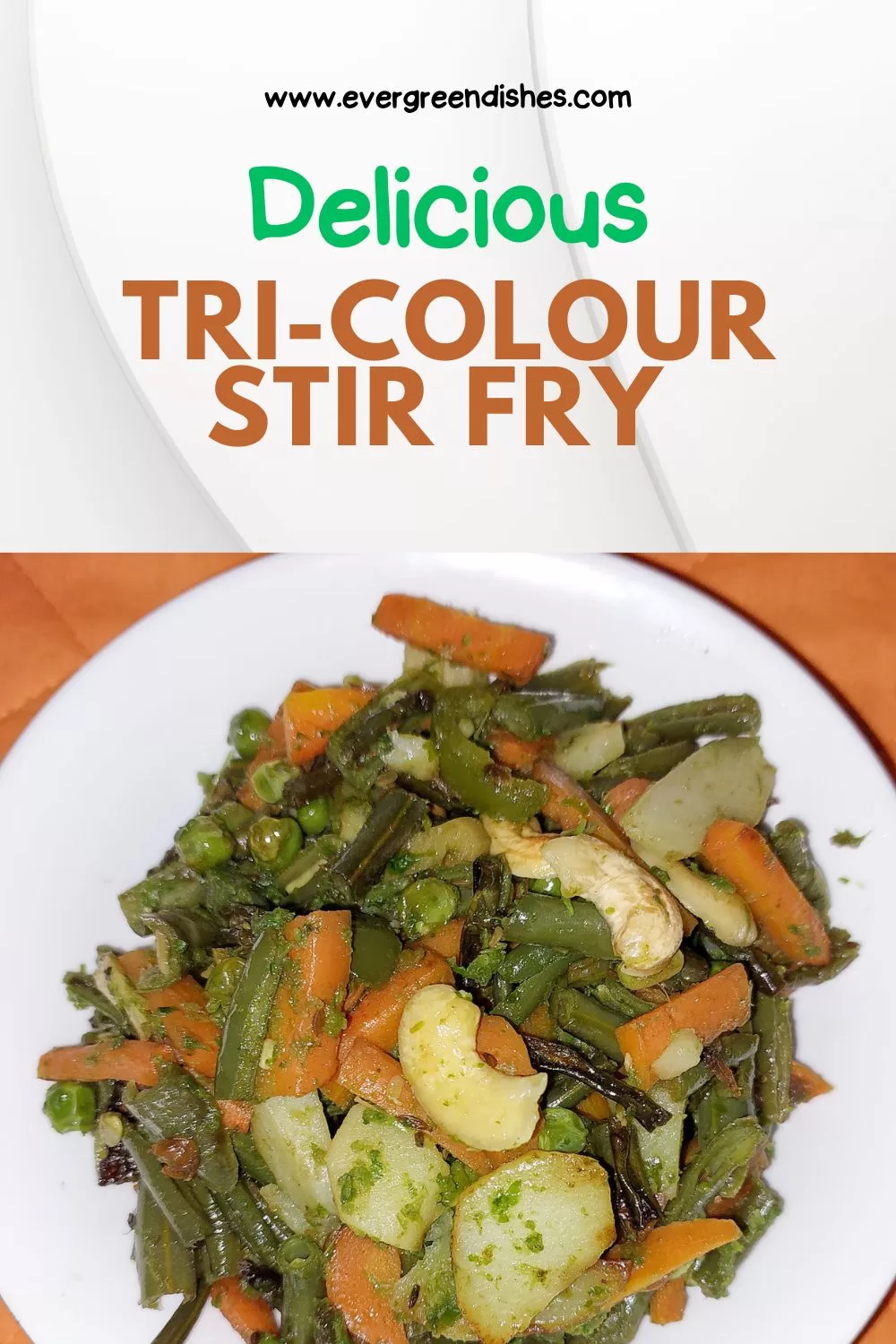
    Tricolour Stir Fry is a simple yet tasty accompaniment with chapati or pulka. It is a no onion garlic recipe.

    It’s that time of the year again when we rejoice and our hearts bow down to the warriors of the country. India celebrates the 76th year of Independence. It was after a long struggle India was declared an independent nation, free from the British rule.

    Be proud of your country. It’s the duty of every citizen to safeguard the hard-won freedom.

    I was wondering what I could post for the Independence Day, and soon I decided it would be a simple yet flavoursome dish which can be easily prepared in the busy mornings. It pairs well with chapati or Phulka. It is ideal to pack in the lunch box too.

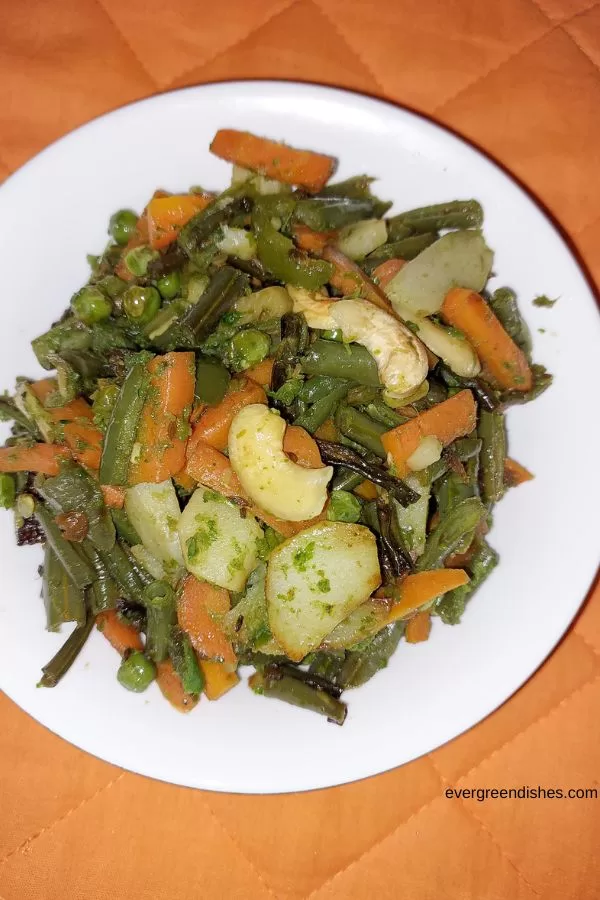
    Since it is made as an Independence Day Special dish, I have used beans, capsicum and green peas for the green colour. Carrot represents the green colour, and potato represents the white colour. It is a no onion garlic stir fry.

    tri-colour stir fry
    tri-colour stir fry

    I often make mixed vegetable at home. It is one way  assorted  vegetables are served to all members. Here are some of the other recipes shared earlier : Bengali Mixed Vegetable, Rajasthani Vegetable Curry, Kerala Aviyal

    What goes in the tri-colour stir fry?

    The vegetables used for saffron colour is carror. Beans, capsicum and green peas to represent the green colour. Potato, peeled and cut into pieces is used for the white colour. Along with it cashewnut is also used.

    • Beans cut into long strips
    • Carrot : cut into lone inch long strips.
    • Capsicum : cut into long strips.
    • Potato : It is peeled and cut in the similar way.
    • Green peas: I have used the fresh ones
    •  Cashew : Take a handful of cashew and soak them for 15 minutes.
    • Coriander, green chillies, ginger and cumin are made into a paste.
    • Oil : Any neutral cooking oil
    • Asafoetida
    • Turmeric powder
    • Cumin : a pinch for the seasoning
    • Salt to taste
    • Lemon juice to balance the flavours

    The other Independent Day recipes shared earlier are : 


    Tri-colour pulav
    Tri-colour pulav


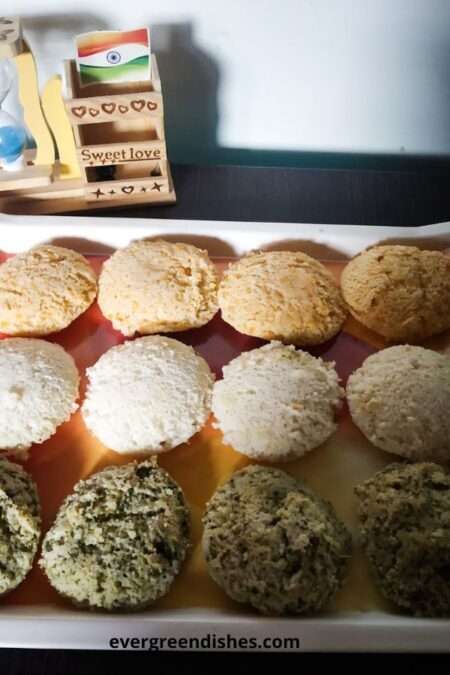
    tri-colour idli
    tri-colour idli

    Why should you make Tricolour Stir Fry?

    1. To celebrate national day.
    2. To use the leftover vegetables in the refrigerator.
    3. If your children are fussy eaters, it is a good way to feed varied vegetables.
    4. When you need something different, from the usual cooking.
    5. To add different vegetables in the daily diet.


    Print Recipe
    tri-colour stir fry
    Evergreendishesdev

    Tri-colour Stir Fry

    5 from 4 votes
    Tri-colour stir fry is a simple yet tasty stir fry. It pairs with chapathi or phulka.
    Prep Time 10 minutes
    Cook Time 15 minutes
    Total Time 25 minutes
    Servings: 4 people
    Course: dinner ideas, lunch, Main Course
    Cuisine: Indian

    Ingredients
      

    • 2 cups beans cut into thin of1 inch long
    • 1.25 cup carrot cut into thin strips of one inch long
    • 1 capsicum
    • 1 potato peeled and cut similarly
    • 1/4 cup green peas
    • 1/4 cup cashew soak for 15 minutes
    To be made into a paste :
    • 1/4 cup coriander
    • 5 green chilli
    • 1/2 inch ginger
    • 1/2 teaspoon cumin
    For seasoning :
    • 2 tablespoon oil
    • 1/4 teaspoon cumin
    • 1/4 teaspoon asafoetida
    • 1/4 teaspoon turmeric powder
    Other ingredients:
    • salt
    • 1/2 lemon

    Equipment

    • 4 4 bowls
    • 2 plates
    • 1 kadai
    • 1 long spoon

    Method
     

    1. Soak cashew for fifteen to twenty minutes. Make a paste of the mentioned ingredients above.
    2. Cut the vegetables and keep them aside. I have cut into one inch long, neither too thick nor thin. The potatoes are peeled here to give the desired white colour.
    3. Take oil in a pan, add cumin. As it sizzles, put beans followed by carrot, potato, capsicum and green peas. Lastly, put the soaked cashew into it. Cover a lid with some water over it, it hastens the cooking process.
    4. Allow them to cook for sometime
    5. Put salt. Add the prepared paste to it. Mix well and remove it after heating it for two minutes on a low flame.
    6. Finally, add lemon juice to it.

    Pin it for later :

    tri-colour stir fry
    tri-colour stir fry

    Wishing all a very happy Independence Day ! If you ever make Tri-Colour Stir Fry  in your kitchen, take a picture and tag @foodiejayashree on Instagram or @evergreendishes on Facebook. Subscribe to get all updates in your inbox and an e-book for free!


  • Stuffed Brinjal / Enne Badanekayi

    Stuffed Brinjal / Enne Badanekayi

    Jump to Recipe Print Recipe

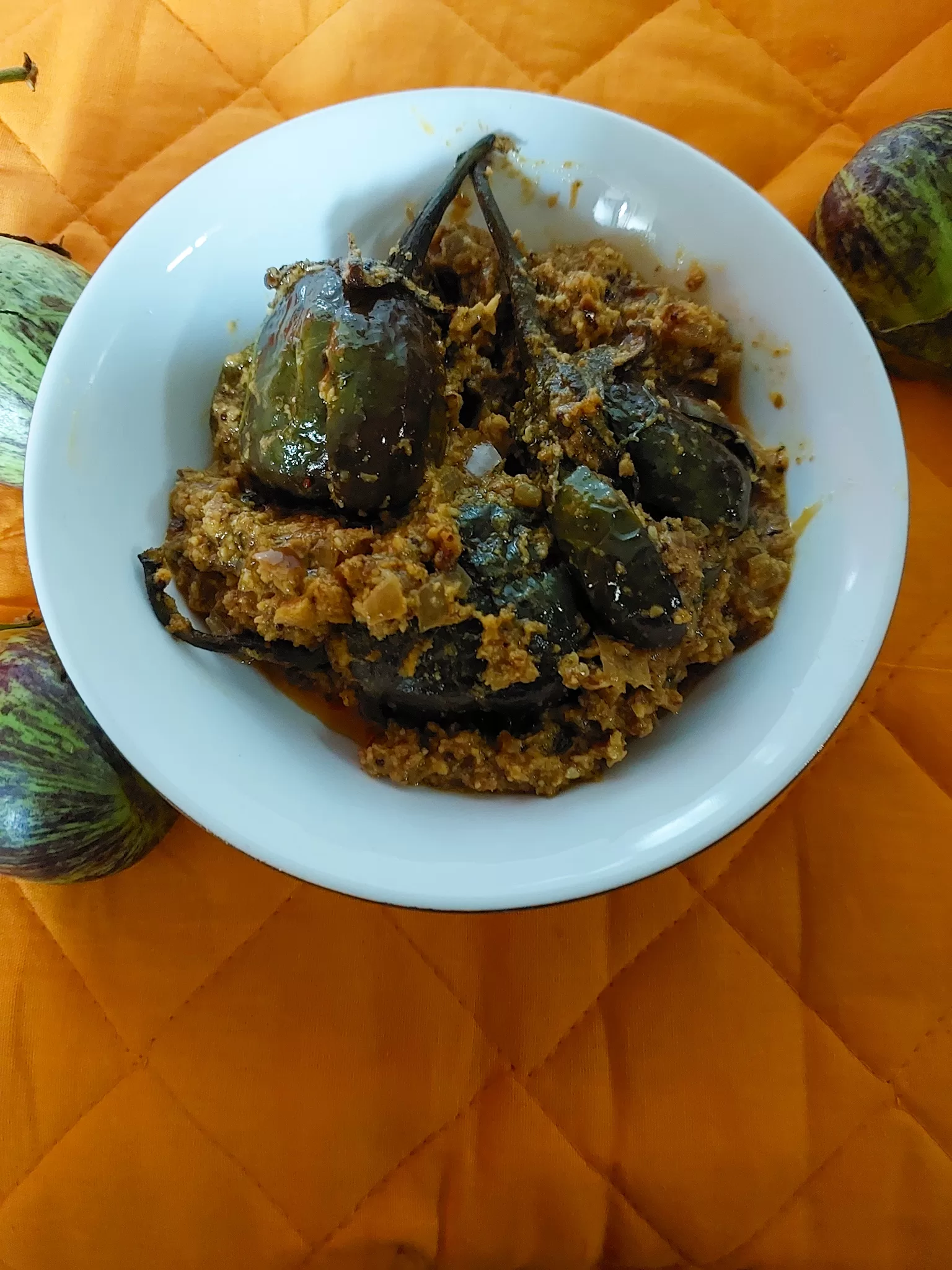
    Stuffed Brinjal aka Enne Badanekayi is a popular dish from North Karnataka. Small sized brinjals  stuffed with a prepared mixture of coconut and other spices is cooked  to make a delectable accompaniment. It is usually paired with millets flatbread as jowar or bajra.

    Stuffed Brinjal is prepared in various ways. Every region of Karnataka  has its own way of making, a slight variation in the ingredients. Few people add sambar masala to the stuffing while a few others make it sans onion.

    About brinjal :

    Brinjal is a n Indian crop. The scientific name of brinjal is Solanum Melongena. It is also known as egg plant and aubergine. It is a good source of minerals and vitamins.

    Today, I am sharing the recipe which I often make at home.

    Stuffed Brinjal / Enne badanekayi is a popular accompaniment from South India. It pairs well with chapathi or jowar roti.
    Here are a few pointers to remember while cooking the brinjals :
    1. Use small size brinjals.
    2. Once you decide to make it, buy fresh ones and prepare the dish.
    3. Do not add water while cooking. Allow it to cook on a low flame. It is called as Enne Badanekaye in Kannada for a reason, it is stuffed and cooked in oil.
    To all the brinjal 🍆 lovers,

    Ingredients :

    • 1/4 kg brinjal

    For the stuffing :

    • 2 tbsp coconut
    • Coriander leaves
    • 1teaspoon chili powder
    • 1 tablespoon roasted peanut
    • 1 teaspoon cumin
    • 1 teaspoon sesame seed
    • 1 onion
    • salt

    For the seasoning :

    • 3 tablespoon oil
    • 1/2 teaspoon mustard
    • 1/4 teaspoon asafoetida
    • 1/4 teaspoon turmeric powder

    Method:

    Grind all the ingredients together for stuffing except onion. Remove it in a bowl.
    Cut onion finely. Mix it in the stuffing.
    Slit the brinjal on top on all the four sides.
    Put the stuffing in it, the remaining can be used fir the gravy later.
    Make seasoning, put the stuffed brinjal in it, cover and let them cook. They should be tender.
    Put the remaining stuffing in it along with some water.
    Let cook for sometime.
    Stuffed Brinjal is ready to serve.
    May be an image of food
    The other variety of dish I often prepare at home is simple yet flavoursome.
    stuffed brinjal
    Evergreendishesdev

    Stuffed Brinjal

    5 from 3 votes
    Stuffed Brinjal is a signature dish of karnataka cuisine. It pairs well with chapathi or jowar roti.
    Prep Time 20 minutes
    Cook Time 20 minutes
    Total Time 40 minutes
    Course: lunch
    Cuisine: karnataka

    Ingredients
      

    • /4 kg brinjal
    • For the stuffing :
    • 2 tbsp coconut
    • Coriander leaves
    • 1 teaspoon chili powder
    • 1 tablespoon roasted peanut
    • 1 teaspoon cumin
    • 1 teaspoon sesame seed
    • 1 onion
    • salt
    • For the seasoning :
    • 3 tablespoon oil
    • 1/2 teaspoon mustard
    • 1/4 teaspoon asafoetida
    • 1/4 teaspoon turmeric powder

    Equipment

    • 1 pan
    • 1 spatula
    • 2 bowls
    • 1 tablespoon
    • 1 lid

    Method
     

    1. Grind all the ingredients together for stuffing except onion. Remove it in a bowl.
    2. Cut onion finely. Mix it in the stuffing.
    3. Slit the brinjal on top on all the four sides.
    4. Put the stuffing in it, the remaining can be used fir the gravy later.
    5. Make seasoning, put the stuffed brinjal in it, cover and let them cook. They should be tender.
    6. Put the remaining stuffing in it along with some water.
    7. Let cook for sometime.
    8. Stuffed Brinjal is ready to serve.

    If you ever make Stuffed Brinjal  in your kitchen, take a picture and tag @foodiejayashree on Instagram or @evergreendishes on Facebook. Subscribe to get all updates in your inbox and an e-book for free!

  • Green Potato Curry | easy lunch ideas

    Green Potato Curry | easy lunch ideas

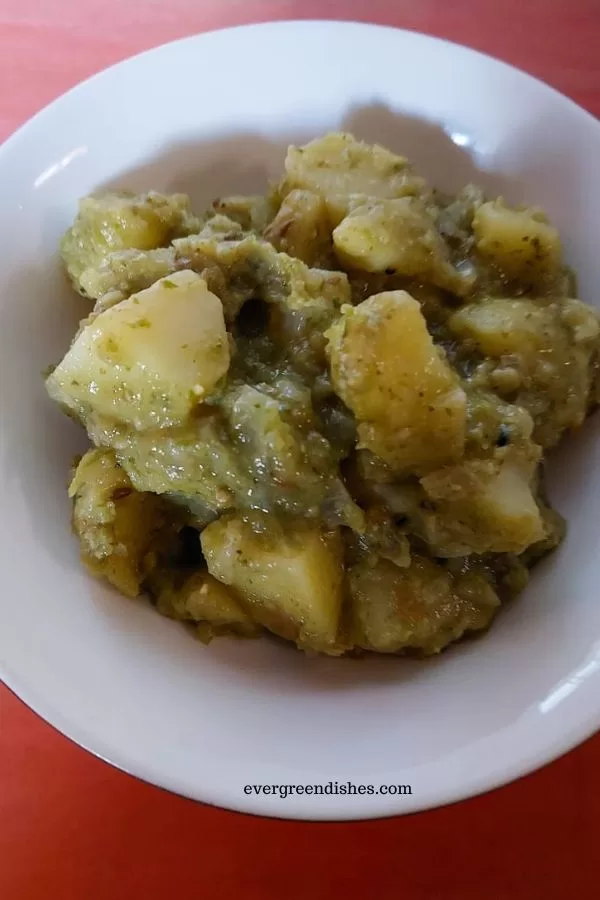
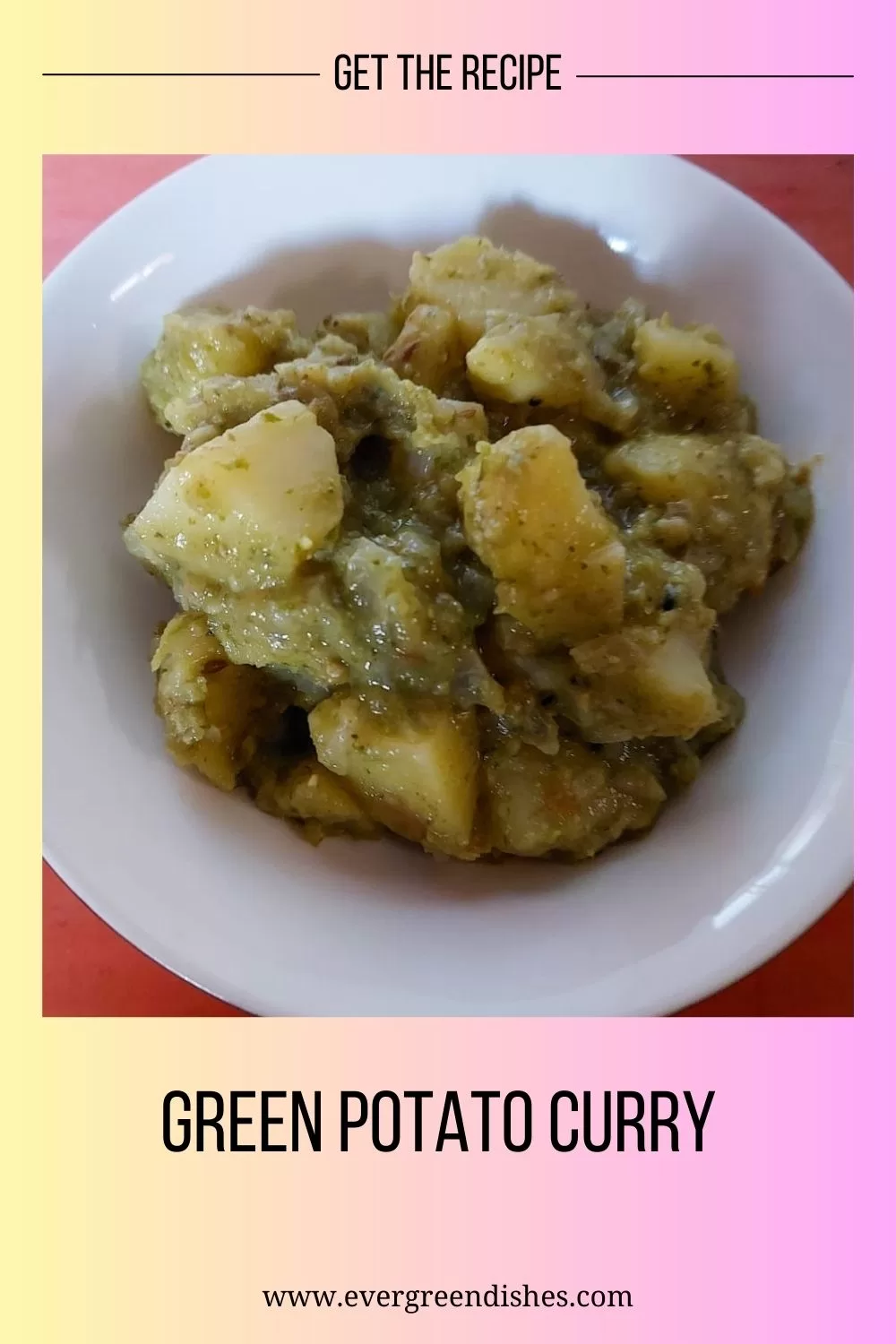
    Green Potato  Curry is a tasty, easy to make  accompaniment. It pairs well with chapathi or phulka. It needs a few  ingredients and most of them are available at  home. 

    Potato is versatile to use and saves the day umppteen times. Either, when I am in a hurry or the stock of vegetables is exhausted, the humble potato finds a place in the menu. Thus, I have learnt to create many kinds of dishes with it. I have earlier shared alu matar, alu , methi aloo and dum aloo. 

    Here are a few myths of humble potato debunked : 

    1.Potatoes are  whole lot of fat. The truth is it depends on the way potato is cooked. If potatoes are consumed as finger chips, they contain fat and not good for the overall health. But, a potato by itself is rich in carbohydrates and fiber. 

    2. Potatoes make me fat. No, cook it in the right way, either boil them or saute in a little oil. Consume it in moderation. 

    3. Potatoes are high in calories. This is not true again. An alu partha has more calories than a dry potato sabzi. A bowl of finger chips is also higher in calories than potato wedges made in the air fryer.. Thus, it also depends on the way the food is cooked and served. 

    Green Potato Curry

    Other potato recipes shared earlier are : 

    Why should you make green potato curry ?

    • It is easy to prepare.
    • It makes a good accompaniment for lunch or dinner.
    • It is ideal to pack in the lunch box.
    • Green potato curry is ideal when you need something varied to serve. 
    • I have given a few more options that you can try it.  

    Green Potato Curry Recipe : 

    Ingredients:

    • 1/2 kg potato
    • 1 tablespoon oil
    • 1/2 teaspoon cumin
    • 1/4 teaspoon turmeric powder
    • 1/4 teaspoon asafoetida
    • 1 onion
    • 1/2 cup coriander leaves
    • 5 green chillies
    • 1/2 inch ginger
    • 4 clove garlic
    • 1 clove
    • 1 cardamom
    • 1 clove
    • salt to taste
    • 1 tablespoon roasted gram (putani) powdered

      Method :

    • Boil the potato, you can cook them in the pressure cooker until three whistles. Let the pressure release by itself.
    • Grind coriander leaves, green chilli, ginger, garlic, cloves, cardamom
    • Take oil, add cumin, turmeric powder and asafoetida. Then saute onion. Put the paste,
    • Peel the skin and cut the potato into cubes.
    • Add water to it. Put the potato pieces, let cook for some time. Then add gram dal powder and cook for a minute.

    Take a tip: 

    • The potato are washed and kept in the pressure cooker to cook. If you keep the whole potato, cook it for three whistles. If you are cutting them into half, then switch off the stove at two whistles.The potatoes will turn mushy.
    • Use green chillies accordingly, the chillies used were not spicy. 
    • Use a little  gram flour if you do not have dahlia.
    • For a different version of this sabji, add a few mint leaves along with coriander, green chilli, ginger and garlic. Avpid adding cardamom and clove to it.
    • Making green potato curry is a breeze if you have boiled potato. 

    Recently, I wrote an article on Fenugreek for Ordtist.com. Do check it out. 

    Green Potato Curry

    Green Potato Curry

    5 from 4 votes
    Green potato curry is a tasty and easy to make accompaniment. It is ideal to pack in the lunch box.
    Prep Time 15 minutes
    Cook Time 10 minutes
    Total Time 25 minutes
    Course: lunch box, lunch ideas, Main Course
    Cuisine: south india

    Ingredients
      

    • 1/2 kg potato
    • 1 tablespoon oil
    • 1/2 teaspoon cumin
    • 1/4 teaspoon turmeric powder
    • 1/4 teaspoon asafoetida
    • 1 onion
    • 1/2 cup coriander leaves
    • 5 green chillies
    • 1/2 inch ginger
    • 4 clove garlic
    • 1 clove
    • 1 cardamom
    • 1 clove
    • salt to taste
    • 1 tablespoon roasted gram putani powdered

    Method
     

    1. Boil the potato, you can cook them in the pressure cooker until three whistles. Let the pressure release by itself.
    2. Grind coriander leaves, green chilli, ginger, garlic, cloves, cardamom
    3. Take oil, add cumin, turmeric powder and asafoetida. Then saute onion. Put the paste,
    4. Peel the skin and cut the potato into cubes.
    5. Add water to it. Put the potato pieces, let cook for some time. Then add gram dal powder and cook for a minute.

    Notes

    • The potato are washed and kept in the pressure cooker to cook. If you keep the whole potato, cook it for three whistles. If you are cutting them into half, then switch off the stove at two whistles.The potatoes will turn mushy.
    • Use green chillies accordingly, the chillies used were not spicy. 
    • Use a little  gram flour if you do not have dahlia.
    • For a different version of this sabji, add a few mint leaves along with coriander, green chilli, ginger and garlic. Avpid adding cardamom and clove to it.
    • Making green potato curry is a breeze if you have boiled potato. 

    If you ever make Green Potato Curry in your kitchen, take a picture and tag @foodiejayashree on Instagram or @evergreendishes on Facebook. Subscribe to get all updates in your inbox and an e-book for free! Until next time, happy cooking!

    Pn it for later :

    green potato curry
    green potato curry
  • Menthe Gojju | Sprouted Fenugreek Curry

    Menthe Gojju | Sprouted Fenugreek Curry

    Jump to Recipe 

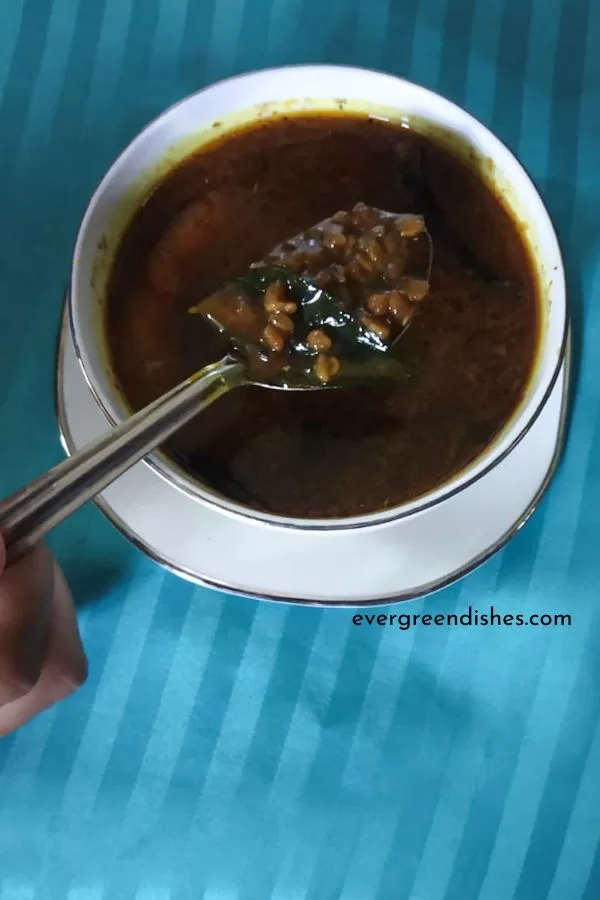
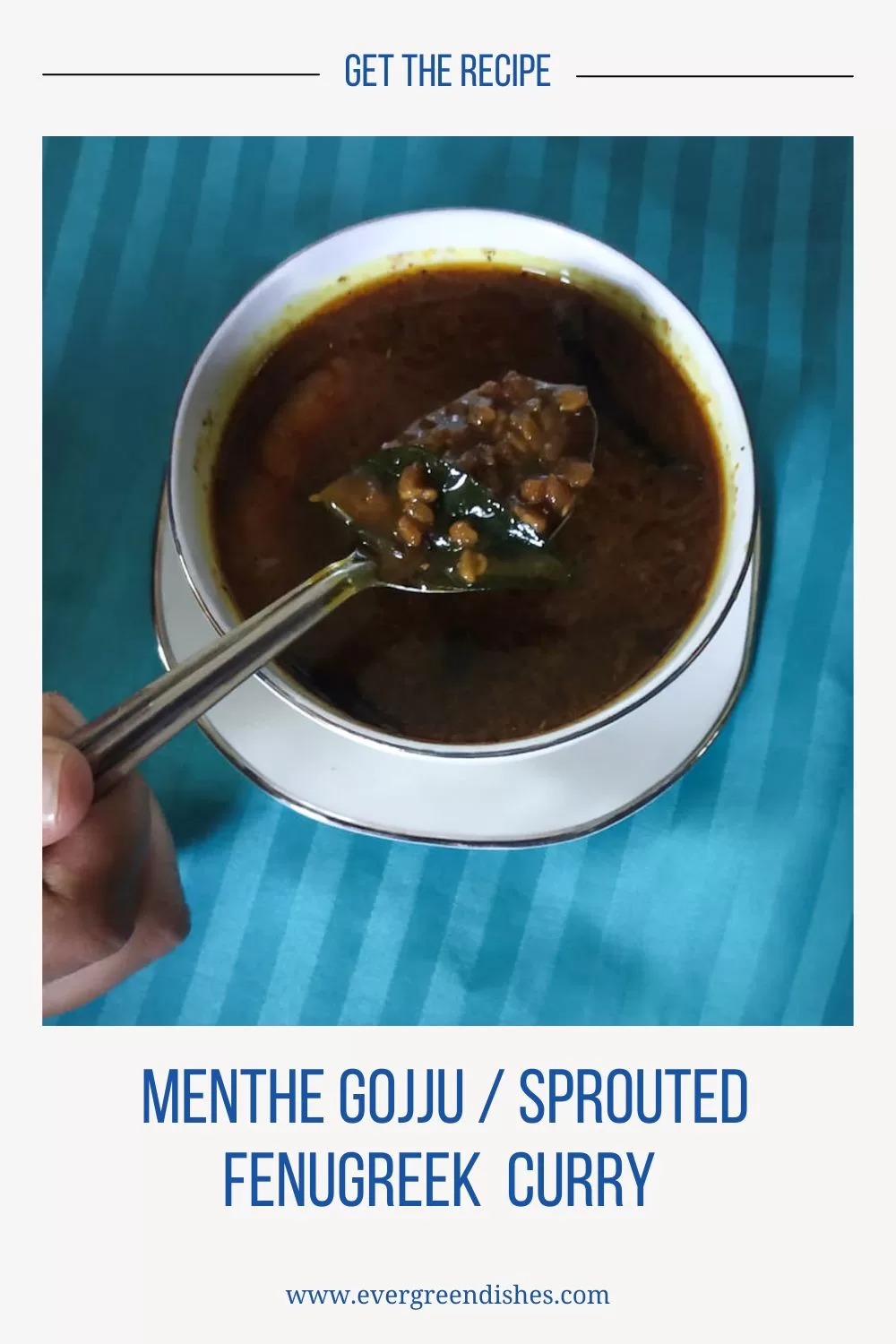
    Menthe Gojju / Sprouted Fenugreek Curry is a tasty side dish from Karrnataka. It makes a good accompaniment with hot steamed rice. You can pair it with chapathi, idli and dosa too. 

    Today, I am sharing another side dish which I had scribbled in my diary many years back. Fenugreek is commonly used as a spice in cooking but sometimes as the star ingredient as used here. Do give a try to this recipe and let me know how it was. 

    What is fenugreek ? 

    Fenugreek is a tiny, hard mustard colured seed found in every Indian kitchen. It belongs to the annual plant family, Fabaceae. It is commonly known as menthe in kannada, methi dana in hindi and meti in Telugu. Both the leaves and seeds are used in culinary purposes. Fresh leaves are used in dal, curries and parathhas. The dry fenugreek seeds are dry roasted and used in pickles and spice mix as sambar powder and rasam powder. It is a good  medicine known since ages. 


    Benefits of Fenugreek seeds:

    Fenugreek are tiny, hard, mustard coloured seeds found in every kitchen. it is one of the essential ingredients in most spice mix. Earthy and mildly bitter in taste, it gives a distinctive taste to the dishes. It is packed with nutrients and plays an important role as a medicine. It is rich in iron, manganese, magnesium and fibre. 

    • It aids in digestion. It helps to reduce indigestion, flatulence and upset tummy.
    • Fenugreek seeds helps in reducing the blood sugar levels. 
    • The antioxidants present in fenugreek have anti-inflammatory properties.
    • Regular consumption of soaked methi seeds or dried powder helps in relieving meenstual cramps.
    • Regular consumption helps the level of testosterone and estrogen in men and women respectively.

    Today, I am sharing a South Indian side dish made with sprouted fenugreek seeds. The sprouted seeds blend well by giving a sweet, spicy, tangy and tart taste to the dish.  It makes a good accompaniment with hot. steamed rice. You can also use it with chapathi, phulka, idli or dosa. 

    menthe gojju
    menthe gojju

    A few other related posts which might interest you are : Lemon Gojju, Orange Peel Chutney, 

    How to make sprouted fenugreek seeds ?

    Soak a cup of seeds in water for five to six hours. You can keep it oveernight. In the morning, put the seeds in a colander and after sometime, tie them in a thin muslin and  keep it in a closed container in a warm place for a eight hours. The seeds will sprout depending on the climatic condition. It may take two days during winter.  Using sprouted fenugreek seed, enhances the nutritional quotient and the bitterness of the fenugreek is largely reduced.

    Menthe Gojju / Sprouted Fenugreek Curry 

    Ingredients : 

    • 1/2 cup sprouted methi
    • 2 teaspoon coconut oil
    • 1/4 teaspoon mustard
    • 1/4 teaspoon cumin
    • 2 green chilli
    • 1/4 teaspoon turmeric powder
    • 1/4 teaspoon asafoetida
    • 2 green chilli
    • 1/4 cup water
    • 1 teaspoon tamarind paste
    • 1/2 teaspoon rasam powder
    • 1/2 teaspoon chilli powder
    • 1.5  teaspoon jaggery powder
    • 1/2 teaspoon rice flour
    • 1 tablespoon water

    Method :

    1.  Initially, make the sprouted methi seeds as mentioned above.
    2. Take coconut oil in a pan, add mustard seeds. As it splutters, put cumin, asafoetida, turmeric powder, green chilli and curry leaves.
    3. Put the sprouted methi seeds to it. Sprinkle a little water and allow it to cook for sometime.  It cooks quickly in three /four minutes.
    4. Add tamarind paste, rasam powder, chilly powder, salt and jaggery to it. Put some water (about three-fourth cup) to it
    5. Make a slurry of rice flour with a little water. Put it to the dish. It helps in giving a good consistency to the dish. 
    6. Allow it to cook for two minutes.
    7. Menthe Gojju is ready to serve.

    Take a tip:

    • Tamarind pulp can be used here. Soak a lemon sized ball of tamarind i water for ten minutes. Extract the pulp and use it.
    • You can use any other variety of oil. 
    Print Recipe

    Menthe Gojju

    5 from 6 votes
    Menthe Gojju / Sprouted Fenugreek Curry is a flavoursome side dish from South India. It pairs well with hot, steamed rice. It is spicy, sweet, tangy and tart.
    Course: Side Dish
    Cuisine: south india

    Ingredients
      

    • 1/2 cup sprouted methi
    • 2 teaspoon coconut oil
    • 1/4 teaspoon mustard
    • 1/4 teaspoon cumin
    • 2 green chilli
    • 1/4 teaspoon turmeric powder
    • 1/4 teaspoon asafoetida
    • 2 green chilli
    • 1/4 cup water
    • 1 teaspoon tamarind paste
    • 1/2 teaspoon rasam powder
    • 1/2 teaspoon chilli powder
    • 1.5 teaspoon jaggery powder
    • 1/2 teaspoon rice flour
    • 1 tablespoon water

    Method
     

    1. Initially, make the sprouted methi seeds as mentioned above.
    2. Take coconut oil in a pan, add mustard seeds. As it splutters, put cumin, asafoetida, turmeric powder, green chilli and curry leaves.
    3. Put the sprouted methi seeds to it. Sprinkle a little water and allow it to cook for sometime.  It cooks quickly in three /four minutes.
    4. Add tamarind paste, rasam powder, chilly powder, salt and jaggery to it. Put some water (about three-fourth cup) to it
    5. Make a slurry of rice flour with a little water. Put it to the dish. It helps in giving a good consistency to the dish.
    6. Allow it to cook for two minutes.
    7. Menthe Gojju is ready to serve.

    Notes

    Tamarind pulp can be used here. Soak a lemon sized ball of tamarind i water for ten minutes. Extract the pulp and use it.

    Pin it for later : 

    menthe gojju
    A bowl of menthe gojju made with sprouted fenugreek seeds

    If you ever make Menthe Gojju, do take a picture and tag @foodiejayashree on Instagram or @evergreendishes on Facebook. Subscribe to get all updates and an e-book for free in your inbox ! 

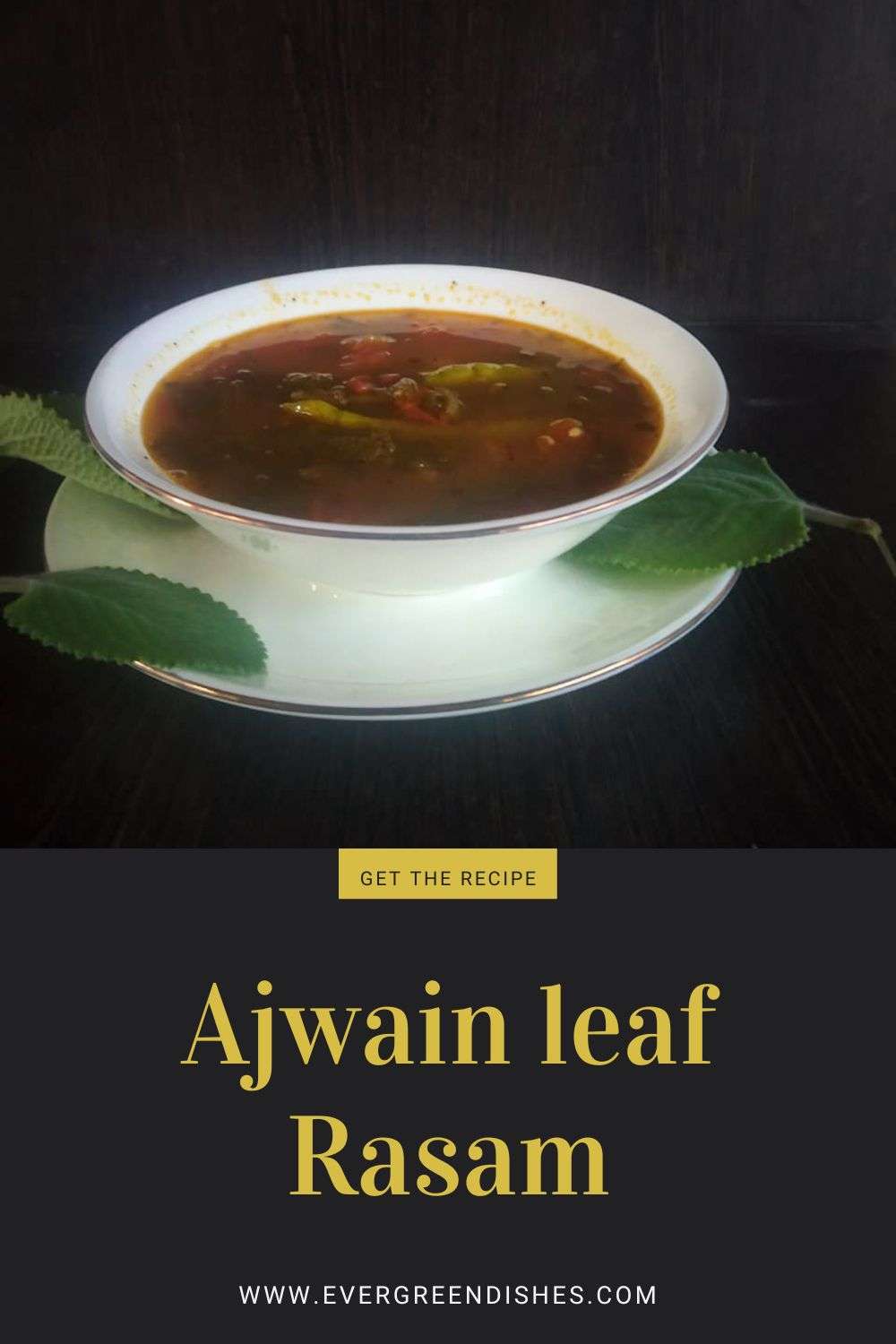
  • Ajwain Leaf Rasam | Doddapatre Saaru

    Ajwain Leaf Rasam | Doddapatre Saaru

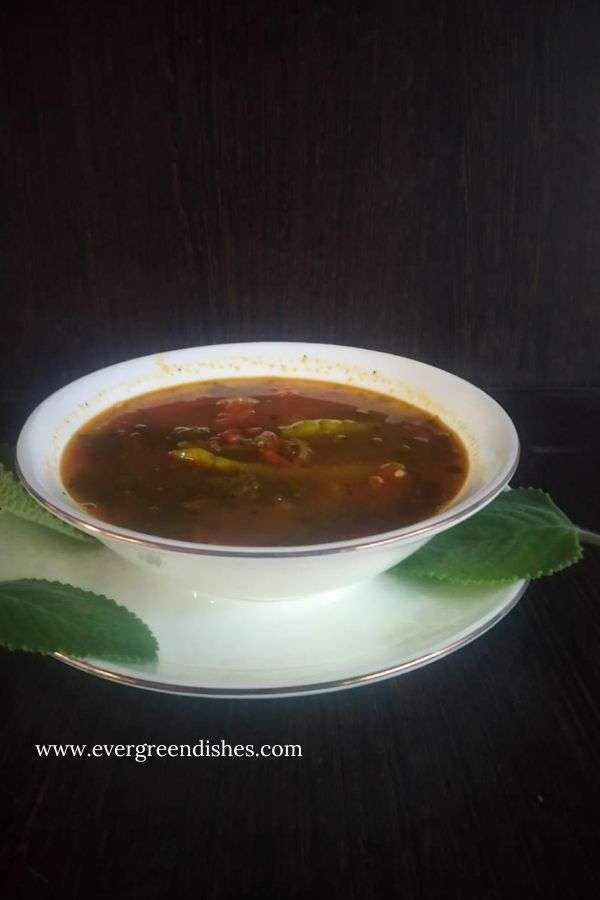
    Ajwain leaf rasam is a comfort and easy to make rasam. It is ideal as a soup too.

    The ajwain leaf is a good source of nutrients. It is known as Ajwain ( Hindi), Karpuravalli ( Tamil), Vamu aaka (Telgu), Panikoora ( Malyalam) and Ova (Marathi) are the other names in regional languages.  I have shared ajwain tambli recipe earlier. It can also be used to make pakodas. You can use it in smoothies and green juice too.

    Doddapatre rasam is simple, no lentil rasam, ready in ten minutes. 

    About the Ajwain leaf plant :

    Ajwain leaf plant is  a small, erect, perennial plant. It is bright green in colour, broad and smooth in texture. The stem is green and soft. it tilts down with the weight of the leaves. It is known as Indian borage. The scientific name is ‘Plecatanthus Ambonicus’.  It can be easily grown in an 8-12 inch pot with a good soil. It grows well in shade and partial sunlight.

    The taste of the leaf is similar to ajwain but with a sharp mint like pepperiness. The aroma is combination of oregano and thyme. The plant is in no way related  to the ajwain seeds we use as a herb in cooking. They have the aroma of ajwain or carom seeds and hence the name. In Kannada, it is commonly called as  ‘saveer sambar soppu’, which literally tanslates to ‘thousand utility leaf’. It can be used in rasam, chutney, dips and pakodas. It may be used in juices along with mint leaves.

    Ajwain leaf concoction is a good medicine for soar throat. Chewing an ajwain leaf helps to keep gas, bloating and  ulcers at bay. It aids in digestion when consumed with black salt. It is widely used as a combination in Homeopathic medicines. 

    aj

    Ajwain Leaf Rasam | Doddapatre Saaru


    Ingredients:

    • 2 teaspoon oil
    • 1/2 teaspoon mustard
    • 1/2 teaspoon cumin
    • 1/4 teaspoon asafoetida
    • 1/4 teaspoon turmeric powder
    • 2 green chilli
    • 1 sprig curry leaves
    • 1 inch ginger
    • 3 tomato
    • 20 ajwain leaves
    • salt to taste
    • amla size of tamarind
    • 1/2 teaspoon jaggery
    • 1/2 teaspoon pepper powder
    • 2.5 cups water

      Method:


      1. Wash the ajwain leaves, cut or tear them into small pieces.
      2. Soak tamarind in water.
      3. Cut tomato and keep it aside.
      4. Take oil in a pan, add the mustard seeds. As it crackles, put cumin, asafoetida and turmeric powder. Grate the ginger in it and throw the curry leaves and green chill. Add tomato along with a little salt. Sprinkle a little water, it helps to cook them evenly. Give a stir.
      5. Add the ajwain leaves.
      6. Extract the tamarind pulp.
      7. Put the tamarind juice, jaggery and pepper powder to it.
      8. Let cook for sometime.
      9. Add water to it.
      10. Allow it to cook for sometime.
      11. Serve it hot with steamed rice.
    ajwain leaf rasam
    Evergreendishesdev

    Ajwain Leaf Rasam

    Ajwain leaf rasam is a flavoursome, easy to make rasam. It can be served as a soup too.
    Prep Time 10 minutes
    Course: lunch
    Cuisine: karnataka

    Ingredients
      

    • 2 teaspoon oil
    • 1/2 teaspoon mustard
    • 1/2 teaspoon cumin
    • 1/4 teaspoon asafoetida
    • 1/4 teaspoon turmeric powder
    • 2 green chilli
    • 1 sprig curry leaves
    • 1 inch ginger
    • 3 to mato
    • 20 ajwain leaves
    • salt to taste
    • amla size of tamarind
    • 1/2 teaspoon jaggery
    • 1/2 teaspoon pepper powder
    • 2.5 cups water

    Equipment

    • pan, ladle, 2 small bowl

    Method
     

    1. Wash the ajwain leaves, cut or tear them into small pieces.
    2. Soak tamarind in water.
    3. Cut tomato and keep it aside.
    4. Take oil in a pan, add the mustard seeds. As it crackles, put cumin, asafoetida and turmeric powder. Grate the ginger in it and throw the curry leaves and green chill. Add tomato along with a little salt. Sprinkle a little water, it helps to cook them evenly. Give a stir.
    5. Add the ajwain leaves.
    6. Extract the tamarind pulp.
    7. Put the tamarind juice, jaggery and pepper powder to it.
    8. Let cook for sometime.
    9. Add water to it.
    10. Allow it to cook for sometime.
    11. Serve it hot with steamed rice.

    If you ever make Ajwain Leaf Rasam recipe, take a picture and share it on Facebook or Twitter by tagging @evergreendishes and @evergreendishes . I will be happy to see your creation and share it further. 

    Subscribe to get all updates and an e-book for free. 
    Pin it for later : 

    ajwain leaf rasam

  • Kadhi Recipe | Punjabi Kadhi Pakora

    Kadhi Recipe | Punjabi Kadhi Pakora

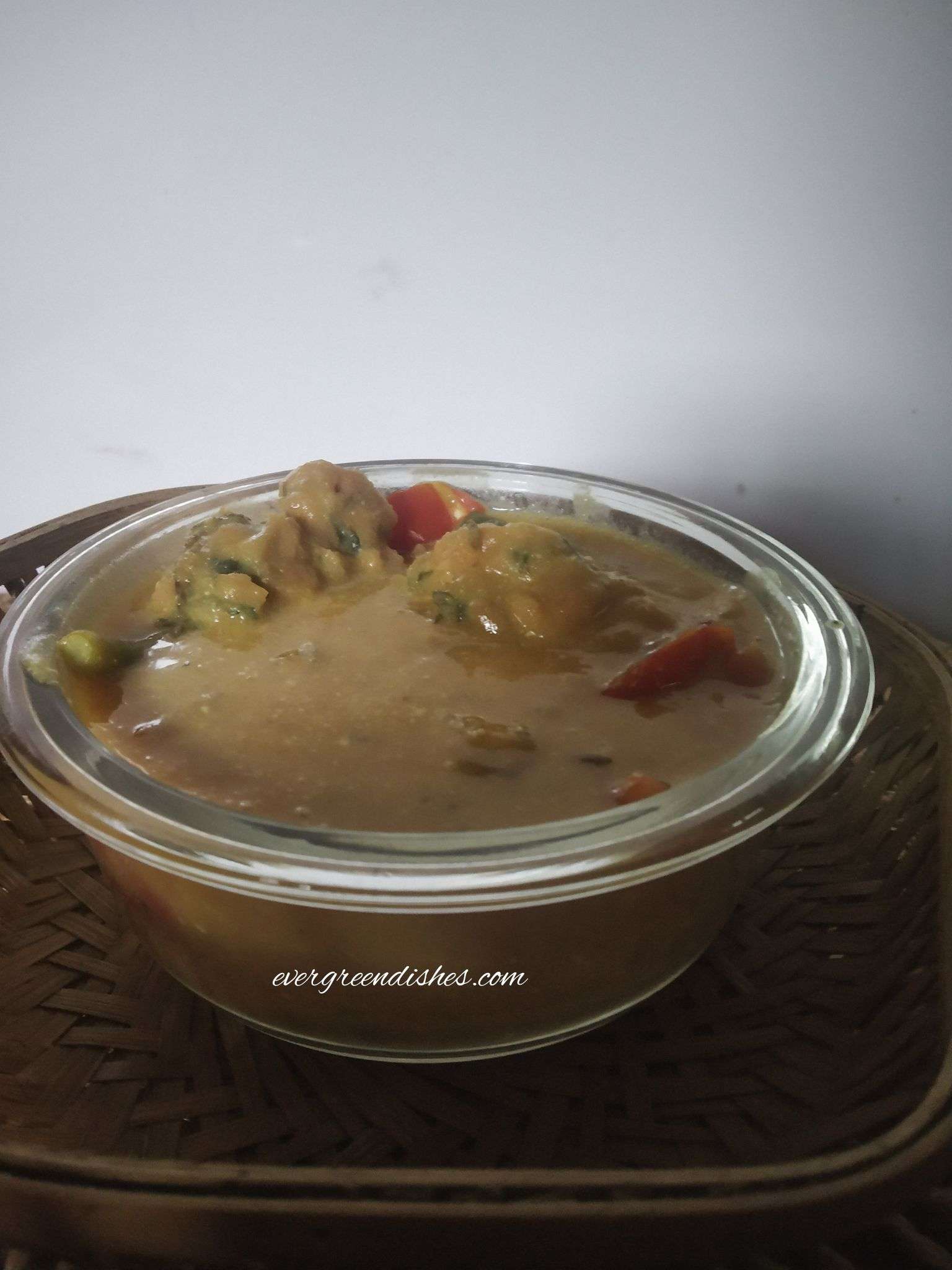
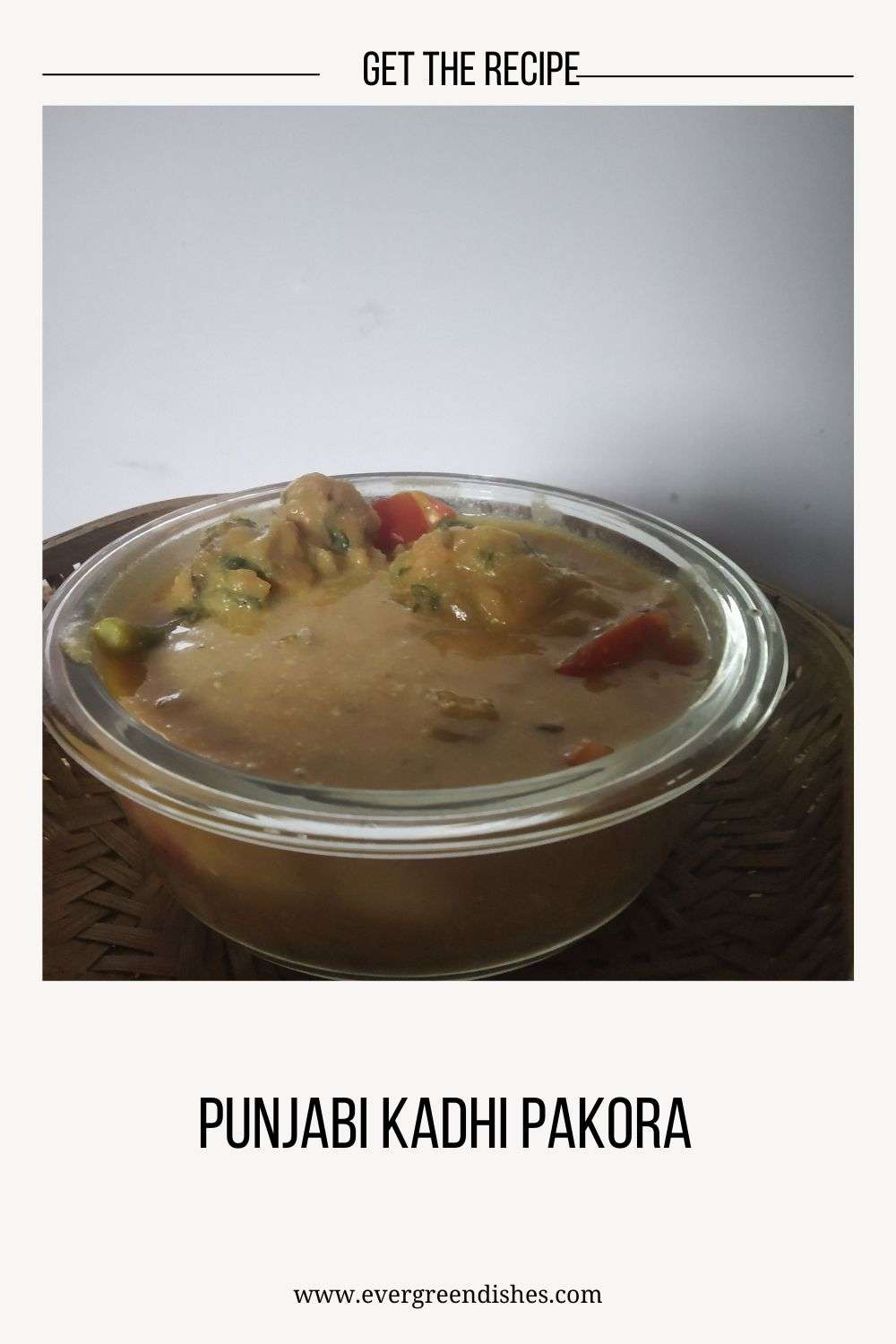
    Kadhi recipe is the popular Punjabi Kadhi Pakora. It is tasty and one of the cherished meals for north indians. 

    Kadhi chawal is the staple food of many people. It is easy to make and makes a good accompaniment with steamed rice. When the usual cooking needs a change, we resort to other kind of dishes. Kadhi is one of them. Every region has its own version of kadhi. The basic ingredient for kadhi is curd and gram flour.  There is a variation in the method of preparation.

    Kadhi with pakora is a signature dish from North Indian cuisine. Kadhi with pakora is made by dunking the onion pakoras in kadhi.

    a bowl of kadhi with pakora
    punjabi kadhi pakora

    What is Kadhi ?

    Kadhi is a popular yoghurt- based dish from Indian sub-continent. Gram flour is usually used to thicken it along with other ingredients. 

    What are the variation in Kadhi ? 

    Every region in India, has it’s own unique culture and traditions. Kadhi is prepared in most parts of the country but every region has its  own unique recipe. In South India, coconut is used in the preparation of majjige paladya along with other ingredients. It is similar to kadhi, at times we add ambodi in it.  The method of preparation is different in Rajasthan, a simple one with or without badas.  Gujarati kadhi is another version which I am yet to make. Sindhi kadhi is totally different and delectable with vegetables in it.

    Kadhi with Pakora Recipe 

    Ingredients:

    For Kadhi :

    • 1 cup sour curd
    • 1/4 cup gram flour
    • 1/4 teaspoon turmeric powder
    • 1/2 teaspoon red chilli powder
    • 1 teaspoon coriander powder
    • salt to taste
    • 1 tablespoon oil
    • 1/4 teaspoon cumin
    • 1/4 teaspoon fenugreek
    • 1 small onion
    • 1 inch ginger grated
    • 1 tomato
    • 2 green chilli

            For tempering 

    • 1 tablespoon oil
    • 1/4 teaspoon cumin
    • 1/8 teaspoon chilli powder

      For Pakoras:

    • 1/2 cup gram flour
    • 1 big onion
    • 2 green chilli
    • 1 tsp chilli powder
    • 1/4 teaspoon garam masala powder
    • 1/2 teaspoon coriander powder
    • water for mixing

      Method:

      To make kadhi : 

    • Blend the curd. Add gram flour, coriander powder, chilli powder, turmeric powder , and salt  to it. Mix it well, no lumps should be formed. 
    • In a kadai, make seasoning. Put oil, add cumin and fenugreek seed. Once it turns golden, add the grated ginger and onion. Saute it for sometime. Add tomato and green chilli pieces to it. Stir for 2-3 minutes.
    • Add the curd mixture, keep stirring it.
    • Reduce the flame, allow it to cook for sometime.
    • Switch off the flame.

    To make the pakoras:

    1. Take besan in a bowl. Add onion, green chilli, chilli powder, garam masala and coriander powder.Mix them together.
    2. Add little water and mix thoroughly. The batter should be of dropping consistency.
    3. Heat oil in a pan, add a spoonful of batter. Put a few more. 
    4. Deep fry to golden colour.
    5. Remove with a ladle and put it aside. 
    6. Put the pakora in kadhi.

    To make the seasoning:

    • Take oil in a pan, add cumin and chilli powder to it. As it turns golden, remove it and pour over the kadhi.
    kadhi with pakora

    Kadhi with Pakora

    5 from 5 votes
    Kadhi with Pakora is a popular dish from Punjabi cuisine. It is a comfort food.
    Course: lunch
    Cuisine: punjabi

    Ingredients
      

    For Kadhi :
    • 1 cup sour curd
    • 1/4 cup gram flour
    • 1/4 teaspoon turmeric powder
    • 1/2 teaspoon red chilli powder
    • 1 teaspoon coriander powder
    • salt to taste
    • 1 tablespoon oil
    • 1/4 teaspoon cumin
    • 1/4 teaspoon fenugreek
    • 1 small onion
    • 1 inch ginger grated
    • 1 to mato
    • 2 green chilli
    For tempering
    • 1 tablespoon oil
    • 1/4 teaspoon cumin
    • 1/8 teaspoon chilli powder
    For Pakoras:
    • 1/2 cup gram flour
    • 1 big onion
    • 2 green chilli
    • 1 tsp chilli powder
    • 1/4 teaspoon garam masala powder
    • 1/2 teaspoon coriander powder
    • water for mixing

    Equipment

    • 1 thick pan
    • 1 kadhi
    • 1 ladle
    • 1 perforated ladle
    • 2 plates
    • 2 bowls

    Method
     

    To make the kadhi :
    1. Blend the curd. Add gram flour, coriander powder, chilli powder, turmeric powder , and salt  to it. Mix it well, no lumps should be formed.
    2. In a kadai, make seasoning. Put oil, add cumin and fenugreek seed. Once it turns golden, add the grated ginger and onion. Saute it for sometime. Add tomato and green chilli pieces to it. Stir for 2-3 minutes.
    3. Add the curd mixture, keep stirring it.
    4. Reduce the flame, allow it to cook for sometime.
    5. Switch off the flame.
    To make the pakoras:
    1. Take besan in a bowl. Add onion, green chilli, chilli powder, garam masala and coriander powder.Mix them together.
    2. Add little water and mix thoroughly. The batter should be of dropping consistency.
    3. Heat oil in a pan, add a spoonful of batter. Put a few more.
    4. Deep fry to golden colour.
    5. Remove with a ladle and put it aside.
    6. Put the pakora in kadhi.
    To make the seasoning:
    1. Take oil in a pan, add cumin and chilli powder to it. As it turns golden, remove it and pour over the kadhi.
    punjabi kadhi pakora
    punjabi kadhi pakora

    If you ever make  Punjabi Kadhi Pakora  recipe,  do take a picture and tag @foodiejayashree on Instagram or @evergreendishes on Facebook or Twitter. I will be glad to see your creation and share it further. Let’s be connected, do follow on social media platforms. Until next time, let’s stay connected.  Subscribe to get all updates and an e-book for free. Check out my e-books on Amazon.