Tag: south indian cooking

  • South Indian Vegetable Spice Mix | Palyada Pudi

    South Indian Vegetable Spice Mix | Palyada Pudi

    Jump to Recipe Print Recipe

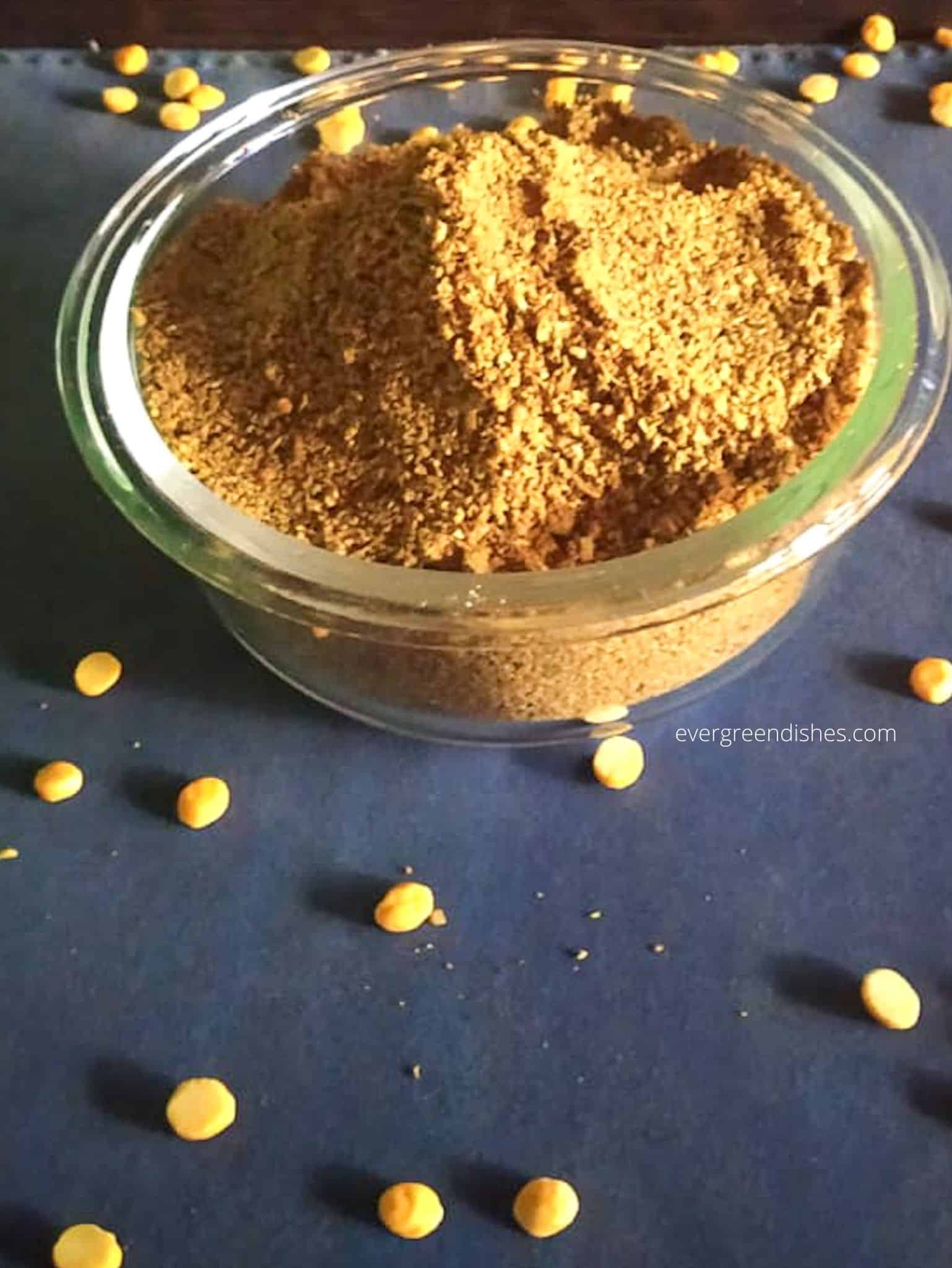
    Vegetable Spice Mix/ Palyada Pudi is one of the essentials in any South Indian kitchen. It is versatile to use, may be used in simple stir fry to dals cooked with green leaf.

    Palya is the kannada word for stir fry. Pudi is dry condiment which we normally use. Thus it is a vegetable spice mix. 

    The ingredients needed are simple and easily found in the kitchen. South Indian cooking revolves around these spice mix, most households keep them ready to use.Today, I am sharing a vegetable spice mix. It is usually added to vegetables as cucumber and brinjal. It is also used as filling in stuffed vegetables.

    The ingredients used here are :


    Coriander seeds: Make use of fresh ones. Be careful while you roast them, do not burn them.
    Curry leaves– Wash them and pat dry them. There is should be no moisture in it.
    Bengal gram– It is one of the essentials in south indian cooking. It gives a good taste and texture to the stir fry.
    Urad dal– It is another essential ingredient. To make it quicker, roast bengal gram for a few seconds, later tip in the urad dal.
    Dessiccated coconut – We cannot cook without coconut. It is used in most of the dishes in some or the other form. Grated or finely cut? It is a personal choice, but ensure you roast them well.
    Red Chilli– Dry red chilli or chilli powder may be used. I prefer using these dry red chilli.


    South Indian Vegetable Spice Mix | Palyada Pudi 


    Ingredients:

    • 3 cup coriander seed
    • 1 cup curry leaves
    • 1 cup urad dal
    • 1 cup bengal gram
    • 1 cup desiccated coconut
    • 15 red chilli
    • oil            

    Method:

    1. In a thick bottom pan,roast the coconut. It should be golden brown in colour.
    2. In the same pan, add a teaspoon of oil and roast the coriander seed along with curry leaves. Keep tossing them, the tiny seeds get easily burnt.
    3. Now you need yo roast the lentils. Add a little oil and roast bengal gram. Once it is slightly done, put the urad dal in it. Roast both of them together.
    4. Finally, roast the chillies with a little oil.
    5. Once, all the ingredients are at room temperature, grind them. At first, grind the lentils, then add red chilly to it. Finally, add coconut and coriander seed to it and give a pulse.
    6. Vegetable Spice mix is now ready to use.Store it in a dry, air tight container.
     
    south indian vegetable spice mix
    south indian vegetable spice mix


    Vegetable Spice Mix | Palyada Pudi

    Vegetable Spice Mix is one of the essentials in South Indian households. It is versatile to use. 3 cup coriander seed
    Prep Time 10 minutes
    Cook Time 20 minutes
    Total Time 30 minutes
    Course: condiments, spice mix
    Cuisine: karnataka

    Ingredients
      

    • 3 cup coriander seed
    • 1 cup urad dal
    • 1 cup bengal gram
    • 1 cup desiccated coconut
    • 15 red chilli
    • oil
    • 1 cup curry leaves

    Method
     

    1. In a thick bottom pan,roast the coconut. It should be golden brown in colour.
    2. In the same pan, add a teaspoon of oil and roast the coriander seed along with curry leaves. Keep tossing them, the tiny seeds get easily burnt.
    3. Now you need yo roast the lentils. Add a little oil and roast bengal gram. Once it is slightly done, put the urad dal in it. Roast both of them together.
    4. Finally, roast the chillies with a little oil.
    5. Once, all the ingredients are at room temperature, grind them. At first, grind the lentils, then add red chilly to it. Finally, add coconut and coriander seed to it and give a pulse.
    6. Vegetable Spice mix is now ready to use.

    Notes

    Once cool, store in a clear, air-tight container.

    If you ever make this vegetable spice mix recipe,  do take a picture and tag @foodiejayashree on Instagram or @evergreendishes on Facebook or Twitter. I will be glad to see your creation and share it further. Let’s be connected, do follow on social media platforms. Until next time, let’s stay connected.  Subscribe to get all updates and an e-book for free. Check out my e-books on Amazon.  Happy Cooking!

    Pin it for later:
     

    South Indian Vegetable Spice Mix is a flavoursome condiment to store at home. it can be used in stir fry, dal and even rice dishes.
    South Indian Vegetable Spice Mix
  • Lemon Rasam / Nimbehannina Saru

    Lemon Rasam / Nimbehannina Saru

    Jump to Recipe Print Recipe

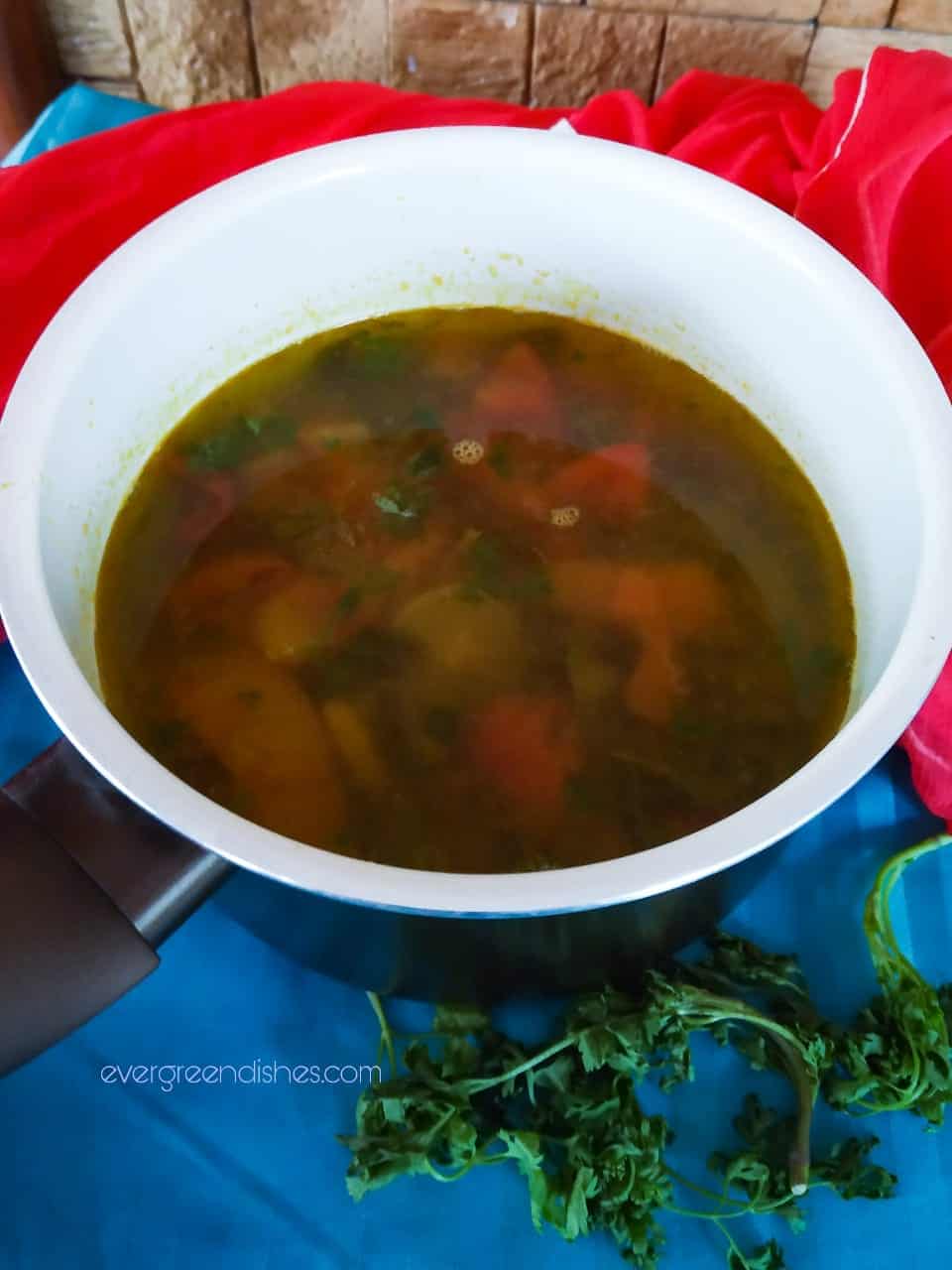
    Lemon Rasam  is another kind of rasam made during monsoon days. The citrusy flavour with the aroma of fresh herbs is tasty and soothing. It is a healthy and comfort food for many people. The ease and simplicity of the recipe makes it a go to recipe. 

    Rasam, as we all know is a lentil based, soup like dish tempered with spices. It is popular in South India and pairs well with hot, steamed rice. Sometimes, it is the simplest of the food like this,  gives immense comfort. I remember, after eating out for a week during our trips, it was simple, home cooked food we longed the most. The rasam varieties shared earlier are drumstick rasam, mysore rasam, andhra rasam

    Lemon Rasam is  a simple yet flavoursome dish, it makes a good accompaniment with hot steamed rice. One can use it as a soup too. . There is hardly any rasam powder used, no tamarind and no garlic too.  If you have not tried it yet, do give a try,  The herbs and lemon give a good taste to it. Every household has its own lemon rasam recipe. Some use moong dal instead of tur dal while others do not add any pepper. However, ,the basic ingredients of tomato, ginger, coriander, green chillies and lemon remain the same. 

    lemon rasam
    lemon rasam

    About the  event: 

    It’s raining  and we at Shhh Secretly Cooking Challenge have a host of monsoon recipes. The theme was suggested by Shobha Keshwani. She is a wonderful blogger who showcases many kinds of recipes on her blog. I want to try her Adraki Aloo.   Coincidentally, she is my partner too for the challenge. She has given me ghee and asafoetida and I have made this recipe. I had given her ginger and pepper and she has made a unique Drumstick soup

    shhh cooking secretly

    Let’s get to the  Lemon Rasam Recipe: 

    Ingredients:

    • 4 cups water
    • 2 tomatoes
    • 1 inch ginger
    • 3 green chilli
    • 1/2 teaspoon turmeric powder
    • a few curry leaves
    • 1/4 cup coriander leaves
    • 1/2 cup tur dal
    • 1 lemon
    • salt to taste


    For tempering:


    • 1 teaspoon ghee
    • 1/2teaspoon mustard seed
    • 1/2 teaspoon cumin
    • 1/4 teaspoon asafoetida
    • 1 red chilly
    • a few curry leaves
    • 1/2 teaspoon pepper powder


    Method:

    1. Wash the tur dal and cook it in a pressure cooker with a little turmeric powder. It should be soft and well cooked. 
    2. Take water in a pan, add tomato pieces, grated ginger, slit green chilli, turmeric powder, coriander and curry leaves to it. Boil them for sometime. The tomatoes should be well cooked. 
    3. Mash the dal well with the back of the ladle. Add it to the boiled broth along with salt.
    4. Make seasoning. In a small pan, take ghee, add mustard seeds. As they splutter put asafoetida and turmeric powder, throw in the red chilly, a few curry leaves and pepper powder. Put the tempering into the rasam. 
    5. Once it boils,  put lemon juice to it and remove from stove. 
    6. Lemon rasam is ready to serve. 

    Take a tip: 

    • Do not skip adding ginger, green chilli, coriander and curry leaves.
    • Use fresh coriander. Chop it finely.
    • Quantity of green chilli may be adjusted. 
    • Rasam can be used as a soup on a cold winter night. 

    Video Recipe is here : 


    lemon rasam
    Evergreendishesdev

    Lemon Rasam

    Lemon rasam is another variety of rasam. It is tasty and makes a good food during monsoon.
    Prep Time 10 minutes
    Cook Time 20 minutes
    Total Time 30 minutes
    Course: lunch ideas, Main Course
    Cuisine: karnataka, South Indian

    Ingredients
      

    • 4 cups water
    • 2 to matoes
    • 1 inch ginger
    • 3 green chilli
    • 1/2 teaspoon turmeric powder
    • a few curry leaves
    • 1/4 cup coriander leaves
    • 1/2 cup tur dal
    • 1 lemon
    • salt to taste
    • For tempering:
    • 1 teaspoon ghee
    • 1/4 teaspoon mustard seed
    • 1/4 teaspoon asafoetida
    • 1 red chilly
    • a few curry leaves
    • 1/2 teaspoon pepper powder

    Equipment

    • pressure cooker
    • pan
    • ladle

    Method
     

    1. Wash the tur dal and cook it in a pressure cooker with a little turmeric powder. It should be soft and well cooked.
    2. Take water in a pan, add tomato pieces, grated ginger, slit green chilli, turmeric powder, coriander and curry leaves to it. Boil them for sometime. The tomatoes should be well cooked.
    3. Mash the dal well with the back of the ladle. Add it to the boiled broth along with some salt.
    4. Make seasoning. In a small pan, take ghee, add mustard seeds. As they splutter put asafoetida and turmeric powder, throw in the red chilly, a few curry leaves and pepper powder. Put the tempering into the rasam.
    5. Once it boils,  put lemon juice to it and remove from stove.
    6. Lemon rasam is ready to serve.

    Notes

    • Do not skip adding ginger, coriander, curry leaves and green chilli. They give a good flavour to it. 
    • Use fresh coriander leaves and chop them finely. Remove the grime by putting in water.
    • Quantity of green chilli can be adjusted as per preference. 
    • You can use it as a soup on a cold winter night. 
    Lemon rasam/ nimbehannina saaru is a comfort food during monsoon and winter season. It is ideal to serve for a quick lunch or dinner.
    lemon rasam / nimbehannina saaru

    If you ever make this Lemon Rasam   recipe or any of my other dishes,  do take a picture and tag @foodiejayashree on Instagram or @evergreendishes on Facebook or Twitter. I will be glad to see your creation and share it further. Let’s be connected, do follow on social media platforms. Until next time, let’s stay connected.  Subscribe to get all updates and an e-book for free. Check out my e-books on Amazon.  Happy Cooking !

  • Rawa Kesari | Sheera | Prasad recipe

    Rawa Kesari | Sheera | Prasad recipe

    Jump to RecipePrint Recipe

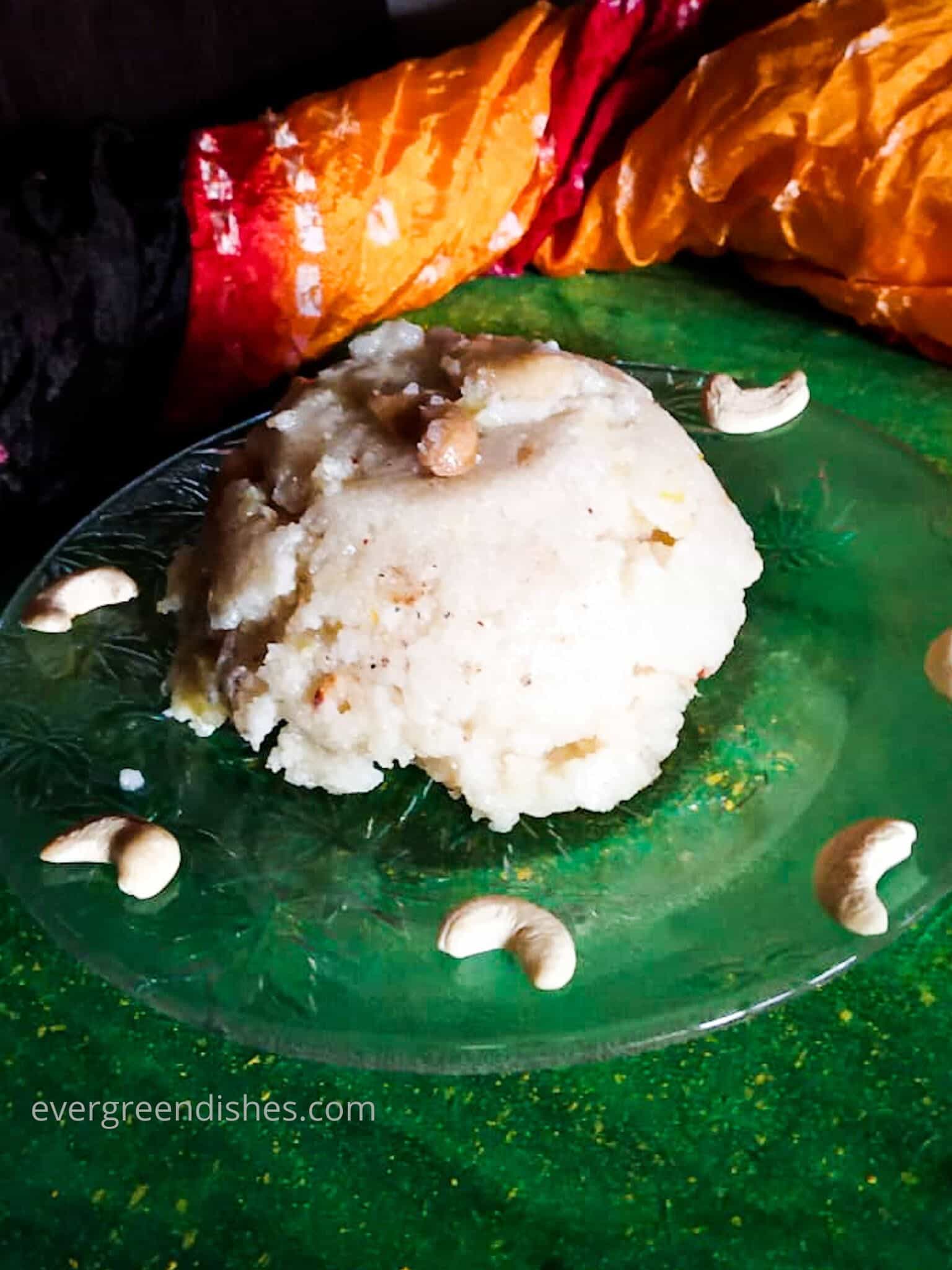
    Rawa Kesari is quite often prepared in most households. It is called by different names as Rawa Kesari, Sheera or as Sooji ka halwa in different parts of the country. In South India, Sheera is made as offering during the Satyanarayan Pooja. 

    The ease of making it and the different flavours which one can impart to it makes it a favourite of every household. It is ideal to pair with breakfast, lunch or dinner. In olden times,  kesari with jaggery was often made.  Earlier, I have shared mango kesari.

    The method of making the sheera as offering is different from the usual one. It is tasty and different from the usual one. Today, I am sharing the recipe of the same.
    rawa kesari/ sheera/ satyanarayan prasad


    Let us get to the recipe of Rawa Kesari / Sheera

    Ingredients :


    1 cup semolina ( measurement used :1 cup=200ml)
    2 teaspoon + 2 tablespoon ghee
    8 cashew
    1 cup water
    2 cup milk
    1 banana
    1 cup sugar
    a few strands of saffron
    1/4 teaspoon cardamom powder


    Method:

    • Take a thick bottom pan, add two teaspoon of ghee and roast the semolina to a golden colour along with cashew pieces. Be careful not to burn it.
    • Put the saffron in a little milk and set it aside.Cut thee bananana into pieces.
    • In another pan, add milk and water, put it on a low flame. Add sugar and ghee to it. Put banana pieces to it. Give a stir, once it boils, slowly add the semolina to it. Keep stirring with a ladle, no lumps should be formed. Let cook for sometime..
    • Add saffron soaked in milk  and cardamom powder to it. Give a stir. Rawa Kesari or Sheera is ready to offer to the Lord.

    Take a tip:

    • You can add a little extra ghee to it. 
    • Almonds and raisins may be used. 
    • You can roast the nuts separately in the beginning. 
    rawa kesari/ sheera/ satyanarayan prasad
    Evergreendishesdev

    Rawa Kesari / Sheera / Satyanarayan Prasad

    Rawa Kesari is a traditional sweet dish from Indian sub-continent. This version is also prepared during Satyanarayan Pooja.
    Prep Time 5 minutes
    Cook Time 15 minutes
    Total Time 20 minutes
    Servings: 6 people
    Course: Breakfast, dinner, lunch
    Cuisine: Indian, South Indian

    Ingredients
      

    • 1 cup semolina measurement used :1 cup=200ml
    • 2 teaspoon + 2 tablespoon ghee
    • 8 cashew
    • 1 cup water
    • 2 cup milk
    • 1 banana
    • 1 cup sugar
    • a few strands of saffron
    • 1/4 teaspoon cardamom powder

    Method
     

    1. Take a thick bottom pan, add two teaspoon of ghee and roast the semolina to a golden colour along with cashew pieces. Be careful not to burn it.
    2. Put the saffron in a little milk and set it aside.Cut thee bananana into pieces.
    3. In another pan, add milk and water, put it on a low flame. Add sugar and ghee to it. Put banana pieces to it. Give a stir, once it boils, slowly add the semolina to it. Keep stirring with a ladle, no lumps should be formed. Let cook for sometime..
    4. Add saffron soaked in milk  and cardamom powder to it. Give a stir. Rawa Kesari or Sheera is ready to offer to the Lord.

    Notes

    You can add a little extra ghee to it. 
    Almonds and raisins may be used. 
    You can roast the nuts separately in the beginning. 

    Pin it for later:
    Rawa kesari | Sheera | Prasad recipe is an offering made to the Lord during Satyanarayan Puja. It is tasty dish. Give a try to this version of prasad recipe.
    Rawa Kesari / Sheera

    If you ever make this Rawa Kesari / Sheera recipe, take a picture and tag  @foodiejayashree on Instagram or @evergreendishes on Facebook or Twitter. I will be happy to see your creation and share them further. Subscribe to get all updates and book of handyhints for free.

  • Menthe Matvadi Palya | Matodi Palya | Karnataka recipes

    Menthe Matvadi Palya | Matodi Palya | Karnataka recipes

    Jump to Recipe 

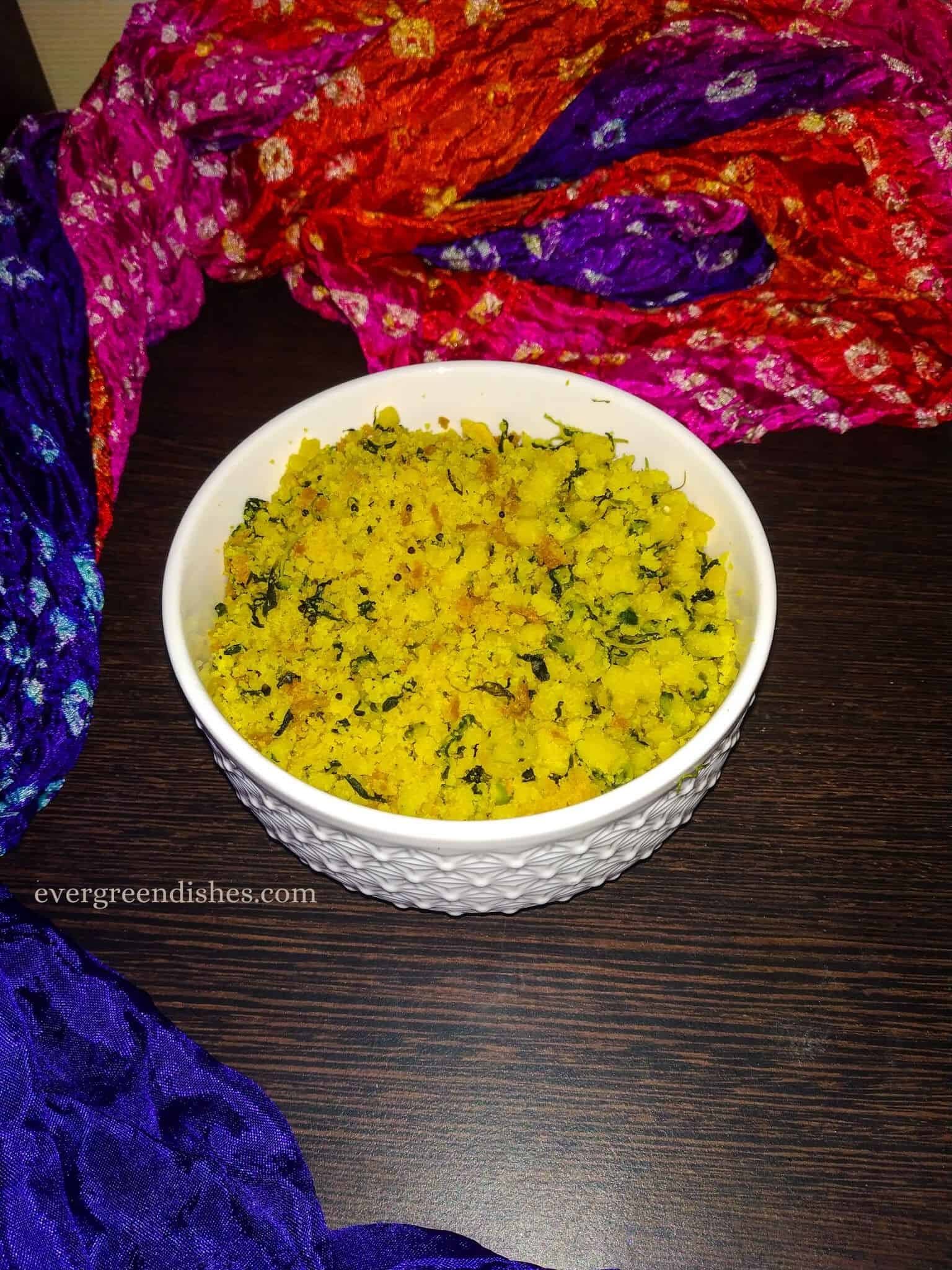
    Menthe Matvadi Palya / Matodi Palya  is a traditional side dish from Karnataka. Fenugreek leaves are cooked along with ground paste of bengal gram to make this delicious accompaniment. It is a no onion garlic recipe. It is vegan and makes a healthy side dish. A delicious side dish, one can eat it as a snack too. 

    It is one of the heirloom recipes, I wanted to post it since a long time and it is on my blog today.  Menthe Matodi Palya  is a dish you make it once in a way and enjoy, it needs good amount of oil to cook and ample time also. Thus, one needs to be liberal with the use of oil here.  It pairs well with steamed rice or one can serve it as a side dish along with rice and rasam. It may eaten by itself as a snack too. 

    I love using fenugreek leaves in my cooking as it gives a good flavour to many dishes. Moreover, it is rich in nutrients as Vitamin K, Vitamin C, Vitamin A, folate, Riboflavin and Pyridoxine. It also contains many antioxidants. It is low in calories. It helps to control diabetes and anaemia. It is good for the digestive system.

    menthe matvada palya

    About the event: 

    It’s time for Shhh Secretly Cooking Challenge post. The theme for the month of June was suggested by Seema Doraiswamy Sriram as ” Fear Not The Bitter”. Seema is a wonderful blogger who blogs at Mildly Indian. She  has many delicious recipes with a good twist in them. I love the simplicity of her cooking and bookmarked the black rice ladoo and guava chutney to make it soon.  Seema was my partner and she gave me coconut and  green chilly as the secret ingredients. But since I had not used coconut, I asked for a change and it was oil she gave me and I made this Matvadi Palya.  I had given oil and cumin as the secret ingredients to Seema  and she has made this delicious side dish Karela ka Bharta

    Karnataka recipes :

    The other karnataka recipes shared earlier on the blog are Huli Nuchu, Mixed Vegetable Kootu, Bisebelebath. Among the sweets, we cherish the traditional Ragi Halbai and Bellada Sheera.

    Let’s get to the recipe of Menthe Matvada Palya /Matodi Palya : 

    Ingredients:


    1 cup bengal gram  (Measurement used: 1 cup = 150ml) 
    2 cluster (bunch) fenugreek leaves
    5 green chilly
    water (little)
    3 tablespoon oil
    1/2 teaspoon mustard
    asafoetida
    1/4 teaspoon turmeric powder
    salt

    Method:


    1.Wash and soak bengal gram for two hours.
    2. Separate the fenugreek leaves. Chop them and put them in water. Clean it several times to remove the grime.
    3.Remove the bengal gram from water and grind it along with green chilly. Add little water while grinding.
    4. Heat oil in a pan, add mustard seeds. As it splutters, put asafoetida and turmeric powder to it. Now, put the fenugreek leaves. Let them cook for a minute. Once the methi leaves are cooked, add the ground mixture to it. Put salt and mix it. Let it cook on a low flame. Keep on stirring with a ladle, otherwise, the wet mixture forms a mass and  it will stick to the pan. All the efforts  turn to be a waste.  From the wet mixture, it cooks to a dry, delicious curry. It needs at least ten to fifteen minutes to cook perfectly. A perfectly cooked dish is dry and grainy. 


    Take a tip: 

    • Add very little  water to grind it to a coarse paste.
    • Coconut and ginger may be added while grinding. I have not added. 
    • A little cumin may be put in the seasoning.
    Print Recipe

    Menthe Matodi Palya

    Menthe Matodi Palya is a delicious side dish from Karnataka. It is a , healthy, vegan, no onion garlic, side dish.
    Prep Time 15 minutes
    Cook Time 20 minutes
    Soaking time 30 minutes
    Total Time 1 hour 5 minutes
    Course: dinner, lunch
    Cuisine: karnataka, South Indian

    Ingredients
      

    • 1 cup bengal gram
    • 2 cluster bunch fenugreek leaves
    • 5 green chilly
    • water little
    • 3 tablespoon oil
    • 1/2 teaspoon mustard
    • asafoetida
    • 1/4 teaspoon turmeric powder
    • salt

    Method
     

    1. 1.Wash and soak bengal gram for two hours.
    2. Separate the fenugreek leaves. Chop them and put them in water. Clean it several times to remove the grime.
    3. 3.Remove the bengal gram from water and grind it along with green chilly. Add little water while grinding.
    4. Heat oil in a pan, add mustard seeds. As it splutters, put asafoetida and turmeric powder to it. Now, put the fenugreek leaves. Let them cook for a minute. Once the methi leaves are cooked, add the ground mixture to it. Put salt and mix it. Let it cook on a low flame. Keep on stirring with a ladle, the wet mixture forms a mass and  it will stick to the pan. All the efforts will turn to be a waste.  From the wet mixture, it cooks to a dry, delicious curry. It needs at least ten to fifteen minutes to cook.

    Notes

    Add very little  water to grind it to a coarse paste.
    Coconut and ginger may be added while grinding. I have not added. 
    A little cumin may be put in the seasoning.

    Pin it for later: 

    Menthe Matvada Palya is one of the heirloom recipes. It is a tasty side dish ideal to pair with rice and rasam.
    Menthe Matvada Palyaacc


    If you ever make this Menthe Matvadi  recipe or any of my other dishes,  do take a picture and tag @foodiejayashree on Instagram or @evergreendishes on Facebook or Twitter. I will be glad to see your creation and share it further. Let’s be connected, do follow on social media platforms. Until next time, let’s stay connected.  Subscribe to get all updates in your inbox. Happy Cooking !

  • Watermelon Rind Dosa | Watermelon Rind Recipes

    Watermelon Rind Dosa | Watermelon Rind Recipes

    Jump to RecipePrint Recipe


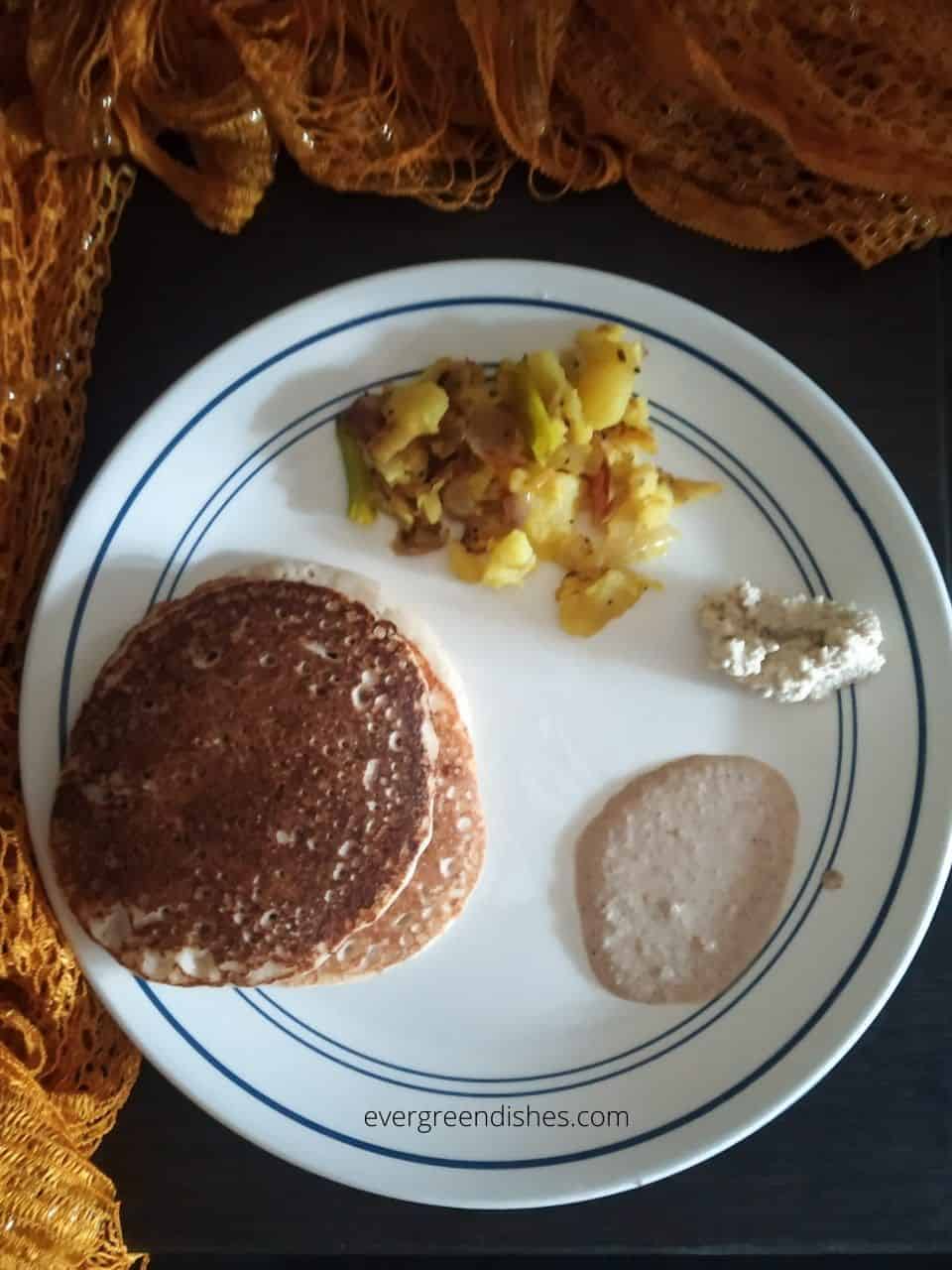
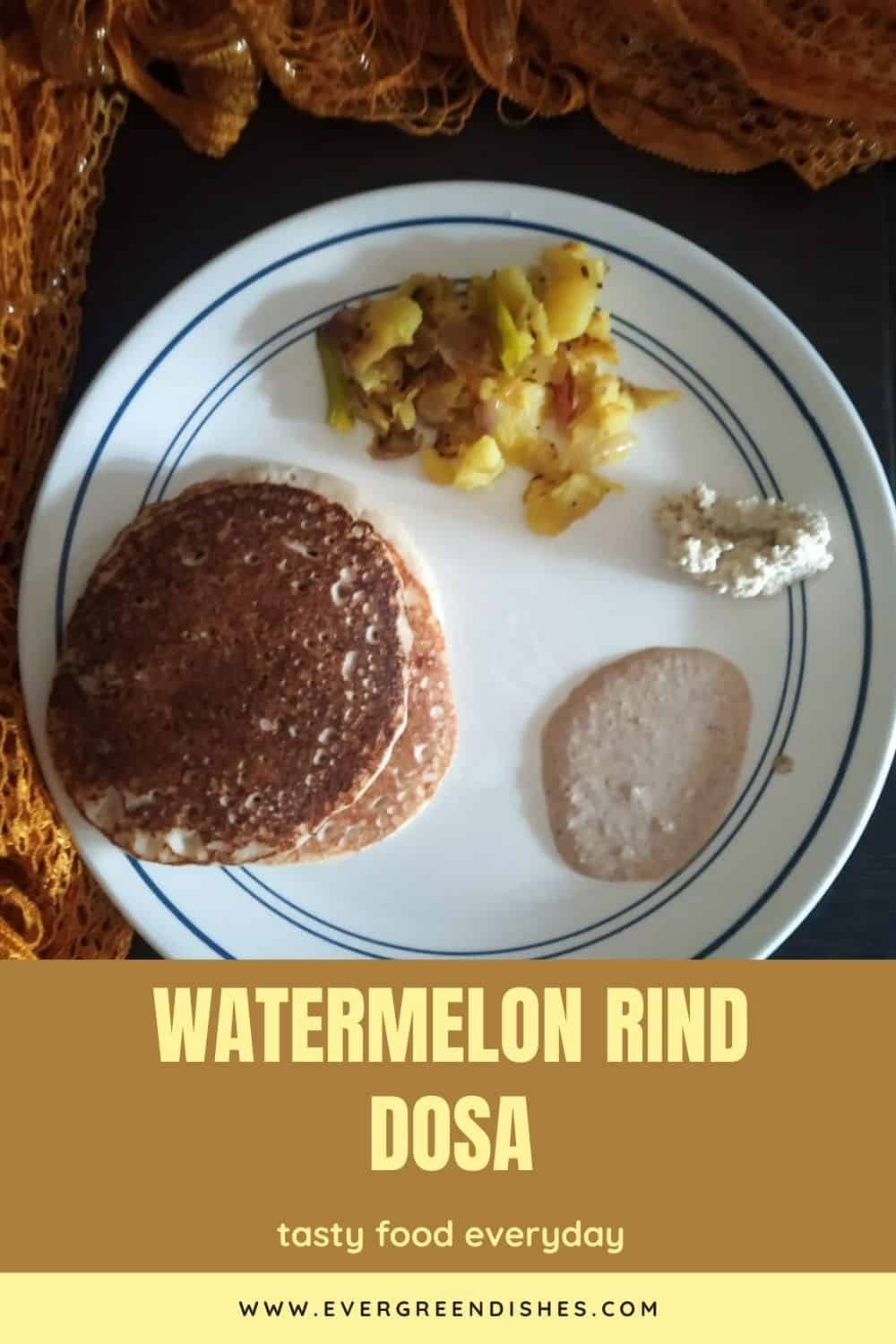
    Watermelon Rind Dosa is a delicious and unique breakfast option. It is soft, spongy and porous.  It is vegan and gluten free  and as the name suggests watermelon rind is used in it.

    Considering the fact, watermelon rind is healthier, I don’t like to waste it. The rind is the white part of the watermelon. It is rich in fibre and aids in digestion.  Usually, I use it in a smoothie or a salad.  Of late, I have another recipe and I make this dosa also. The dosa is made slightly thick and cooked only on one side. Like the regular dosa, this needs to be fermented. This  recipe is adopted from Vinaya Prasad’s blog  Vegetarian Culinary Delights. I am active in a couple of groups on Facebook and this group is one of them. I like the enthusiasm and patience with which she runs the group. Recently, the group reached the 15000 milestone mark. 

    Watermelon Rind Dosa Recipe 

    Ingredients: 

     1. 25 cup  rice
    1/2 cup  urad dal
    1/4 cup flattened rice (poha) 
    1/2 cup   watermelon rind
    1/2 cup  fresh coconut
    1/2 teaspoon methi seeds
    oil for roasting
    water for soaking and grinding
    salt to taste


    Method:

    1. Soak rice, urad dal and methi for 4 hours.
    2. Soak flattened rice (poha) for half an hour.
    3. Cut the rind into small pieces. 
    4. Grind the soaked rice and lentil mixture to a fine batter, remove it in a bowl. Now, grind the rind pieces, soaked poha and  coconut, mix it into the batter. Add salt to it, cover and keep it in a warm place to ferment overnight or 5-6 hours.
    5. Next day, mix the batter, heat a skillet. Smear a little oil if using the cast iron. pour a ladleful of batter, spread a little oil, cover with a lid   and allow to cook. There is no need to cook the other side for this dosa. Once it is cooked, remove and serve hot with coconut chutney. Repeat for the rest of the batter. 


    Take a tip: 

    1. The dosa is made as a set dosa.  The consistency of the batter should be moderately thick.
    2. Use any kind of skillet, iron or non-stick, cover with a lid and cook. There is no need to flip  to the other side. 


    watermelon rind dosa
    watermelon rind dosa


    My family enjoys dosa any day.  Rava dosa is usually prepared during weekends. A dosa batter is handy and used in different ways. You can make masala dosa, uttapam or gundapongal. The other kind of dosa are ragi dosa, jowar dosa, set dosa, neer dosa and mixed flour dosa. 

    watermelon rind dosa

    Watermelon Rind Dosa

    Watermelon rind dosa is soft, spongy dosa. It is ideal to prepare it for breakfast.
    Prep Time 4 hours
    Cook Time 30 minutes
    Fermentation time 6 hours
    Total Time 10 hours 30 minutes
    Course: Breakfast
    Cuisine: Indian, South Indian

    Ingredients
      

    • 25 cup rice
    • 1/2 cup urad dal
    • 1/4 cup flattened rice poha
    • 1/2 cup watermelon rind
    • 1/2 cup fresh coconut
    • 1/2 teaspoon methi seeds
    • oil for roasting
    • water for soaking and grinding
    • salt to taste

    Method
     

    1. Soak rice, urad dal and methi for 4 hours.
    2. Soak flattened rice (poha) for half an hour.
    3. Cut the rind into small pieces.
    4. Grind the soaked rice and lentil mixture to a fine batter, remove it in a bowl. Now, grind the rind pieces, soaked poha and  coconut, mix it into the batter. Add salt to it, cover and keep it in a warm place to ferment overnight or 5-6 hours.
    5. Next day, mix the batter, heat a skillet. Smear a little oil if using the cast iron. pour a ladleful of batter, spread a little oil, cover with a lid   and allow to cook. There is no need to cook the other side for this dosa. Once it is cooked, remove and serve hot with coconut chutney. Repeat for the rest of the batter.

    Notes

    The dosa is made as a set dosa.  The consistency of the batter should be moderately thick.
    Use any kind of skillet, iron or non-stick, cover with a lid and cook. There is no need to flip  to the other side. 

    Pin it for later:

    Watermelon rind dosa is soft, supple and porous. It is a good way to use the rind  of the fruit which is usually discarded. Watermelon rind is rich in fibre and minerals. Give a try to this variation of dosa.
    watermelon rind dosa

    If you ever make this dosa recipe or any of my dishes,  do take a picture and tag @foodiejayashree on Instagram or @evergreendishes on Facebook or Twitter. I will be glad to see your creation and share it further. Let’s be connected, do follow on social media platforms. Until next time, let’s stay connected.  Subscribe to get all updates in your inbox. Happy Cooking ! 


  • Coconut Rice

    Coconut Rice

    Jump to Recipe Print Recipe

    Coconut Rice | Coconut Rice Recipe | South Indian Cooking

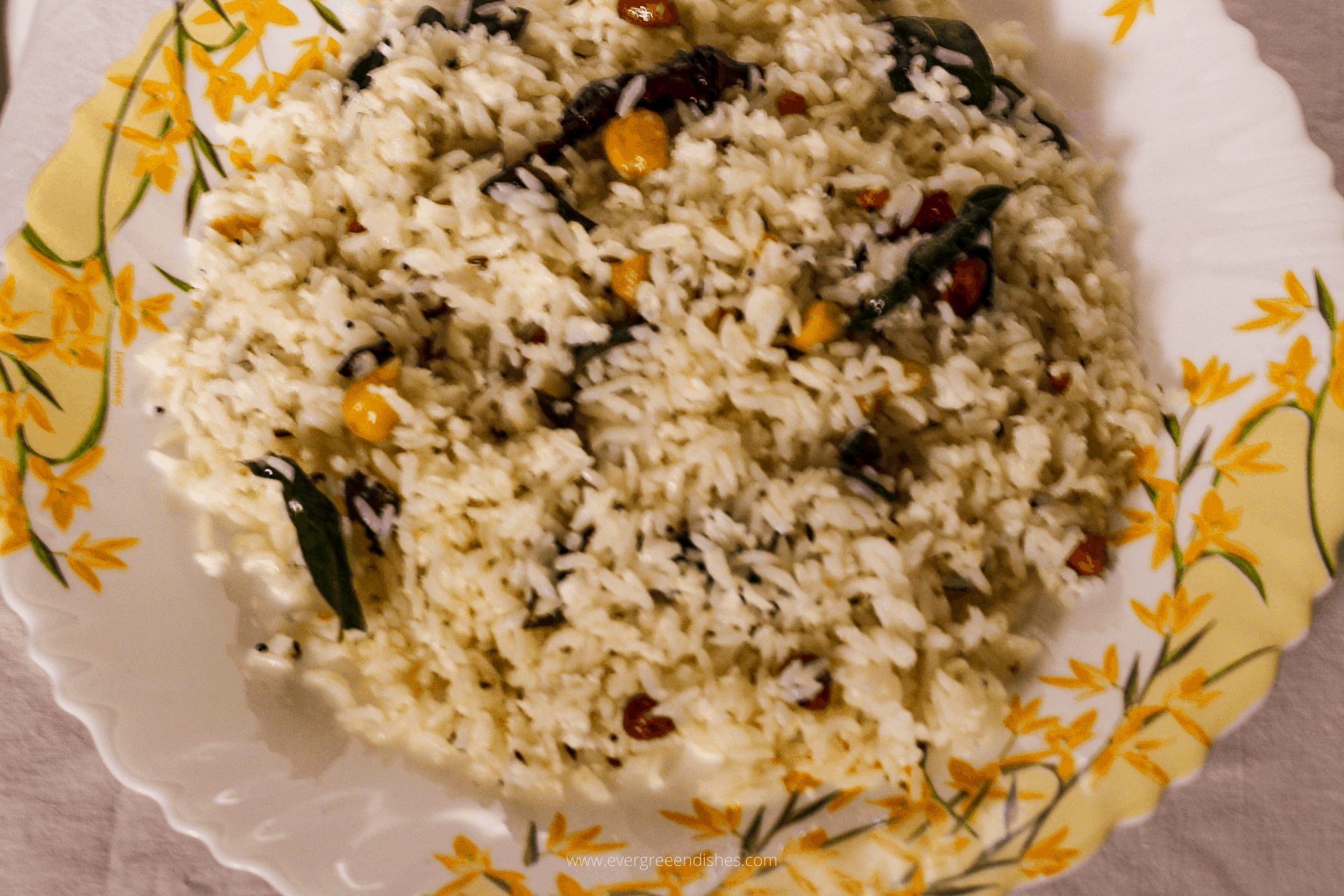
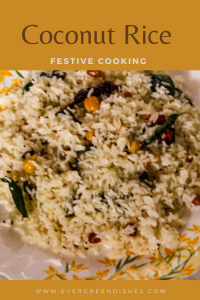
    Coconut Rice is a flavoursome, easy to make  rice dish from South India. The goodness of coconut  along with taste of cumin and curry leaves blend  well to give a tasty and easy to make dish. It can be eaten as it is or served with a few papad and fryums.

    A no onion garlic recipe, coconut rice  is ideal for festive days. It is simple yet flavoursome. I often make it during holidays as it is loved at home. It is ideal to serve  for lunch or dinner. A good thing, you can make use of the left over rice too.

    It does not need any accompaniments but I usually make some fryums and papads to pair them together. Moreover, my family members  love to top it with a few pieces of these fryums.

    The ingredients that goes into the making of Coconut Rice are:

    Rice: Well cooked rice, that is neither too smudgy or soft. You can use the regular sona masuri rice here.

    Coconut: Use fresh grated coconut  to make this dish.

    Curry leaves : Curry leaves give a good aroma to it.

    Cashew pieces : They give flavour to the dish. Be sure to roast them well, you need a golden tinged one.

    Groundnuts: Not a necessity, but they taste good in most South Indian dishes.

    Asafoetida: It  is one of the essentials of the South Indian cooking.

    Coconut Rice
    Coconut Rice

    About the event:

    Sending this to Healthy Wellthy Cuisine, the theme is “Satvik Treat”. The theme was suggested by Ruchi Shah, who is an expert cook. I loved her Raw Mango Thokku and want to try it. Other satvik recipes that you may like to try are


    Recipe of Coconut Rice:

    Ingredients:

    • 1 cup  rice
    • 2 tablespoon oil
    • 1/2 teaspoon mustard
    • 1/4 teaspoon asafoetida
    • 1/2 teaspoon cumin
    • 1 teaspoon bengal gram
    • 1 teaspoon urad dal
    • 2 tablespoon groundnut
    •  8 cashew
    • 4 red chilly
    • a few sprigs of curry leaf
    • 1/2 cup coconut
    • salt to taste

    Method:

    1. Wash the rice and cook it in pressure cooker, adjust the water quantity accordingly.  Once the pressure releases, keep it aside.
    2. Take oil in a pan, add mustard seeds, as it splutters, put bengal gram, urad dal, groundnuts. Saute for a while. Put cashew pieces and red chilly into it. Throw in the curry leaves, the seasoning is ready. Keep it aside.
    3. Put rice, salt and coconut to it. Mix it.
    4. Coconut rice is ready to serve.

    Take a tip:

    • Grated coconut may be added in the seasoning. I do not do it, I prefer putting it over and mixing.
    • A few green chilly and ginger may be added in the seasoning.

    Print Recipe

    Coconut Rice

    Coconut Rice

    Coconut Rice is a flavoursome rice from South India. A no onion garlic recipe, it is ideal for festive days.
    Prep Time 10 minutes
    Cook Time 20 minutes
    Total Time 30 minutes
    Course: dinner, festive cooking, lunch box, lunch ideas
    Cuisine: South Indian

    Ingredients
      

    • 1 cup rice
    • 2 tablespoon oil
    • 1/2 teaspoon mustard
    • 1/4 teaspoon asafoetida
    • 1/2 teaspoon cumin
    • 1 teaspoon bengal gram
    • 1 teaspoon urad dal
    • 2 tablespoon groundnut
    • 8 cashew
    • 4 red chilly
    • a few sprigs of curry leaf
    • 1/2 cup coconut
    • salt to taste

    Method
     

    1. Wash the rice and cook it in pressure cooker, adjust the water quantity accordingly.  Once the pressure releases, keep it aside.
    2. Take oil in a pan, add mustard seeds, as it splutters, put bengal gram, urad dal, groundnuts. Saute for a while. Put cashew pieces and red chilly into it. Throw in the curry leaves, the seasoning is ready. Keep it aside.
    3. Put rice, salt and coconut to it. Mix it.
    4. Coconut rice is ready to serve.

    Notes

    Grated coconut may be added in the seasoning. I do not do it, I prefer putting it over and mixing.
    A few green chilly and ginger may be added in the seasoning. 

    Pin it for later:
    Coconut rice is a simple yet flavoursome rice dish from South India. A no onion garlic recipe, it t is ideal for festive days.
    Coconut Rice

    If you have liked this post, do share it with your family and friends. If you ever make this, take a picture and share it by tagging @foodiejayashree on Instagram or @evergreendishes on Facebook or Twitter.


  • Mysore Rasam

    Mysore Rasam

    The season is mild rainy days and chilly nights, a steaming hot food with a few pakodas is ideal, isn’t it? Today, I have a rasam recipe for you.

    What is rasam?

    Rasam is a lentil based, thin soup like accompaniment served with hot steamed rice. It is popular in South India mainly in the states of Karnataka, Tamilnadu and Andhra Pradesh.

    What are the different variety of rasam that one can make?

    There are many variety of rasam that one can relish. Pepper rasam, tomato rasam, saaru, neer saaru, lemon rasam, andhra rasam, mysore rasam are a few variety of rasam that one can prepare.

    What is the difference between Rasam and Sambar?

    Rasam and Sambar are siblings from South India. Rasam is thinner in consistency and usually served with steamed rice. Sambar is slightly thicker than rasam and has different vegetables in it, onion may or may not be added. It is not only served with rice but also idly, dosa and vada.

    What is Mysore Rasam?

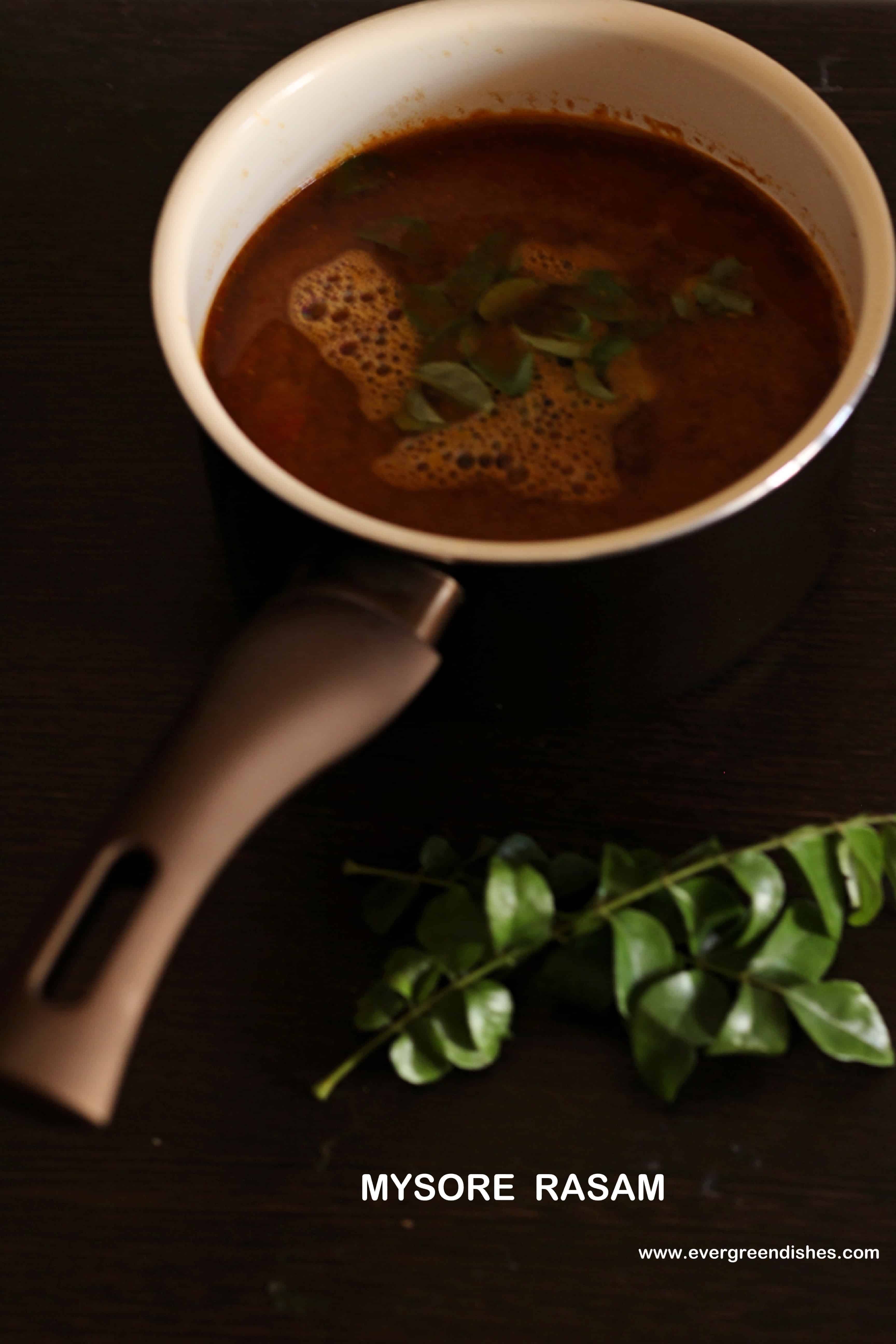
    Mysore Rasam as the name suggests, hails from the sate of Karnataka. It is also known as Arachuvitta Rasam. It is a rasam made using fresh spice mix and coconut. It is flavoursome. Let’s get to the recipe of it.

    Ingredients:

    • 1 cup tur dal
    • 2 tomato
    • 1/2 teaspoon mustard
    • 1/4 teaspoon turmeric powder
    • a small lemon size ball of tamarind
    • 1 teaspoon ghee

    For the rasam mix:

    • 1 tablespoon bengal gram
    • 1 tablespoon coriander seed
    • 1/2 teaspoon cumin
    • 1/2 teaspoon pepper
    • 1/4 teaspoon methi
    • 5 dry red chilli
    • 2 tablespoon fresh coconut

    For the seasoning:

    • 2 teaspoon ghee
    • 1/2 teaspoon mustard seed
    • 1/4 teaspoon asafoetida
    • 1/4 teaspoon turmeric powder
    • 1/4 teaspoon cumin
    • 1 red chilly
    • curry leaves

    Method:

    1. Wash the tur dal, add two cups of water and cook it in pressure cooker for three whistles. The dal should be smoothly cooked.
    2. Soak the tamarind in water.
    3. Make tomato puree, keep it aside.
    4. Take a pan, add a teaspoon of ghee and roast all the ingredients except coconut under “For the rasam mix” for two to three minutes. Put the coconut in the end and roast for another minute. When it is completely cool, grind them together.
    5. Extract the tamarind pulp. Mix it with tomato puree, put it to boil, the raw smell of the tomatoes should go.
    6. Put the ground rasam mix, jaggery, and salt into it. Mix the cooked dal well and put it along with other ingredients. Add three cups of water.
    7. Make seasoning, heat ghee in a pan. Add mustard seeds, as it splutters, put cumin, asafoetida, turmeric powder, red chilly and curry leaves. Pour it over the rasam
    8. Once the rasam boils, it is done.
    9. Serve hot with rice.
    Mysore Rasam

    Mysore Rasam

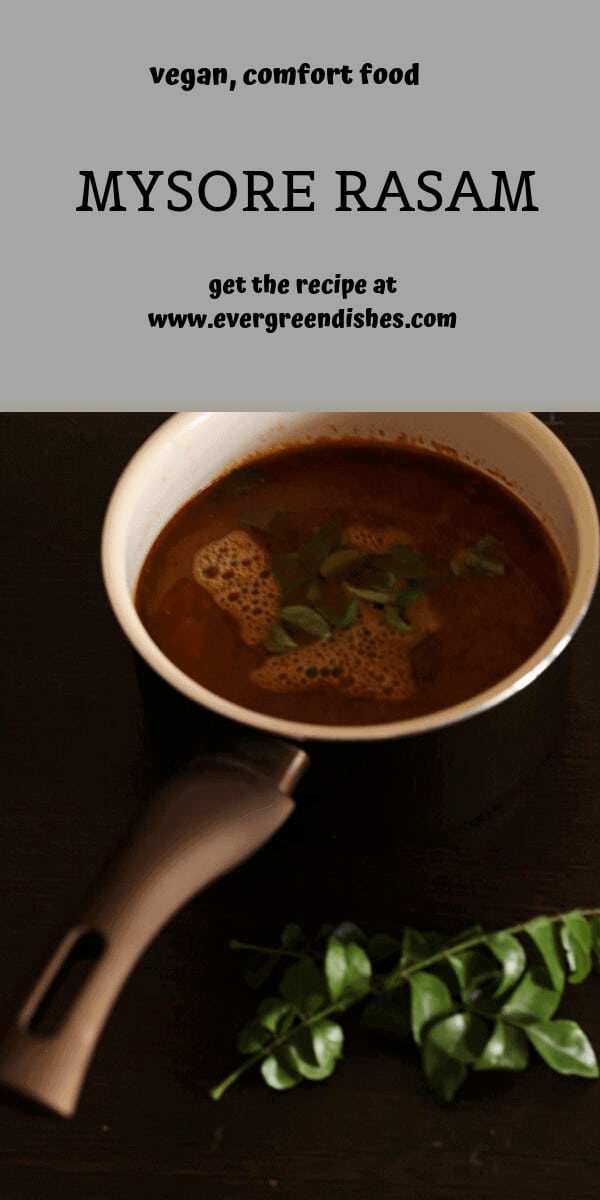
    Mysore Rasam is spicy- tangy lentil based dish served with hot steamed rice.
    Prep Time 20 minutes
    Cook Time 20 minutes
    Total Time 40 minutes
    Course: lunch ideas, Main Course
    Cuisine: karnataka

    Ingredients
      

    • 1 cup tur dal
    • 2 tomato
    • 1/4 teaspoon turmeric powder
    • small lemon size ball tamarind
    For Rasam Mix
    • 1 teaspoon ghee
    • 1 tablespoon bengal gram
    • 1 tablespoon coriander seed
    • 1/2 teaspoon cumin
    • 1/2 teaspoon pepper
    • 1/4 teaspoon fenugreek
    • 5 red chilli
    • 1 sprig curry leaves
    • 2 tablespoon fresh coconut
    For the seasoning
    • 2 teaspoon ghee
    • 1/2 teaspoon mustard seed
    • 1/4 teaspoon asafoetida
    • 1/8 teaspoon turmeric powder
    • 1/4 teaspoon cumin
    • 1 red chilli
    • 1 sprig curry leaf

    Method
     

    1. Wash the tur dal, add two cups of water and cook it in pressure cooker for three whistles. The dal should be smoothly cooked.
    2. Soak the tamarind in water.Make tomato puree, keep it aside.
    3. Take a pan, add a teaspoon of ghee and roast all the ingredients except coconut under "For the rasam mix" for two to three minutes. Put the coconut in the end and roast for another minute. When it is completely cool, grind them together.
    4. Extract the tamarind pulp. Mix it with tomato puree, put it to boil, the raw smell of the tomatoes should go.Put the ground rasam mix, jaggery, and salt into it. Mix the cooked dal well and put it along with other ingredients. Add three cups of water.
    5. Make seasoning, heat ghee in a pan. Add mustard seeds, as it splutters, put cumin, asafoetida, turmeric powder, red chilly and curry leaves. Pour it over the rasam. Once the rasam boils, it is done.Serve hot with rice.

    Pin it for later:
    Mysore Rasam

    I am sharing this with the Facebook group, “Food for Feast” where like minded bloggers decide a theme to blog every month. The theme for September was “Satvik Recipe”. Satvik food is that food that can be offered to God and does not contain onion and garlic in it.

    I am also sending this post MLLA 131 hosted by Sasmita of First Timer Cook . It is a monthly event started by Susan and now hosted by Lisa of Lisa’s Kitchen.

    If you have liked this post, do leave a comment below. If you ever make it, do take a picture and post it on Facebook by tagging @evergreendishes or on Instagram by tagging @foodiejayashree.

    Subscribe to get a book of handyhints for free !


  • Flaxseed Chutney Powder / Agase Chutney Pudi

    Flaxseed Chutney Powder / Agase Chutney Pudi

    Jump to Recipe

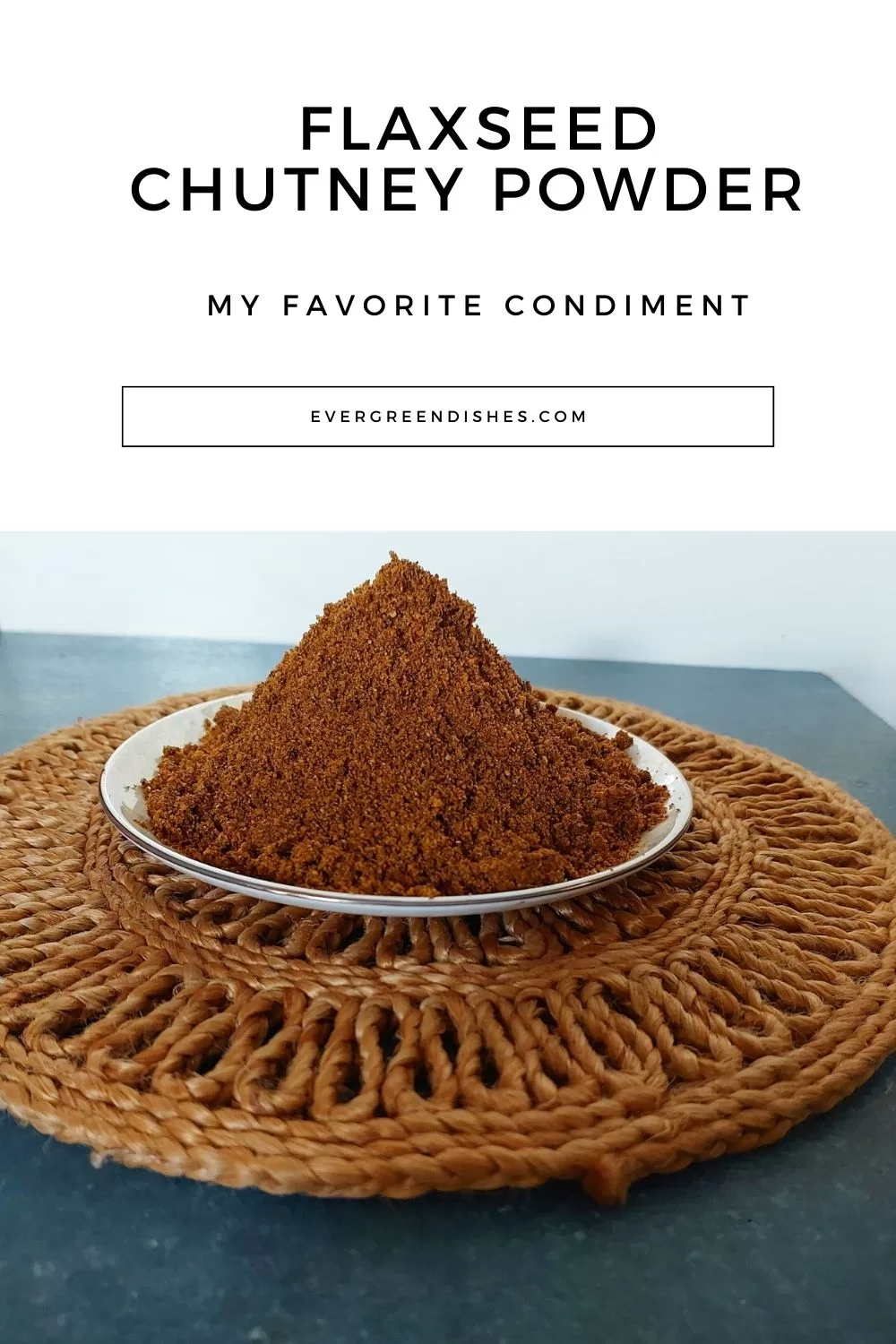
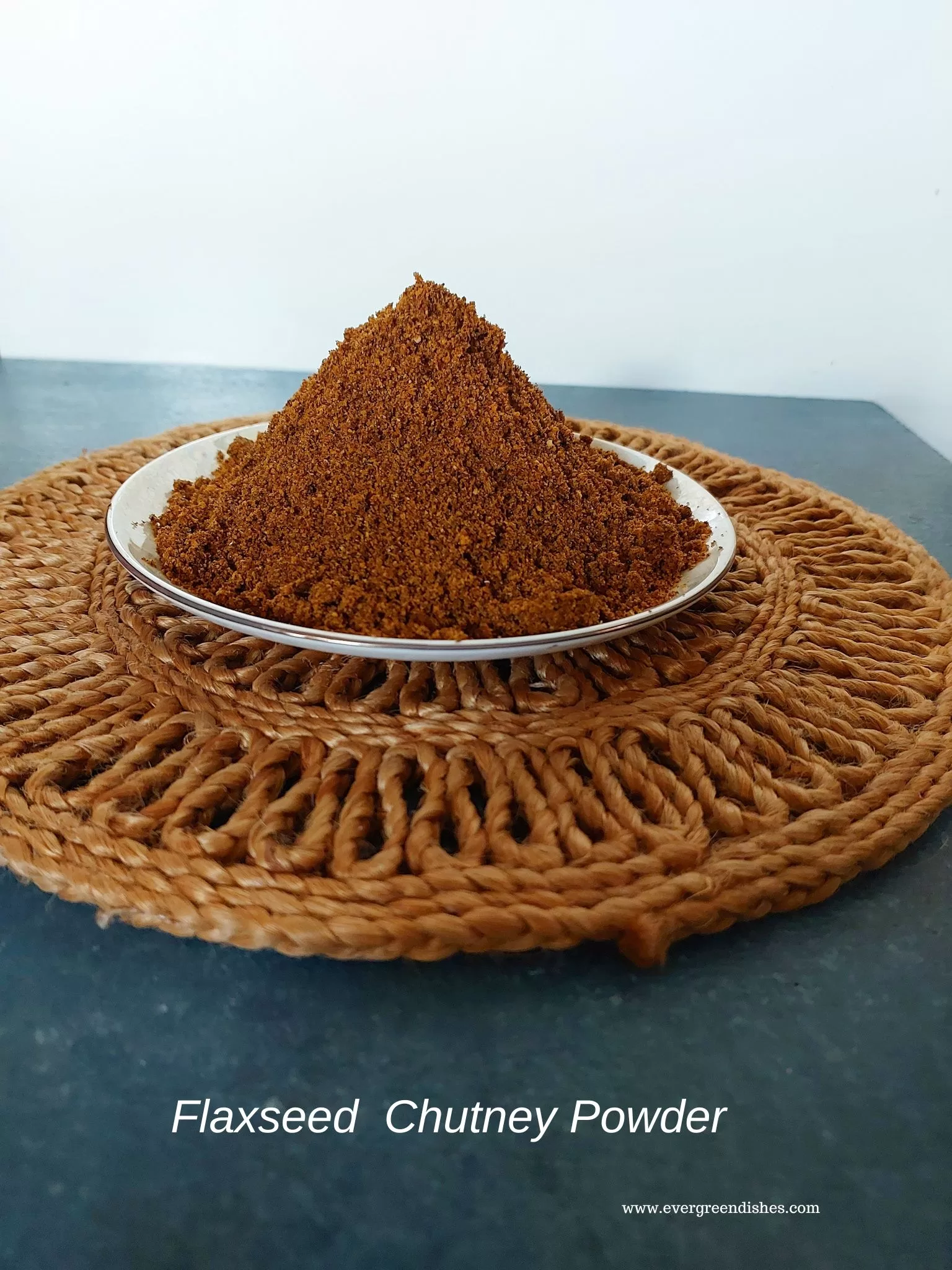
    Flaxseed chutney powder is a tasty and ideal condiment to make and store at home. It stays good for a long period and makes a good accompaniment with any meal. It is usually served with jowar roti or chapati along with other dishes.

    A hearty new year greetings to one and all. May the year be filled with joy, peace and happiness. The first post of 2019 and as is the custom to begin with good things, I thought of kick starting with a healthy recipe on the blog. Flaxseed is the new age food that has gained a lot of importance because of its immense benefits. Presenting, flaxseed chutney powder that is not only tasty but healthy, easy to make and pairs well with many dishes. It is a life saviour during busy days.

    What is flaxseed?

    Flax also known as common flax or linseed is a member of the genus Linumin the family Linaceae. It is a food and fiber crop cultivated in cooler regions of the world. The textiles made from flax is known as linen in the western countries and traditionally used for bedsheets and other kind of clothing.

    How is it helpful?

    Flaxseed is considered to be a super food as it is a good source of many nutrients. The main nutrients of flaxseed are Omega 3 essential fatty acids, lignans and fiber. It is high in Omega 3 Fatty Acids and consists of alpha linolenic acid (ALA), which is mostly found in plants. It lowers the risk of stroke and is heart friendly. The other rich source is the lignans which may reduce the risk of cancer. They are rich in dietary fibre and can be consumed easily. It helps digestive conditions  including chronic constipation, diarrehea, irritable bowel syndrome.

    How can one eat flaxseeds?

    Flaxseed is available as whole seeds, meal powder, liquid oil and oil in a pill form. It can be easily added to cereal, baked goods and garnished in other dishes in its powder form. Add a few roasted flaxseed to salad, it tastes good. You can also  also add a spoon of roasted flaxseed while making thalipeeth along with other spices.

    How can this chutney powder be used?

    Flaxseed chutney powder   makes a good accompaniment with chapati, idli, dosa, rice or curd rice. It is a life saviour on busy days or when you are bored to cook an elaborate meal.

    How long can it be stored?

    Agase pudi  stays good for more than two months, make sure the container is dry.

    flaxseed chutney powder

    Let’s get to the recipe of Flax Seed Chutney Powder

    Ingredients:            Measurement used : 1cup =250 ml

    • 1 cup flax seed
    • 2 tablespoon bengal gram
    • 2 tablespoon urad dal
    • 1 teaspoon coriander seed
    • 1/2 teaspoon cumin
    • 1/2 cup desiccated coconut
    • 15- 20 dry red chilli
    • a few curry leaves
    • a small piece of tamarind
    • a small piece jaggery
    • salt
    • 1 + 2 teaspoon oil
    • a pinch of turmeric powder
    • asafoetida

    Method:

    1. Dry roast the flax seeds until they splutter and you get a nutty aroma.
    2. Dry roast the desiccated coconut and curry leaves.
    3. Dry roast the lentils ,coriander seed  and cumin  separately.
    4. Put a spoon of oil in the pan and roast the red chilly.
    5. Once the ingredients are cool, grind them in a mixer jar. Add salt, jaggery and tamarind to it.
    6. Heat oil in a pan and make the seasoning. Add turmeric powder and asafoetida to it, put the ground powder and turn off the stove. Mix well. Store in a dry jar.

    Some other kind of condiments that I have on blog : curry leaf powder powder, garlic chutney powder, raw mango chutney, gongura chutney

    Print Recipe

    flaxseed chutney powder
    Evergreendishesdev

    Flaxseed Chutney Powder

    Flaxseed Chutney Powder is tasty and versatile to use. As it is packed with nutrients, this a good way to incorporate in our diet.
    Course: condiments
    Cuisine: karnataka

    Ingredients
      

    • 1 cup flax seed
    • 2 tablespoon bengal gram
    • 2 tablespoon urad dal
    • 1 teaspoon coriander seed
    • 1/2 teaspoon cumin
    • 1/2 cup desiccated coconut
    • 15- 20 dry red chilli
    • a few curry leaves
    • a small piece of tamarind
    • a small piece jaggery
    • salt
    • 1 + 2 teaspoon oil
    • a pinch of turmeric powder
    • asafoetida

    Equipment

    • 1 pan
    • 1 ladle
    • 1 large bowl
    • 1 large plate
    • 1 cup
    • 1 tablespoon
    • 1 teaspoon

    Method
     

    1. Dry roast the flax seeds until they splutter and you get a nutty aroma.
    2. Dry roast the desiccated coconut and curry leaves.
    3. Dry roast the lentils ,coriander seed  and cumin  separately.
    4. Put a spoon of oil in the pan and roast the red chilly.
    5. Once the ingredients are cool, grind them in a mixer jar. Add salt, jaggery and tamarind to it.
    6. Heat oil in a pan and make the seasoning. Add turmeric powder and asafoetida to it, put the ground powder and turn off the stove. Mix well. Store in a dry jar.

    About the event :

    Sending this to Fooodies_Redoing Old Post No128 a fortnightly event. We are a group of bloggers, work on  an old post either by changing the picture, text or both.Here, I have put better pictures.

    Pin it for later :

    flaxseed chutney powder
    flaxseed chutney powder


    If you have liked this post, do leave a comment and share it further.

    If you ever recreate this recipe, take a picture and tag  @foodiejayashree on Instagram or @evergreendishes on Facebook. I will be happy to share your dish with my network.

    Follow evergreendishes on other social media, let’s be connected.

  • Mixed Vegetable Kootu | South Indian Kootu

    Mixed Vegetable Kootu | South Indian Kootu

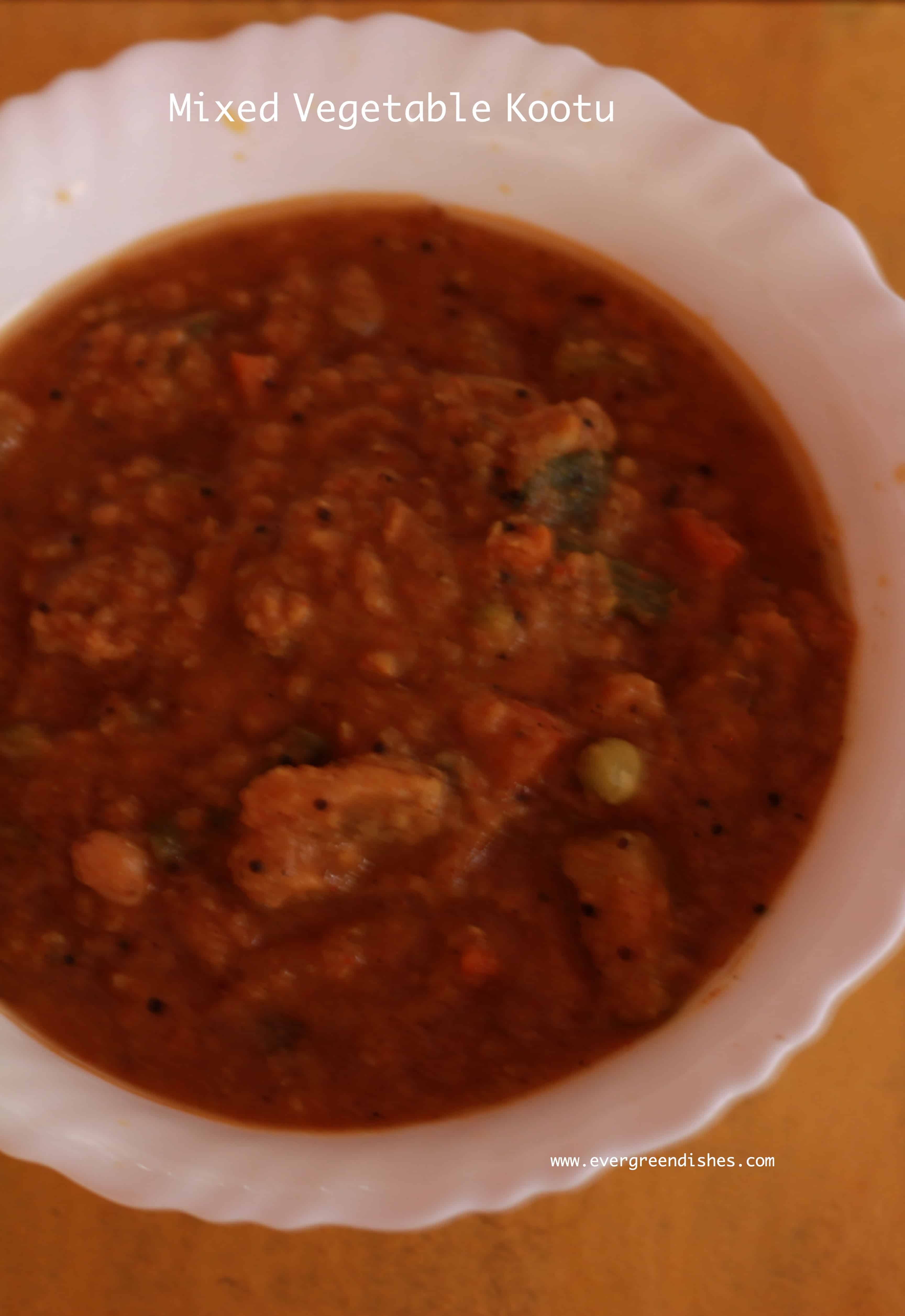
    Kootu is a tasty lentil curry with mixed vegetables cooked in a blend of spices. It is moderately thick in consistency than sambar. It is usually prepared during festivals and ceremonies. (more…)

  • Cabbage stir fry recipe | cabbage palya

    Cabbage stir fry recipe | cabbage palya

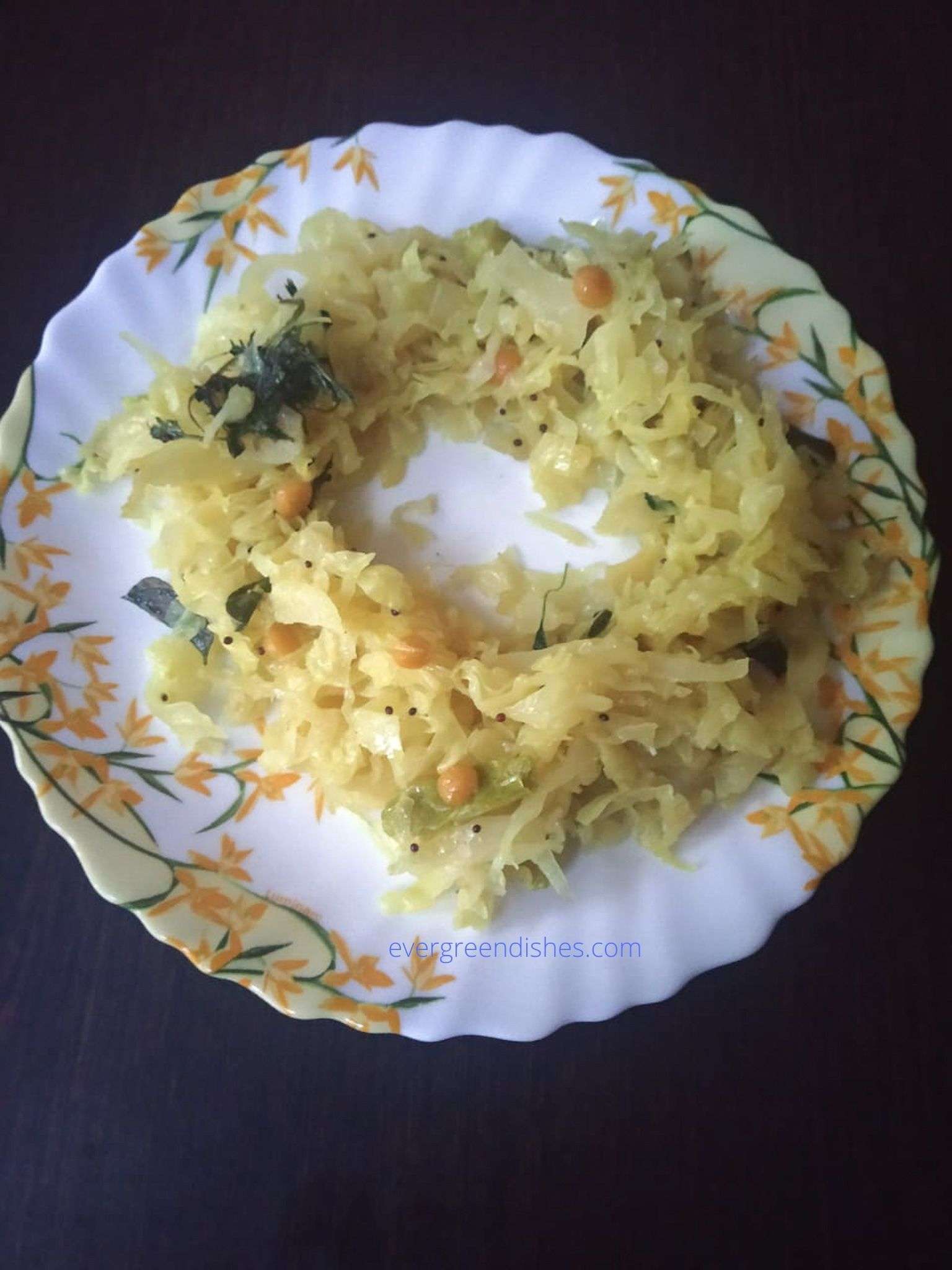
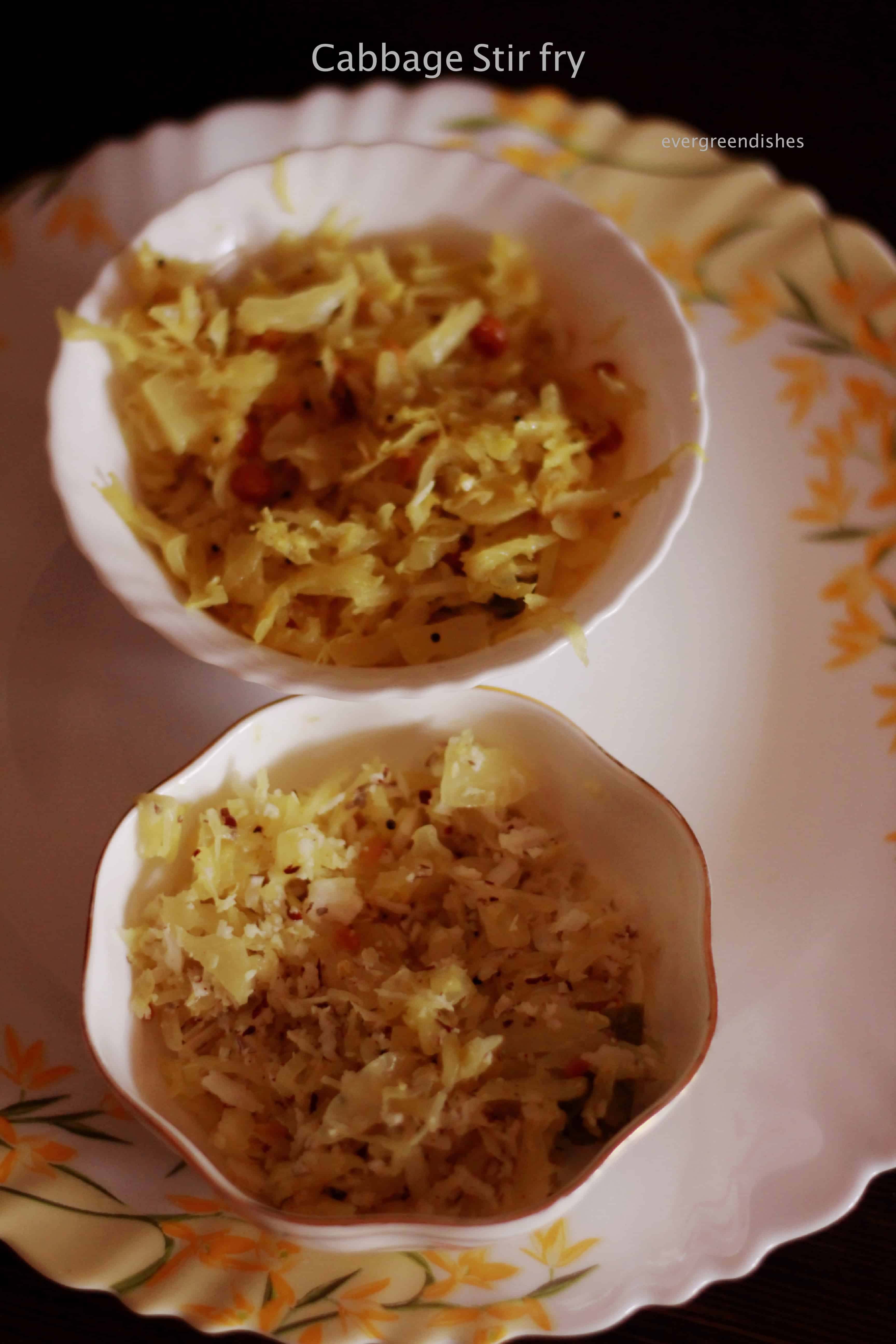
    Cabbage stir fry/ palya  is a simple yet flavourful accompaniment. It tastes good with rice and sambar or rasam.  It can also be served with chapati or roti.

    Cabbage is one of the veggies that I cook on a regular basis. It is flavourful and pairs well with  both rice and  chapati. It can be easily made with a few ingredients. The cabbage stir fry is also called as thoran, palya  and poriyal.

    Let’s know a bit of cabbage:

    It is one of the widely grown vegetables in the world. It is a low calorie, fiber rich leafy vegetable. It is the store house of phyto chemicals.

    Variety:

    Different varieties of cabbage are cultivated such as green, purple, red, savoy, bok-choy and napha cabbage.

    Benefits of using cabbage:

    Cabbage  helps in preventing cancer. It helps in reducing bad cholestrol. It aids in weight loss. It can be eaten both raw and cooked. It is a rich source of fibre. It helps prevent constipation. It boosts mental functions.

    Culinary usage:

    It can be used both in raw and cooked form. It is versatile vegetable which eases our cooking. From salads to stir fry, it is one of the veggies that most people consume. It is one of the key ingredients in Indo- Chinese cooking. Cabbage rice is easy to prepare and  tastes awesome. One can make fried snacks and serve with tea.

    Cabbage stir fry| poriyal |thoran| palya

    Ingredients:

    • 1 medium cabbage
    • 1 tablespoon oil
    • 1/2 teaspoon mustard seeds
    • 1/4 teaspoon turmeric powder
    • 1/4 teaspoon asafoetida
    • 1 teaspoon bengal gram
    • 1 teaspoon urad dal
    • 4 green chilly
    • a few curry leaves
    • salt to taste
    • 1 teaspoon milk
    • coriander for garnishing
    • 1/2 bowl fresh coconut

    Method:

    1. Cut the cabbage as finely as you can. The taste of the stir fry to an extent depends on how we cut it. Put it in water, rinse and put in a colander.
    2. Take oil in a pan, add mustard seeds, as it crackles, put bengal gram and urad dal to it. Let it get a golden colour. Add turmeric powder, asafoetida and green chilly to it.
    3. Add the cabbage to it. Put salt and milk. Milk helps in avoiding the smell cabbage emits at times. Since, no onion is used here that can elevate the taste, I add a little milk. Mix it, close a lid and let cook on slow flame.
    4. Once it tender and cooked, remove the lid and let cook for sometime. Sometimes, cabbage tends to get watery.
    5. Add coconut if using and garnish with fresh coriander.

    Take a tip:

    • Adding of coconut enhances the flavour and it is a typical South Indian style of cooking. I have not added here
    • One can use green peas along with cabbage. Add a handful of it along with cabbage and let it cook.
    • Do cut cabbage  as finely as possible.

    cabbage stir fry
    cabbage stir fry

    About the event:

    Cabbage stir fry recipe was posted in 2018, four years later, I have added one more picture to it.  I have also put the pinterest pic and made a few seo related changes.Sending it to Foodies_Redoing Old Post 76, where we edit out old posts with better pictures, text or both.

    cabbage stir fry | thoran | palya
    Evergreendishesdev

    Cabbage Stir Fry

    Cabbage Stir Fry is a simple and tasty accompaniment for any meal. It tastes good with rice as well as chapati.
    Prep Time 10 minutes
    Cook Time 15 minutes
    Total Time 25 minutes
    Course: lunch box, lunch ideas, Side Dish
    Cuisine: Indian, South Indian

    Ingredients
      

    • 1 medium size cabbage
    • 1 tablespoon oil
    • 1/2 teaspoon mustard seeds
    • 1/4 teaspoon turmeric powder
    • 1/4 teaspoon asafoetida
    • 1 teaspoon bengal gram
    • 1 teaspoon urad dal
    • 4 green chilly cut into pieces
    • few curry leaves
    • coriander for garnishing
    • 1/2 cup fresh coconut optional
    • 1 teaspoon milk
    • salt to taste

    Method
     

    1. Shred the cabbage as finely as you can. Put it in water and keep it aside. Put in a colander.
    2. Make seasoning in a pan, add oil, put the mustard seeds, as it splutters, add bengal and urad dal. Let it turn golden, add turmeric powder, asafoetida, green chilly and curry leaves.
    3. Put the shredded cabbage into it, add salt and milk. Mix and cover with a lid. Let cook on a slow flame.
    4. Once it is cooked, add coconut and heat it.
    5. Garnish with fresh coriander.

    Notes

    • Peas may be added to it.
    • Coconut may be avoided.
    • Adding of milk helps to remove the odour of cabbage that it has.

    cabbage stir fry
    cabbage stir fry

    If you ever make Cabbage Stir Fry recipe, take a picture and tag @foodiejayashree on Instagram or @evergreendishes on Facebook. Subscribe to get all updates in your inbox and an e-book for free!