Tag: south indian

  • How to make the perfect Idli and Dosa Batter

    How to make the perfect Idli and Dosa Batter

    ( Disclosure : As an Amazon Associate, I will get a small commission for qualifying purchases without no addition cost to you.)

    How to make the perfect Idli and Dosa Batter | Idli and Dosa batter recipe | healthy homemade batter 
     Make the perfect idli and dosa batter and store in the refrigerator for a hassle free morning ahead.

    An  idli and dosa batter in the refrigerator saves the day. It eases the morning dilemma and makes a filling breakfast for all. It is welcome on the busy days, when errands are many and time consuming. Idli and Dosa is a popular breakfast in South India. It is preferred in many households as it is soft and easy to digest. The fermenting  process breaks the nutrients and helps in proper absorption. Making the batter at home requires a little time and effort but it is worthwhile. 

    Today, most people buy a packet of batter and use it.  However, there is nothing like the homemade one. The batter made at home is according to the best known method with the purest ingredients that you get in the market without any preservatives. There is no scope for the deterioration in the quality of the batter. The yield you get is comparatively more than that you get in the market. Moreover, you are making a fresh batch of batter whenever you need it. You are in control of the ingredients you use and the quantity of batter you prepare. Thus the nutrition and taste are much better of the homemade batter.


    TIPS FOR A GOOD BATTER


    Keep in mind to use good quality ingredients. Use newly produced urad dal/

    Consistency of the idli batter is very important. It should neither be too thick nor thin. If the batter is too thin, the idlis will not be fluffy. If the batter is too thick, the idlis will turn out hard. The consistency should be thick but of pouring consistency.

    The question often arises when should the salt be added? Should it be added before fermentation or after the fermentation process ? Every person has his own views on this matter. Most of us use iodized salt and it hinders the fermentation process .I always add salt to the fermented batter and it works fine for me.

    Another point of consideration, urad dal is available in two forms as whole and broken. Many people prefer to use whole urad dal as the yield of batter is higher. But, in a few cases, I have seen them to be infested with black pests. I prefer to use the half broken urad dal.

    Rice is another important ingredient in the preparation of idli and dosa batter. If a recipe says only rice, use the regular sona masuri rice. You can also par boiled rice or ration rice. Do not use basmati rice or any other variety.

    Appliance :

    The  new mixer grinder is ideal choice of many as it comes as a multi-purpose appliance for batter, chutney, smoothie and juice. It is sturdy and can be used hands free, the unique locking system holds the ingredients properly. Tabletop Wet  Grinder is the other appliance which you can use to make idli and batter. It makes a good investment if you are making the batter regularly at home. The tabletop grinder is ideal for indian cooking.It gives a smooth batter and the quantity is much more. It saves time too. Today, the tabletop grinders have varied other features as atta kneader, spice mix drum and coconut scrapper. It can be useful appliance in the kitchen. I always make batter in the tabletop grinder though I feel a bit cumbersome at times. I love the texture of dosa and gundapongal made by this battter.

    Fermentation time:

    The time required for fermenting depends on the season. The ideal temperature for fermentation is between 25 degree Celsius to 32 degree Celsius.  During winter, the process is slow and needs twelve hours. During summer, the batter rises quickly in six to eight hours. It then turns sour if kept outside for a longer period.
    Today, I am sharing the recipe of Idli and Dosa Batter

    Idli Batter


    1) Idli batter using rice and urad dal.

    The idlis  made of rice and urad dal are soft and spongy. Parboiled rice is the essential ingredient here. Do not skip on it. You can use only parboiled rice but I found addition of a little sona masuri rice worked better.

    Ingredients:

    1 cup urad dal
    2 cup par boiled rice
    1 cup sona masoori rice
    ½ teaspoon fenugreek seed
    water for soaking and grinding
    salt as required

    Method:

    • Wash urad dal and soak it in water for four hours.
    • Wash the par boiled rice and soak it in hot water for six hours.
    • Wash the sona masoori rice and soak it in water for six hours. Put fenugreek seeds in it.
    • Grind both the varieties of rice together to a slightly coarse texture. Remove the batter in a bowl.
    • Grind urad dal to a fine paste.
    • Mix both of them together in a wide bowl. Keep the batter in a warm place to ferment for at least eight hours.
    • Next day, add salt to the batter and mix it in a clock-wise direction.

    Take the required quantity and keep the remaining in the refrigerator.

    2) Idli Batter using Idli Rawa

    Idli batter made using idli rawa is mostly made as it is easier. The idli rawa is easily available in the market.

    Ingredients :

    • 1 cup urad dal
    • 2 cup idli rawa
    • Water for grinding and soaking
    • Salt

    Method:

    • Wash urad dal and soak it for four hours.
    • Idli rawa can be soaked for half an hour.
    • Grind the urad dal to a fine paste with some water.
    • Once it is smooth, remove it in a wide bowl. The bowl should be a large one as the batter will rise on fermenting.
    • Mix the soaked semolina to it.
    • Keep it in a warm place. Ensure that it is kept properly as the batter rises on fermentation.
    • The next day, add salt to the batter and mix it well.

    Take the required quantity and keep the rest in the refrigerator.
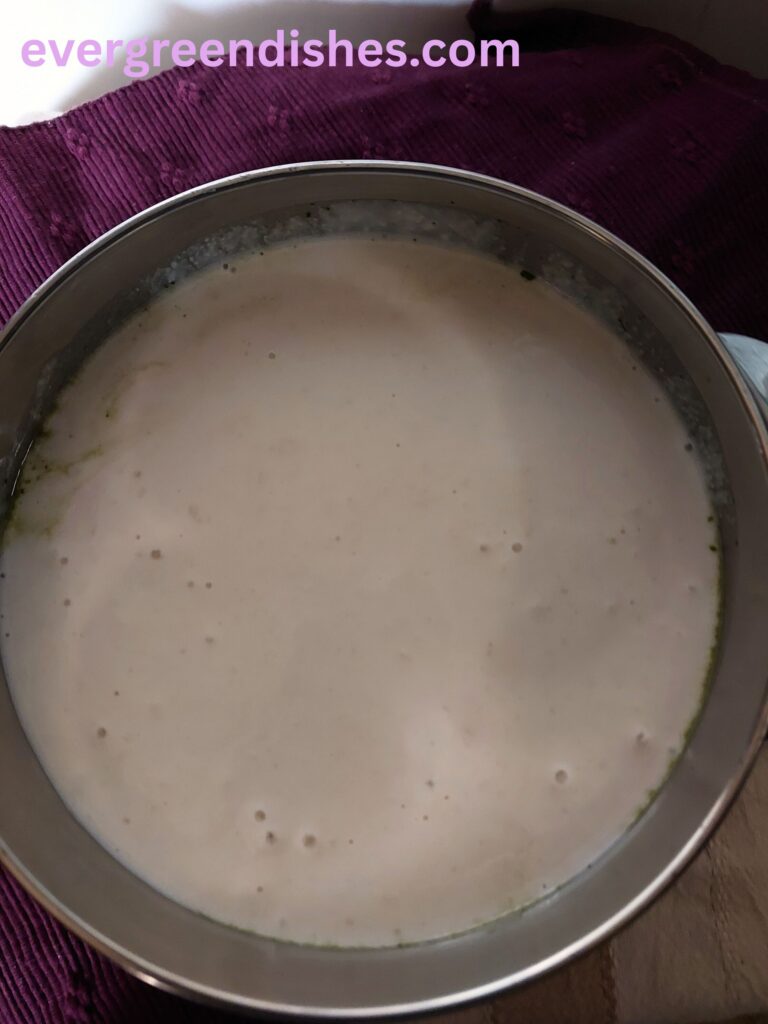
    Dosa Batter
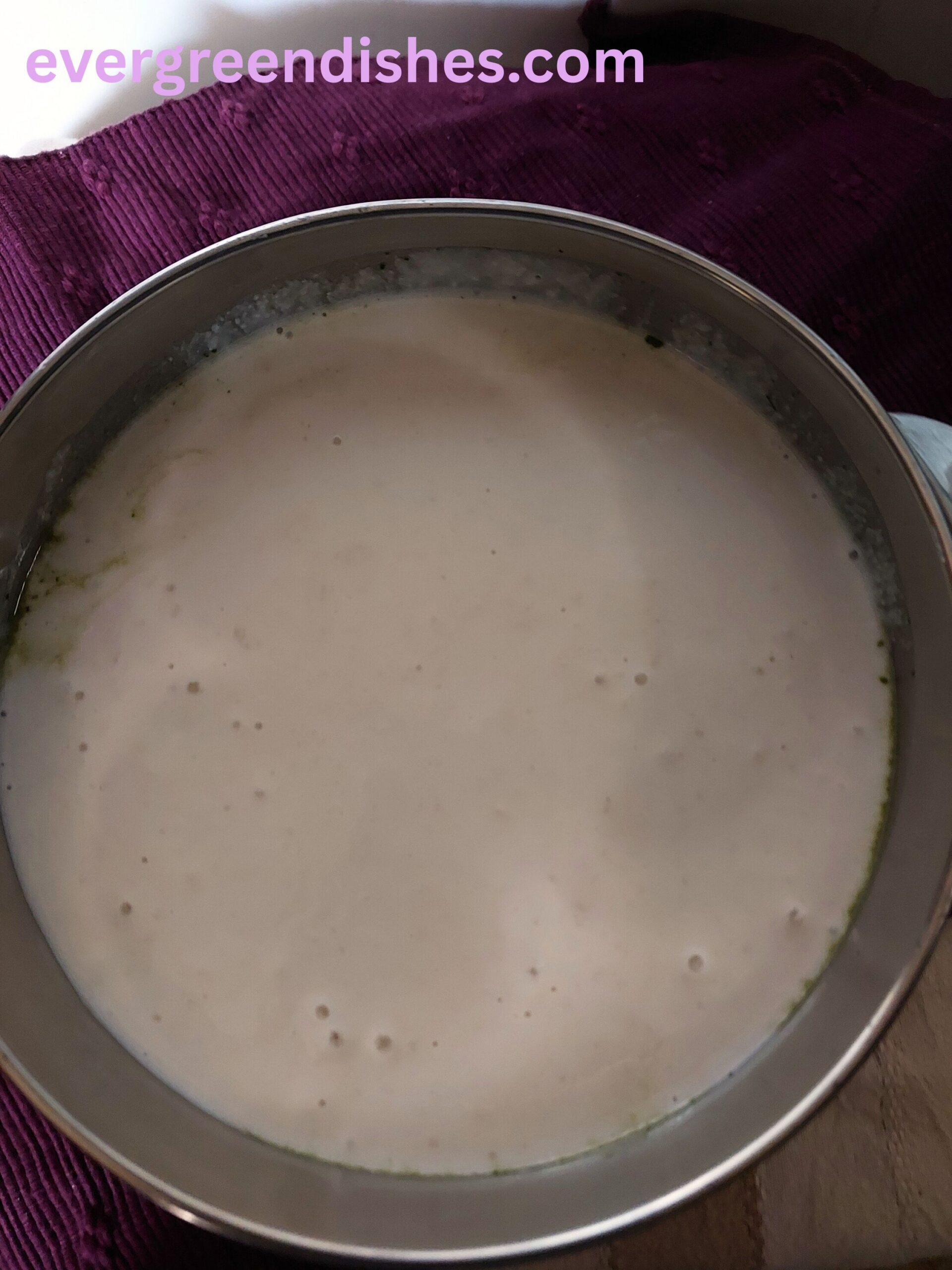
    A bowl of fermented dosa batter

    Dosa Batter

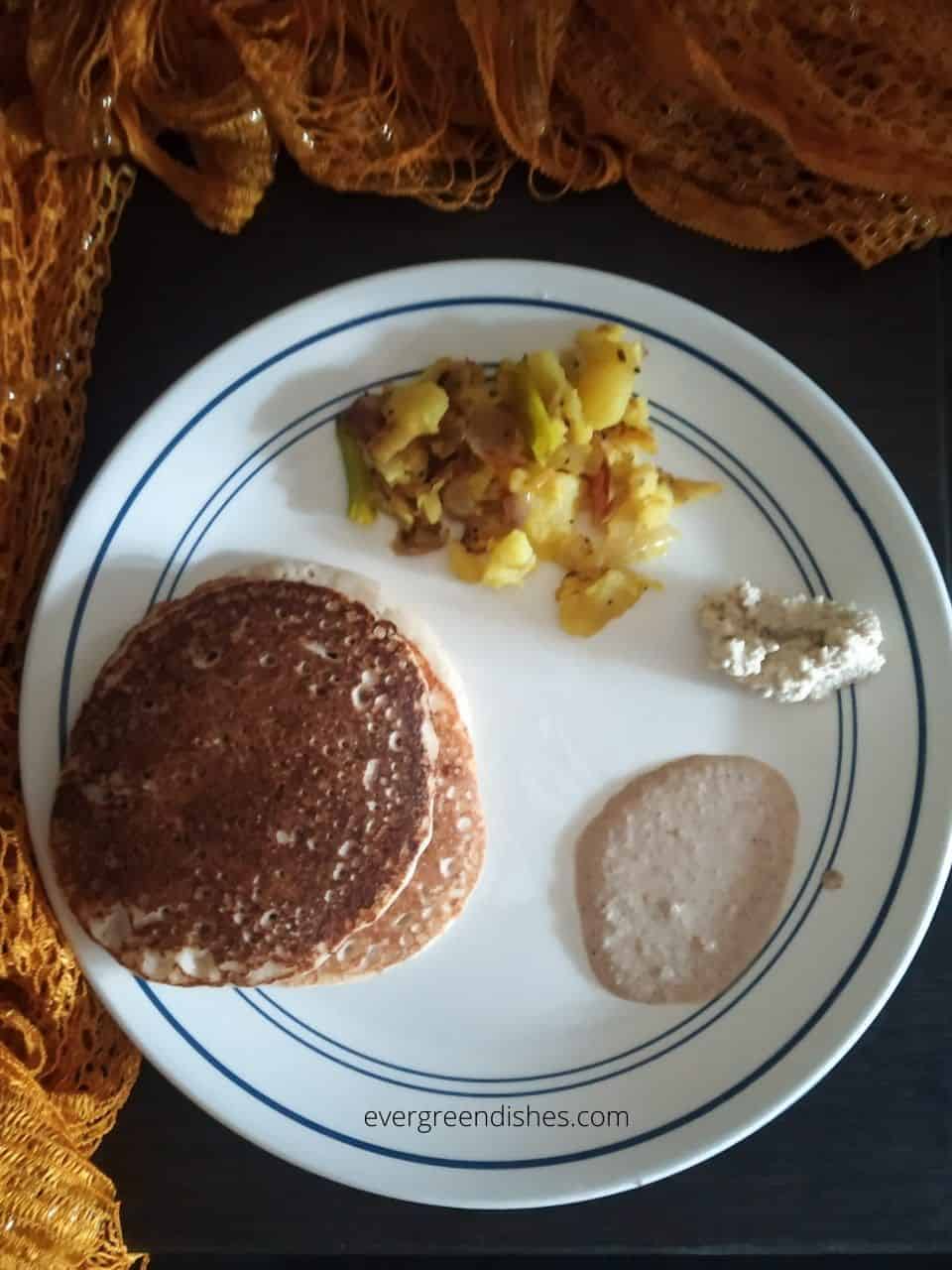
    Dosa batter can be used to make various recipes. You can make regular dosa, set dosa, gundapongal and uttapam. 

    Ingredients:

    • 4 cup raw rice
    • 1 cup urad dal
    • 1 teaspoon fenugreek

    ½ cup flattened rice (poha)

    Method :

    • Rinse the rice and soak it for six hours in sufficient quantity of water. Add fenugreek seeds to it.
    • In another bowl, wash urad dal and soak it for six hours.
    • Soak flattened rice for half an hour.
    • Grind the rice with some water. Remove it in a wide bowl.
    • Grind urad dal to a fine paste.Add poha to it and give a swirl Mix it with the rice batter.Cover and keep it in a warm place. Ensure that the vessel in which you have poured the batter is large enough as the batter rises on fermentation.
    • Next day, add salt and mix it well.

    Take the required quantity of batter and keep the rest in the refrigerator. This helps in preventing the batter from turning sour.

    Take a tip:


    • The batter needs to be of thick consistency to make set dosa. The dosa turns soft and spongy. But, make sure to cook it well on both sides with a lid closed over it.
    • To make thin crepes, the batter should not be of thick consistency. Add a little water and adjust it.
    • To make gundapongal, the batter needs to be of moderate consistency.

      I hope the post helps you to make a good idli and dosa batter at home.  Do you buy the batter or make it at home ? Do let me know in the comments below.  If you have any doubts, do  feel free to write below. Do not forget to follow @foodiejayashree on Instagram and @evergreendishes on Facebook. 


      ( Disclosure : As an Amazon Associate, I will get a small commission for qualifying purchases without no addition cost to you.)
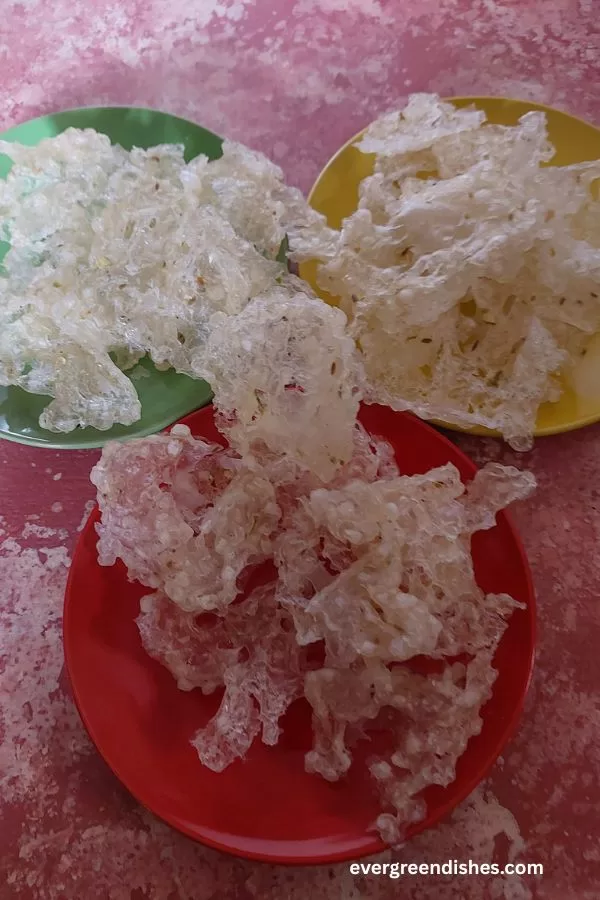


  • Sabudana Papad | Sago Fryums | Sabudana Sandige

    Sabudana Papad | Sago Fryums | Sabudana Sandige

    Jump to Recipe

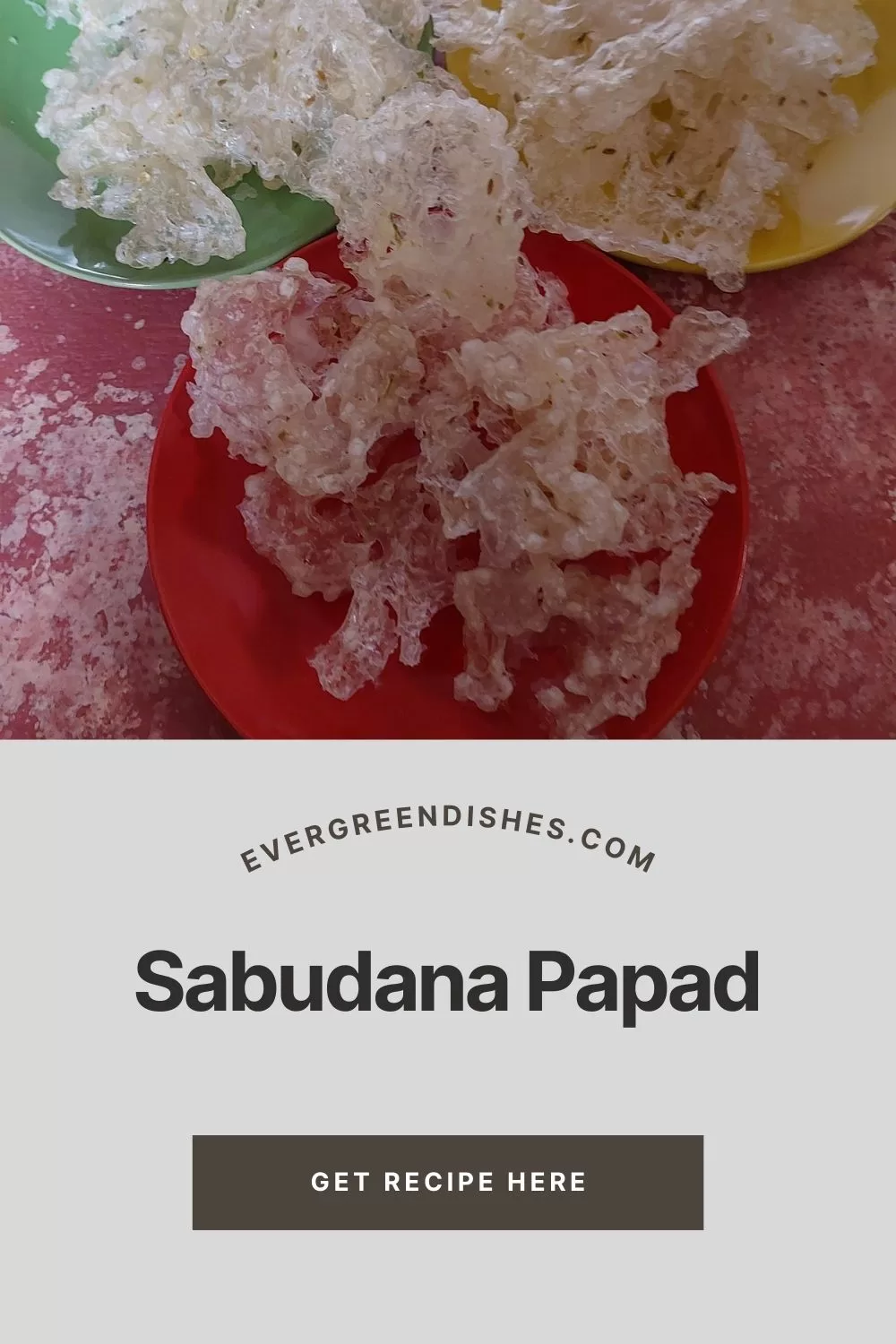
    Sabudana Papad is a popular summer treat from South India. It is made in large quantities and stored in air tight containers for further use. It is ideal to serve as an accompaniment with any meal. 

    Summer is the time we indulge in many activities as making papad and pickles. Papad and fryums should be sundried as they are stored throughout the year. The scorching heat makes them crisp and ready to eat in two or three days. The different kind of sundried recipes are rice fryums, poha papad, pumpkin sandige {aralu sandige} and majjige mensinakai (chillies in buttermilk).

    Today, I am sharing the recipe of Sabudana Sandige or Sago Papad as it is commonly called.

    Sabudana Papad, sabakki sandige, sabudani sandige are the different names associated with it. It is made from tapioca pearls. The sago or sabudana is commonly used during fasting in many parts of India. To make sabudna papad, we use the large ones. It is soaked and cooked with some spices and later dried in the sun. It is quite easy to make as the making does not involve much labour. One needs to keep an eye while boiling it, lest it gets burnt. 

    The sabudana sandige can be made as simple as you wish. You may add only salt and asafoetida. Otherwise with a little cumin tastes good, I love the taste of cumin along with some chillies put in it. The other options are addition of pepper powder, chilli powder, or garlic. I do not add any of these. 

    The method I follow requires one day. I soak sago pearls in the afternoon. By evening, it is bloomed. I cook it at night and keep it it closed in a warm place. Next day, early in the morning, I adjust the consistency and put them on the terrace. Later, by evening, they are semi-dried. I remove them and keep them in wide plates which help me to keep easily in the sun on the following days. I need to sun dry them for a couple more days as they are stored all year long.


    Let us get to the recipe of Sabudana Papad.

    Ingredients: 

    • ½ kilogram white sabudana ( large )
    • 4 + 8 + 8 cups water
    • 1 teaspoon cumin
    • 6 green chilly
    • 1 tablespoon curd
    • ½ teaspoon asafoetida

    Method : 

    Making of sabudana papad includes 6 steps :

    1. Soaking of sago 
    2. Boiling of the mixture
    3. Making of papad
    4. Drying of papad
    5. Storing of papad
    6. Frying 

    Let us discuss each step now.

    1. First, clean the sago pearls and wash them once. Soak it in four cups of water for five hours.
    2. Now, in a thick bottom pan, add the soaked sabudana along with eight cups of water. Put it to boil. Add cumin and asafoetida to it. Keep stirring. 
    3. It becomes a gelatinous like substance, transparent in colour. The sago pearls are soft and well cooked. Turn off the stove. You can put it after an hour. But I prefer to put it on the next day.
    4. Grind green chilly to a paste.
    5. Put it into the boiled mixture along with a spoon of curd.
    6. Use clean plastic sheets to make papad.
    7. Smear some oil on the sheet. With a wide spoon, take a spoonful and pout it on the sheet, spread a little with the back of the spoon. 
    8. Repeat by putting them in a row. Continue to the next row and so on. 
    9. Allow it to dry in the sun. 
    10. By evening, only one side is dried. We need to put them carefully on a plate and dry the other side the following day.
    11. Once they are dry on both sides, you need to keep them in the sunlight for a few days.
    12. Later, store them in a clean, dry container.
    13. To fry, heat oil in a pan. Take a few sun dried sago papad and slowly fry them. 

    Take a tip : 

    • Collect all materials before you start doing the work. You need sheets which are dry and clean. Also, not to forget the bricks or tiles to hold them as you lay them in the sun. Food cooked at home takes care of all these things, isn’t it ? 
    • Adjust the consistency if it is too thick by adding some water to it.
    • Green chilly may be avoided. You can do plain ones only with cumin.

    Other sabudana recipes I have shared earlier are :

    Jump to Recipe Print Recipe

    Evergreendishesdev

    Sabudana Papad

    5 from 2 votes
    Sabudana Papad is a popular sun dried munchies from South India. It is made and stored in airtight containers.
    Course: accompaniment
    Cuisine: karnataka

    Ingredients
      

    • ½ kilogram white sabudana large
    • 4 + 8 + 8 cups water
    • 1 teaspoon cumin
    • 6 green chilly
    • 1 tablespoon curd
    • ½ teaspoon asafoetida
    • 1 teaspoon cumin

    Equipment

    • 1 large utensil for soaking
    • 1 lid to close
    • 1 thick bottom pan with lid
    • 6 large plates
    • 1 ladle
    • 1 tablespoon
    • 1 teaspoon
    • clean plastic sheets
    • bricks or something similar as weights

    Method
     

    1. First, clean the sago pearls and wash them once. Soak it in four cups of water for five hours.
    2. Now, in a thick bottom pan, add the soaked sabudana along with eight cups of water. Put it to boil. Add cumin and asafoetida to it. Keep stirring.
    3. It becomes a gelatinous like substance, transparent in colour. The sago pearls are soft and well cooked. Turn off the stove. You can put it after an hour. But I prefer to put it on the next day.
    4. Grind green chilly to a paste.
    5. Put it into the boiled mixture along with a spoon of curd.
    6. Use clean plastic sheets to make papad.
    7. Smear some oil on the sheet. With a wide spoon, take a spoonful and pout it on the sheet, spread a little with the back of the spoon.
    8. Repeat by putting them in a row. Continue to the next row and so on.
    9. Allow it to dry in the sun.
    10. By evening, only one side is dried. We need to put them carefully on a plate and dry the other side the following day.
    11. Once they are dry on both sides, you need to keep them in the sunlight for a few days.
    12. Later, store them in a clean, dry container.
    13. To fry, heat oil in a pan. Take a few sun dried sago papad and slowly fry them.

    Notes

    Collect all materials before you start doing the work. You need sheets which are dry and clean. Also, not to forget the bricks or tiles to hold them as you lay them in the sun. Food cooked at home takes care of all these things, isn’t it ? 
    Adjust the consistency if it is too thick by adding some water to it.
    Green chilly may be avoided. You can do plain ones only with cumin.


    If you have liked this post, do share it with your family and friends.. Follow @foodiejayashree on Instagram  and @evergreendishes on Facebook.

    Pin it for later :


    Sabudana Papad
    sabudana papad

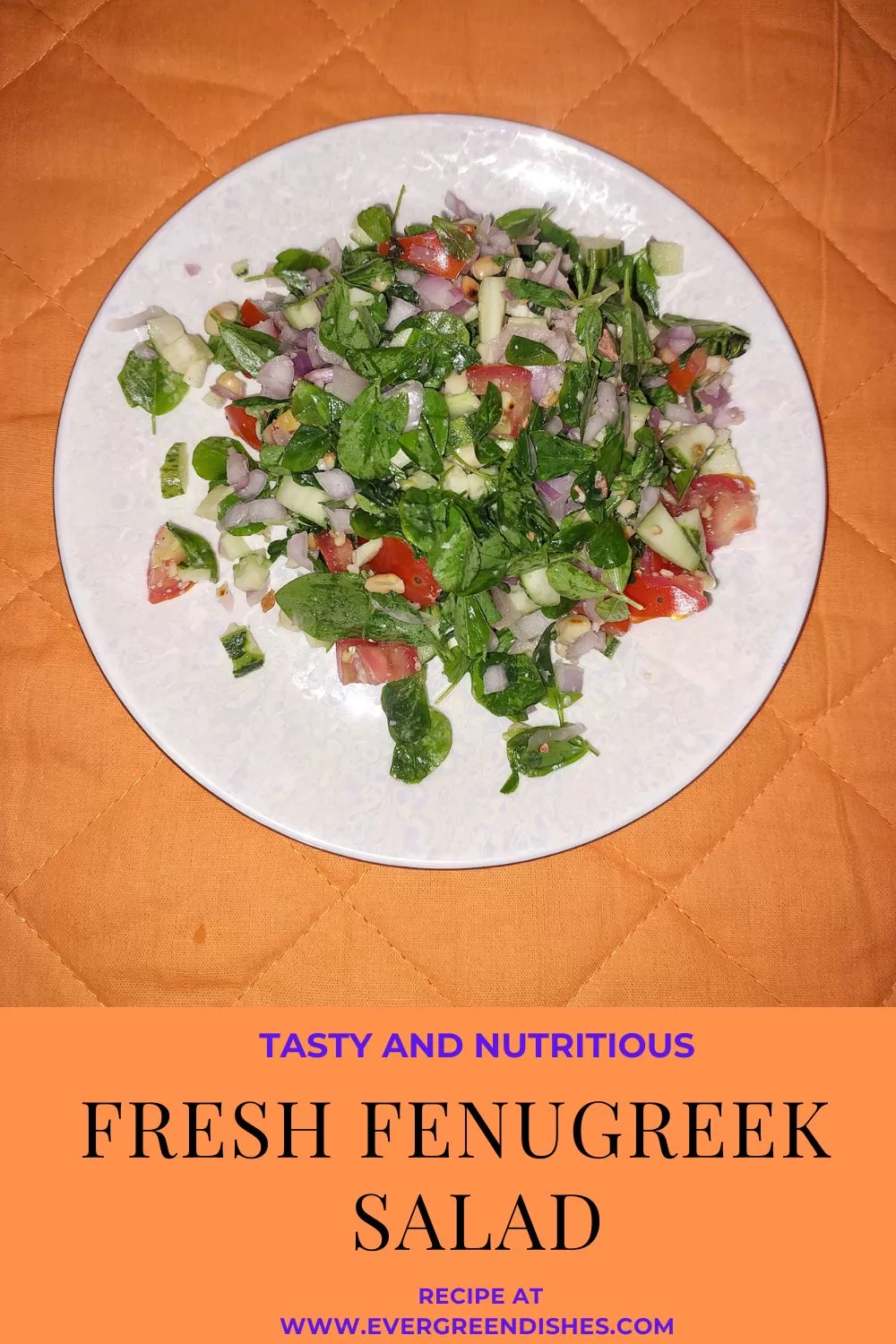
  • Fresh Fenugreek salad | Hasi menthe kosambri

    Fresh Fenugreek salad | Hasi menthe kosambri

    Jump to Recipe

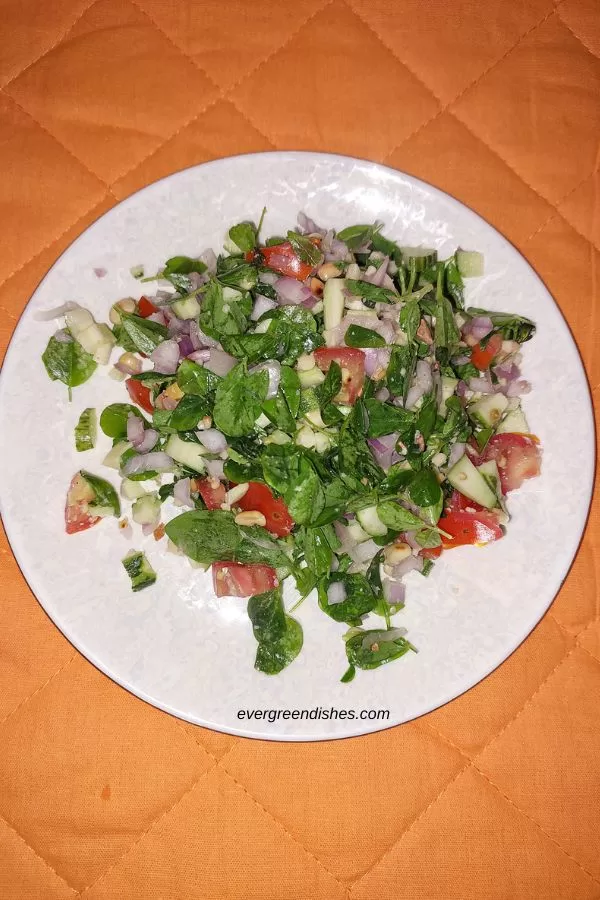
    Fresh Fenugreek salad is a simple, healthy and tasty salad. It pairs well with jowar roti. It is commonly called as Hasi Menthe Kosambri in Kannada.

    Hasi Menthe is the Kannada word which translates as raw fenugreek leaves and kosambri refers to a salad.

    In North Karnataka, a variety of dishes are served with jowar roti. Chutney, palya, kossambri and not mention the various podis. It is one such food the people of the region enjoy. Menthe kosambri is a simple, rustic yet tasty to the core. Now, one need not wonder if the recipe is of any use. If you do not make jowar roti, you can serve it with chaapthi. The best thing is it can be eaten as a snack too, add a few cherry tomatoes, top with nuts and a salad bowl packed with nutrients is ready.

    I was amazed when I read the numerous benefits of fenugreek leaves. It is rich in nutrients as Folic acid, Vitamin A, B, K and C. It also contains riboflavin and niacin. The fibre helps in flushing out the toxins from the body. It also helps in treating gastritis and indigestion. Fenugreek leaves are one of the richest source of  Vitamin K.  It is heart friendly. It is rich in antioxidants. They help in proper functioning of the kidney. It helps in controlling cholesterol which may result in stroke, high blood pressure and heart failure.

    Ways to serve the salad :

    • It tastes great with millet flat bread. It is quite common to pair it with jowar roti along with a sabzi and chutney.
    • It pairs well with khichdi along with pickle
    • It can also be used as a side dish with any meal.


    fresh fenugreek salad
    platter of green salad

    What goes in the salad ?

    • Fenugreek leaves : Use fresh leaves. Use only the leaves, discard the stem. Use whole leaves in salad. Wash them and put them in a colander for sometime. The long fenugreek leaves are ideal for salads.
    • Onion : Chop it finely.
    • Tomato : chop it finely.
    • Cucumber : wash well and cut into bits.
    • Peanuts : Roast and discard the skin. Grind coarsely.
    • Salt : to taste
    • Pepper powder: for that spicy kick
    • lemon juice : to balance all flavours

    How to assemble :

    Put all the ingredients in a bowl and toss them

    You may add cherry tomatoes, grated cheese and a splash of olive oil. Be creative with your choices.


    Other  kind of salad recipes :

    kidney bean and corn salad
    kidney bean and corn salad

    watermelon rind salad
    watermelon rind salad


    Print Recipe

    fresh fenugreek salad
    Evergreendishesdev

    Fresh Fenugreek Salad

    5 from 8 votes
    Fenugreek leaves salad is a simple, easy to make salad. It tastes good with jowar roti.
    Prep Time 15 minutes
    Total Time 15 minutes
    Servings: 4 people
    Course: lunch, mid-day snack
    Cuisine: Indian, karnataka

    Ingredients
      

    • 1 cup fenugreek leaves
    • 1 onion
    • 1 cucumber
    • 1 tomato
    • salt
    • pepper powder
    • lemon juice
    • 1 teaspoon roasted peanut coarsely powdered

    Equipment

    • 4 small bowl
    • 1 big bowl
    • 1 serving spoon
    • 1 colander

    Method
     

    1. Wash the greens and keep it aside. Refer tips below on using it.
    2. Cut onion, cucumber and tomato into small pieces.
    3. In a bowl add the ingredients and toss them.
    4. Serve it fresh.

    Notes

    Use fresh fenugreek leaves. Use only the leaves, discard the stems. Whole leaves do not taste bitter, hence whole leaves are used after washing and drying them on a colander.
    Add salt just before serving.
    Do not skip on lemon juice, it lends a good taste to it. 

    About the event :

    Sending this to, ” Greens on My Plate” at Shhh Cooking Secretly. The theme for the month of August was was suggested by Seema Doraiswamy Sriram. Seema has used Asian greens to make a tasty  Gailan Stirfry.

    My partner was Aruna Saras Chandra. As the salad fits the theme, I requested to give the ingreedients accordingly. She suggested pepper and lemon juice. Aruna made Gongura Pachadi with cumin and fenugreek seed, the secret ingredients I had given

    shhh cooking secretly

    About the event :

    An old post was updated with better content. Sending it to Foodies_Redoing Old Post No 142, a fortnightly event. I am joining after a break for sometime.

    Pin it for later :

    fresh fenugreek salad
    fresh fenugreek salad                                                                                                                                                                              If you ever make Fresh Fenugreek Salad in your kitchen, take a picture and tag @foodiejayashree on Instagram or @evergreendishes on Facebook. Subscribe to get all updates in your inbox and an e-book for free!


  • Menthe Gojju | Sprouted Fenugreek Curry

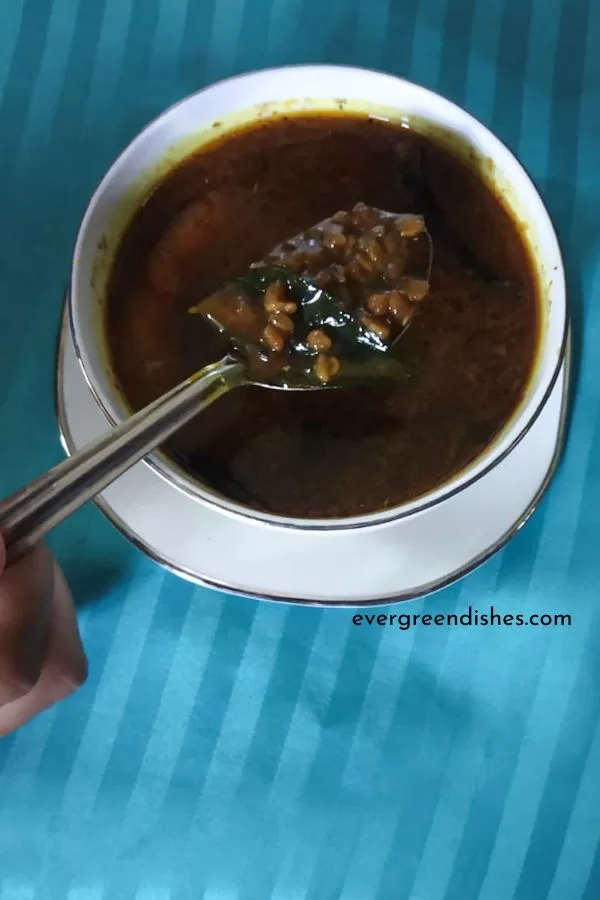
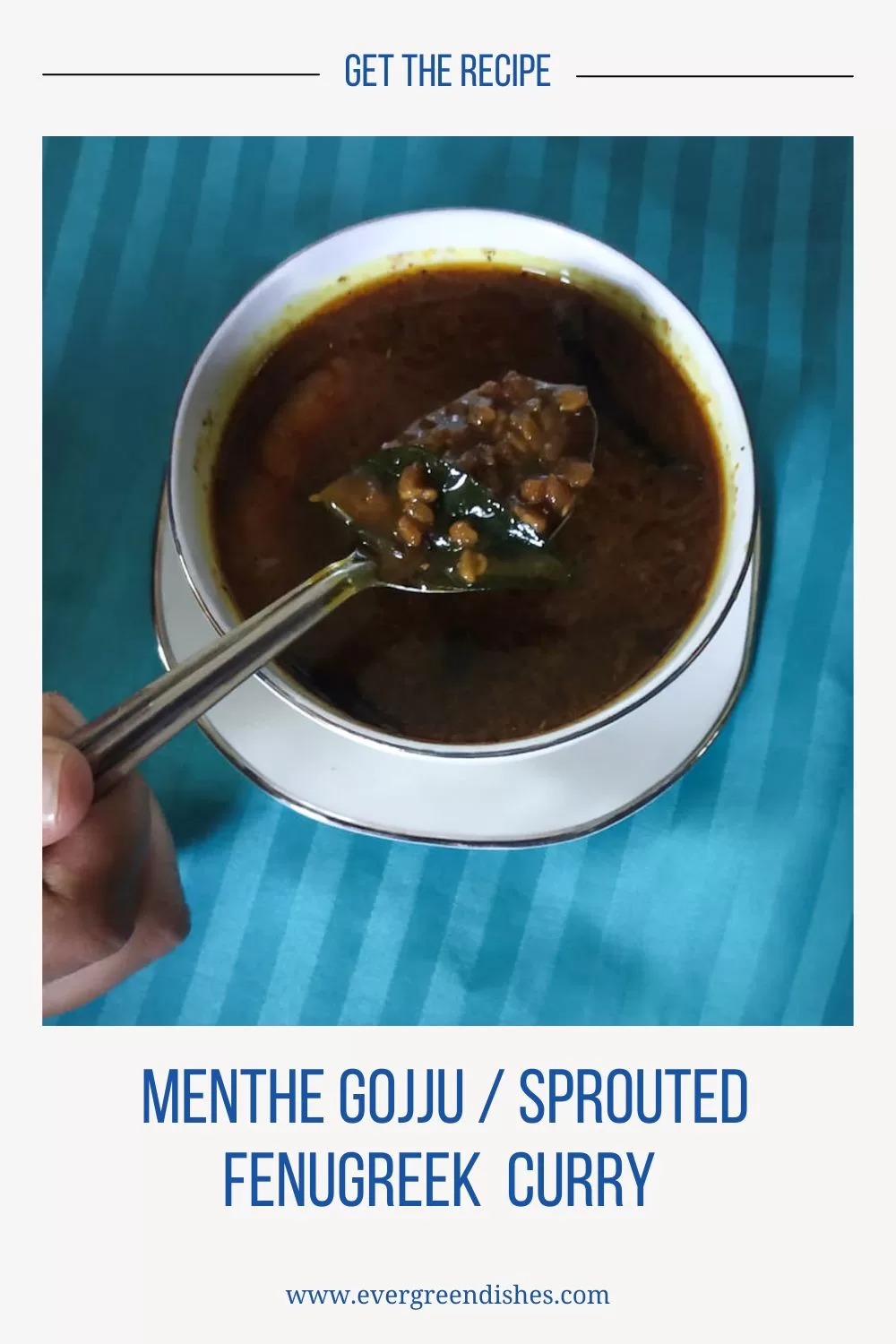
    Menthe Gojju | Sprouted Fenugreek Curry

    Jump to Recipe 

    Menthe Gojju / Sprouted Fenugreek Curry is a tasty side dish from Karrnataka. It makes a good accompaniment with hot steamed rice. You can pair it with chapathi, idli and dosa too. 

    Today, I am sharing another side dish which I had scribbled in my diary many years back. Fenugreek is commonly used as a spice in cooking but sometimes as the star ingredient as used here. Do give a try to this recipe and let me know how it was. 

    What is fenugreek ? 

    Fenugreek is a tiny, hard mustard colured seed found in every Indian kitchen. It belongs to the annual plant family, Fabaceae. It is commonly known as menthe in kannada, methi dana in hindi and meti in Telugu. Both the leaves and seeds are used in culinary purposes. Fresh leaves are used in dal, curries and parathhas. The dry fenugreek seeds are dry roasted and used in pickles and spice mix as sambar powder and rasam powder. It is a good  medicine known since ages. 


    Benefits of Fenugreek seeds:

    Fenugreek are tiny, hard, mustard coloured seeds found in every kitchen. it is one of the essential ingredients in most spice mix. Earthy and mildly bitter in taste, it gives a distinctive taste to the dishes. It is packed with nutrients and plays an important role as a medicine. It is rich in iron, manganese, magnesium and fibre. 

    • It aids in digestion. It helps to reduce indigestion, flatulence and upset tummy.
    • Fenugreek seeds helps in reducing the blood sugar levels. 
    • The antioxidants present in fenugreek have anti-inflammatory properties.
    • Regular consumption of soaked methi seeds or dried powder helps in relieving meenstual cramps.
    • Regular consumption helps the level of testosterone and estrogen in men and women respectively.

    Today, I am sharing a South Indian side dish made with sprouted fenugreek seeds. The sprouted seeds blend well by giving a sweet, spicy, tangy and tart taste to the dish.  It makes a good accompaniment with hot. steamed rice. You can also use it with chapathi, phulka, idli or dosa. 

    menthe gojju
    menthe gojju

    A few other related posts which might interest you are : Lemon Gojju, Orange Peel Chutney, 

    How to make sprouted fenugreek seeds ?

    Soak a cup of seeds in water for five to six hours. You can keep it oveernight. In the morning, put the seeds in a colander and after sometime, tie them in a thin muslin and  keep it in a closed container in a warm place for a eight hours. The seeds will sprout depending on the climatic condition. It may take two days during winter.  Using sprouted fenugreek seed, enhances the nutritional quotient and the bitterness of the fenugreek is largely reduced.

    Menthe Gojju / Sprouted Fenugreek Curry 

    Ingredients : 

    • 1/2 cup sprouted methi
    • 2 teaspoon coconut oil
    • 1/4 teaspoon mustard
    • 1/4 teaspoon cumin
    • 2 green chilli
    • 1/4 teaspoon turmeric powder
    • 1/4 teaspoon asafoetida
    • 2 green chilli
    • 1/4 cup water
    • 1 teaspoon tamarind paste
    • 1/2 teaspoon rasam powder
    • 1/2 teaspoon chilli powder
    • 1.5  teaspoon jaggery powder
    • 1/2 teaspoon rice flour
    • 1 tablespoon water

    Method :

    1.  Initially, make the sprouted methi seeds as mentioned above.
    2. Take coconut oil in a pan, add mustard seeds. As it splutters, put cumin, asafoetida, turmeric powder, green chilli and curry leaves.
    3. Put the sprouted methi seeds to it. Sprinkle a little water and allow it to cook for sometime.  It cooks quickly in three /four minutes.
    4. Add tamarind paste, rasam powder, chilly powder, salt and jaggery to it. Put some water (about three-fourth cup) to it
    5. Make a slurry of rice flour with a little water. Put it to the dish. It helps in giving a good consistency to the dish. 
    6. Allow it to cook for two minutes.
    7. Menthe Gojju is ready to serve.

    Take a tip:

    • Tamarind pulp can be used here. Soak a lemon sized ball of tamarind i water for ten minutes. Extract the pulp and use it.
    • You can use any other variety of oil. 
    Print Recipe

    Menthe Gojju

    5 from 6 votes
    Menthe Gojju / Sprouted Fenugreek Curry is a flavoursome side dish from South India. It pairs well with hot, steamed rice. It is spicy, sweet, tangy and tart.
    Course: Side Dish
    Cuisine: south india

    Ingredients
      

    • 1/2 cup sprouted methi
    • 2 teaspoon coconut oil
    • 1/4 teaspoon mustard
    • 1/4 teaspoon cumin
    • 2 green chilli
    • 1/4 teaspoon turmeric powder
    • 1/4 teaspoon asafoetida
    • 2 green chilli
    • 1/4 cup water
    • 1 teaspoon tamarind paste
    • 1/2 teaspoon rasam powder
    • 1/2 teaspoon chilli powder
    • 1.5 teaspoon jaggery powder
    • 1/2 teaspoon rice flour
    • 1 tablespoon water

    Method
     

    1. Initially, make the sprouted methi seeds as mentioned above.
    2. Take coconut oil in a pan, add mustard seeds. As it splutters, put cumin, asafoetida, turmeric powder, green chilli and curry leaves.
    3. Put the sprouted methi seeds to it. Sprinkle a little water and allow it to cook for sometime.  It cooks quickly in three /four minutes.
    4. Add tamarind paste, rasam powder, chilly powder, salt and jaggery to it. Put some water (about three-fourth cup) to it
    5. Make a slurry of rice flour with a little water. Put it to the dish. It helps in giving a good consistency to the dish.
    6. Allow it to cook for two minutes.
    7. Menthe Gojju is ready to serve.

    Notes

    Tamarind pulp can be used here. Soak a lemon sized ball of tamarind i water for ten minutes. Extract the pulp and use it.

    Pin it for later : 

    menthe gojju
    A bowl of menthe gojju made with sprouted fenugreek seeds

    If you ever make Menthe Gojju, do take a picture and tag @foodiejayashree on Instagram or @evergreendishes on Facebook. Subscribe to get all updates and an e-book for free in your inbox ! 

  • Watermelon Rind Dosa | Watermelon Rind Recipes

    Watermelon Rind Dosa | Watermelon Rind Recipes

    Jump to RecipePrint Recipe


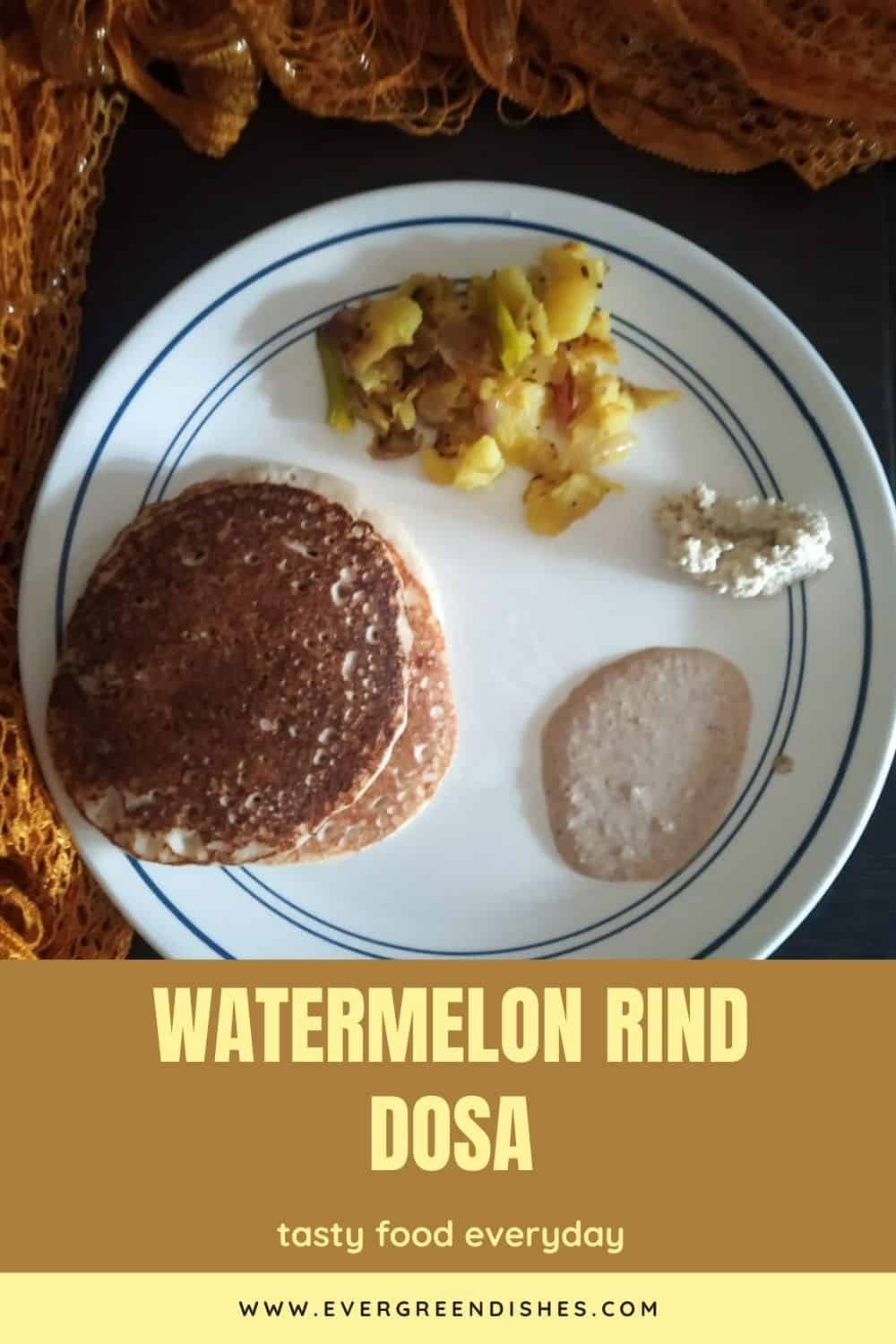
    Watermelon Rind Dosa is a delicious and unique breakfast option. It is soft, spongy and porous.  It is vegan and gluten free  and as the name suggests watermelon rind is used in it.

    Considering the fact, watermelon rind is healthier, I don’t like to waste it. The rind is the white part of the watermelon. It is rich in fibre and aids in digestion.  Usually, I use it in a smoothie or a salad.  Of late, I have another recipe and I make this dosa also. The dosa is made slightly thick and cooked only on one side. Like the regular dosa, this needs to be fermented. This  recipe is adopted from Vinaya Prasad’s blog  Vegetarian Culinary Delights. I am active in a couple of groups on Facebook and this group is one of them. I like the enthusiasm and patience with which she runs the group. Recently, the group reached the 15000 milestone mark. 

    Watermelon Rind Dosa Recipe 

    Ingredients: 

     1. 25 cup  rice
    1/2 cup  urad dal
    1/4 cup flattened rice (poha) 
    1/2 cup   watermelon rind
    1/2 cup  fresh coconut
    1/2 teaspoon methi seeds
    oil for roasting
    water for soaking and grinding
    salt to taste


    Method:

    1. Soak rice, urad dal and methi for 4 hours.
    2. Soak flattened rice (poha) for half an hour.
    3. Cut the rind into small pieces. 
    4. Grind the soaked rice and lentil mixture to a fine batter, remove it in a bowl. Now, grind the rind pieces, soaked poha and  coconut, mix it into the batter. Add salt to it, cover and keep it in a warm place to ferment overnight or 5-6 hours.
    5. Next day, mix the batter, heat a skillet. Smear a little oil if using the cast iron. pour a ladleful of batter, spread a little oil, cover with a lid   and allow to cook. There is no need to cook the other side for this dosa. Once it is cooked, remove and serve hot with coconut chutney. Repeat for the rest of the batter. 


    Take a tip: 

    1. The dosa is made as a set dosa.  The consistency of the batter should be moderately thick.
    2. Use any kind of skillet, iron or non-stick, cover with a lid and cook. There is no need to flip  to the other side. 


    watermelon rind dosa
    watermelon rind dosa


    My family enjoys dosa any day.  Rava dosa is usually prepared during weekends. A dosa batter is handy and used in different ways. You can make masala dosa, uttapam or gundapongal. The other kind of dosa are ragi dosa, jowar dosa, set dosa, neer dosa and mixed flour dosa. 

    watermelon rind dosa

    Watermelon Rind Dosa

    Watermelon rind dosa is soft, spongy dosa. It is ideal to prepare it for breakfast.
    Prep Time 4 hours
    Cook Time 30 minutes
    Fermentation time 6 hours
    Total Time 10 hours 30 minutes
    Course: Breakfast
    Cuisine: Indian, South Indian

    Ingredients
      

    • 25 cup rice
    • 1/2 cup urad dal
    • 1/4 cup flattened rice poha
    • 1/2 cup watermelon rind
    • 1/2 cup fresh coconut
    • 1/2 teaspoon methi seeds
    • oil for roasting
    • water for soaking and grinding
    • salt to taste

    Method
     

    1. Soak rice, urad dal and methi for 4 hours.
    2. Soak flattened rice (poha) for half an hour.
    3. Cut the rind into small pieces.
    4. Grind the soaked rice and lentil mixture to a fine batter, remove it in a bowl. Now, grind the rind pieces, soaked poha and  coconut, mix it into the batter. Add salt to it, cover and keep it in a warm place to ferment overnight or 5-6 hours.
    5. Next day, mix the batter, heat a skillet. Smear a little oil if using the cast iron. pour a ladleful of batter, spread a little oil, cover with a lid   and allow to cook. There is no need to cook the other side for this dosa. Once it is cooked, remove and serve hot with coconut chutney. Repeat for the rest of the batter.

    Notes

    The dosa is made as a set dosa.  The consistency of the batter should be moderately thick.
    Use any kind of skillet, iron or non-stick, cover with a lid and cook. There is no need to flip  to the other side. 

    Pin it for later:

    Watermelon rind dosa is soft, supple and porous. It is a good way to use the rind  of the fruit which is usually discarded. Watermelon rind is rich in fibre and minerals. Give a try to this variation of dosa.
    watermelon rind dosa

    If you ever make this dosa recipe or any of my dishes,  do take a picture and tag @foodiejayashree on Instagram or @evergreendishes on Facebook or Twitter. I will be glad to see your creation and share it further. Let’s be connected, do follow on social media platforms. Until next time, let’s stay connected.  Subscribe to get all updates in your inbox. Happy Cooking ! 


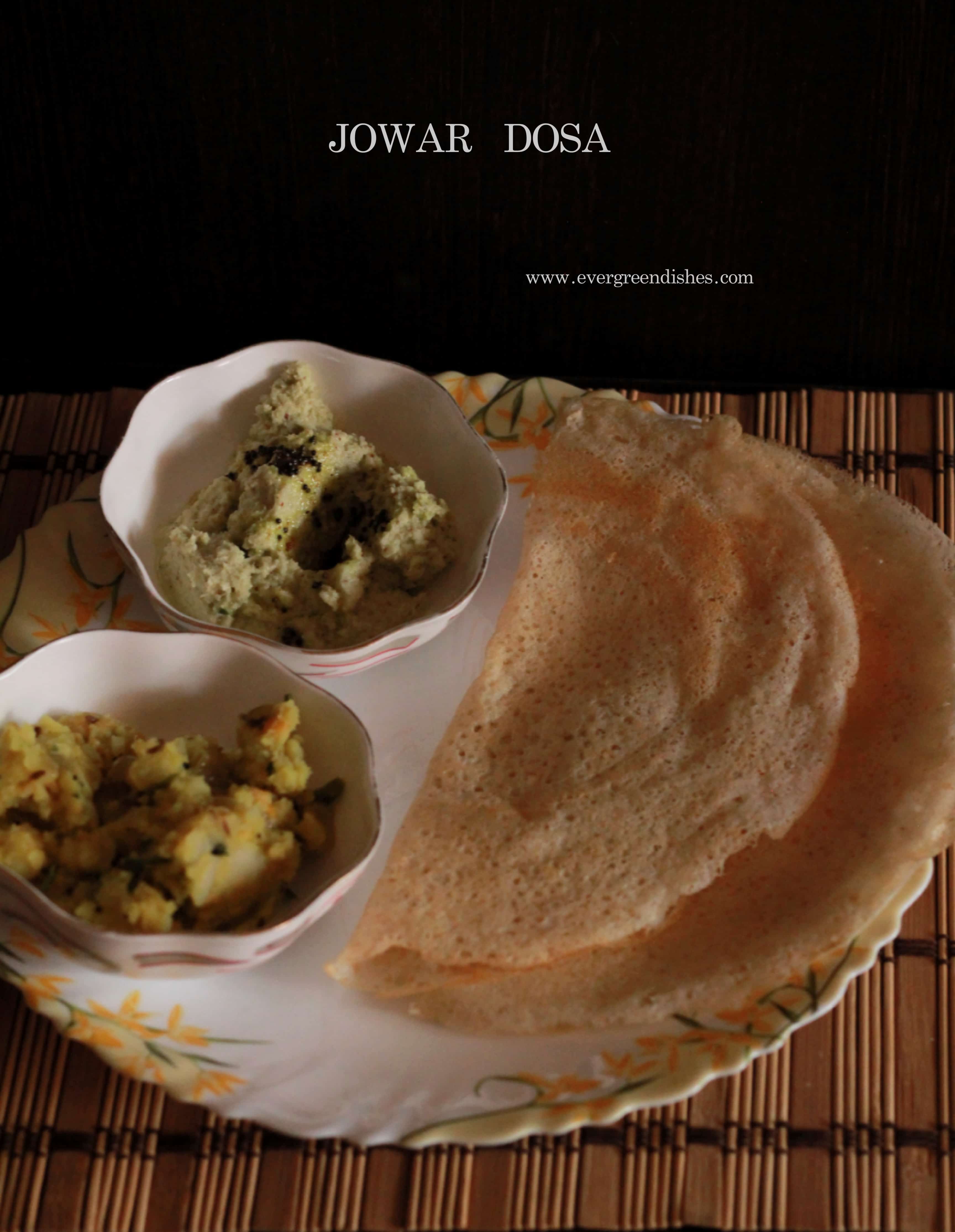
  • How to make jowar dosa

    How to make jowar dosa

    Jowar dosa | healthy recipe | south indian cooking || breakfast recipe

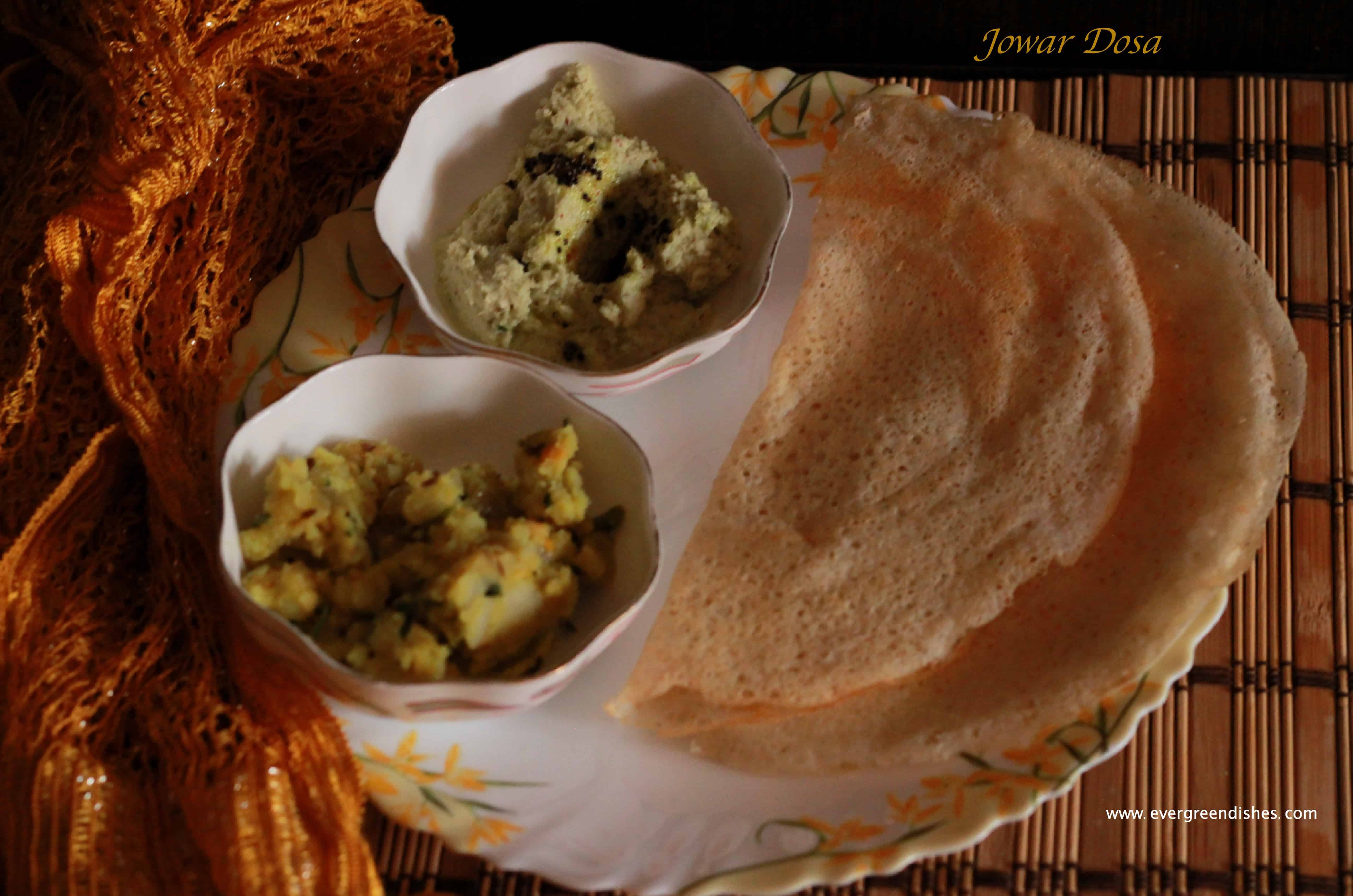
    Jowar dosa is a healthy twist to the usual one. It is tasty and can be made both crispy and soft. Serve it with chutney and potato sabzi for a good breakfast. Jowar is the Indian name for Sorghum. It is also known as Indian millet, Great millet, Durra and milo. In India, the other names by which it is known are jola, chholam or jonna.

    Dosa is one of the favourites of South Indian. A dosa batter in the refrigerator really saves our day ! It is on the weekly menu, and not to mention the many variety that they prepare. Rice is one of the essential ingredients in it, but now different versions are being made. We are more conscious of what we consume, thus dosa with millets has made their way in most kitchens.

    Jowar dosa is a healthy twist to the regular one and I am loving it. The taste is not similar but I can vouch that there is not much difference too. Infact, we are loving this variety of millets dosa. It is ideal for breakfast, evening snack or dinner. It is vegan and glutenfree.

    What are millets? 

    Millets are coarse grains and a repository of high fibre, protein, mineral and vitamins. They are widely grown as cereal crops for fodder and human food. Some millets are fox tail, sorghum, pearl millet, little millet, proso millet and barnyard millet. 

    Can one make the same quantity of batter as the regular dosa?

    I prefer not to make as the taste varies once the batter gets sour. The regular dosa tastes good.It is better to make these in lesser quantity as for a single use. 

    A few other dosa variety that I often prepare Neer Dosa, Rava Dosa,

    You can pair them with coconut chutney, green chutney or  Red Onion chutney 

    Jowar dosa
    Jowar dosa

    Here whole grains of jowar are used, they need to be soaked for a longer time. It is advisable to soak before you go to bed at night, but the urad dal, soak it for two hours only. Grind them to a batter and allow to ferment. Thus, pre-planning is essential.

    Make a small quantity and preferably finish the batter on the same day. If it remains, finish it the next day, I am doubtful how good it tastes as the usual dosa batter that we use.

    Since millet is used here, unlike the regular dosa, these need to be cooked on both sides.

    Jowar Dosa

    Ingredients:                       

     (Measurement used 1 cup = 150 ml)

    • 1 cup jowar
    • 1 cup rice
    • 1 cup urad dal
    • 1 teaspoon fenugreek
    • water for soaking
    • salt
    • oil for roasting

    Method:

    1. Wash and soak the jowar in water for six to eight hours.
    2. Soak rice separately with methi in it.
    3. Soak urad dal for two hours.
    4. Grind the jowar at first, add rice to it later and let them blend.
    5. After sometime, put urad dal to it. Put some water to the batter if needed. I preferably use the soaked water.
    6. Grind all of them to a smooth batter.
    7. Remove the batter in a wide bowl.
    8. Allow it to ferment for seven to eight hours.
    9. Add salt to the batter, mix it.
    10. Take some batter in another bowl.
    11. Heat a skillet.
    12. Take a spoonful of batter, pour it on the skillet and spread it inside out. A thin crepe can be made.
    13. Drizzle oil, once it roasted, turn it to the other side.
    14. Serve hot with chutney. Potato sabzi too tastes good.
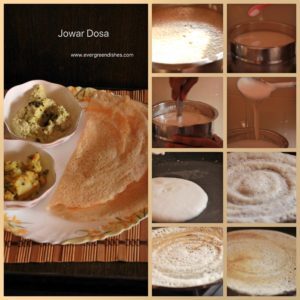
    making of jowar dosa
    making of jowar dosa

    Pin it for later: 

    Jowar dosa
    Jowar dosa


    Jowar dosa
    Evergreendishesdev

    Jowar Dosa

    Jowar dosa is tasty and healthy twist to the usual dosa. It can be served for breakfast, lunch, evening snack or dinner. 
    Prep Time 15 minutes
    Cook Time 30 minutes
    Fermentation time 6 hours
    Total Time 45 minutes
    Servings: 20 dosas
    Course: Breakfast, evening snacks, glutenfree
    Cuisine: karnataka, south india

    Ingredients
      

    • 1 cup jowar 1 cup = 150 ml
    • 1 cup raw rice
    • 1 cup urad dal
    • 1 teaspoon methi
    • water for grinding
    • salt
    • oil for roasting

    Method
     

    1. Wash and soak the jowar in water for eight hours.
    2. Soak rice separately with methi in it.
    3. Soak urad dal for two hours.
    4. While grinding, at first, put only the jowar in the machine. After sometime, put rice. Add some water. Then later, add urad dal. Grind all of them together to a smooth batter. 
    5. Remove the batter in a big bowl, allow to ferment for six to eight hours.
    6. Add salt to it.
    7. Mix the batter and take some in a small bowl. Heat a skillet, pour a ladle full of batter and spread it inside out to a thin crepe. Drizzle some oil.
    8. Allow to cook. Flip it to the other side. After two minutes, remove and serve.

    Notes

    • Make a small quantity of batter and finish it within a day or two. 

    This post is part of the theme #TimeForDoasatHW at Healthy Wellthy Cuisines group. Here are the other dosa varieties by co-bloggers

    If you have liked this post, do share it further.  Do pin it for future reference.

    If you ever make this recipe, do take a picture and tag me @foodiejayashree on Instagram, I will be glad to see your creation.

    Follow evergreendishes on Facebook, Twitter, Pinterest and Instagram, let’s be connected.

    Subscribe to get all updates and a book of handy hints for free!

    Check out my e-books

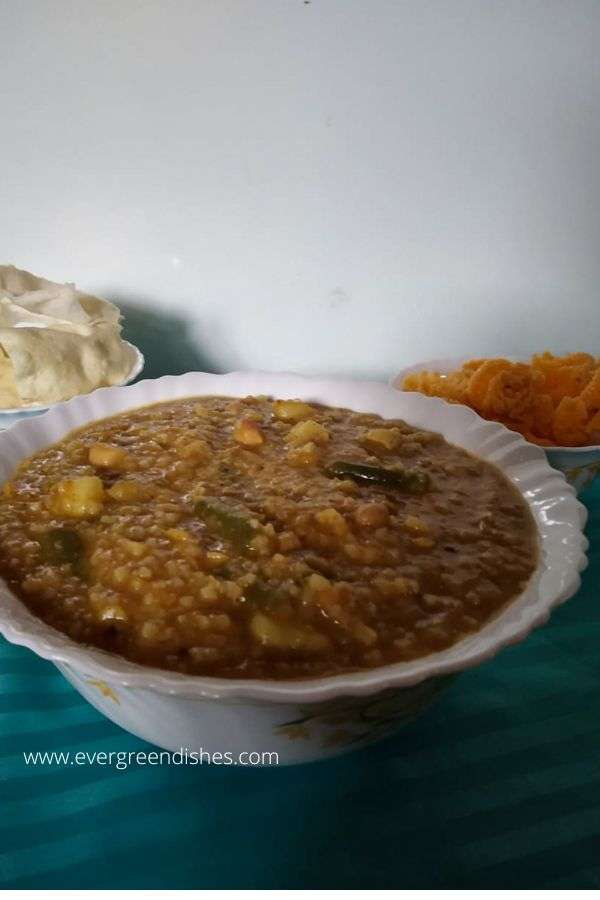
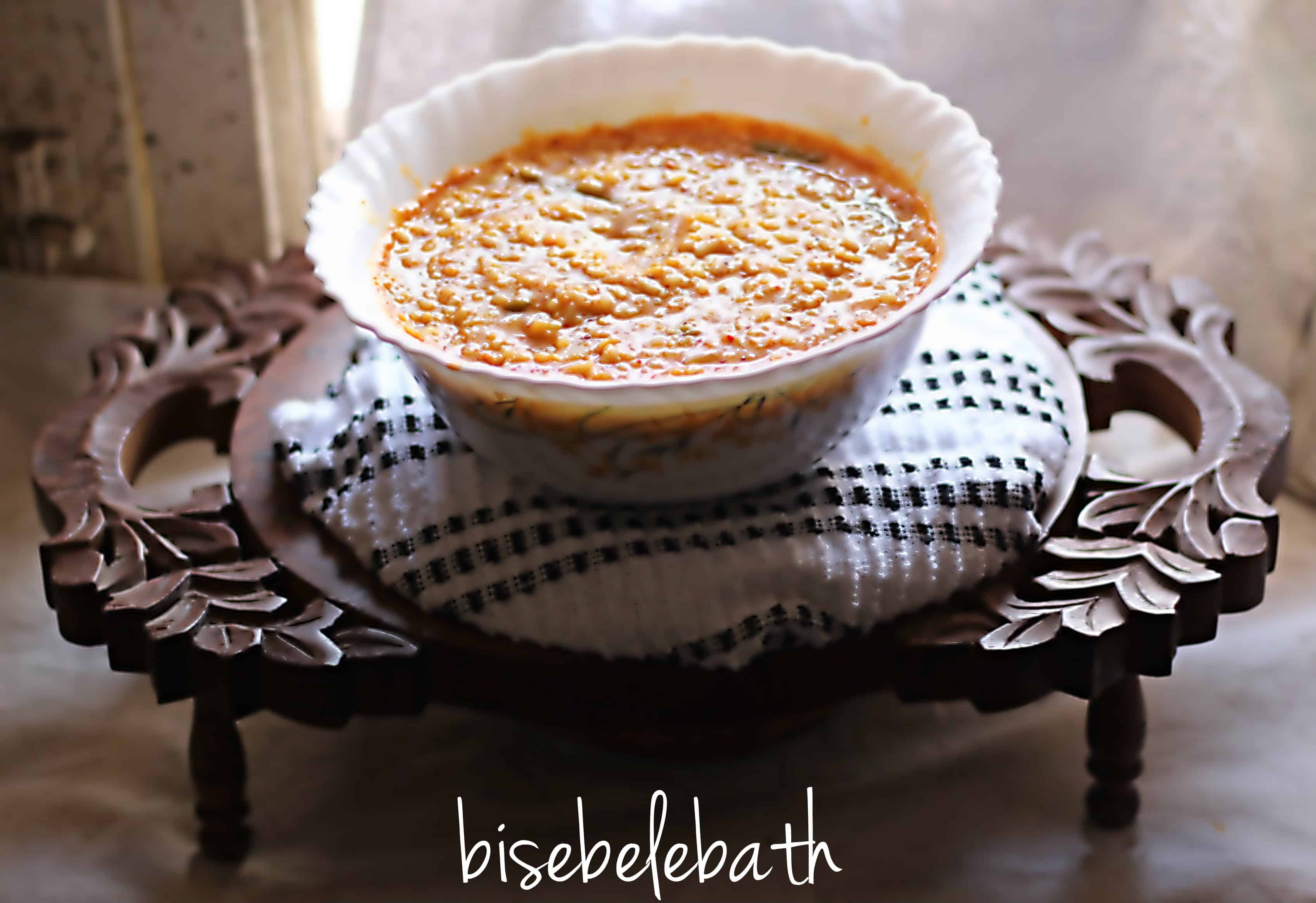
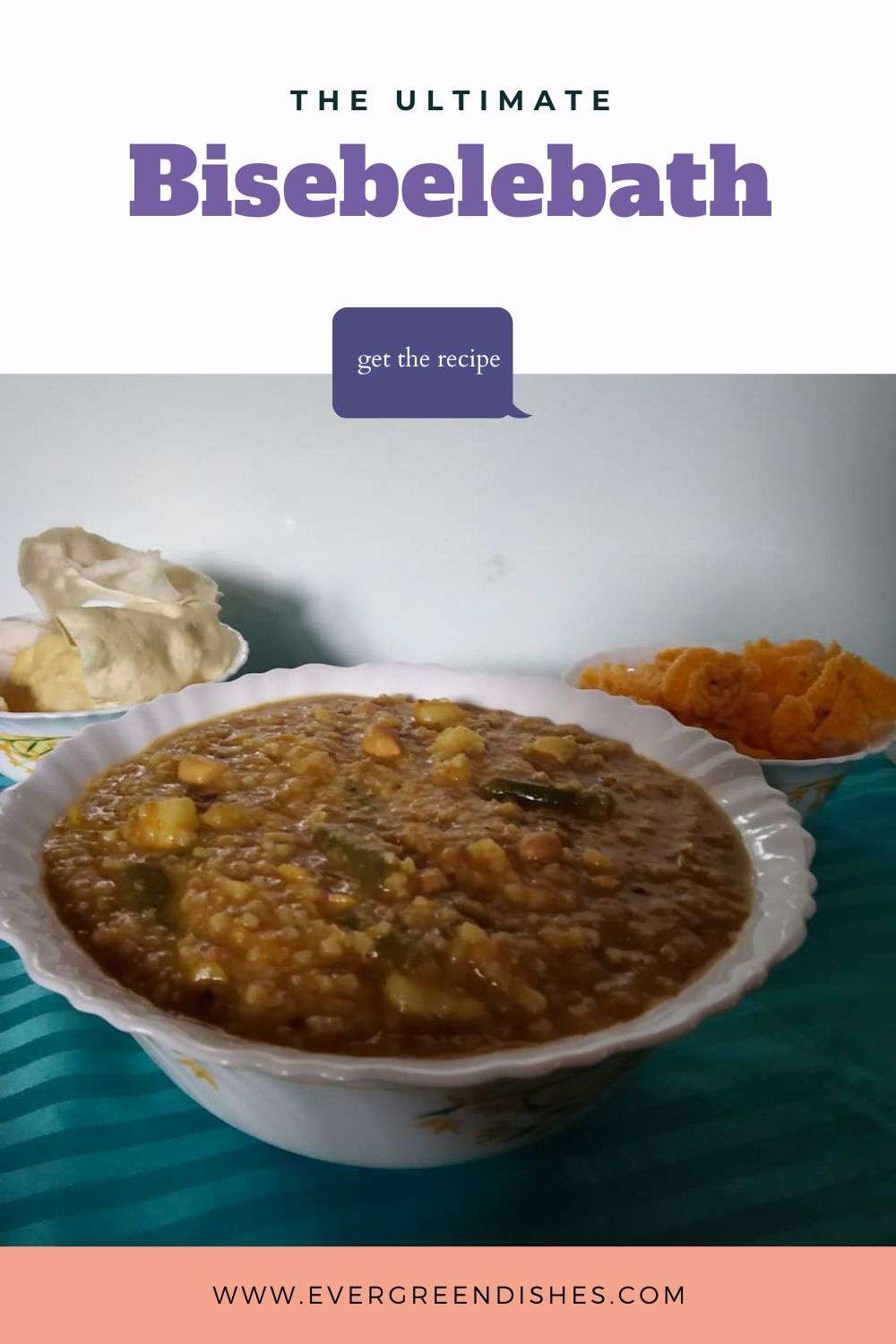
  • Bisebelebath | Karnataka cuisine

    Bisebelebath | Karnataka cuisine

    Bisebelebath is a popular dish from Karnataka cuisine. It is a rice and lentil based dish cooked with vegetables and a different spice miix. It is usually prepared during festivities.
    It’s that time of the year, when the weather is wonderful and our heart calls out to enjoy. It’s the season of fun and frolic. Time to celebrate with colours, yes it’s Holi.  To mark this ocassion I present  to  all of you, a dish very close dish to my heart, Bisebelebath.  It is a one pot meal which can be relished on many occasions. A rice savoury with lentils and vegetables makes a good meal with some papad.

    bisebelebath

    Bisebelebath is a kannada phrase which translates to Hot Lentil Rice. Bisi is the kannada term for hot. Bele translates to lentil and bath is a rice dish. It is a one pot, hearty meal. You can serve it potato chips and fryums. Curd based salads also pair well with it.

    At home, bisebelebath is usually prepared during lunch. But, one can serve it for breakfast, brunch or dinner. The traditional method of cooking is generally followed by me. It is more tastier and makes a delicious meal. But, it does require more time. One can allow it to cook on slow flame while doing other chores.

    Over to the recipe of Bisebelebath 

    • Preparation time: 15 minutes
    • Cook time: 1 hour
    • Total time: 1hour 15 minutes
    • Serves: 4
    • Cuisine: South India
    • Type: Main Course


    Ingredients:                           Measurement: 1cup = 150 ml

    • 1 cup tuvar dal (arhar dal)
    • 1.5 cup rice
    • 20 french beans
    • 1 potato
    • 1 bowl green peas
    • lemon sized ball tamarind
    • 4 teaspoon spice mix
    • salt to taste
    • 12-15 cups water
    • ¼ teaspoon turmeric powder

    For the seasoning:

    • 2 tablespoon oil
    • 2 tablespoon ghee
    • ½ teaspoon mustard seeds
    • 1 teaspoon chana dal
    • 1 teaspoon urad dal
    • ¼  teaspoon turmeric powder
    • 1/3 teaspoon asafetida
    • 4 cashew broken into pieces (optional)
    • curry leaves

    For the spice mix:

    • ¼ cup urad dal
    • ¼ cup bengal gram
    • 1 cup coriander seeds
    • 1 tsp cumin
    • 1 tsp methi
    • 1 tsp pepper corns
    • ½ cup desiccated coconut
    • ½ inch cinnamon stick
    • 2 cloves
    • 8-10 red chilly
    • 2 teaspoon oil


    Method :

    1. Cut the potatoes into big chunks and put them in water. Remove the string of the beans and break them into medium sized pieces ( around an inch).
    2. Soak tamarind in water and keep it aside.
    3. Take a thick bottom pan, put water and keep it to boil. Wash tur dal and put into boiling water. Add a little turmeric powder to it.
    4. Let it cook on a low flame. In the mean time, make the spice mix. Roast each one separately with a little oil. Once it cools, grind them together to a powder. Keep it aside.
    5. Once the tur dal is half-cooked, put beans into it.
    6. A little later put the green peas.
    7. After five minutes, wash the rice and put into it. Give a stir. Adjust the level of water accordingly.
    8. Lastly, put the potato pieces.
    9. Allow them to cook well. The rice should not only be cooked but mushy also.
    10.  Extract the pulp from the soaked tamarind.
    11.  Put spice mix in the tamarind pulp and pour it over  the rice dal mixture.
    12.  Mix well and let cook.
    13.  Make seasoning in another pan. Take oil and ghee mixture, put mustard seeds, as it splutters add bengal gram, urad dal, cashew pieces and curry leaves. Finally, put asafetida and turmeric powder, pour it over the dish and give astir
    14. Serve bisebelebath with fryums and papads. Ghee may be  added over it.


    Take a tip;

    • Adjust spice mix according to your taste.
    • Groundnuts may be used instead of green peas.
    • Other vegetables as carrot and capsicum may be added. You can use varied vegetables but keep a check on the quantity used. 
    • Keeping a lid over the vessel fastens cooking.

    Evergreendishesdev

    Bisebelebath

    Bisebelebath is a popular dish from Karnataka. A rice variety which is cooked along with lentils and vegetables makes a good food anytime.
    Prep Time 15 minutes
    Cook Time 1 hour
    Total Time 1 hour 15 minutes
    Servings: 4 people
    Course: Main Course
    Cuisine: Indian

    Ingredients
      

    • 1 cup tuvar dal
    • 1.5 cup rice
    • 20 french beans
    • 1 potato
    • 1 cup green peas
    • 1 lemon sized ball tamarind
    • salt to taste
    • 12-15 cups water
    • 1/4 tsp turmeric powder
    • 4 tsp spice mix
    For the seasoning:
    • 2 tbsp oil
    • 2 tbsp ghee
    • 1/2 tsp mustard seeds
    • 1/3 tsp asafoetida
    • 1/4 tsp turmeric powder
    • 1 tsp bengal gram
    • 1 tsp urad dal
    • 4 cashewnuts broken into pieces
    • a few curry leaves
    For the spice mix:
    • 1/4 cup bengal gram
    • 1/4 cup urad dal
    • 1 cup coriander seeds
    • 1 tsp cumin
    • 1 tsp pepper
    • 1 tsp methi
    • 2 cloves
    • 1/2 inch cinnamon
    • 1/2 cup dessicated coconut
    • 8-10 red chilly
    • 2 tsp oil

    Method
     

    1. Cut the potatoes into big chunks and put it in water. String the beans and break them into long pieces (about an inch)
    2. Soak tamarind in water.
    3. Take a thick bottom pan, put water and keep it to boil. Wash tur dal and put it into it along with a pinch of turmeric powder.
    4. Once tur dal is half cooked, put beans into it. A little later put green peas into it.
    5. In the mean time, prepare the spice mix. Roast each ingredient seperately with a little water. Grind it to a powder and keep it aside.
    6. After five minutes, wash the rice and put into it. Adjust the level of water accordingly.
    7. Lastly, put potatoes.
    8. Allow it to cook for sometime. Keep stirring in between. It should not only be well cooked but mushy. Put salt to it.
    9. Extract the tamarind pulp.
    10. Add spice mix to the tamarind pulp. Put it over the rice dal mixture. Give a stir. Let the flavours imbibe for sometime.
    11. In another pan, make the seasoning. Take the oil and ghee mixture, add mustard seeds, as it crackles put bengal gram and urad dal. Then add cashew pieces, asafoetida, turmeric powder and curry leaves. Pour it over the bisebelebath. 
    12. Bisebelebath is ready to serve,

    Notes

    • Adjust the spice mix accordingly.
    • The remaining spice mix can be stored and used later.
    • Adjust the consistency by adding more water to it.
    • Keep stirring in between.
    • Other vegetables as groundnuts, capsicum may be used.
    • If you do not have vegetables, then make it only with a few ground nuts.
    • A little ghee over it tastes good.

    About the event :

    Recently, I had prepared Bisebelebath and clicked some pictures. I thought of putting better pictures here. Sending this to Foodies_Redoing Old Post 82, a fortnightly event. Here. I have only modified the picture of the dish, the recipe remains the same.

    Pin it for later :

    a bowl of bisebelebath served with papad and fryums
    bisebelebath


    Wishing one and all a happy Holi ! May the year be filled with colourful events for all.

    Subscribe to get a book of handy hints for free! If you have liked this post, do share it further. If you ever make this dish, take a picture and tag us on Facebook or Instagram by tagging @evergreendishes and @foodiejayashree respectively. I will be glad to see it and shall share it further. 


  • Kempu Chitranna Recipe | South Canara Cuisine

    Kempu Chitranna Recipe | South Canara Cuisine

    Kempu Chitranna is a traditional rice dish from Karnataka. It is popular in the South Canara region and often part of the festive platter.

    Today, marks the beginning of 2017, another new year. Wishing all my readers a very happy and prosperous new year. May this year  be an awesome one for all of us. On this ocassion presenting a rice dish from South Kanara. This is another variety of rice dish which eases my cooking.  It is  full of flavours and easy to make. This is   “Kempu Chitranna” which means Red Rice.

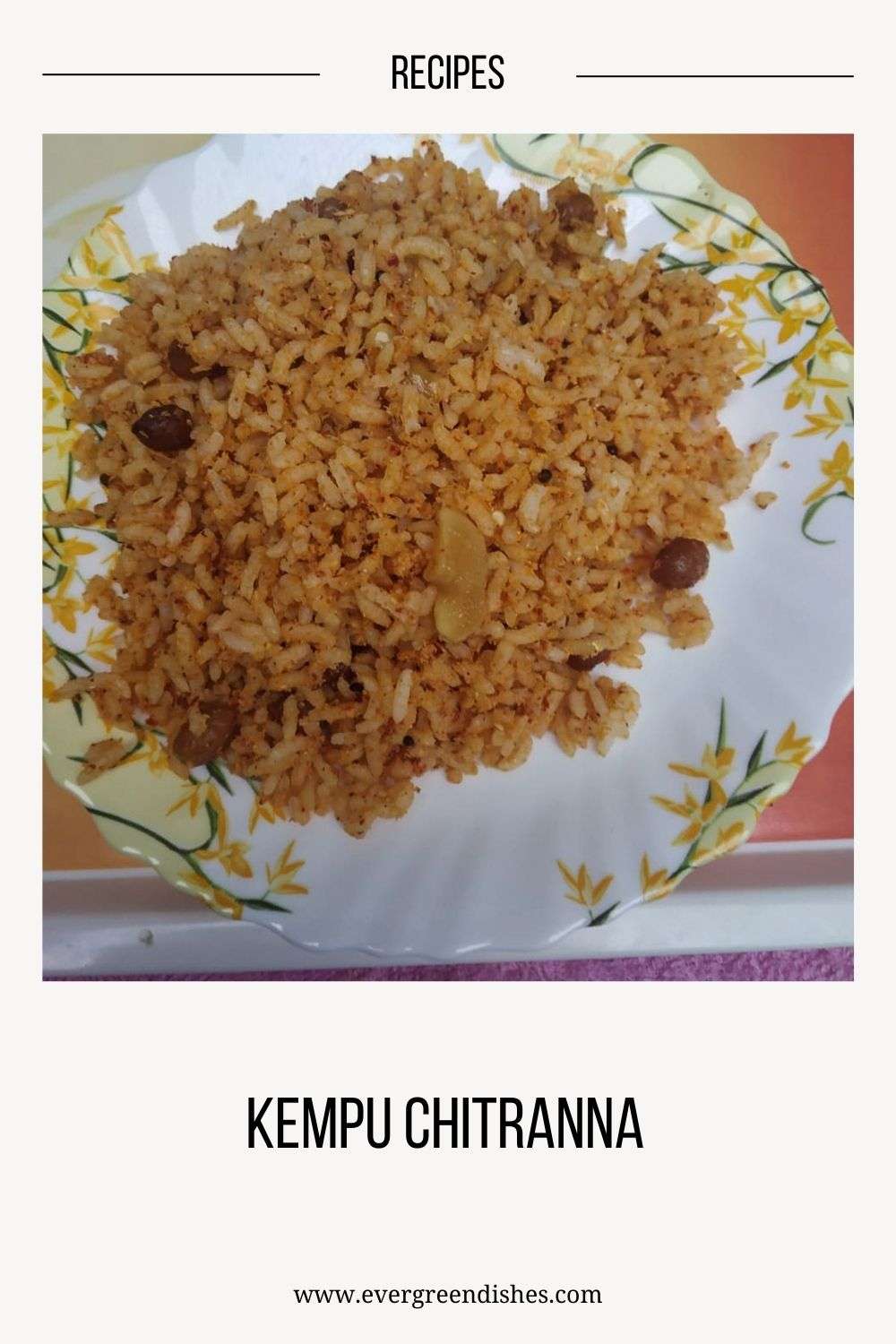
    kempu chitranna

    Kempu chitranna
    Kempu chitranna

    And here are a few more dishes from South Kanara region:

     Why should you prepare it ?

    • It is ideal for festive days as it is a no onion garlic recipe.
    • It is ideal to prepare when you are bored of the usual pulav.
    • It is a good way to know about the traditional dishes.
    • It is ideal for brunch or light dinner.


    Kempu Chitranna

    • Preparation time: 10 minutes
    • Cooking time: 20 minutes
    • Serves : 4 persons
    • Cuisine : South Kanara
    • Course: Main meal


    Ingredients :

    • 1 cup rice  [measurement: 1 cup = 250ml]
    • 1/2 grated coconut
    • 2 tsp mustard seeds
    • 5-6  dry red chillies
    • 3 tablespoon oil
    • 1/2 teaspoon mustard seeds
    • a pinch of asafoetida
    • 1/4 teaspoon turmeric powder
    • 1 teaspoon bengal gram
    • 1 teaspoon urad dal
    • a few curry leaves
    • 6- 8 cashew broken into pieces
    • salt to taste
    • 2 tablespoon ground nuts

    Method :

    • Cook the rice  in a pressure cooker and keep it aside.
    • Once the pressure is released, put the rice in a wide plate and allow to cool.
    • Grind coconut, mustard seeds and red chillies together to a smooth paste.
    • Take oil in a pan.
    • Make the seasoning. Add mustard seeds, as it crackles, put in asafoetida, turmeric powder, bengal gram and urad dal. Once it turns slight brown in colour, add ground nuts, let cook for a minute, then throw in the curry leaves and cashew pieces to it.
    • Now, add the ground paste and saute it for sometime.
    • You should get a good aroma.
    • Keep it aside.
    • Put the rice and salt.
    • Mix well. Kempu chitranna is ready to serve.

    Take a tip :

    • This rice dish is ideal to serve for lunch or dinner. Accompany it with a few papad and fryums.
    • Coconut oil can be used in the seasoning, it gives a good taste.

    About the event :

    This is an old post which I have updated with better pictures. I have also modified the text a bit. Sending this to Foodies-Redoing Old Post 84.

    It was first 10/1/2017 and edited on31/8/2022

    kempu chitranna
    Evergreendishesdev

    Kempu Chitranna

    A flavourful food which can be prepared during festivities and celebrations.
    Prep Time 10 minutes
    Cook Time 20 minutes
    Total Time 30 minutes
    Servings: 4 people
    Course: Main Course
    Cuisine: Indian
    Calories: 200

    Ingredients
      

    • 1 cup rice
    • 1/2 fresh coconut
    • 2 teaspoon mustard
    • 6-8 dry red chilly
    • 3 tablespoon oil
    • 1/2 teaspoon mustard
    • 1 teaspoon bengal gram
    • 1 teaspoon urad dal
    • 6-8 cashew broken into pieces
    • a few curry leaves
    • 1 tablespoon groundnuts
    • salt to taste
    • 2 tablespoon groundnuts

    Method
     

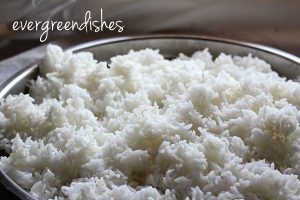
    1. Cook the rice in a pressure cooker and keep it to cool. The grains should be seperate.
      cooked rice
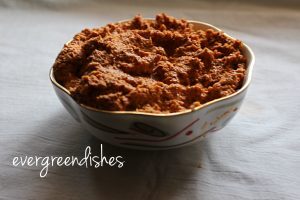
    2. Grind mustard seeds, red chilly and coconut to a paste.
      ground paste
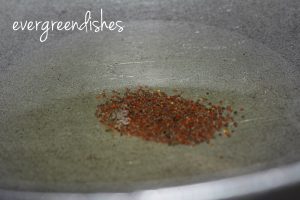
    3. Take a pan and oil to it. Add mustard seeds. Let it splutter.
      mustard seeds to it
    4.  Then, put bengal gram, urad dal, asafoetida and turmeric powder to it.
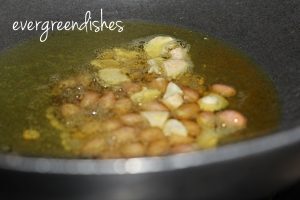
    5. Once it turns golden, add groundnut to it. Allow it to cook for a minute. The rawness of the nuts should not be there.Then add cashew pieces and curry leaves.
      ground nuts, cashew pieces and curry leaves
    6. Now, add the paste to it
      paste goes into it
    7. Saute the paste for five minutes. You get a good aroma when it is done. Switch off the stove.
      saute the paste
    8. Put rice and thoroughly mix it. Kempu Chitranna or red rice is ready to serve.
      Kempu chitranna

    Notes

    • Add little water while making the paste.
    • You can see coconut pieces in the picture, the copra came out of the shell and thus I cut and used it.
    • The water used in cooking the rice differs from each kind of raw rice used. Thus, I do not mention it.
    • 1 cup =250 ml is the measurement cup used

    HAPPY NEW YEAR 2017  

    a ceramic plate served with kempu chitranna
    kempu chitranna                                                                                                                                                                                                                                                                                                                                                                                                                      If you ever make Kempu Chitranna  in your kitchen, take a picture and tag @foodiejayashree on Instagram or @evergreendishes on Facebook. Subscribe to get all updates in your inbox and an e-book for free!


    book of handyhints
    book of handyhints


  • Groundnut chutney

    Groundnut chutney is a very tasty accompaniment that can be served with idli or dosa. It was during last winter that I first made it, and since then , it has become a routine.

    Usually, roasted groundnuts are grinded with  green chillies  and salt along with a little tamarind pulp. But, I have made a slight variation here. The consistency was dense, adding a little coconut was appropriate and a dash of ginger gave more taste to it..

    Ingredients:

    • Roasted groundnuts 1/2 cup
    • coconut 1tsp
    • green chilly 2
    • curry leaves a few
    • ginger 1/2 inch
    • tamarind pulp 1tsp
    • salt to taste
    • water very little
    • oil 1/2tsp

    groundnut chutney
    groundnut chutney


    Method :

    Take oil in a kadai, roast the green chillies. curry leaves and ginger. Grind all ingredients together with a little water. Serve with idli or dosa. Seasoning may be added.


  • Masala Puri

    Masala Puri are a deep fried spicy indian breads.It can be used as a breakfast dish , but if fried food is not your early  option, serve it for lunch or as an evening snack.  They are tasty and easy to make. It can be called as a modified version of the plain puri which needs kurma.You do not need much accompaniments here, coconut chutney and pickles are ideal to be served  with it. This is my second entry to the blog hop of the theme”Holi special” .My first entry can be read here.

    (more…)