Tag: south indian

  • Beetroot Stir Fry Recipe

    Beetroot Stir Fry Recipe

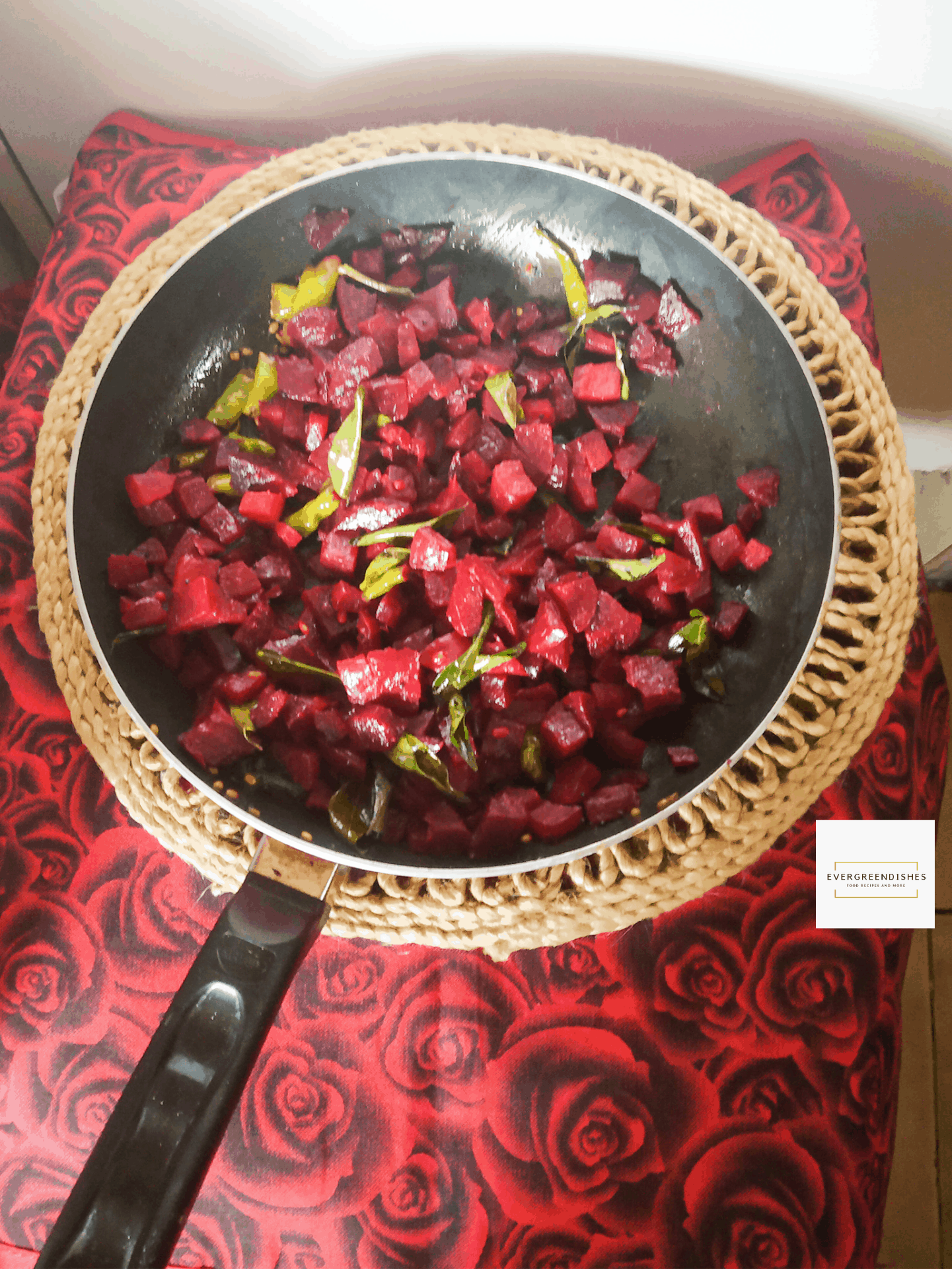
    Beetroot stir fry is a simple, healthy and tasty side dish from South Indian cuisine. It pairs well with chapati or phulka.

    Beetroot is a wonderful vegetable .The vibrant  purple colour is very pleasing. I really love that colour. Dark coloured vegetables are all rich in nutrients and so is this one. It is rich in calcium, iron, Viamin A and C and packed with anti oxidants.

    It is good for the heart and lowers the blood pressure. It is said to prevent some types of cancer. It helps in the functioning of the brain and thus helps in preventing dementia. It is rich in fibre and thus helps in keeping the body clean.

    One can find many ways to include this vegetable.Many people drink juice of it. It can be used in vegetables, soups and varied snacks as cutlets and burgers. Today, I am presenting to you a simple vegetable which is healthy and can be quickly prepared.

    This  vegetable is liked by my children sans fresh coconut, but do feel free to include it for a better taste.
    Beetroot Stir Fry
    Beetroot Stir Fry

    Beetroot Stir Fry

    Ingredients:

    • 1 beetroot
    • 2 teaspoon oil
    • 1/2 teaspoon mustard seed
    • 1/4 teaspoon asafoetida
    • 1/4 teaspoon turmeric powder
    • 2 green chilly
    • salt
    • 1/4cup fresh grated coconut


    Method:

    • Cut the beetroot in half and pressure cook it along with rice or dal.
    • Peel the skin and cut into small cubes.
    • Make a seasoning  by adding the mustard seeds, urad dal, bengal gram , asafoetida  and turmeric powder. Add the green chilli and after a second , put the beetroot pieces and stir. Add salt and coconut and heat on a low flame for sometime.
    • Serve with chapati or phulka or as an accompaniment with rice.

    Take a tip:

    • The purple crimson colour tends to cover our hands while cooking. Use lime juice to get rid of it.
    • Keep the beetroot in a separator or on a steel lid over the separator.
    Beetroot Stir Fry
    Evergreendishesdev

    Beetroot Stir Fry

    Beetroot Stir Fry is a simple yet tasty side dish. It pairs well with chapati as well as rice.
    Prep Time 10 minutes
    Cook Time 20 minutes
    Total Time 30 minutes
    Course: lunch box, lunch ideas
    Cuisine: karnataka

    Ingredients
      

    • 1 beetroot
    • 1 tsp urad dal
    • 2 green chilly
    • 1/4 tsp asafoetida
    • 1/4 tsp turmeric powder
    • 1/2 tsp mustard seeds
    • 2 tsp oil
    • 1 cup fresh grated coconut optional

    Method
     

    1. Cut the beetroot in half and pressure cook it along with rice or dal.
    2. Peel the skin and cut into small cubes.
    3. Make a seasoning  by adding the mustard seeds, urad dal, bengal gram , asafoetida  and turmeric powder. Add the green chilli and after a second , put the beetroot pieces and stir. Add salt and coconut and heat on a low flame for sometime.
    4. Serve with chapati or phulka or as an accompaniment with rice.

    Notes

    The purple crimson colour tends to cover our hands while cooking. Use lime juice to get rid of it.
    Keep the beetroot in a seperator or on a steel lid over the seperator.

    About the event:

    Sending this to our fortnightly event, Foodies_Redoing Old Post 37, where we work on an old post by editing the picture, text or both. Here, I have created new pictures.

    Pin it for later:
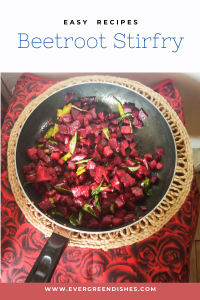
    Beetroot Stirfry

    If you ever make this recipe, take a picture and share it by tagging @foodiejayashree on Instagram or @evergreendishes on Facebook. I will be glad to see and share your creation further.
    Check out my e-books on Amazon. Do not miss any post. Subscribe to get all updates and an e-book for free !
  • Spicy Pongal for Sankranti

    Spicy Pongal for Sankranti

    This year,January 15 is Makar Sankranti , a very important festival in South India. It marks new beginnings. The previous day too, is celebrated by giving fresh grains and other cereals to elderly married ladies.It symbolises sharing and good will to others.Houses are decorated with colourful rangolis. Lunch is a welcome meal of bajra roti along with stuffed brinjal and moong . Pongal, a rice dish is also prepared on this day.  (more…)

  • Rasam

    Rasam is popular accompaniment with rice in South India. Our food seems to be incomplete without rice and  rasam. Called by various names as Saaru or Bele Saaru, it is prepared by different methods from region to region. (more…)

  • Tangy accompaniment “gojju”

    For the rice lovers, gojju and chutney of various kinds make good accompaniments. This is popular in southern region and is made using ladies finger,cucumber ,pineapple  and even mango. Here ,is the one made of cucumber. (more…)

  • Ridge gourd chutney

    Ridge gourd chutney is a popular side dish in Karnataka. It pairs well with both steamed rice and chapathi.

    Ridge gourd is often used to make vegetable after scraping the skin. It is called as herekayi in kannada and torai in hindi for your information.

    The peel is often discarded. It can be used to make this chutney which is very tasty. Take care to wash the ridge gourd well. This dish can be used with rice as well as chapatis. Steaming hot rice with ghee and chutney is the usual beginning of a south indian food.

    Ridge gourd Chutney

    INGREDIENTS :

    • ridge gourd peel of 5 veggies
    • ridge gourd pieces 3 ( remaining two can be used in dal)
    • fresh coconut 1 bowl
    • urad dal  2 tbsp
    • green chilly  4
    • tamarind pulp 2 tsp
    • salt to taste

    For tempering :

    •  oil  2 tsp
    • mustard seeds 1/2 tsp
    • asafoetida 1/8 tsp
    • turmeric powder 1/8 tsp

    ridgegourd chutney

    METHOD :

    • Wash the ridge gourd, and scrape the skin. Keep it aside.
    • Cut a few chunks and keep in another bowl.
    • Dry roast the urad dal.
    • Take a little oil and roast the green chillies.
    • Now , put them aside and some more oil. Add asafoetida and the peel of ridge gourd , later add the chunks too.
    • When soft, remove from flame and let cool for sometime.
    • Grind all the ingredients together.
    • Make a tempering and serve the ridge gourd chutney.

    Subscribe to get a book of handy hints for free

    [inbound_forms id=”default_1″ name=”First, Last, Email Form”]

    [social_share style=”bar” align=”horizontal” heading_align=”inline” facebook=”1″ twitter=”1″ google_plus=”1″ linkedin=”1″ pinterest=”1″ /]


  • Urad dal wada / uddina wade

    Urad dal wada / uddina wade

    (Disclosure : As an Amazon Associate, I will get a small commission for qualifying purchases without no addition cost to you.)

    urad dal wada | uddina wade | wada recipe | uddina vade| south indian recipes |

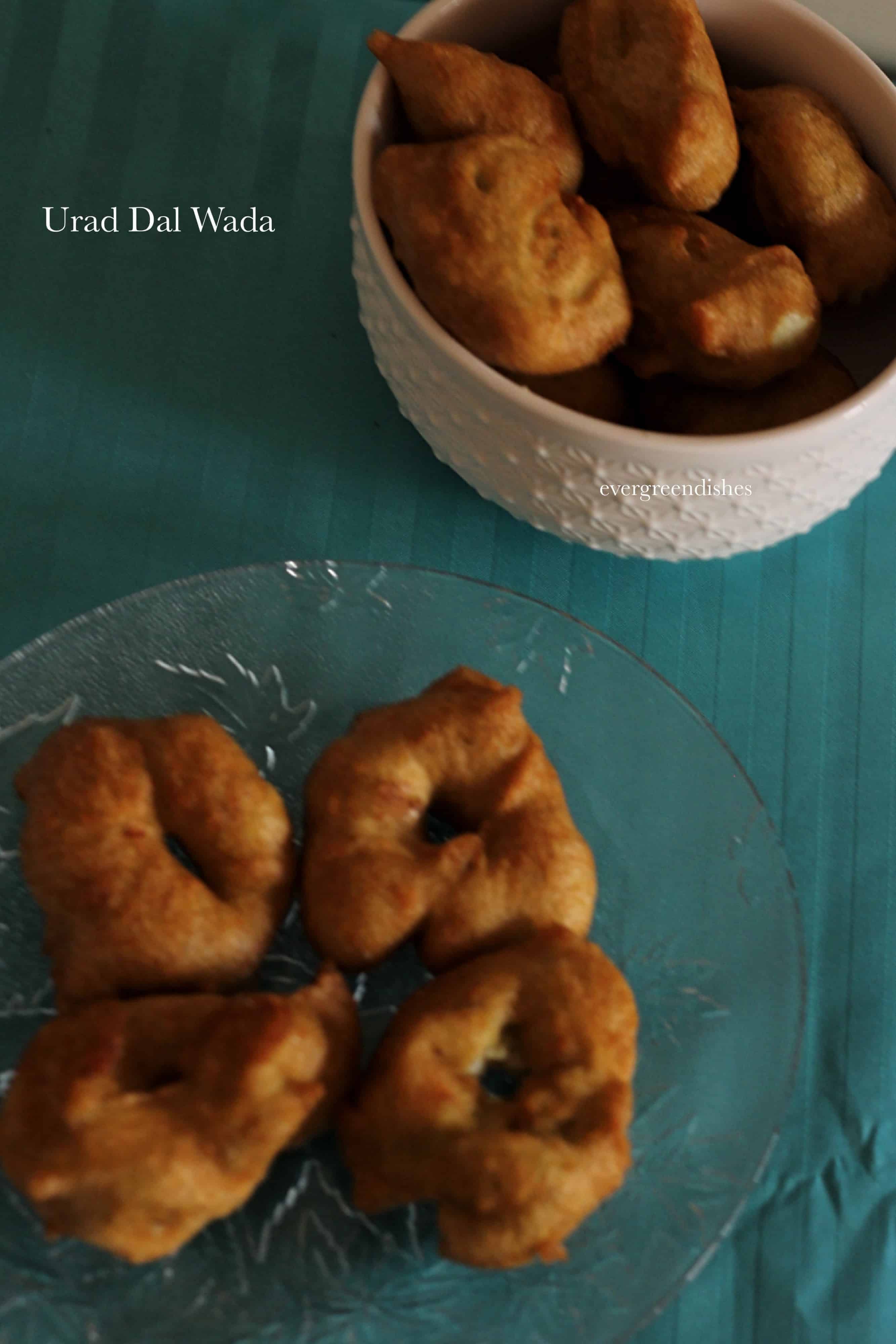
    Urad dal wada are tasty and loved by all. It is usually served along  with idli in restaurants. It is one of the essentials of South Indian breakfast. 

    Urad dal is soaked and then made into a thick batter, seasoned with spices and then deep fried in oil. Shaped like doughnuts, these have always been my favourite. With or without chutney, I love these fried dumplings. Today, a sneak and peek at this one.

    This is vegan and gluten free snack, ideal for breakfast along with idly or as an accompaniment with any meal. It is tasty and one cannot  resist having a couple of them. It is usually served with coconut chutney but one can dunk them in sambar or thick curd, it tastes awesome.

    This is an old post which I had written when I started my blog. Now, the post is redesigned with new picture and content, looking back there is a phenomenal change in the pictures and the way of writing. Well, that’s life, we try to get better each day isn’t it? And this post is part of the new group that I have joined Foodies_Redoing Old Posts started by Renu. The purpose is to give a new face to the old posts that we had written long back.

    urad dal wada

    INGREDIENTS :

    • 2 cup urad dal
    • 5 green chilly
    • coriander leaves
    • a few fresh coconut pieced
    • curry leaves
    • salt
    • water
    • oil for frying

    METHOD :

    • Soak urad dal in water for three hours.
    • Grind it to a fine batter with little water.
    • In another jar, grind green chilly and coriander and mix with it. Throw in a few roughly cut curry leaves, coconut pieces  and salt.
    • Heat oil in a pan , when done, beat and take some batter, make a hole with the thumb, and slowly release it into the oil. Initially, one needs a little practice to make urad dal wada, but once you know the trick, you can do it. 
    • In the beginning, one may not be able to make them and needs to be satisfied with the usual round balls.
    • Fry until brown on medium flame, remove and put them on a tissue paper. 
    • Serve with coconut chutney.


    About the Lifelong Iron Pan

    The pan is made from cast iron and is ideal for sauting,  deep frying or shallow frying. It is toxin free and teflon free. It is sturdy and is durable for a long time. The pan can be used on all kind of cook tops including induction stove.

    Pin it for later:

    urad dal wada
    urad dal wada


    urad dal wada
    Evergreendishesdev

    Urad Dal Wada

    Urad dal wada is a popular fried snack from South India. It is usually served for breakfast along with idli, chutney and sambar.
    Course: Breakfast
    Cuisine: South Indian

    Ingredients
      

    • 2 cup urad dal
    • 5 green chilly
    • coriander leaves
    • a few fresh coconut pieces
    • curry leaves
    • salt
    • water
    • oil for frying

    Method
     

    1. Soak urad dal in water for three hours.
    2. Grind it to a fine batter with little water.
    3. In another jar, grind green chilly and coriander and mix with it. Throw in a few roughly cut curry leaves, coconut pieces  and salt.
    4. Heat oil in a pan , when done, beat and take some batter, make a hole with the thumb, and slowly release it into the oil. Initially, one needs a little practice to make urad dal wada, but once you know the trick, you can do it.
    5. In the beginning, one may not be able to make them and needs to be satisfied with the usual round balls.
    6. Fry until brown on medium flame, remove and put them on a tissue paper.
    7. Serve with coconut chutney.

    Notes

    Add a little quantity of water while grinding, we need a batter of thick consistency.


    If you have liked this post, do share it with your family and friends. If you ever recreate it, take a picture and share it by tagging @foodiejayashree on Instagram or @evergreendishes on Facebook. I will be glad to see your creation.

    (Disclosure : As an Amazon Associate, I will get a small commission for qualifying purchases without no addition cost to you.)


  • upma

    I am pretty excited as I write this one. Eight like minded  bloggers together have started a blog hop and this is our first one. So let me start right away. We will be working on a particular theme, twice a month and its ” Breakfast ” in the beginning. I am making our very own Upma here today. (more…)

  • Chennai Idli

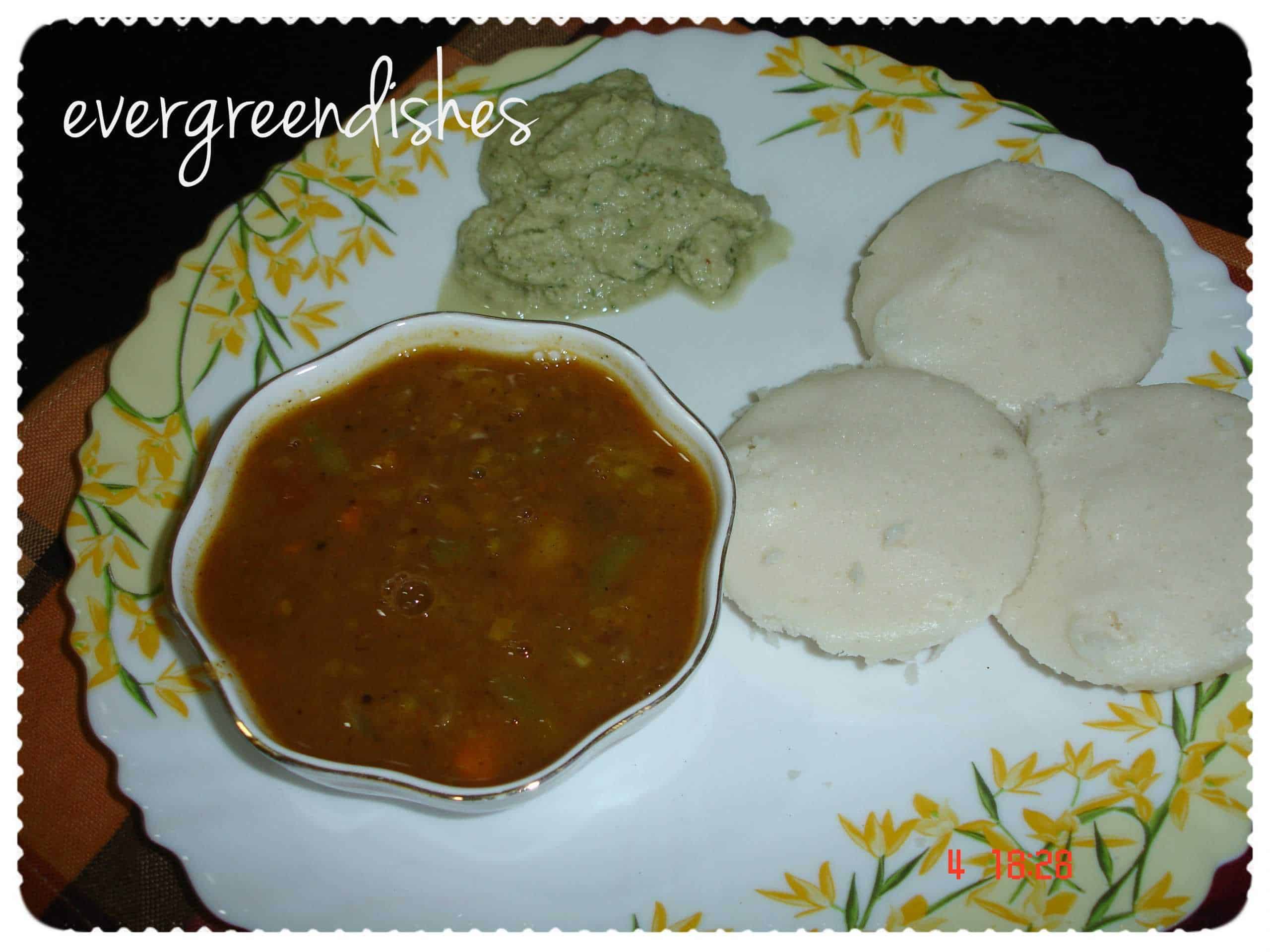
    Idli are an all time favourite for many of us. I love making this one, as they are soft and supple. There may be a variation in other recipe as this is modified by me.They make an ideal breakfast with sambar and chutney. Why is this named as “Chennai Idli” ? Chennai is a place in South India,it is the capital city of the state of Tamilnadu. It is here, they were first made  and  was very famous for these soft and supple idlis. Hence the name as “Chennai Idli”

    Ingredients :

    soft idlis
    ideal breakfast

    Procedure :

    • Soak the rice in hot water for 4 hours.
    • Soak urad dal seperately  in cold water for two hours.
    • Grind both of them seperately with adequate quantity of water. Later ,mix both together.
    • Now, rinse the semolina in water for sometime. Mix into the ground batter.
    • Keep in a warm place to ferment for 8 hours.
    • Add salt, mix and  and make idlis the usual way, in a steamer.
    • Serve with coconut chutney and sambar and a dollop of butter if you wish !

    Just a note :

    Idli rice is a different kind of rice, which is used in making idlis and dosas. It is partially brown and  smaller in size. Here, in south india, it is called as salem rice.

    My other idli recipes on the blog:

    chennai idli
    Evergreendishesdev

    Chennai Idli

    Soft and supple idli make ideal breakfast, chennai idlis are that kind. 
    Prep Time 2 hours
    Cook Time 20 minutes
    Total Time 2 hours 20 minutes
    Course: Breakfast, healthy, lunch box
    Cuisine: Indian, South Indian

    Ingredients
      

    • 1 cup urad dal
    • 2 cup idli rice
    • 1 cup semolina (idli)
    • salt
    • water

    Method
     

    1. Clean and wash the rice. Boil water in a pan. Put the rice in it and soak it for four hours.
    2. Soak urad dal in regular water for two hours.
    3. Grind both of them separately to a smooth batter. Later, mix them in a wide bowl.
    4. Wash the semolina and soak it for ten minutes, mix it in the batter and keep it in a warm place to ferment, preferably overnight.
    5. Add salt to the batter and mix it well.
    6. Take the idli stand, put the batter in each of the cavity, steam it for fifteen to twenty minutes.
    7. Once, it is done, let cool, then remove and serve with coconut chutney and sambar. 

    Notes

    • Batter is to be kept in a warm place.
    • Keep a wide plate below the container, lest it may not overflow on fermenting.
    • Fermenting time differs according to the season and the region where you are. 

    Make sure to get your copy of ” Book of Handyhints” which contains many useful tips for you. Subscribe to the mailing list and get it now.

    Chutney recipe can be found here

    Note: This post contains affilate links

    Sharing is Caring

    [social_share style=”bar” align=”horizontal” heading_align=”inline” facebook=”1″ twitter=”1″ google_plus=”1″ linkedin=”1″ pinterest=”1″ /]

    Subscribe to this blog to get a free book of handy hints.

    ****UPDATED****

    Do get the mobile app if you have not got it yet. Follow evergreendishes on other social media: Facebook, Instagram, Pinterest, Twitter

    Check out my e-books on Amazon


  • Black eyed bean veggie (alasande kalu)

    Black eyed bean veggie (alasande kalu)

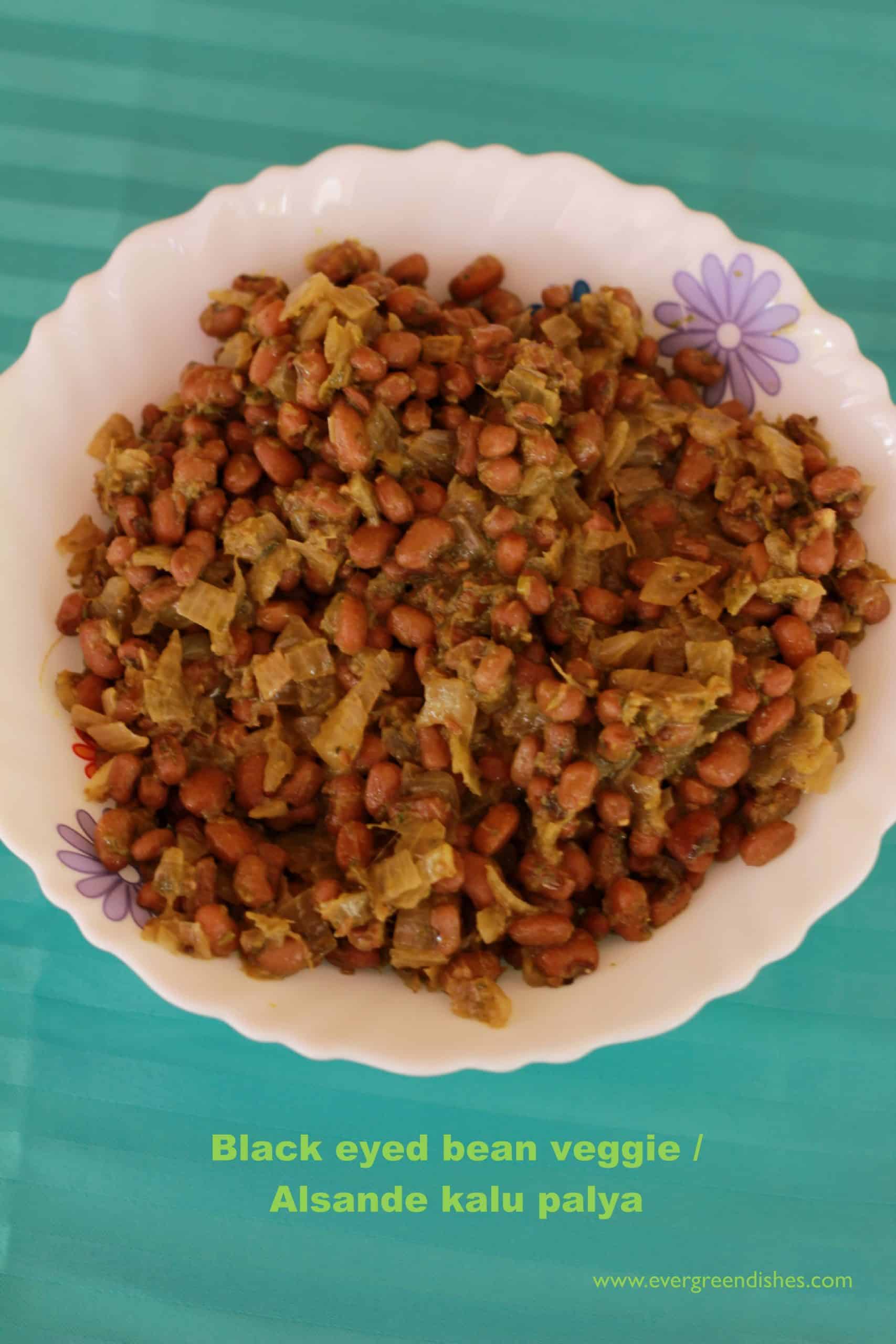
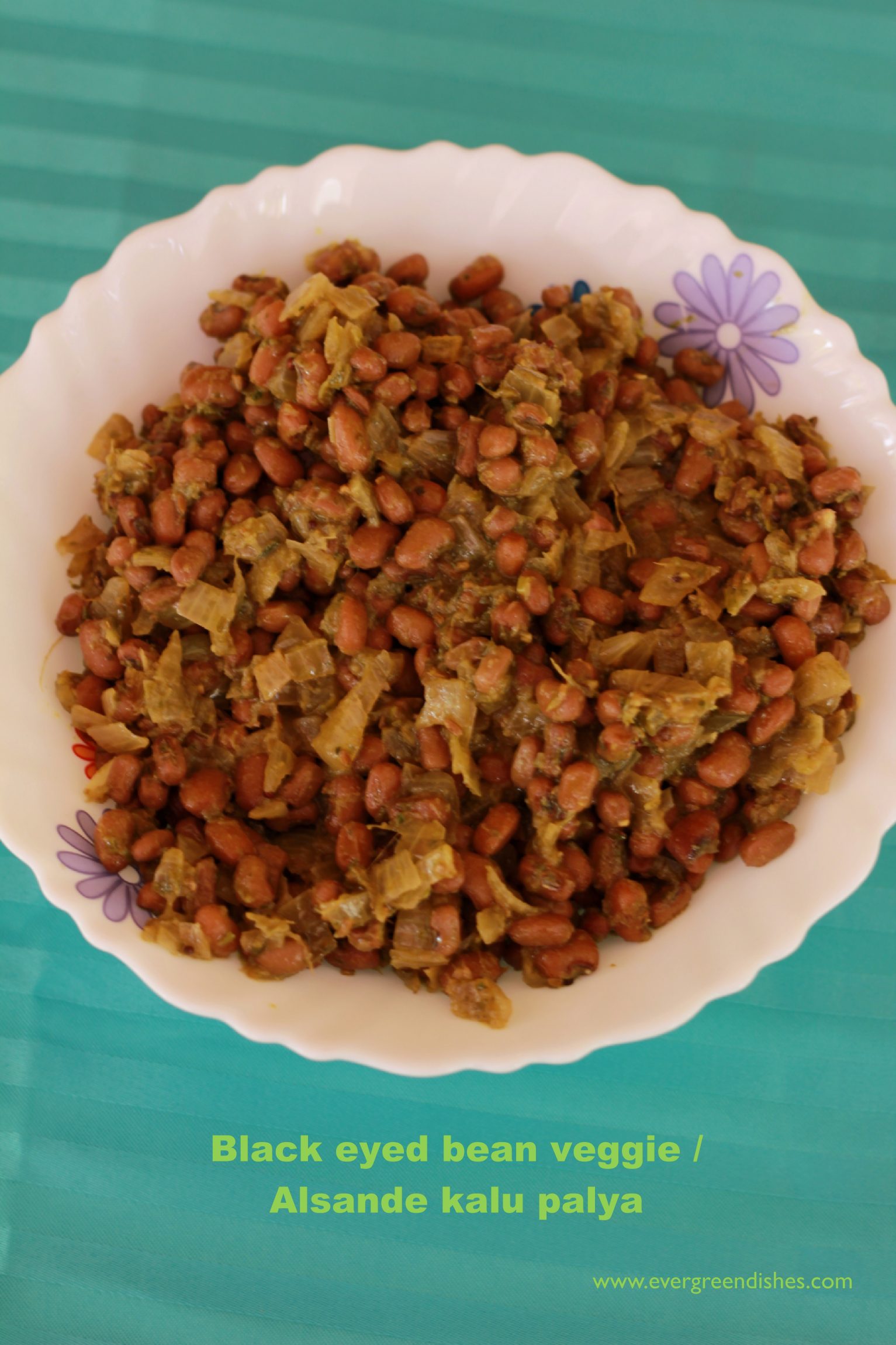
    Black eyed bean makes a good accompaniment with chapati or jowar roti. Dried ones need soaking while the fresh ones can be cooked instantly.

    Daily cooking needs some planning and I find beans to be useful in some way, either as a quick or soaked stir fry.  I tend to make them quite often as they are rich in nutrients and loved by all. Black eyed bean,  known by the name as “alasande ” in kannada  makes a good accompaniment with jowar roti or chapati. It is used in various dishes as sambar and fried dumplings. Here is one kind of accompaniment that is often made at home. 

    black eyed bean palya

    Ingredients that you need are 

    • Black eyed bean 2cups  
    • Onion 2  
    • Coriander 1/2 bunch
    • Ginger 1 inch
    • Green chilly 4
    • Cumin 1tsp
    • Oil 1 tbsp
    • Salt to taste 


    Method :

    Soak the black eyed beans for half an hour.Cut the onions finely and keep aside. Pressure cook them. Grind coriander leaves,ginger and green chilly  to a fine paste. Take oil in a kadai, add cumin, turmeric powder and asafoetida. As cumin splutters add onions and saute till light pink. Now,add the paste and salt to it . Let cook for a minute. Add the cooked beans along with the water. Let boil to get a thick consistency.

    Handy hints:

    • Adding the water content ensures all the vital nutrients are regained.
    • Two cloves of garlic may be added while grinding the paste.

    Black eyed bean veggie

    Black eyed bean veggie makes a good
    Prep Time 10 minutes
    Cook Time 10 minutes
    soaking time 30 minutes
    Course: sabzi
    Cuisine: karnataka

    Ingredients
      

    • 2 cup black eyed bean
    • 2 onion
    • 1/2 bunch coriander
    • 1 inch ginger
    • 4 green chilly
    • 1 tbsp oil
    • salt

    Method
     

    1. Soak the black eyed beans for half an hour.
    2. Cut the onions finely and keep aside.
    3. Pressure cook the soaked beans.
    4. Grind coriander leaves,ginger and green chilly  to a fine paste.
    5. Take oil in a kadai, add cumin, turmeric powder and asafoetida. As cumin splutters add onions and saute till light pink.
    6. Put the paste along with required amount of salt to it. Let cook for a minute.
    7. Put the boiled beans to it, boil for sometime, until you reach the required consistency.

    This is an old post which I have redone it now with better pictures and text. Sending this to Foodies Redoing Old Post 16, a foodie group where we virtually meet with our new posts twice a month.

    If you ever make this recipe, take a picture and tag me @foodiejayashree on Instagram or @evergreendishes on Facebook. Let’s be connected. 


    SIGN UP TO GET A FREE COPY  OF  “Book of Handyhints ” and all updates in your inbox


  • Gojjavalakki / Huli Avalakki

    Gojjavalakki / Huli Avalakki

    Jump to Recipe

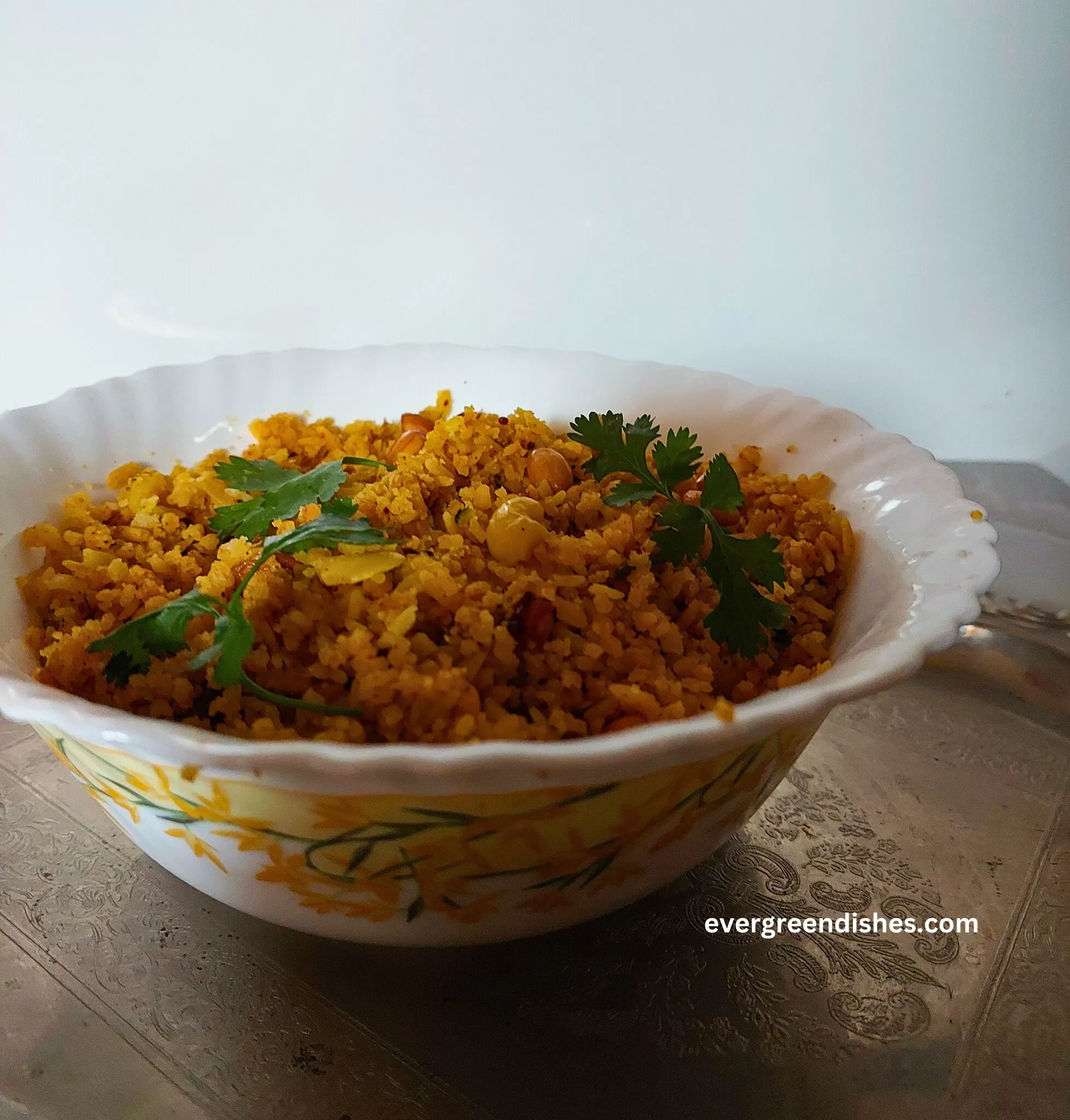
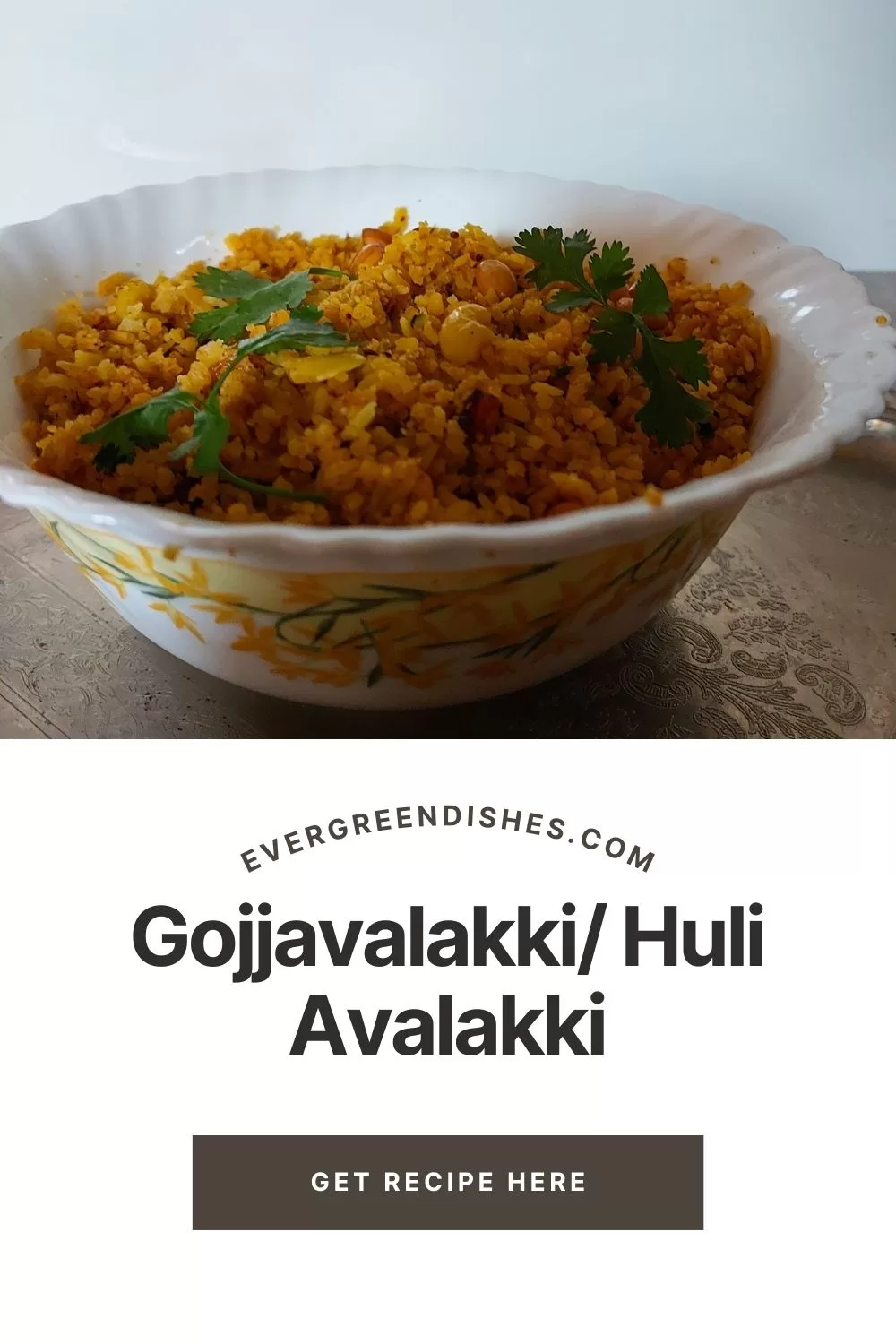
    Gojjuavalakki  or Gojju Avalakki is a staple food in South India. It is tangy and also called as Huli Avalakki. Huli is the regional word meaning sour. It is not only sour, but I can say tangy.

    Beaten rice  popularly known as  “avalakki ” in karnataka and “poha ” in maharashtra  is one of the staple food of the Kannadigas. They relish eating in any form, just as a chivda with tea or for breakfast. Here is one such recipe which many of you can relate.

    gojjavalakki
    gojjavalakki

    The ingredients needed are : 

    • 4 cup beaten rice 
    • 300 ml tamarind pulp 
    • a lemon size ball of jaggery 
    • 2 tablespoon oil 
    • 1/2 teaspoon mustard seeds 
    • a pinch of asafoetida  
    • 1/4 teaspoon turmeric powder 
    • 2 tablespoon groundnuts 
    • 1/2 teaspoon bengal gram 
    • 1/2 teaspoon urad dal 
    • 6 cashew nuts broken into pieces
    •  a few curry leaves 
    • salt to taste
    • 1 teaspoon chilli powder 
    • 2 teaspoon rasam powder 
    • coriander for garnishing


    Method :

    • Take the beaten rice , immerse in water for a second and drain the water.
    • Take the tamarind pulp, jaggery, salt, chilli powder and rasam powder and boil in a pan. It should be of a moderately thick consistency. 
    • Take oil in a large pan and make the seasoning. Add the mustard seeds, and as they crackle add asafoetida, turmeric powder, bengal gram urad dal, groundnuts, cashew nut pieces  and curry leaves . Leave aside for a minute. 
    •  As the colour changes, add the pulp to it and mix well. Now add the washed beaten rice to it and mix well. Keep on a low flame for sometime. Garnish with coriander.

    Take a tip :

    • The taste of gojju avalakki is a  blend of sour, sweet and spicy, hence it can be described as khatta meetha.
    • One needs to let the ground nuts cook for some time in the oil. Otherwise,  it does not taste good.
    • One  can add onions to it, when the seasoning is done, saute  and prepare in the same way. But, this is also equally good.


    Pin it for later :

    Gojjavalakki
    gojjavalakki


    Print Recipe

    gojjavalakki

    Gojjavalakki

    Gojjavalakki is a tasty and healthy breakfast option from South India.
    Course: Breakfast
    Cuisine: Andhra pradesh, karnataka, South Indian

    Ingredients
      

    • 4 cup medium poha /avalakki
    • 300 ml tamarind pulp
    • a lemon size ball of jaggery
    • 2 tablespoon oil
    • 1/2 teaspoon mustard seeds
    • a pinch of asafoetida
    • 1/4 teaspoon turmeric powder
    • 2 tablespoon groundnuts
    • 1/2 teaspoon bengal gram
    • 1/2 teaspoon urad dal
    • 6 cashew nuts broken into pieces
    • a few curry leaves
    • salt to taste
    • 1 teaspoon chilli powder
    • 2 teaspoon rasam powder
    • coriander for garnishing

    Method
     

    1. Take the poha or avalakki and wash it in water. Let the impurities be drained. Then, immerse in water for a second and drain the water.
    2. Take the tamarind pulp, jaggery, salt, chilli powder and rasam powder and boil in a pan. It should be of a moderately thick consistency.
    3. Take oil in a large pan and make the seasoning. Add the mustard seeds, and as they crackle add asafoetida, turmeric powder, bengal gram urad dal, groundnuts, cashew nut pieces  and curry leaves . Leave aside for a minute.
    4. As the colour changes, add the pulp to it and mix well. Now add the washed beaten rice to it and mix well. Keep on a low flame for sometime. Garnish with coriander.

    Notes

    Tamarind pulp can be extracted by soaking the tamarind in water for fifteen minutes. It is squeezed well and then extracted. It is moderately thick in consistency.
    The taste of gojju avalakki is a  blend of sour, sweet and spicy, hence it can be described as khatta meetha.
    One needs to let the ground nuts cook for some time in the oil. Otherwise,  it does not taste good.
    One  can add onions to it, when the seasoning is done, saute  and prepare in the same way. But, this is also equally good.