Category: traditional recipes

  • Olan Recipe |  Kerala Sadya Recipe

    Olan Recipe | Kerala Sadya Recipe

    Jump to Recipe

    Olan is a traditional dish from Kerala cuisine. It is a part of the sadya menu. Olan recipe is easy to make and pretty straight forward.

    Onam is celebrated from Aug 20th to 29 th this year. It is an annual harvest festival celebrated throughout India. It is the official festival of Kerala. The whole state is decorated during this  period and many cultural events are held.

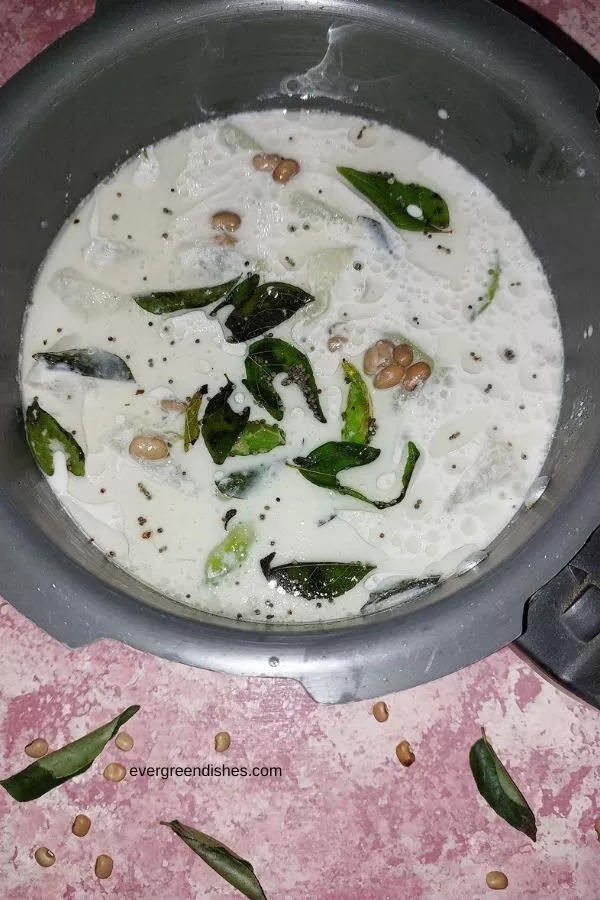
    Onam sadya is an elaborate menu prepared as offering on the festive day. It consists of at least 26 dishes. Some of them are ada payasam, thoran,  aviyal, pachadi, inji thayir, rice,  kozambu, pulissery,  olan, paal payasam  and banana chips. are some of the dishes. Olan is prepared using ash gourd, red cow peas and coconut milk. For the uninitiated, ash gourd is also known as white gourd, wax gourd and winter melon. It is native to South Asia. In Kannada, we call it as budhakumbalakayi.

    I have extracted the coconut milk at home, so I could easily make the thick and thin milk. Two cups of fresh grated coconut yielded 200 ml of thick milk and 240 ml of thin milk.
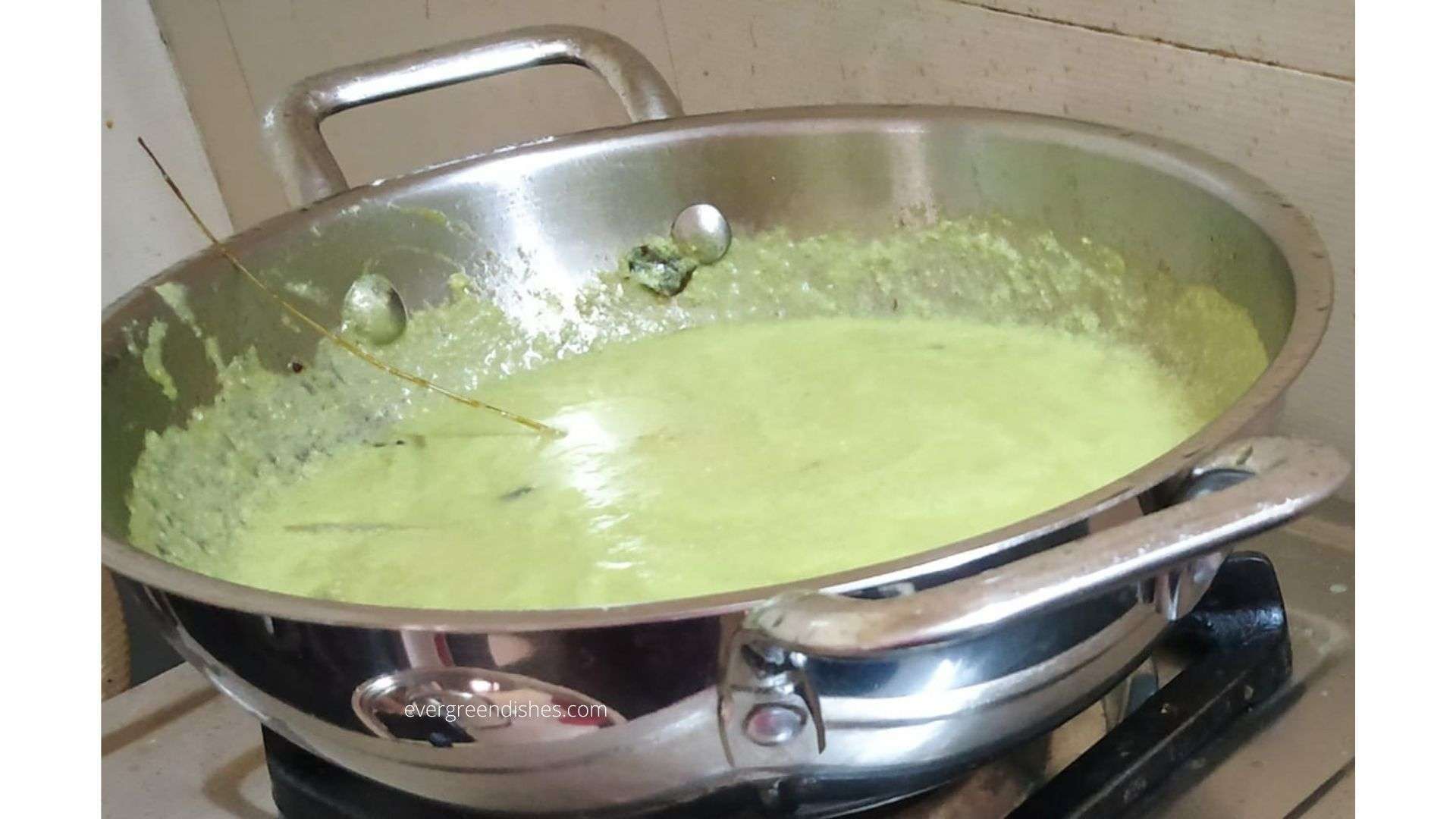
    olan

    What ingredients are used in Olan ?

    • Fresh coconut: We need quite a lot of fresh grated coconut. Kerala recipes call for coconut in most recipes. Coconut milk is extracted by grinding and straining it., The thick and thin milk has to be kept separately. At first the thin milk is added and later the thick milk is added. Do not cook for a long time after adding thick milk.
    •  Ash gourd : Remove the skin and cut it into cubes.
    • Lobia: Soak them overnight
    • Green chilli
    • curry leaves
    • Coconut oil : Coconut oil is the preferred oil in this cuisine.
    • Mustard
    • Asafoetida


    The other recipes using ash  gourd shared earlier are
     

    dum root halwa
    dum root halwa

    majjige

    Print Recipe

    Kerala Olan

    Olan is a traditional dish from Kerala cuisine. It is a part of the sadya menu. Olan pairs well with hot steamed rice.

    Ingredients
      

    • 2 cups of grated coconut
    • 250 grams ash gourd
    • 1/3 cup lobia
    • 2 green chilli
    • curry leaves
    • For the seasoning :
    • 2 teaspoon coconut oil
    • 1/4 teaspoon mustard
    • 1/4 teaspoon asafoetida
    • 1 green chilli
    • a few curry leaves

    Method
     

    1. Soak the red cow peas overnight.
    2. Put the grated coconut in  a cup of warm water and keep it aside for half an hour.
    3. Grind it and make a puree. Extract the puree. Keep the thick milk aside.
    4. Add half a glass of  water and grind it again. Extract and repeat the process, this is the thin milk. We will be using the thin milk in the beginning.
    5. Peel the ash gourd skin and cut into cubes. Be careful as you remove the hard skin, lest you hurt yourself.
    6. Cook the cow pea for one whistle in the pressure cooker.
    7. In a pan, put the ash gourd pieces, boiled cow pea, thin coconut milk and boil on a medium flame. Add curry leaves and green chilli to it.
    8. Once the ash gourd is tender, add the thick coconut milk to it. Put salt. Cook for a minute and turn off the stove.
    9. Make seasoning with coconut oil and pour it.
    10. Olan is ready to serve.

    Notes

    White cow pea may be used instead of the red one.
    Do not overcook the cow pea or the ash gourd.
    You can use store bought coconut milk.
    Coconut oil is commonly used in the preparation of Kerala dishes. You can use any neutral oil.
    Do not cook for long time after adding the thick coconut milk. 

    About the event :

    Sending this to the Sadya theme at Shhh Secretly Cooking group. The theme was suggested by Priya Vijayakrishnan. She has prepared Vendakkai Pachadi, an  essential of the sadya menu.  It is easy to prepare and makes a good accompaniment.

    I was paired with Seema Doraiswamy of Mildly Indian. Seema gave me green chillies and coconut I have made olan. With the asafoetida and curry leaves I had shared, Seema has made Mambazha Pachadi, a dish made with ripe mango. I have bookmarked her Madhura Curry to make sometime.

    shhh cooking secretly

    Pin it for later :

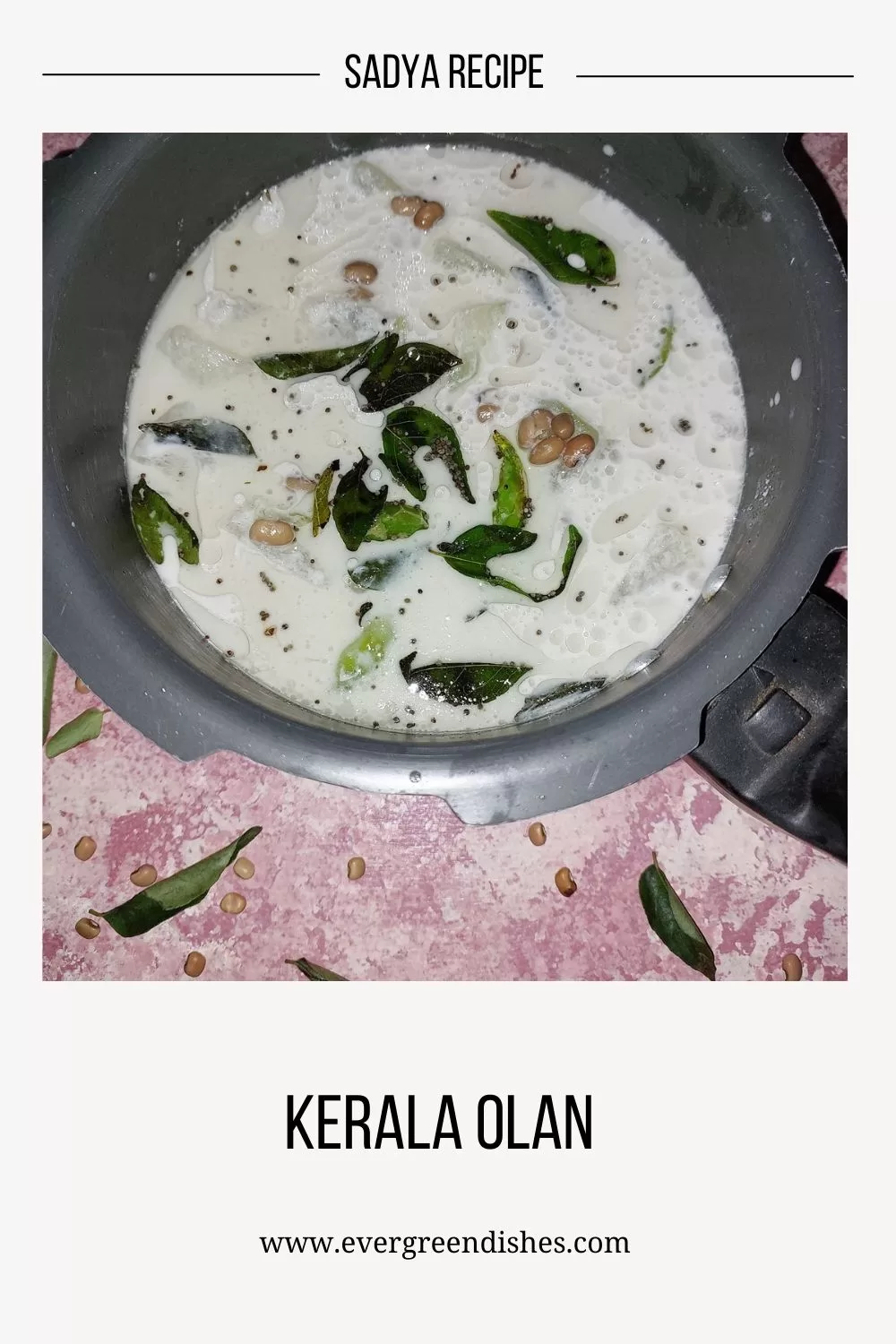
    kerala olan recipe
    kerala olan recipe

    I hope you liked the Onam Sadya recipe. If you ever make Olan in your kitchen, take a picture and tag @foodiejayashree on Instagram or evergreendishes on Facebook.  Until next time, Happy Cooking ! Be happy and cheerful.
  • Lemon Rasam / Nimbehannina Saru

    Lemon Rasam / Nimbehannina Saru

    Jump to Recipe Print Recipe

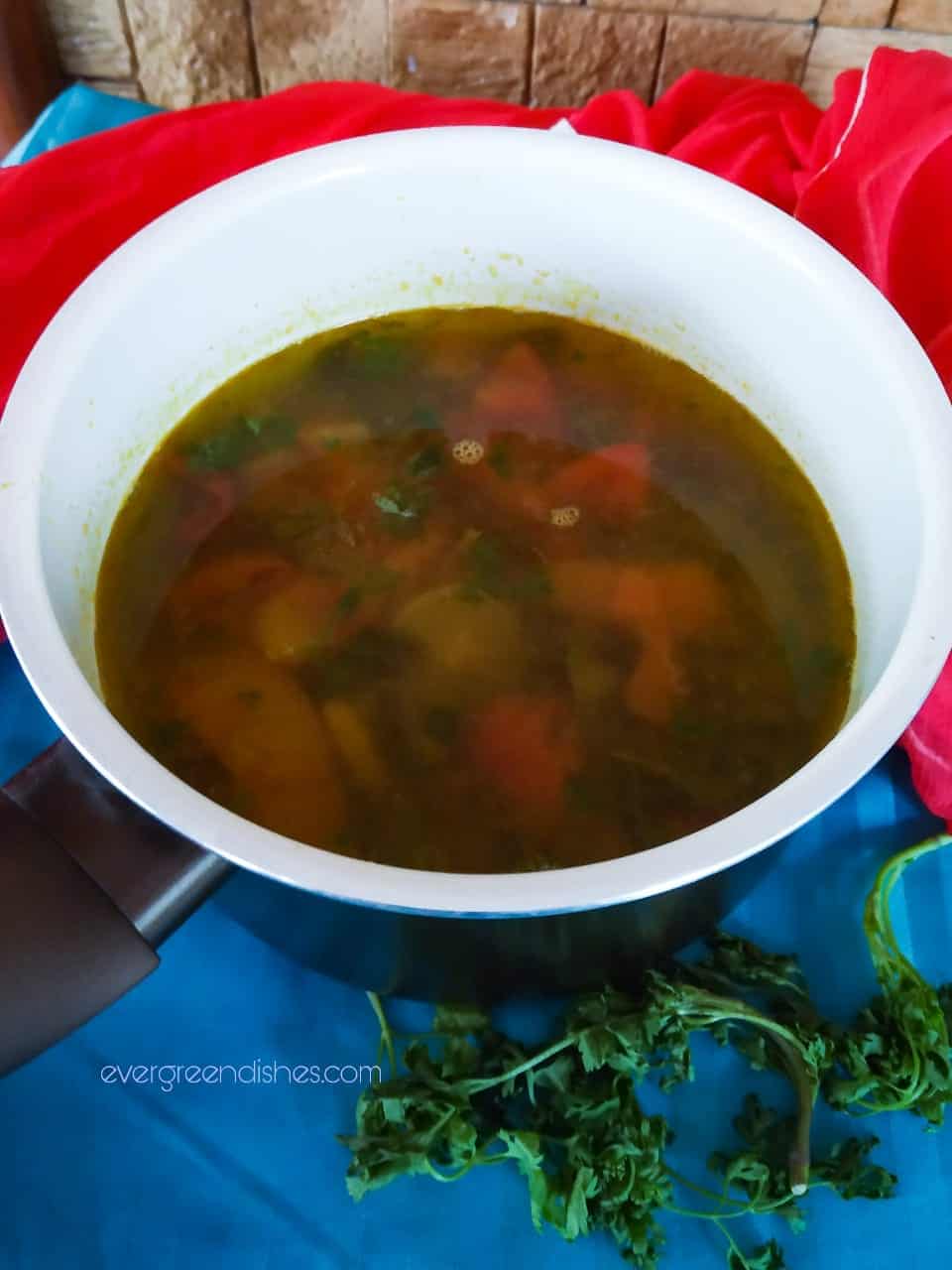
    Lemon Rasam  is another kind of rasam made during monsoon days. The citrusy flavour with the aroma of fresh herbs is tasty and soothing. It is a healthy and comfort food for many people. The ease and simplicity of the recipe makes it a go to recipe. 

    Rasam, as we all know is a lentil based, soup like dish tempered with spices. It is popular in South India and pairs well with hot, steamed rice. Sometimes, it is the simplest of the food like this,  gives immense comfort. I remember, after eating out for a week during our trips, it was simple, home cooked food we longed the most. The rasam varieties shared earlier are drumstick rasam, mysore rasam, andhra rasam

    Lemon Rasam is  a simple yet flavoursome dish, it makes a good accompaniment with hot steamed rice. One can use it as a soup too. . There is hardly any rasam powder used, no tamarind and no garlic too.  If you have not tried it yet, do give a try,  The herbs and lemon give a good taste to it. Every household has its own lemon rasam recipe. Some use moong dal instead of tur dal while others do not add any pepper. However, ,the basic ingredients of tomato, ginger, coriander, green chillies and lemon remain the same. 

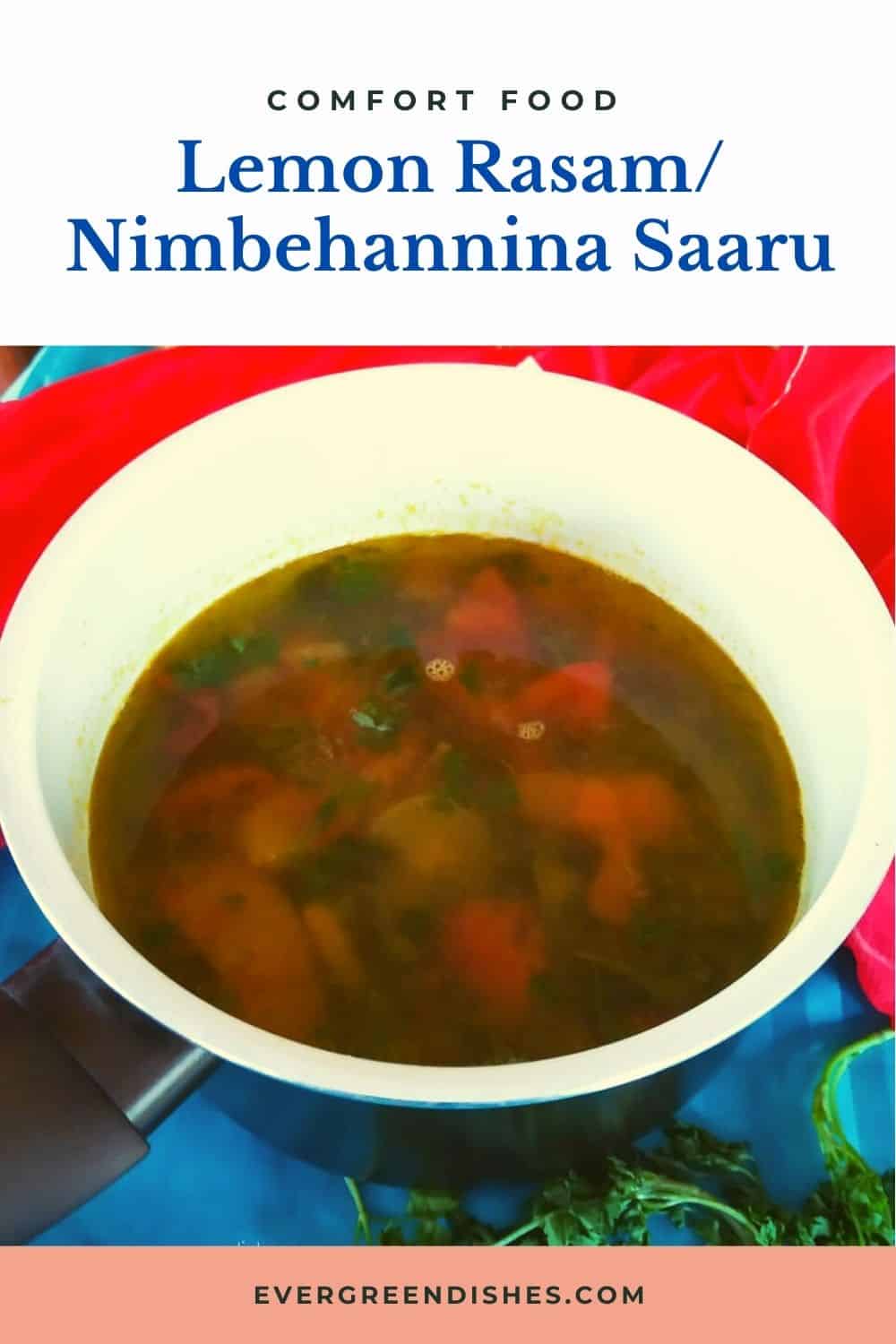
    lemon rasam
    lemon rasam

    About the  event: 

    It’s raining  and we at Shhh Secretly Cooking Challenge have a host of monsoon recipes. The theme was suggested by Shobha Keshwani. She is a wonderful blogger who showcases many kinds of recipes on her blog. I want to try her Adraki Aloo.   Coincidentally, she is my partner too for the challenge. She has given me ghee and asafoetida and I have made this recipe. I had given her ginger and pepper and she has made a unique Drumstick soup

    shhh cooking secretly

    Let’s get to the  Lemon Rasam Recipe: 

    Ingredients:

    • 4 cups water
    • 2 tomatoes
    • 1 inch ginger
    • 3 green chilli
    • 1/2 teaspoon turmeric powder
    • a few curry leaves
    • 1/4 cup coriander leaves
    • 1/2 cup tur dal
    • 1 lemon
    • salt to taste


    For tempering:


    • 1 teaspoon ghee
    • 1/2teaspoon mustard seed
    • 1/2 teaspoon cumin
    • 1/4 teaspoon asafoetida
    • 1 red chilly
    • a few curry leaves
    • 1/2 teaspoon pepper powder


    Method:

    1. Wash the tur dal and cook it in a pressure cooker with a little turmeric powder. It should be soft and well cooked. 
    2. Take water in a pan, add tomato pieces, grated ginger, slit green chilli, turmeric powder, coriander and curry leaves to it. Boil them for sometime. The tomatoes should be well cooked. 
    3. Mash the dal well with the back of the ladle. Add it to the boiled broth along with salt.
    4. Make seasoning. In a small pan, take ghee, add mustard seeds. As they splutter put asafoetida and turmeric powder, throw in the red chilly, a few curry leaves and pepper powder. Put the tempering into the rasam. 
    5. Once it boils,  put lemon juice to it and remove from stove. 
    6. Lemon rasam is ready to serve. 

    Take a tip: 

    • Do not skip adding ginger, green chilli, coriander and curry leaves.
    • Use fresh coriander. Chop it finely.
    • Quantity of green chilli may be adjusted. 
    • Rasam can be used as a soup on a cold winter night. 

    Video Recipe is here : 


    lemon rasam
    Evergreendishesdev

    Lemon Rasam

    Lemon rasam is another variety of rasam. It is tasty and makes a good food during monsoon.
    Prep Time 10 minutes
    Cook Time 20 minutes
    Total Time 30 minutes
    Course: lunch ideas, Main Course
    Cuisine: karnataka, South Indian

    Ingredients
      

    • 4 cups water
    • 2 to matoes
    • 1 inch ginger
    • 3 green chilli
    • 1/2 teaspoon turmeric powder
    • a few curry leaves
    • 1/4 cup coriander leaves
    • 1/2 cup tur dal
    • 1 lemon
    • salt to taste
    • For tempering:
    • 1 teaspoon ghee
    • 1/4 teaspoon mustard seed
    • 1/4 teaspoon asafoetida
    • 1 red chilly
    • a few curry leaves
    • 1/2 teaspoon pepper powder

    Equipment

    • pressure cooker
    • pan
    • ladle

    Method
     

    1. Wash the tur dal and cook it in a pressure cooker with a little turmeric powder. It should be soft and well cooked.
    2. Take water in a pan, add tomato pieces, grated ginger, slit green chilli, turmeric powder, coriander and curry leaves to it. Boil them for sometime. The tomatoes should be well cooked.
    3. Mash the dal well with the back of the ladle. Add it to the boiled broth along with some salt.
    4. Make seasoning. In a small pan, take ghee, add mustard seeds. As they splutter put asafoetida and turmeric powder, throw in the red chilly, a few curry leaves and pepper powder. Put the tempering into the rasam.
    5. Once it boils,  put lemon juice to it and remove from stove.
    6. Lemon rasam is ready to serve.

    Notes

    • Do not skip adding ginger, coriander, curry leaves and green chilli. They give a good flavour to it. 
    • Use fresh coriander leaves and chop them finely. Remove the grime by putting in water.
    • Quantity of green chilli can be adjusted as per preference. 
    • You can use it as a soup on a cold winter night. 
    Lemon rasam/ nimbehannina saaru is a comfort food during monsoon and winter season. It is ideal to serve for a quick lunch or dinner.
    lemon rasam / nimbehannina saaru

    If you ever make this Lemon Rasam   recipe or any of my other dishes,  do take a picture and tag @foodiejayashree on Instagram or @evergreendishes on Facebook or Twitter. I will be glad to see your creation and share it further. Let’s be connected, do follow on social media platforms. Until next time, let’s stay connected.  Subscribe to get all updates and an e-book for free. Check out my e-books on Amazon.  Happy Cooking !

  • Rawa Kesari | Sheera | Prasad recipe

    Rawa Kesari | Sheera | Prasad recipe

    Jump to RecipePrint Recipe

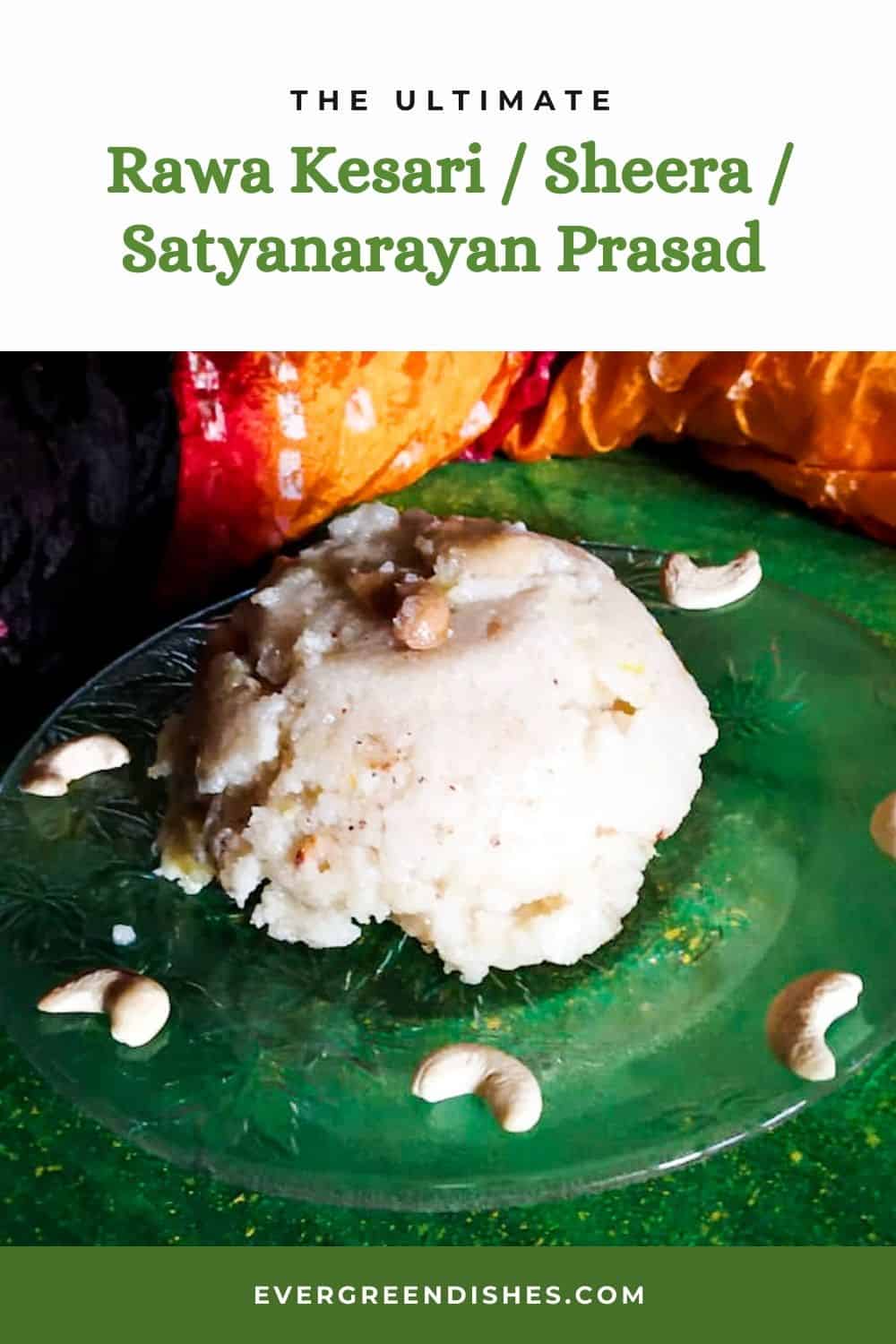
    Rawa Kesari is quite often prepared in most households. It is called by different names as Rawa Kesari, Sheera or as Sooji ka halwa in different parts of the country. In South India, Sheera is made as offering during the Satyanarayan Pooja. 

    The ease of making it and the different flavours which one can impart to it makes it a favourite of every household. It is ideal to pair with breakfast, lunch or dinner. In olden times,  kesari with jaggery was often made.  Earlier, I have shared mango kesari.

    The method of making the sheera as offering is different from the usual one. It is tasty and different from the usual one. Today, I am sharing the recipe of the same.
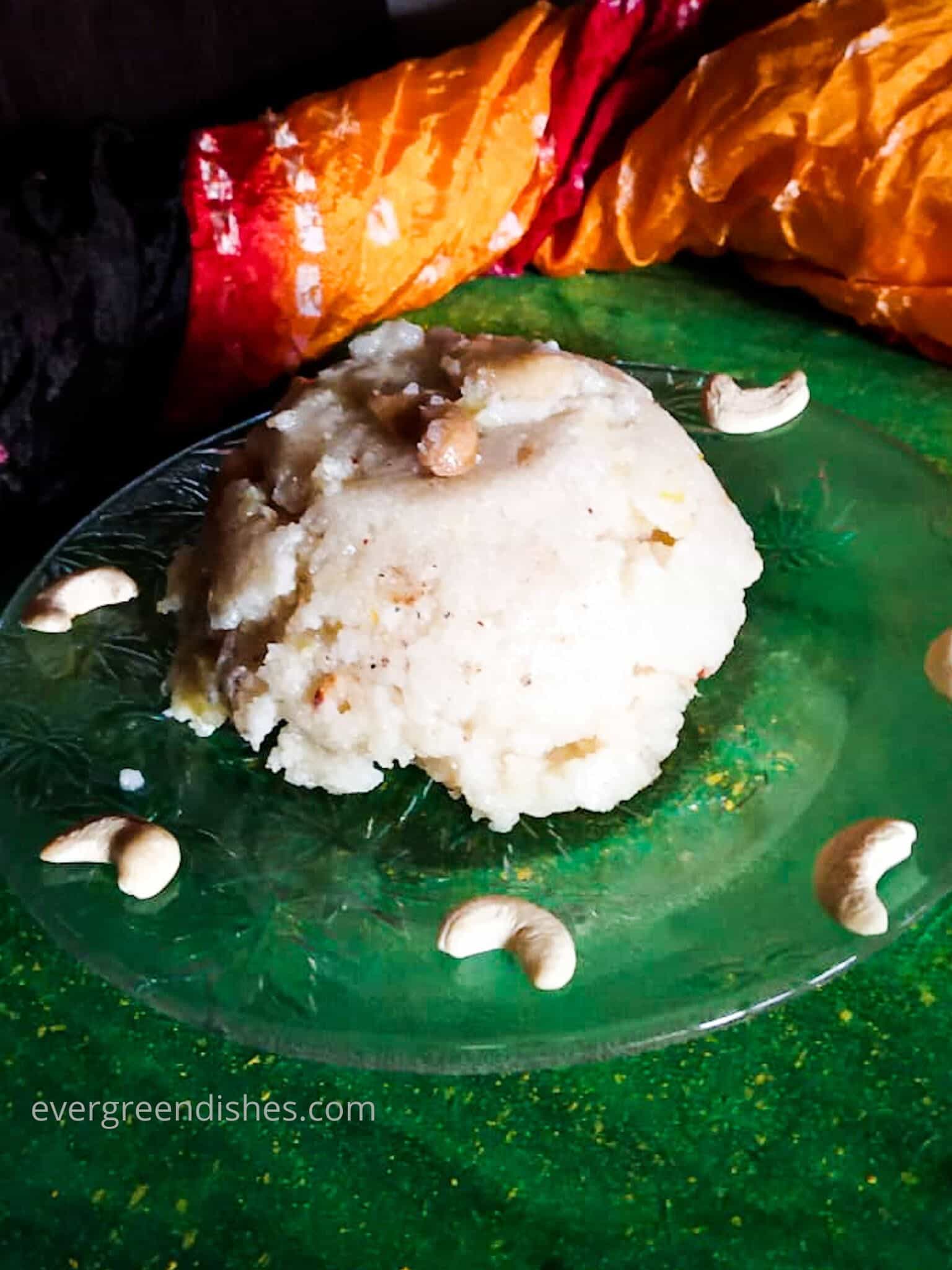
    rawa kesari/ sheera/ satyanarayan prasad


    Let us get to the recipe of Rawa Kesari / Sheera

    Ingredients :


    1 cup semolina ( measurement used :1 cup=200ml)
    2 teaspoon + 2 tablespoon ghee
    8 cashew
    1 cup water
    2 cup milk
    1 banana
    1 cup sugar
    a few strands of saffron
    1/4 teaspoon cardamom powder


    Method:

    • Take a thick bottom pan, add two teaspoon of ghee and roast the semolina to a golden colour along with cashew pieces. Be careful not to burn it.
    • Put the saffron in a little milk and set it aside.Cut thee bananana into pieces.
    • In another pan, add milk and water, put it on a low flame. Add sugar and ghee to it. Put banana pieces to it. Give a stir, once it boils, slowly add the semolina to it. Keep stirring with a ladle, no lumps should be formed. Let cook for sometime..
    • Add saffron soaked in milk  and cardamom powder to it. Give a stir. Rawa Kesari or Sheera is ready to offer to the Lord.

    Take a tip:

    • You can add a little extra ghee to it. 
    • Almonds and raisins may be used. 
    • You can roast the nuts separately in the beginning. 
    rawa kesari/ sheera/ satyanarayan prasad
    Evergreendishesdev

    Rawa Kesari / Sheera / Satyanarayan Prasad

    Rawa Kesari is a traditional sweet dish from Indian sub-continent. This version is also prepared during Satyanarayan Pooja.
    Prep Time 5 minutes
    Cook Time 15 minutes
    Total Time 20 minutes
    Servings: 6 people
    Course: Breakfast, dinner, lunch
    Cuisine: Indian, South Indian

    Ingredients
      

    • 1 cup semolina measurement used :1 cup=200ml
    • 2 teaspoon + 2 tablespoon ghee
    • 8 cashew
    • 1 cup water
    • 2 cup milk
    • 1 banana
    • 1 cup sugar
    • a few strands of saffron
    • 1/4 teaspoon cardamom powder

    Method
     

    1. Take a thick bottom pan, add two teaspoon of ghee and roast the semolina to a golden colour along with cashew pieces. Be careful not to burn it.
    2. Put the saffron in a little milk and set it aside.Cut thee bananana into pieces.
    3. In another pan, add milk and water, put it on a low flame. Add sugar and ghee to it. Put banana pieces to it. Give a stir, once it boils, slowly add the semolina to it. Keep stirring with a ladle, no lumps should be formed. Let cook for sometime..
    4. Add saffron soaked in milk  and cardamom powder to it. Give a stir. Rawa Kesari or Sheera is ready to offer to the Lord.

    Notes

    You can add a little extra ghee to it. 
    Almonds and raisins may be used. 
    You can roast the nuts separately in the beginning. 

    Pin it for later:

    Rawa kesari | Sheera | Prasad recipe is an offering made to the Lord during Satyanarayan Puja. It is tasty dish. Give a try to this version of prasad recipe.
    Rawa Kesari / Sheera

    If you ever make this Rawa Kesari / Sheera recipe, take a picture and tag  @foodiejayashree on Instagram or @evergreendishes on Facebook or Twitter. I will be happy to see your creation and share them further. Subscribe to get all updates and book of handyhints for free.

  • Menthe Matvadi Palya | Matodi Palya | Karnataka recipes

    Menthe Matvadi Palya | Matodi Palya | Karnataka recipes

    Jump to Recipe 

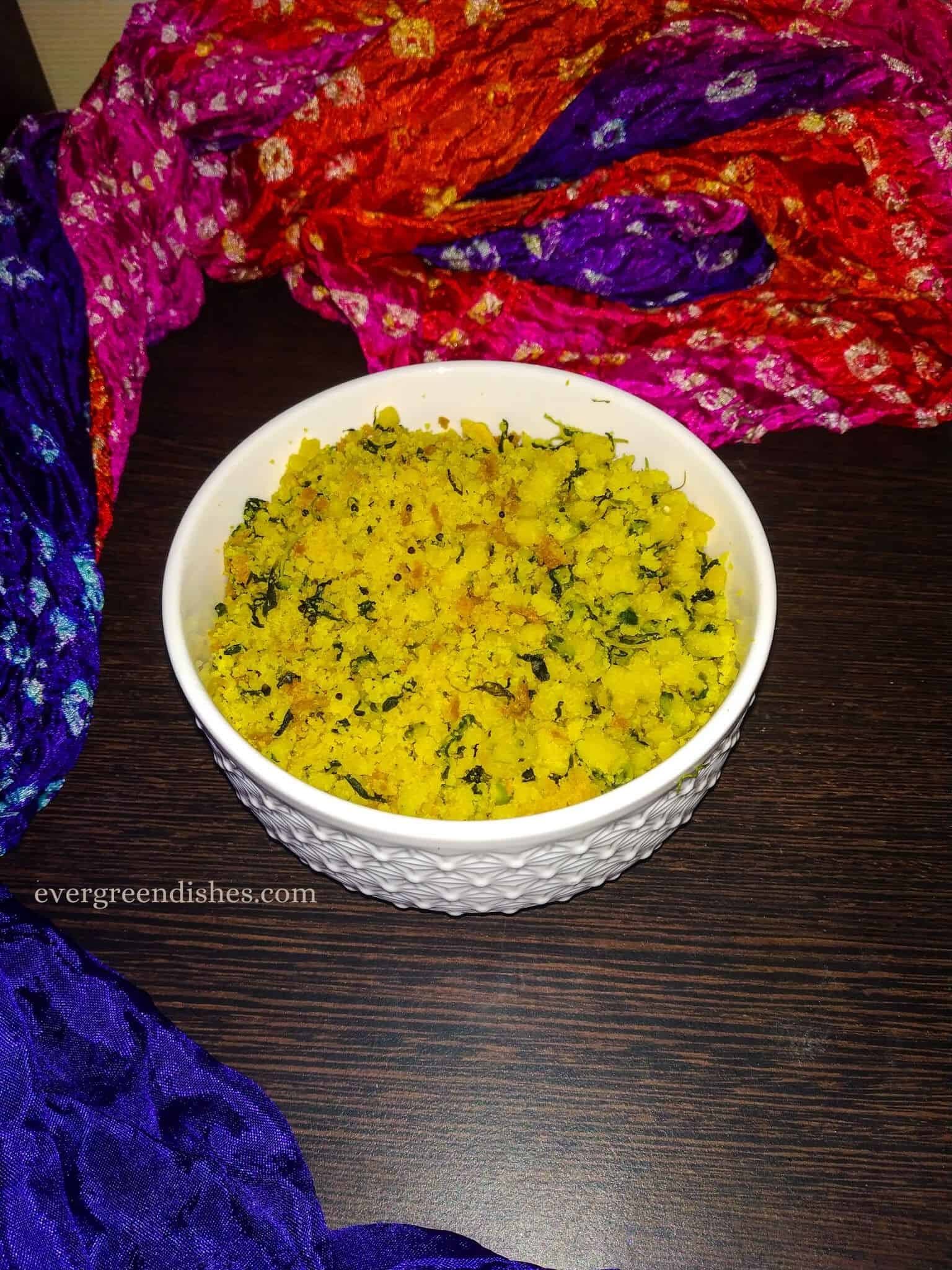
    Menthe Matvadi Palya / Matodi Palya  is a traditional side dish from Karnataka. Fenugreek leaves are cooked along with ground paste of bengal gram to make this delicious accompaniment. It is a no onion garlic recipe. It is vegan and makes a healthy side dish. A delicious side dish, one can eat it as a snack too. 

    It is one of the heirloom recipes, I wanted to post it since a long time and it is on my blog today.  Menthe Matodi Palya  is a dish you make it once in a way and enjoy, it needs good amount of oil to cook and ample time also. Thus, one needs to be liberal with the use of oil here.  It pairs well with steamed rice or one can serve it as a side dish along with rice and rasam. It may eaten by itself as a snack too. 

    I love using fenugreek leaves in my cooking as it gives a good flavour to many dishes. Moreover, it is rich in nutrients as Vitamin K, Vitamin C, Vitamin A, folate, Riboflavin and Pyridoxine. It also contains many antioxidants. It is low in calories. It helps to control diabetes and anaemia. It is good for the digestive system.

    menthe matvada palya

    About the event: 

    It’s time for Shhh Secretly Cooking Challenge post. The theme for the month of June was suggested by Seema Doraiswamy Sriram as ” Fear Not The Bitter”. Seema is a wonderful blogger who blogs at Mildly Indian. She  has many delicious recipes with a good twist in them. I love the simplicity of her cooking and bookmarked the black rice ladoo and guava chutney to make it soon.  Seema was my partner and she gave me coconut and  green chilly as the secret ingredients. But since I had not used coconut, I asked for a change and it was oil she gave me and I made this Matvadi Palya.  I had given oil and cumin as the secret ingredients to Seema  and she has made this delicious side dish Karela ka Bharta

    Karnataka recipes :

    The other karnataka recipes shared earlier on the blog are Huli Nuchu, Mixed Vegetable Kootu, Bisebelebath. Among the sweets, we cherish the traditional Ragi Halbai and Bellada Sheera.

    Let’s get to the recipe of Menthe Matvada Palya /Matodi Palya : 

    Ingredients:


    1 cup bengal gram  (Measurement used: 1 cup = 150ml) 
    2 cluster (bunch) fenugreek leaves
    5 green chilly
    water (little)
    3 tablespoon oil
    1/2 teaspoon mustard
    asafoetida
    1/4 teaspoon turmeric powder
    salt

    Method:


    1.Wash and soak bengal gram for two hours.
    2. Separate the fenugreek leaves. Chop them and put them in water. Clean it several times to remove the grime.
    3.Remove the bengal gram from water and grind it along with green chilly. Add little water while grinding.
    4. Heat oil in a pan, add mustard seeds. As it splutters, put asafoetida and turmeric powder to it. Now, put the fenugreek leaves. Let them cook for a minute. Once the methi leaves are cooked, add the ground mixture to it. Put salt and mix it. Let it cook on a low flame. Keep on stirring with a ladle, otherwise, the wet mixture forms a mass and  it will stick to the pan. All the efforts  turn to be a waste.  From the wet mixture, it cooks to a dry, delicious curry. It needs at least ten to fifteen minutes to cook perfectly. A perfectly cooked dish is dry and grainy. 


    Take a tip: 

    • Add very little  water to grind it to a coarse paste.
    • Coconut and ginger may be added while grinding. I have not added. 
    • A little cumin may be put in the seasoning.
    Print Recipe

    Menthe Matodi Palya

    Menthe Matodi Palya is a delicious side dish from Karnataka. It is a , healthy, vegan, no onion garlic, side dish.
    Prep Time 15 minutes
    Cook Time 20 minutes
    Soaking time 30 minutes
    Total Time 1 hour 5 minutes
    Course: dinner, lunch
    Cuisine: karnataka, South Indian

    Ingredients
      

    • 1 cup bengal gram
    • 2 cluster bunch fenugreek leaves
    • 5 green chilly
    • water little
    • 3 tablespoon oil
    • 1/2 teaspoon mustard
    • asafoetida
    • 1/4 teaspoon turmeric powder
    • salt

    Method
     

    1. 1.Wash and soak bengal gram for two hours.
    2. Separate the fenugreek leaves. Chop them and put them in water. Clean it several times to remove the grime.
    3. 3.Remove the bengal gram from water and grind it along with green chilly. Add little water while grinding.
    4. Heat oil in a pan, add mustard seeds. As it splutters, put asafoetida and turmeric powder to it. Now, put the fenugreek leaves. Let them cook for a minute. Once the methi leaves are cooked, add the ground mixture to it. Put salt and mix it. Let it cook on a low flame. Keep on stirring with a ladle, the wet mixture forms a mass and  it will stick to the pan. All the efforts will turn to be a waste.  From the wet mixture, it cooks to a dry, delicious curry. It needs at least ten to fifteen minutes to cook.

    Notes

    Add very little  water to grind it to a coarse paste.
    Coconut and ginger may be added while grinding. I have not added. 
    A little cumin may be put in the seasoning.

    Pin it for later: 

    Menthe Matvada Palya is one of the heirloom recipes. It is a tasty side dish ideal to pair with rice and rasam.
    Menthe Matvada Palyaacc


    If you ever make this Menthe Matvadi  recipe or any of my other dishes,  do take a picture and tag @foodiejayashree on Instagram or @evergreendishes on Facebook or Twitter. I will be glad to see your creation and share it further. Let’s be connected, do follow on social media platforms. Until next time, let’s stay connected.  Subscribe to get all updates in your inbox. Happy Cooking !

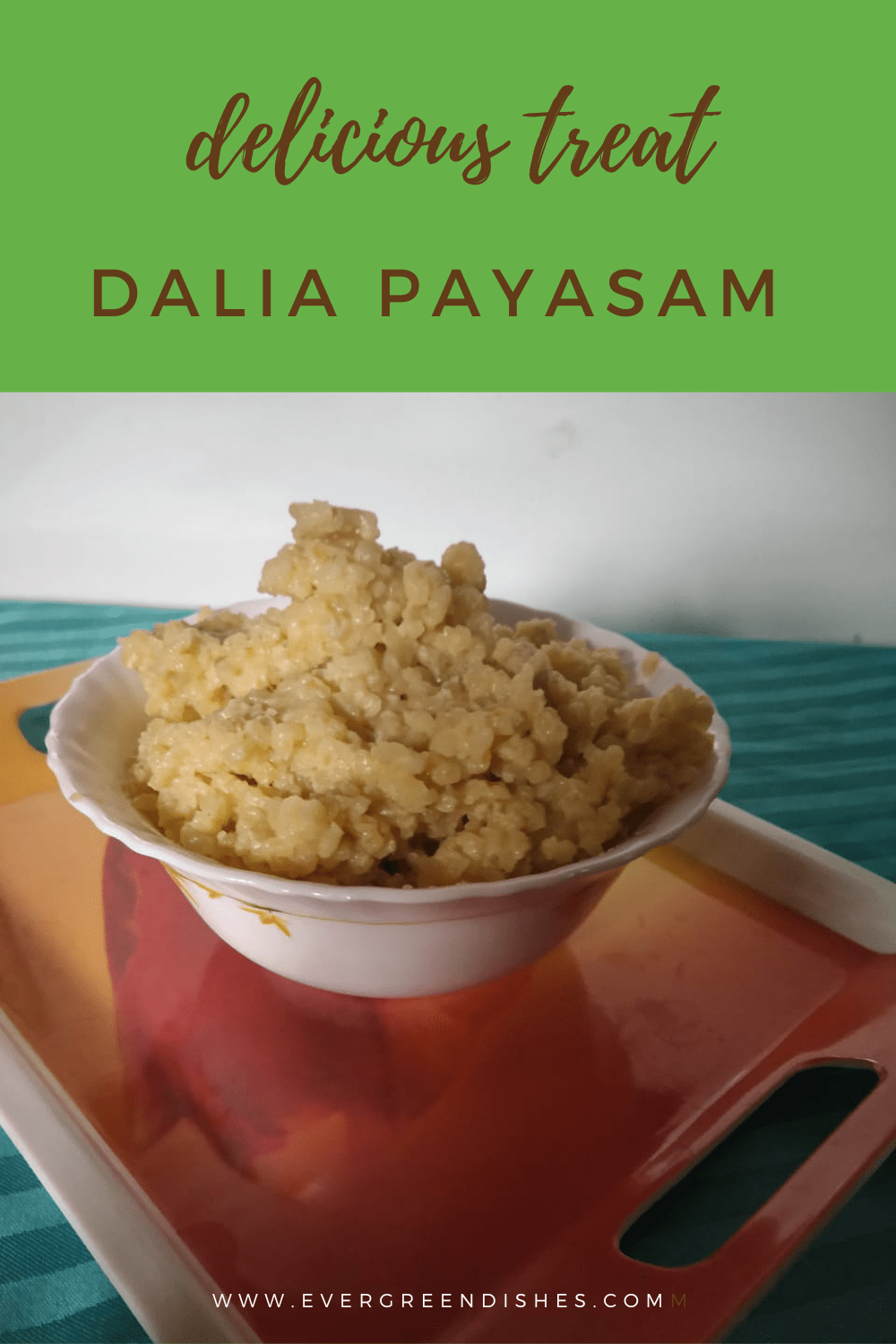
  • Dalia Payasam | Cracked Wheat Kheer

    Dalia Payasam | Cracked Wheat Kheer

    Jump to Recipe

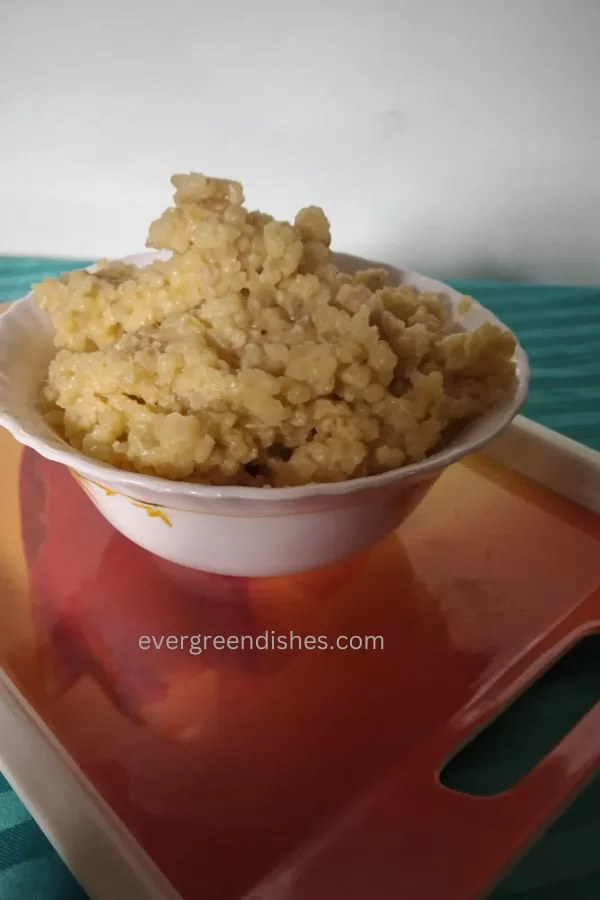
    Dalia payasam is a traditional sweet dish from Karnataka. It is rich in nutrients and a good food for people of all ages.

    What is Dalia ?

    Dalia is broken wheat grain, it is made from the whole grain. It is used in cooking different kind of dishes as upma, pulav, payasam and porridge.

    What are the other names by which it is known?

    Daliya is commonly known as broken wheat or cracked wheat. In Indian languages it is known as godhuma rava or samba rava.

    Is Dalia and Bulgur, one and same ?

    Dalia is also known as cracked wheat. It is made by milling raw wheat berries. Bulgur wheat is different from dalia. It is made from parboiled wheat berries. dried and then broken into pieces.

    Is dalia healthy ?

    Yes, dalia is a good source of nutrition. It can be used in various ways.

    What are the other kheer/ payasam recipes that you prepare ?

    Kheer/ payasam is one of the essentials during festivities. Rice kheer, moong dal payasam are the sweet dishes that children like and usually prepared. Custard apple kheer is utterly delicious. Komala Payasa is a sweet delicacy from West Bengal.

    dalia payasam

    Dalia Payasam / Broken wheat kheer

    Ingredients:

    • 2 teaspoon ghee
    • 6 almond slivered
    • 1 cup dalia           Measurement: 1 cup= 150 ml
    • 3 cups milk
    • 2 cup water
    • 1 cup grated jaggery
    • 1/2 teaspoon cardamom powder

    Method:

    1. In a small pressure cooker and ghee and roast the almond pieces. Put them aside.
    2. In the same pan, add dalia and roast until it slightly changes colour and gives a good aroma.
    3. Put two glasses of milk and water to it, give a stir, close the lid and cook for one whistle.
    4. Once the pressure releases by itself, remove the lid and mix it. Add jaggery to it and allow to cook. Adjust the consistency by adding the remaining milk and some water if needed.
    5. Finally, add cardamom powder, keep it aside. Garnish with roasted cashew pieces.
    6. Dalia payasam is ready to serve.

    Take a tip:

    1. Only milk may be used.
    2. Cashew nut and raisin can be used.
    3. A few strands of saffron enhances the taste.
    4. Use more quantity of jaggery if you want more sweetness.

    Print Recipe

    Dalia Payasam
    Evergreendishesdev

    Dalia Payasam

    Dalia Payasam is tasty and apt for any festive ocassion. It is healthy and ideal to use on a regular basis.
    Prep Time 10 minutes
    Cook Time 20 minutes
    Total Time 30 minutes
    Servings: 4 people
    Course: traditional recipes, traditional sweets
    Cuisine: Indian

    Ingredients
      

    • 2 teaspoon ghee
    • 6 almond cut into pieces
    • 1 cup dalia
    • 3 cups milk
    • 2 cup water
    • 1 cup grated jaggery
    • 1/2 teaspoon cardamom powder

    Equipment

    • 1 pressure cooker
    • 1 ladle
    • 2 bowls

    Method
     

    1. In a small pressure cooker and ghee and roast the almond pieces. Put them aside.
    2. In the same pan, add dalia and roast until it slightly changes colour and gives a good aroma.
    3. Put two glasses of milk and water to it, give a stir, close the lid and cook for one whistle.
    4. Once the pressure releases by itself, remove the lid and mix it. Add jaggery to it and allow to cook. Adjust the consistency by adding the remaining milk and some water if needed.
    5. Finally, add cardamom powder, keep it aside. Garnish with roasted cashew pieces.
    6. Dalia payasam is ready to serve.

    Notes

    Only milk may be used.
    Cashew nut and raisin can be used.
    A few strands of saffron enhances the taste. 

    Pin it for later:

    dalia payasam
    dalia payasam

    If you ever make this recipe, take a picture and share it by tagging @foodiejayashree on Instagram or @evergreendishes on Facebook. I will be glad to see and share your creation further.
    Check out my e-books on Amazon. Do not miss any post, subscribe to get all updates and an e-book for free !


  • Coconut Rice

    Coconut Rice

    Jump to Recipe Print Recipe

    Coconut Rice | Coconut Rice Recipe | South Indian Cooking

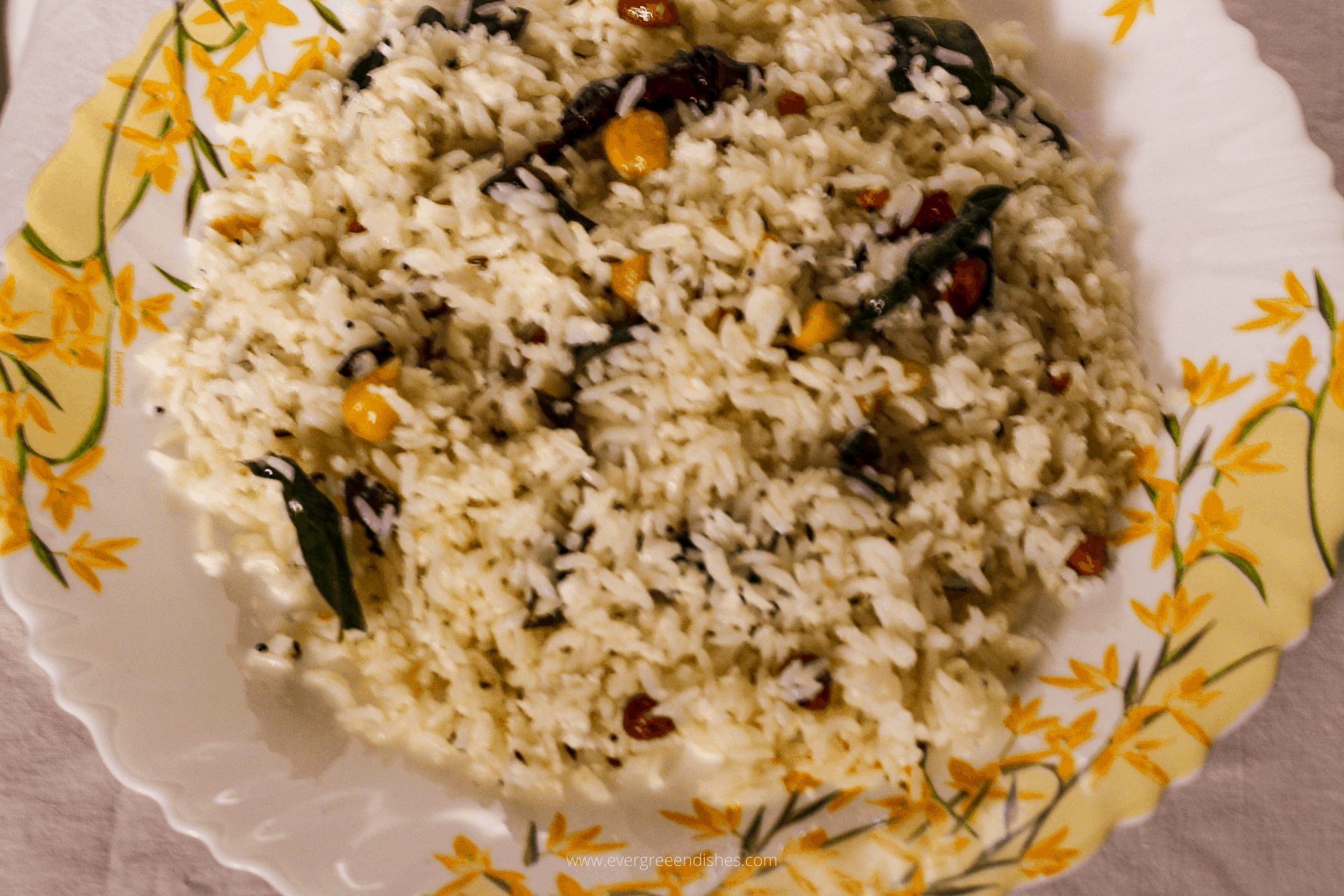
    Coconut Rice is a flavoursome, easy to make  rice dish from South India. The goodness of coconut  along with taste of cumin and curry leaves blend  well to give a tasty and easy to make dish. It can be eaten as it is or served with a few papad and fryums.

    A no onion garlic recipe, coconut rice  is ideal for festive days. It is simple yet flavoursome. I often make it during holidays as it is loved at home. It is ideal to serve  for lunch or dinner. A good thing, you can make use of the left over rice too.

    It does not need any accompaniments but I usually make some fryums and papads to pair them together. Moreover, my family members  love to top it with a few pieces of these fryums.

    The ingredients that goes into the making of Coconut Rice are:

    Rice: Well cooked rice, that is neither too smudgy or soft. You can use the regular sona masuri rice here.

    Coconut: Use fresh grated coconut  to make this dish.

    Curry leaves : Curry leaves give a good aroma to it.

    Cashew pieces : They give flavour to the dish. Be sure to roast them well, you need a golden tinged one.

    Groundnuts: Not a necessity, but they taste good in most South Indian dishes.

    Asafoetida: It  is one of the essentials of the South Indian cooking.

    Coconut Rice
    Coconut Rice

    About the event:

    Sending this to Healthy Wellthy Cuisine, the theme is “Satvik Treat”. The theme was suggested by Ruchi Shah, who is an expert cook. I loved her Raw Mango Thokku and want to try it. Other satvik recipes that you may like to try are


    Recipe of Coconut Rice:

    Ingredients:

    • 1 cup  rice
    • 2 tablespoon oil
    • 1/2 teaspoon mustard
    • 1/4 teaspoon asafoetida
    • 1/2 teaspoon cumin
    • 1 teaspoon bengal gram
    • 1 teaspoon urad dal
    • 2 tablespoon groundnut
    •  8 cashew
    • 4 red chilly
    • a few sprigs of curry leaf
    • 1/2 cup coconut
    • salt to taste

    Method:

    1. Wash the rice and cook it in pressure cooker, adjust the water quantity accordingly.  Once the pressure releases, keep it aside.
    2. Take oil in a pan, add mustard seeds, as it splutters, put bengal gram, urad dal, groundnuts. Saute for a while. Put cashew pieces and red chilly into it. Throw in the curry leaves, the seasoning is ready. Keep it aside.
    3. Put rice, salt and coconut to it. Mix it.
    4. Coconut rice is ready to serve.

    Take a tip:

    • Grated coconut may be added in the seasoning. I do not do it, I prefer putting it over and mixing.
    • A few green chilly and ginger may be added in the seasoning.

    Print Recipe

    Coconut Rice

    Coconut Rice

    Coconut Rice is a flavoursome rice from South India. A no onion garlic recipe, it is ideal for festive days.
    Prep Time 10 minutes
    Cook Time 20 minutes
    Total Time 30 minutes
    Course: dinner, festive cooking, lunch box, lunch ideas
    Cuisine: South Indian

    Ingredients
      

    • 1 cup rice
    • 2 tablespoon oil
    • 1/2 teaspoon mustard
    • 1/4 teaspoon asafoetida
    • 1/2 teaspoon cumin
    • 1 teaspoon bengal gram
    • 1 teaspoon urad dal
    • 2 tablespoon groundnut
    • 8 cashew
    • 4 red chilly
    • a few sprigs of curry leaf
    • 1/2 cup coconut
    • salt to taste

    Method
     

    1. Wash the rice and cook it in pressure cooker, adjust the water quantity accordingly.  Once the pressure releases, keep it aside.
    2. Take oil in a pan, add mustard seeds, as it splutters, put bengal gram, urad dal, groundnuts. Saute for a while. Put cashew pieces and red chilly into it. Throw in the curry leaves, the seasoning is ready. Keep it aside.
    3. Put rice, salt and coconut to it. Mix it.
    4. Coconut rice is ready to serve.

    Notes

    Grated coconut may be added in the seasoning. I do not do it, I prefer putting it over and mixing.
    A few green chilly and ginger may be added in the seasoning. 

    Pin it for later:

    Coconut rice is a simple yet flavoursome rice dish from South India. A no onion garlic recipe, it t is ideal for festive days.
    Coconut Rice

    If you have liked this post, do share it with your family and friends. If you ever make this, take a picture and share it by tagging @foodiejayashree on Instagram or @evergreendishes on Facebook or Twitter.


  • Aamras | Mavina Hannu Seekarne

    Aamras | Mavina Hannu Seekarne

    Jump to Recipe Print Recipe

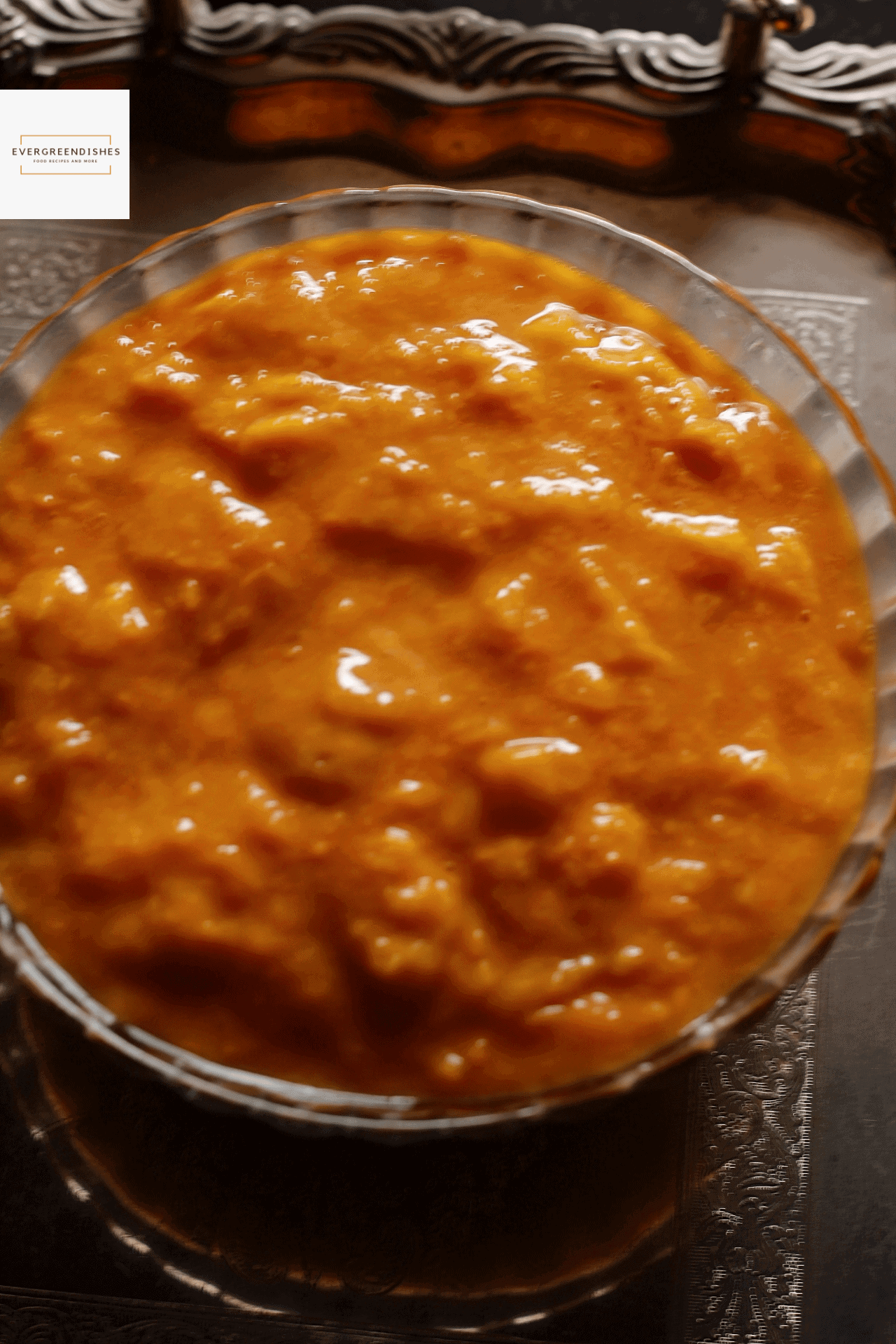
    Aamras / Mavina Hannu Seekarne is a popular sweet dish made with mangoes. It is usually served with puris.

    Mango is the king of fruits and loved by one and all. We make numerous dishes with mango but nothing is as good as eating the fruit itself. In the order, Aam Ras or Mavina Hannina Seekarne unanimously comes next. I realised, I have not put this one on my blog and  with this it’s a adieu to mango, until the next season arrives.

    Monsoon has started in most parts of India and it means the end of mangoes for the year.                    Amba bhaat, mango panna cotta and sunshine drink were the recipes of mango I posted earlier this year. Mango is the only fruit which everyone loves but available only once a year. The summers get better as everyone waits for the mangoes.


    Since time immemorial, mavina hannina seekarne / aam ras is cherished by Indians. It is an emotion, a joy, a nostalgia and many stories to brew. Summer is incomplete without it for many of us. It pairs well with chapati or puri. It is also served with obbattu (holige) as a festive sweet.

    I have vivid memories about the mango season. We used to get good fruits from the farm and enjoyed them. Now, I have a couple of trees at home.

    Aam Ras is made in different ways in different parts of the country. In Karnataka, a little milk  is added to it. In coastal karnataka, coconut is ground with cardamom and sugar to give a good taste. In Gujarat, it is known  as keri no ras and  no milk is added in it.

    Aam Ras / Mavina Hannu Seekarne

    How to extract the pulp?

    There are two methods : Traditional and Modern

    Traditional Method

    The traditional method is to squeeze the pulp using hands. It is the best way to make it and tastes magical. The process is cumbersome, one has to wash the fruits, soften them, extract the pulp, if needed put the seed in some milk, one can extract again from it. The skin is discarded, the seeds too are discarded, but few people  serve them along. They love eating from it.

    The Modern Method

    The fruit is cut into cubes and then blended. This is simplified version is all that I can say. But, if one needs the real taste, follow the traditional method and do not blend it later.

    This is the last mango recipe for the year, send it to MangoTango at Healthy Wellthy Cuisine. It is a fortnightly event, where we create recipes on a particular theme suggested by a member. This fortnight, Narmadha from Nams Corner suggested the theme. She has many good recipes on her blog, I liked her recently published ragi cookies.


    What goes in Aamras ?

    • Mango: It is the star ingredient. It would not be wrong to say as the only ingredient too.
    • Milk : a little milk to extract the extra juice from the mangoes.
    • Jaggery : It is optional. If the mangoes are sweet, do not add it.
    • Salt: apinch of it

    How to store Aamras?

    Aamras can be stored in the refrigerator for a couple of days. Keep it closed with a lid.

    Making of Aamras :

    Choose ripe mangoes. Wash them well and keep them in a bowl of water for half an hour. Get yourself prepared for the work as it is not an easy task. It is messy. Wipe dry. Squeeze them lightly as a prep work before extracting the pulp. We used to sit around during summer holidays at mom’s place and two of us would soften the mangoes while the other two would extract the pulp. I know, we are a single person handling everything at home.

    It is then squeezed from both the skin and the seed. The process is repeated for all the mangoes. Jaggery is dissolved in milk and put.

    Depending on the household, the pulp is blended or served as it is. I prefer to serve as it is. Blending make it even and thick.


    If you have liked this post, pin it for later.

    Aam Ras / Mavina Hannu Seekarne is a popular sweet dish made with mangoes. It is usually served with puris, chapati and even obbattu.
    Aam ras/ Mavina hannu seekarne

    Looking for another recipe with mango ? You can try this yummy pudding

    Aam Ras / Mavina Hannu Seekarne

    Aam Ras / Mavina Hannu Seekarne is a delicious sweet dish from mangoes. It tastes good with puri, chapati or even obbattu.
    Course: sweets, traditional recipes
    Cuisine: Indian, karnataka

    Ingredients
      

    • 12 mangoes
    • 1 cup milk
    • 1 tablespoon jaggery
    • a pinch of salt

    Method
     

    1. Method 1 :
    2. Choose ripe mangoes. Put them in water, scrub  and keep them immersed  for sometime.
    3. Remove the mangoes, pat dry with a clean cloth.
    4. Soften the fruits by pressing them lightly with the hand.
    5. Keep two wide bowls. Remove the stalk and squeeze the pulp in a wide bowl. Put the seed into it, and slowly extract the pulp from the skin. Put the skin aside and now, extract pulp from the seed.
    6. You can immerse the seed in milk and use it again after sometime.
    7. Step 4 and 5 is repeated for all the fruits.
    8. Add milk and jaggery. Salt is optional.
    9. Mix and serve.
    10. Method 2 :
    11. Wash the fruits. Peel the skin with a scraper.
    12. Cut the fruit into pieces.
    13. Put jaggery in milk and keep it aside.
    14. Blend into a puree, add the jaggery dissolved milk and blend once again.
    15. Mango Pulp is ready to serve.

    Notes

    Use  good quality mangoes. The mangoes should be ripe.
    Addition of milk and  jaggery is optional. In most households, it is added. 
    The quantity of jaggery used depends on the sweetness of the mangoes. 
    Addition of salt is also optional. It gives a good taste. 

    If you have liked this post, do share it with your family and friends. If you ever make this, take a picture and share it by tagging @foodiejayashree on Instagram or @evergreendishes on Facebook or Twitter.

    Let’s be connected, the follow buttons are on the side bar. Subscribe to get all updates and an e-book for free!


  • Khandvi | Suralichi Vadi | Recipe with video

    Khandvi | Suralichi Vadi | Recipe with video

    Jump to Recipe Print Recipe

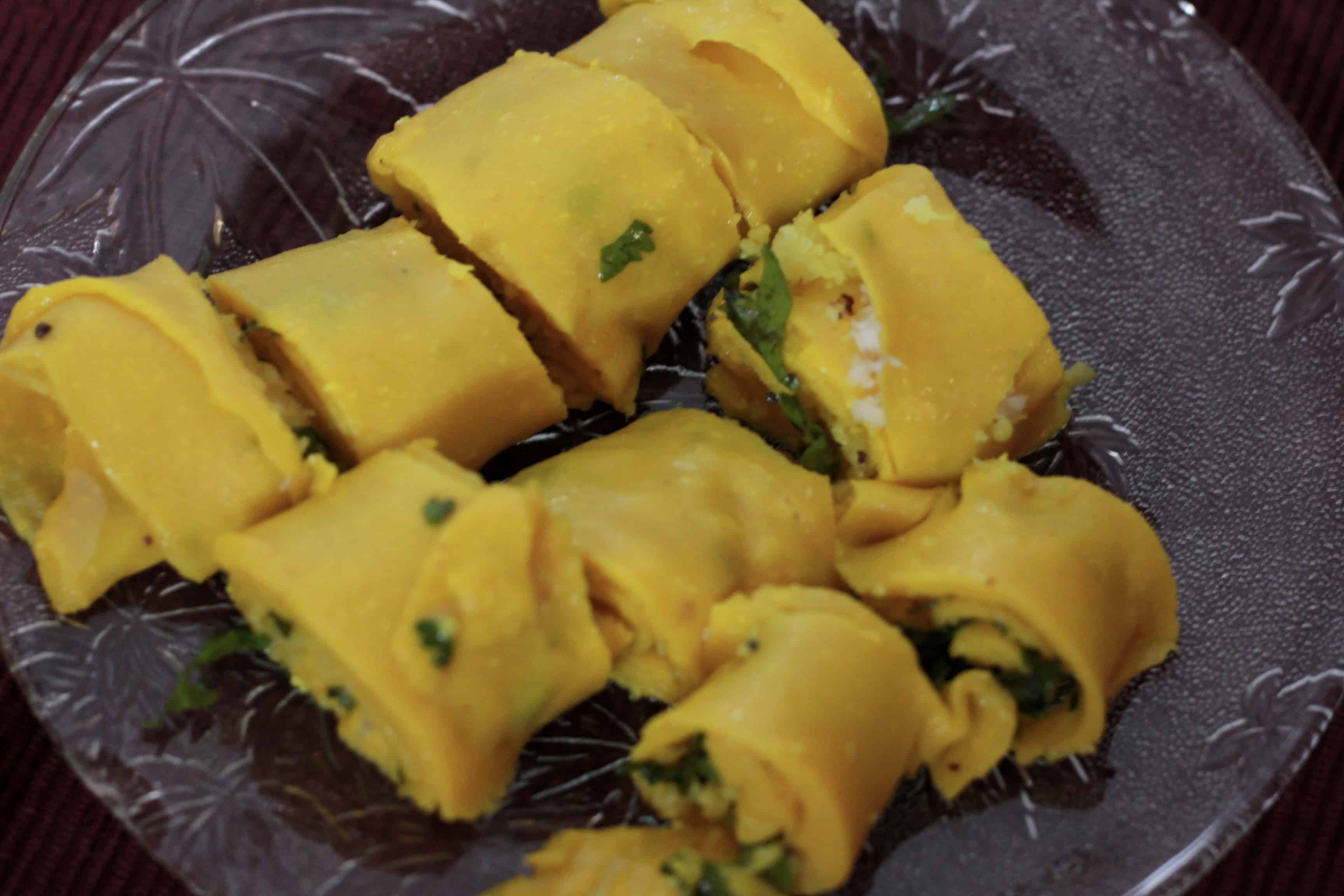
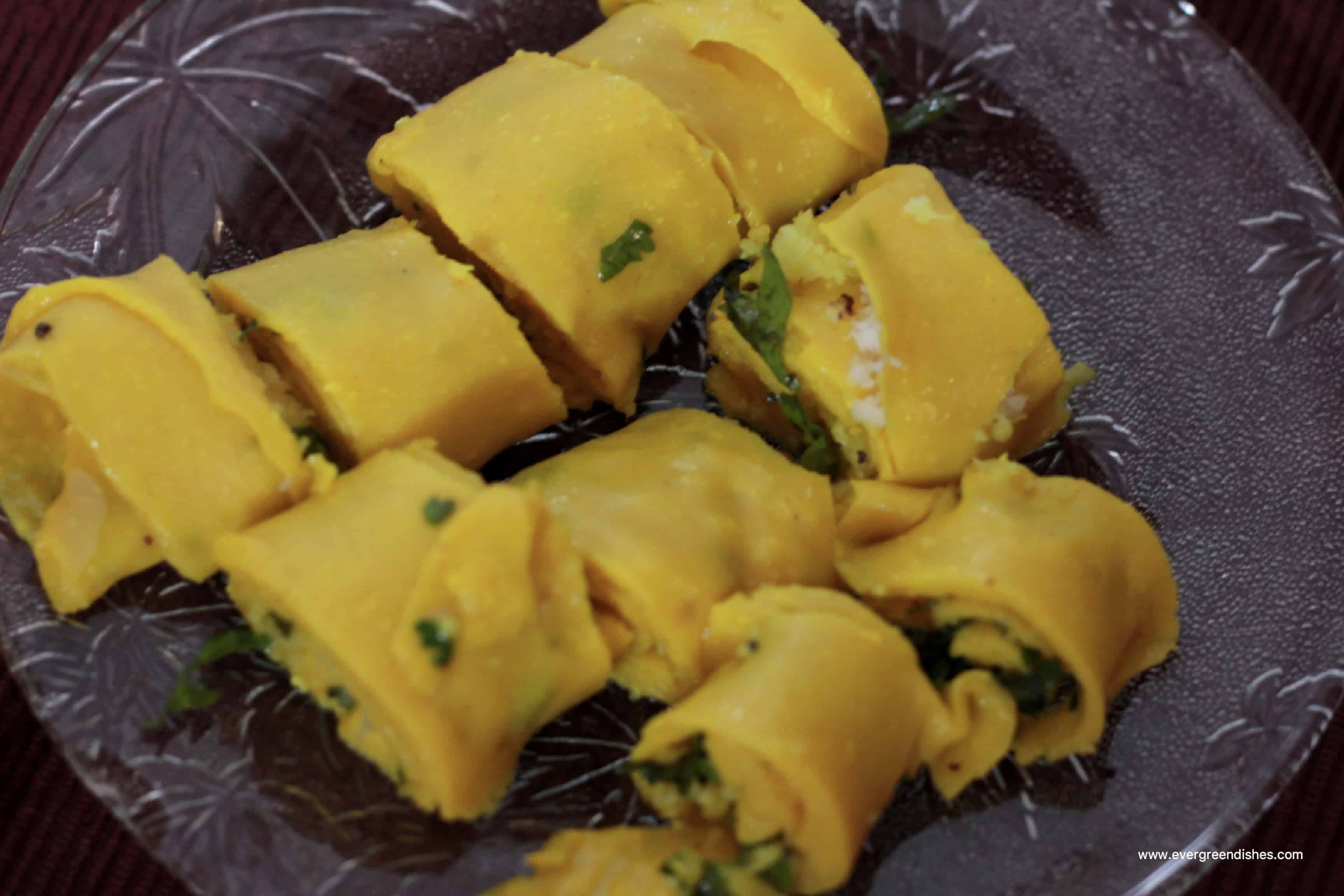
    Khandvi / Suralichi Vadi is a savoury snack from Maharashtrian and Gujarati cuisine. Yellowish, tight rolls of gramflour and curd , tempered with spices make a good snack anytime. They are slightly spicy and tangy in taste. It is also known as Surlicha Vadi and Patuli. It is one of the dishes that you can easily make in less than 30 minutes, tasty and ideal to serve with any course of meal.

    Any tips for making perfect khandvi?

    Like any new recipe, this dish also needs practice. The key to making a perfect khandvi:

    • You need sour butter milk.
    • Take the proper measurement of ingredients.
    • Once it is done, spread it quickly on the greased plate as thin as you can.
    • Sieve the gram flour before using it.

    Is there any substitute for buttermilk?

    Thick curd can be used. Blend and mix it with two glasses of water. 

    What can one do if the curd is not sour?

    It is best to keep a day out prior to making. But incase, you have not kept it or planned in the last minute, lime juice may be added to the batter.

     Khandvi/ Suralichi Vadi Recipe

    1 cup = 200 ml

    Ingredients:

    • 1 cup gram flour
    • 1 cup sour curd
    • 2 cup water
    • 1 inch ginger
    • 2 green chilly
    • 2 tablespoon oil
    • 1/2 teaspoon mustard seeds
    • 1/4 teaspoon asafoetida
    • 1/2 teaspoon turmeric powder
    • 2 tablespoon fresh grated coconut
    • 1 tablespoon chopped coriander
    • salt

    Method:

    1. Sieve the gram flour.
    2. Take a plate and at the back side, grease it with a little oil. You will need it later.
    3. Whisk the curd, mix it with water.
    4. Grind green chilly and ginger together.
    5. Mix together gram flour, a little turmeric salt, salt, ginger-chilli paste and butter milk. No lumps should be formed.
    6. Put the batter in a thick pan and cook it on a low flame. Keep stirring.
    7. Once the mixture thickens and is done, put it on the greased plate and spread it as soon as possible.
    8. Make seasoning in a small pan. Take oil, add mustard seeds, as it crackles, put asafoetida and turmeric powder.
    9. Garnish with grated coconut and finely chopped coriander over it.
    10. Put seasoning over it.
    11. Slowly, roll it from one end to the other.
    12. Cut into small spirals.
    13. Khandvi is ready to serve.

    Take a tip:

    • Make in small quantities, it will be easier to spread it. 
    • Making perfect khandvi needs practice. My suggestion is to make it in a small quantity. Use the same measurements as given above. 

    Check out the video :

    Khandvi / Suralichi Vadi
    Evergreendishesdev

    Khandvi / Suralichi Vadi

    5 from 6 votes
    Khandvi is a popular snack from Maharashtrian as well as Gujarati cuisine of India. It is a savoury, bite sized snack ideal to serve with tea.
    Prep Time 5 minutes
    Cook Time 15 minutes
    Course: appetisers, evening snacks
    Cuisine: Gujarati, Maharashtrian

    Ingredients
      

    • 1 cup gram flour
    • 1 cup sour curd
    • 2 cup water
    • 1 inch ginger
    • 2 green chilly
    • 2 tbsp oil
    • 1/2 tsp mustard seed
    • 1/4 tsp asafoetida
    • 1/2 tsp turmeric powder
    • salt

    Method
     

    1. Sieve the gram flour.
    2. Take a plate and at the back side, grease it with a little oil.
    3. Whisk the curd, mix it with water. Again, whisk it.
    4. Grind green chilly and ginger together.
    5. Mix together gram flour, a little turmeric salt, salt, ginger-chilli paste and butter milk. No lumps should be formed.
    6. Put the batter in a thick pan and cook it on a low flame. Keep stirring.
    7. Once the mixture thickens and is done, put it on the greased plate and spread it as soon as possible.Make seasoning in a small pan.
    8. Take oil, add mustard seeds, as it crackles, put asafoetida and turmeric powder. Garnish with grated coconut and finely chopped coriander over it.
    9. Put seasoning over it.Slowly, roll it from one end to the other
    10. Cut into small spirals. Khandvi is ready to serve.

    A few other snack recipes from blog are Vegetable and Vermicelli Cutlets, Cornflakes Bhel,

    My e-books on Amazon


    Disclaimer: This post contains affilate links. You can read the policy here.

    If you ever make this, do take a picture and share it with us. I will be glad to share it further. Follow us on Facebook, Twitter, Instagram and Pinterest.

    Want to start a blog? I have my hosting with A2 Hosting and happy with the service they provide.

    Subscribe to get a book of handyhints for free !

  • Sukhdi / Gud Papdi recipe

    Sukhdi / Gud Papdi recipe

    Jump to Recipe Print Recipe

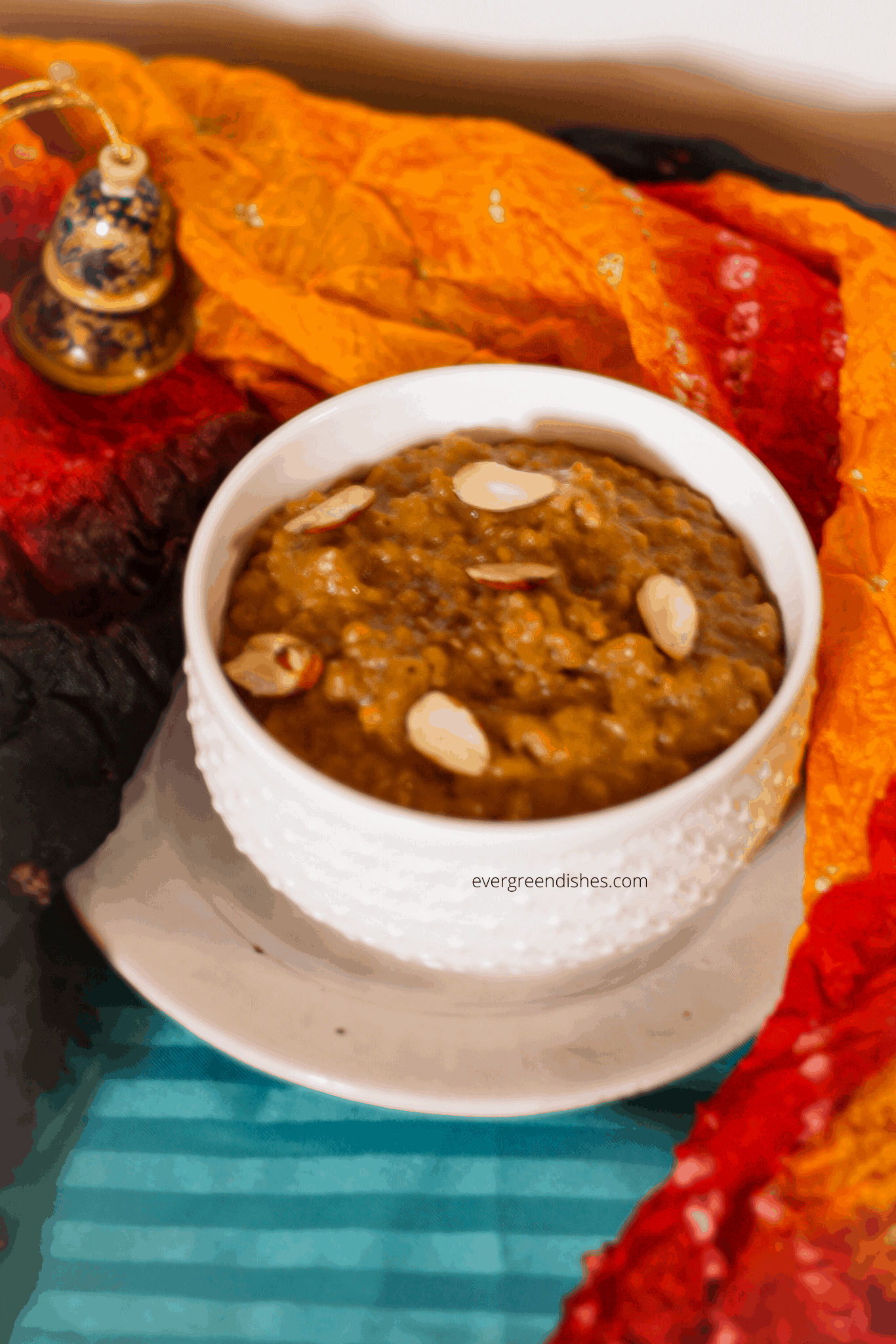
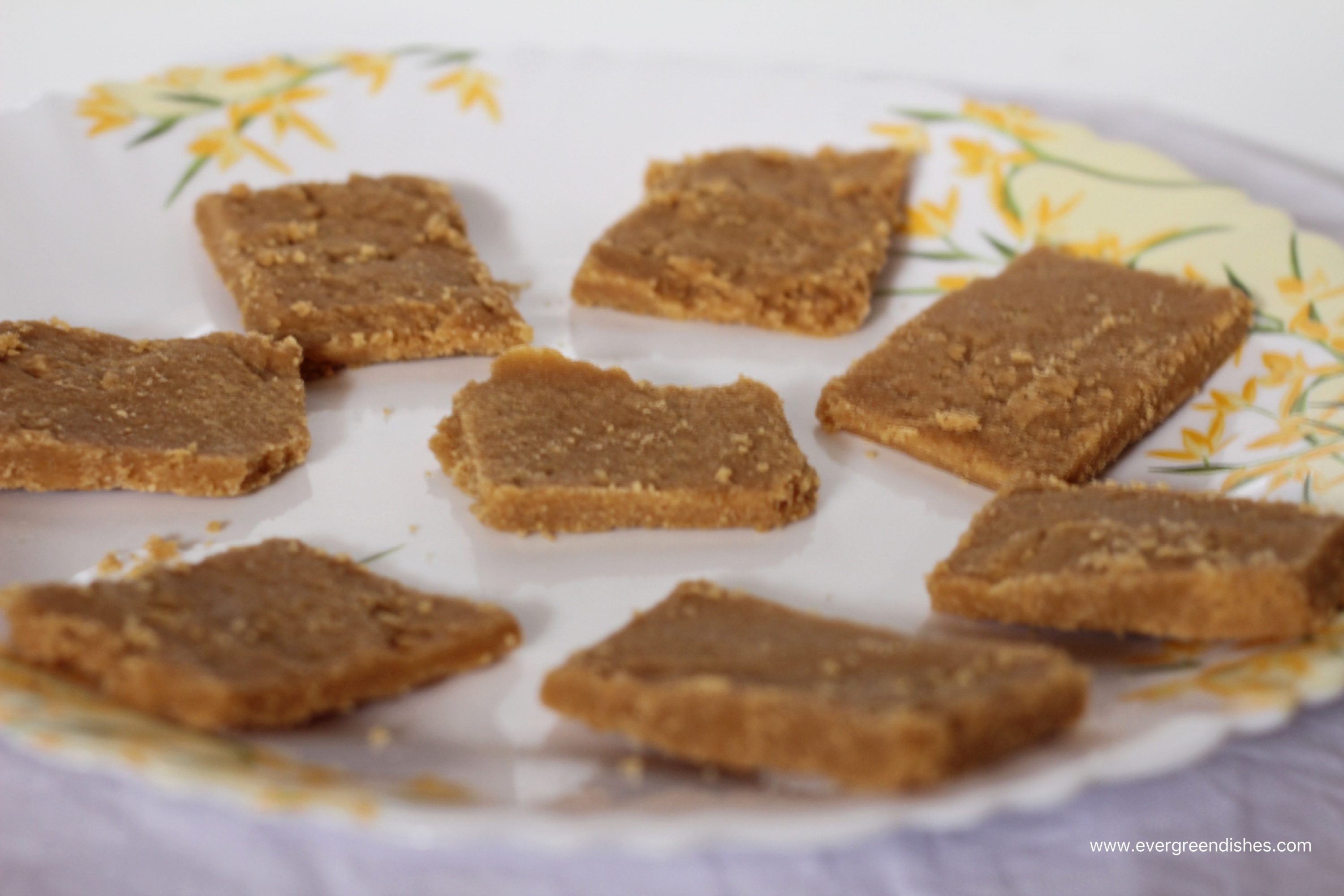
    Sukhdi / Gud Papdi is a popular Gujarati sweet. It is made using whole wheat flour, jaggery and ghee. It is soft, crumbly and has melt in the mouth texture.

    Sukhdi is quite an easy to make sweet that can be made in fifteen minutes. It is ideal to make during festivities or as a snack to eat anytime. I have tried to keep the recipe authentic, so not added any embellishments to it. One may add cashew pieces, cardamom powder or even grated coconut to it. Anyway, it tastes good as it is if made perfectly.

    It is called as Sukhdi in Gujarat while in Maharashtra it is popular as Gud Papdi or Gol Papdi.

    A few other sweet recipes from the blog that you may like are Mamra na ladoo, Tapeshwara Khaja, Ellu Holige

     Sukhdi / Gud Papdi.

    Ingredients:

    • 2/3 cup wheat flour
    • 1/3 cup ghee
    • 1/4 cup jaggery

    Method:

    1. Keep all the ingredients ready, grate the jaggery or powder it.
    2. Grease a plate with little ghee.
    3. Take ghee in a pan and heat it on a low flame.
    4. Once the ghee melts, add wheat flour to it and mix it with a ladle.
    5. Let it cook on a slow flame, keep stirring. Once the mixture changes it colour and aroma is felt, it is done.
    6. Switch off the stove, add jaggery to it mix it well and spread it over the greased plate.
    7. Let it cool for a few minutes.
    8. Cut into desired shape.
    9. Sukhdi / Gud Papdi is ready to serve

    Take a tip:

    • Quantity of ghee is in semi-liquid form.
    • Keep stirring and let the wheat flour be brown in colour. If you do not stir, it will get burnt easily.
    • Jaggery needs to be grated or powdered finely.
    • Do not add jaggery and heat it further. It may become chewy.

    Pin it for later:

    sukhdi / gud papdi
    sukhdi / gud papdi

    Here’s the video of the making of Sukhdi / Gud Papdi

    Evergreendishesdev

    Sukhdi / Gud Papdi

    Sukhdi / Gid Papdi is a soft, melt in the mouth sweet from Gujarati cuisine.
    Prep Time 5 minutes
    Cook Time 15 minutes
    Course: indian sweets
    Cuisine: Gujarati

    Ingredients
      

    • 2/3 cup wheat flour
    • 1/3 cup ghee
    • 1/4 cup jaggery

    Method
     

    1. Keep all the ingredients ready, the jaggery should be grated.
    2. Grease a plate with a little ghee.
    3. Take ghee in a pan and heat it. Once it melts, put the flour in it and roast it to a golden colour.
    4. Keep stirring, once it is done, switch off the gas.
    5. Add jaggery, mix it well and pour it on the greased plate and spread it with the spatula.
    6. Let cool for a few minutes, cut into desired shape.

    Notes

    • Quantity of ghee is in semi-liquid form.
    • Keep stirring and let the wheat flour be brown in colour. If you do not stir, it will get burnt easily.
    • Jaggery needs to be grated or powdered finely.
    • Do not add jaggery and heat it further. It may become chewy.

    If you have liked this post, do share it further.

    Follow us on social media: Facebook, Twitter, Pinterest, Instagram and YouTube

    If you ever recreate this recipe, do take a picture and tag me on Facebook or Instagram, I shall share it further with due credits.

    Check out my e-books

    Subscribe to get all updates and an e-book for free!

  • Milagai Podi/ Idli Podi

    Milagai Podi/ Idli Podi

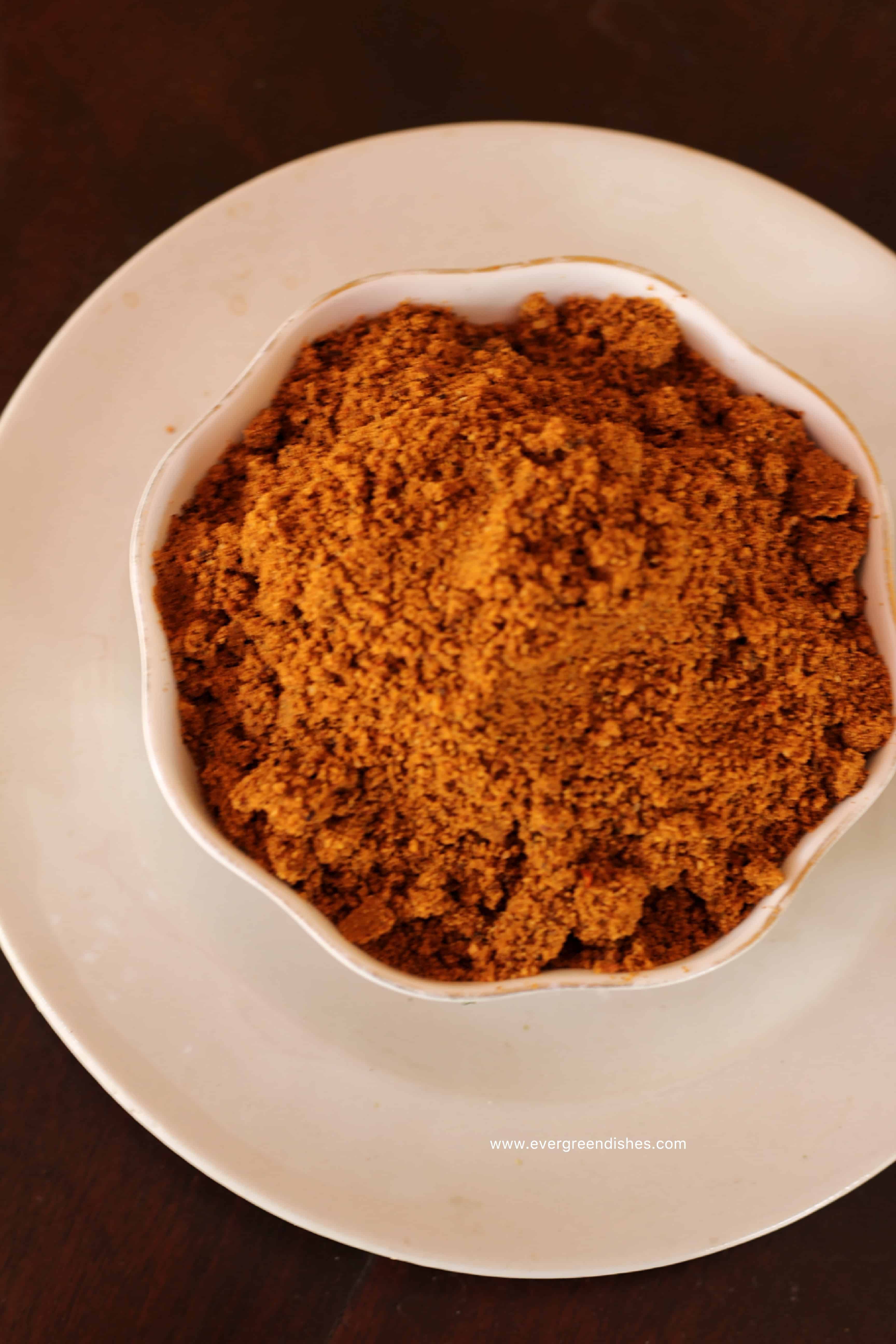
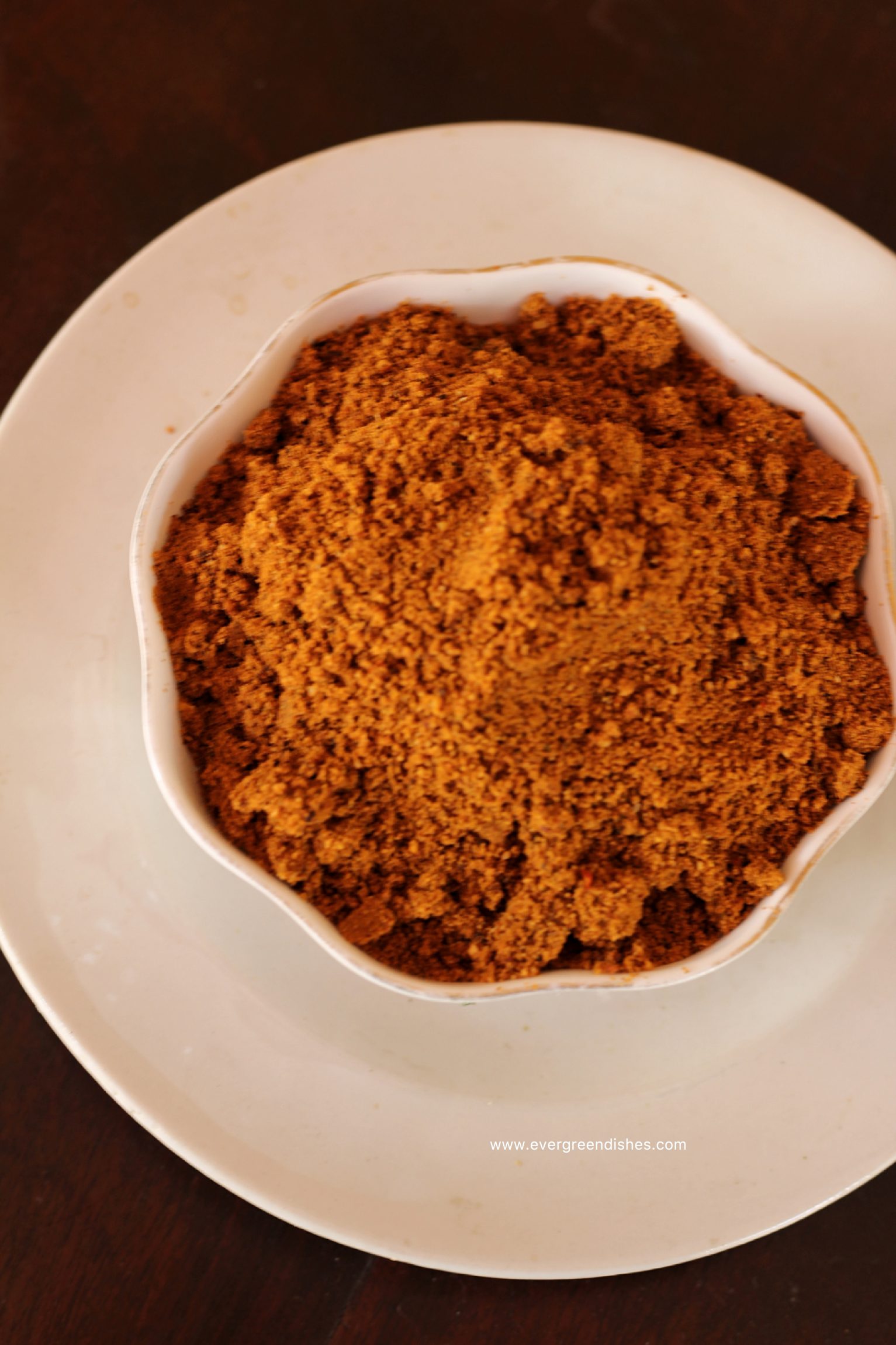
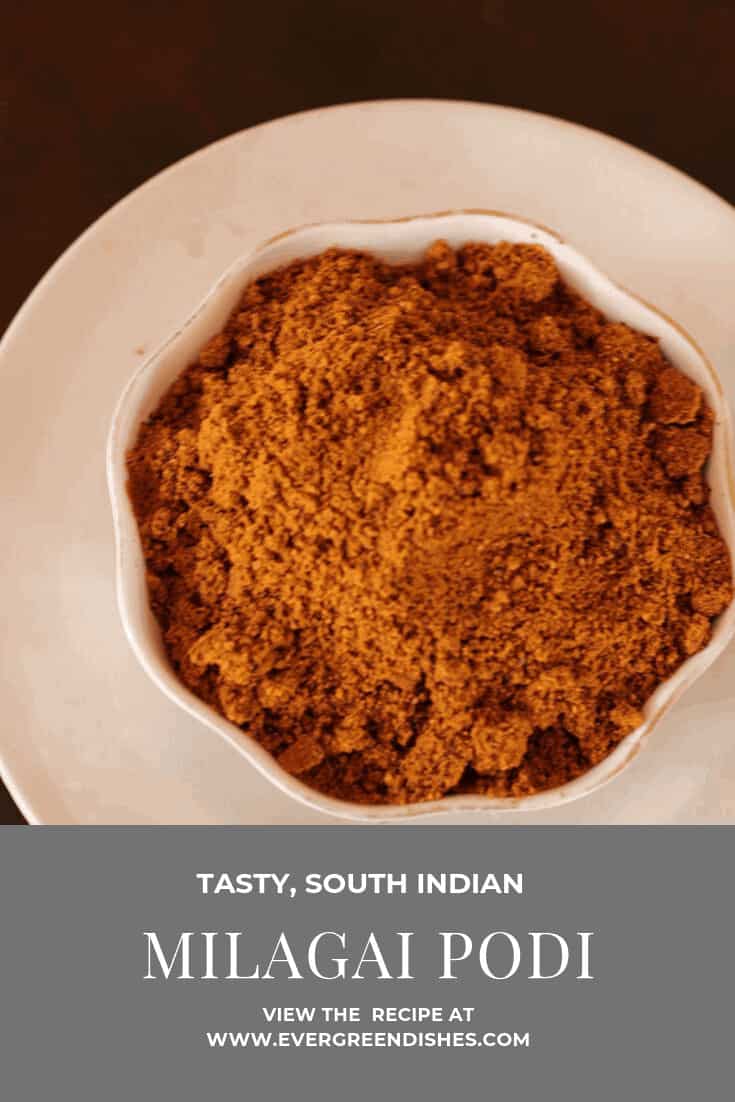
    Milagai Podi (pudi) is a lentil based spice powder stored in the kitchen shelves. It is ideal with idli and dosa. It is commonly made in Tamilnadu cuisine.

    I love the flavours of Tamilnadu, variety of dosa and idli with delicious chutney and flavoursome sambar, not to mention the crispy vada. They also have a variety of tasty snacks such as murukku and thattai. Among the rice dishes, puliodarai and lemon rice are commonly prepared.

    But, why am I speaking of Tamil Nadu cuisine ? The Shhhh secretly cooking group is preparing from this state for the month of September and I was paired with Kalyani. Kalyani gave me black gram and dry red chilly as the secret ingredients and I decided to make this humble Milgai Podi.

    The secret ingredients given by me were bengal gram and dry red chilly, she has prepared the Arichivitta Mulangi Sambar . Do check it out, it pairs well with hot steamed rice.

    Now, coming to the Milagai Podi, this is one of the essentials in any Tamilian home. It is a lentil based, dry chutney powder, preserved all round the year. They serve it with idli as an additional accompaniment along with chutney and sambar. It is usually mixed with sesame oil or ghee, the nutty flavour of sesame is really good.

    The other uses of Milagai Podi :

    • It can also be used with hot steamed rice. It tastes good with chapati and roti too.
    • In times of urgency, one can serve it immediately with idly or dosa. It is also handy during travelling.
    • You can use the left over idlis, lightly roast them on a skillet with ghee and sprinkle this chutney powder over it.
    • It makes a good accompaniment with curds rice.

    Milagai Podi / Idli Podi

    Ingredients:

    • 1 cup bengal gram
    • 1 cup black gram
    • 1 cup sesame
    • 8-10 dry red chilly
    • a few curry leaves
    • a small piece tamarind
    • jaggery
    • salt
    • 1/4 teaspoon asafoetida

    Method:

    1. Dry roast the sesame seed until they splutter and lend a good aroma.
    2. dry roast the curry leaves.
    3. Take half a teaspoon of oil and roast bengal gram on a low flame. Let them turn golden in colour.
    4. Now, similarly roast the black gram with a little oil
    5. Put half teaspoon of oil and roast the red chillies. Once, it is done, put asafoetida over it.
    6. Take a small piece of tamarind and slightly toss it in the pan.
    7. Grind the lentils and sesame seed together, do not pulse for a long time. Grind for a few seconds and again repeat it, the sesame seeds may ooze the oil out of them. Then, add the red chillly, salt, tamarind and jaggery to it, pulse it again. The chutney powder should be coarse.
    8. Once it is done, store in a clean, air tight jar.

    Take a tip:

    • Different versions of milagai podi are prepared. The quantity of bengal gram may be reduced, but I used both equally.
    • Tamarind and jaggery may be avoided, but they do give a good taste to it.
    milagai podi
    Milagai Podi
    Evergreendishesdev

    Milagai Podi

    Milagai Podi is a earthy, nutty, flavoursome side dish used with idly and dosa.
    Prep Time 10 minutes
    Total Time 10 minutes
    Servings: 2 cups of powder
    Course: condiments
    Cuisine: south india

    Ingredients
      

    • 1/2 cup bengal gram
    • 1/2 cup black gram
    • 1/2 cup sesame seed
    • 6-8 dry red chilli
    • 2 teaspoon oil
    • 1 small piece tamarind
    • 1/4 teaspoon jaggery
    • salt

    Method
     

    1. Dry roast the sesame seeds. they splutter and give a good aroma. Similarly, dry roast the curry leaves.
    2. Take half a teaspoon of oil and roast the bengal gram. It should be golden in colour. Put it aside.
    3. Similarly, roast the black gram.
    4. Put the tamarind and toss it in the kadai for sometime.
    5. Take a little oil and roast the red chillies.
    6. Once the ingredients, cool down, at first grind the lentils and sesame. Do not run it for long, the oil may ooze out from the sesame seeds.
    7. Then, add the red chillies, salt, jaggery and tamarind. Grind them once again.
    8. Once, it is a coarse powder, remove and store in an airtight container.

    Pin it for later :

    Milagai Podi (Pinterest)
    milagai podi

    If you have liked this post, do share it further. If you ever make it, take a picture and tag @foodiejayashree on Instagram or @evergreendishes on Facebook.

    Let’s be connected, follow us on Twitter, YouTube, Instagram, Facebook and Pinterest

    Subscribe to get all updates and an e-book for free !

    shhhhh secret cooking challenge
    shhhhh secret cooking challenge