Category: south indian

  • How to make the perfect Idli and Dosa Batter

    How to make the perfect Idli and Dosa Batter

    ( Disclosure : As an Amazon Associate, I will get a small commission for qualifying purchases without no addition cost to you.)

    How to make the perfect Idli and Dosa Batter | Idli and Dosa batter recipe | healthy homemade batter 
     Make the perfect idli and dosa batter and store in the refrigerator for a hassle free morning ahead.

    An  idli and dosa batter in the refrigerator saves the day. It eases the morning dilemma and makes a filling breakfast for all. It is welcome on the busy days, when errands are many and time consuming. Idli and Dosa is a popular breakfast in South India. It is preferred in many households as it is soft and easy to digest. The fermenting  process breaks the nutrients and helps in proper absorption. Making the batter at home requires a little time and effort but it is worthwhile. 

    Today, most people buy a packet of batter and use it.  However, there is nothing like the homemade one. The batter made at home is according to the best known method with the purest ingredients that you get in the market without any preservatives. There is no scope for the deterioration in the quality of the batter. The yield you get is comparatively more than that you get in the market. Moreover, you are making a fresh batch of batter whenever you need it. You are in control of the ingredients you use and the quantity of batter you prepare. Thus the nutrition and taste are much better of the homemade batter.


    TIPS FOR A GOOD BATTER


    Keep in mind to use good quality ingredients. Use newly produced urad dal/

    Consistency of the idli batter is very important. It should neither be too thick nor thin. If the batter is too thin, the idlis will not be fluffy. If the batter is too thick, the idlis will turn out hard. The consistency should be thick but of pouring consistency.

    The question often arises when should the salt be added? Should it be added before fermentation or after the fermentation process ? Every person has his own views on this matter. Most of us use iodized salt and it hinders the fermentation process .I always add salt to the fermented batter and it works fine for me.

    Another point of consideration, urad dal is available in two forms as whole and broken. Many people prefer to use whole urad dal as the yield of batter is higher. But, in a few cases, I have seen them to be infested with black pests. I prefer to use the half broken urad dal.

    Rice is another important ingredient in the preparation of idli and dosa batter. If a recipe says only rice, use the regular sona masuri rice. You can also par boiled rice or ration rice. Do not use basmati rice or any other variety.

    Appliance :

    The  new mixer grinder is ideal choice of many as it comes as a multi-purpose appliance for batter, chutney, smoothie and juice. It is sturdy and can be used hands free, the unique locking system holds the ingredients properly. Tabletop Wet  Grinder is the other appliance which you can use to make idli and batter. It makes a good investment if you are making the batter regularly at home. The tabletop grinder is ideal for indian cooking.It gives a smooth batter and the quantity is much more. It saves time too. Today, the tabletop grinders have varied other features as atta kneader, spice mix drum and coconut scrapper. It can be useful appliance in the kitchen. I always make batter in the tabletop grinder though I feel a bit cumbersome at times. I love the texture of dosa and gundapongal made by this battter.

    Fermentation time:

    The time required for fermenting depends on the season. The ideal temperature for fermentation is between 25 degree Celsius to 32 degree Celsius.  During winter, the process is slow and needs twelve hours. During summer, the batter rises quickly in six to eight hours. It then turns sour if kept outside for a longer period.
    Today, I am sharing the recipe of Idli and Dosa Batter

    Idli Batter


    1) Idli batter using rice and urad dal.

    The idlis  made of rice and urad dal are soft and spongy. Parboiled rice is the essential ingredient here. Do not skip on it. You can use only parboiled rice but I found addition of a little sona masuri rice worked better.

    Ingredients:

    1 cup urad dal
    2 cup par boiled rice
    1 cup sona masoori rice
    ½ teaspoon fenugreek seed
    water for soaking and grinding
    salt as required

    Method:

    • Wash urad dal and soak it in water for four hours.
    • Wash the par boiled rice and soak it in hot water for six hours.
    • Wash the sona masoori rice and soak it in water for six hours. Put fenugreek seeds in it.
    • Grind both the varieties of rice together to a slightly coarse texture. Remove the batter in a bowl.
    • Grind urad dal to a fine paste.
    • Mix both of them together in a wide bowl. Keep the batter in a warm place to ferment for at least eight hours.
    • Next day, add salt to the batter and mix it in a clock-wise direction.

    Take the required quantity and keep the remaining in the refrigerator.

    2) Idli Batter using Idli Rawa

    Idli batter made using idli rawa is mostly made as it is easier. The idli rawa is easily available in the market.

    Ingredients :

    • 1 cup urad dal
    • 2 cup idli rawa
    • Water for grinding and soaking
    • Salt

    Method:

    • Wash urad dal and soak it for four hours.
    • Idli rawa can be soaked for half an hour.
    • Grind the urad dal to a fine paste with some water.
    • Once it is smooth, remove it in a wide bowl. The bowl should be a large one as the batter will rise on fermenting.
    • Mix the soaked semolina to it.
    • Keep it in a warm place. Ensure that it is kept properly as the batter rises on fermentation.
    • The next day, add salt to the batter and mix it well.

    Take the required quantity and keep the rest in the refrigerator.
    Dosa Batter
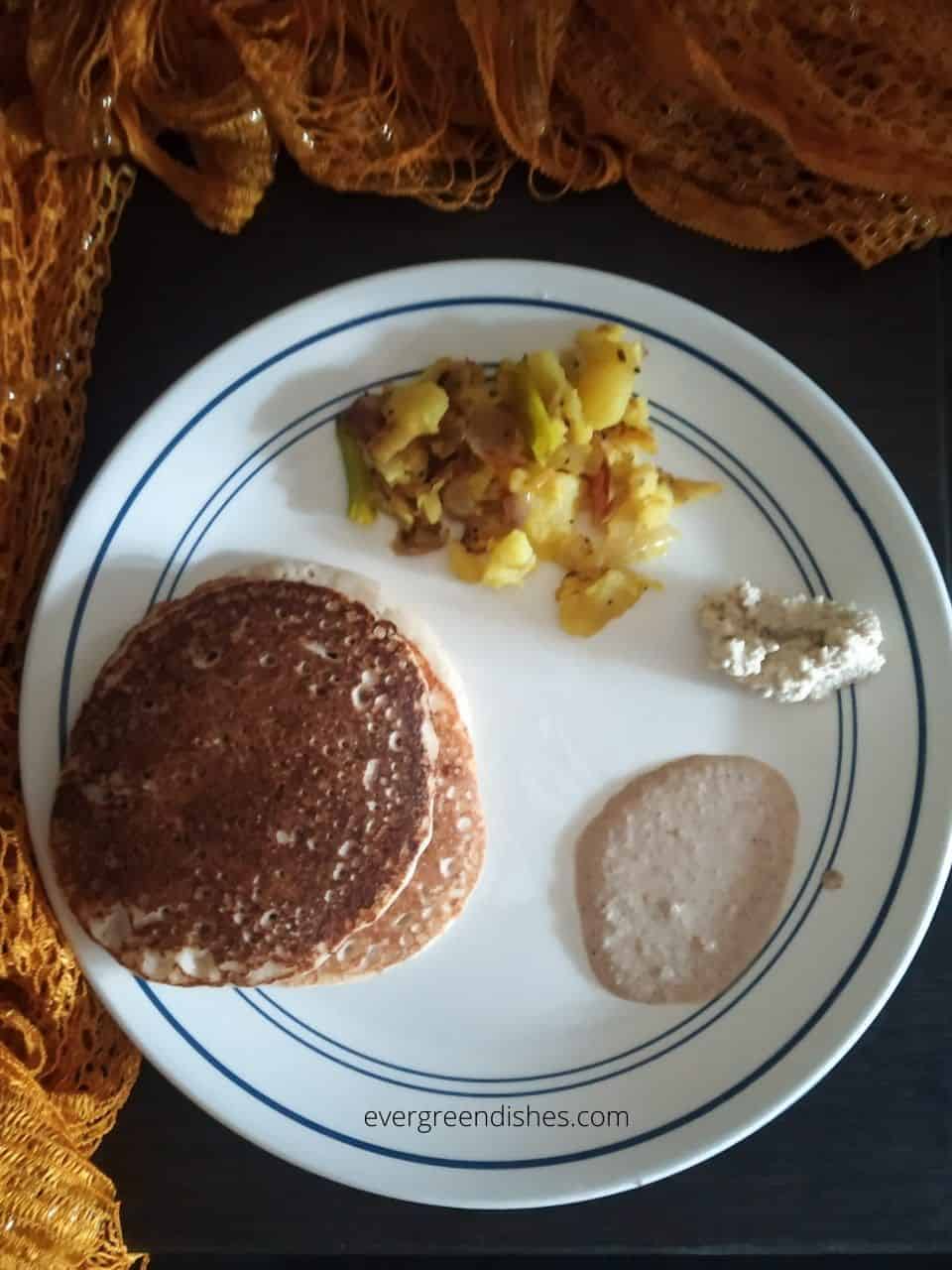
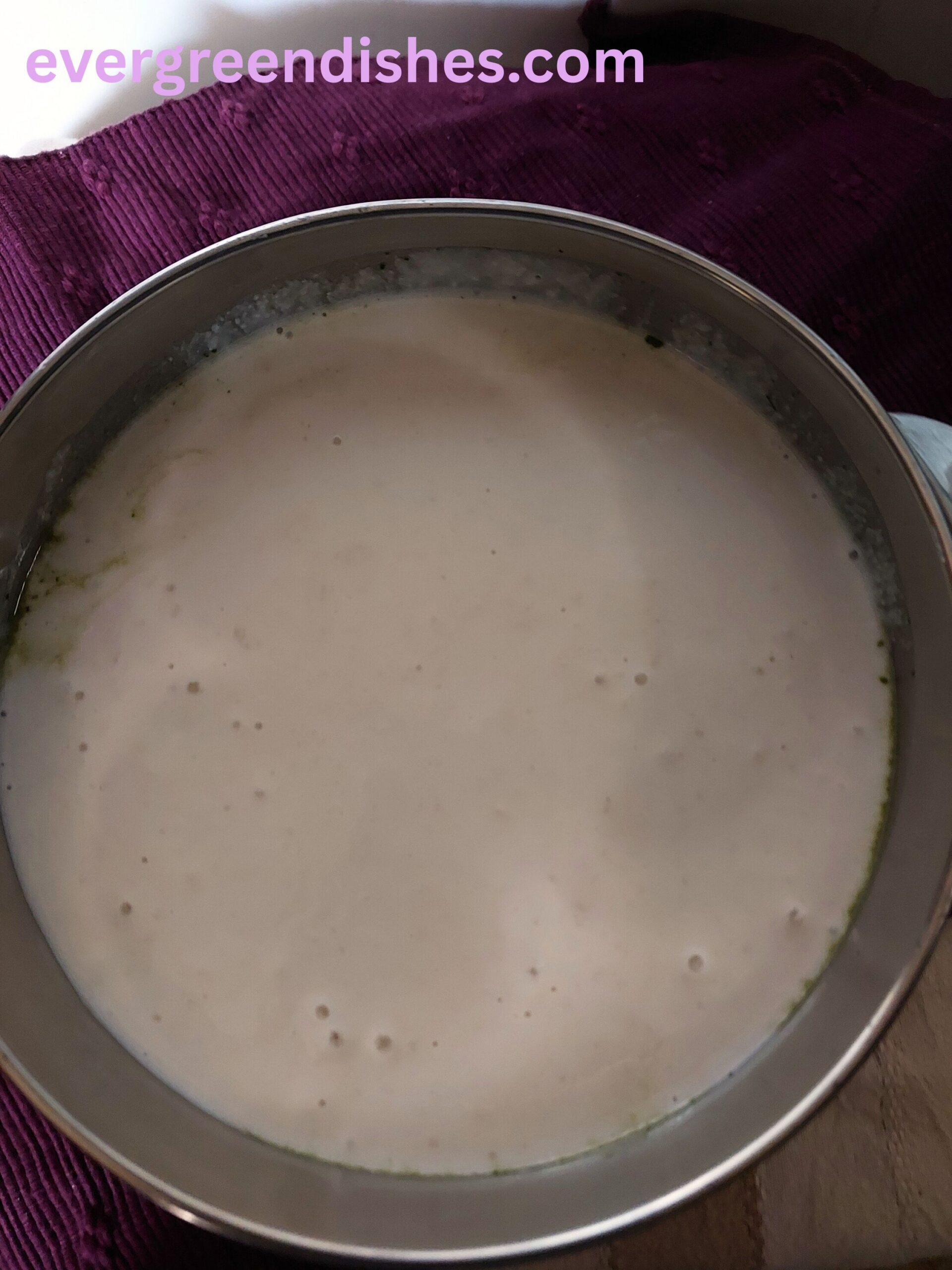
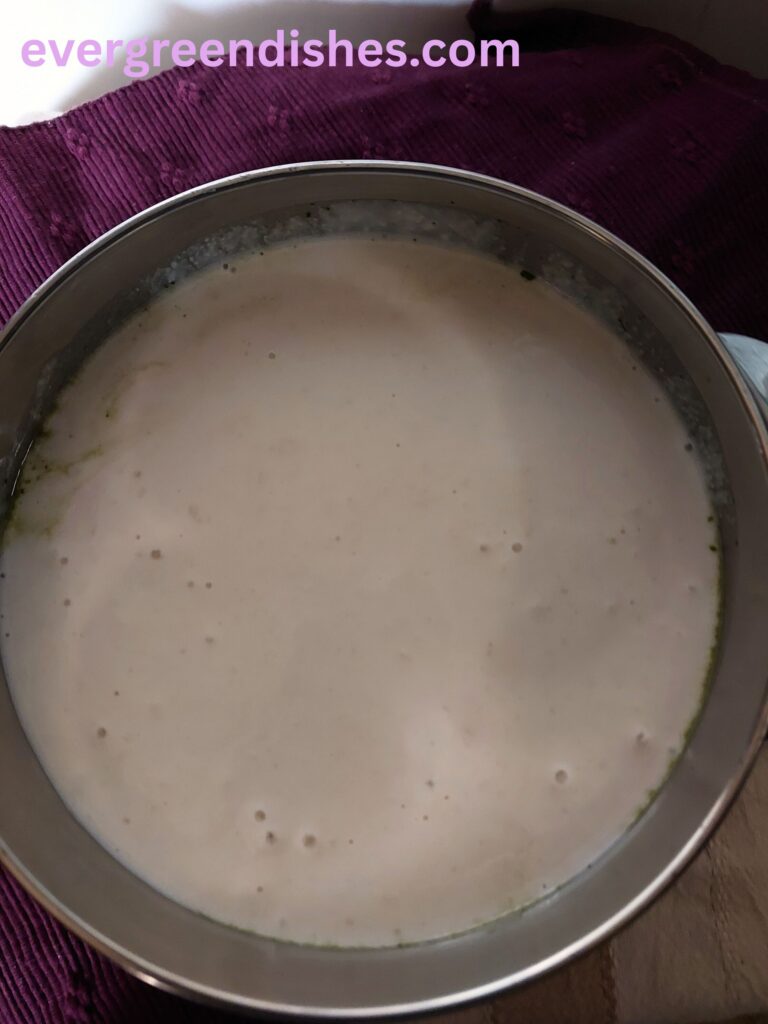
    A bowl of fermented dosa batter

    Dosa Batter

    Dosa batter can be used to make various recipes. You can make regular dosa, set dosa, gundapongal and uttapam. 

    Ingredients:

    • 4 cup raw rice
    • 1 cup urad dal
    • 1 teaspoon fenugreek

    ½ cup flattened rice (poha)

    Method :

    • Rinse the rice and soak it for six hours in sufficient quantity of water. Add fenugreek seeds to it.
    • In another bowl, wash urad dal and soak it for six hours.
    • Soak flattened rice for half an hour.
    • Grind the rice with some water. Remove it in a wide bowl.
    • Grind urad dal to a fine paste.Add poha to it and give a swirl Mix it with the rice batter.Cover and keep it in a warm place. Ensure that the vessel in which you have poured the batter is large enough as the batter rises on fermentation.
    • Next day, add salt and mix it well.

    Take the required quantity of batter and keep the rest in the refrigerator. This helps in preventing the batter from turning sour.

    Take a tip:


    • The batter needs to be of thick consistency to make set dosa. The dosa turns soft and spongy. But, make sure to cook it well on both sides with a lid closed over it.
    • To make thin crepes, the batter should not be of thick consistency. Add a little water and adjust it.
    • To make gundapongal, the batter needs to be of moderate consistency.

      I hope the post helps you to make a good idli and dosa batter at home.  Do you buy the batter or make it at home ? Do let me know in the comments below.  If you have any doubts, do  feel free to write below. Do not forget to follow @foodiejayashree on Instagram and @evergreendishes on Facebook. 


      ( Disclosure : As an Amazon Associate, I will get a small commission for qualifying purchases without no addition cost to you.)


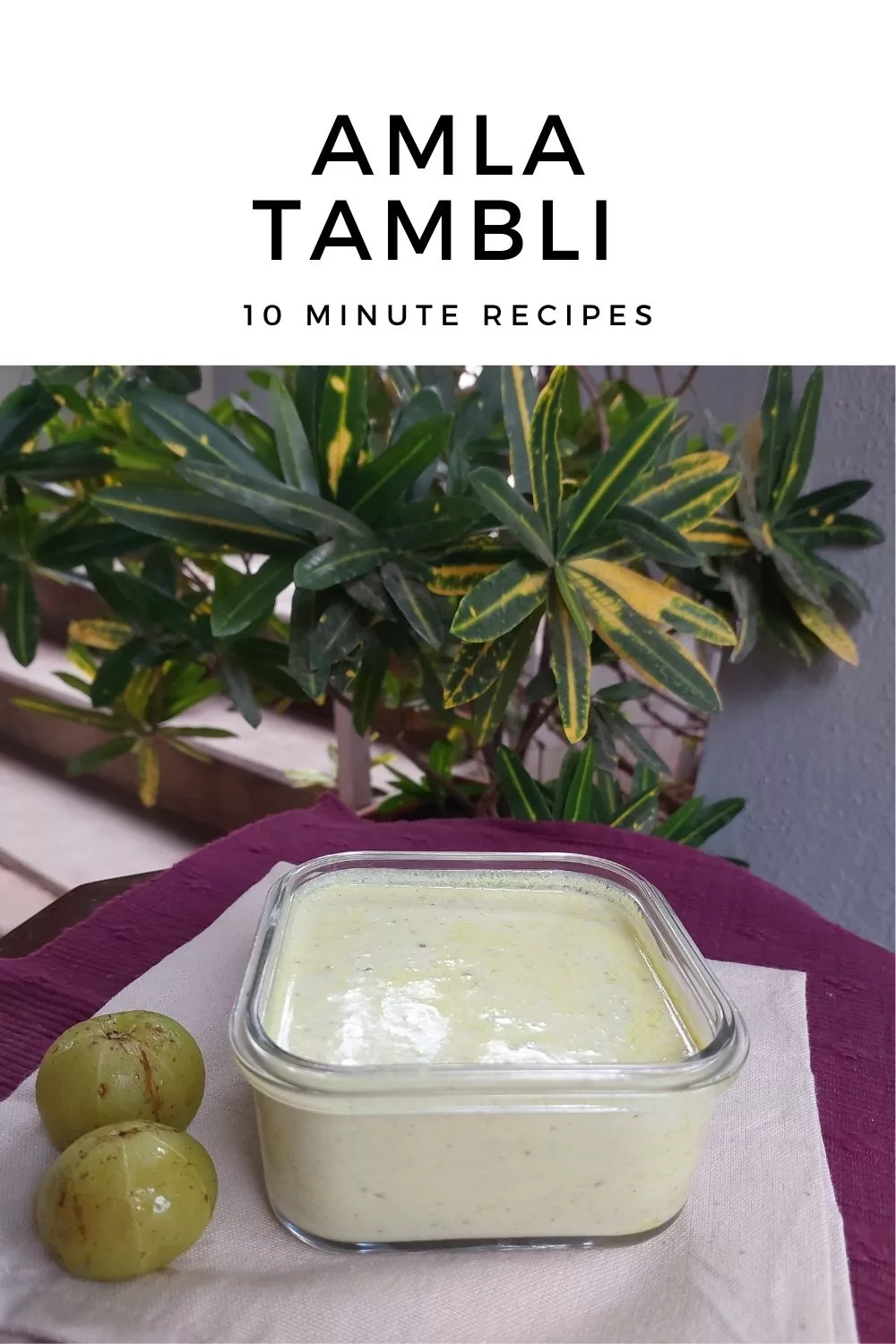
  • Amla Tambli | Nellikayi Tambuli

    Amla Tambli | Nellikayi Tambuli

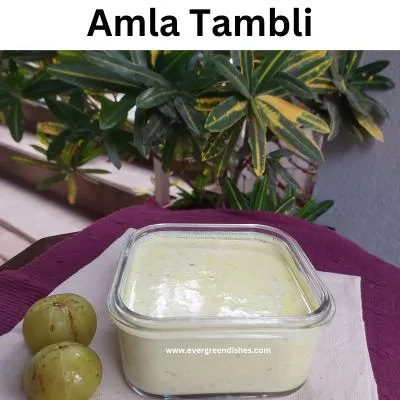
    Amla Tambli is a tasty, healthy dish from South Canara. It pairs well with hot, steamed rice.

    Amla or the Indian gooseberry is a fruit native to South Asia. It is widely used in Ayurvedic medicine. The botanical name of Amla is Phyllanthus emblica. It is a rich source of Vitamin C. It also contains anti-oxidants and other essential nutrients as iron, calcium and fiber.

    Amla is generally round in shape and greenish yellow in colour. It is usually available during months of December and January. It is used to make various kind of dishes as amla pickle, amla murabba, amla rasam, amla tambuli and amla chitranna. Sadly, I have not posted any amla recipes on the blog. So, here is to new beginnings.

    Benefits of Amla :

    1. Boosts immunity  : Being a good source of Vitamin C, one can include it to get the nutrients and anti-oxidants. The anti-oxidants helps in replenishing the cells and fights against the diseases.
    2. Aids in digestion: The dietary fibre helps in preventing constipation.
    3. Good for the heart : The amla extracts are found to be ideal to lower cholesterol and triglycerides. It also helps to reduce the blood pressure.
    4. Good for the kidneys: Studies have shown that it is good for the kidneys.
    5. Ideal for skin health : The high concentration of vitamin C promotes the texture and elasticity of the skin.
    6. Good for hair care : Amla is often used in hair care products.

    Side effects :

    I am not a  health worker or a doctor.  Please use any suggested food ideas as per your health conditions. Although, amla is a good source of Vitamin C, it is suggested to be used  in moderation. Excess use may cause varied kinds of problems. The high fibre content  may cause bloating and diarrhoea in some individuals.

    It can affect the blood sugar levels also. People with diabetes should be careful about using it.

    Amla Tambli

    Amla Tambli

    Amla Tambli is an easy to make, tangy dish ideal to serve with hot, steamed rice. It is a good way to include amla in our diet. Usually, the round shaped known as bettada nellikayi is used in cooking.

    Amla pickle is often made in made home. Here is an instant amla pickle by my co-blogger Seema.

    Why should you make amla tambli ?

    Amla tambli is an easy to make dish. It is ready in ten minutes. It is ideal to serve with hot steamed rice.

    Can it be stored for a couple of days ?

    No. I suggest to make it in a small quantity and consume it.

    Can I use other kind of oil?

    Coconut oil lends a good taste but feel free to use any neutral cooking oil

    Can I make it spicy ?

    You my add an extra chilli if you need.

    Can I use sour curd ?

    No, use fresh curd to make tambli.


    Evergreendishesdev

    Amla Tambli

    Amla Tambli is an easy to make, tasty, healthy and a no cook side dish. It makes a good accompaniment with hot steamed rice.
    Prep Time 10 minutes
    Total Time 10 minutes
    Course: dinner, lunch
    Cuisine: South Canara

    Ingredients
      

    • To be made into a paste :
    • 4 amla washed and cut into pieces
    • 1/2 cup fresh coconut
    • 2 green chillies
    • 1/2 teaspoon cumin
    • Other ingredients :
    • 4 tablespoon curd
    • 1/2 cup water
    • salt to taste
    • For the seasoning :
    • 2 teaspoon coconut oil
    • 1/4 teaspoon mustard
    • dash of asafoetida
    • 1/4 teaspoon turmeric powder
    • a few curry leaves

    Method
     

    1. Grind the ingredients under the section,”To be made into a paste”. Put  curd and blend it again. Remove it in a bowl.
    2. Add some water to it. Put salt.
    3. Make seasoning with coconut oil. Add mustard seeds. As it splutters,  put a few curry leaves, asafoetida and turmeric powder. Pour it over the prepared dish. Amla Tambli is ready to serve.

    Notes

    You may use any other oil. But, coconut oil gives a good taste to the dish.
    Use fresh curd.
    You may adjust the quantity of green chilly as per the need.

    If you ever make Amla Tambli in your kitchen, take a picture and share on Instagram by tagging @foodiejayashree. You can also tag me on facebook. Subscribe to get all updates in your inbox and an e-book of handyhints for free. Until next time, happy cooking !

    Pin it for later :

    Amla Tambli
    Amla Tambli


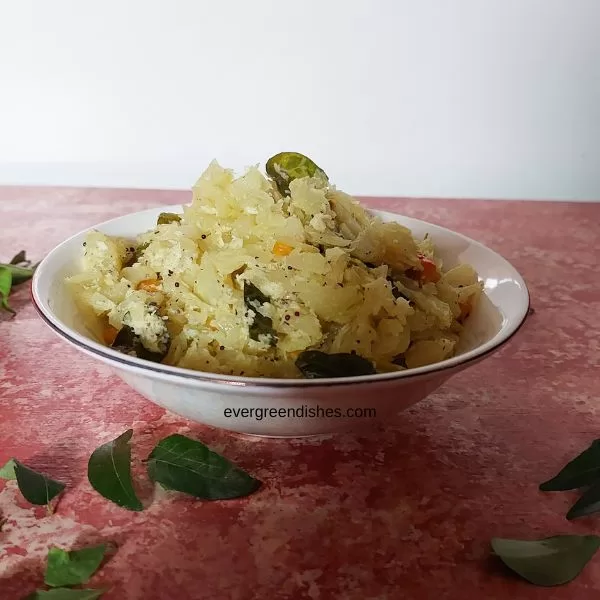
  • Kohlrabi Stir Fry | Navilakosu Palya | No Onion Garlic Recipe

    Kohlrabi Stir Fry | Navilakosu Palya | No Onion Garlic Recipe

    Jump to Recipe

    kohlrabi stir fry | navilakosu palya | 

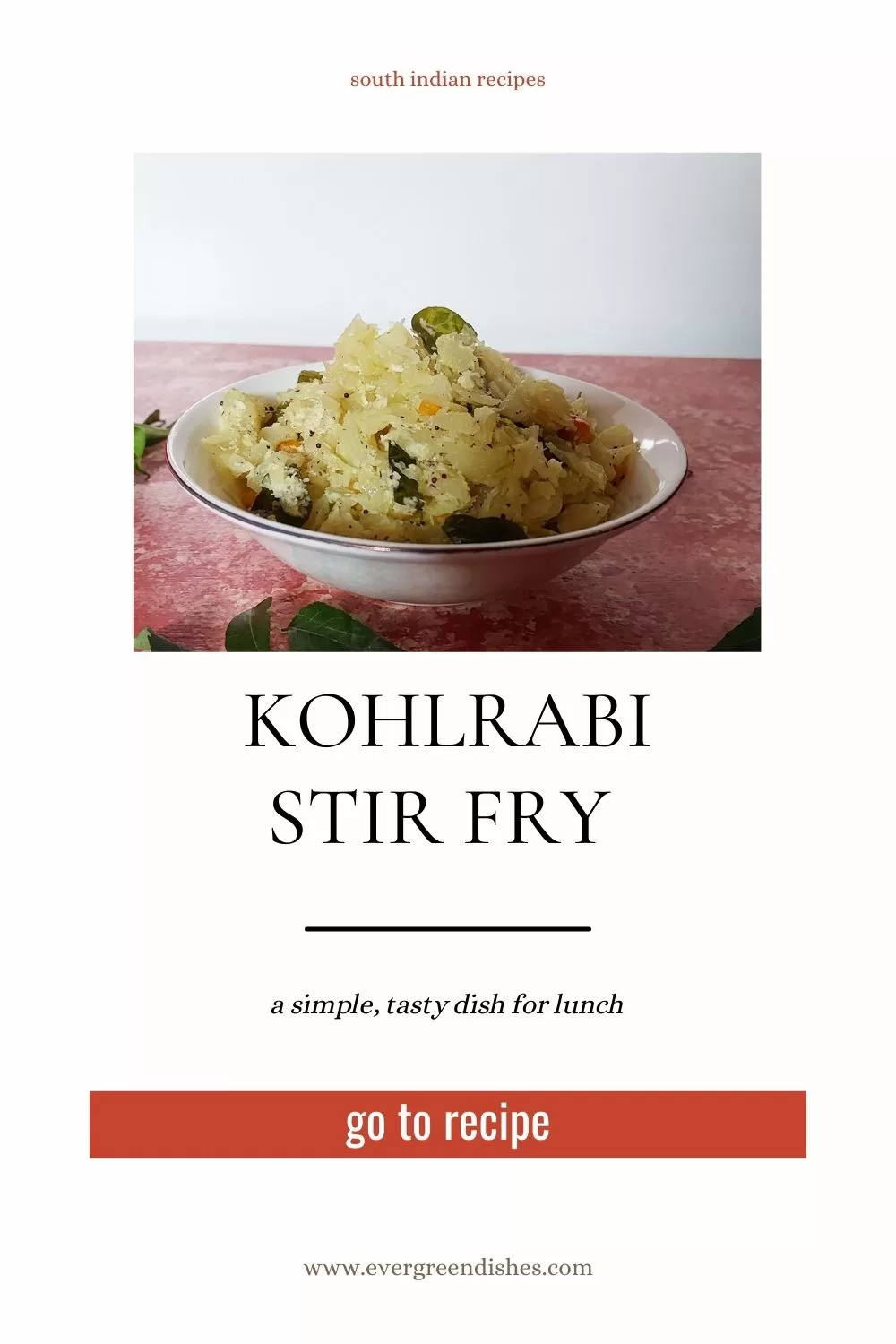
    Kohlrabi stir fry is a simple, tasty, healthy  side dish for daily lunch menu. You can pair it with sambar, rice and a stir fry. It tastes good with chapathi or jowar roti too. It is vegan and a low calorie dish. 

    Some days we avoid using onion and garlic for religious or personal interests. Today’s recipe is a no onion recipe

    Kohlrabi or German Turnip is a cruciferous vegetable and  belongs to the family Brassica Oleracea, same species as cabbage, cauliflower and brussel sprouts. It grows above the ground and looks like a turnip, but it is neither a root vegetable nor belongs to the turnip family. It has long leafy stems as an alien and a round bulb which may be purple, light green or white. The inside is whitish green . The bulb as well as the leaves are used in cooking. It is eaten both in cooked and raw form. Kohlrabi lends a different taste on cooking which is different from cabbage. 

    The stalk is used in salads. The leaves are used in dal and stir fry. The vegetable can be used in different dishes as stir fry, sambar and chutney. 

    Knolkhol is a good source of nutrients as Vitamin C, B6, potassium and magnesium. It is also a good source of anti-oxidants. 

    Kohlrabil is called by different names in different regions. It is Navilkosu in Kannada, Navalkol in Maharashtra, monj hakh in Kashmiri and Su Hao in Bengali. 

    kohlrabi stri fry
    a bowlful of kohlrabi stir fry


    How to use kohlrabi in cooking:

    Wash the vegetable, remove the leaves if any. Here, we are not using the greens in any way. Remove the skin and chop it. The middle portion is hard and discarded. 


    What goes in the stir fry ? 

    • Kohlrabi : It is the star ingredient here. You can chop it unevenly as it is usually done or cut into small bits. The way you cut the vegetable alters the taste of the vegetabel.
    • Oil : Any cooking coil may be used. 
    • Seasoning : All the usual ingredients of seasoning are needed. They are mustard seeds, asafoetida, bengal gram, urad dal. 
    • Chilli : For that spicy flavour
    • Fresh coconut : Essential but no compulsion.
    • Ginger : You may add a small piece of grated ginger in the seasoning.
    • Curry leaves : Essential in south indian cooking. It gives a distinctive flavour.
    • Coriander : for garnishing


    Making the stir fry : 

    The kohlrabi has a thick outer covering. It needs to be removed slowly. Wash and then peel the skin. Chop it and keep it aside. Make the seasoning and add the chopped vegetable. Sprinkle a little water and put salt. Allow to cook. Once it is tender, add grated coconut and fresh coriander to it.. 


    A few South Indian no onion garlic recipes :

    lemon rasam
    lemon rasam
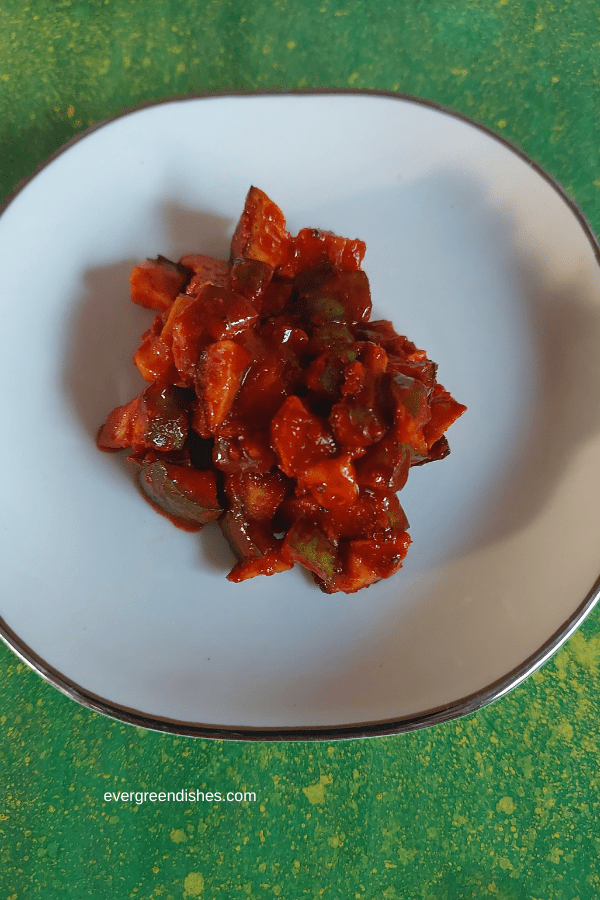
    instant raw mango pickle
    instant raw mango pickle


    cucumber stir fry
    cucumber stir fry
    Print Recipe

    Kohlrabi Stir Fry

    5 from 11 votes
    Kohlrabi stir fry is a simple yet tasty side dish with any meal.

    Ingredients
      

    • 2 tablespoon oil
    • 1/2 teaspoon mustard
    • 1/4 teaspoon asafoetida
    • 1/4 teaspoon turmeric powder
    • 1 teaspoon bengal gram
    • 1 teaspoon urad dal
    • 4 green chilli
    • a few curry leaves
    • 1/2 kilogram kohlrabi
    • salt to taste
    • 1/2 cup fresh coconut

    Equipment

    • 1 pan with lid
    • 1 plate
    • 1 ladle
    • 1 bowl

    Method
     

    1. Wash, peel the skin  and chop the vegetable.
    2. Take oil in a pan. Add mustard seeds, as it crackles, put bengal gram, urad dal, turmeric powder and asafoetida. Now, add green chilli to it along with a few curry leaves.
    3. Put the chopped kohlrabi to it along with a little salt.
    4. Sprinkle a little water to it.
    5. Allow it to cook for sometime. Close a lid, it helps in proper cooking.
    6. Once it is cooked, add grated coconut and fresh coriander to it.
    7. Kohlrabi stir fry is ready to serve.

    About the event : 

          Priya Iyer suggested  “No Onion Garlic Stir Fry or Curry ” at Shhh Secretly Cooking Challenge for the month of September. Priya has prepared a delicious gravy dish Sweet Corn Masala for the theme,  do check it out. 

    Here, we are paired with a parter, exchange two ingredients and the dish is prepared using those ingredients. Later, it is put in the group for guessing. It is a fun way to  engage with like minded individuals. I was paired with Mayuri Patel. She is a versatile cook  whom I have closely seen in my blogging journey. I discussed about my plan to prepare kohlrabi stir fry and she gave me kohlrabi and urad dal as the secret ingredients. Mayuri Patel wanted to make Methi Corn Malai and I suggested jaggery and cumin accordingly. It is something which my children will relish, will be making it soon. 

    kohlrabi stir fry kohlrabi stir fry
    If you ever make Kohrabi Stir Fry  in your kitchen, take a picture and tag @foodiejayashree on Instagram or evergreendishes on Facebook.  Until next time, Happy Cooking ! Be happy and cheerful. 

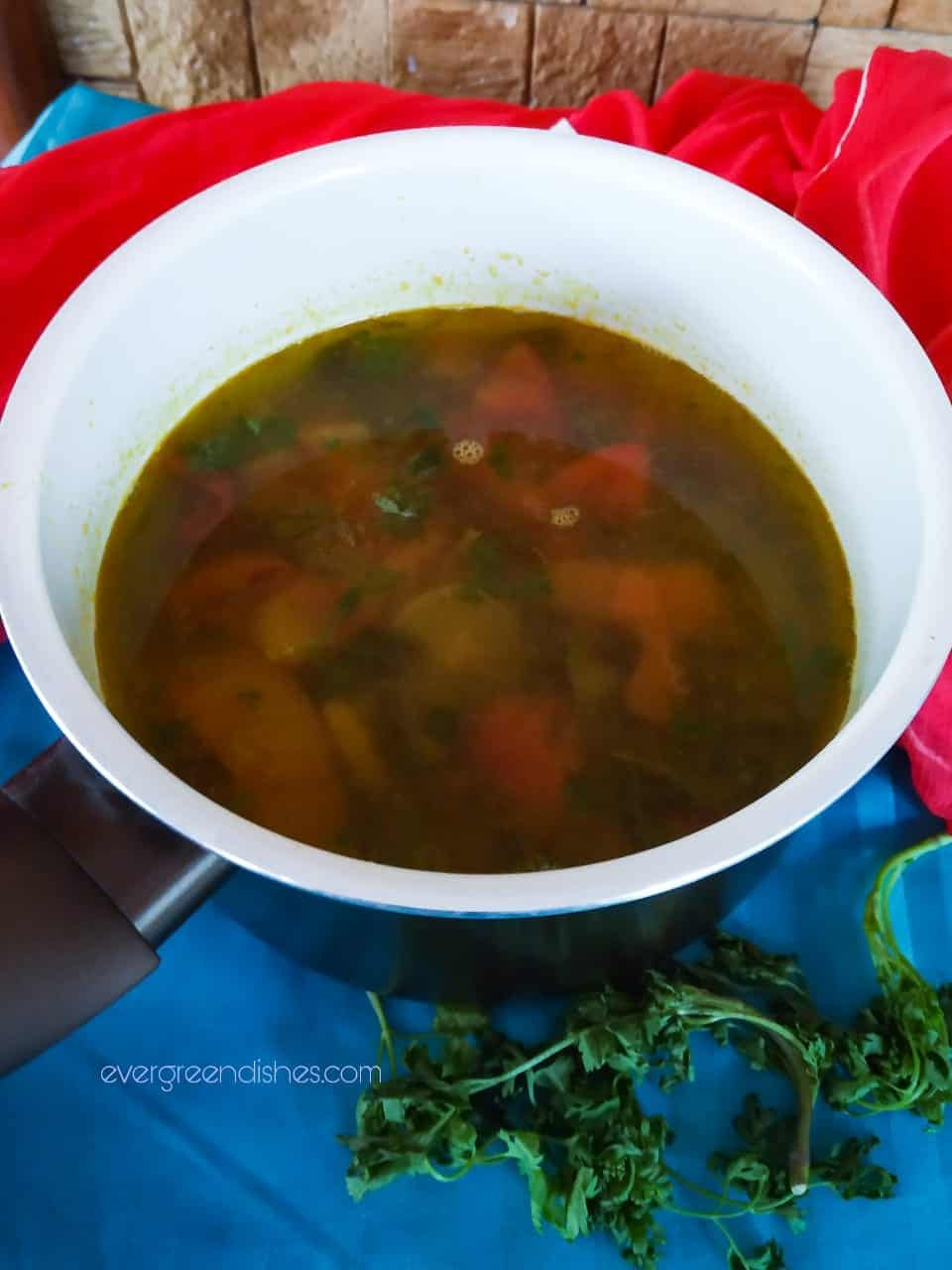
  • Ajwain Leaf Rasam | Doddapatre Saaru

    Ajwain Leaf Rasam | Doddapatre Saaru

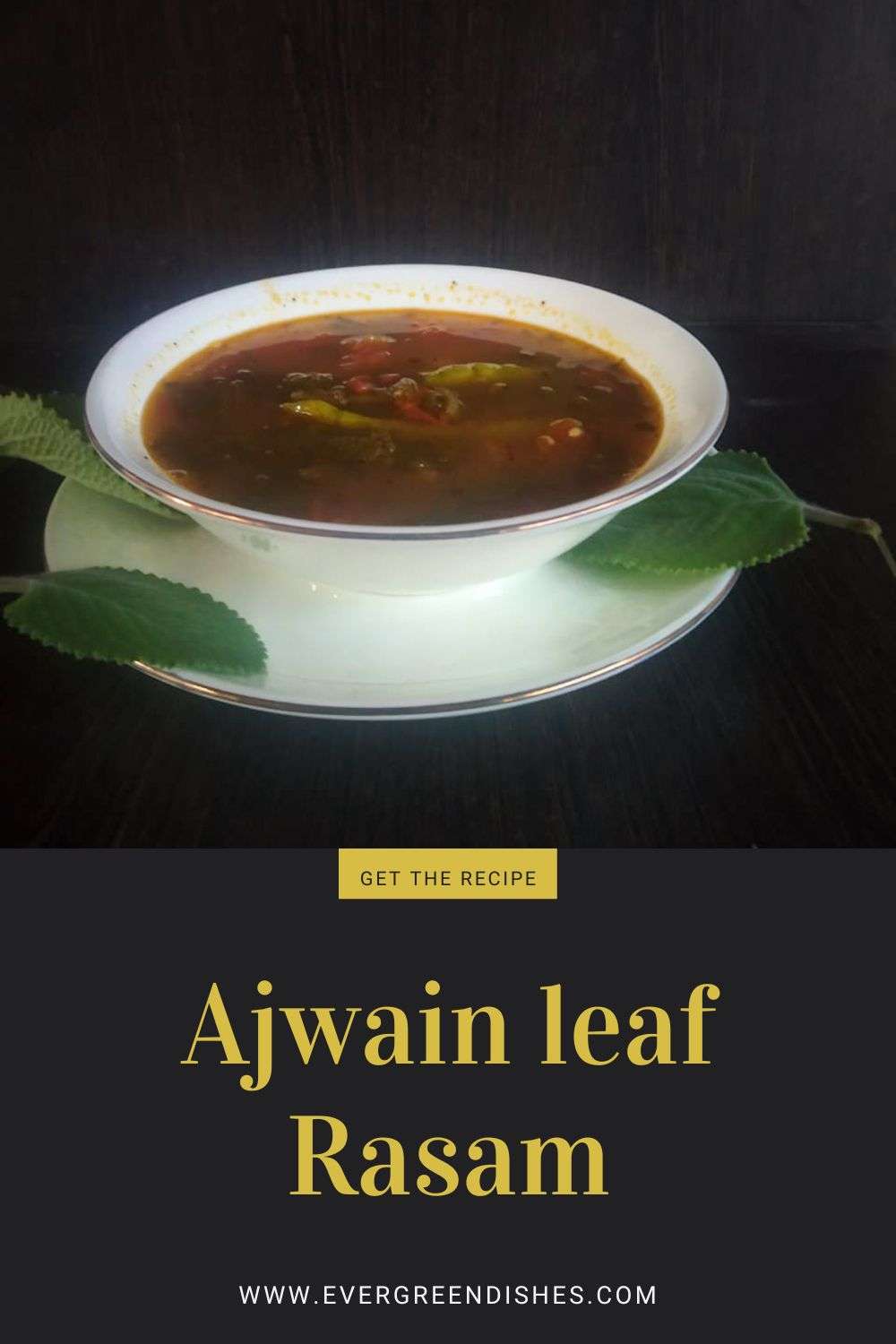
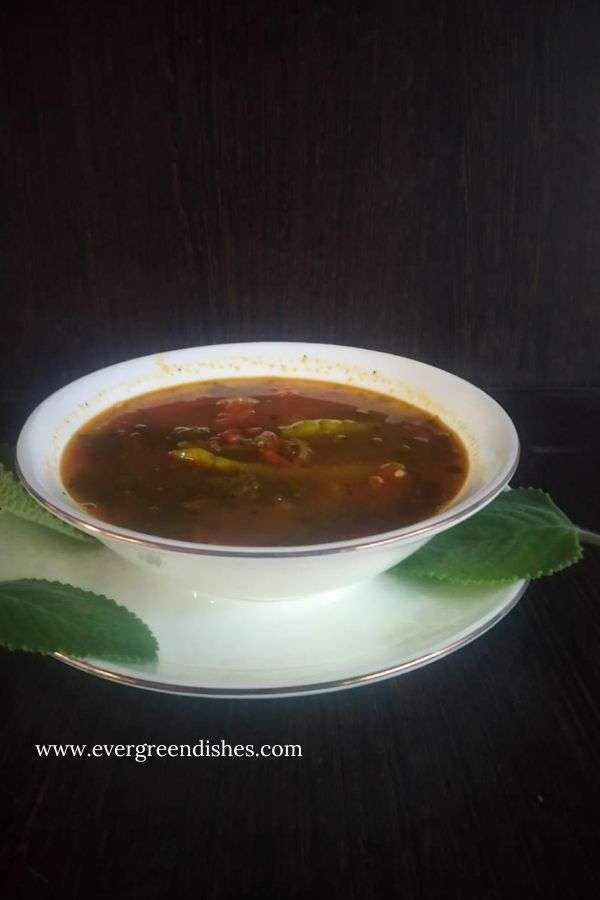
    Ajwain leaf rasam is a comfort and easy to make rasam. It is ideal as a soup too.

    The ajwain leaf is a good source of nutrients. It is known as Ajwain ( Hindi), Karpuravalli ( Tamil), Vamu aaka (Telgu), Panikoora ( Malyalam) and Ova (Marathi) are the other names in regional languages.  I have shared ajwain tambli recipe earlier. It can also be used to make pakodas. You can use it in smoothies and green juice too.

    Doddapatre rasam is simple, no lentil rasam, ready in ten minutes. 

    About the Ajwain leaf plant :

    Ajwain leaf plant is  a small, erect, perennial plant. It is bright green in colour, broad and smooth in texture. The stem is green and soft. it tilts down with the weight of the leaves. It is known as Indian borage. The scientific name is ‘Plecatanthus Ambonicus’.  It can be easily grown in an 8-12 inch pot with a good soil. It grows well in shade and partial sunlight.

    The taste of the leaf is similar to ajwain but with a sharp mint like pepperiness. The aroma is combination of oregano and thyme. The plant is in no way related  to the ajwain seeds we use as a herb in cooking. They have the aroma of ajwain or carom seeds and hence the name. In Kannada, it is commonly called as  ‘saveer sambar soppu’, which literally tanslates to ‘thousand utility leaf’. It can be used in rasam, chutney, dips and pakodas. It may be used in juices along with mint leaves.

    Ajwain leaf concoction is a good medicine for soar throat. Chewing an ajwain leaf helps to keep gas, bloating and  ulcers at bay. It aids in digestion when consumed with black salt. It is widely used as a combination in Homeopathic medicines. 

    aj

    Ajwain Leaf Rasam | Doddapatre Saaru


    Ingredients:

    • 2 teaspoon oil
    • 1/2 teaspoon mustard
    • 1/2 teaspoon cumin
    • 1/4 teaspoon asafoetida
    • 1/4 teaspoon turmeric powder
    • 2 green chilli
    • 1 sprig curry leaves
    • 1 inch ginger
    • 3 tomato
    • 20 ajwain leaves
    • salt to taste
    • amla size of tamarind
    • 1/2 teaspoon jaggery
    • 1/2 teaspoon pepper powder
    • 2.5 cups water

      Method:


      1. Wash the ajwain leaves, cut or tear them into small pieces.
      2. Soak tamarind in water.
      3. Cut tomato and keep it aside.
      4. Take oil in a pan, add the mustard seeds. As it crackles, put cumin, asafoetida and turmeric powder. Grate the ginger in it and throw the curry leaves and green chill. Add tomato along with a little salt. Sprinkle a little water, it helps to cook them evenly. Give a stir.
      5. Add the ajwain leaves.
      6. Extract the tamarind pulp.
      7. Put the tamarind juice, jaggery and pepper powder to it.
      8. Let cook for sometime.
      9. Add water to it.
      10. Allow it to cook for sometime.
      11. Serve it hot with steamed rice.
    ajwain leaf rasam
    Evergreendishesdev

    Ajwain Leaf Rasam

    Ajwain leaf rasam is a flavoursome, easy to make rasam. It can be served as a soup too.
    Prep Time 10 minutes
    Course: lunch
    Cuisine: karnataka

    Ingredients
      

    • 2 teaspoon oil
    • 1/2 teaspoon mustard
    • 1/2 teaspoon cumin
    • 1/4 teaspoon asafoetida
    • 1/4 teaspoon turmeric powder
    • 2 green chilli
    • 1 sprig curry leaves
    • 1 inch ginger
    • 3 to mato
    • 20 ajwain leaves
    • salt to taste
    • amla size of tamarind
    • 1/2 teaspoon jaggery
    • 1/2 teaspoon pepper powder
    • 2.5 cups water

    Equipment

    • pan, ladle, 2 small bowl

    Method
     

    1. Wash the ajwain leaves, cut or tear them into small pieces.
    2. Soak tamarind in water.
    3. Cut tomato and keep it aside.
    4. Take oil in a pan, add the mustard seeds. As it crackles, put cumin, asafoetida and turmeric powder. Grate the ginger in it and throw the curry leaves and green chill. Add tomato along with a little salt. Sprinkle a little water, it helps to cook them evenly. Give a stir.
    5. Add the ajwain leaves.
    6. Extract the tamarind pulp.
    7. Put the tamarind juice, jaggery and pepper powder to it.
    8. Let cook for sometime.
    9. Add water to it.
    10. Allow it to cook for sometime.
    11. Serve it hot with steamed rice.

    If you ever make Ajwain Leaf Rasam recipe, take a picture and share it on Facebook or Twitter by tagging @evergreendishes and @evergreendishes . I will be happy to see your creation and share it further. 

    Subscribe to get all updates and an e-book for free. 

    Pin it for later : 

    ajwain leaf rasam

  • Masoor Dal Dosa | Healthy Breakfast

    Masoor Dal Dosa | Healthy Breakfast

    Jump to Recipe Print Recipe

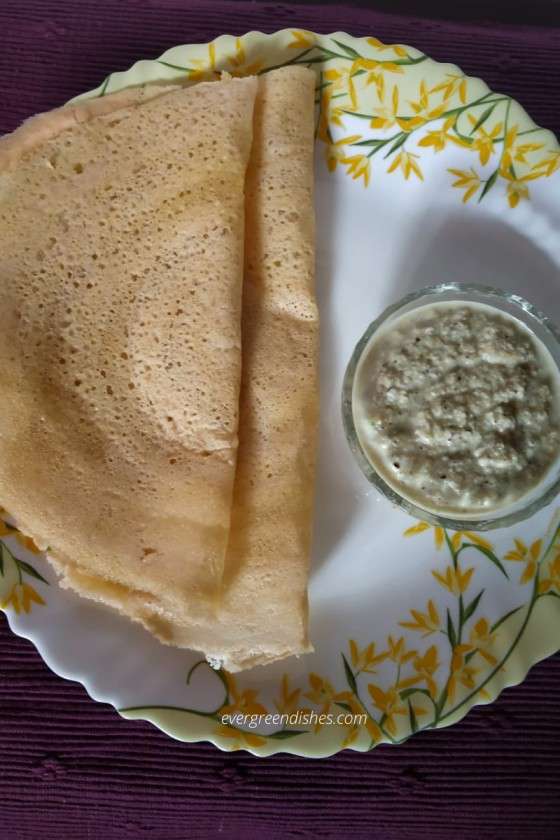
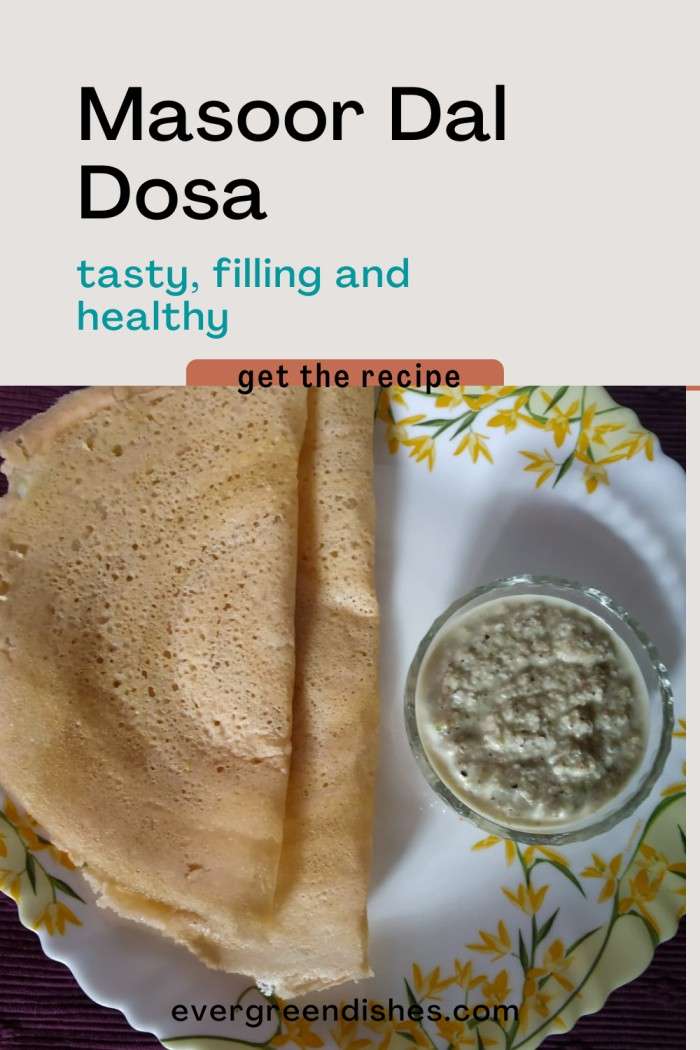
    Masoor Dal Dosa is crispy and tasty. It is rich in nutrients and makes a good option for breakfast.

    Ask any South Indian and they are never bored of having dosa. Idli may not be liked as much as they prefer dosa anytime. Let it be the regular kind or the rawa dosa, they are satisfied and happy.  The  dosa love is evident. Moreover, dosa variations are so many, you can keep making a different kind over a  month. Do find a new kind of dosa, Masoor Dal Dosa. 

    Masoor Dal Dosa is yet another variation, it is protein rich as the lentil is used in a larger quantity. I liked the dosa shared  in another food group and thought I must share it with my readers.

    masoor dal dosa


    What is Masoor Dal ?  

    Masoor Dal is one of the five legumes used regularly in Indian cooking. It is orange in colour. It is a good source of  nutrition as it is rich in protein, fibre and minerals. It does not need much time to cook and is tasty. 

    What are the  benefits of using masoor dal ?

     A cup of masoor dal has 230 calories, about 17 grams of proteins and 15 grams of dietary fibre. It has many  health benefits: 

    • It helps to keep the heart healthy by lowering cholesterol.
    • It helps to stabilise the blood sugar level.
    • It aids in weight loss. 
    • It boosts the immune system. 


    How is it used in cooking? 

    It can be use in cooking different dishes as soups and dal. It can also be used in making a variety of snacks as fritters, dosa and khichdi. Today, I am sharing a dosa recipe which I have adopted from Shobana Rao, food blogger and friend. 

    What are the other dosa recipe you have shared earlier ?

    The other kind of dosa normally made in my kitchen are jowar dosa, ragi dosa, masala dosa, quinoa dosa, watermelon rind dosa


    Masoor Dal Dosa  Recipe: 

    Ingredients:

    • 2 cup Masoor dal
    • 1 cup raw rice
    • 1 teaspoon methi seed
    • salt to taste
    • oil for roasting

      Method:

    • Wash and soak masoor dal for 2-3 hours.
    • Wash and soak raw rice and methi seeds for 2-3 hours.
    • Grind masoor dal to a smooth paste and remove it in a wide bowl.
    • Grind raw rice and methi seeds to a smooth paste. Use water as required, the consistency should be of a dosa batter.
    • Mix both of them together, keep it in a warm place and allow it to ferment for six to eight hours. I usually keep it overnight.
    • Next day, add salt to the batter.
    • Take the required quantity of batter, adjust the consistency.
    • Heat a skillet, take a spoonful of batter and spread it like a dosa. Sprinkle oil around it.
    • Once it is golden in colour, remove from the skillet and serve with coconut chutney.
    • Repeat for the rest of the batter.

    Take a tip:

    • A few red chilly may be added while grinding the batter. 

    About the event :

         Sending this to “Flatbreads Theme” at Shhh Secretly Cooking Challenge. Every month, one of the blogger suggests a theme, we are paired as partners and the secret ingredients are exchanged between the two ladies. They prepare a dish using the secret ingredients and later share it in the FB group, other members try to guess those ingredients. It is interesting to see some ingredients cannot be guessed by the members.  During the month of March, Anu Kollon suggested the theme. I liked her Uluva Kanji, a traditional Kerala dish  made with methi seeds and raw rice, I have bookmarked it to make it soon. 

    I was paired with Priya Iyer. Priya gave me oil and salt which was versatile to prepare any kind of recipe  I needed to do. I gave wheat flour and chilli, she made the delicious Gujarati Methi Bhakris

                                            shhh cooking secretly


    Masoor Dal Dosa 

    Masoor Dal Dosa is crispy and tasty. It is a good way to include the healthy legumes in breakfast.

    Ingredients
      

    • 2 cup Masoor dal
    • 1 cup raw rice
    • 1 teaspoon methi seed
    • salt to taste
    • oil for roasting

    Equipment

    • 1 big bowl
    • 1 ladle
    • 1 dosa skillet
    • 1 dosa spatula
    • 1 small bowl
    • 1 small spoon
    • 1 round plate

    Method
     

    1. Wash and soak masoor dal for 2-3 hours.
    2. Wash and soak raw rice and methi seeds for 2-3 hours.
    3. Grind masoor dal to a smooth paste and remove it in a large, wide bowl.
    4. Grind raw rice and methi seeds to a smooth paste. Use water as required, the consistency should be of a dosa batter.
    5. Mix both of them together, keep it in a warm place and allow it to ferment for six to eight hours. I usually keep it overnight.
    6. Next day, add salt to the batter.
    7. Take the required quantity of batter, adjust the consistency.
    8. Heat a skillet, take a spoonful of batter and spread it like a dosa. Sprinkle oil around it.
    9. Once it is golden in colour, remove from the skillet and serve with coconut chutney.
    10. Repeat for the rest of the batter.

    Notes

    • A few red chilly may be added while grinding the batter.
    • Dosa can be made either crisp or like the regular ones.
    • Ghee or a mix of oil and ghee can be used for roasting.
    Masoor dal dosa is crispy and tasty. It is a healthy twist to the usual one. Masoor dal is a good source of nutrient and this recipe is an ideal way to include it in your diet. Give a try to Masoor Dal Dosa.      #breakfastrecipes #healthy #southindian
    masoor dal dosa

    If you ever make Masoor Dal Dosa in your kitchen, take a picture and tag @foodiejayashree on Instagram or @evergreendishes on Facebook. Subscribe to get all updates in your inbox and an e-book for free! 

  • South Indian Vegetable Spice Mix | Palyada Pudi

    South Indian Vegetable Spice Mix | Palyada Pudi

    Jump to Recipe Print Recipe

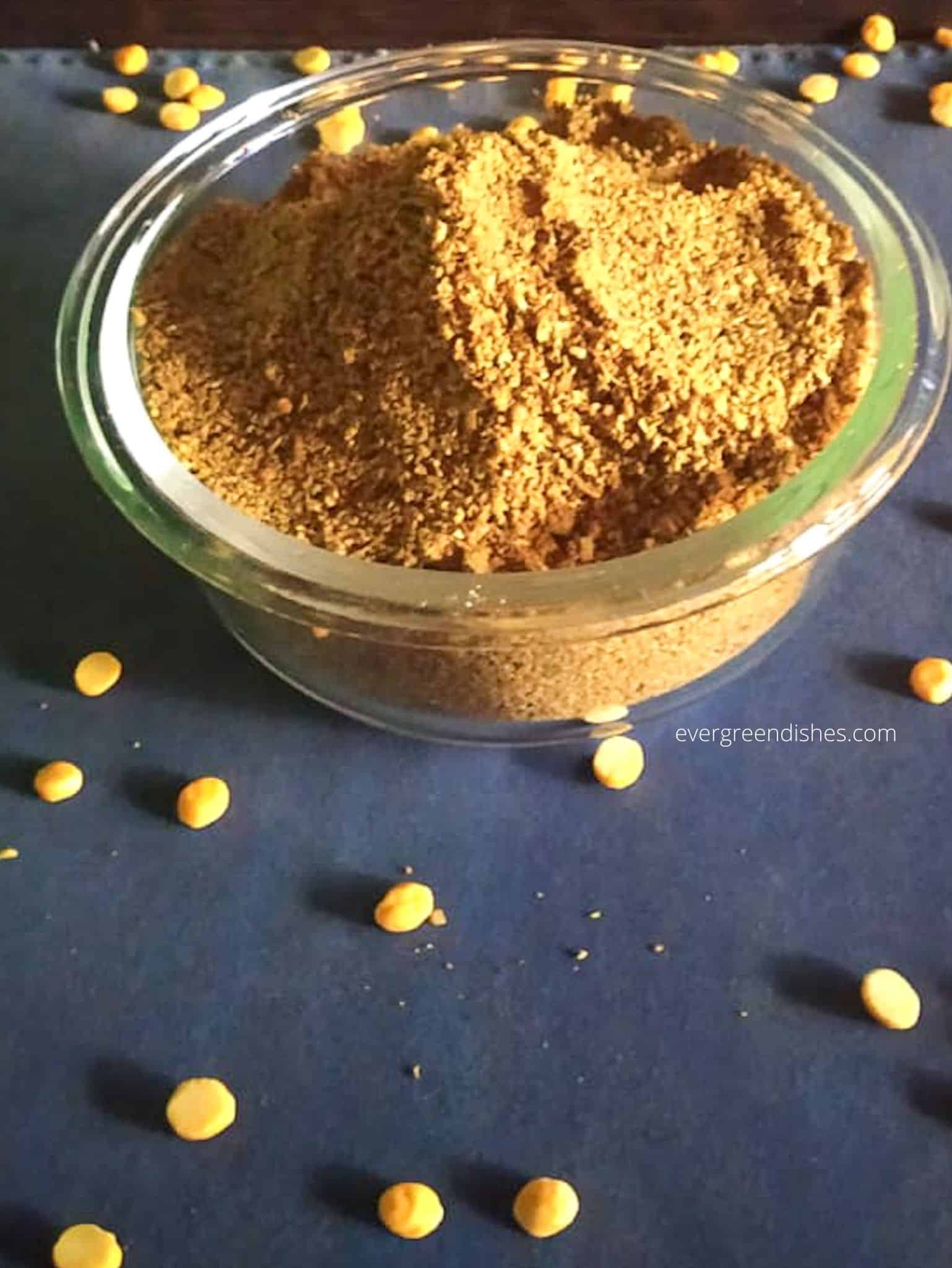
    Vegetable Spice Mix/ Palyada Pudi is one of the essentials in any South Indian kitchen. It is versatile to use, may be used in simple stir fry to dals cooked with green leaf.

    Palya is the kannada word for stir fry. Pudi is dry condiment which we normally use. Thus it is a vegetable spice mix. 

    The ingredients needed are simple and easily found in the kitchen. South Indian cooking revolves around these spice mix, most households keep them ready to use.Today, I am sharing a vegetable spice mix. It is usually added to vegetables as cucumber and brinjal. It is also used as filling in stuffed vegetables.

    The ingredients used here are :


    Coriander seeds: Make use of fresh ones. Be careful while you roast them, do not burn them.
    Curry leaves– Wash them and pat dry them. There is should be no moisture in it.
    Bengal gram– It is one of the essentials in south indian cooking. It gives a good taste and texture to the stir fry.
    Urad dal– It is another essential ingredient. To make it quicker, roast bengal gram for a few seconds, later tip in the urad dal.
    Dessiccated coconut – We cannot cook without coconut. It is used in most of the dishes in some or the other form. Grated or finely cut? It is a personal choice, but ensure you roast them well.
    Red Chilli– Dry red chilli or chilli powder may be used. I prefer using these dry red chilli.


    South Indian Vegetable Spice Mix | Palyada Pudi 


    Ingredients:

    • 3 cup coriander seed
    • 1 cup curry leaves
    • 1 cup urad dal
    • 1 cup bengal gram
    • 1 cup desiccated coconut
    • 15 red chilli
    • oil            

    Method:

    1. In a thick bottom pan,roast the coconut. It should be golden brown in colour.
    2. In the same pan, add a teaspoon of oil and roast the coriander seed along with curry leaves. Keep tossing them, the tiny seeds get easily burnt.
    3. Now you need yo roast the lentils. Add a little oil and roast bengal gram. Once it is slightly done, put the urad dal in it. Roast both of them together.
    4. Finally, roast the chillies with a little oil.
    5. Once, all the ingredients are at room temperature, grind them. At first, grind the lentils, then add red chilly to it. Finally, add coconut and coriander seed to it and give a pulse.
    6. Vegetable Spice mix is now ready to use.Store it in a dry, air tight container.
     
    south indian vegetable spice mix
    south indian vegetable spice mix


    Vegetable Spice Mix | Palyada Pudi

    Vegetable Spice Mix is one of the essentials in South Indian households. It is versatile to use. 3 cup coriander seed
    Prep Time 10 minutes
    Cook Time 20 minutes
    Total Time 30 minutes
    Course: condiments, spice mix
    Cuisine: karnataka

    Ingredients
      

    • 3 cup coriander seed
    • 1 cup urad dal
    • 1 cup bengal gram
    • 1 cup desiccated coconut
    • 15 red chilli
    • oil
    • 1 cup curry leaves

    Method
     

    1. In a thick bottom pan,roast the coconut. It should be golden brown in colour.
    2. In the same pan, add a teaspoon of oil and roast the coriander seed along with curry leaves. Keep tossing them, the tiny seeds get easily burnt.
    3. Now you need yo roast the lentils. Add a little oil and roast bengal gram. Once it is slightly done, put the urad dal in it. Roast both of them together.
    4. Finally, roast the chillies with a little oil.
    5. Once, all the ingredients are at room temperature, grind them. At first, grind the lentils, then add red chilly to it. Finally, add coconut and coriander seed to it and give a pulse.
    6. Vegetable Spice mix is now ready to use.

    Notes

    Once cool, store in a clear, air-tight container.

    If you ever make this vegetable spice mix recipe,  do take a picture and tag @foodiejayashree on Instagram or @evergreendishes on Facebook or Twitter. I will be glad to see your creation and share it further. Let’s be connected, do follow on social media platforms. Until next time, let’s stay connected.  Subscribe to get all updates and an e-book for free. Check out my e-books on Amazon.  Happy Cooking!

    Pin it for later:


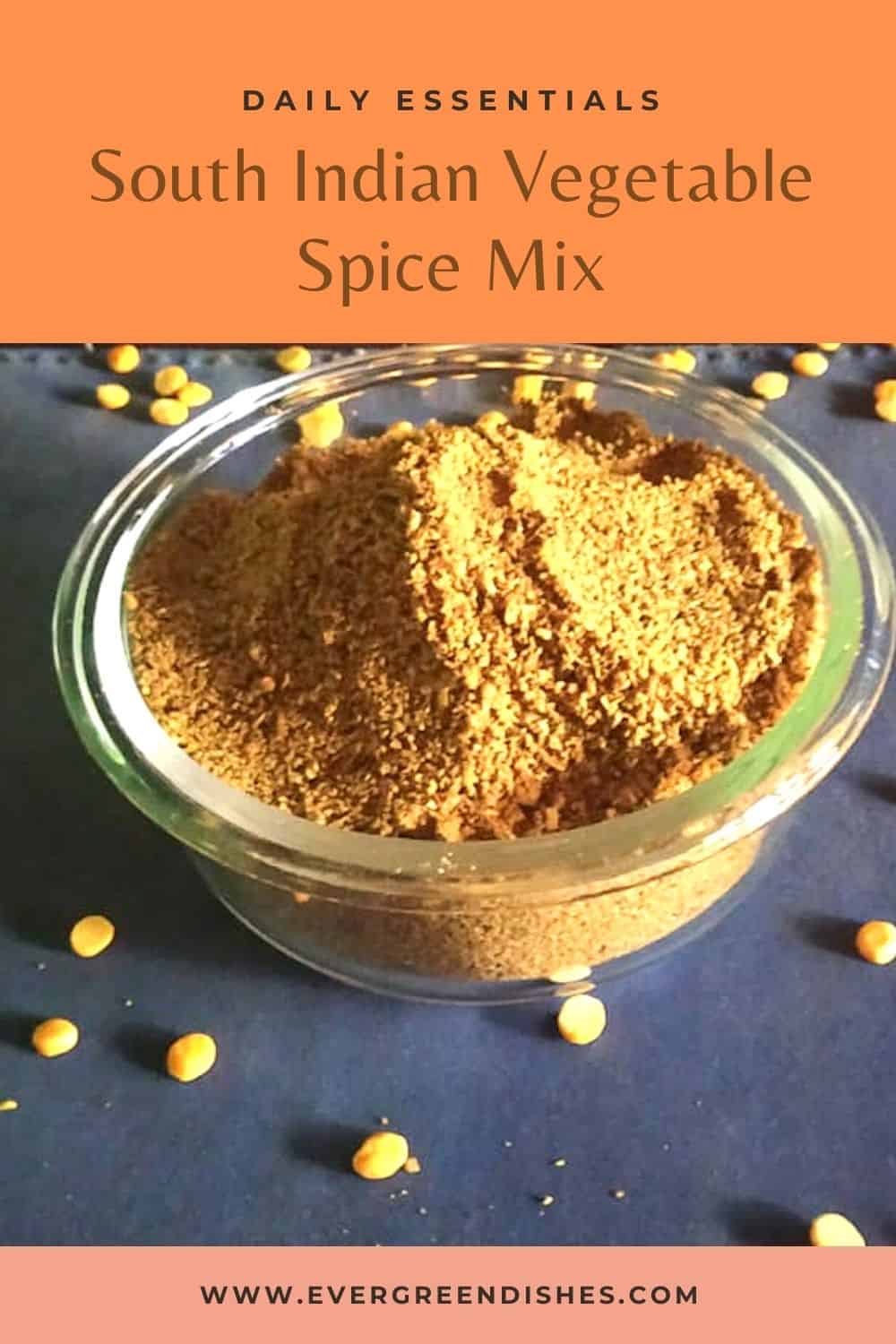
    South Indian Vegetable Spice Mix is a flavoursome condiment to store at home. it can be used in stir fry, dal and even rice dishes.
    South Indian Vegetable Spice Mix
  • Watermelon Rind Dosa | Watermelon Rind Recipes

    Watermelon Rind Dosa | Watermelon Rind Recipes

    Jump to RecipePrint Recipe


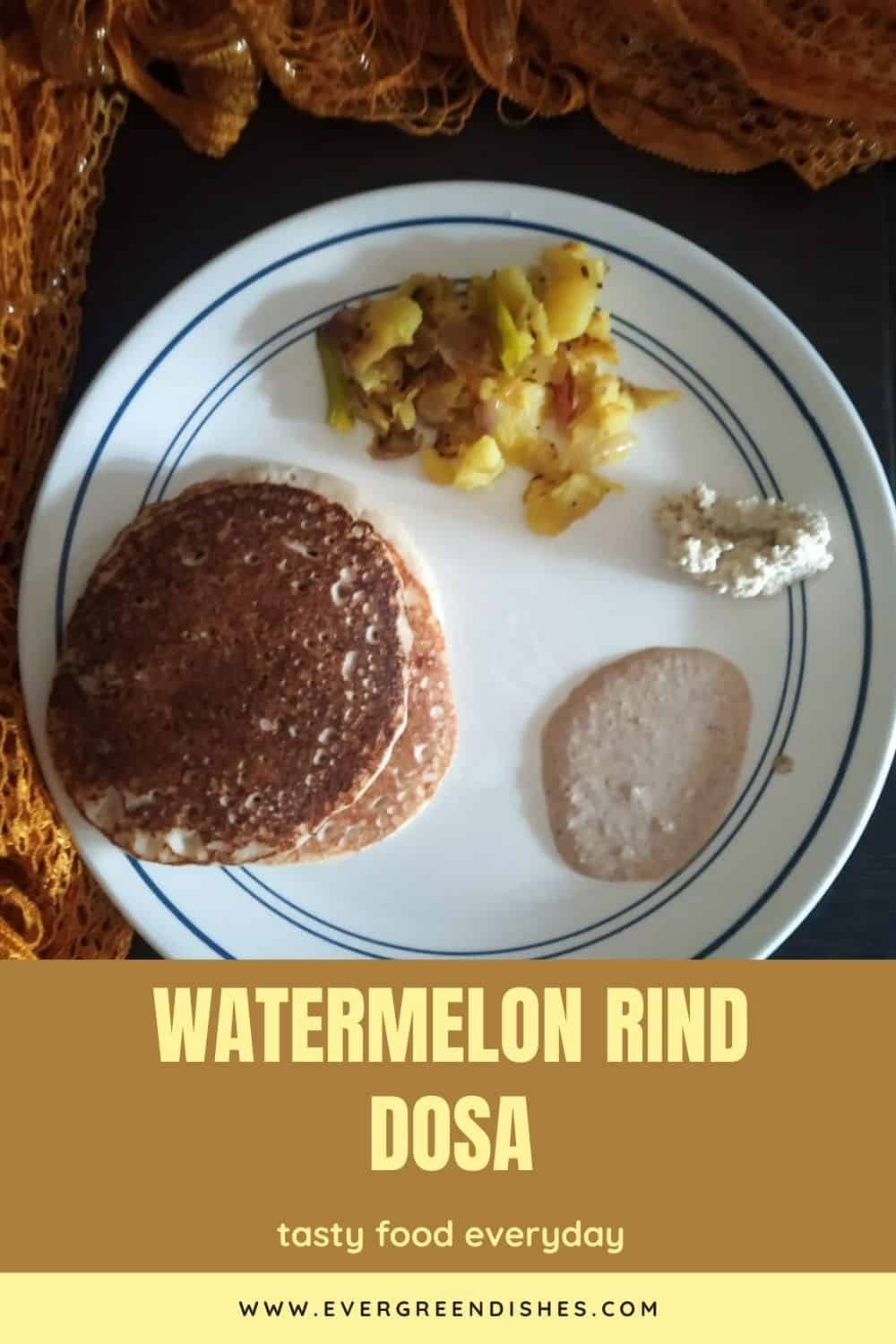
    Watermelon Rind Dosa is a delicious and unique breakfast option. It is soft, spongy and porous.  It is vegan and gluten free  and as the name suggests watermelon rind is used in it.

    Considering the fact, watermelon rind is healthier, I don’t like to waste it. The rind is the white part of the watermelon. It is rich in fibre and aids in digestion.  Usually, I use it in a smoothie or a salad.  Of late, I have another recipe and I make this dosa also. The dosa is made slightly thick and cooked only on one side. Like the regular dosa, this needs to be fermented. This  recipe is adopted from Vinaya Prasad’s blog  Vegetarian Culinary Delights. I am active in a couple of groups on Facebook and this group is one of them. I like the enthusiasm and patience with which she runs the group. Recently, the group reached the 15000 milestone mark. 

    Watermelon Rind Dosa Recipe 

    Ingredients: 

     1. 25 cup  rice
    1/2 cup  urad dal
    1/4 cup flattened rice (poha) 
    1/2 cup   watermelon rind
    1/2 cup  fresh coconut
    1/2 teaspoon methi seeds
    oil for roasting
    water for soaking and grinding
    salt to taste


    Method:

    1. Soak rice, urad dal and methi for 4 hours.
    2. Soak flattened rice (poha) for half an hour.
    3. Cut the rind into small pieces. 
    4. Grind the soaked rice and lentil mixture to a fine batter, remove it in a bowl. Now, grind the rind pieces, soaked poha and  coconut, mix it into the batter. Add salt to it, cover and keep it in a warm place to ferment overnight or 5-6 hours.
    5. Next day, mix the batter, heat a skillet. Smear a little oil if using the cast iron. pour a ladleful of batter, spread a little oil, cover with a lid   and allow to cook. There is no need to cook the other side for this dosa. Once it is cooked, remove and serve hot with coconut chutney. Repeat for the rest of the batter. 


    Take a tip: 

    1. The dosa is made as a set dosa.  The consistency of the batter should be moderately thick.
    2. Use any kind of skillet, iron or non-stick, cover with a lid and cook. There is no need to flip  to the other side. 


    watermelon rind dosa
    watermelon rind dosa


    My family enjoys dosa any day.  Rava dosa is usually prepared during weekends. A dosa batter is handy and used in different ways. You can make masala dosa, uttapam or gundapongal. The other kind of dosa are ragi dosa, jowar dosa, set dosa, neer dosa and mixed flour dosa. 

    watermelon rind dosa

    Watermelon Rind Dosa

    Watermelon rind dosa is soft, spongy dosa. It is ideal to prepare it for breakfast.
    Prep Time 4 hours
    Cook Time 30 minutes
    Fermentation time 6 hours
    Total Time 10 hours 30 minutes
    Course: Breakfast
    Cuisine: Indian, South Indian

    Ingredients
      

    • 25 cup rice
    • 1/2 cup urad dal
    • 1/4 cup flattened rice poha
    • 1/2 cup watermelon rind
    • 1/2 cup fresh coconut
    • 1/2 teaspoon methi seeds
    • oil for roasting
    • water for soaking and grinding
    • salt to taste

    Method
     

    1. Soak rice, urad dal and methi for 4 hours.
    2. Soak flattened rice (poha) for half an hour.
    3. Cut the rind into small pieces.
    4. Grind the soaked rice and lentil mixture to a fine batter, remove it in a bowl. Now, grind the rind pieces, soaked poha and  coconut, mix it into the batter. Add salt to it, cover and keep it in a warm place to ferment overnight or 5-6 hours.
    5. Next day, mix the batter, heat a skillet. Smear a little oil if using the cast iron. pour a ladleful of batter, spread a little oil, cover with a lid   and allow to cook. There is no need to cook the other side for this dosa. Once it is cooked, remove and serve hot with coconut chutney. Repeat for the rest of the batter.

    Notes

    The dosa is made as a set dosa.  The consistency of the batter should be moderately thick.
    Use any kind of skillet, iron or non-stick, cover with a lid and cook. There is no need to flip  to the other side. 

    Pin it for later:

    Watermelon rind dosa is soft, supple and porous. It is a good way to use the rind  of the fruit which is usually discarded. Watermelon rind is rich in fibre and minerals. Give a try to this variation of dosa.
    watermelon rind dosa

    If you ever make this dosa recipe or any of my dishes,  do take a picture and tag @foodiejayashree on Instagram or @evergreendishes on Facebook or Twitter. I will be glad to see your creation and share it further. Let’s be connected, do follow on social media platforms. Until next time, let’s stay connected.  Subscribe to get all updates in your inbox. Happy Cooking ! 


  • Mysore Rasam

    Mysore Rasam

    The season is mild rainy days and chilly nights, a steaming hot food with a few pakodas is ideal, isn’t it? Today, I have a rasam recipe for you.

    What is rasam?

    Rasam is a lentil based, thin soup like accompaniment served with hot steamed rice. It is popular in South India mainly in the states of Karnataka, Tamilnadu and Andhra Pradesh.

    What are the different variety of rasam that one can make?

    There are many variety of rasam that one can relish. Pepper rasam, tomato rasam, saaru, neer saaru, lemon rasam, andhra rasam, mysore rasam are a few variety of rasam that one can prepare.

    What is the difference between Rasam and Sambar?

    Rasam and Sambar are siblings from South India. Rasam is thinner in consistency and usually served with steamed rice. Sambar is slightly thicker than rasam and has different vegetables in it, onion may or may not be added. It is not only served with rice but also idly, dosa and vada.

    What is Mysore Rasam?

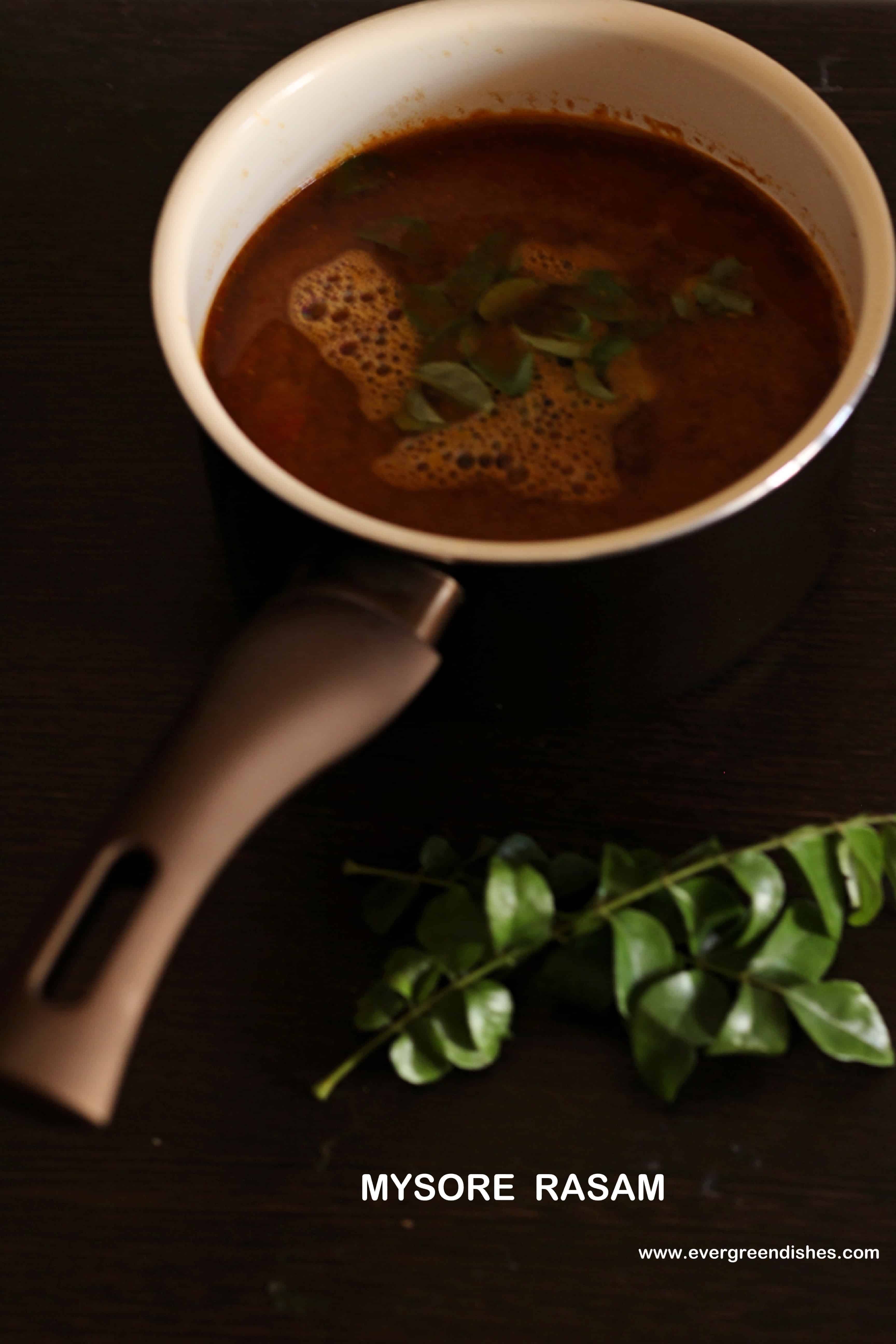
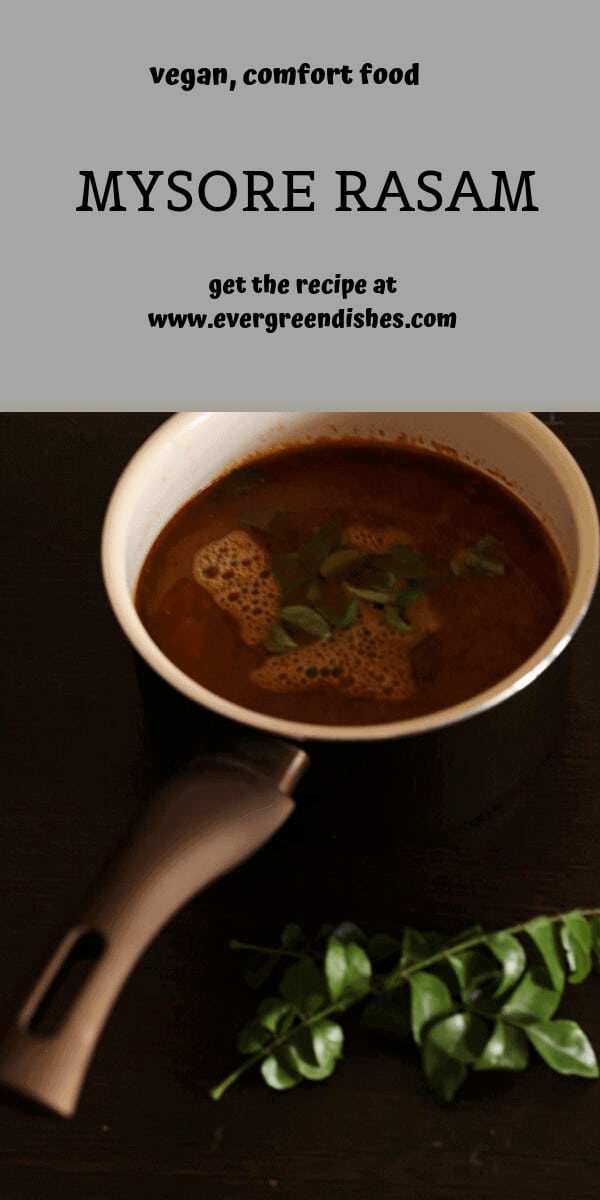
    Mysore Rasam as the name suggests, hails from the sate of Karnataka. It is also known as Arachuvitta Rasam. It is a rasam made using fresh spice mix and coconut. It is flavoursome. Let’s get to the recipe of it.

    Ingredients:

    • 1 cup tur dal
    • 2 tomato
    • 1/2 teaspoon mustard
    • 1/4 teaspoon turmeric powder
    • a small lemon size ball of tamarind
    • 1 teaspoon ghee

    For the rasam mix:

    • 1 tablespoon bengal gram
    • 1 tablespoon coriander seed
    • 1/2 teaspoon cumin
    • 1/2 teaspoon pepper
    • 1/4 teaspoon methi
    • 5 dry red chilli
    • 2 tablespoon fresh coconut

    For the seasoning:

    • 2 teaspoon ghee
    • 1/2 teaspoon mustard seed
    • 1/4 teaspoon asafoetida
    • 1/4 teaspoon turmeric powder
    • 1/4 teaspoon cumin
    • 1 red chilly
    • curry leaves

    Method:

    1. Wash the tur dal, add two cups of water and cook it in pressure cooker for three whistles. The dal should be smoothly cooked.
    2. Soak the tamarind in water.
    3. Make tomato puree, keep it aside.
    4. Take a pan, add a teaspoon of ghee and roast all the ingredients except coconut under “For the rasam mix” for two to three minutes. Put the coconut in the end and roast for another minute. When it is completely cool, grind them together.
    5. Extract the tamarind pulp. Mix it with tomato puree, put it to boil, the raw smell of the tomatoes should go.
    6. Put the ground rasam mix, jaggery, and salt into it. Mix the cooked dal well and put it along with other ingredients. Add three cups of water.
    7. Make seasoning, heat ghee in a pan. Add mustard seeds, as it splutters, put cumin, asafoetida, turmeric powder, red chilly and curry leaves. Pour it over the rasam
    8. Once the rasam boils, it is done.
    9. Serve hot with rice.
    Mysore Rasam

    Mysore Rasam

    Mysore Rasam is spicy- tangy lentil based dish served with hot steamed rice.
    Prep Time 20 minutes
    Cook Time 20 minutes
    Total Time 40 minutes
    Course: lunch ideas, Main Course
    Cuisine: karnataka

    Ingredients
      

    • 1 cup tur dal
    • 2 tomato
    • 1/4 teaspoon turmeric powder
    • small lemon size ball tamarind
    For Rasam Mix
    • 1 teaspoon ghee
    • 1 tablespoon bengal gram
    • 1 tablespoon coriander seed
    • 1/2 teaspoon cumin
    • 1/2 teaspoon pepper
    • 1/4 teaspoon fenugreek
    • 5 red chilli
    • 1 sprig curry leaves
    • 2 tablespoon fresh coconut
    For the seasoning
    • 2 teaspoon ghee
    • 1/2 teaspoon mustard seed
    • 1/4 teaspoon asafoetida
    • 1/8 teaspoon turmeric powder
    • 1/4 teaspoon cumin
    • 1 red chilli
    • 1 sprig curry leaf

    Method
     

    1. Wash the tur dal, add two cups of water and cook it in pressure cooker for three whistles. The dal should be smoothly cooked.
    2. Soak the tamarind in water.Make tomato puree, keep it aside.
    3. Take a pan, add a teaspoon of ghee and roast all the ingredients except coconut under "For the rasam mix" for two to three minutes. Put the coconut in the end and roast for another minute. When it is completely cool, grind them together.
    4. Extract the tamarind pulp. Mix it with tomato puree, put it to boil, the raw smell of the tomatoes should go.Put the ground rasam mix, jaggery, and salt into it. Mix the cooked dal well and put it along with other ingredients. Add three cups of water.
    5. Make seasoning, heat ghee in a pan. Add mustard seeds, as it splutters, put cumin, asafoetida, turmeric powder, red chilly and curry leaves. Pour it over the rasam. Once the rasam boils, it is done.Serve hot with rice.

    Pin it for later:

    Mysore Rasam

    I am sharing this with the Facebook group, “Food for Feast” where like minded bloggers decide a theme to blog every month. The theme for September was “Satvik Recipe”. Satvik food is that food that can be offered to God and does not contain onion and garlic in it.

    I am also sending this post MLLA 131 hosted by Sasmita of First Timer Cook . It is a monthly event started by Susan and now hosted by Lisa of Lisa’s Kitchen.

    If you have liked this post, do leave a comment below. If you ever make it, do take a picture and post it on Facebook by tagging @evergreendishes or on Instagram by tagging @foodiejayashree.

    Subscribe to get a book of handyhints for free !


  • Instant Ragi Idli

    Instant Ragi Idli

    finger millet idli | instant ragi idli |millet recipes | breakfast recipes | healthy recipes

    Jump to Recipe

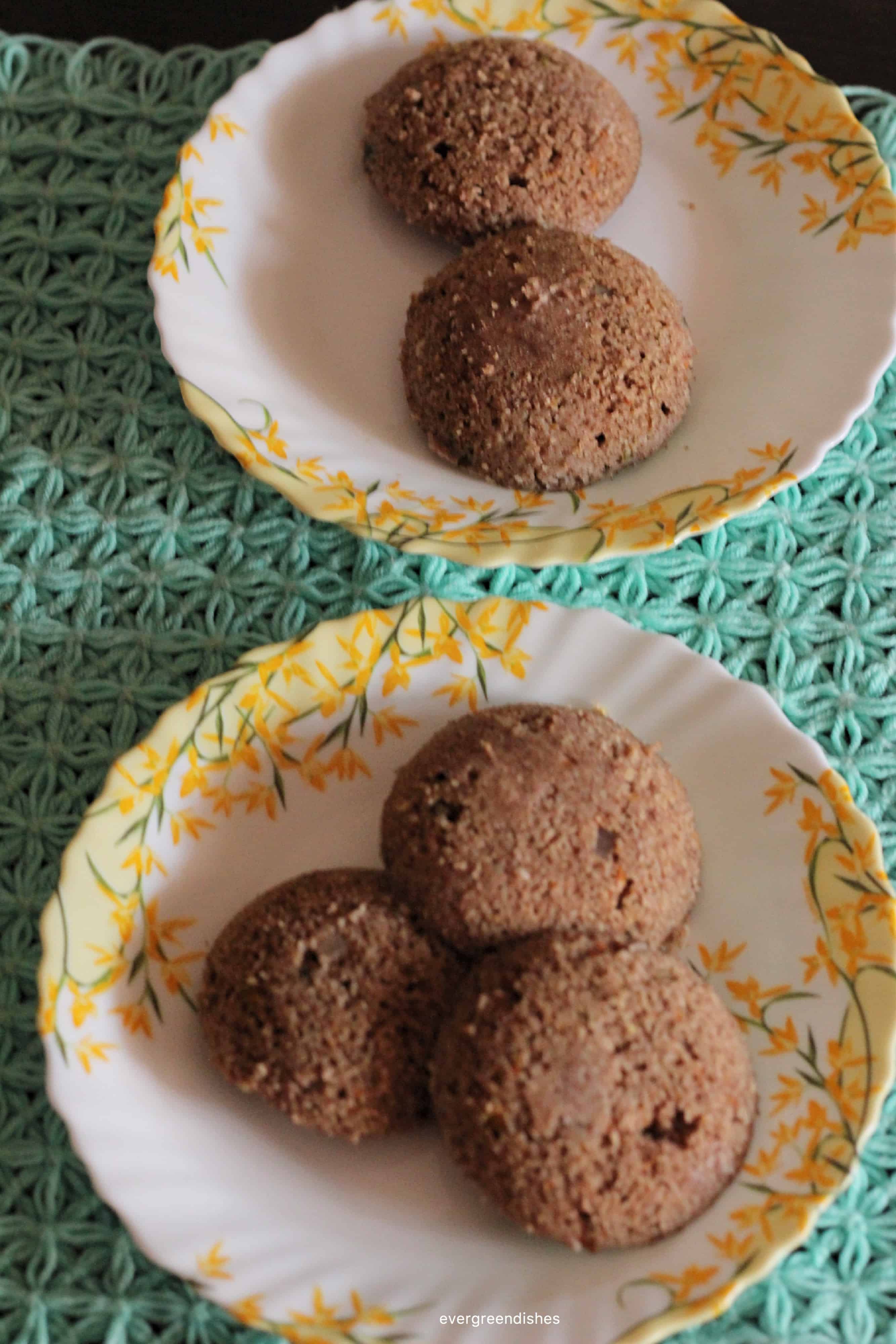
    Instant Ragi Idli is tasty, healthy and easy to make. It is a good option for breakfast, evening snack or dinner. You can serve it for people with diabetics.

    The summer is at it’s peak, nothing is more soothing than a glass of cold water. One needs to eat simple food that is tasty and nourishing for the body. Idli is ideal during summer. Here is another version of Idli.

    Ragi or finger millet is regularly used at home these days. It is gluten free and good source of protein. It is rich in calcium, good carbohydrates and proteins. It helps to control diabetes and blood sugar. It is ideal for weight watchers. It helps in controlling anxiety and depression.

    Moreover, it is ideal food for summer. It has cooling properties which helps the body to combat stress. A few other idli recipes that I have shared earlier :Chennai Idli, Sago Idli,

    I had earlier shared the fermented version of ragi idli. But, I find this to be more simple and handy. One hardly require ten minutes for all the preparation, keep it aside for half an hour and later put it in the mould and steam.

    A few pointers before I proceed to the recipe. Curds or yoghurt must be sour. Addition of veggies is optional, you can make without it. Once the baking soda is added, immediately put it in the moulds and keep it to steam.

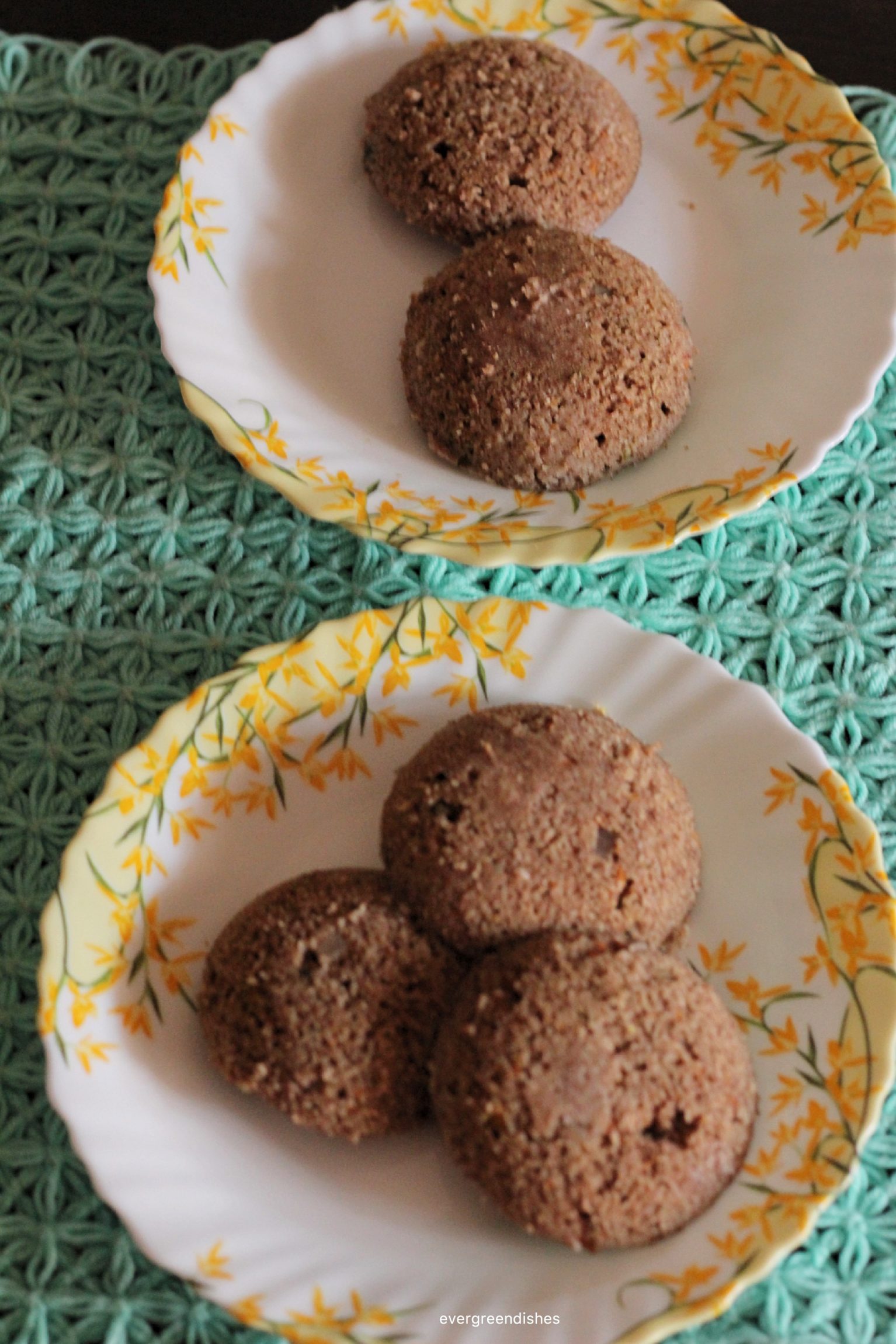
    instant ragi idli
    instant ragi idli

    Ragi Flour : Always use fresh flour. The best way to keep a track of all the groceries is to bring them in a required quantity. For a family of four, one kilogram of ragi atta is sufficient. There is no need to buy two kilograms and keep as a reserve for the future. We tend to use different ingredients on a rotational basis.

    Semolina : The semolina used here is bombay rawa. 

    Sour curd ; The curd should be sour but should not have a foul smell. It 

    Vegetables ; Vegetables used here are onion, carrot, green chilli and coriander. You may use green peas and capsicum. Using of onion is                            optional. 

    Baking Soda : As the idli is an instant version, baking soda is essential. You can use eno instead. 

    Water : It is needed to bring in the desired consistency.  You also need water for steaming.

    Seasoning : All the ingredients of seasoning are needed. You may add a few curry leaves. Cashews give a good taste.


    instant ragi idli
    Evergreendishesdev

    Instant Ragi Idli

    5 from 4 votes
    Instant ragi idli is tasty, healthy and easy to make breakfast option for the busy mornings. One can make it for evening snack or dinner too.
    Prep Time 10 minutes
    Cook Time 20 minutes
    Resting time 30 minutes
    Servings: 20 idli
    Course: Breakfast, dinner ideas, evening snacks
    Cuisine: South Indian

    Ingredients
      

    • 1 cup finger miller flour
    • 1 cup sour curd
    • 1 carrot
    • 1 onion
    • fresh coriander
    • salt
    • 1 tablespoon oil
    • 1/2 teaspoon mustard
    • 1/4 teaspoon asafoetida
    For seasoning
    • 1 tablespoon mustard seed
    • 1/4 teaspoon asafoetida
    • 1/4 teaspoon turmeric powder
    • 1/2 teaspoon cumin
    • 4 cashewnut

    Method
     

    1. Take a wide bowl, add ragi flour and semolina to it. Put salt and curd to it. Mix it well, keep the batter aside for half an hour.
    2. Chop the onion finely and grate the carrot.
    3. Make seasoning, take oil in a small pan, add mustard seeds, as it crackles, put cumin, cashew pieces, broken chilli, a few curry leaves, pour it over the batter.Add veggies and chopped coriander. Adjust the consistency by adding some water.
    4. Put water in the idli pan and heat in on a low flame.Meanwhile, put the soda powder to the batter, mix it and put it to the moulds.
    5. Steam it for fifteen minutes on moderate flame., then on low heat for five to ten minutes. Check if it is done. Switch off. Unmould after sometime.Serve with coconut chutney.

    Notes

    • Sour curds is mandatory. 
    • Addition of veggies is optional.
    • Once the baking soda is added, immediately put it in moulds and steam it.
    • Eno may be used instead of baking soda.
    • Serve hot. 

    This post is part of the Healthy Wellthy Cuisines with the theme “Steamed Dishes”, do check out the other recipes by co-bloggers:

    If you have liked this post, pin it for later. Do share with your family and friends. If you ever make it, take a picture and tag us on Facebook or @foodiejayashree on Instagram, we would be happy to see your creation.

    Pin it for later

    instant ragi idli
    instant ragi idli

    Do subscribe to get a book of handyhints for free !

    Are you passionate about writing? Do start a blog and pen your thoughts Choose A2 Hosting as I have done. They are easily approachable and reliable.


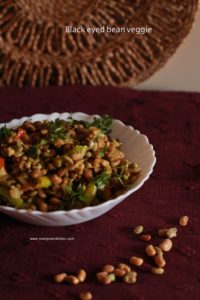
  • Black eyed bean veggie

    Black eyed bean veggie

    Black eyed bean veggie makes a tasty accompaniment with chapati for lunch or dinner. It is loved by children and thus ideal to pack in the lunch box. 


    Today, I am sharing a stir fry with winter vegetable. Fresh black eyed pea are tasty and make a good accompaniment with chapati or jowar roti. This is a simple yet tasty accompaniment that children will surely love. 

    Black eyed pea is nutritious and makes a good accompaniment for children in the lunch box. You can use the frozen ones that are easily available.   As the fresh ones cook quickly, this can be done in under 30 minutes. 

    This post is part of BM#96 

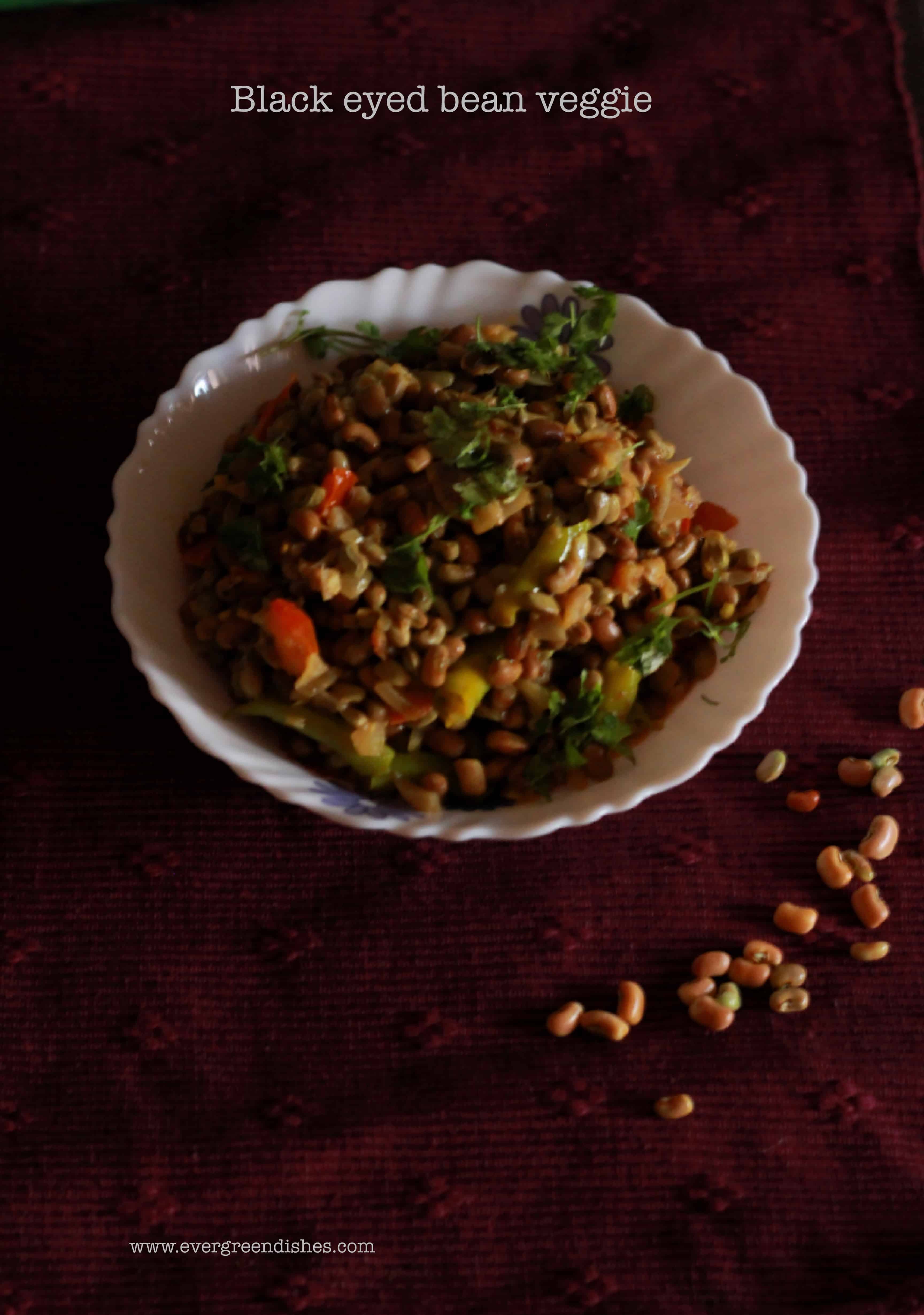
    black eyed bean veggie
    black eyed bean veggie

    Ingredients:

    • 1 cup black eyed bean/ pea
    • water
    • 2 onion
    • 1 tomato
    • 1 tablespoon oil
    • 1/2 teaspoon cumin
    • 1/4 teaspoon asafoetida
    • 1/4 teaspoon turmeric powder
    • 2 green chilly
    • 1/2 inch ginger
    • coriander
    • salt

    Method:

    Cook the black eyed bean in a pressure cooker for one whistle. Take oil in a pan, add cumin, as it splutters put turmeric powder, asafoetida, green chilly , onion and ginger. Let cook, then add tomato and saute it. Put salt to it. Finally, add the cooked beans to it and boil for three minutes. Garnish with fresh coriander.

    Tupperware is widely used everywhere. This lunch box is ideal for school children as it is user friendly

    Here is a trendy lunch box from Tupperware for office use. It has four containers, the lids are tight, microwave safe and can be cleaned easily. 

    Evergreendishesdev

    Black eyed pea stir fry

    Black eyed pea stir fry makes a tasty accompaniment with chapati or jowar roti. Pack it in the lunch box to give a healthy meal for children. 
    Prep Time 10 minutes
    Cook Time 15 minutes
    Total Time 25 minutes
    Course: accompaniments, lunch box
    Cuisine: South Indian

    Ingredients
      

    • 1 cup black eyed pea
    • water
    • 2 onion
    • 1 tomato
    • 1 tablespoon oil
    • 1/2 teaspoon cumin
    • 1/4 teaspoon asafoetida
    • 1/4 teaspoon turmeric powder
    • 2 green chilly
    • 1/2 inch ginger
    • coriander
    • salt

    Method
     

    1. Wash, add water to the black eyed bean and cook in pressure cooker for one whistle. 
    2. Cut the onion and tomato into small pieces. Grate the ginger and keep it aside. 
    3. Take oil in a pan, add cumin as it splutters put turmeric powder, asafoetida, green chilly, ginger and onion. Let cook.
    4. Add tomato and saute it. Put salt to it. 
    5. Finally, add cooked  beans to it and boil for three minutes. 
    6. Garnish with fresh coriander.

    Notes

    • Frozen black eyed peas can be used.
    • When fresh ones are available, I like to use them.
    • Remove the pea from the pod and store them in the refrigerator, it will be handy to use. 


    black eyed bean veggie
    black eyed bean veggie

    If you have liked this post, leave a comment and pin it for later. 

    black eyed bean stir fry
    black eyed bean stir fry

    I am sending this post to the Kids Event hosted by Bhawana under the theme, “Lunch Box Ideas in 30 minutes”


    BMLogo Check out the Blogging Marathon page for the other Blogging Marathoners doing this BM#96

    Follow evergreendishes on Facebook, Twitter, Instagram and Pinterest.

    If you ever recreate this dish, do take a picture and share it on Instagram by tagging @foodiejayashree