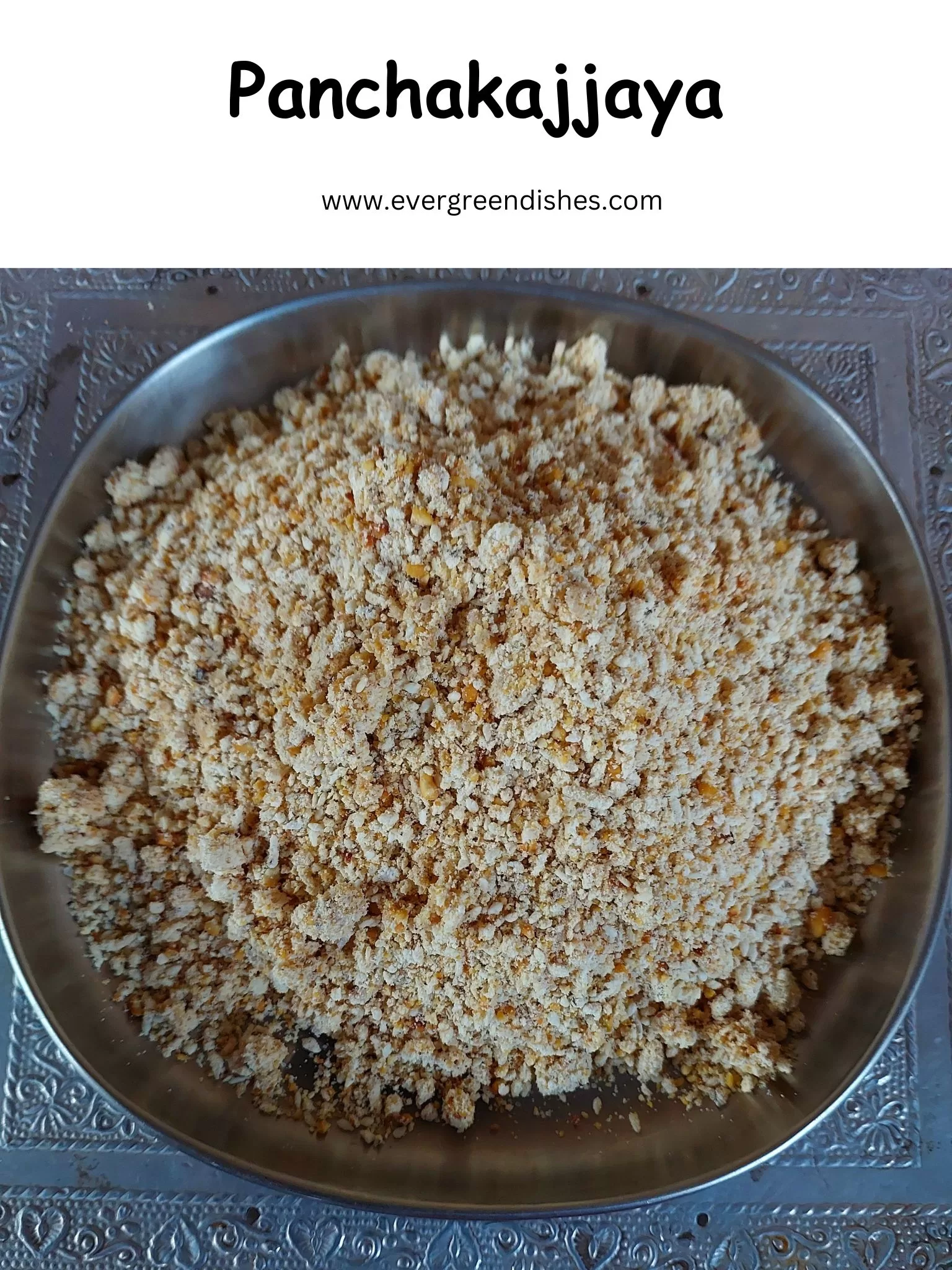
Panchakajjaya is a simple offering that is made during Ganesha Chaturthi.Various kind of panchakajjaya are made. Roasted chana dal, bengal gram, poha and even with green gram they do prepare this offering of panchakajjaya. Here is one kind from the state of Karnataka using bengal gram dal.
Ganesh Chaturthi or Vinayaka Chauti is round the corner and we see so many blogs with dishes for the same. It is a important festival which is celebrated for ten days in some places. Ganesha idols are bought and beautiful decorations are made around with flowers and crafted motifs. Lord Ganesha is the eliminator of obstacles and also the Lord of wisdom and learning. He is the God of beginnings in rites and ceremonies, precedings take place in good thought and note. Various offerings are made to the Lord. Modak, kadabu, chakli, panchakajjaya and sundal are some of the usual preparations made during this festivals. Panchakajjaya is a Ganesh Chauti offering made with a few easily available ingredients.
Various kind of panchakajjaya are made. Roasted chana dal, bengal gram, poha and even with green gram they do prepare this offering of panchakajjaya. Here is one kind from the state of Karnataka using bengal gram dal.
The good thing of Panchakajjaya is, it can be made a day earlier and kept aside for the festive day.
Modak is also made during Ganesh Chaturthi. Lord Ganesha loved modak and thus twenty-one modaks are offered as naivedyam. Another sweet, which we often do at home during Ganesha habba is kadabu. It is crescent shaped sweet prepared with a lentil filling. It is tasty and makes a good festive treat.
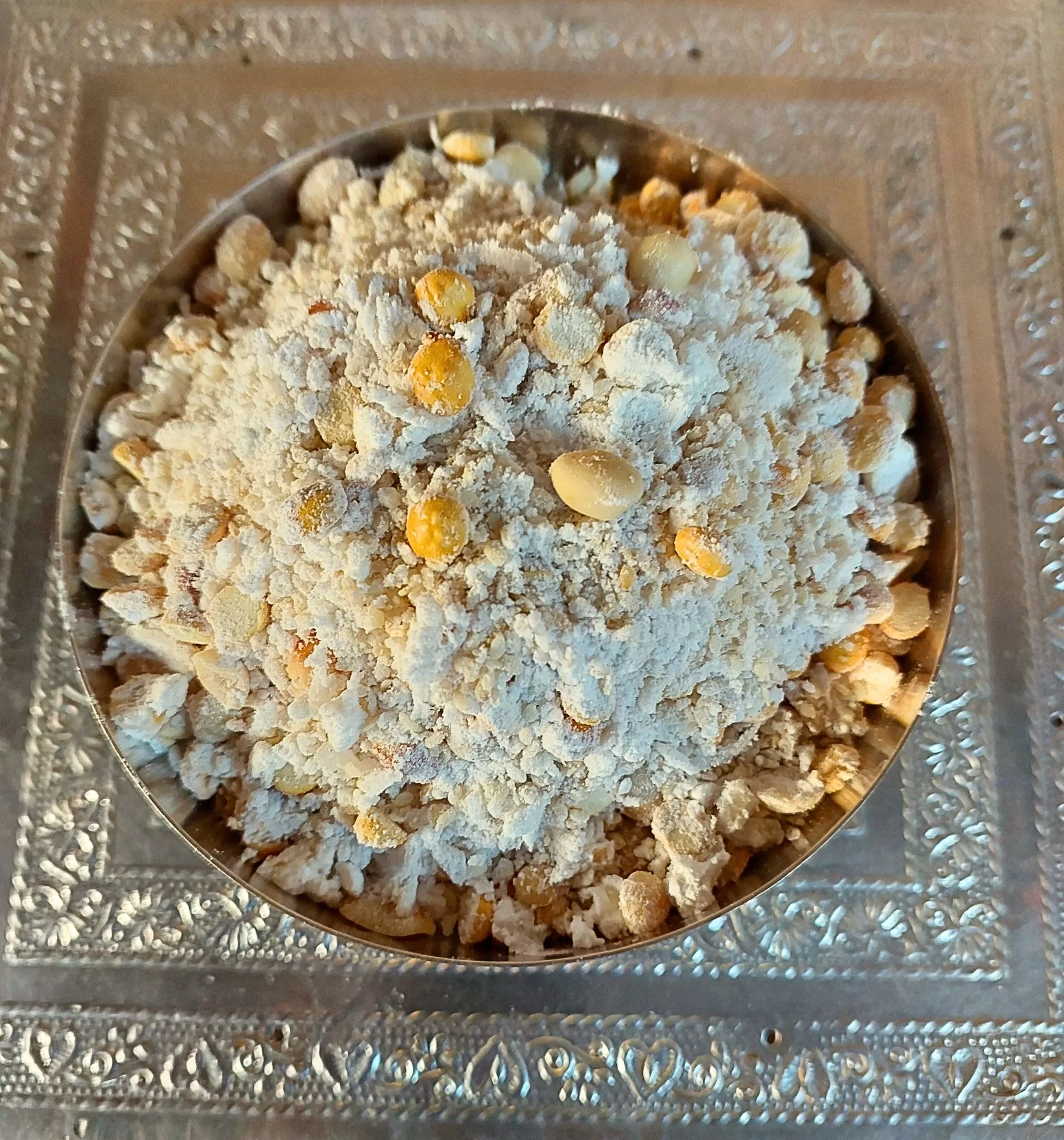
Roast bengal gram on a low flame, it should not get burnt. Let cool, grind it to a powder.
Roast the desiccated coconut lightly for a few seconds.
Dry roast the sesame seeds until they splutter and give a nice aroma.
Grind the sugar.
Take a wide bowl, add all the ingredients and mix well.
Panchakajaya offering is ready for Lord Ganesha.
About the event :
This is an old post, first published on 23rd August, 2017. Today, i.e, 8th Sept 2024, I have redone it with better pictures. The recipe remains the same. Sending this to Foodies_Redoing Old Post _135, a fortnightly event. Here, pictures have been changed along with a few edits.
Dry roast bengal gram on a low flame. It should not get burnt and evenly roasted to a golden colour.
Dry roast the coconut gratings for a few second.
Dry roast the sesame until it splutters and is golden in colour.
Grind sugar along with cardamom to a powder.
Grind roasted bengal gram to a powder.
Add all the ingredients in a wide bowl and mix well with hand.
Panchakajaya is ready to serve
Notes
You can reduce the quantity of desiccated coconut.
Pin it for later :
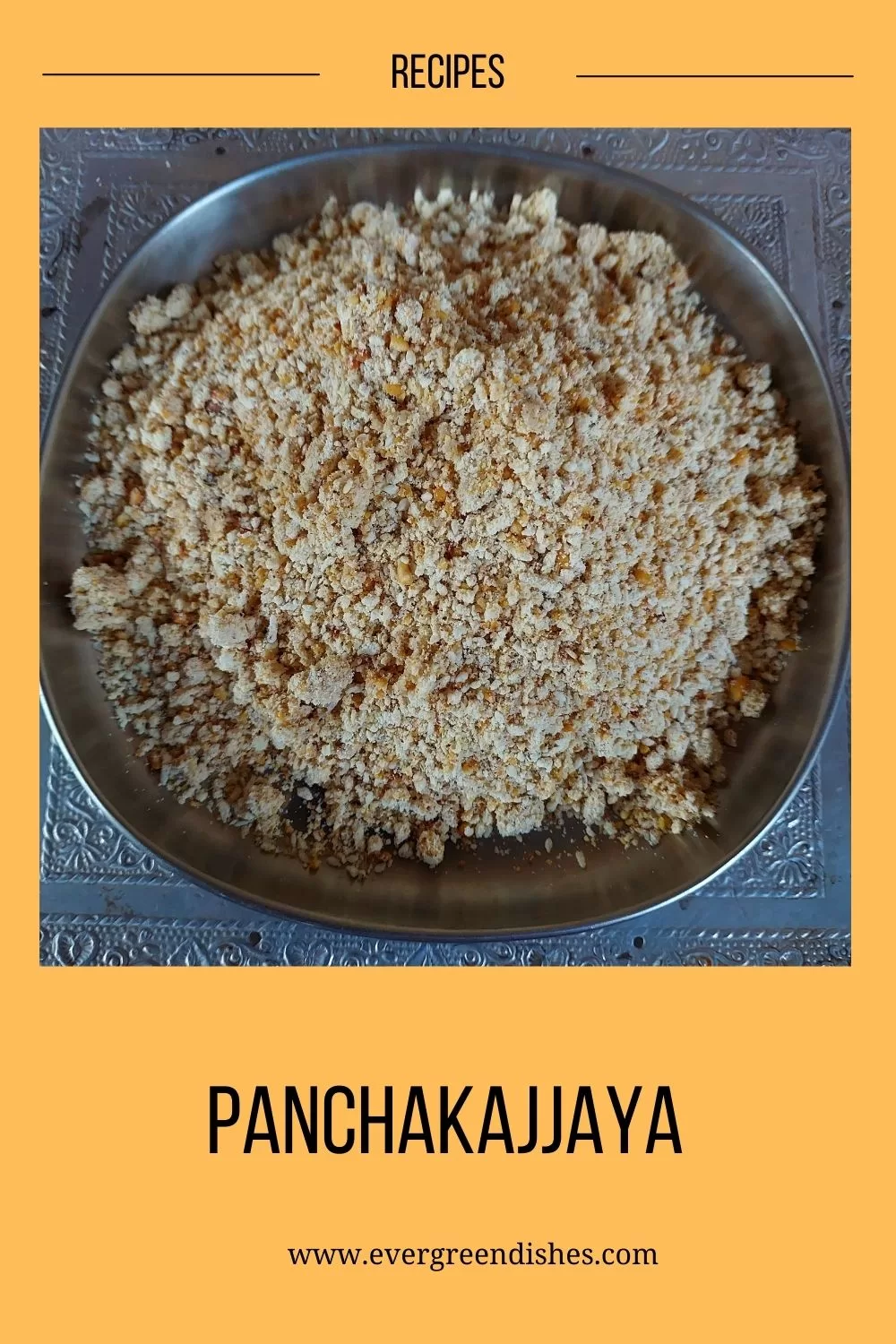
panchakajjaya
If you ever make Panchakajjaya prasadam, take a picture and share it by tagging @foodiejayashree on Instagram and @evergreendishes on Facebook. Subscribe to get all updates and an e-book for free. Happy Gowri Ganesha festival to one and all.
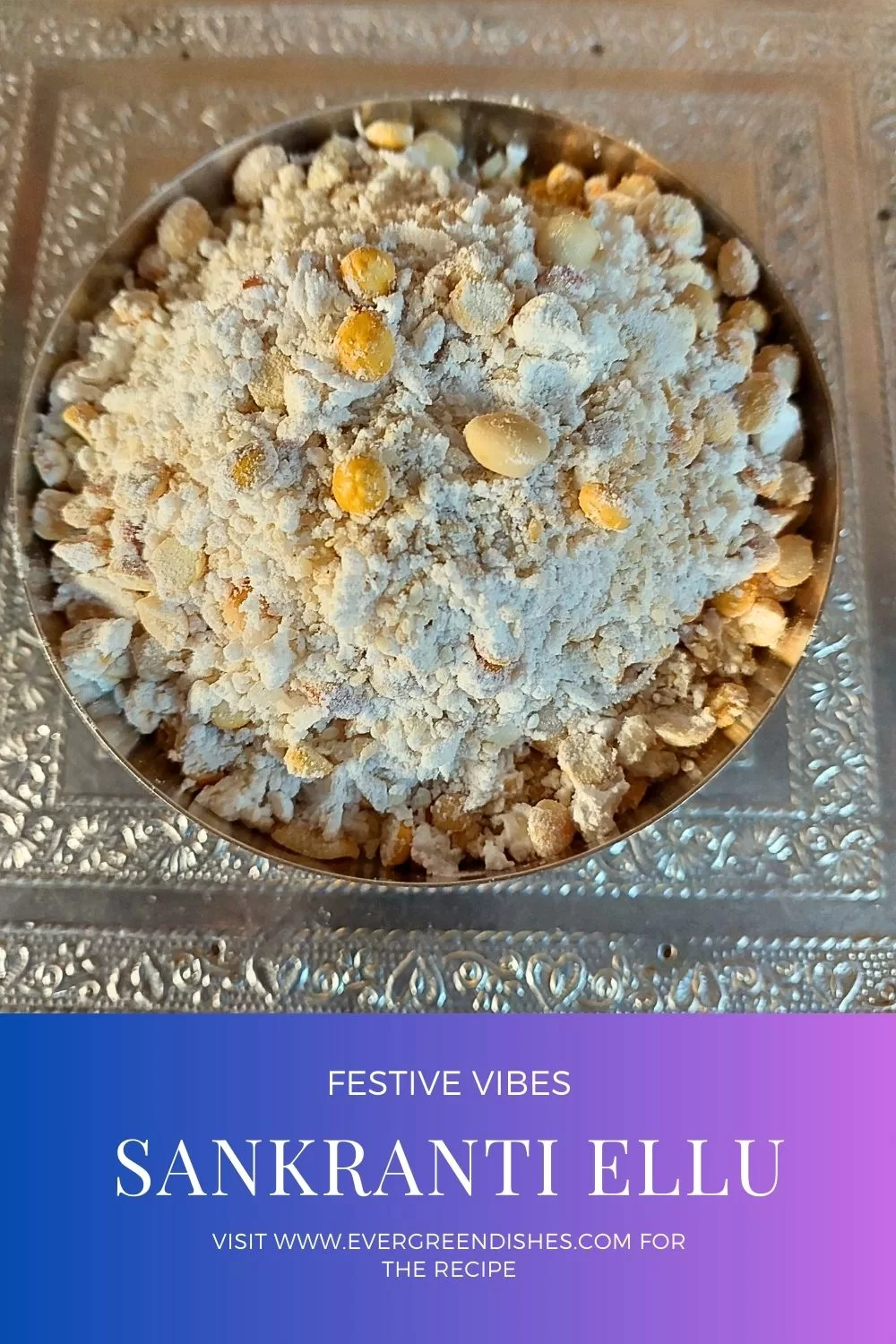
Sankranti Ellu is commonly prepared in South India. It is offered to the Lord and later exchanged with family members and friends.
Makar Sankranti is one of the important festivals celebrated in India. It is called by different names in different parts of the country. Pongal and Lohri are the other names. It marks the transition of the sun into the sign of Makara. It marks the beginning of Uttarayana kal, a pious period for the next six months. It usually occurs on January 14th or 15th every year. It is also one of the periods which marks longer days and harvesting period for the farmers.
In Karnataka, Andhra Pradesh, Tamil Nadu and Maharashtra Ellu (a mixture of white sesame with sugar or jaggery) is offered to Lord and later in the evening to elder members to seek their blessings. Sankranti Ellu is usually made at home though it is available in the market also. It is also known as Ellu Bella.
The white sesame seeds is mixed with ground nuts, desiccated coconut and castor sugar. Ellu Bella theendu, olle olle maatadu, meaning take sweet, talk sweet is the saying that often goes with it.
Back to our childhood days, we cherished taking this mixture the next day, in cute box and exchanging with all classmates as ” Take Sweet, Talk Sweet, Be Sweet”. Some good memories as I write this post.
Here is the Sakkarai Pongal recipe prepared on this day. If you like using quinoa, try making quinoa pongal, as I have made it. It is healthier and tasty too.
SANKRANTI ELLU
INGREDIENTS:
1 cup white sesame seeds
1 cup ground nut seeds
1 cup split dalia
11/2 cup dessicated coconut
2 cup castor sugar
METHOD:
Grate the coconut. I remove the black part at first and then grate the white only.
Dry roast sesame seeds, ground nut, and dessicated coconut lightly. They should not get burnt or dark.
Remove the skin of groundnuts.
Put split dalia in the pan for a second and remove it.
Mix all ingredients together.
Sankranti Ellu is ready to serve.
Take a tip:
Use shiny sesame seeds.
Instead of castor sugar and shredded coconut , small bits of jaggery and coconut pieces may be added.
Evergreendishesdev
Ellu for Makar sankranti
5 from 4 votes
Ellu is exchanged during Makar Sankranti in South India. It signifies better bonding and mark of respect between indivduals.
Masale Bhat | South indian cooking | rice dishes | masala bhat
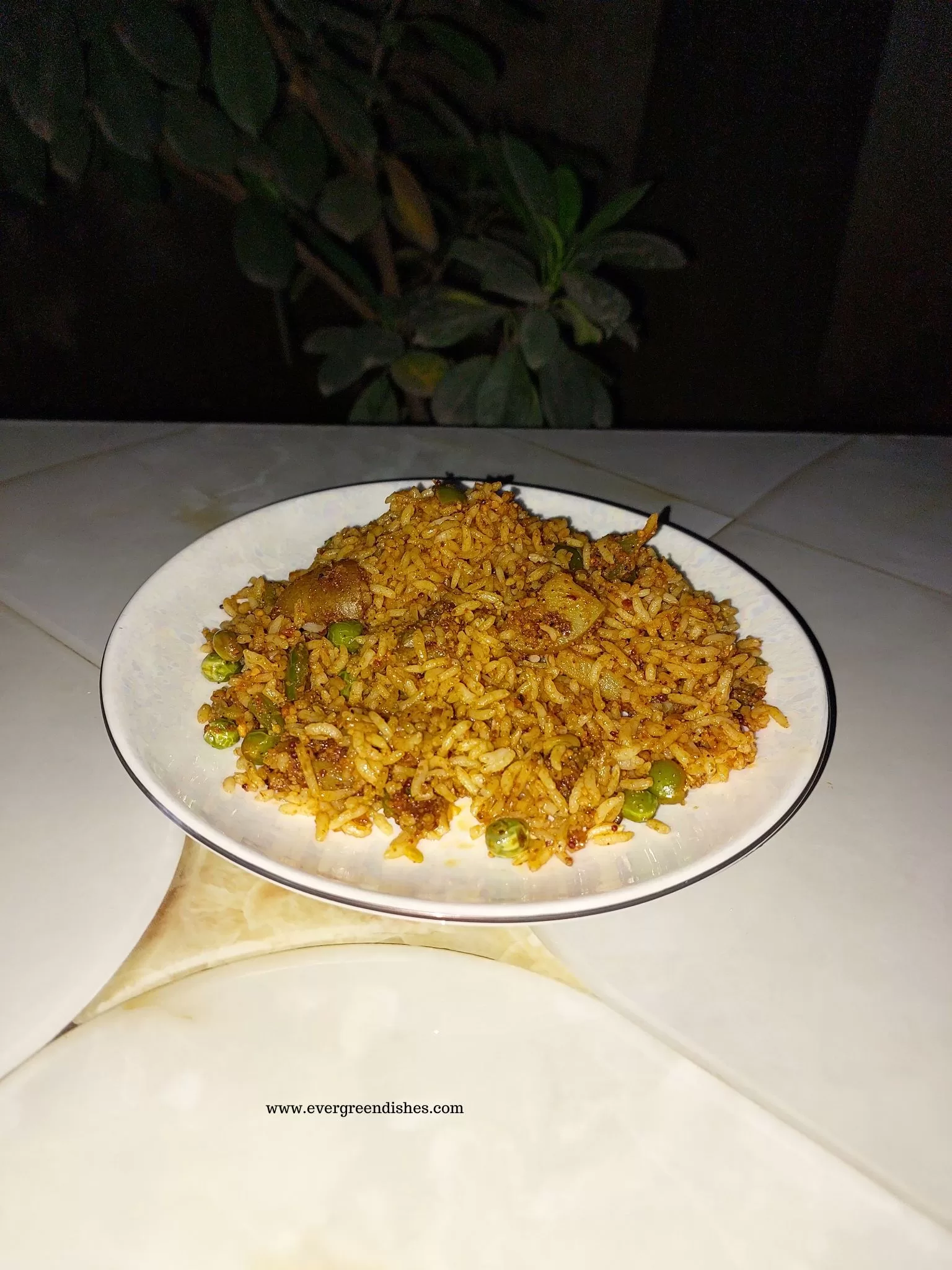
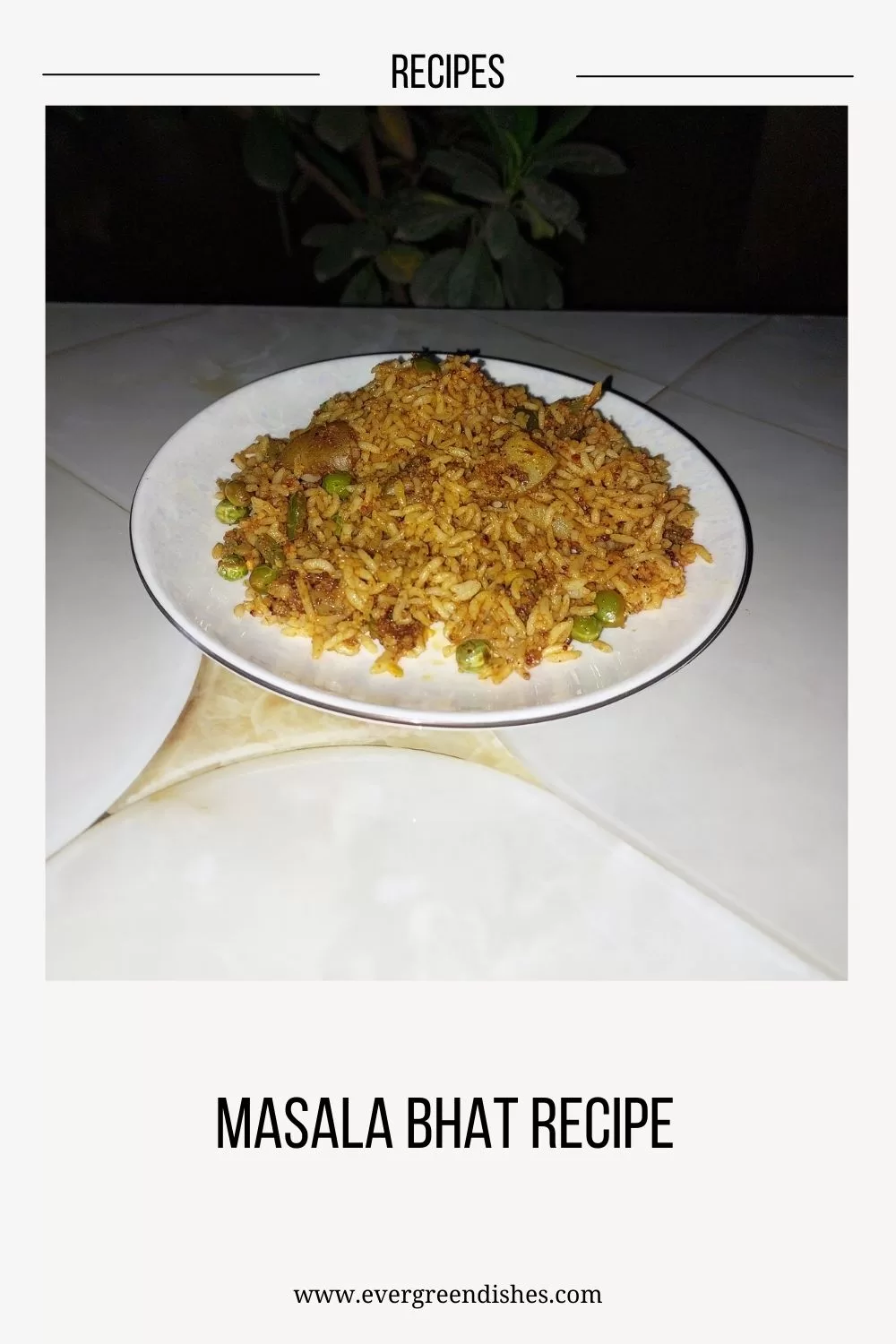
Masale Bhat is a flavoursome, no onnion garlic rice dish from Karnataka. It is usually prepared as part of the festive menu.
Rice dishes form one of the major attractions in South Indian festivals. Masala Bhath is one such kind which is tasty and can be made with the available ingredients.
Preparations for Ugadi are on in most of the houses. It is an important festival for the people of South India. It is also celebrated by Sindhis, Marwaris and Manipuris. It falls on the first day known as Padya in the month of Chaitra of the Hindu calendar. This is considered as the beginning of new year.
People rise early in the morning, have an oil bath, decorate the house with mango leaves and pooja is performed. The new panchanga is worshipped and it is customary to make an offering of neem and jaggery mixed with raw mango pieces. It is called as Bevu Bella. It signifies that we should accept both joy and sorrow gleefully.
Among the sweets, kheer and holige are usually prepared. Today, I am presenting a tasty Masala Bhath to you all. Do read further.
Here I am using capsicum, potatoes and peas. The potatoes and peas are parboiled. Fresh spice powder adds a good taste, though one can make it ahead and store. I prefer using the freshly made one.
Masale Bhat is a flavoursome, no onion garlic rice dish from Karnataka. It is usually prepared during festive days as Ugadi and Deepavali.
The ingredients needed are usually available in all south indian households. The vegetables used here are capsicum, potato and green peas. Do not skip on any of these, it lends a good taste to it.
Ingredients:
1 cup cooked rice
3 potato
2 capsicum
1 cup green peas
3 teaspoon spice mix
1/2 teaspoon chilli powder
salt to taste
For the seasoning :
3 tablespoon oil
1/2 teaspoon mustard
2 teaspoon bengal gram
2 teaspoon urad dal
1/4 teaspoon asafoetida
1/4 teaspoon turmeric powder
a few curry leaves
For the spice mix:
3 tablespoon coriander seed
1 tablespoon bengal gram
1 tablespoon urad dal
6 dry red chilli
a few curry leaves
2 cloves
15 peppper corn
1 inch cinnamon
Method :
Cook the rice and keep it aside. The grains of rice should be separate.
Cut the vegetables.
Put the potatoes to boil, when they are nalf done, add green peas to it.
Make the spice mix by roasting the ingredients separately under the section,” For the Spice Mix” and grindd them to a powder.
Make seasoning, add mustard seeds, as it crackles put bengal gram urad dal, asafoetida, turmeric powder and capsicum.
Once the capsicum pieces are cooked, put the boiled peas and potato to it.
Add three teaspoon of spice mix, a little chilli powder and salt.
Mix it well, let cook for a minute.
Switch off the gas, put the rice and mix it gently.
You may garnish with fresh coriander.
Masale Bhat
Masale Bhat is a flavoursome rice dish from South India. It is usually prepared during festive days.
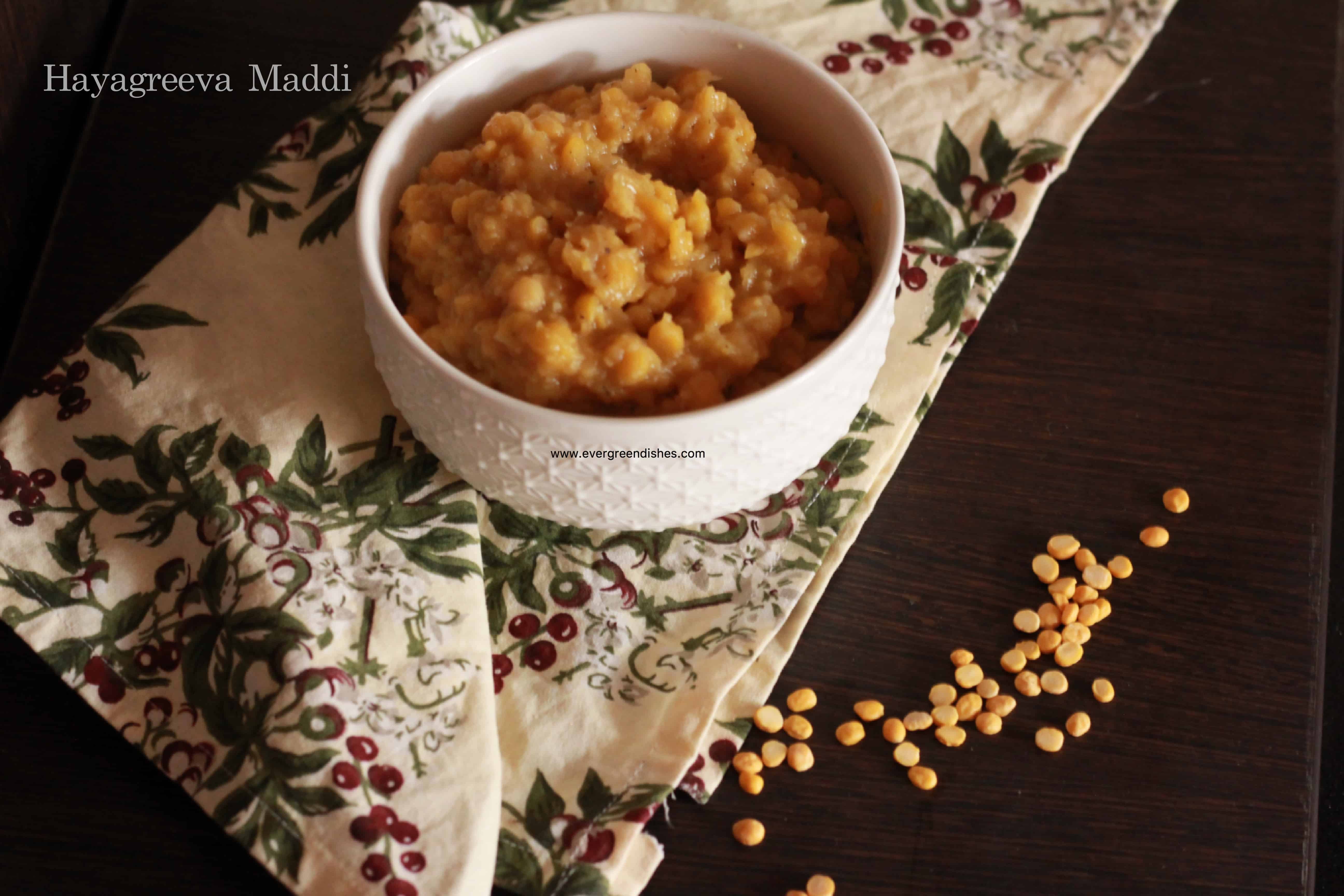
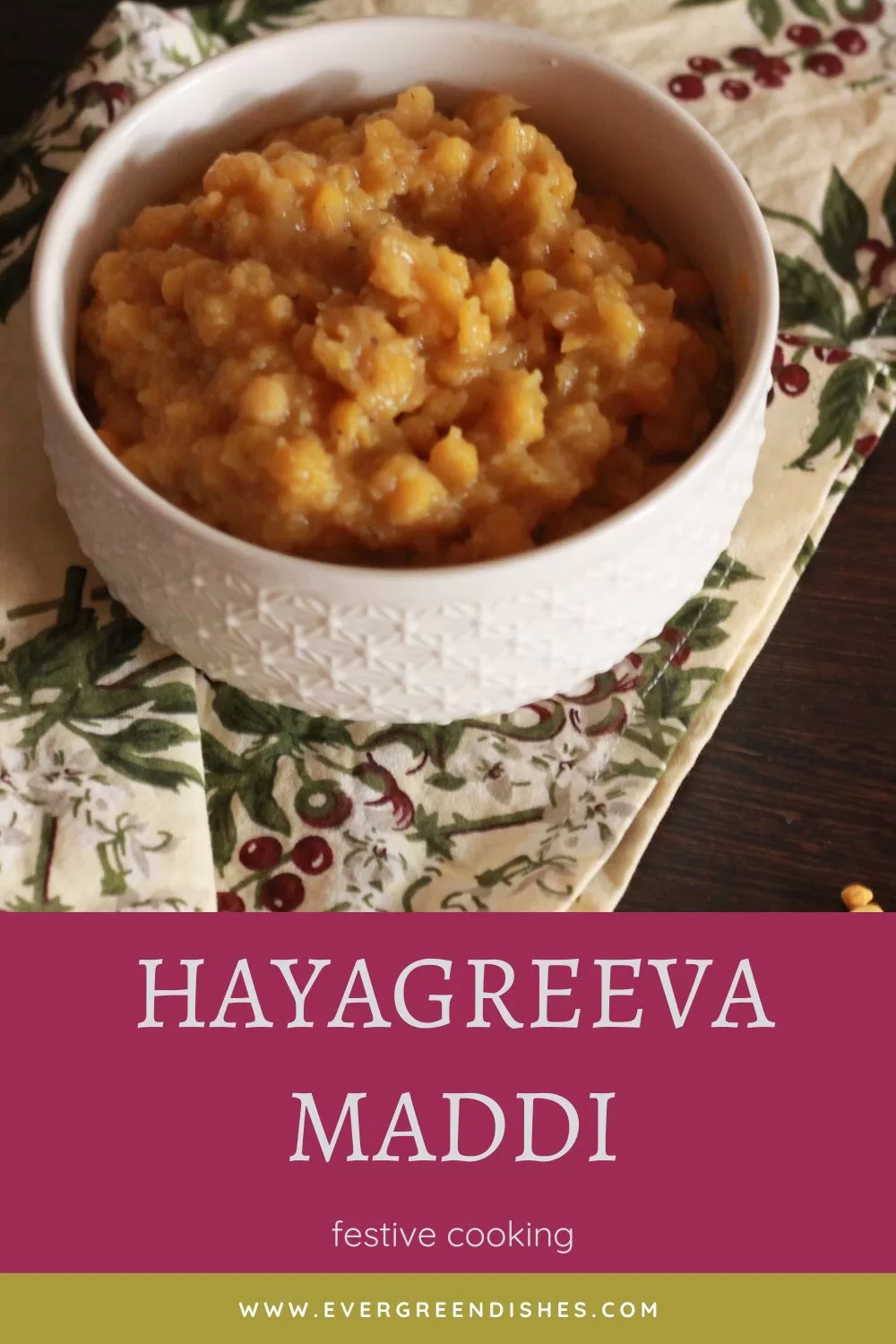
Hayagreeva Maddi is a traditional sweet dish from Karnataka. Bengal gram is perfectly cooked and simmered in jaggery along with desiccated coconut and nuts. It makes a delectable sweet.
As we enter the new year 2016, I start my posts here on a sweet note. Here is a traditional sweet dish from the state of Karnataka. This is widely prepared during festivals in Mysore, Hayagreeva maddi, popularly known as hayagreeva, is made of boiled chana dal in syrup of jaggery, garnished with grated coconut, cardamom and nuts.
Sweets are usually made during festivities. Some sweets like Hayagreeva maddi are ideal to serve for lunch. This is an easy to prepare dish, which does not need elaborate preparation and all ingredients are easily available at home.
Chana dal or bengal gram needs longer time to quickthan other lentils. Hence, I prefer to soak it for half an hour, before cooking in the pressure cooker. It is necessary that the lentil is well cooked before proceeding further to step 3 in the recipe.
Before I proceed to the recipe, I wish you all a very Happy New Year again !
Wash and soak chana dal in water for half an hour.
Pressure cook the chana dal with three glass of water. Add a little ghee to it.
Drain the water of the dal. It can be used in other dishes. Put the cooked dal in a pan and heat it on a low flame.
Ensure that the cooked lentil is extremly soft. It will not get cooked after the addition of jaggery.
Add the jaggery and ghee.and simmer on a low flame for five to ten minutes.
Add dessicated coconut.
Finally, garnish with roasted nuts and cardamom powder.
Hayagreeva maddi is ready to serve.
Take a tip:
The consistency should neither be too thick or thin.
It is essential for the lentil to be well cooked. Otherwise, you children may suffer stomach disorders.
The quantity of jaggery may be increased or decreased.
Check the cooked lentil by pressing between fingers.
Evergreendishesdev
Hayagreeva Maddi
5 from 2 votes
Hayagreeva Maddi is a traditional sweet dish from Karnataka. Bengal gram is perfectly cooked and simmered with desiccated coconut and jaggery to make a delectable sweet.
Wash and soak chana dal in water for half an hour.
Pressure cook the chana dal with three glass of water. Add a little ghee to it.
Drain the water present in the dal. It can be used in other dishes. Put the cooked dal in a pan and heat it on a low flame.
Ensure that the cooked lentil is extremely soft. It will not get cooked after the addition of jaggery.
Add the jaggery and ghee.and simmer on a low flame for five to ten minutes.
Add desiccated coconut.
Finally, garnish with roasted nuts and cardamom powder.
Hayagreeva Maddi is ready to serve.
Notes
The consistency should neither be too thick or thin.
It is essential for the lentil to be well cooked. Check by pressing between fingers. If it is undercooked, put it again itn the pressure cooker.
The quantity of jaggery may be increased or decreased.
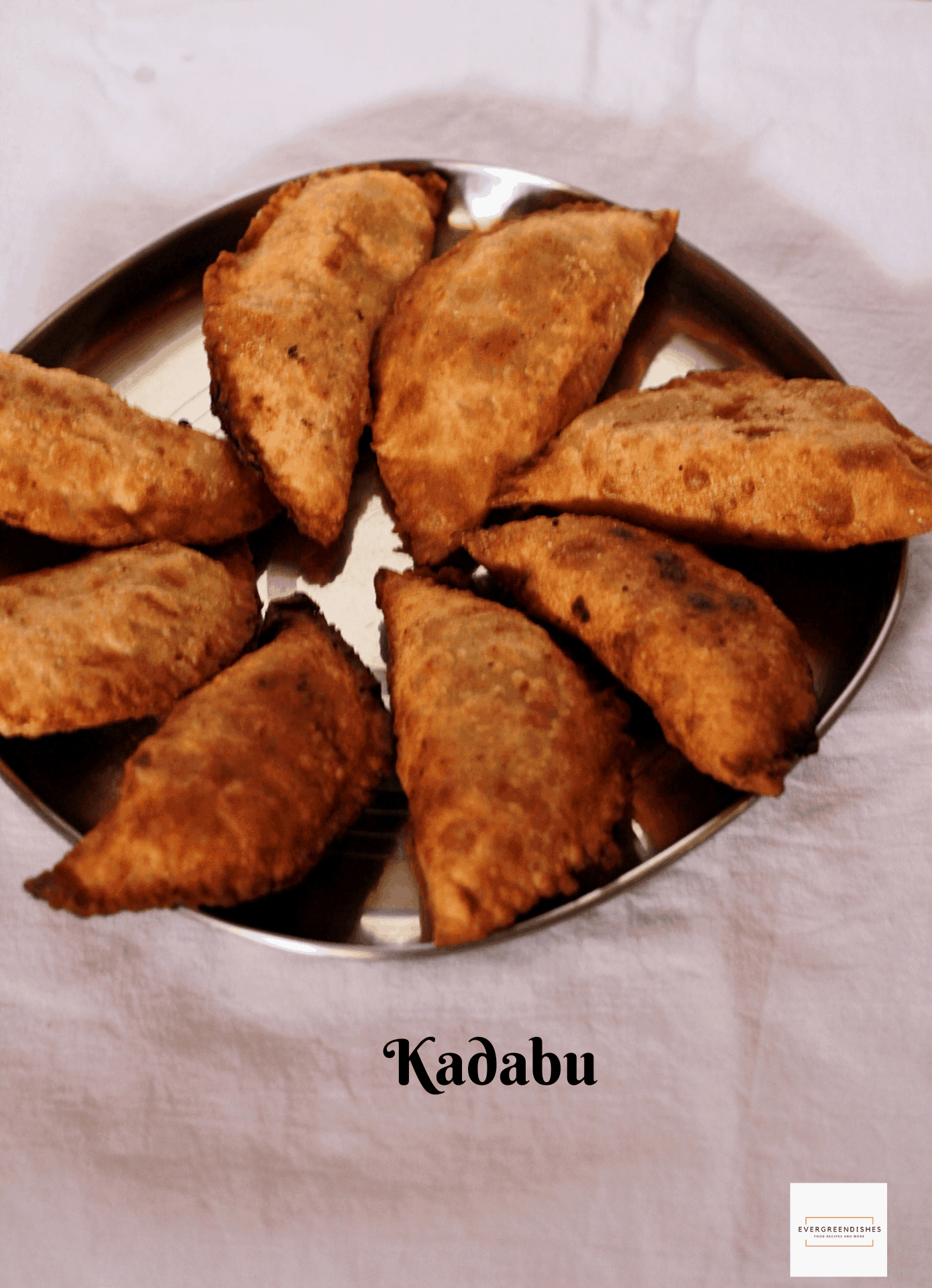
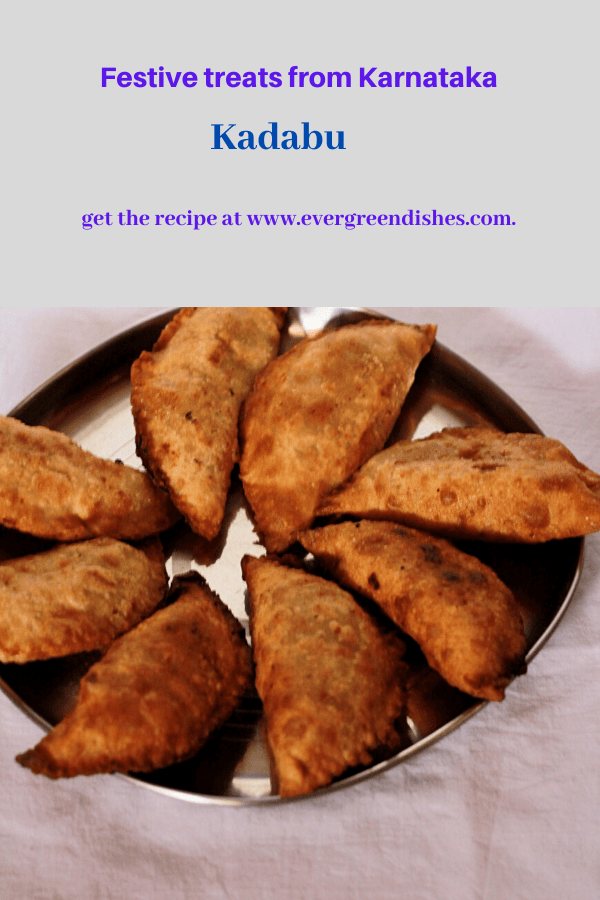
Kadabu is a festive sweet from Karnataka. Lentil is cooked with jaggery, laced with nuts, desiccated coconut and cardamom powder, filled in thin sheets into crescent shaped and deep fried. These are absolutely tasty and usually made as an offering to Lord Ganesha.
With the Ganesha festival fast approaching, it is time to prepare a wide variety of sweets. Modak and kadabu are usually prepared during this festival. Here is Kadabu recipe for you.Have a great festival and enjoy your time with family.
stuffing ready
For the stuffing :
Split pigeon peas ( tur dal) 1 cup
ghee 1/2tsp
jaggery grated 1 cup
cardamom powder 1/2 tsp
camphor a pinch
desiccated coconut 1/2 cup
cashew pieces and raisins
For the covering :
wheat flour 1 1/2 cup
rice flour 2 tsp
ghee 1/2 tsp
water
Other ingredients :
oil for frying
flour for dusting
Method :
To make the stuffing:
Cook split pigeon pea with a little ghee and water in a pressure cooker. Once it iscooked, let the pressure release by itself. Drain the water, from the lentil. Now, you can either cook it directly in a thick bottom pan or smudge it well along with jaggery. I have a handy equipment and I use it.
Put the lentil and jaggery together and cook for sometime. When I pass the lentil, I get a thin, smooth consistency of it and I it is boiled. Put desiccated coconut, dry fruits and cardamom powder to it. Once the consistency is moderate, turn off the stove.
To make the dough :
In the meantime, prepare the dough. It should be firm, cover it with a muslin cloth and keep it aside for sometime.
To make the kadabu:
Make balls of the stuffing and keep it aside.
Take a small piece of the dough, roll it into a circle.
Take the stuffing and elongate it between palms. Keep it on one side and slowly cover the other end and seal it. The edges can be trimmed with a curvy knife. I have a mould and I use it. The picture of the mould is given.
Heat oil in a pan.
Once the oil is warm, slowly immerse two stuffed kadabu into it. Deep fry on both the sides on a moderate heat. Once the brown spots are visible, remove them on a plate with tissue paper.
Repeat for the rest of the dough.
Kadabu
Kadabu is a festive sweet from Karnataka. Lentil is cooked and mixed with jaggery. It is then filled and fried in crescent-shaped, called as kadabu.
Cook split pigeon pea with a little ghee and water in a pressure cooker. Once it iscooked, let the pressure release by itself. Drain the water, from the lentil. Now, you can either cook it directly in a thick bottom pan or smudge it well along with jaggery. I have a handy equipment and I use it.
Put the lentil and jaggery together and cook for sometime. When I pass the lentil, I get a thin, smooth consistency of it and I it is boiled. Put desiccated coconut, dry fruits and cardamom powder to it. Once the consistency is moderate, turn off the stove.
In the meantime, prepare the dough. It should be firm, cover it with a muslin cloth and keep it aside for sometime.
Make balls of the stuffing and keep it aside.Take a small piece of the dough, roll it into a circle. Take the stuffing and elongate it between palms. Keep it on one side and slowly cover the other end and seal it. The edges can be trimmed with a curvy knife. I have a mould and I use it. The picture of the mould is given. Heat oil in a pan.Once the oil is warm, slowly immerse two stuffed kadabu into it. Deep fry on both the sides on a moderate heat. Once the brown spots are visible, remove them on a plate with tissue paper. Repeat for the rest of the dough.
This is an old post which I have redone with better pictures and text. I am sending this to Foodies_ Redoing Old Post 20, a group which I am part of. Every fortnight, a group of bloggers have decided to work on old posts which need our attention. This was one of the first few posts that I had posted in the beginning.
If you have liked this post, do share it with your family and friends. You can save it for later use on pinterest. If you ever make this sweet dish, take a picture and share it by tagging @foodiejayashree on Instagram or @evergreendishes on Facebook. I will be happy to see and share further.
Let’s be connected. Subscribe to get all updates and an e-book for free !
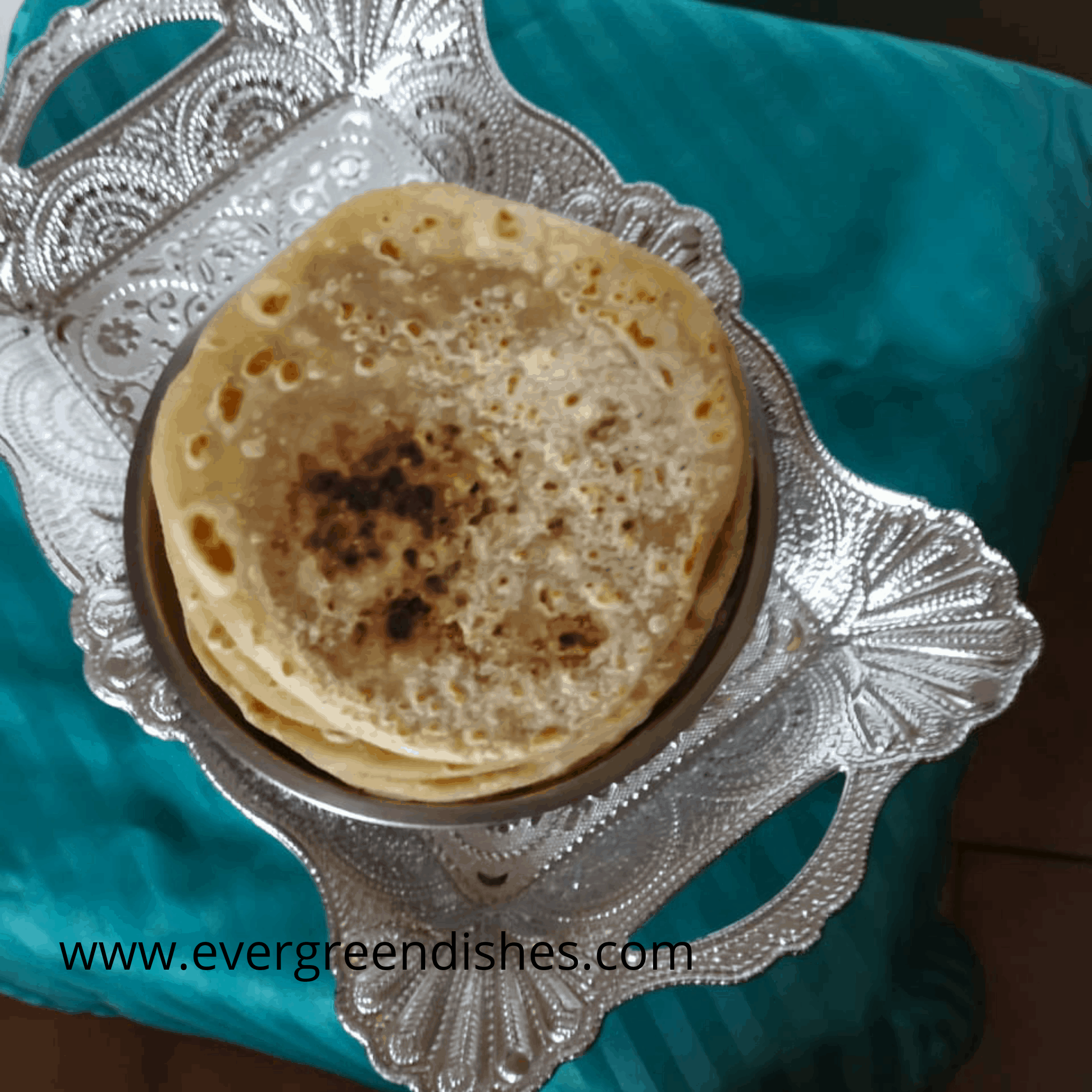
Shenga Holige is a traditional sweet from North Karnataka. It is often made during festivals. It is like a stuffed sweet pancake with peanut jaggery filling.
With the commencement of the holy month of Shravan, many auspicious days and festivals lay ahead. If the tuesdays and fridays are sacred, in between are the Nagara chauti, panchmi , raksha bandhan, varmalakshmi and krishna janmasthmi, so many tuned up, one needs to think of the different sweets that can be prepared. Today, I am presenting to you shenga holige/peanut sweet pancake. Shenga is peanut or groundnut and holige is a stuffed sweet bread or pancake.
Shenga holige is a popular sweet of North Karnataka. It can be stored for a few days. It is tasty and muchloved by kids, as it can be eaten just like that, no need of milk or even ghee. This post is part of Culinary Hoppers with the theme “Sweets “. Let’s get cooking in steps.
Ingredients :
For the dough :
fine semolina 3 cups
refined flour 2 cups
ghee 1tbsp
oil 2tsp
water
Note : Fine semolina is known by the name of “chiroti rawa”
For the stuffing :
peanuts 1/4kg
jaggery 1/4kg
cardamom powder 1/2tsp
Other ingredients :
refined flour for dusting
oil for greasing
Equipments :
Skillet , kitchen turner, rolling pin, pan or container, thin muslin cloth
Method :
To make the dough :
Take the flour and semolina in a wide bowl. Mix well. Add ghee, mix , add little water and make it into a dough of medium consistency. Smear oil, cover with a thin muslin cloth and keep aside for fifteen minutes.
To make the filling :
Roast the groundnuts and let cool. Discard the skin by crushing with hand or rolling pin.
Break the jaggery into small bits.
Grind the groundnut coarsely. Add jaggery and cardamom to it and pound it well. Put it in a bowl and keep aside.
To make the pancakes:
Take a small ball of the dough, roll it into a small circle.
Mix the filling. Take a small portion of it, squeeze it between palms and make it into a small ball.
Put it into the centre and slowly seal the edges together.
Dust it with flour and roll it.
Heat a skillet.
Smear little oil on the rolled pancake and put it on the skillet.
Put some oil and roast it till brown bubbles are seen.
Remove and keep aside.
Repeat for the remaining dough.
Shenga holige/peanut sweet pancakes are ready to savour. Tastes good with ghee.
Take a tip:
Once you take the ball and fill it, press the ball lightly between palms.
Dust with a little flour and roll it very lightly.
Once cool, store them in a tight container. They can be kept for a couple of days.
Holige is usually served with ghee.
About the event:
This is an old post which I have redone with better pictures. Sending this to our fortnightly event, Foodies_Redoing Old Post 34. I have changed the main picture of holige and put better ones. Some text also needed formatting.
Shenga Holige
Shenga Holige is a festive sweet from North Karnataka.
Note : Fine semolina is known by the name of “chiroti rawa”
For the stuffing :
peanuts 1/4kg
jaggery 1/4kg
cardamom powder 1/2tsp
Other ingredients :
refined flour for dusting
oil for greasing
Equipment
Skillet , kitchen turner, rolling pin, pan or container, thin muslin cloth
Method
To make the dough
Take the flour and semolina in a wide bowl. Mix well. Add ghee, mix , add little water and make it into a dough of medium consistency. Smear oil , cover with a thin muslin cloth and keep aside for fifteen minutes.
To make the filling
Roast the groundnuts and let cool. Discard the skin by crushing with hand or rolling pin.Break the jaggery into small bits.Grind the groundnut coarsely. Add jaggery and cardamom to it and pound it well. Put it in a bowl and keep aside.
To make the pancake
Take a small ball of the dough, roll it into a small circle.Mix the filling. Take a small portion of it, squeeze it between palms and make it into a small ball.Put it into the centre and slowly seal the edges together.Dust it with flour and roll it.Heat a skillet.Smear little oil on the rolled pancake and put it on the skillet.Put some oil and roast it till brown bubbles are seen. Remove and keep it in a plate. Repeat for the rest of the dough and filling.
If you have liked this post, do share it with your family and friends. If you ever make this recipe, take a picture and share it on Instagram by tagging @foodiejayashree or on Facebook by tagging @evergreendishes. Do check out our recent videos that I am making
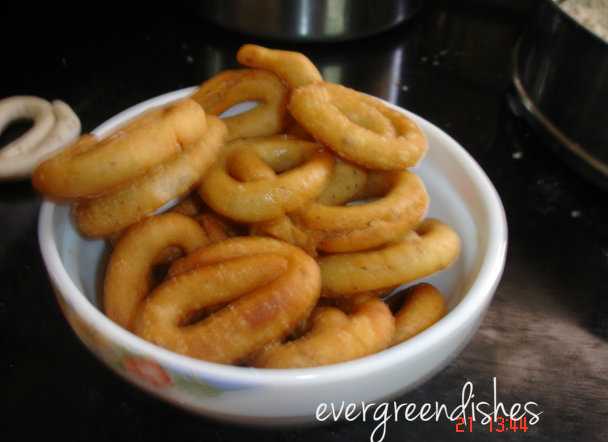
With kids at home, it is usual to have many dry snacks such as chakli and kodbole on the shelves. These are loved by children.The fast and mechanical life has brought a stand still to some of the routine work made by older generation.Very often, we buy from stores , but it is always good if we can make it at home. Nothing is more healthier !
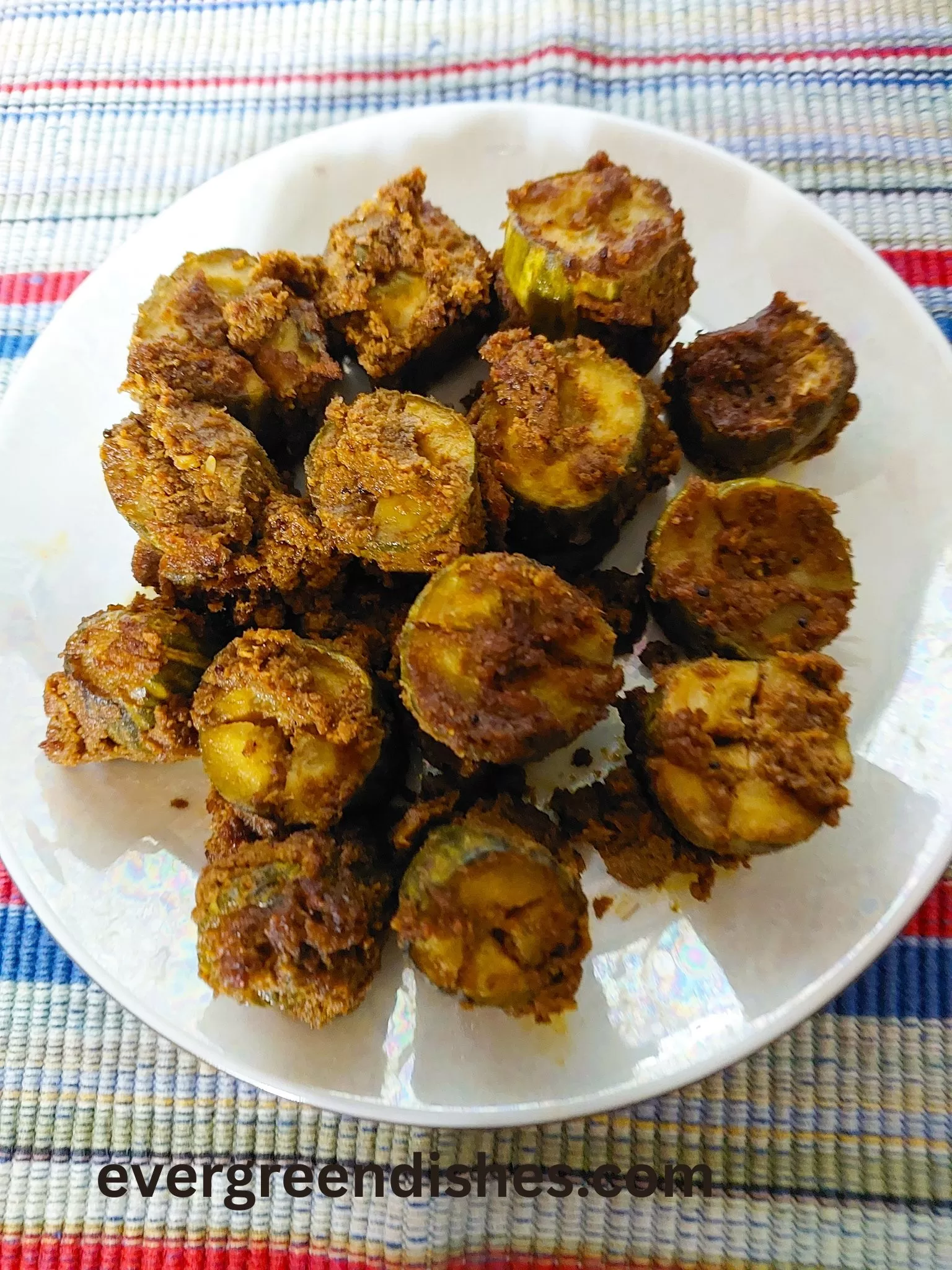
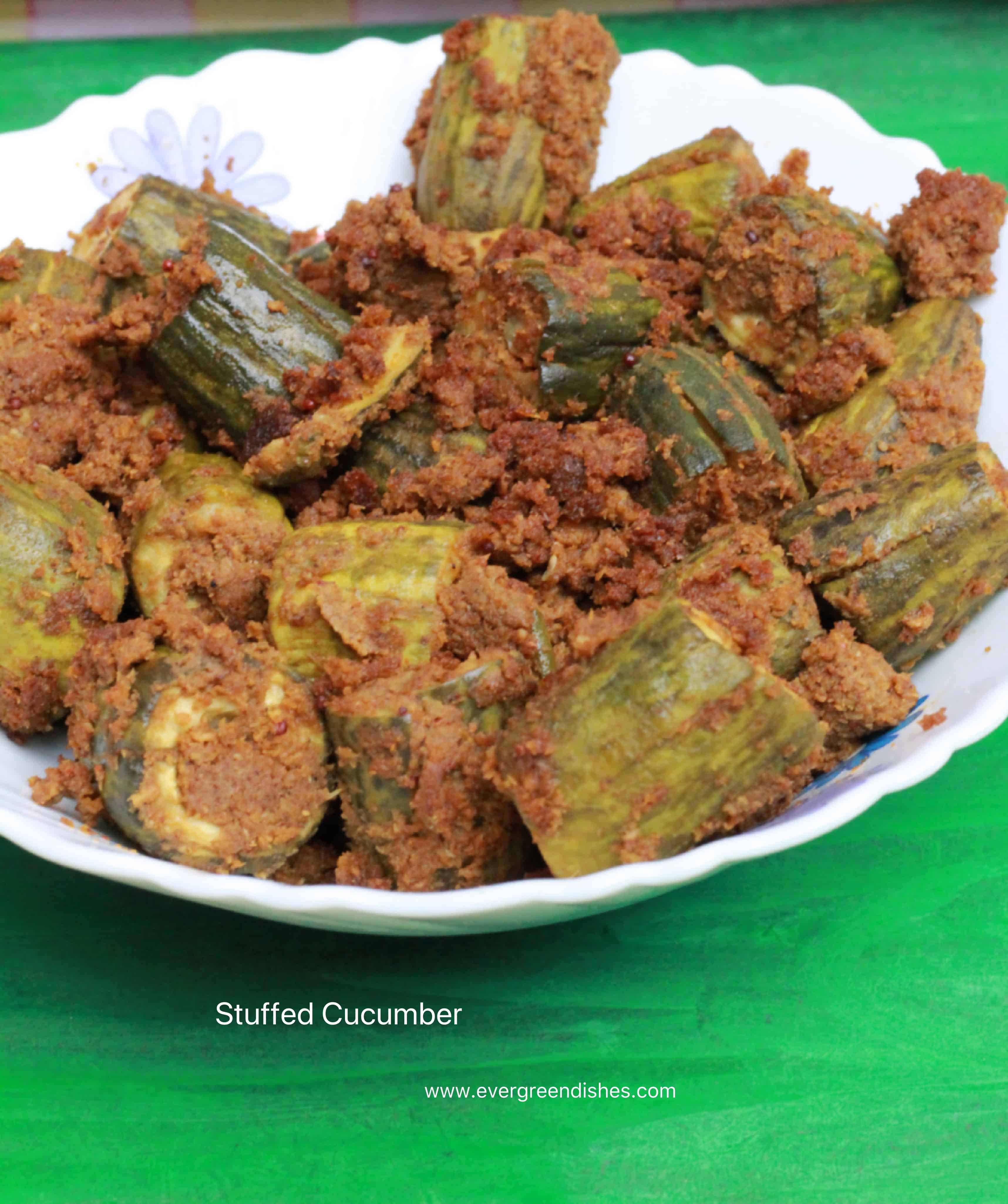
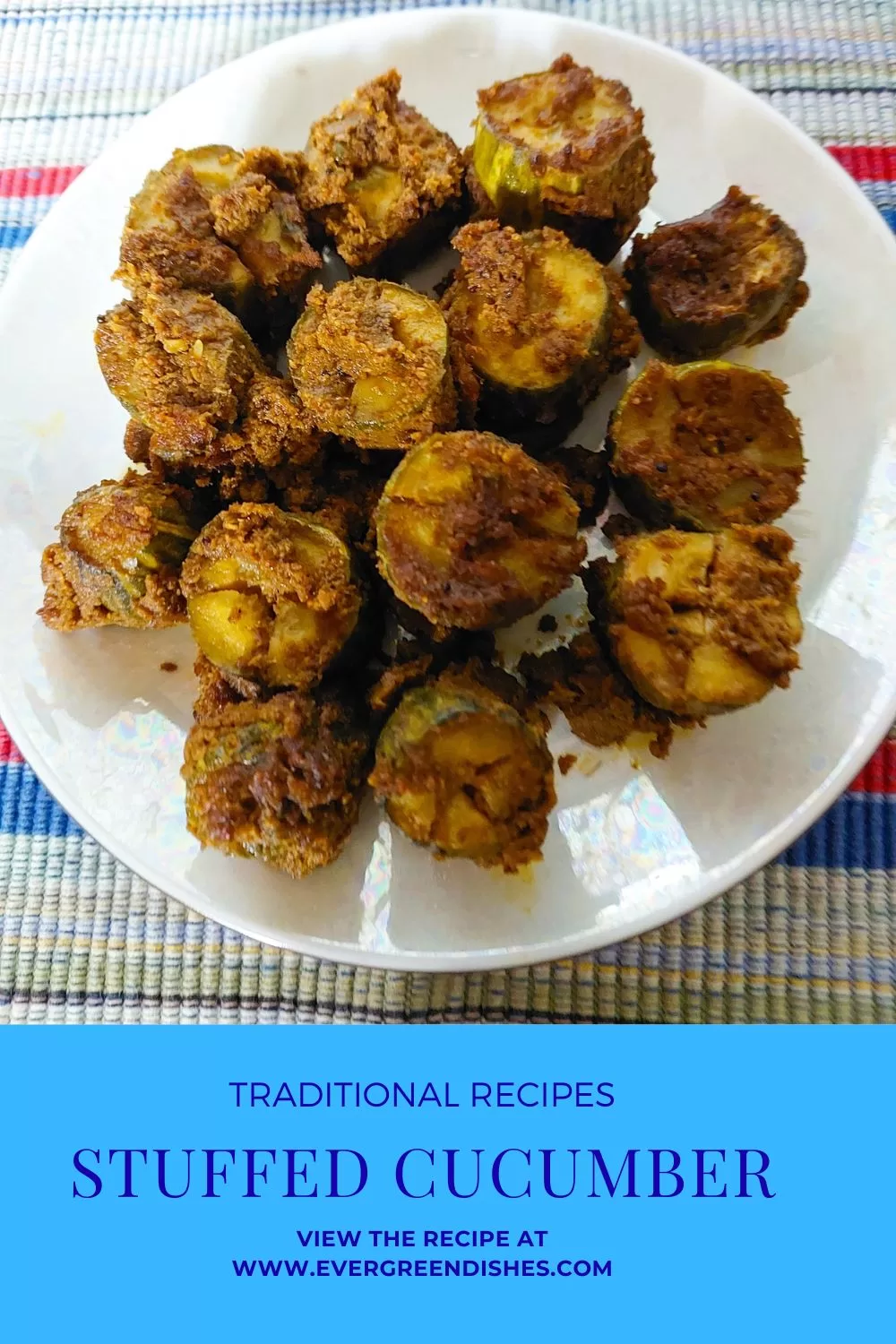
Stuffed cucumber is a traditional dish from Karnataka in South India. It is served with jowar roti or chapati.
Today, various kinds of stuffed vegetables are prepared. South Indian cooking differs from its counterpart in many aspects. Here, brinjal, ridge gourd, cucumber and bittergourd are usually used in the preparation. Today, we take a look at the southern style of stuffed cooking. I am using cucumbers.
Ironically, cucumber is used mainly in a salad in many parts of the world. Thus, here it tastes different. It is tender and tastes good with the spice mixture. Give a try to this forgotten recipe of Karnataka.
I would like to inform, cucumber used are the small variety. The have a smooth surface and the skin is not peeled. The cucumber has to be washed well and dried before cutting them for the below recipe. I do not recommend the use of tender ones here. You can use the large ones; they will be more ideal for filling the mixture. The large ones are usually used in making stir fry or masala bhat in our region. Sometimes, it is also used in majjige huli too.
The making of stuffed cucumber involves three stages :
Cutting the vegetable
Preparing the filling
Stuffing the paste into it
Cooking
The vegetable should be cut into medium sized of 1 inch. Then, you have to make an incision on each piece. The filling is made and then filled into these cut vegetable pieces. They are later cooked in a pan.
stuffed cucumber
Let us get to the recipe of Stuffed Cucumber:
Ingredients:
1/2 kg cucumber
1 cup fresh grated coconut
3 tablespoon coriander seeds
1 tablespoon bengal gram
1 tablespoon urad dal
3 dry chilly
2 green chilly
handful coriander leaves
1 teaspoon cumin seeds
salt to taste
3 tablespoon oil
1/4 teaspoon asafoetida
1/4 teaspoon turmeric powder
1/4 teaspoon mustard seeds
METHOD:
Wash the cucumber, pat dry and cut them into two or three pieces.
Make an incision on four sides on each of them, you will be filling the paste in it later. Keep them aside.
TO MAKE STUFFING:
Dry roast the bengal gram and urad dal and keep aside.
Roast the coriander seeds with a little oil. Do not burn them.
Roast the red chilly with a little oil.
Now ,grind the roasted ingredients along with green chilly, coriander, and cumin to a fine paste.
TO FILL THE STUFFING:
Gently, take a piece of cucumber, and put some filling in it. Take care, as they tend to break easily. Repeat for all pieces.
TO PREPARE:
Take a pan and make the seasoning. Slowly, add the stuffed veggie into it. Close it with a plate of water. This eases the cooking process. Keep stirring in between. When tender, remove into a serving bowl. Stuffed cucumber is ready to be served.
About the event:
Sending the Stuffed Cucumber Recipe to Shhh Secretly Cooking Challenge. It is a group which I have been associated since a long time. A theme is decided, and the members are paired. The partners, accordingly agree to discuss and provide two secret ingredients. The dish is later shared in the group and the ingredients are guessed by other members.
My partner Archana has given me bengal gram and oil as the secret ingredients. I have shared this post which has been redone thoroughly with the group. Archana has prepared Stuffed Capsicum for the challenge.
Wash the cucumber, pat dry and cut them into two or three pieces.
Make an incision on four sides on each of them, you will be filling the paste in it later. Keep them aside.
To make the stuffing
Dry roast the bengal gram and urad dal and keep aside.
Roast the coriander seeds with a little oil, do not burn them.
Now, roast the red chilly with a little oil.
Grind the roasted ingredients along with green chilly, coriander and cumin to a fine paste.
To fill the stuffing:
Slowly, take a piece in the hand . Take a little of the filling and stuff it using both the hands. Take care, as they tend to break easily. Repeat for all pieces.
To prepare the veggie
Take a pan and make the seasoning. Slowly, add the stuffed veggie into it. Close it with a plate of water. This eases cooking. Keep stirring in between. When tender, remove into a serving bowl. Stuffed cucumber is ready to be served.
If you ever make Stuffed Cucumber in your kitchen, take a photo and share with me by tagging @foodiejayashree on Instagram and @evergreendishes on Facebook.
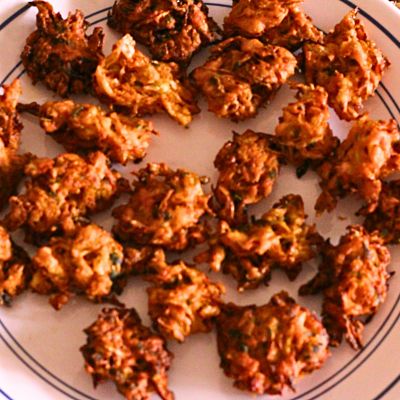
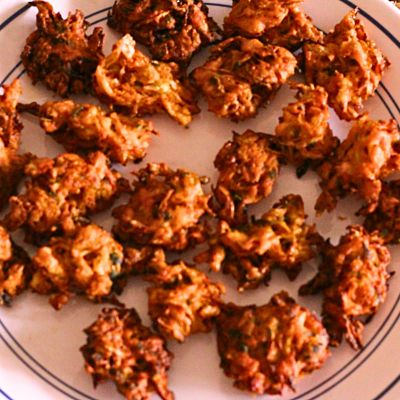
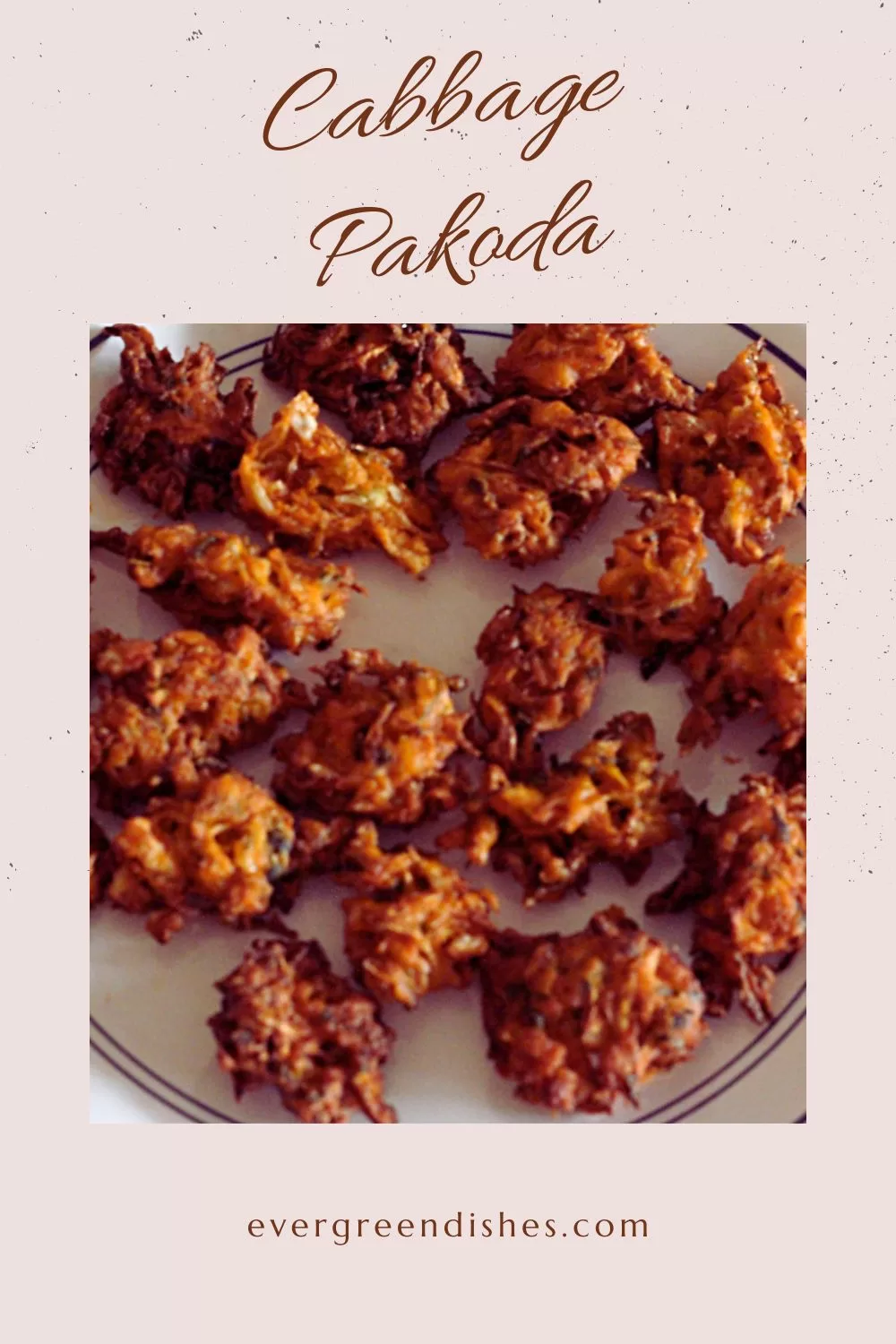
Cabbage pakoda are crispy and tasty. They are ideal with a hot cup of tea. It is vegan, no onion garlic dish. It is ideal to serve with a festive platter.
A typical South Indian platter consists of a payasam, chutney, pickle, two kind of stir fry, dal made with green leaf or sambar, rasam, sweet such as holige with a dollop of ghee, or any other kind, lemon rice and fritters as bhajiya along with papad. The meal ends with curds rice.
Cabbage pakodas are crispy and tasty. They are vegan and may be made as gluten-free by opting out asafoetida. You may also use a gluten-free asafoetida..
To make good pakodas, use a cabbage that is green in colour. Shred the cabbage finely. You may add a little bit of cumin or ajwain. They not only lend a good flavour but also aid in digestion.
platter of cabbage pakoda
Cabbage Pakoda Recipe :
Ingredients :
1 small cabbage
1 cup gram flour
1 tablespoon rice flour
1/4 teaspoon asafoetida
1/4 teaspoon turmeric powder
salt to taste
1/2 bunch coriander leaves
Method :
Cut the cabbage finely into long slender shredding. Immerse in cold water and put it in a colander.
Take a wide bowl, add the cabbage and salt and keep it aside for ten to fifteen minutes.
After sometime remove the cabbage from the water and put it in a colander for sometime.
Now, put it in a bowl and add salt to it. Keep it aside for fifteen minutes.
Now, add chilly powder, turmeric powder and asafoetida to it. Mix it. Add gram flour and rice flour. Mix well.
Heat oil in a pan. Take small ball of the mixture and slowly let some into the pan. Put around eight to ten (depends on the size of the frying pan)
Deep fry on moderate heat. After sometime, turn it to the other side. Once it is done, remove them on a plate with tissue paper.
Repeat for the rest of the batter.
cabbage pakoda
About the event :
An old post got a makeover, sending this to Foodies_Redoing Old Post No 174. Participating after a long time, an old post got updated on 24/4/2026.
Subscribe to get an e-book of handyhints for free !If you have liked this post, do share it with your family and friends. If you ever make this, take a picture and share it by tagging @foodiejayashree on Instagram or @evergreendishes on Facebook or Twitter.