Author: Evergreendishesdev

  • Samosa | How to make crispy samosa

    Samosa | How to make crispy samosa

    Samosa are an all time favourite snack relished by young and old alike. Crispy, triangular shaped,  filled with tasty fillings and deep fried make sumptuous snack to devour anytime. Love the idea of a samosa for a weekend when children can eat and enjoy their favourite serial, isn’t it? 

    The filling of a samosa can be of many kind. The most popular one is the potato filling. Mixed vegetables along with boiled potatoes makes a good option. The recent trending ones are the corn samosa, paneer samosa and the dry fruit samosa.

    samosa


    Ingredients 

    for the covering :

    • wheat flour 2 cups
    • salt a pinch
    • ghee 2tsp

    for the filling :

    • potatoes 3 boiled
    • onion 1 finely cut
    • green peas 1 bowl
    • amchur powder 1/4 tsp
    • coriander powder 1tsp
    •  cumin powder 1 tsp
    • red chilly powder 2 tsp
    • garam masala powder 1/2 tsp
    • salt to taste
    • coriander leaves finely cut

    Other ingredients:

    • flour for dusting
    • oil for frying


    Procedure :

    for the dough :

    Take the flour in a wide nowl. Add ghee and salt to it. Mix it well with fingers, it should form a crumbly texture. Now, add water in small quantities and mix into a dough  of thick consistency. Cover it with a damp cloth and keep it aside for 15 minutes.

    dough

    Take oil in a kadai and saute the onions and remove from fire. Add the potatoes and all the ingredients. Mix well and keep aside.

    DSC01750

    rolledtwo halves

    Take a ball and roll into a thin circle of 5 inches. Cut it in the centre. Take one section and keep aside.  Now ,you should fold into a cone .Place the stuffing and seal the sides with a little water. Heat oil in a pan, once it is hot, put two and deep fry on low flame. Keep tossing with some oil over them in between. Once they are golden, in colour, remove and put them on a tissue paper. Repeat for the remaining.

    stuffing

    I had prepared medium sized ones.

    samosa

    The stuffed samosas can be put in the air fryer and made a guilt-free snack. I used my Philips Air fryer to make these guilt free snacks. In just ten minutes, crispy, tasty, guilt-free samosas were ready.


    samosas in air fryer


    samosa

    Samosa in 2 ways

    Samosa is a crispy and tasty snack loved by all. It is ideal to serve as an evening snack with a cup of hot tea.
    Course: evening snacks
    Cuisine: punjabi

    Ingredients
      

    • for the covering :
    • 2 cup wheat flour
    • salt a pinch
    • 2 teaspoon ghee
    • for the filling ;
    • 3 potatoes boiled
    • 1 onion finely cut
    • 1 cup green peas
    • 1/4 tsp amchur powder
    • 1 tsp coriander powder
    • 1 tsp cumin powder
    • 2 tsp red chilly powder
    • 1/2 tsp garam masala powder
    • salt to taste
    • coriander leaves finely cut
    • Other ingredients:
    • flour for dusting
    • oil for frying

    Method
     

    1. Take the flour in a wide nowl. Add ghee and salt to it. Mix it well with fingers, it should form a crumbly texture. Now, add water in small quantities and mix into a dough  of thick consistency. Cover it with a damp cloth and keep it aside for 15 minutes.
       
    2. Take a ball and roll into a thin circle of 5 inches. Cut it in the centre. Take one section and keep aside.  Now ,you should fold into a cone .Place the stuffing and seal the sides with a little water.
    3. Heat oil in a pan, once it is hot, put two and deep fry on low flame. Keep tossing with some oil over them in between. Once they are golden, in colour, remove and put them on a tissue paper. Repeat for the remaining.

    samosa
    samosa

    So, here’s something to cook for the weekend ! Happy Cooking and have  a great weekend ! Do subscribe to get a copy of Book of Handyhints. If you have liked this Samosa recipe, do share it with your family and friends. If you ever make this, take a picture and share it by tagging @foodiejayashree on Instagram or @evergreendishes on Facebook or Twitter.

  • Chennai Idli

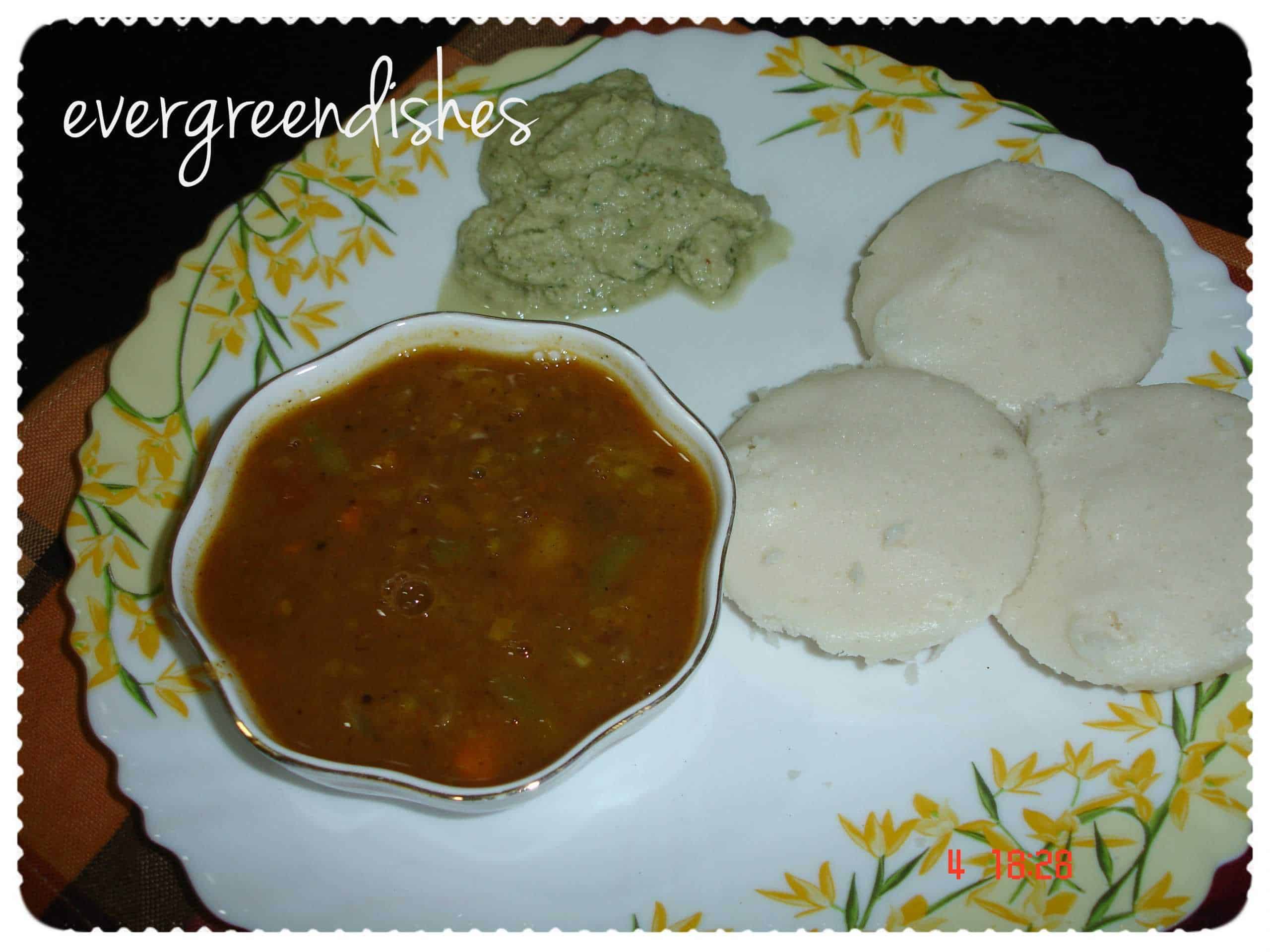
    Idli are an all time favourite for many of us. I love making this one, as they are soft and supple. There may be a variation in other recipe as this is modified by me.They make an ideal breakfast with sambar and chutney. Why is this named as “Chennai Idli” ? Chennai is a place in South India,it is the capital city of the state of Tamilnadu. It is here, they were first made  and  was very famous for these soft and supple idlis. Hence the name as “Chennai Idli”

    Ingredients :

    soft idlis
    ideal breakfast

    Procedure :

    • Soak the rice in hot water for 4 hours.
    • Soak urad dal seperately  in cold water for two hours.
    • Grind both of them seperately with adequate quantity of water. Later ,mix both together.
    • Now, rinse the semolina in water for sometime. Mix into the ground batter.
    • Keep in a warm place to ferment for 8 hours.
    • Add salt, mix and  and make idlis the usual way, in a steamer.
    • Serve with coconut chutney and sambar and a dollop of butter if you wish !

    Just a note :

    Idli rice is a different kind of rice, which is used in making idlis and dosas. It is partially brown and  smaller in size. Here, in south india, it is called as salem rice.

    My other idli recipes on the blog:
    chennai idli
    Evergreendishesdev

    Chennai Idli

    Soft and supple idli make ideal breakfast, chennai idlis are that kind. 
    Prep Time 2 hours
    Cook Time 20 minutes
    Total Time 2 hours 20 minutes
    Course: Breakfast, healthy, lunch box
    Cuisine: Indian, South Indian

    Ingredients
      

    • 1 cup urad dal
    • 2 cup idli rice
    • 1 cup semolina (idli)
    • salt
    • water

    Method
     

    1. Clean and wash the rice. Boil water in a pan. Put the rice in it and soak it for four hours.
    2. Soak urad dal in regular water for two hours.
    3. Grind both of them separately to a smooth batter. Later, mix them in a wide bowl.
    4. Wash the semolina and soak it for ten minutes, mix it in the batter and keep it in a warm place to ferment, preferably overnight.
    5. Add salt to the batter and mix it well.
    6. Take the idli stand, put the batter in each of the cavity, steam it for fifteen to twenty minutes.
    7. Once, it is done, let cool, then remove and serve with coconut chutney and sambar. 

    Notes

    • Batter is to be kept in a warm place.
    • Keep a wide plate below the container, lest it may not overflow on fermenting.
    • Fermenting time differs according to the season and the region where you are. 

    Make sure to get your copy of ” Book of Handyhints” which contains many useful tips for you. Subscribe to the mailing list and get it now.

    Chutney recipe can be found here

    Note: This post contains affilate links

    Sharing is Caring

    [social_share style=”bar” align=”horizontal” heading_align=”inline” facebook=”1″ twitter=”1″ google_plus=”1″ linkedin=”1″ pinterest=”1″ /]

    Subscribe to this blog to get a free book of handy hints.

    ****UPDATED****

    Do get the mobile app if you have not got it yet. Follow evergreendishes on other social media: Facebook, Instagram, Pinterest, Twitter

    Check out my e-books on Amazon


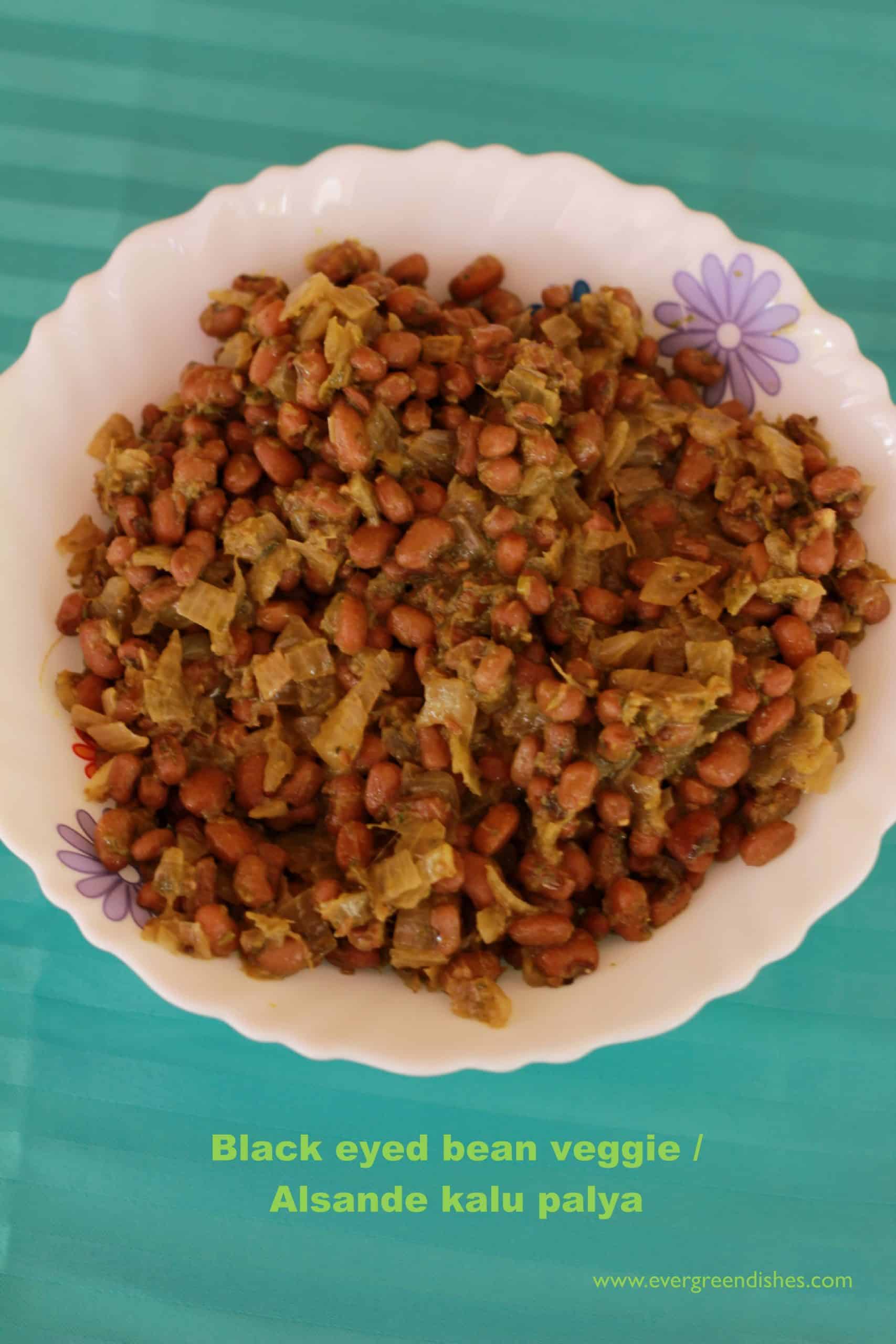
  • Black eyed bean veggie (alasande kalu)

    Black eyed bean veggie (alasande kalu)

    Black eyed bean makes a good accompaniment with chapati or jowar roti. Dried ones need soaking while the fresh ones can be cooked instantly.

    Daily cooking needs some planning and I find beans to be useful in some way, either as a quick or soaked stir fry.  I tend to make them quite often as they are rich in nutrients and loved by all. Black eyed bean,  known by the name as “alasande ” in kannada  makes a good accompaniment with jowar roti or chapati. It is used in various dishes as sambar and fried dumplings. Here is one kind of accompaniment that is often made at home. 

    black eyed bean palya

    Ingredients that you need are 

    • Black eyed bean 2cups  
    • Onion 2  
    • Coriander 1/2 bunch
    • Ginger 1 inch
    • Green chilly 4
    • Cumin 1tsp
    • Oil 1 tbsp
    • Salt to taste 


    Method :

    Soak the black eyed beans for half an hour.Cut the onions finely and keep aside. Pressure cook them. Grind coriander leaves,ginger and green chilly  to a fine paste. Take oil in a kadai, add cumin, turmeric powder and asafoetida. As cumin splutters add onions and saute till light pink. Now,add the paste and salt to it . Let cook for a minute. Add the cooked beans along with the water. Let boil to get a thick consistency.

    Handy hints:

    • Adding the water content ensures all the vital nutrients are regained.
    • Two cloves of garlic may be added while grinding the paste.

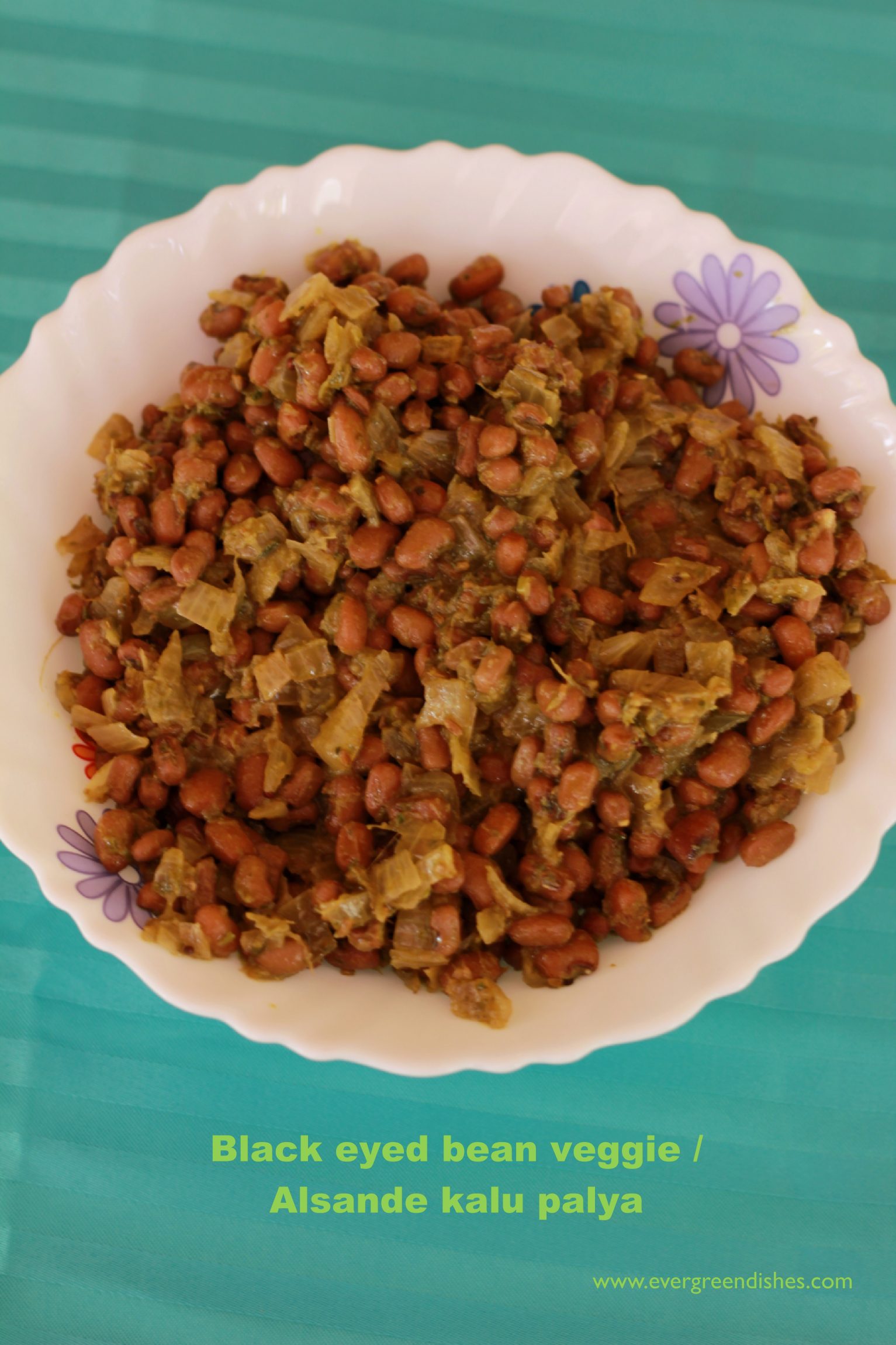
    Black eyed bean veggie

    Black eyed bean veggie makes a good
    Prep Time 10 minutes
    Cook Time 10 minutes
    soaking time 30 minutes
    Course: sabzi
    Cuisine: karnataka

    Ingredients
      

    • 2 cup black eyed bean
    • 2 onion
    • 1/2 bunch coriander
    • 1 inch ginger
    • 4 green chilly
    • 1 tbsp oil
    • salt

    Method
     

    1. Soak the black eyed beans for half an hour.
    2. Cut the onions finely and keep aside.
    3. Pressure cook the soaked beans.
    4. Grind coriander leaves,ginger and green chilly  to a fine paste.
    5. Take oil in a kadai, add cumin, turmeric powder and asafoetida. As cumin splutters add onions and saute till light pink.
    6. Put the paste along with required amount of salt to it. Let cook for a minute.
    7. Put the boiled beans to it, boil for sometime, until you reach the required consistency.

    This is an old post which I have redone it now with better pictures and text. Sending this to Foodies Redoing Old Post 16, a foodie group where we virtually meet with our new posts twice a month.

    If you ever make this recipe, take a picture and tag me @foodiejayashree on Instagram or @evergreendishes on Facebook. Let’s be connected. 


    SIGN UP TO GET A FREE COPY  OF  “Book of Handyhints ” and all updates in your inbox


  • How to make custard apple milkshake

    How to make custard apple milkshake

    Custard Apple Milkshake is creamy and tasty. It is ideal to serve for breakfast. 

    Custard apple, a seasonal fruit, creamy, sugary  and pulpy is loved by many. It is considered to be the fruit of the Lords. It is a delicious fruit ideal to make desserts.

    Custard apple is a delicious fruit grown in tropical countries with high altitudes.. It is also commonly called as sugar apple , cheimoya  or sweet pop. It is a pale green, spherical or conical shaped fruit with a thick rind, outer existence has knobby segments.  The flesh is sweet and tasty. A typical fruit has twenty to thirty hard, black seeds in it. I have heardthe seedless variety is available but not seen to date. Custard apple  is available during the months of October to February in India. It is called as sitaphal in Kannada, Gujarati and Marathi, Shareefa in Hindi and a Seetapazham in Malyalam. 

    custard apple milkshake

    Custard apple is usually eaten as a fruit. tastes good when it is chilled. You can make delicious desserts as ice cream or kheer. Sitaphal milkshake is creamy and tasty.

    Custard Apple is rich in anti-oxidants, vitamins and minerals. It is rich in Vitamin B6, which helps to improve the mood and fights depression. It helps to build the immune system of the body.The cartoneiod antioxidant helps to maintain good vision. Lutein, may also help in preventing cataract and AMD conditions. Cheerimoya helps to fight against cancer.


    Custard Apple Milkshake Recipe / Sitaphal Milkshake :

    Ingredients 

     2 Custard apple 

    2 cup chilled milk chilled 

    1 teaspoon sugar 

     1 teaspoon vanilla milk powder 

    Method :

    Remove the pulp from the seeds. Blend all the ingredients together. Serve chilled.


    About the event :

    This is an old post which I have redone with better pictures and text. Sending this to Foodies_Redoing Old Post 88, a fortnightly event. Here, we as a group, work on an old post either by changing the pictures or writing better text. Here, I have changed the picture and put more information in the body of the article. The recipe remains the same. It was published on 31/ 8/2014. I have redone it on 30/9/2022.

    Pin in for later :

    custard apple milkshakeIf you ever make  Custard Apple Milkshake, take a picture and share it on Facebook or Instagram by tagging @evergreendishes and @foodiejayashree  respectively. I will be happy to see your creation and share it further.

    Subscribe to get all updates and an e-book for free.


  • Vegetable Biryani | Veg Biryani

    Vegetable Biryani | Veg Biryani

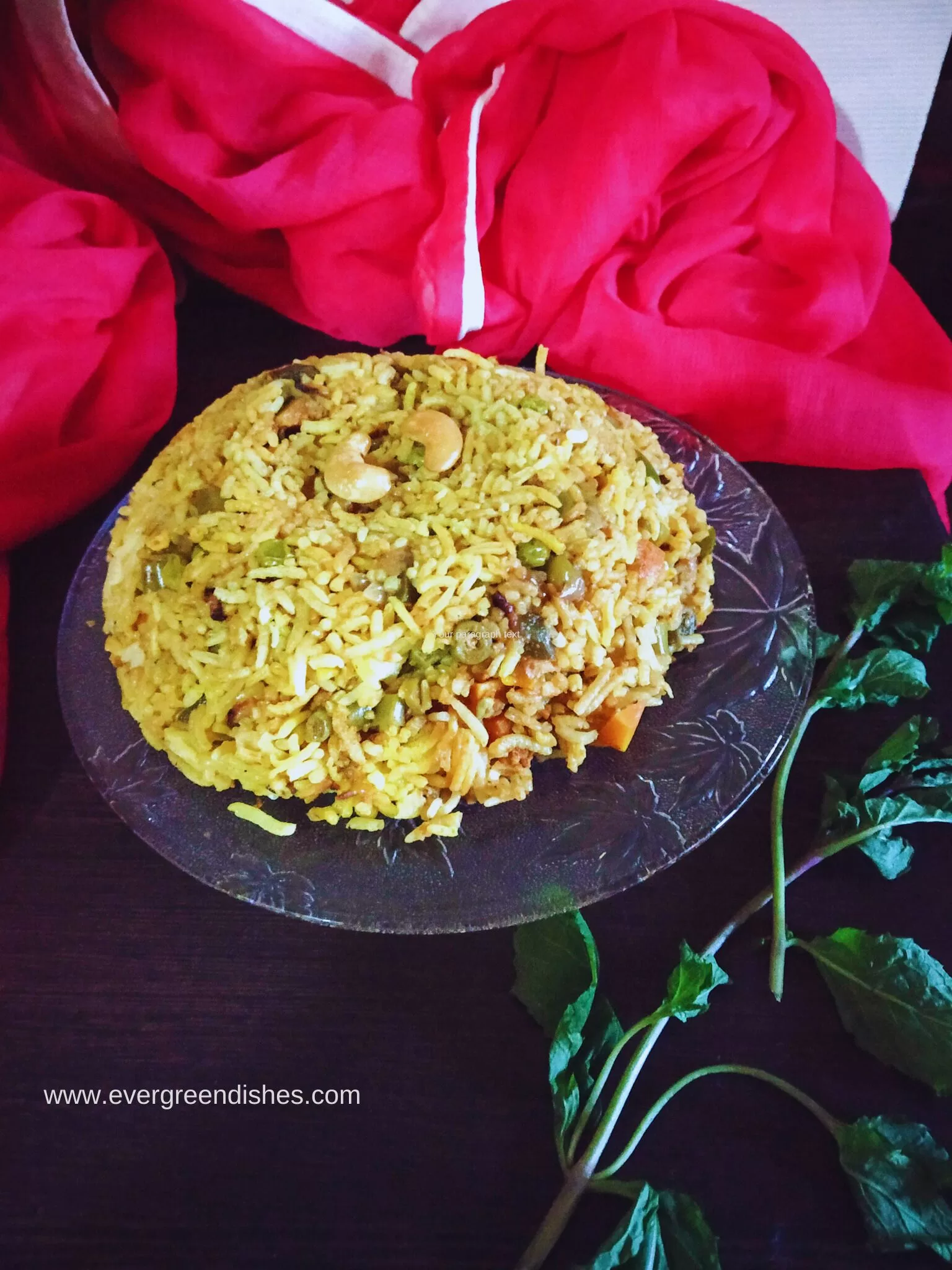
    Vegetable  Biryani is a flavoursome, layered rice cooked with vegetables and spices and  saffron infused. It makes a tasty dinner menu with a yoghurt based salad.

    Biryani is a popular food loved and cherished  Indian food.  It is a mixed rice dish made with meat, rice and some spices cooked in dum usually. The vegetarian biryani with vegetables is made to cater to the other sect of indivduals who do not eat meat.  It is a dish which gained popularity in Hyderabad during the Nizam period and till date is the most ordered dish online. 

    Usually made with meat, here is the vegetable biryani or veg biryani as it is commonly called.

    veg biryani
    veg biryani

    Ingredients :

    • 2 cups of uncooked basmati rice (aromatic long rice)
    • 2 cups of assorted veggies as beans, carrots, cauliflower,potatoes and peas
    • 1 onion
    • 3 green chillies
    • 2 inch ginger     
    • 4 cloves garlic
    • 1 tsp turmeric powder
    • 1 tsp chilli powder
    • 1 tsp coriander powder
    • 3 cloves
    • 3 cardamom
    • 1 stick of cinnamon
    • 2 tomatoes
    • 3 tbsp oil
    • ½ cup curds or yoghurt
    • 2 tbsp oil for cooking
    • salt


    For garnishing:

    • Fresh chopped mint leaves
    • Caramalised  onions

    Method:

    Pre-requsites: 

    • Cook the rice with only two cups of water. It is partially cooked, on further cooking it will be evenly done.
    • Cut veggies into small cubes.
    • Grind onion, green chillies, ginger and garlic into a fine paste.
    • Boil the vegetables in a pan. Add the potatoes, a little later as they should be a little firm.
    • Make powder of clove, cinnamon and cardamom.
    • Make puree of tomato and keep aside.


    Cooking procedure :

    • Now take oil in a pressure pan and add the paste of onion. Saute it till light pink in colour.
    • Then add the pound spices and continue to sauté.
    • Later add turmeric powder, coriander powder and chilli powder.
    • Add tomato puree,mint leaves and yoghurt and continue to blend the mixture.
    • As the aroma spreads add the boiled veggies, and the partially cooked rice.
    • Close the lid and allow to cook on a slow flame.
    • Once done, mix the rice well as the masala needs to blend well.
    • Garnish with caramalised onions.
    • Biryani is ready to serve.

    To make caramalised onions :

    Cut onions into thin long pieces. Take oil in a small pan and add the onions. Saute them until dark brown in colour. Be careful as they tend to get burnt easily.

    To Serve :

      Serve biryani  garnished with onions along  with a yoghurt based salad of your choice.

    About the event :

    Sending this to Foodies_Redoing Old Post 129. It is a fortnightly event, where we work on an old post by editing with better pictures or text. Here, I have put better pictures and a lot of formatting had to be done. This is one of the first posts writtwen in 2014, edited today on 17/6/2024.  Phew, this is thee year of my blogging.

    Pin it for later : 

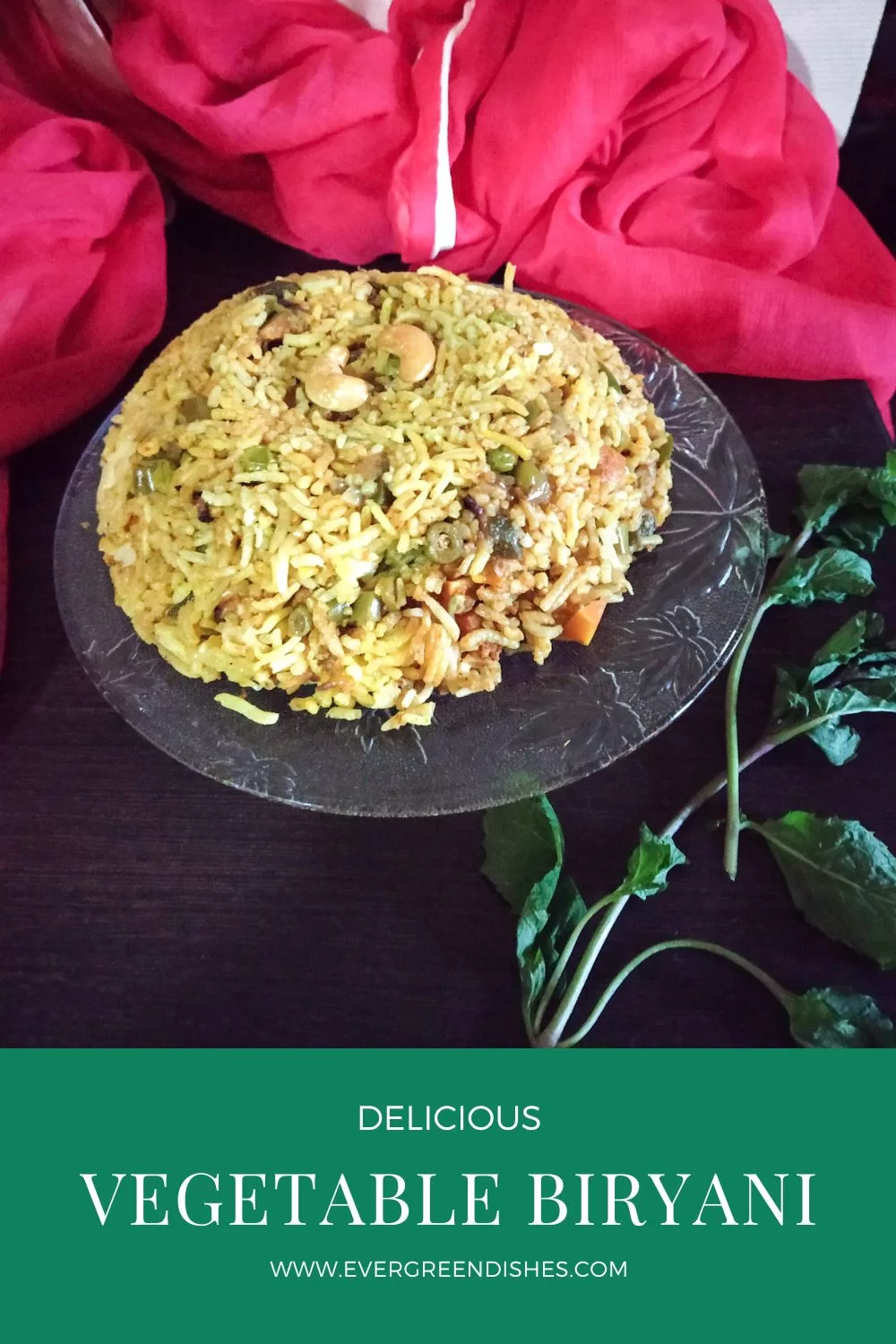
    vegetable biryani
    vegetable biryanii                                                                                                                                    If you  ever make  Veg Biryani,  take a picture and share it by tagging @foodiejayashree on Instagram and @evergreendishes on Facebook.  Subscribe to get all updates and an e-book for free.


  • Potatoes in gravy

    A day without veggies in the kitchen and these potatoes are such a handy stuff, I really love them for their versitality. It can be used in all kind of cooking. Here is another veggie for you.

    The ingredients that you need are :

    • potatoes 3
    • onions 2
    • tomatoes 3
    • chilli powder 1tsp
    • garam masala powder 1/2 tsp
    •  oil 1 tbsp
    •   turmeric powder1/4 tsp
    • cumin seeds1/2 tsp  
    • kasuri methi 1/2 tsp 
    potatoes in gravy
    love this one


    To Proceed :

    Wash and cut the potatoes into small triangular shapes with their jackets on. Cut onions and tomatoes finely and keep aside.Take oil in a kadai, add cumin and the onions. Saute for a while,then add the tomatoes and let cook. Now add the cut potatoes into it. Add enough water and salt . Cover with a lid for even and fast cooking. Later,add chilli powder, garam masala and kasuri methi to it. Serve with chapati or phulka.

            HAPPY COOKING !!! 

  • Gojjavalakki / Huli Avalakki

    Gojjavalakki / Huli Avalakki

    Jump to Recipe

    Gojjuavalakki  or Gojju Avalakki is a staple food in South India. It is tangy and also called as Huli Avalakki. Huli is the regional word meaning sour. It is not only sour, but I can say tangy.

    Beaten rice  popularly known as  “avalakki ” in karnataka and “poha ” in maharashtra  is one of the staple food of the Kannadigas. They relish eating in any form, just as a chivda with tea or for breakfast. Here is one such recipe which many of you can relate.

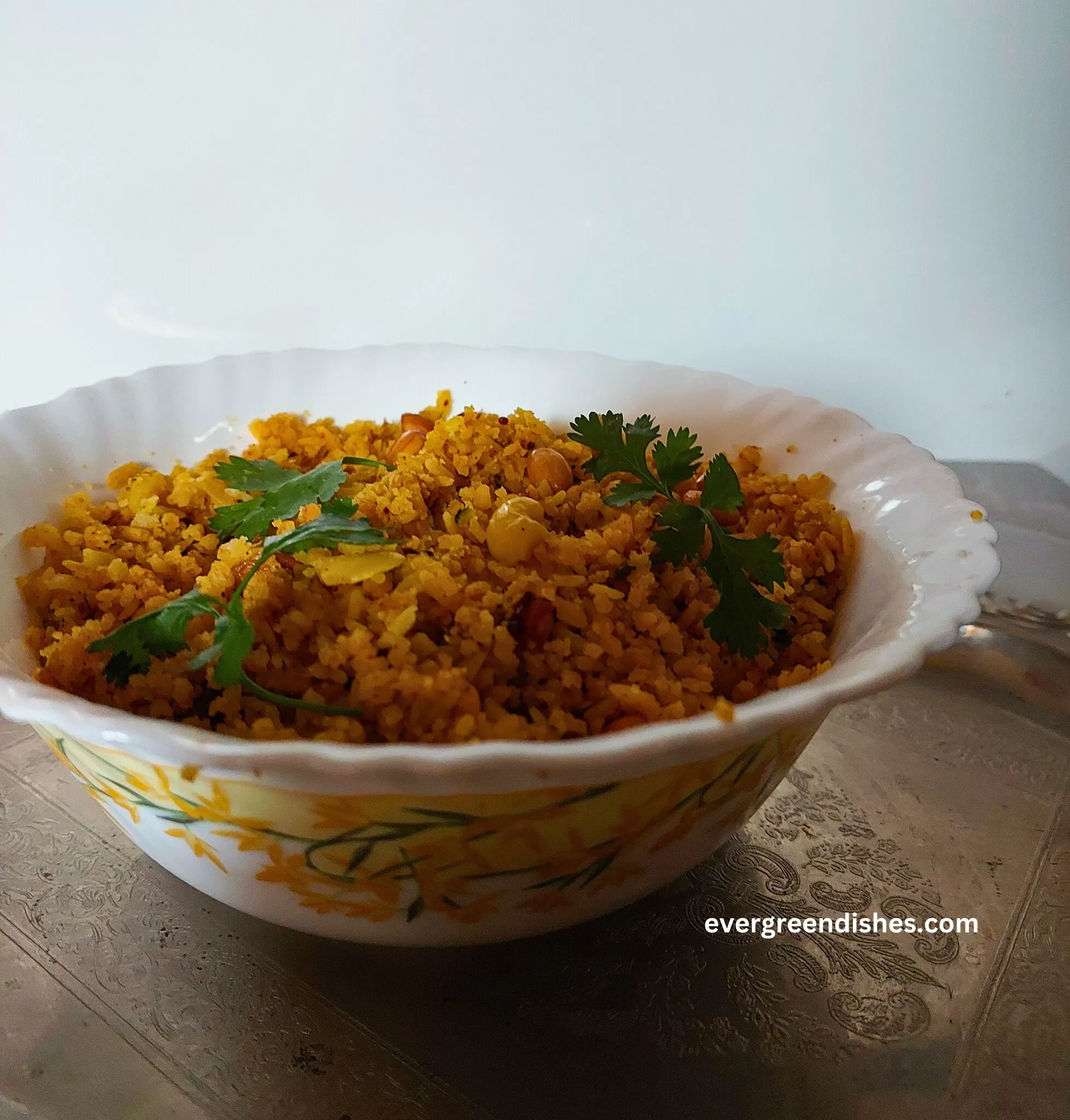
    gojjavalakki
    gojjavalakki

    The ingredients needed are : 

    • 4 cup beaten rice 
    • 300 ml tamarind pulp 
    • a lemon size ball of jaggery 
    • 2 tablespoon oil 
    • 1/2 teaspoon mustard seeds 
    • a pinch of asafoetida  
    • 1/4 teaspoon turmeric powder 
    • 2 tablespoon groundnuts 
    • 1/2 teaspoon bengal gram 
    • 1/2 teaspoon urad dal 
    • 6 cashew nuts broken into pieces
    •  a few curry leaves 
    • salt to taste
    • 1 teaspoon chilli powder 
    • 2 teaspoon rasam powder 
    • coriander for garnishing


    Method :

    • Take the beaten rice , immerse in water for a second and drain the water.
    • Take the tamarind pulp, jaggery, salt, chilli powder and rasam powder and boil in a pan. It should be of a moderately thick consistency. 
    • Take oil in a large pan and make the seasoning. Add the mustard seeds, and as they crackle add asafoetida, turmeric powder, bengal gram urad dal, groundnuts, cashew nut pieces  and curry leaves . Leave aside for a minute. 
    •  As the colour changes, add the pulp to it and mix well. Now add the washed beaten rice to it and mix well. Keep on a low flame for sometime. Garnish with coriander.

    Take a tip :

    • The taste of gojju avalakki is a  blend of sour, sweet and spicy, hence it can be described as khatta meetha.
    • One needs to let the ground nuts cook for some time in the oil. Otherwise,  it does not taste good.
    • One  can add onions to it, when the seasoning is done, saute  and prepare in the same way. But, this is also equally good.


    Pin it for later :

    Gojjavalakki
    gojjavalakki


    Print Recipe
    gojjavalakki

    Gojjavalakki

    Gojjavalakki is a tasty and healthy breakfast option from South India.
    Course: Breakfast
    Cuisine: Andhra pradesh, karnataka, South Indian

    Ingredients
      

    • 4 cup medium poha /avalakki
    • 300 ml tamarind pulp
    • a lemon size ball of jaggery
    • 2 tablespoon oil
    • 1/2 teaspoon mustard seeds
    • a pinch of asafoetida
    • 1/4 teaspoon turmeric powder
    • 2 tablespoon groundnuts
    • 1/2 teaspoon bengal gram
    • 1/2 teaspoon urad dal
    • 6 cashew nuts broken into pieces
    • a few curry leaves
    • salt to taste
    • 1 teaspoon chilli powder
    • 2 teaspoon rasam powder
    • coriander for garnishing

    Method
     

    1. Take the poha or avalakki and wash it in water. Let the impurities be drained. Then, immerse in water for a second and drain the water.
    2. Take the tamarind pulp, jaggery, salt, chilli powder and rasam powder and boil in a pan. It should be of a moderately thick consistency.
    3. Take oil in a large pan and make the seasoning. Add the mustard seeds, and as they crackle add asafoetida, turmeric powder, bengal gram urad dal, groundnuts, cashew nut pieces  and curry leaves . Leave aside for a minute.
    4. As the colour changes, add the pulp to it and mix well. Now add the washed beaten rice to it and mix well. Keep on a low flame for sometime. Garnish with coriander.

    Notes

    Tamarind pulp can be extracted by soaking the tamarind in water for fifteen minutes. It is squeezed well and then extracted. It is moderately thick in consistency.
    The taste of gojju avalakki is a  blend of sour, sweet and spicy, hence it can be described as khatta meetha.
    One needs to let the ground nuts cook for some time in the oil. Otherwise,  it does not taste good.
    One  can add onions to it, when the seasoning is done, saute  and prepare in the same way. But, this is also equally good.
  • Dal, the southern style

    Dal is essential in  Indian cooking and forms the main course of our meal. This is an accompaniment  of the traditional kind, to those who love  the southern style of cooking. This dish is always liked by the older members of the family as it is passed through generations.

    The ingredients that you need are:

    • turdal cooked 1 cup
    • tomatoes 3
    • chilli powder 1tsp
    • sambar powder 1tsp
    • tamarind pulp a small cup
    • salt to taste
    • oil 2tsp
    • mustard seeds 1/2 tsp
    •  asafoetida 1/4 tsp
    • turmeric powder 1/4tsp 
    dal southern style
    relished by all

    Method : 

    • Wash and cut the tomatoes.
    • Take oil in a pan and add the mustard seeds. As they crackle, add the asafoetida,turmeric powder and tomatoes and salt.  Sprinkle some water and close the lid.
    • When done,add the cooked dal to it. Let boil.
    • Now add the tamarind pulp,sambar powder and chilly powder to it.  Keep on a low flame and simmer for five minutes.
    • Serve hot with rice.

    Handy hints:

    • Tamarind pulp is extracted by soaking the tamarind in water for sometime.
    • Tur dal is evenly cooked by adding some turmeric powder to it.

    [social_share style=”bar” align=”horizontal” heading_align=”inline” facebook=”1″ twitter=”1″ google_plus=”1″ linkedin=”1″ pinterest=”1″ /]

  • Green gram stir fry

    Green gram stir fry

    Green gram stir fry is a popular side dish from Karnataka. It is commonly known as Hesaru kalu palya. It makes a good accompaniment with chapathi or jowar roti.

    Ask any South Indian, they will be happy to mention about green moong. It is one of the essentials in the kitchen. It is widely used to make an array of dishes as stir fry, curries and dosa. Sprouted green gram is mostly used in salads.

    Green gram is widely used in South India to make as an accompaniment with jowar roti or chapati. It is mixed with a few spices and cooked well. It is often made as it is healthy and  makes a good substitute for the regular veggies.

    Other recipes from Karnataka are Menthe  Matvadi Palya, Cucumber stir fry,

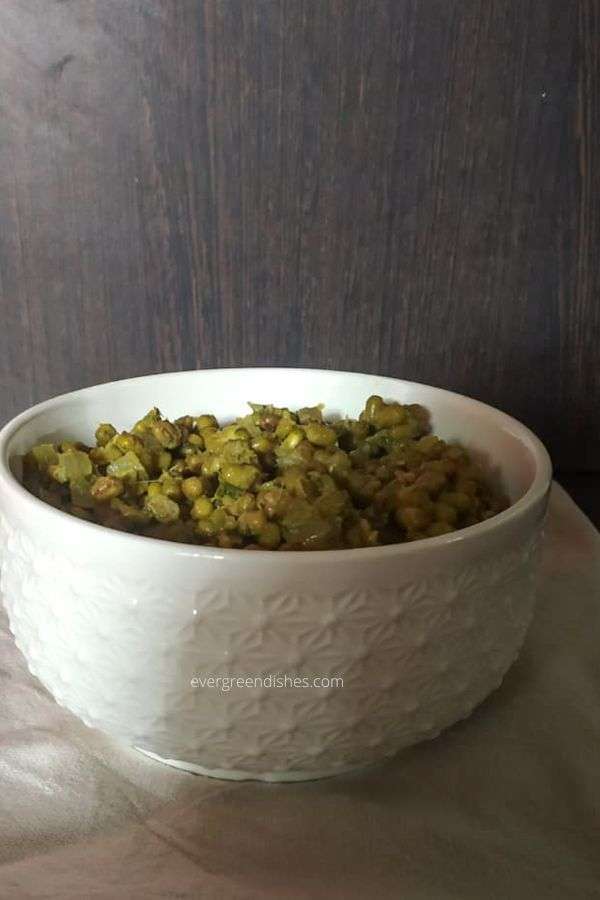
    green gram stir fry

    How to cook green gram:

    For unplanned cooking, you can cook them directly in the pressure cooker. But, it is good to soak green moong for half an hour at least. It eases the cooking process. Pressure cook it for two whistles. Allow the pressure to release it by itself. Do not cook for a longer time, it becomes smudgy.

    Green moong can be soaked overnight and used in cooking. It can be cooked directly in a pan with some seasoning.

    Sprouted green moong can also be used in cooking stir fry.

    Moong Dal Bada is a crunchy snack made using green moong, ideal to serve as a snack.

    Let’s get to the recipe of Green Moong Stir Fry

    The ingredients that you need are :

    • 1 cup green gram 
    • 1 onion 
    • 3 green chilli
    • ginger 1inch
    • handful of coriander leaves 
    • 1 tablespoon oil
    • 1/4 cumin 
    • 1/4 teaspoon muustard
    • 1/8 teaspoon asafoetida 
    • 1/8 teaspoon turmeric powder 
    • salt to taste

    Method :

    • Cook the green gram in a pressure cooker.
    • Grind coriander leaves, cumin, ginger and green chillies to a fine paste with a tablespoon of water.
    • Cut onions into small pieces.
    • Heat oil in a kadai, add the mustard seeds. When they crackle add asafoetida , turmeric powder and the onions. Saute till light pink. Add the paste and salt and mix well. Now ,add the cooked green gram to it and mix well. Simmer for five minutes. 
    • Serve with chapati or jowar roti.It is ideal to soak for green moong for half an hour.

      Take a tip:

    • The cooking time depends on the kind of gram you have used and the mode of cooking.
    • If soaked for a longer, you can cook them directly in a pan. Otherwise, you need to pressure cook them.
    • Adjust the level of spiciness as per your taste.
    Evergreendishesdev

    Green Moong Stir Fry

    5 from 4 votes
    Green Moong Stir Fry is a simple and tasty stir fry from North Karnataka. It makes a good accompaniment with jowar roti or chapathi.

    Ingredients
      

    • 1 cup green gram
    • 1 onion
    • 3 green chilli
    • ginger 1inch
    • handful of coriander leaves
    • 1 tablespoon oil
    • 1/4 cumin
    • 1/4 teaspoon muustard
    • 1/8 teaspoon asafoetida
    • 1/8 teaspoon turmeric powder
    • salt to taste

    Equipment

    • pan, ladle, pressure cooker, small bowl, ladle

    Method
     

    1. Cook the green gram in a pressure cooker.
    2. Grind coriander leaves, cumin, ginger and green chillies to a fine paste with a tablespoon of water.
    3. Cut onions into small pieces.
    4. Heat oil in a kadai, add the mustard seeds. When they crackle add asafoetida , turmeric powder and the onions. Saute till light pink. Add the paste and salt and mix well. Now ,add the cooked green gram to it and mix well. Simmer for five minutes.
    5. Serve with chapati or jowar roti.

    Notes

    It is ideal to soak for green moong for half an hour.
    The cooking time depends on the kind of gram you have used and the mode of cooking. If soaked for a longer, you can cook them directly in a pan. Otherwise, you need to pressure cook them.
    Adjust the level of spiciness as per your taste.

    About the event :

    This is an old post which I have updated with more information and better pictures. The recipe remains the same. Sending this to Foodies_Redoing Old Post 83, a fortnightly event. Here, we work on the old posts either by editing or by changing the pictures.

    The post was first published on 13/07/2014. Edited on 21/7/2022

    a bowl of green gram stir fry
    green gram stir fry

    If you ever make Green Moong Stir Fry recipe, take a piicture and tag @foodiejayashree on Instagram or @evergreendishes on Facebook. I will be glad to share your creation. Subscribe to get an e-book and all updates in your inbox!


  • Cabbage Pakoda | No Onion Garlic Recipe

    Cabbage Pakoda | No Onion Garlic Recipe

    cabbage pakoda | no onion garlic recipe|  cabbage pakoda recipe  | vegan | festive treat | south indian food

    Jump to RecipePrint Recipe

    Cabbage pakoda  are crispy and tasty. They are ideal with a hot cup of tea. It is vegan, no onion garlic  dish. It is ideal to serve with a festive platter.

    A typical South Indian platter consists of a payasam, chutney, pickle, two kind of stir fry, dal made with green leaf or sambar, rasam, sweet such as holige with a dollop of ghee,  or any other kind, lemon rice and fritters as bhajiya along with papad. The meal ends with curds rice.

    Cabbage pakodas are crispy and tasty. They are vegan and may be made as gluten-free by opting out asafoetida. You may also use a gluten-free asafoetida..

    To make good pakodas, use a cabbage that is green in colour. Shred the cabbage finely. You may add a little bit of cumin or ajwain. They not only lend a good flavour but also aid in digestion.

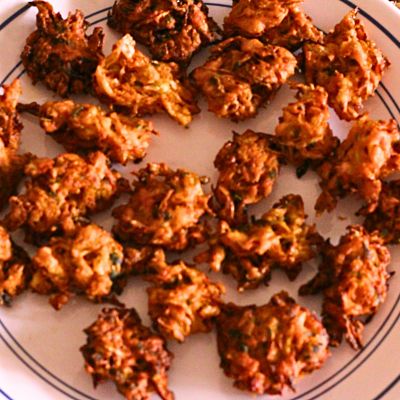
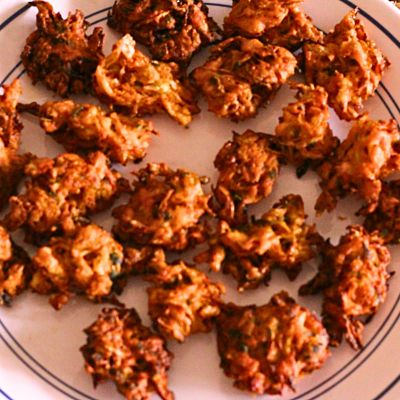
    cabbage pakoda
    platter of cabbage pakoda

    Cabbage Pakoda Recipe :

    Ingredients :

      • 1 small cabbage
      • 1 cup gram flour
      • 1 tablespoon rice flour
      • 1/4 teaspoon asafoetida
    • 1/4 teaspoon turmeric powder
    • salt to taste
    • 1/2 bunch coriander leaves

    Method :

    • Cut the cabbage finely into long slender shredding. Immerse in cold water and put it in a colander.
    • Take a wide bowl, add the cabbage and salt and keep it  aside for ten to fifteen minutes.
    •  Later, add gram flour, rice flour, chilli powder, asafoetida, finely cut coriander and mix well.
    • Heat oil in a pan, put them as pakodas and deep fry till brown in colour. Remove them on a tissue paper.
    • Crispy and tasty  cabbage pakoda fries  are ready to binge.

    Take a tip :

    • To make it gluten-free, do not add asafoetida or use gluten-free asafoetida.
    • Fresh cabbage shreds well. Finely cut vegetables give a good texture to the pakoda.
    • A few cut green chillies pieces enhances the taste and gives extra spiciness.
    • Crush a little bit of ajwain with fingers and tip in the batter. It lends a good taste and also aids in digsetion.

    Other festive treats for the season

    Evergreendishesdev

    Cabbage pakoda fries

    5 from 1 vote
    Cabbage pakoda fries are tasty and ideal to prepare during festive days.
    Prep Time 20 minutes
    Cook Time 20 minutes
    Total Time 40 minutes
    Servings: 6 people
    Course: Side Dish, Snack
    Cuisine: Indian

    Ingredients
      

    • 1 small cabbage
    • 1 cup gram flour (besan)
    • 1 tablespoon rice flour
    • 2 teaspoon chilly powder
    • 1/4 teaspoon asafoetida
    • 1/4 teaspoon turmeric powder
    • salt to taste
    • 1/2 bunch coriander leaves
    • oil for frying

    Method
     

    1. Chop the cabbage into fine shreddings.
    2. Put it in water and keep aside for sometime.
    3. After sometime remove the cabbage from the water and put it in a colander for sometime.
    4. Now, put it in a bowl and add salt to it. Keep it aside for fifteen minutes.
    5. Now, add chilly powder, turmeric powder and asafoetida to it. Mix it. Add gram flour and rice flour. Mix well. 
    6. Heat oil in a pan. Take small ball of the mixture and slowly let some into the pan. Put around eight to ten (depends on the size of the frying pan)
    7. Deep fry on moderate heat. After sometime, turn it to the other side. Once it is done, remove them on a plate with tissue paper.
    8. Repeat for the rest of the batter.
    cabbage pakoda
    cabbage pakoda

    About the event :

    An old post got  a makeover, sending this to Foodies_Redoing Old Post No 174. Participating after a long time, an old post got updated on 24/4/2026.

    Subscribe to get an e-book of handyhints for free !If you have liked this post, do share it with your family and friends. If you ever make this, take a picture and share it by tagging @foodiejayashree on Instagram or @evergreendishes on Facebook or Twitter.
    Pin it for later :

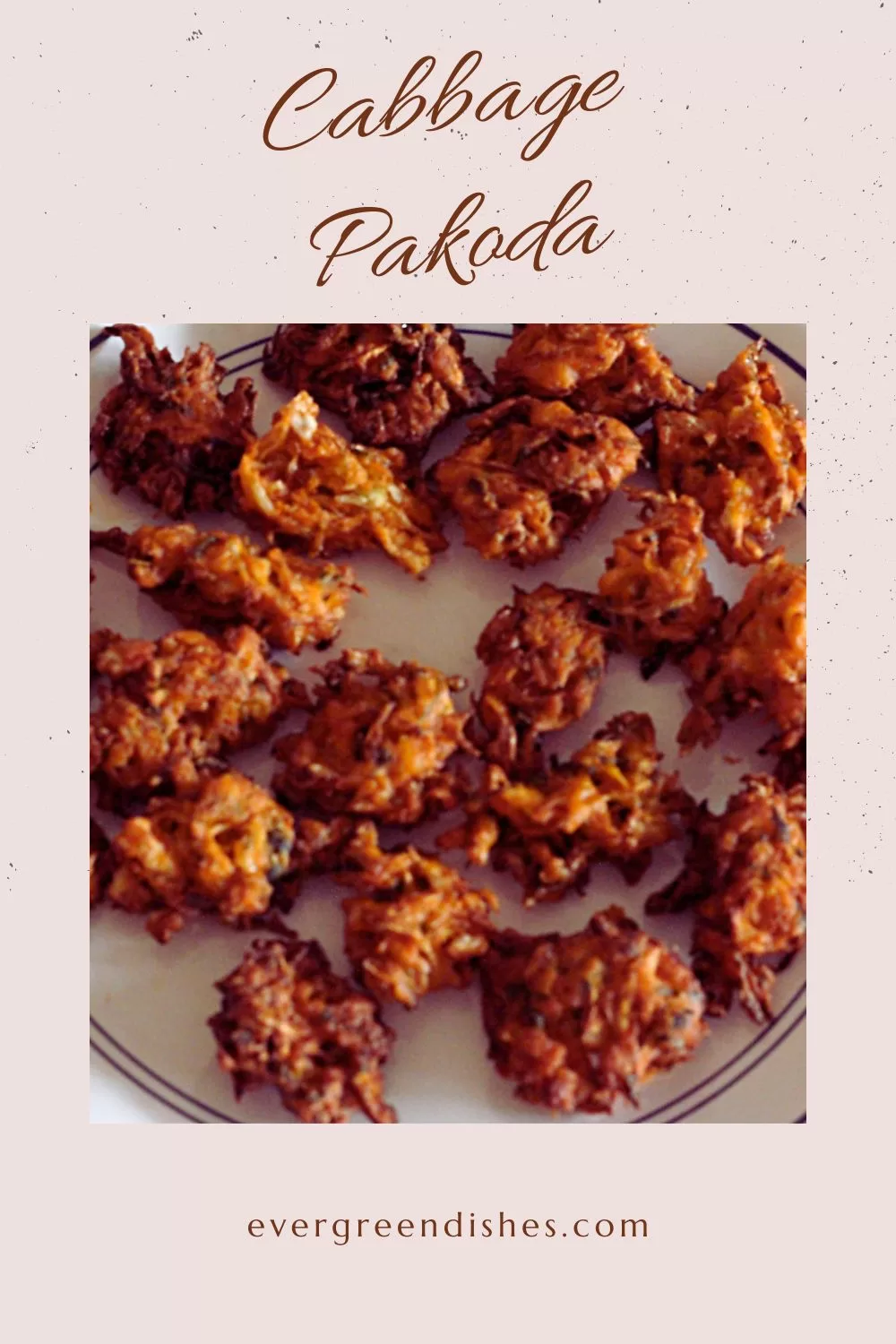
    cabbage pakoda
    cabbage pakoda