Tag: vegan recipes

  • Menthe Matvadi Palya | Matodi Palya | Karnataka recipes

    Menthe Matvadi Palya | Matodi Palya | Karnataka recipes

    Jump to Recipe 

    Menthe Matvadi Palya / Matodi Palya  is a traditional side dish from Karnataka. Fenugreek leaves are cooked along with ground paste of bengal gram to make this delicious accompaniment. It is a no onion garlic recipe. It is vegan and makes a healthy side dish. A delicious side dish, one can eat it as a snack too. 

    It is one of the heirloom recipes, I wanted to post it since a long time and it is on my blog today.  Menthe Matodi Palya  is a dish you make it once in a way and enjoy, it needs good amount of oil to cook and ample time also. Thus, one needs to be liberal with the use of oil here.  It pairs well with steamed rice or one can serve it as a side dish along with rice and rasam. It may eaten by itself as a snack too. 

    I love using fenugreek leaves in my cooking as it gives a good flavour to many dishes. Moreover, it is rich in nutrients as Vitamin K, Vitamin C, Vitamin A, folate, Riboflavin and Pyridoxine. It also contains many antioxidants. It is low in calories. It helps to control diabetes and anaemia. It is good for the digestive system.
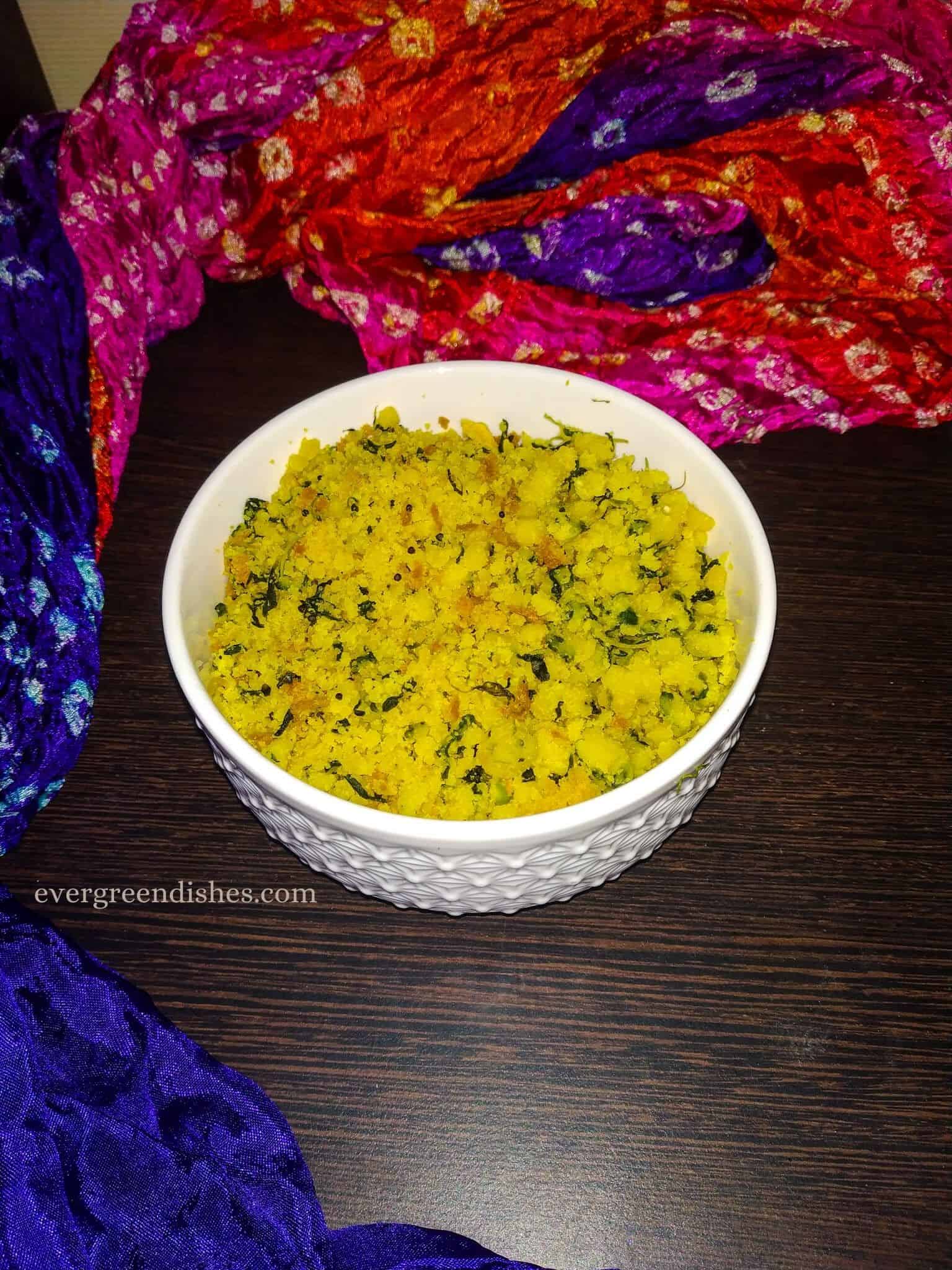
    menthe matvada palya

    About the event: 

    It’s time for Shhh Secretly Cooking Challenge post. The theme for the month of June was suggested by Seema Doraiswamy Sriram as ” Fear Not The Bitter”. Seema is a wonderful blogger who blogs at Mildly Indian. She  has many delicious recipes with a good twist in them. I love the simplicity of her cooking and bookmarked the black rice ladoo and guava chutney to make it soon.  Seema was my partner and she gave me coconut and  green chilly as the secret ingredients. But since I had not used coconut, I asked for a change and it was oil she gave me and I made this Matvadi Palya.  I had given oil and cumin as the secret ingredients to Seema  and she has made this delicious side dish Karela ka Bharta

    Karnataka recipes :

    The other karnataka recipes shared earlier on the blog are Huli Nuchu, Mixed Vegetable Kootu, Bisebelebath. Among the sweets, we cherish the traditional Ragi Halbai and Bellada Sheera.

    Let’s get to the recipe of Menthe Matvada Palya /Matodi Palya : 

    Ingredients:


    1 cup bengal gram  (Measurement used: 1 cup = 150ml) 
    2 cluster (bunch) fenugreek leaves
    5 green chilly
    water (little)
    3 tablespoon oil
    1/2 teaspoon mustard
    asafoetida
    1/4 teaspoon turmeric powder
    salt

    Method:


    1.Wash and soak bengal gram for two hours.
    2. Separate the fenugreek leaves. Chop them and put them in water. Clean it several times to remove the grime.
    3.Remove the bengal gram from water and grind it along with green chilly. Add little water while grinding.
    4. Heat oil in a pan, add mustard seeds. As it splutters, put asafoetida and turmeric powder to it. Now, put the fenugreek leaves. Let them cook for a minute. Once the methi leaves are cooked, add the ground mixture to it. Put salt and mix it. Let it cook on a low flame. Keep on stirring with a ladle, otherwise, the wet mixture forms a mass and  it will stick to the pan. All the efforts  turn to be a waste.  From the wet mixture, it cooks to a dry, delicious curry. It needs at least ten to fifteen minutes to cook perfectly. A perfectly cooked dish is dry and grainy. 


    Take a tip: 

    • Add very little  water to grind it to a coarse paste.
    • Coconut and ginger may be added while grinding. I have not added. 
    • A little cumin may be put in the seasoning.
    Print Recipe

    Menthe Matodi Palya

    Menthe Matodi Palya is a delicious side dish from Karnataka. It is a , healthy, vegan, no onion garlic, side dish.
    Prep Time 15 minutes
    Cook Time 20 minutes
    Soaking time 30 minutes
    Total Time 1 hour 5 minutes
    Course: dinner, lunch
    Cuisine: karnataka, South Indian

    Ingredients
      

    • 1 cup bengal gram
    • 2 cluster bunch fenugreek leaves
    • 5 green chilly
    • water little
    • 3 tablespoon oil
    • 1/2 teaspoon mustard
    • asafoetida
    • 1/4 teaspoon turmeric powder
    • salt

    Method
     

    1. 1.Wash and soak bengal gram for two hours.
    2. Separate the fenugreek leaves. Chop them and put them in water. Clean it several times to remove the grime.
    3. 3.Remove the bengal gram from water and grind it along with green chilly. Add little water while grinding.
    4. Heat oil in a pan, add mustard seeds. As it splutters, put asafoetida and turmeric powder to it. Now, put the fenugreek leaves. Let them cook for a minute. Once the methi leaves are cooked, add the ground mixture to it. Put salt and mix it. Let it cook on a low flame. Keep on stirring with a ladle, the wet mixture forms a mass and  it will stick to the pan. All the efforts will turn to be a waste.  From the wet mixture, it cooks to a dry, delicious curry. It needs at least ten to fifteen minutes to cook.

    Notes

    Add very little  water to grind it to a coarse paste.
    Coconut and ginger may be added while grinding. I have not added. 
    A little cumin may be put in the seasoning.

    Pin it for later: 

    Menthe Matvada Palya is one of the heirloom recipes. It is a tasty side dish ideal to pair with rice and rasam.
    Menthe Matvada Palyaacc


    If you ever make this Menthe Matvadi  recipe or any of my other dishes,  do take a picture and tag @foodiejayashree on Instagram or @evergreendishes on Facebook or Twitter. I will be glad to see your creation and share it further. Let’s be connected, do follow on social media platforms. Until next time, let’s stay connected.  Subscribe to get all updates in your inbox. Happy Cooking !
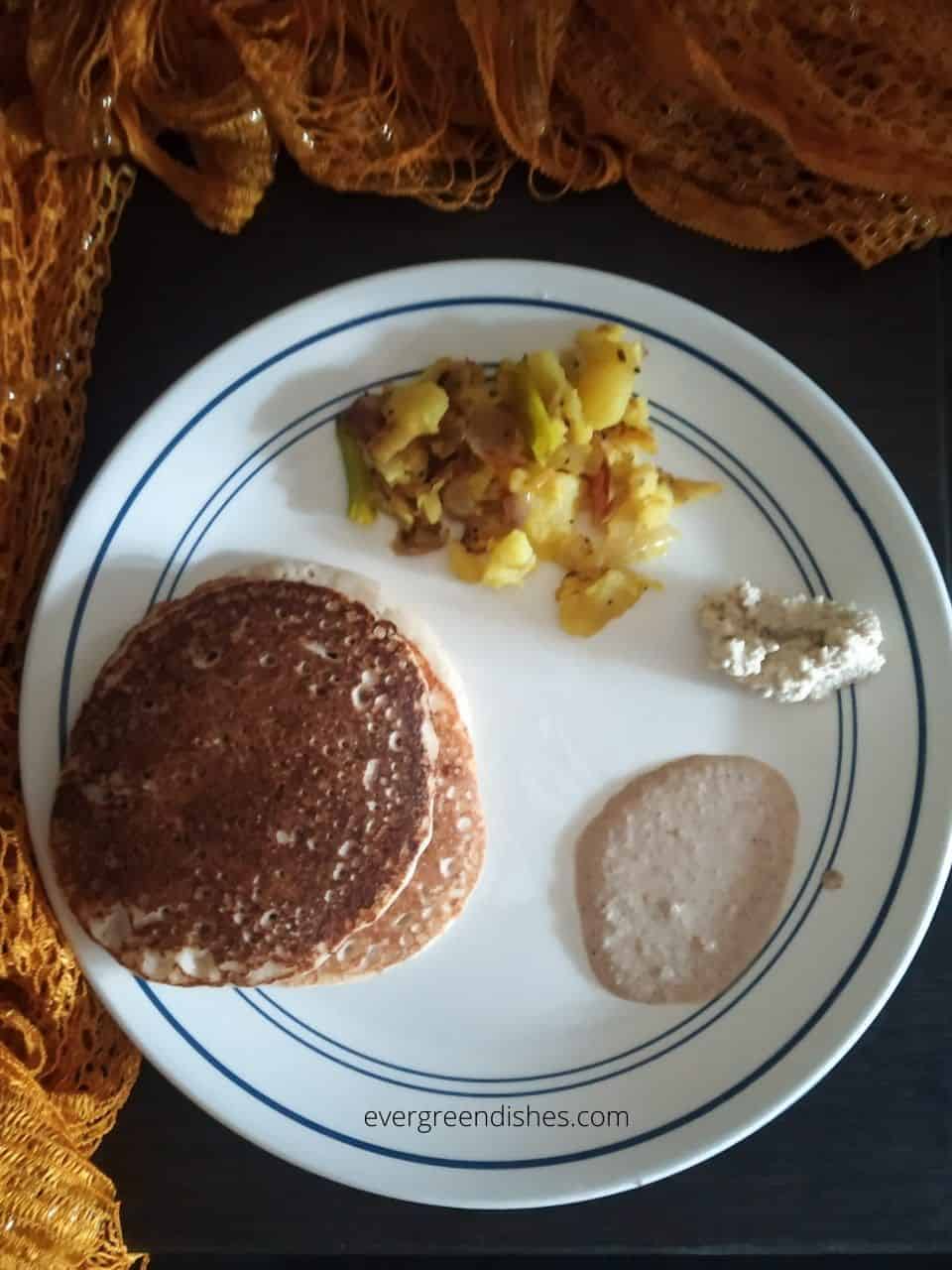
  • Watermelon Rind Dosa | Watermelon Rind Recipes

    Watermelon Rind Dosa | Watermelon Rind Recipes

    Jump to RecipePrint Recipe


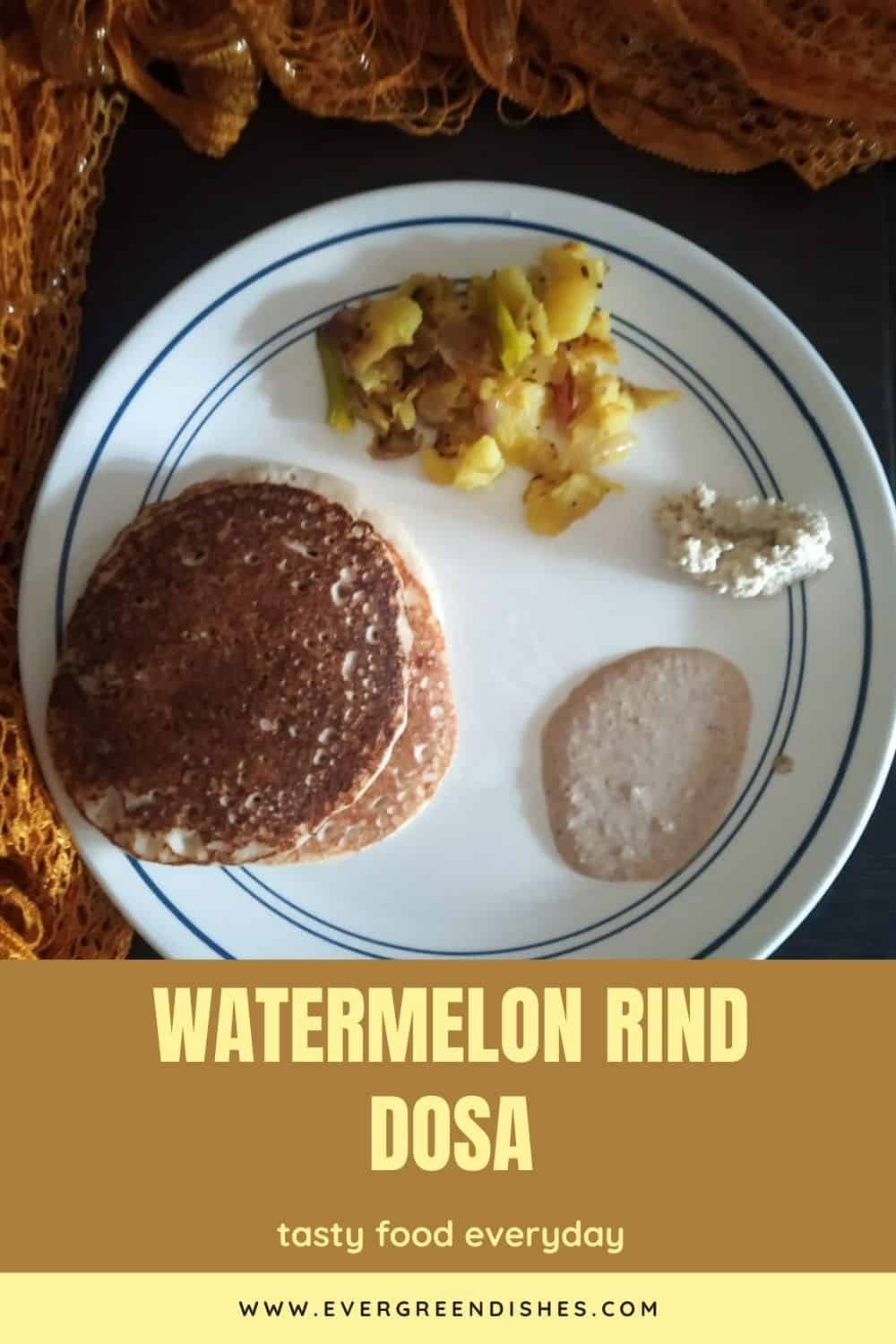
    Watermelon Rind Dosa is a delicious and unique breakfast option. It is soft, spongy and porous.  It is vegan and gluten free  and as the name suggests watermelon rind is used in it.

    Considering the fact, watermelon rind is healthier, I don’t like to waste it. The rind is the white part of the watermelon. It is rich in fibre and aids in digestion.  Usually, I use it in a smoothie or a salad.  Of late, I have another recipe and I make this dosa also. The dosa is made slightly thick and cooked only on one side. Like the regular dosa, this needs to be fermented. This  recipe is adopted from Vinaya Prasad’s blog  Vegetarian Culinary Delights. I am active in a couple of groups on Facebook and this group is one of them. I like the enthusiasm and patience with which she runs the group. Recently, the group reached the 15000 milestone mark. 

    Watermelon Rind Dosa Recipe 

    Ingredients: 

     1. 25 cup  rice
    1/2 cup  urad dal
    1/4 cup flattened rice (poha) 
    1/2 cup   watermelon rind
    1/2 cup  fresh coconut
    1/2 teaspoon methi seeds
    oil for roasting
    water for soaking and grinding
    salt to taste


    Method:

    1. Soak rice, urad dal and methi for 4 hours.
    2. Soak flattened rice (poha) for half an hour.
    3. Cut the rind into small pieces. 
    4. Grind the soaked rice and lentil mixture to a fine batter, remove it in a bowl. Now, grind the rind pieces, soaked poha and  coconut, mix it into the batter. Add salt to it, cover and keep it in a warm place to ferment overnight or 5-6 hours.
    5. Next day, mix the batter, heat a skillet. Smear a little oil if using the cast iron. pour a ladleful of batter, spread a little oil, cover with a lid   and allow to cook. There is no need to cook the other side for this dosa. Once it is cooked, remove and serve hot with coconut chutney. Repeat for the rest of the batter. 


    Take a tip: 

    1. The dosa is made as a set dosa.  The consistency of the batter should be moderately thick.
    2. Use any kind of skillet, iron or non-stick, cover with a lid and cook. There is no need to flip  to the other side. 


    watermelon rind dosa
    watermelon rind dosa


    My family enjoys dosa any day.  Rava dosa is usually prepared during weekends. A dosa batter is handy and used in different ways. You can make masala dosa, uttapam or gundapongal. The other kind of dosa are ragi dosa, jowar dosa, set dosa, neer dosa and mixed flour dosa. 

    watermelon rind dosa

    Watermelon Rind Dosa

    Watermelon rind dosa is soft, spongy dosa. It is ideal to prepare it for breakfast.
    Prep Time 4 hours
    Cook Time 30 minutes
    Fermentation time 6 hours
    Total Time 10 hours 30 minutes
    Course: Breakfast
    Cuisine: Indian, South Indian

    Ingredients
      

    • 25 cup rice
    • 1/2 cup urad dal
    • 1/4 cup flattened rice poha
    • 1/2 cup watermelon rind
    • 1/2 cup fresh coconut
    • 1/2 teaspoon methi seeds
    • oil for roasting
    • water for soaking and grinding
    • salt to taste

    Method
     

    1. Soak rice, urad dal and methi for 4 hours.
    2. Soak flattened rice (poha) for half an hour.
    3. Cut the rind into small pieces.
    4. Grind the soaked rice and lentil mixture to a fine batter, remove it in a bowl. Now, grind the rind pieces, soaked poha and  coconut, mix it into the batter. Add salt to it, cover and keep it in a warm place to ferment overnight or 5-6 hours.
    5. Next day, mix the batter, heat a skillet. Smear a little oil if using the cast iron. pour a ladleful of batter, spread a little oil, cover with a lid   and allow to cook. There is no need to cook the other side for this dosa. Once it is cooked, remove and serve hot with coconut chutney. Repeat for the rest of the batter.

    Notes

    The dosa is made as a set dosa.  The consistency of the batter should be moderately thick.
    Use any kind of skillet, iron or non-stick, cover with a lid and cook. There is no need to flip  to the other side. 

    Pin it for later:

    Watermelon rind dosa is soft, supple and porous. It is a good way to use the rind  of the fruit which is usually discarded. Watermelon rind is rich in fibre and minerals. Give a try to this variation of dosa.
    watermelon rind dosa

    If you ever make this dosa recipe or any of my dishes,  do take a picture and tag @foodiejayashree on Instagram or @evergreendishes on Facebook or Twitter. I will be glad to see your creation and share it further. Let’s be connected, do follow on social media platforms. Until next time, let’s stay connected.  Subscribe to get all updates in your inbox. Happy Cooking ! 
     

  • Sajje Rotti Recipe | Pearl millet Roti | Bajra Roti

    Sajje Rotti Recipe | Pearl millet Roti | Bajra Roti

    Jump to Recipe Print Recipe

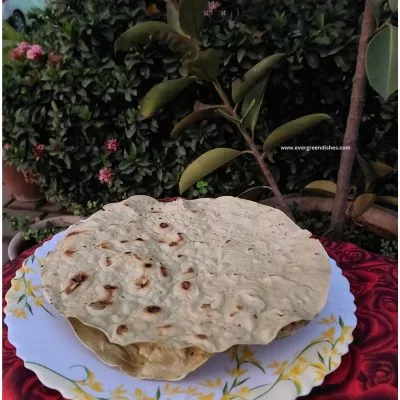
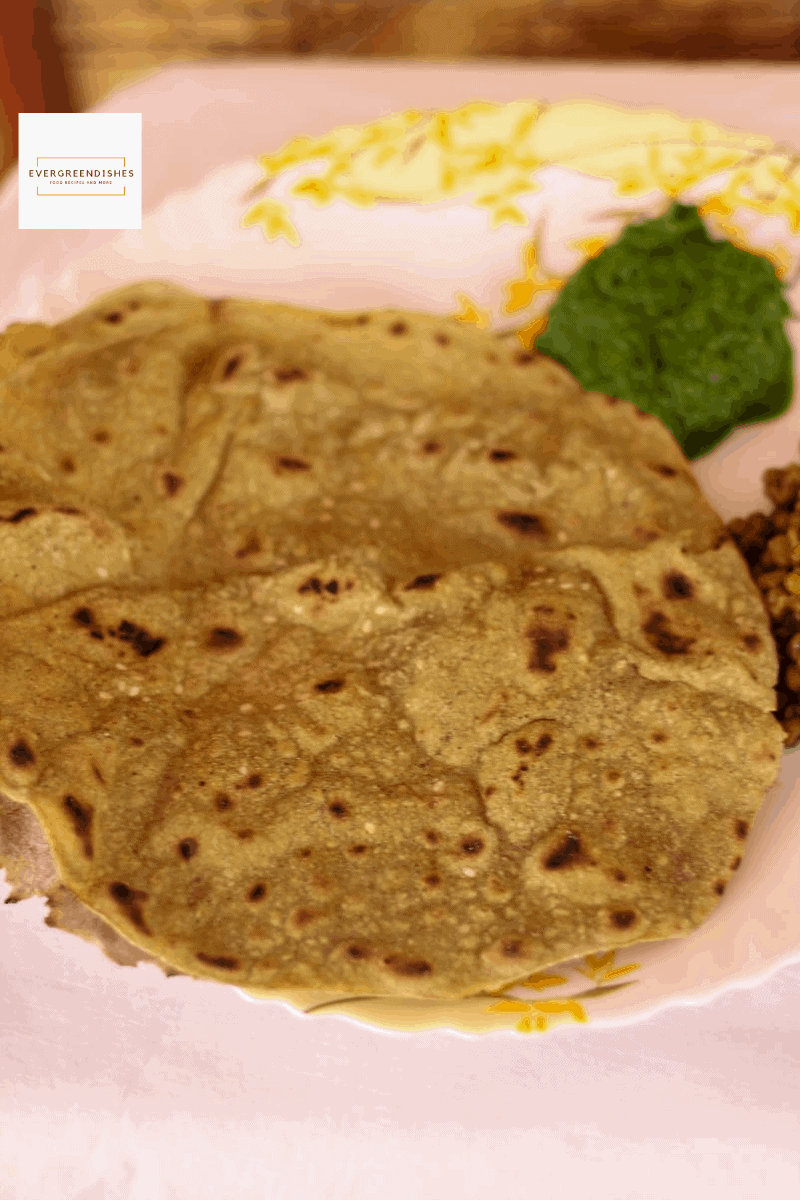
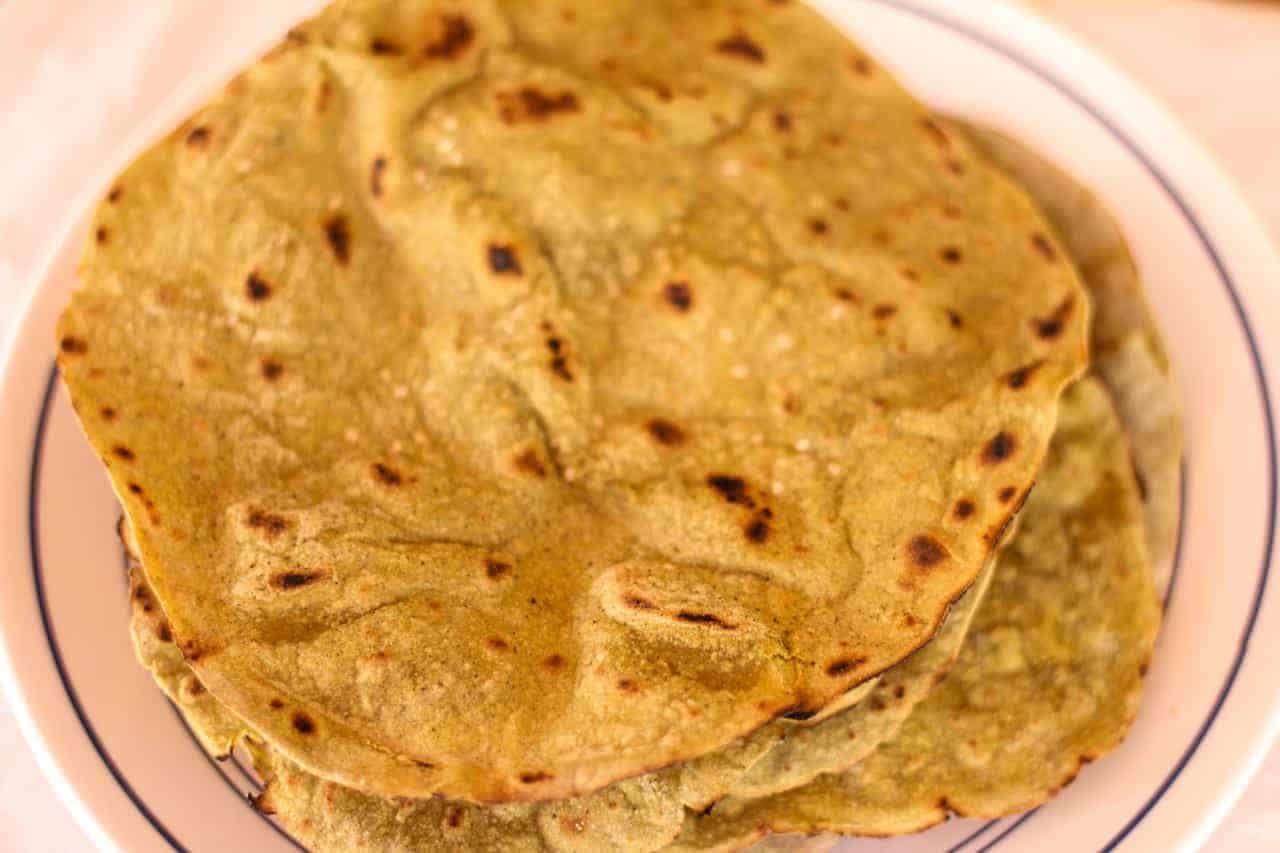
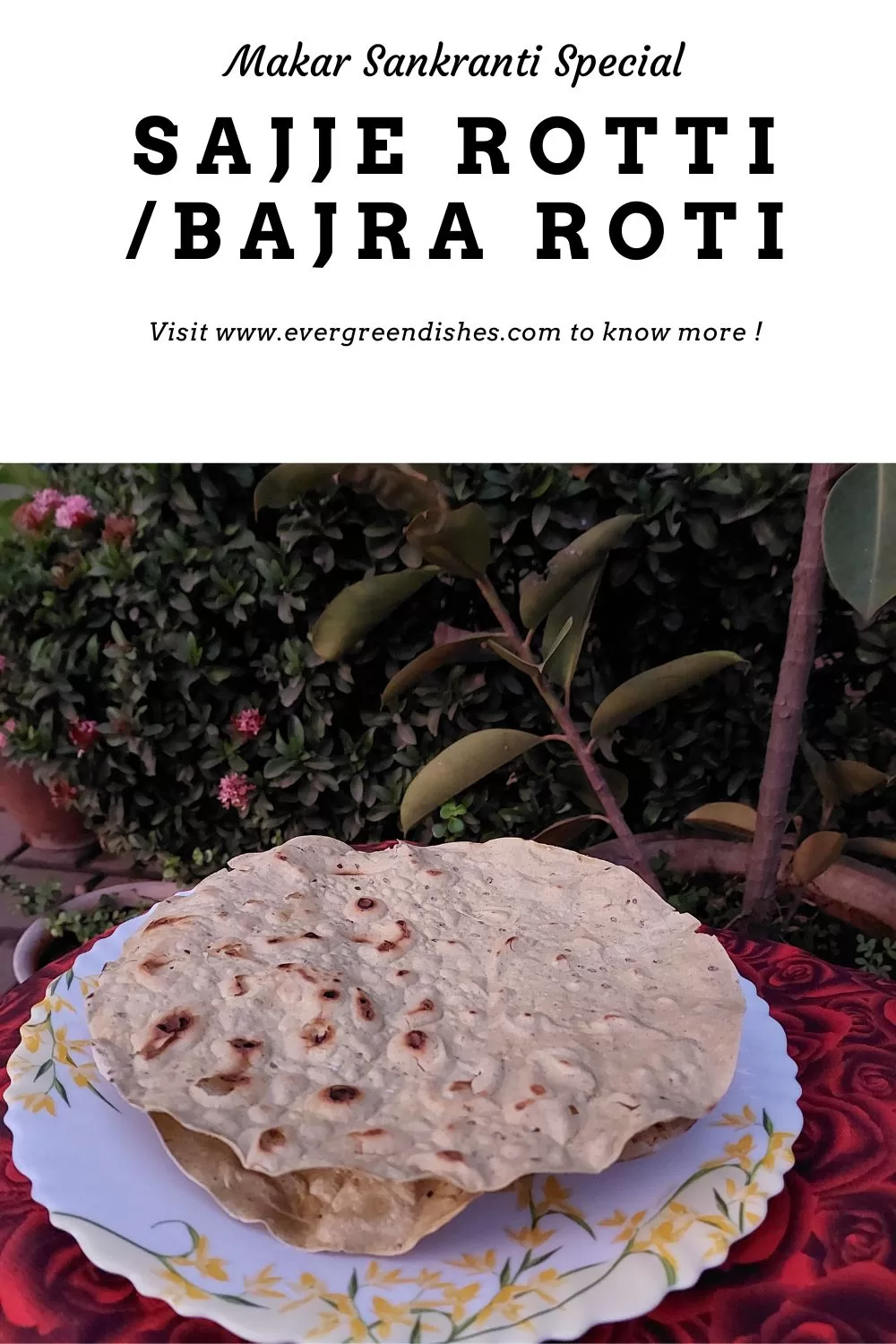
    Sajje Rotti / Pearl Millet Roti / Bajra Roti is a vegan and gluten-free, unleavened flat bread from South India. It is usually made crisp and served with different accompaniments. It is commonly prepared during Sankranti in South India. 

    What is Makar Sankranti ?

    Makar Sankranti is a popular festival celebrated according to the Hindu calendar. It is dedicated to Sun God, when the sun enters the zodiac sign of Capricorn and transcends towards the North or Uttarayan. Thus, this festival is also known as Uttarayan. It is also known as Magha, Pongal and Bhogi.  It officially marks the end of winter solstice and the beginning of longer days and autumn. It is also a harvest festival, it marks the beginning of harvest season when new crops are worshipped and relished. This festival is celebrated as per the solar cycle, it usually falls on the same date every year, Jan 14 / 15.

    Celebrations in Karnataka

    In Karnataka  this festival is celebrated over two days, the first day is Bhogi and the next day is Makar Sankranti.   As it is the festival of harvest, on the day of Bhogi, all married women donate fresh harvest as grains and pulses to an elderly married lady. It is a traditional custom passed through generations. The menu  prepared on this day bajra roti, brinjal stir fry or stuffed, green gram stir fry, raw tomato chutney,  spicy pongal and gojju. The food on this day is scrumptious.

    The next day is Makar Sankranti. On this day, front yard of every house is decorated with beautiful kolam in breathtaking designs adorned vibrantly and painstakingly. The sesame plays a very important role during this festival. Sankranti Ellu is prepared and offered to the Lord. It is also exchanged with all friends and family members. Sweets such as til ladoos and chikkis are prepared. Even lamps made with sesame and jaggery are lit. The sweet dish prepared on this day is usually Sakkarai Pongal but one can prepare any other sweet.

    Sajje Rotti / Pearl Millet Roti / Bajra Roti
    Sajje rotti / pearl millet roti / bajra roti

    sajje rotti

    Why is Sesame used during this festival ?

    Sesame is considered as a seed par excellence and consumed and donated during Makar Sankranti. A story in our mythology says that God Yama blessed the sesame seed and they are epitome of immortality.

    According to nutritionist Shruti Sharma, sesame is rich in nutrients. It consists of vitamins, oils, calcium, iron, magnesium, copper, zinc, Vitamin B6 and folate. It helps to support a healthy digestive system.  The copper present in it helps to reduce swelling and pain due to arthritis.Magnesium gives relief to respiratory diseases and the zinc helps in maintaining the bone health. It is one of the essential foods for vegetarians. The season needs food that helps to keep the body warm and healthy, sesame does it in a good way.

    What other side dishes can one use with Sajje Rotti ?

    Many different kind of dishes such as dal with methi and cabbage stir fry may be prepared. Chutneys are ideal to serve with bajra roti. The   raw tomato chutney tastes awesome. Gongura chutney is also often served with it. Dal with green leaf is commonly  prepared in most south indian homes.

    Can sajje rotti be stored?

    As these rotis are crisp, you can  stored for a couple of days. Keep them in a closed container. You can make them ahead and serve when needed.

    Let us now get to the recipe of Sajje Rotti :

    Equipments:

    • wide bowl or plate for mixing and kneading
    • a small bowl to boil water
    • skillet ( slightly curved and a different one is kept for roti)
    • spatula
    • a small piece of muslin cloth to smear the water
    • two  plate to stack them

    Ingredients:

    • 1 cup bajra flour
    • 1/4 teaspoon turmeric powder
    • a little salt
    • 1/2 cup hot water
    • 1/2 cup normal water (use as needed)

    Other ingredients:

    • 1 tablespoon sesame
    • flour for dusting

    Method:

    1. Put the flour in a wide bowl.
    2. Add salt and turmeric powder to it. Mix it thoroughly.
    3. Boil the water.
    4. Slowly, put the water and mix the flour thoroughly with the fingers.
    5. Now, use normal water to further mix the dough. Make it into a pliable dough by kneading it well with the palm.
    6. Take a small ball of the dough, dust with the flour and beat it a little. Smear a few sesame seeds and continue to make it to a thin circle. You may do it on the rolling board  or directly on the kitchen platform.
    7. Heat a skillet, slowly pick the roti and put it on the skillet. Smear a little water over it.
    8. Once it is done, turn it to the other side and roast it. Usually, this is done directly on the stove and put aside.
    9. Repeat for the rest of the dough.

    Take a tip:

    • Use good quality  flour. Always use fresh flour while making rotis as it is easier to prepare, otherwise they  tear apart.
    • Making rotis needs a little practice, but one can easily do it with a little practice. Each time, knead the ball of dough and then begin to tap it.
    • Applying of water is usually done with a small piece of muslin cloth. The cloth is dipped in a small bowl of water and applied to the roti, this helps in proper cooking of the roti.
    • These rotis are usually made crisp by keeping near the flame or on the skillet for sometime in between while making them.
    • You cannot roll the rotis with a rolling pin in this method. This is to be beaten with the palm only. The method to roll with a rolling pin is different, I am yet to learn that method. After the roti is beaten, you may use the rolling pin to make it even and thinner.

    Sajje Rotti / Bajra Roti / Pearl Millet Roti
    Evergreendishesdev

    Sajje Rotti / Bajra Roti / Pearl Millet Roti

    Sajje Rotti is vegan, gluten-free flat bread made from pearl millet. It is usually made on the day before Makar Sankranti in South India.
    Prep Time 10 minutes
    Cook Time 20 minutes
    Total Time 30 minutes
    Course: lunch
    Cuisine: karnataka

    Ingredients
      

    • 1 cup bajra flour
    • 1/4 teaspoon turmeric powder
    • a little salt
    • 1/2 cup hot water
    • 1/2 cup water
    • Other ingredients:
    • 1 tablespoon sesame
    • flour for dusting

    Method
     

    1. Put the flour in a wide bowl.
    2. Add salt and turmeric powder to it. Mix it thoroughly.
    3. Boil the water.
    4. Slowly, put the water and mix the flour thoroughly with the fingers.
    5. Now, use normal water to further mix the dough. Make it into a pliable dough by kneading it well with the palm.
    6. Take a small ball of the dough, dust with the flour and beat it a little. Smear a few sesame seeds and continue to make it to a thin circle. You may do it on the rolling stone or directly on the kitchen platform.
    7. Heat a skillet, slowly pick the roti and put it on the skillet. Smear a little water over it.
    8. Once it is done, turn it to the other side and roast it. Usually, this is done directly on the stove and put aside.
    9. Repeat for the rest of the dough.

    Notes

    Use good quality of flour.
    Making of rotis needs a little practice, but one can do it. Each time, knead the ball of dough and then begin to tap it.
    Applying of water is usually done with a small piece of muslin cloth. The cloth is dipped in a small bowl of water and applied to the roti, this helps in proper cooking of the roti.
    These rotis are usually made crisp by keeping near the flame or on the skillet for sometime in between while making them.

    Pin it for later :

    sajje rotti
    sajje rotti

    If you ever make this recipe, take a picture and share it by tagging @foodiejayashree on Instagram or @evergreendishes on Facebook. I will be glad to see and share your creation further.
    Check out my e-books on Amazon. Do not miss any post, subscribe to get all updates and an e-book for free !

  • Tuvar Sabzi / Winter Special

    Tuvar Sabzi / Winter Special

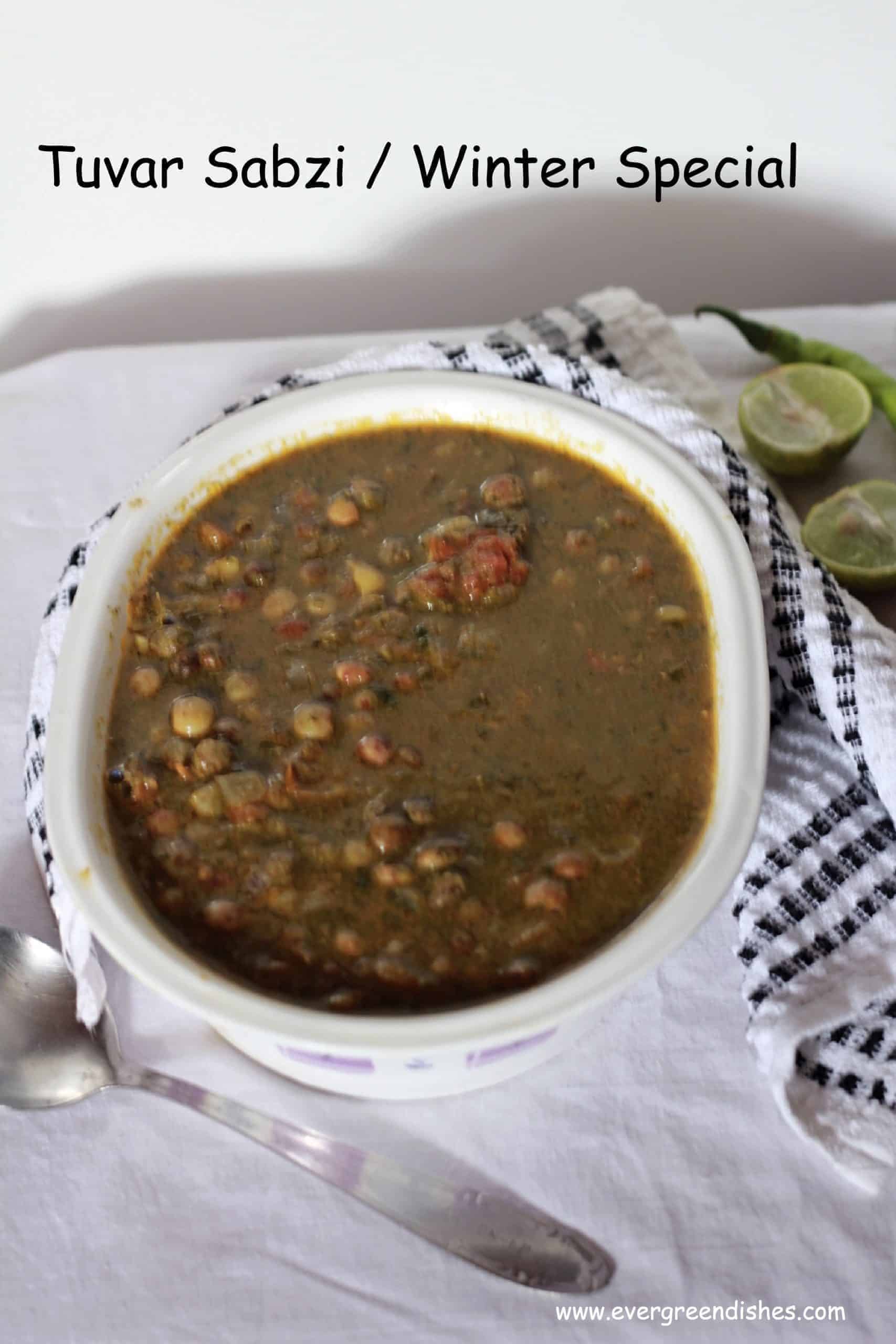
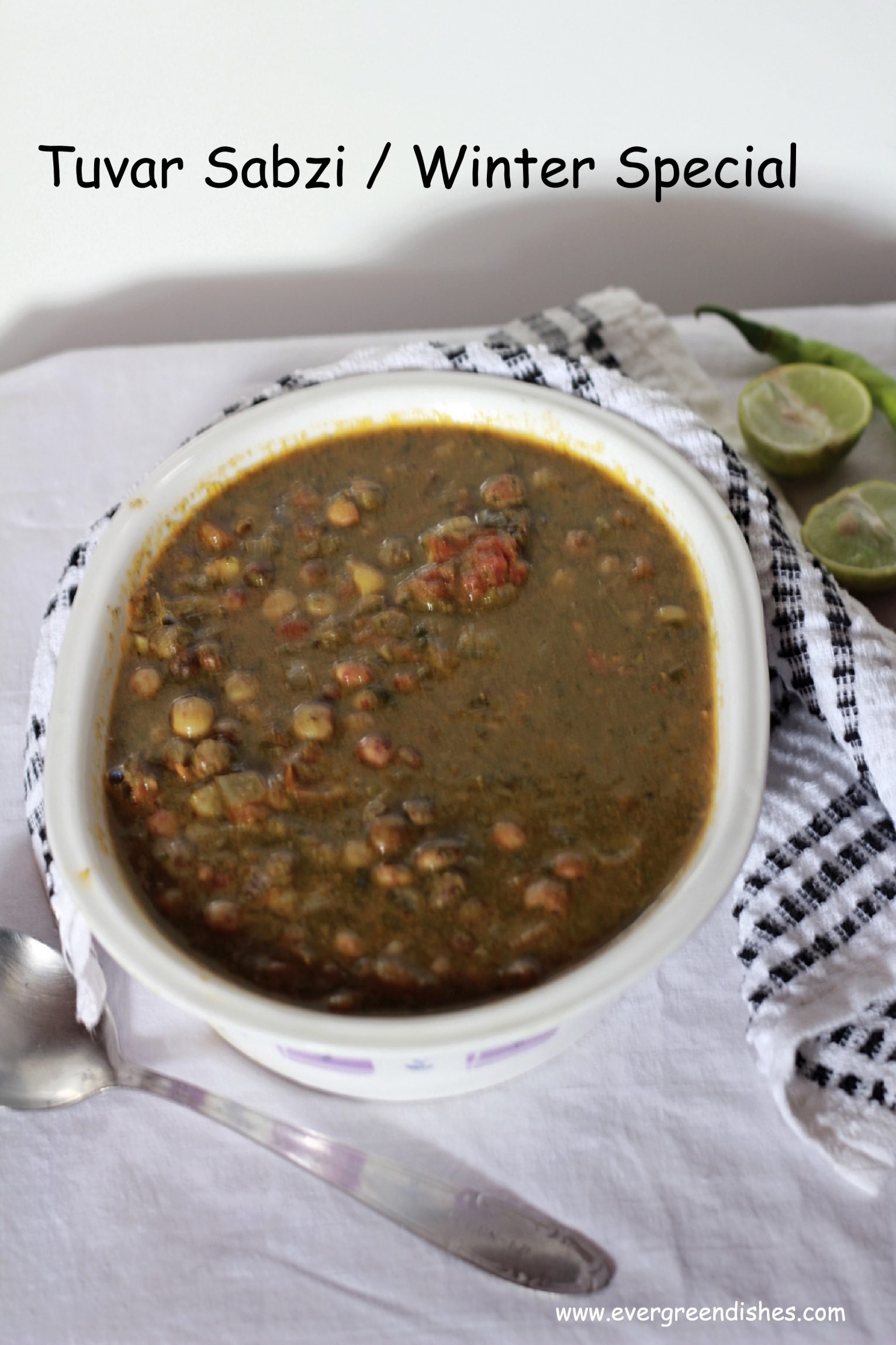
    Tuvar Lilva is a winter vegetable, it is abundantly available. It makes a good accompaniment with chapati or jowar roti. Kachoris are often made and they taste good. It is often used in sambar along with other vegetables. 

    Tuvar  is mainly cultivated as a legume and is the primary food for the majority of the Indian population. Dal makes a good accompaniment with rice and chapati.

    Today, I have a stir fry and it can be made in 15 minutes if  peeled and kept ready.  What do you make with it? I had shared another variety earlier. 

    Tuvar is known as green pigeon pea and commonly called as Togare kalu in Karnataka and in Kerala as Tomara Payaru. In Europe, it is known as Congo Pea.

    tuvar sabzi
    tuvar sabzi

    Do you know the best way to store green pea and tuvar? Pour them in a zip lock bag, lock and deep freeze it. It stays good for atleast one month. If you keep it longer, the taste may not be all that good.

    To store green pea for a longer time, it is blanched, dried and then put in deep freezer. 

    Here is another recipe using Tuvar, ideal with chapati. 

    And here is the recipe of Tuvar Sabzi that I am sharing 

    Ingredients:

    • 1 cup tuvar lilva
    • 2 onion
    • 2 tomato
    • 1 tablespoon oil
    • 1/2 bunch coriander
    • 1 inch ginger
    • 6 green chilly
    • 4 cloves garlic
    • 6 cashew
    • salt

    Method:

    • Grind coriander, green chilly, ginger and garlic to a paste.
    • Cook tuvar lilva in pressure cooker with a little water.
    • Take oil in a pan, add onion and saute it.
    • Once it is light pink in colour, cashew pieces to it.
    • Then, add tomato and let cook for sometime.
    • Put turmeric powder to it.
    • Put the paste and the required salt.
    • Now, put the boiled peas to it and let cook for sometime.
    • Tuvar lilva stir fry is ready to serve.
    tuvar sabzi

    Tuvar Sabzi

    Tuvar Sabzi makes a quick and tasty accompaniment with chapati or jowar roti. It can be prepared in 15 minutes.
    Course: curry, vegetable
    Cuisine: Indian, Vegan,

    Ingredients
      

    • 1 cup tuvar lilva
    • 2 onion
    • 2 to mato
    • 1 tablespoon oil
    • 1/2 bunch coriander
    • 1 inch ginger
    • 6 green chilly
    • 4 cloves garlic
    • 6 cashew
    • salt

    Method
     

    1. Grind coriander, green chilly, ginger and garlic to a paste.
    2. Cook tuvar lilva in pressure cooker with a little water.
    3. Take oil in a pan, add onion and saute it.
    4. Once it is light pink in colour, cashew pieces to it.
    5. Then, add tomato and let cook for sometime.
    6. Put turmeric powder to it.
    7. Put the paste and the required salt.
    8. Now, put the boiled legumes to it and let cook for sometime.
    9. Tuvar Sabzi is ready to serve.

    If you ever make this recipe, take a picture and share it with us by tagging @foodiejayashree on Instagram or @evergreendishes on Facebook. It will be nice to see your creation. 

    You Tube Update:

    I have posted Strawberry Yoghurt on YouTube, do check it out.  Do like and subscribe to the channel. 

    Before I end my post, if you are not eating seasonal vegetables and fruits, I urge you to try tasting them. The fruits and vegetables  are good in quality, available in abundance and the price is less expensive. Buy from the local suppliers, they too are striving hard to make a living.

    Pin this for later:

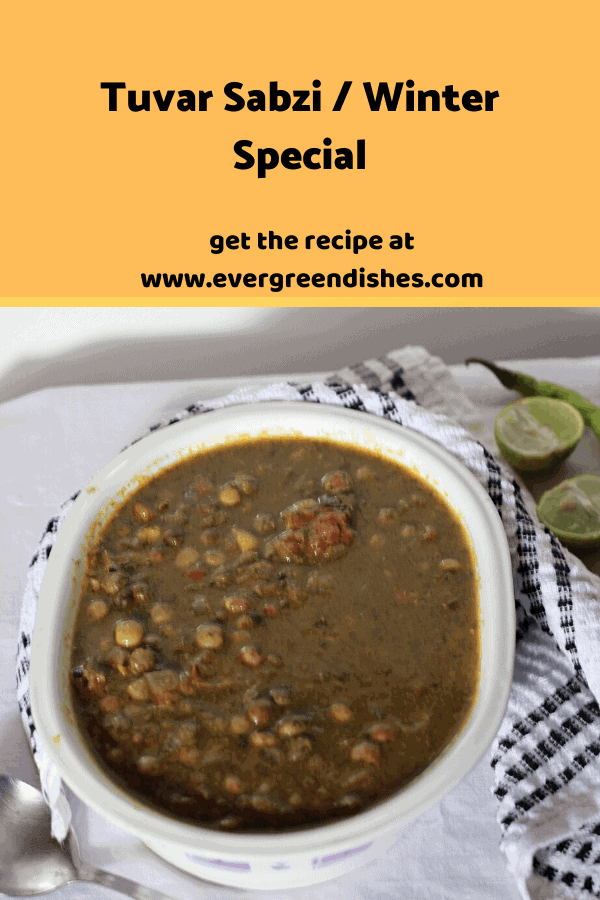
    Tuvar Sabzi Winter Special
    Tuvar Sabzi Winter Special


    Subscribe to get a book of handyhints for free ! 


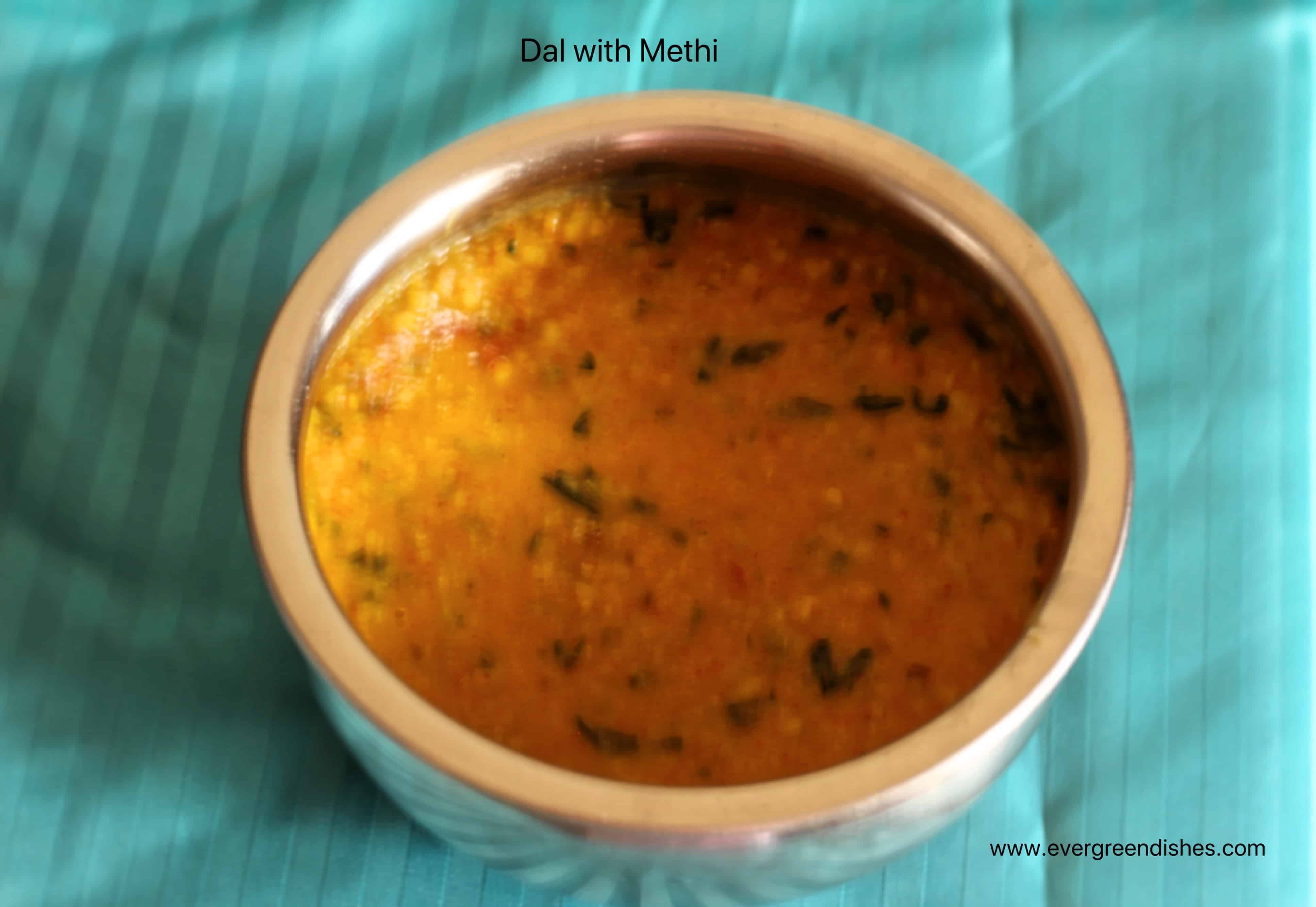
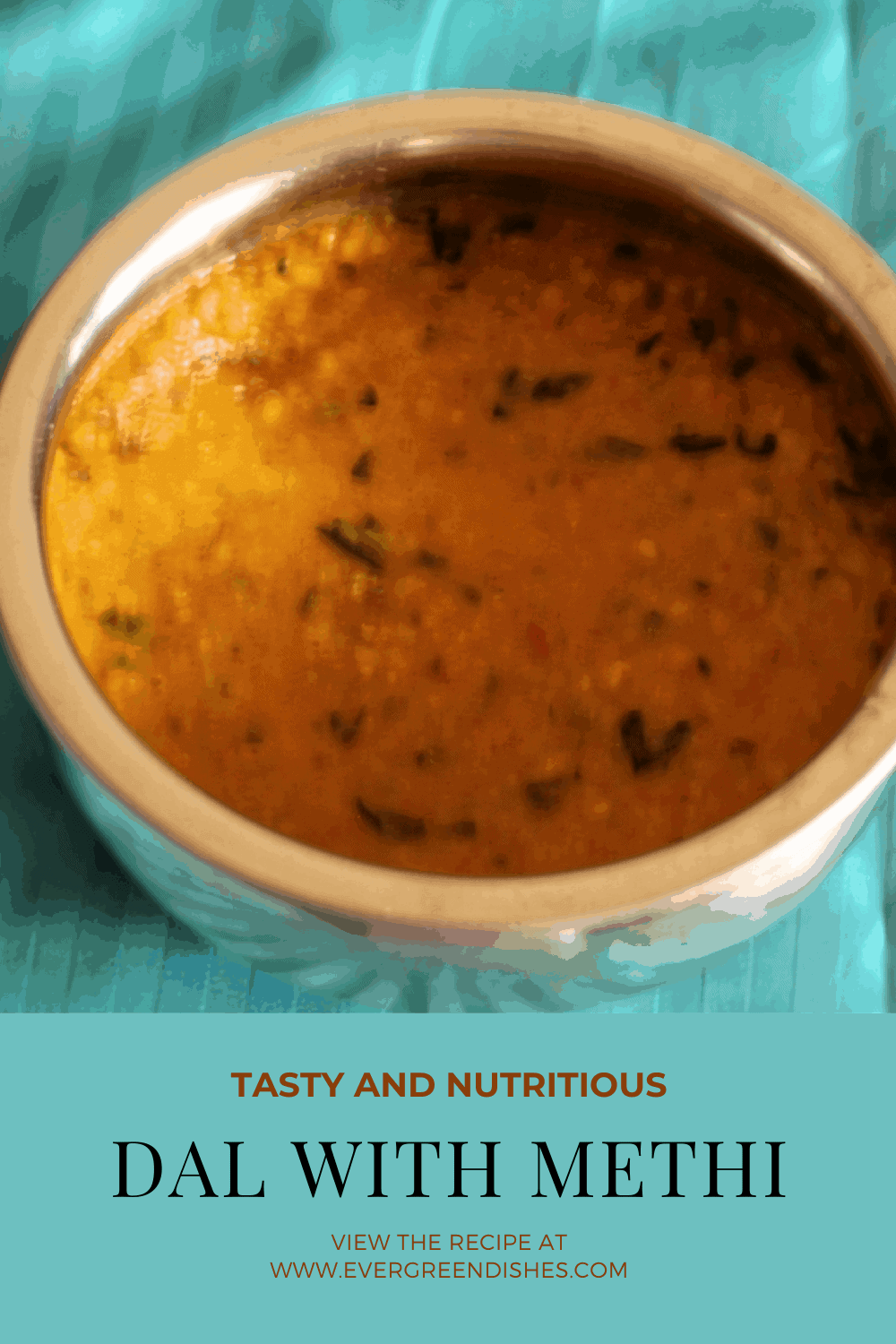
  • Dal with Methi

    Dal with Methi

    Dal with methi makes a tasty side dish with any meal. It tastes good with hot steamed rice, jeera rice, pulav or even with chapati or phulka.

    I love making a variety of dals, it is not only filling but packed with vital nutrients essential for carrying on day to day activities. It serves dual purpose, tastes good with both rice and chapati. Moreover, my family members have a special liking for dal, thus I find many good reasons to play round it.

    Dal with methi or fenugreek leaves tastes good, thus I make three kinds of dal with it. One is the south indian dal  (muddipalya) we make  regularly, it is a traditional recipe loved by all elders. Let’s get to the recent addition that I have made in my cooking.

    Dal with Methi

    Measurement: 1 cup = 200 ml

    Ingredients:
    • 1 cup tur dal
    • 1/4 teaspoon turmeric powder
    • 2 teaspoon oil
    • 1 teaspoon cumin
    • 2 cluster of fenugreek leaves
    • 1 onion
    • 2 tomato
    • 2 teaspoon red chilli
    • salt to taste
    Method:
    1. Wash the tur dal and cook it in the pressure cooker with a little turmeric powder.
    2. Cut the onion and tomato.
    3. Cut the stem of the fenugreek leaves, chop the leaves and put them in water for sometime. A little salt may be added, it helps to remove the grime.
    4. Take oil in a pan, add cumin seeds, as they splutter, add onion, turmeric powder and asafoetida. Let cook for sometime.
    5. Now, add the fenugreek leaves to it.
    6. Put the tomatoes and salt. Let cook for sometime.
    7. Once the tomatoes are soft, add chilly powder to it and mix.
    8. Take the cooked dal and mix it thoroughly.
    9. Put the dal and allow to simmer for sometime.
    10. Dal with methi is ready to serve.
    Evergreendishesdev

    Dal with Methi

    Dal with methi is tasty and makes a good accompaniment with both rice and chapati.
    Prep Time 10 minutes
    Cook Time 30 minutes
    Soaking time 30 minutes
    Servings: 4 people
    Course: lunch ideas, Main Course
    Cuisine: north indian

    Ingredients
      

    • 1 cup tur dal
    • 1/4 teaspoon turmeric powder
    • 1 tablespoon oil
    • 1 teaspoon cumin
    • 2 bunch fenugreek leaves
    • 1 onion
    • 2 tomato
    • 2 teaspoon red chilli
    • salt to taste

    Method
     

    1. Take oil in a pan, add cumin seeds, as they splutter, add onion, turmeric powder and asafoetida. Let cook for sometime.Now, add the fenugreek leaves to it.Put the tomatoes and salt. Let cook for sometime. Once the tomatoes are soft, add chilly powder to it and mix.Wash the tur dal and cook it in the pressure cooker with a little turmeric powder.
      Cut the onion and tomato.
      Cut the stem of the fenugreek leaves, chop the leaves and put them in water for sometime. A little salt may be added, it helps to remove the grime.

      Now, add the fenugreek leaves to it.

      Take the cooked dal and mix it thoroughly.
      Put the dal and allow to simmer for sometime.
      Dal with methi is ready to serve.
    2. Wash the tur dal and cook it in the pressure cooker with a little turmeric powder.
      Cut the onion and tomato
    3. Cut the stem of the fenugreek leaves, chop the leaves and put them in water for sometime. A little salt may be added, it helps to remove the grime.
    4. Take oil in a pan, add cumin seeds, as they splutter, add onion, turmeric powder and asafoetida. Let cook for sometime. Now, add the fenugreek leaves.
    5. Put the tomatoes and salt. Let cook for sometime.
    6. Once the tomatoes are soft, add chilly powder to it and mix.
    7. Take the cooked dal and mix it thoroughly. Put the dal and allow to simmer for sometime.Dal with methi is ready to serve.

    I have recently started a You Tube Channel. Do like and subscribe to it. Here is the video recipe.

    Pin it for later:

    dal with methi
    dal with methi

    If you have liked this post, do leave a comment below. It really motivates me to write more. Do share it with your family members.

    If you ever make this, take a picture and share it with us by tagging @foodiejayashree on Instagram or @evergreendishes on Facebook.

    Do check out my e-book, 30 Tasty Dal Recipes for more such recipes.

    Subscribe to get a book of handy hints and all updates in your inbox.


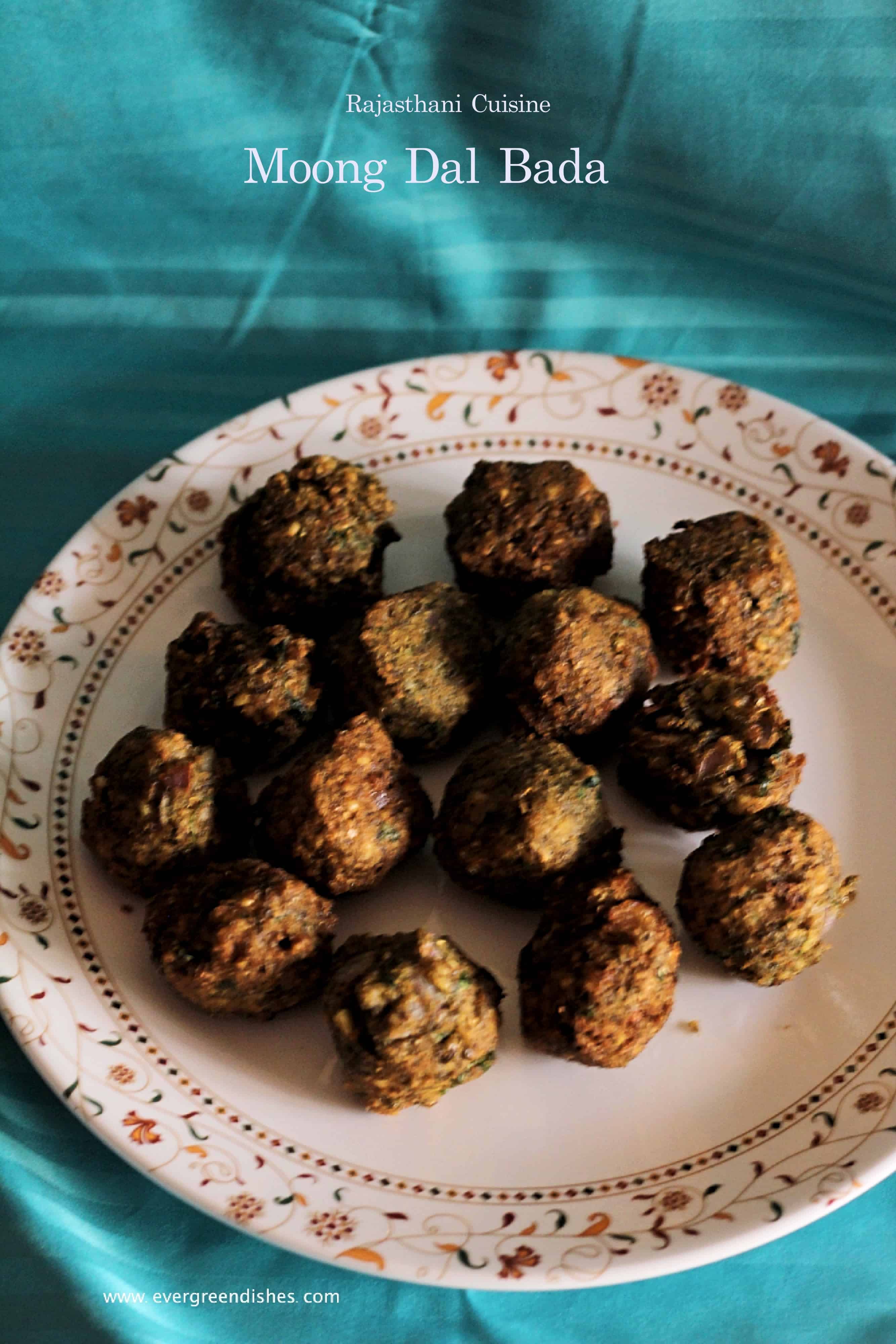
  • Moong Dal Bada / Rajasthani cuisine

    Moong Dal Bada / Rajasthani cuisine

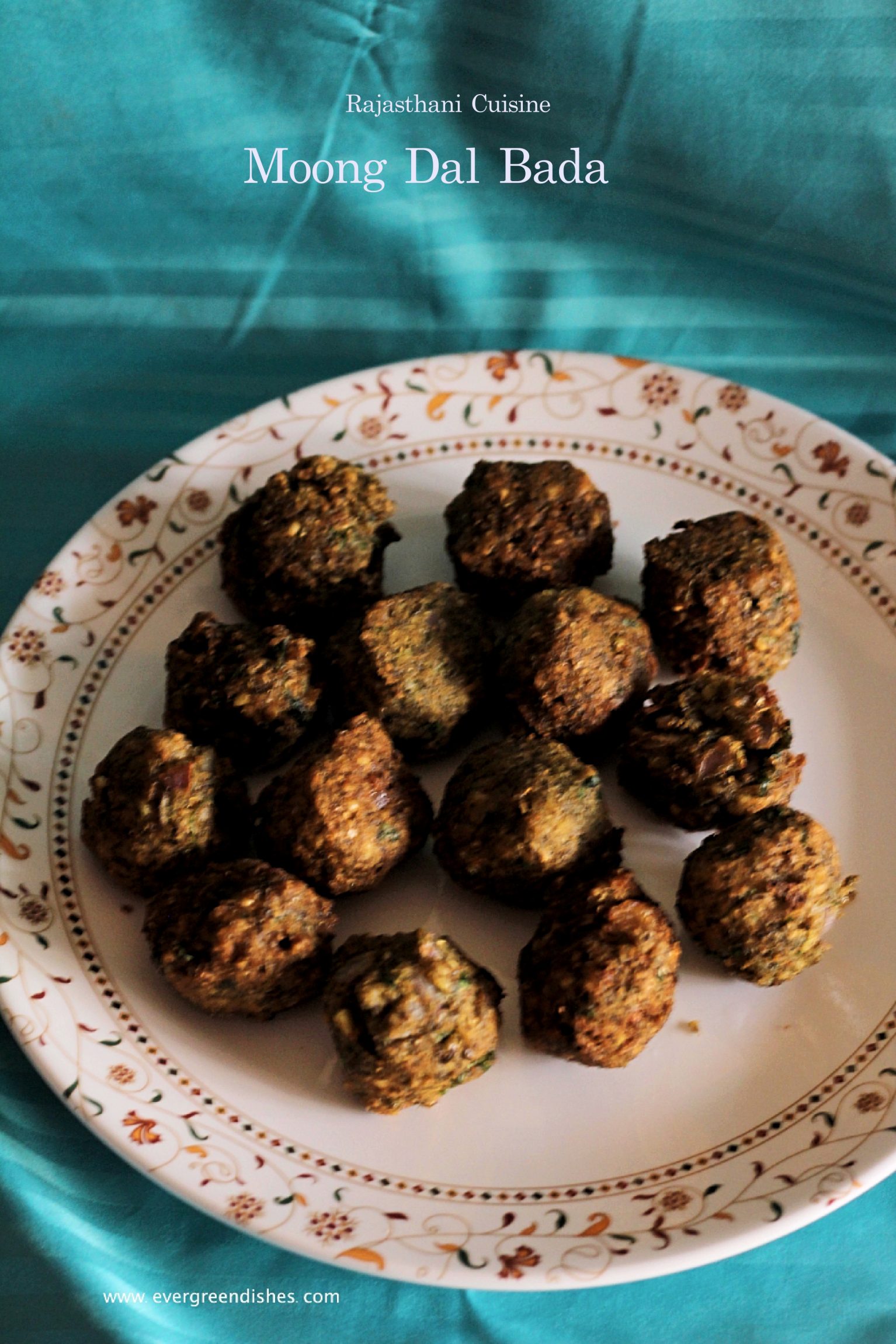
    The cuisine of Rajasthan is unique, flavoursome and makes a good use of lesser known ingredients. I love the dishes from this cuisine and my list of dishes to post here is extensive. Today, I have Moong Dal Bada.

    It’s that time of the month when we bloggers traverse to a particular state, to cook and learn along with a partner. The partners of Shhh secretly cooking group are paired, they exchange two secret ingredients and cook a dish accordingly. My partner was Priya Iyer from www.the photowali.wordpress.com. As the cuisine is vast and interesting, we made a detailed study about it and later shared the ingredients. Green moong and onion were the two ingredients given to me and I made these moong dal bada, they are absolutely delicious with green chutney.

    I had given Priya, coriander and cumin and she prepared Gatte Ki Sabzi, do check it, looks delicious.

    I love using green moong in my cooking, salad, stir fry and pulav are the commonly prepared dishes. Now, I have this one, to add to my repertoire.

    moong dal bada
    moong dal bada


    Other Rajasthani dishes that I have shared here are Gatte Ki Sabji, Quick Kadhi, Imli ka Amlana, Masala Mathri and Khasta Kachori.

    Let’s get to the recipe of Moong Dal Bada

    Ingredients:

    • 1 cup whole green moong bean
    • 4 flakes garlic
    • 1.5 inch ginger
    • 2 tablespoon coriander seed
    • 1 tablespoon fennel seed
    • 1 onion
    • coriander
    • 3 green chilly
    • a pinch of asafoetida
    • 1/2 teaspoon dry mango powder
    • 1/4 teaspoon black pepper powder
    • 1/2 teaspoon red chilli powder
    • salt to taste
    • oil for frying
    • chaat masala to sprinkle

    Method:

    1. Wash and soak the green moong for 6 -8 hours.
    2. Drain dal. Grind it along with green chilly, ginger and garlic, put very little water.
    3. Dry roast coriander seed and fennel seed for two minutes. Once it cools, grind it coarsely. This is the spice mix.
    4. Add all the other ingredients as dry mango powder, salt, pepper powder, chilli powder, spice mix, finely chopped coriander to the dal paste that you made. Mix thoroughly.
    5. Heat oil in a pan. Take a small ball of the batter, shape them into balls. Put a couple of them in the oil and deep fry them on medium heat until golden in colour.
    6. Repeat for the rest of the batter.
    7. Sprinkle a little chat masala over it and serve with green chutney.

    Ingredients
      

    • 1 cup green moong
    • 4 flakes garlic
    • 1.5 inch ginger
    • 3 green chilly
    • 2 tablespoon coriander seed
    • 1 tablespoon fennel seed
    • 1 onion
    • coriander
    • 3 green chilly
    • a pinch of asafoetida
    • 1/2 teaspoon dry mango powder
    • 1/4 teaspoon black pepper powder
    • 1/2 teaspoon red chilli powder
    • salt to taste
    • oil for frying
    • chat masala to sprinkle

    Method
     

    1. Wash and soak the green moong for six to eight hours.
    2. Drain and put it aside in a colander.
    3. Dry roast coriander seed and fennel seed for two minutes. Once, it gives a good aroma, coarsely grind. This is the spice mix.
    4. Grind the green moong along with green chilly, ginger and ginger with very little water.
    5. Remove the batter in a bowl.
    6. Add all the other ingredients to it, black pepper, red chilli powder, amchur powder, salt, spice mix, coriander. Mix thoroughly.
    7. Heat oil, make balls and put them in it. Deep fry on medium heat until golden in colour.
    8. Remove them on a tissue paper, repeat for the rest of the dough.
    9. Sprinkle a little chat masala over the badas, serve with green chutney.
    moong dal bada
    moong dal bada

    If you have liked this post, leave a comment below. Whenever you make it, take a picture and share it on instagram by tagging @foodiejayashree or on Facebook by tagging @evergreendishes.

    Subscribe to get all updates and a book of handyhints for free !

  • Maggi Bhel / quick chaats

    Maggi Bhel / quick chaats

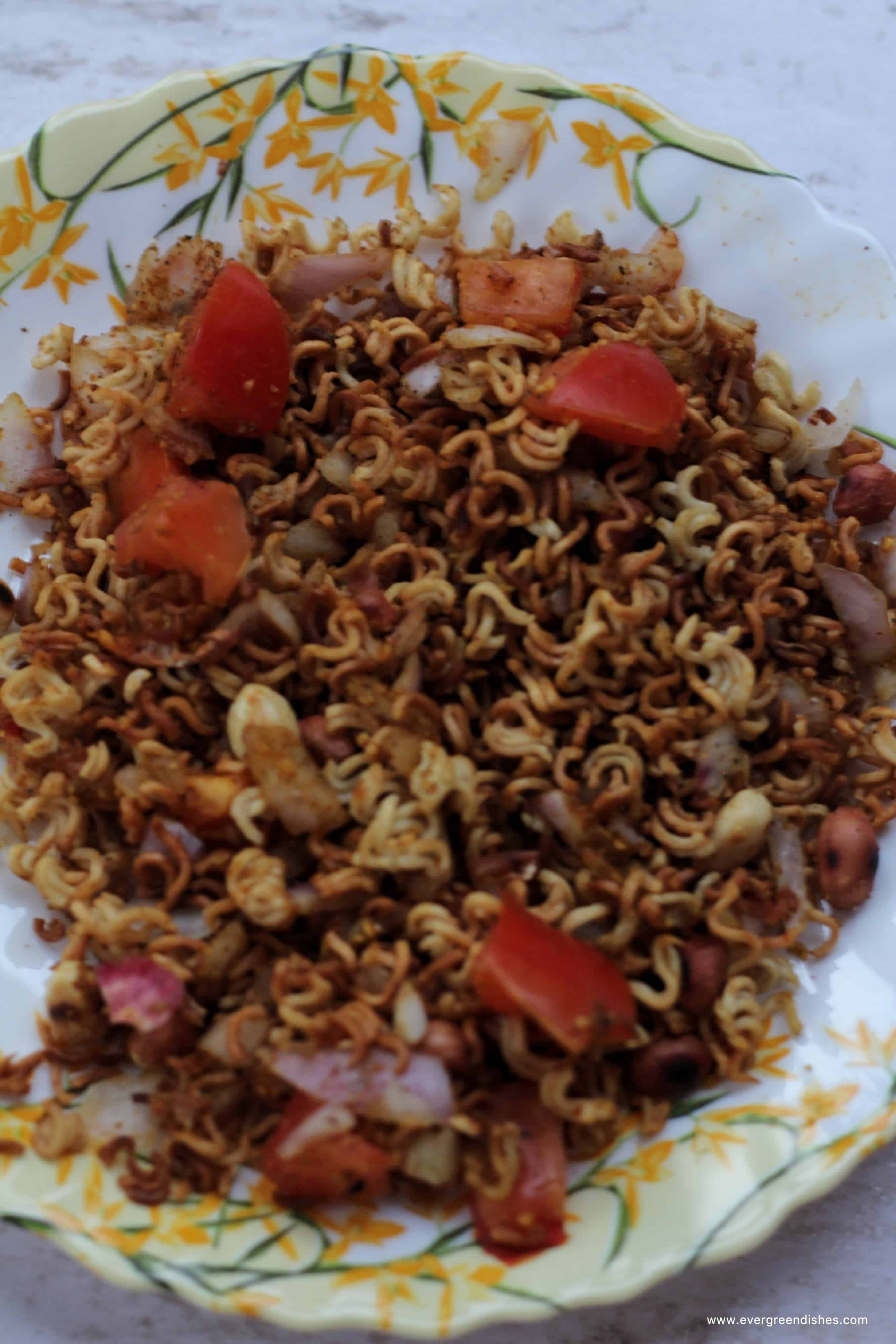
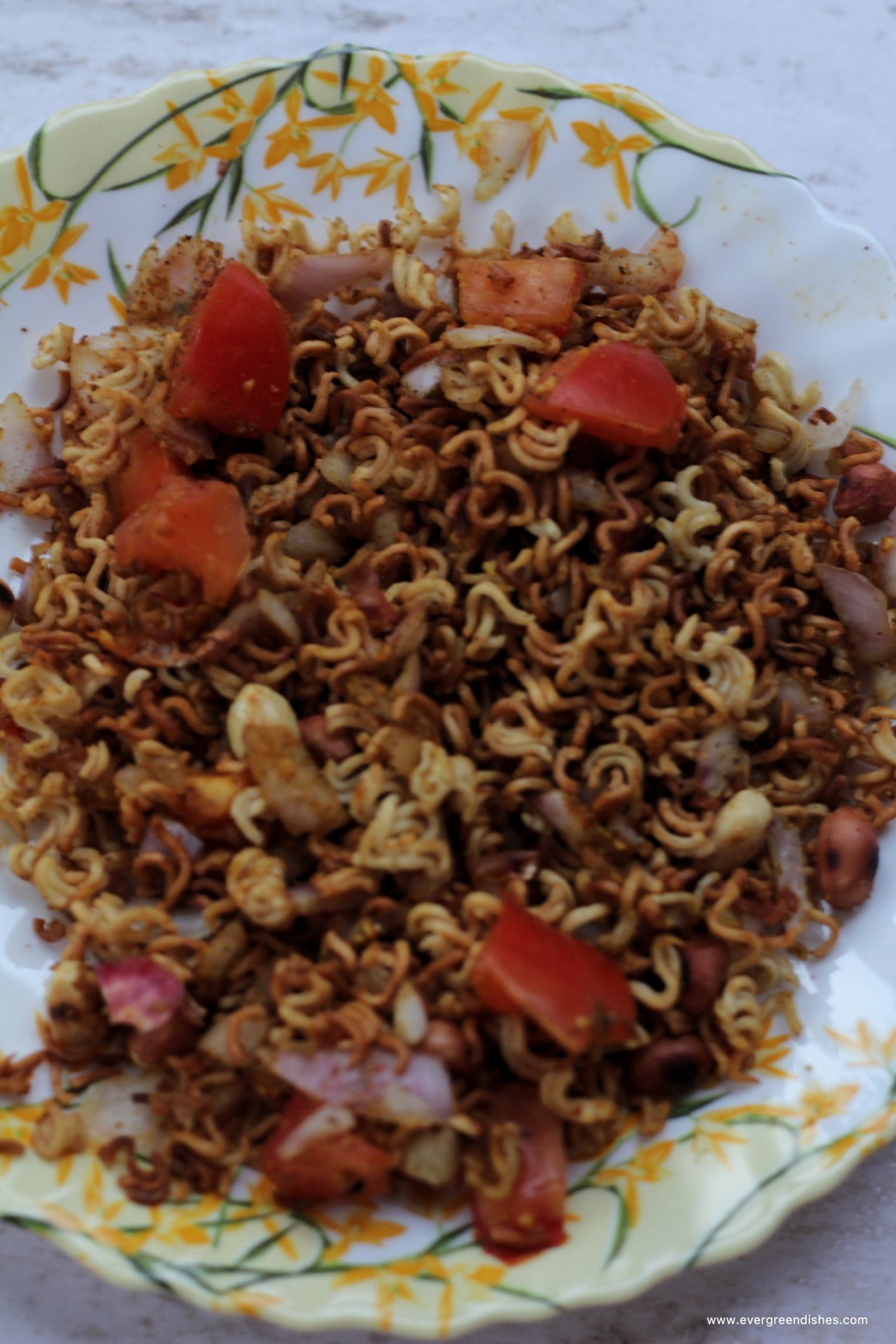
    Children need a variety of snacks especially in the evenings. I am always on the look out for something interesting. Maggi Bhel is a quick snack that can be made at a short notice. It is tasty and super liked at home.

    This snack can be easily made in fifteen minutes. I usually make a small quantity ( single serving) and thus my measurements are the same. It involves dry roasting of the noodles, roast them well as they are not cooked any further.

    Here are a few facts about Chaats:

    1. This is loved by children as it has noodles.
    2. It makes a good and easy snack to make in the evenings.
    3. It is something different than the regular noodles.
    4. You can be creative as you wish, add more toppings or just limit to the mentioned ones.

    Here are some finger- licking chaat recipes that I had posted earlier :Bhel Puri, Ragda Patties, Sev Puri,

    Maggi Bhel
    Maggi Bhel

    Ingredients:

    • 1 slab maggi noodle
    • 1 small onion
    • 1 tomato
    • 1/2 teaspoon chilli powder
    • 1 packet maggi masala
    • a few roasted peanut
    • salt

    Method:

    1. Take a slab of maggi noodle, break it into small pieces. Roast them on a low flame until golden brown in colour.
    2. Cut the onion finely.
    3. Choose a red firm tomato, chop it into small pieces.
    4. In the roasted noodles, add onion, maggi masala, chilli powder and roasted peanut. Mix them
    5. Finally add tomato and garnish with chopped coriander.


    Maggi Bhel
    Evergreendishesdev

    Maggi Bhel

    Maggi Bhel is a quick snack to make in the evening. It is tasty and can be made in ten minutes. 
    Prep Time 10 minutes
    Cook Time 5 minutes
    Total Time 15 minutes
    Course: evening snacks
    Cuisine: Indian

    Ingredients
      

    • 1 slab maggi noodle
    • 1 small onion
    • 1 tomato
    • 1 packet maggi masala
    • 1/2 teaspoon chilli powder
    • roasted peanut

    Method
     

    1. Take a slab of maggi, break it into pieces and dry roast it until golden brown in colour.
    2. Chop the onion finely.
    3. Take a bright red firm tomato, cut into small pieces.
    4. Add onion to the roasted noodles. Put maggi masala, chilli powder, roasted peanut and salt to it. Mix them well.
    5. Add tomato and garnish with finely chopped coriander.

    Check out my e-books that I have published.

    Pin it for later:

    maggi bhel
    maggi bhel

    If you have liked this post, share it with your near and dear ones. If you ever make it, do take a picture and share it on instagram by tagging @foodiejayashree or by commenting on my facebook page.

    Are you planning to start a blog ? Choose A2 Hosting, they manage well and we are quickly heard.


    If you have liked this post, do share it further with your family members and friends. If you ever recreate this recipe, take a picture and tag @foodiejayashree on Instagram. Do check out my e-books on Amazon. 

    Subscribe to get all updates in your inbox and an e-book for free ! 

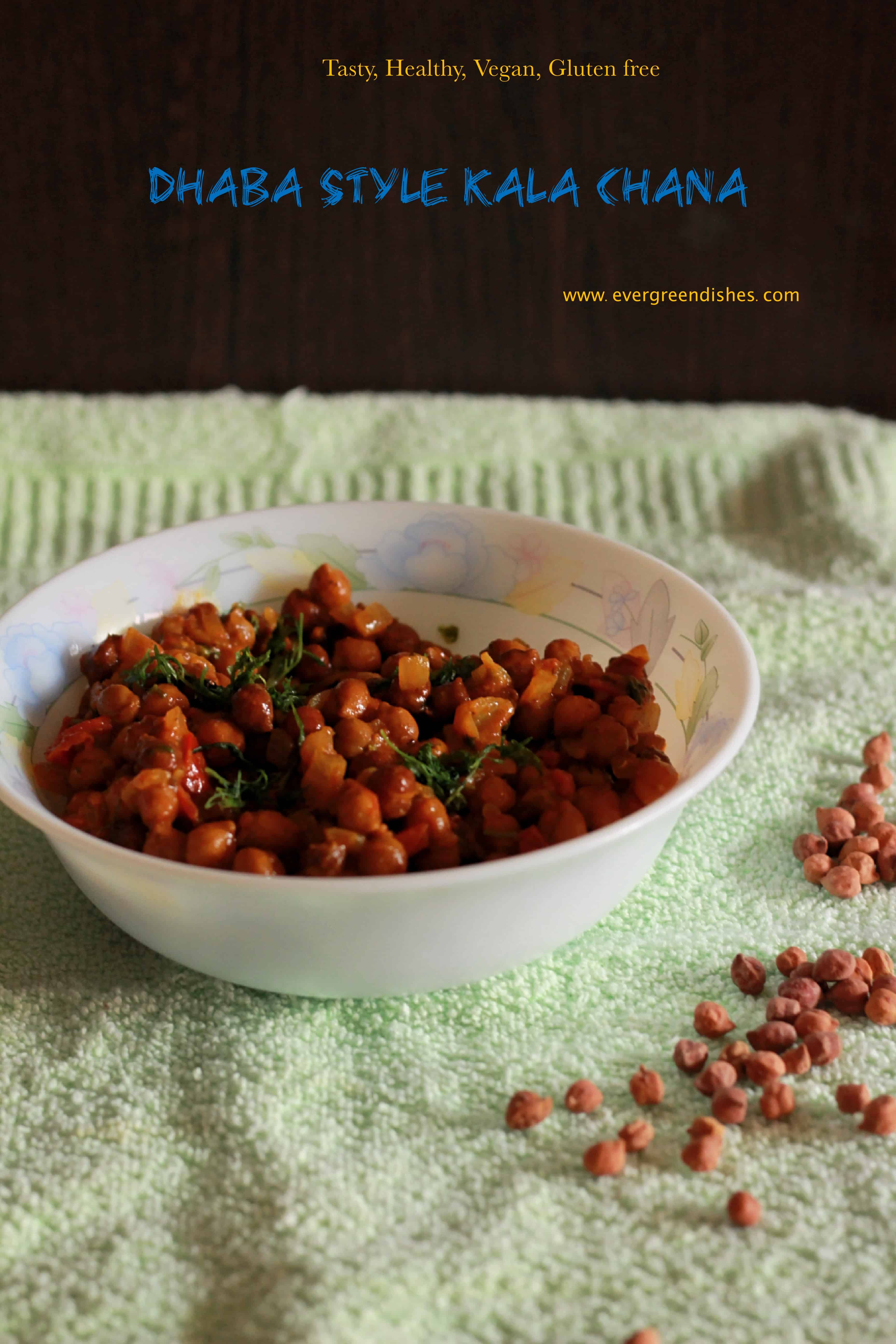
  • Dhaba style Kala Chana

    Dhaba style Kala Chana

    Dhaba style Kala Chana makes a tasty accompaniment with chapati or phulka. One of the tasty accompaniments, it makes a good snack also. It is ideal to pack in the lunch box too.

    It is vegan and gluten free.  (more…)

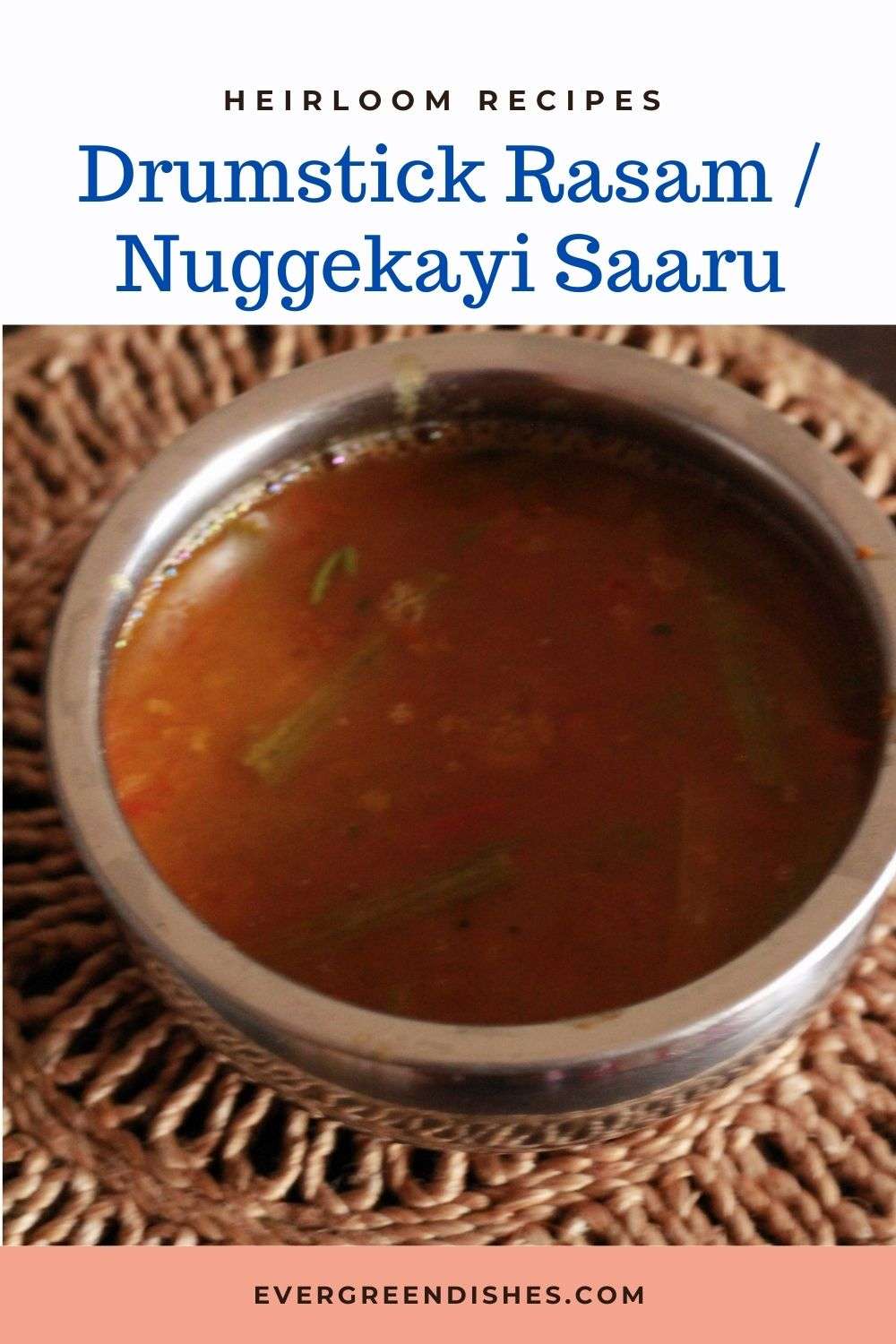
  • How to make drumstick rasam |Nuggekayi saaru

    How to make drumstick rasam |Nuggekayi saaru

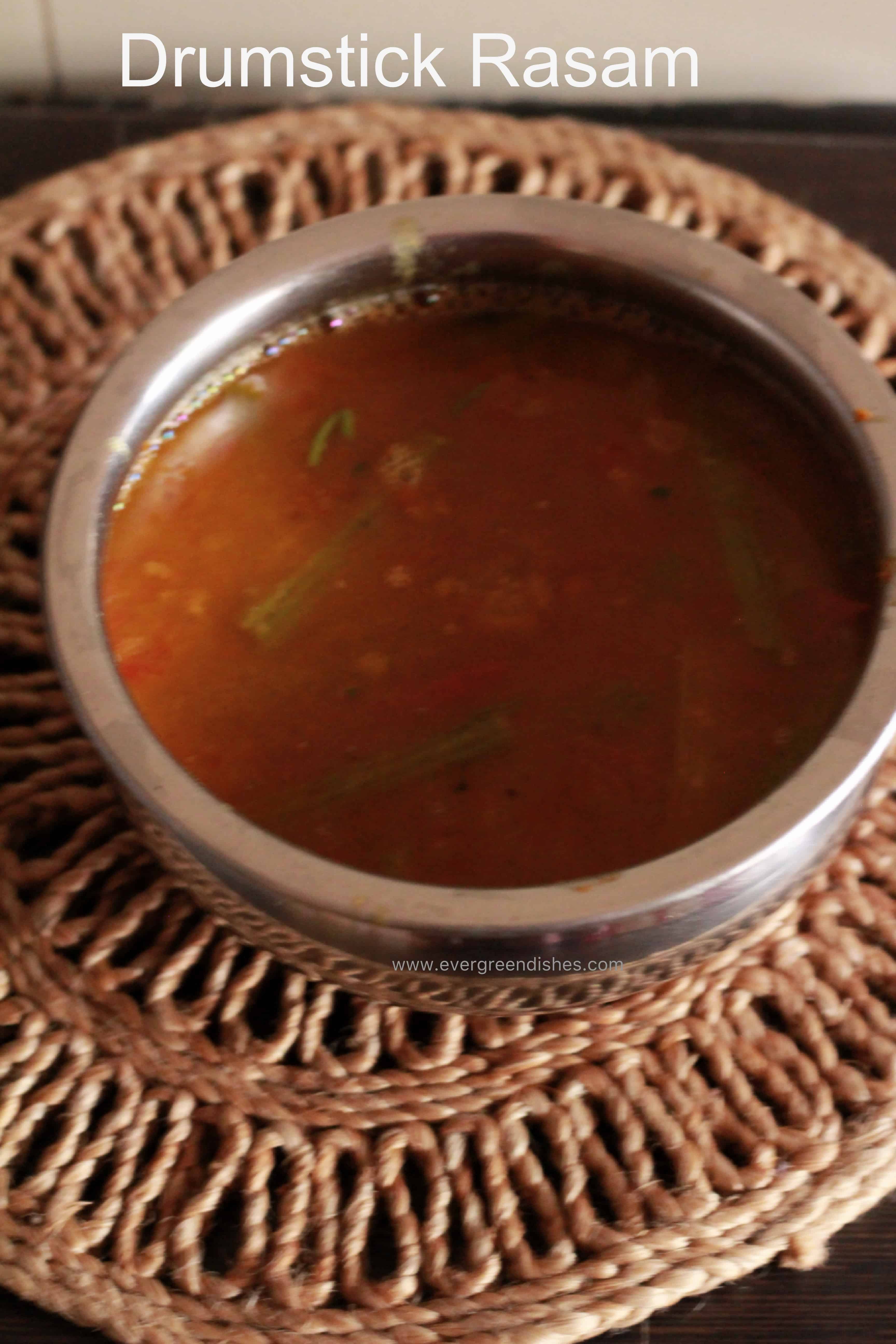
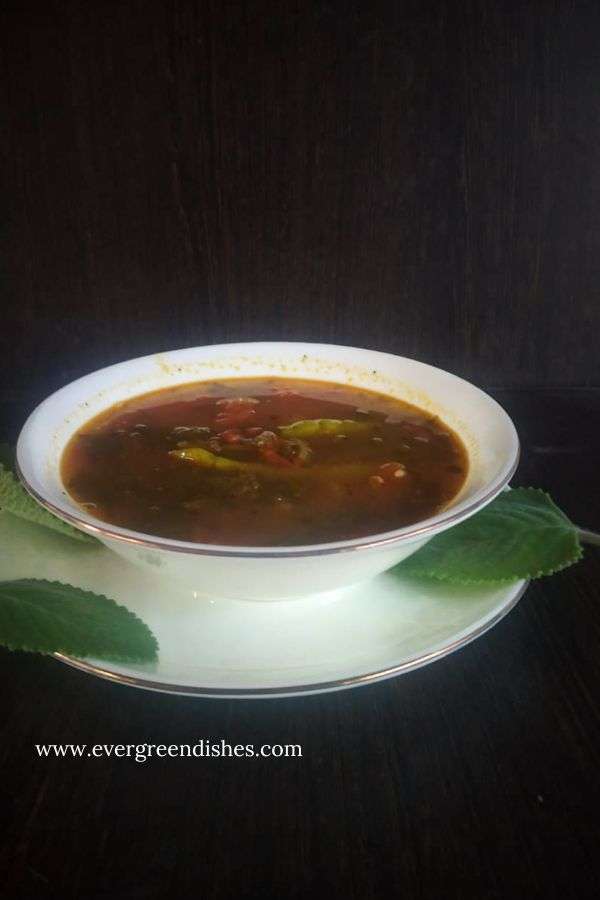
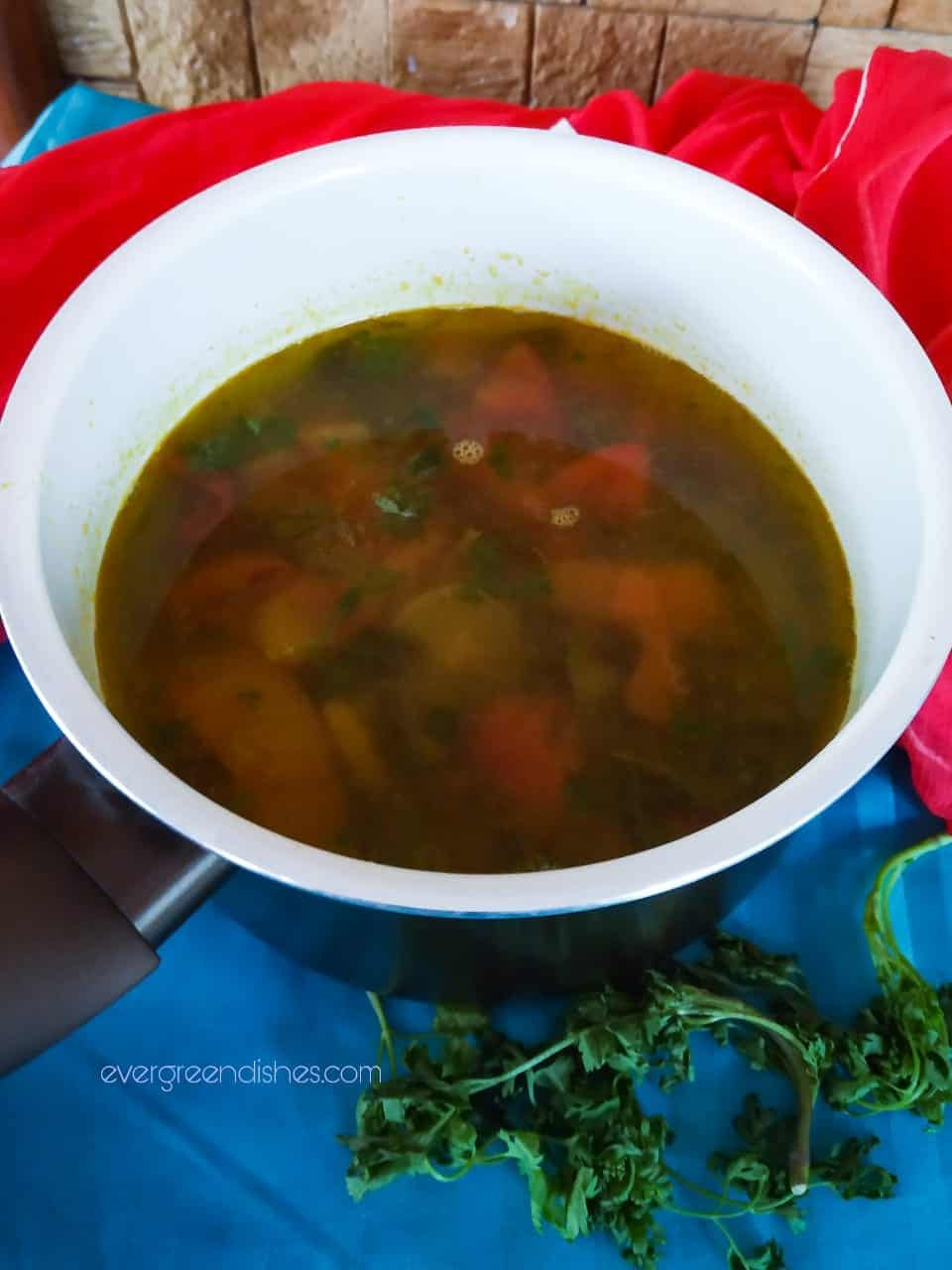
    Drum stick rasam is a tasty and lesser known accompaniment served with steamed rice in South India. The taste and smell of drum stick is good and it is spicy, sour and sweet in taste. 

    Benefits of using drum stick:

    I have seen that drumstick is not used in many households, some do not use as per tradition while a few detest it. But drumstick can be used in various ways, it is usually used in sambar. A stir fry made along with tomatoes tastes good. The leaves of drumstick are used in dal and considered healthy.

    Did you know using drumstick has numerous benefits? It regulates blood sugar level and boosts immunity. They are excellent source of Vitamin B. It helps in purifying blood. It also helps in boosying the overall immunity of the system. Thus, regular usage has many benefits.


    drumstick rasam
    drumstick rasam

    Rasam is called as Saaru in Karnataka and Chaaru in Andhra Pradesh. Drumstick rasam is more popular as Murungakai Rasam in Tamilnadu and Mulakkada Charu in Andhra Pradesh.  It is a comfort food for South Indians. The scientific name for drumstick is Moringa Oleifera.  It is slender, cylindrical pods popular as moringa,  nuggekayi, murungakkai.

    Are you a rasam lover ? Here are a few rasam recipes which will tantalize your taste buds.

     
    ajwain leaf rasam

    lemon rasam
    lemon rasam

    How to make Drumstick Rasam

    Ingredients:

    • 4 drumsticks
    • 1 small cup tur dal  (1 cup= 50 ml)
    • 2 tomato
    • 2 teaspoon ghee
    • 1/4 teaspoon mustard seeds
    • 1/4 teaspoon asafoetida
    • 1/4 teaspoon turmeric powder
    • lemon size ball of tamarind
    • 2 teaspoon rasam powder
    • a small piece jaggery
    • water

    Method: 

    • Soak tamarind in water.
    • Wash tur dal, add water and and some turmeric powder to it. Cook it in the pressure cooker. 
    • Cut the drumstick in five or six pieces, two inch in length. Cook them in a pan with some water. 
    • Cut the tomato into small pieces.
    • Take ghee in a pan, add mustard seed, as it splutters, put asafoetida and turmeric powder, throw in the tomato pieces. Add salt and some water. Let cook.
    • Extract pulp from the soaked tamarind.
    • Stir the tomatoes, add tamarind pulp, jaggery, curry leaves and rasam powder. Let boil. 
    • Take the cooked tur dal, mix it well. It should be well cooked. Put the tur dal to it, cooked drum stick and water. Let it cook on a low flame.
    • Once it boils, garnish with fresh coriander. It is ready to serve.
    Drumstick rasam
    Drumstick rasam
    drumstick rasam

    Drumstick Rasam

    5 from 7 votes
    Course: lunch
    Cuisine: Indian, karnataka

    Ingredients
      

    • 4 drumstick
    • 1 cup tur dal 1 cup =50 ml
    • 2 tomato
    • 2 teaspoon ghee
    • 1/2 teaspoon mustard seed
    • 1/4 teaspoon turmeric powder
    • 1/4 teaspoon asafoetida
    • salt to taste
    • lemon ball size tamarind
    • jaggery a small piece
    • 2 teaspoon rasam powder
    • curry leaves
    • water

    Method
     

    1. Soak the tamarind in water.
    2. Wash the tur dal and cook it in the pressure cooker with a little turmeric powder.
    3. Cut the drum stick into two inch pieces. Cook them in a pan with some water.
    4. Cut the tomato into small pieces.
    5. In a pan, add ghee and make the seasoning. Add mustard seeds, as it splutters, put asafoetida and turmeric powder, throw in the tomato with salt and some water. Let cook.
    6. Extract the pulp from the tamarind.
    7. Once the tomato are cooked, add tamarind pulp, rasam powder and curry leaves to it. Let boil. 
    8. Add cooked tur da and boiled drumstick to it. Put water, letcook on a low flame. 
    9. Once it boils, garnish with coriander leaves. Drumstick rasam is ready to serve.
    Drumstick Rasam / Nuggekayi Saaru
    Drumstick Rasam / Nuggekayi Saru


  • Ulli Theeyal / Kerala Shallot Curry

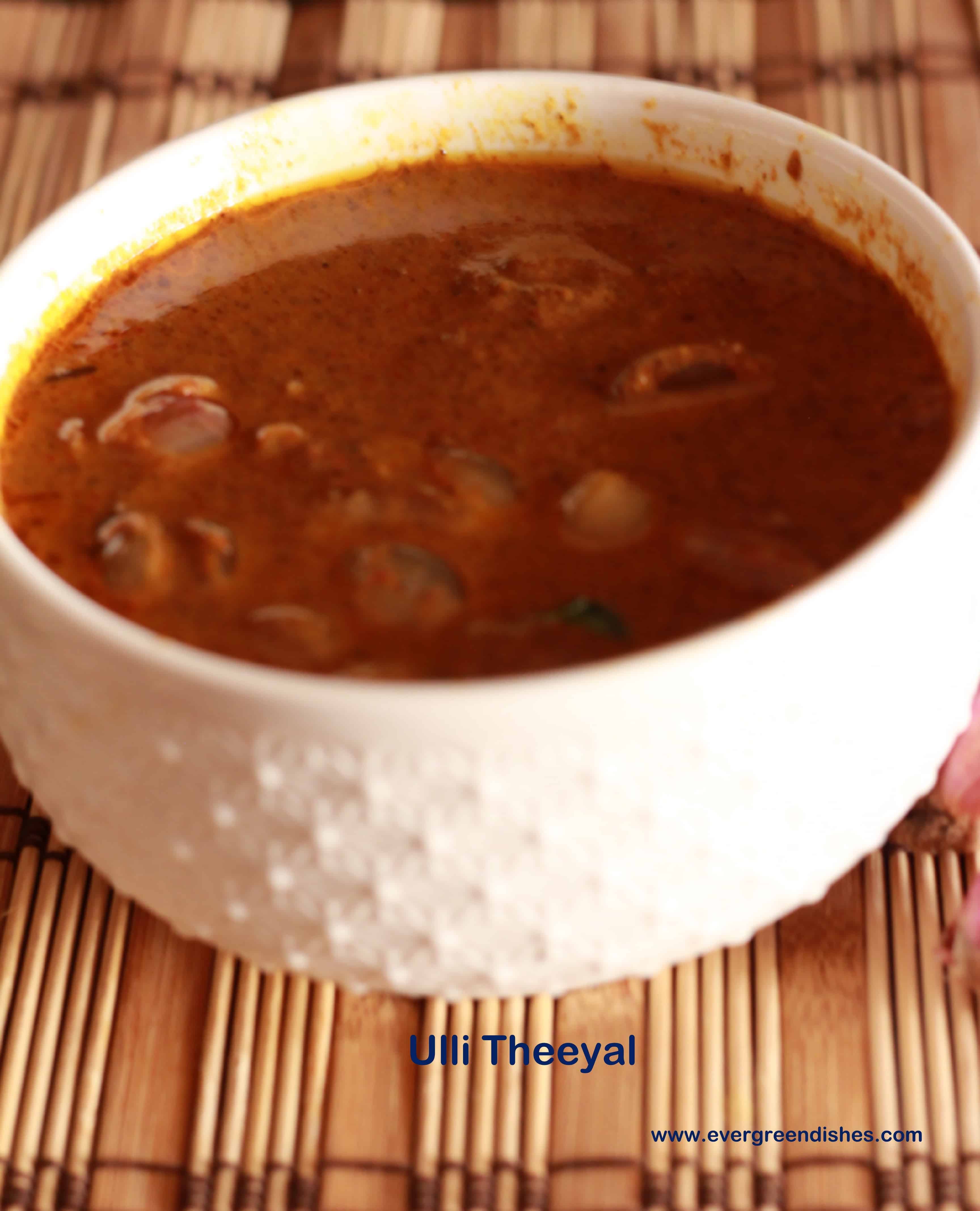
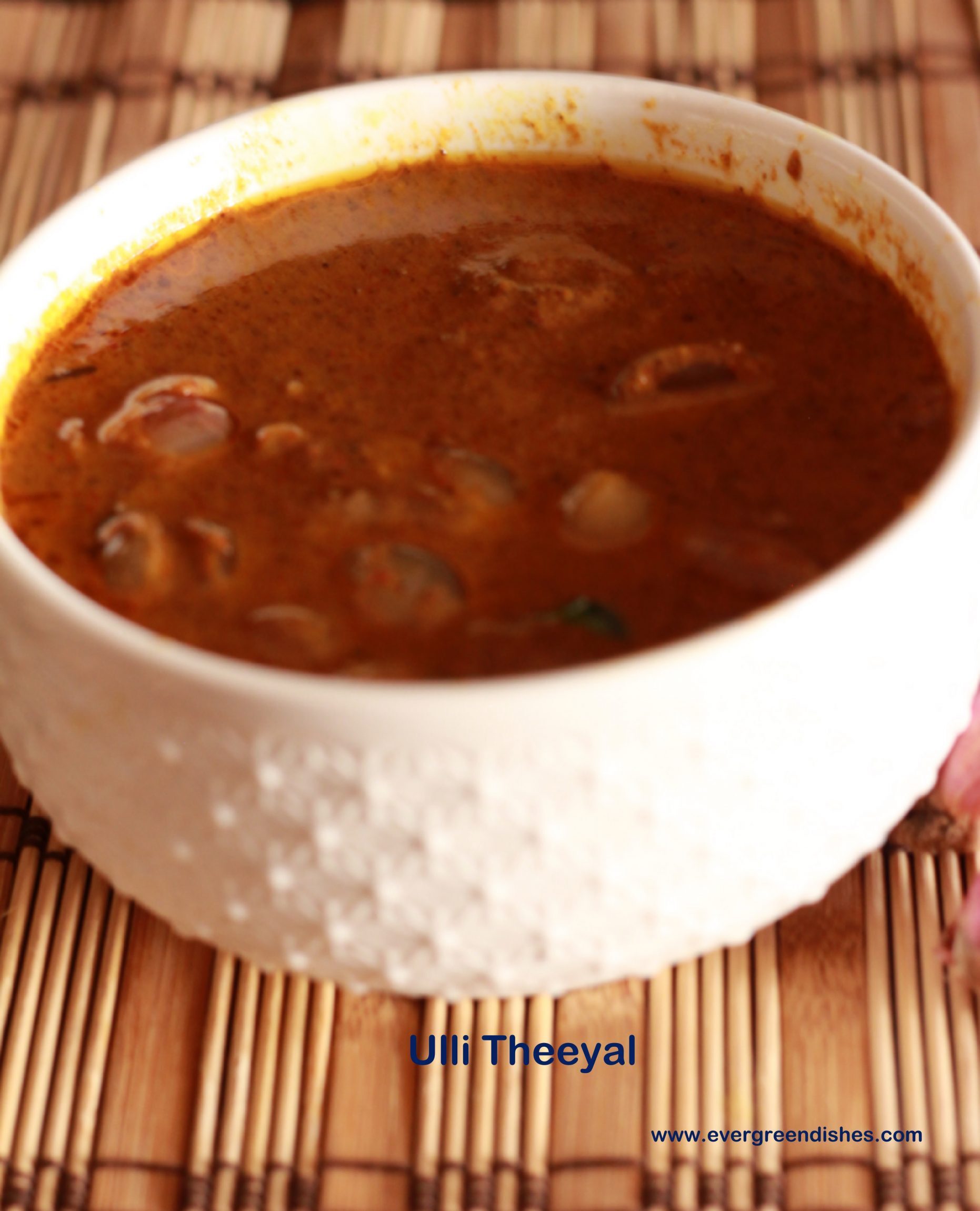
    Ulli Theeyal / Kerala Shallot Curry

    Ulli theeyal/ kerala shallot curry is a tasty accompaniment with hot steamed rice. It is often prepared in daily cooking in Kerala cuisine.

    Kerala is a state in the south western region of India, a beautiful state and a tourists pride. As one enters the state, palm lined beaches and backwaters, a network of canals and estates of spices, tea and coffee are witnessed and mesmerising. It is called as “Gods Own Country” and  ” Land of Spices”

    But the recent devastation has taken a toll of the life of most people. It was one of the severe floods that the state has witnessed in last hundred years.  Many people lost their lives while some are left homeless and still struggling. My heart goes out to these poor souls.

    Shhhhh Secretly Challenge group has now reached Kerala where we are paired and given two ingredients to prepare dish of a particular selected state. I was paired with Vidya Narayan who blogs at Masala Chilli and she gave me shallots and tamarind as the secret ingredients. Do visit her blog www.masalachilli.com for delicious dishes.

    The recipe that I have chosen to prepare is the Ulli Theeyal, a kerala style onion curry. It is tasty and pairs well with hot steamed rice. A mixture of spices are roasted and powdered, the shallots are cooked in seasoning and then tamarind pulp is added to it along with the spice mix.

    As every cuisine, Kerala cuisine too is unique, different and tasty. Fresh grated coconut is one of the essentials in their cooking. Spices as cumin and pepper are regularly. Vegetables of many kind are consumed. Shallots are commonly used in this cuisine. The oil generally used is coconut oil. Now, let’s get cooking Ulli Theeyal

    ulli theeyal
    ulli theeyal

    Ulli Theeyal / Kerala Shallot Curry

    Ingredients:

    For the curry: 
    • 300 grams shallots
    • 4 cloves garlic
    • 2 tablespoon coconut oil
    • 1/2 teaspoon mustard seeds
    • 1/2 teaspoon chilli powder
    • small lemon ball sized tamarind
    • salt
    For the paste:
    • 1/2 cup fresh coconut
    • 1 tablespoon coriander seeds
    • 1/2 teaspoon cumin seeds
    • 4 dry red chilly
    • 1/4 teaspoon fenugreek seeds
    • 2 tablespoon coconut oil
    • 1/2 teaspoon mustard seeds
    For the tempering:
    • 1 teaspoon coconut oil
    • 1/4 teaspoon mustard seeds
    • curry leaves
    • 2 dry red chilly

    Method:

    1. Remove the skin of the shallots.
    2. Soak tamarind in water.
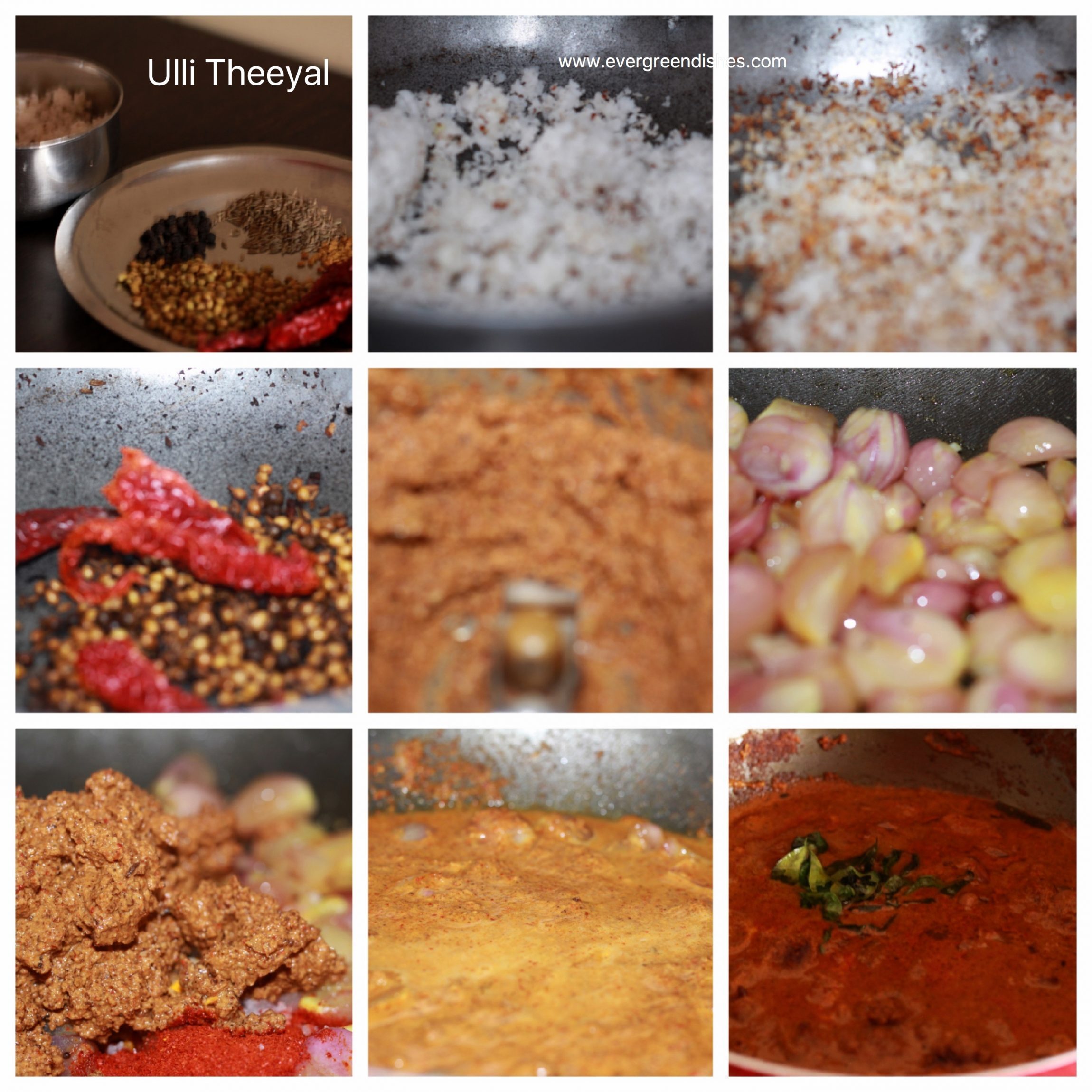
    3. Dry roast the spices for a few minutes, put them aside, then dry roast the coconut until it is golden in colour and you get a good aroma.
    4. Let cool. Grind all ingredients to a paste with water.
    5. Take oil in a pan, add the mustard seeds, as it crackles put turmeric powder and the shallots. Let cook for four to five minutes.
    6. Extract the pulp from the soaked tamarind.
    7. Add the pulp to the shallots, let cook for ten minutes.
    8. Put the ground paste and salt to it. Let cook for two minutes.
    9. Make seasoning, heat coconut oil, add the mustard seeds, as it cracles put the dry red chilly and curry leaves. Pour it over the curry.
    10. Ulli Theeyal is ready to serve.

    Take a tip:

    1. I have not made it very spicy, add two more dry chilly while roasting if you want.
    2. Shallots can be easily peeled by putting in water.
    3. Oil may be added while roasting the ingredients but I have not used.
    4. Use coconut oil for a good taste of the dish.


    making of ulli theeyal
    making of ulli theeyal

    ulli theeyal
    Evergreendishesdev

    Ulli Theeyal / Kerala Shallot Curry

    Ulli Theeyal is a spicy curry of shallots cooked in paste of roasted coconut and other spices along with tamarind extract. It pairs well with hot steamed rice. 
    Prep Time 10 minutes
    Cook Time 20 minutes
    Total Time 30 minutes
    Servings: 6 people
    Course: dinner, lunch, lunch ideas, Side Dish
    Cuisine: kerala, south india

    Ingredients
      

    For the curry
    • 300 grams shallots/ small onions
    • 4 cloves garlic
    • 2 tablespoon coconut oil
    • 1/2 teaspoon mustard seeds
    • 1/2 teaspoon chilli powder
    • tamarind small lemon size ball
    • salt to taste
    For the paste
    • 1/2 cup fresh coconut
    • 1 tablespoon coriander seeds
    • 1/2 teaspoon cumin
    • 4 dry red chilli
    • 1/4 teaspoon fenugreek seeds
    For the tempering
    • 2 teaspoon coconut oil
    • 1/4 teaspoon mustard
    • 2 dry red chilli
    • a few curry leaves

    Method
     

    1. Remove the skin of shallots.
    2. Soak tamarind in water.
    3. Dry roast the spices for a few minutes. Put them aside.
    4. Dry roast the coconut until light brown in colour. 
    5. When cool, grind the ingredients to a paste. 
    6. Heat oil in a pan, add mustard seeds, as it crackles put the shallots and garlic cloves in it. Let cook for sometime. 
    7. Extract tamarind pulp.
    8. Put the pulp to it, let cook for ten minutes.
    9. Add the ground masala, chilly powder and salt to it. Let cook for sometime.
    10. In a small pan, make the tempering. Heat oil, add mustard seeds, as it crackles, thrown in red chilly and curry leaves. Pour it over ulli theeyal curry. 

    Notes

    Take a tip:
    1. I have not made it very spicy, add two more dry chilly while roasting if you want. 
    2. Shallots can be easily peeled by putting in water. 
    3. Oil may be added while roasting the ingredients but I have not used. 
    4. Use coconut oil for a good taste of the dish. 
     

    If you have liked this post, do pin it for your reference. If you ever recreate this dish, do share it on Instagram, tag @foodiejayashree, it will be nice to see your creation.

    Have you subscribed to get all updates and an e-book for free?

    Follow Evergreendishes on Facebook, Twitter, G+, Instagram and Pinterest


    shhhhh secret cooking challenge
    shhhhh secret cooking challenge